Coles won’t rule out CCTV on Australian farms

Despite a barrage of requests on Twitter and emails to the Coles executive interviewed by ABC Radio, Coles has refused to rule out video surveillance of Australian farming families.

All it would say was that it has “no plans” for the cameras. It’s a remarkable turnaround given the enthusiasm for CCTV on farms so publicly expressed by one of its most senior executives on Wednesday. Either Jackie Healing was way out of line or Coles could do with a little more transparency of its own.

Seeing as the retail Goliath decided not to respond, here’s my best attempt at answering the questions Coles apparently found too hot to handle:

  1. What do you consider are the benefits of video cameras on farm?
    The presence of the cameras could lift the awareness of animal welfare, while reassuring the wider community that farm animals are well treated.
  2. Do you see any potential problems?
    A family farm is also a home and I will not have our little family watched by millions via spy cameras. Imagine CCTV on your backyard streaming live to the internet. Totally unacceptable.
  3. Do you have any concerns that practices in the best interests of animals (restraint for vaccinations or veterinary procedures, for example) could be misconstrued by viewers?
    The viewers would deserve an explanation for some of the practices they’d see. Veterinary treatment for an eye cancer, for example, could very well look like animal abuse on video.
  4. Do you anticipate Australian farmers will volunteer to host the cameras?
    No.
  5. Have you (Coles) discussed the possibility of cameras with farmer organisations? If so, what has been the response?
    I don’t know.
  6. If Australian farmers do not volunteer to host the cameras, how will Coles respond?
    I am guessing they would refuse to pay for the milk but Coles won’t say.
  7. Does Coles plan to offer education for consumers about animal husbandry practices?
    This would be critical but was not mentioned by Coles quality manager, Jackie Healing. It would be a gargantuan undertaking.
  8. Where would cameras be mounted on a typical 500-acre dairy farm?
    To be effective, they’d need to be in the dairy, the calf sheds, the yards, the ute, the quad bikes, the tractor and the paddocks. That’s around 50 cameras on my farm alone.
  9. How would the dairy supply chain need to be “remodelled”?
    If Coles does intend to follow the Tesco example, it will try to contract farmers directly, giving it incredible control over the food consumers get and the price farmers are paid.
  10. Will Coles install cameras in the food preparation areas of supermarkets?
    I suspect not.

I am hoping that, despite its silence, Coles has got the message. Please pass it on. The supermarket wants to become a superpower and it has to hear loud and clear that Australians from every walk of life reckon it’s gone too far this time.

Coles wants video cameras on Aussie farms

In an ABC Radio interview yesterday, Coles quality manager Jackie Healing called for video cameras on Australian farms. I asked the Twitterverse to add to my list of questions for the retail superpower and sent the following email to Ms Healing and Coles PR contact, Jon Church:

Hi Jackie,

As a dairy farmer and blogger, I was fascinated to see that you are advocating a Tesco-style approach, including video cameras on farm. Would you care to answer some questions for http://www.milkmaidmarian.com? The blog is now quite popular with both farmers and consumers who would, I am sure, be equally as interested in exploring the topic further.

  1. What do you consider are the benefits of video cameras on farm?
  2. Do you see any potential problems?
  3. Do you have any concerns that practices in the best interests of animals (restraint for vaccinations or veterinary procedures, for example) could be misconstrued by viewers?
  4. Do you anticipate Australian farmers will volunteer to host the cameras?
  5. Have you discussed the possibility of cameras with farmer organisations? If so, what has been the response?
  6. If Australian farmers do not volunteer to host the cameras, how will Coles respond?
  7. Does Coles plan to offer education for consumers about animal husbandry practices?
  8. Where would cameras be mounted on a typical 500-acre dairy farm?
  9. How would the dairy supply chain need to be “remodelled”?
  10. Will Coles install cameras in the food preparation areas of supermarkets?

I shall post the questions online tomorrow and would be delighted to add your answers, provided they are no more than 100 words each and reach me by COB tomorrow. If this doesn’t suit, please let me know and I will do my best to provide a balanced response.

It will be interesting to see whether Coles is happy to elaborate, don’t you think?
 

Fur flies as seven bulls join the herd

We did something desperately silly yesterday: we pushed not one but six fighting bulls along a one kilometre treck (including a road crossing) at once, just before milking time. Silly because I was very worried someone might get hurt. Desperate because they’d broken into the yearlings’ paddock.

Yearlings get as randy as a mature cow but until they’re 15 months old, their bodies just aren’t up to carrying a calf, let alone a one-tonne Friesian bull.

Strangely enough, the six jousting bulls went across the road okay. It was “Buster” who had my full attention. Buster the bull was in a group of seven until, suddenly, he was by himself over the fence. A seemingly impregnable, tightly strained eight-barb was no match for him and his mates. We hadn’t seem him exit the laneway but the fence was the worse for wear and a slow drip of blood from his tail showed he wasn’t completely unscathed.

As we approached – me, Zoe and Alex in the Bobcat and Wayne on a quad – Buster’s first response was to swing round at Wayne and put his head down. Now, that’s not a good start. That’s a threat.

Wayne very wisely stopped and feeling a little safer on the Bobcat, I called Buster’s bluff, who stood his ground. There we were in a bull to bull-bar standoff. I squeezed the accelerator and Buster pushed forward, then swung around again facing the Bobcat a-midships. Reverse, redirect, start again. This went on for about 15 minutes before we finally got Buster back out into the laneway.

We decided Buster was bound to make even more trouble with the “crew” in tow, so he had to be cajoled the entire way by himself. He was better with the cows but, even then, decided to pick a fight. Hope Buster just had PMT!

I bought it but I don’t want to use it

Blitz

The circle of life in stainless steel

I paid handsomely for this German-engineered (whoops, I mean Danish) tool but I hate it. The charmingly-named Blitz Gun is used specifically for killing cattle. Importantly, it’s not a typical gun and operators don’t need a shooter’s licence. The Blitz arrived this afternoon by courier and I’ve only just opened it gingerly for a closer look.

Until now, we’d relied on professionals to euthanase our cows. Two knackery men serviced our area and the waiting time for suffering animals was brief but after one sold his business, it stretched to a single daily round. That meant the prospect of cows struggling through icy nights. That, I believe, is not good enough.

As farmers, we cannot stop the circle of life from turning but we can do our best to look after our animals the whole way through.


Do you have the stomach to adopt a heifer?

I was amazed by Mike’s comment suggesting an “adopt a heifer” program following my last post about the impact of falling milk prices on my dairy cows and even more amazed by the responses it generated.

One of my fellow dairy farmers, Jessa, has had the same thought but a few reservations have held her back. The biggie is: “What if the heifer dies?”.

To that, I’d add: “What if the heifer turns out to be infertile, bad feet that send her lame often or gets intractable mastitis?”. The reality is that, ordinarily, she’d be sent to market. There is no ‘fat’ in the price farmers are paid for their milk and, consequently, no room for infirm passengers on farm. How would you feel if your adopted heifer had to go? Especially if I posted a picture of her big brown eyes.

The scenario gets at the heart of what it is to be a farmer. We love animals. But we can only look after them properly if we are profitable farmers and that means some animals are created more equal than others (with apologies to Mr Orwell).

Farm animals are cherished but not in the same way as pets – mostly. I still remember the day 30 years ago when my father sent Queen Bessie to market. For a decade or more, Queen Bessie stood regally at the head of the dairy entrance demanding scratches until she simply became too old to thrive. Dad was shattered for weeks but, nevertheless, she was sold.

It’s only with a philosopher’s eye for the big picture that farmers manage the balancing act of love, business and the welfare of the herd. Could you stomach it or is that where the “adopt a heifer” experiment would come unstuck?


Life goes on

Daily tasks on a dairy farm are a great reminder that, no matter what happens, life goes on.

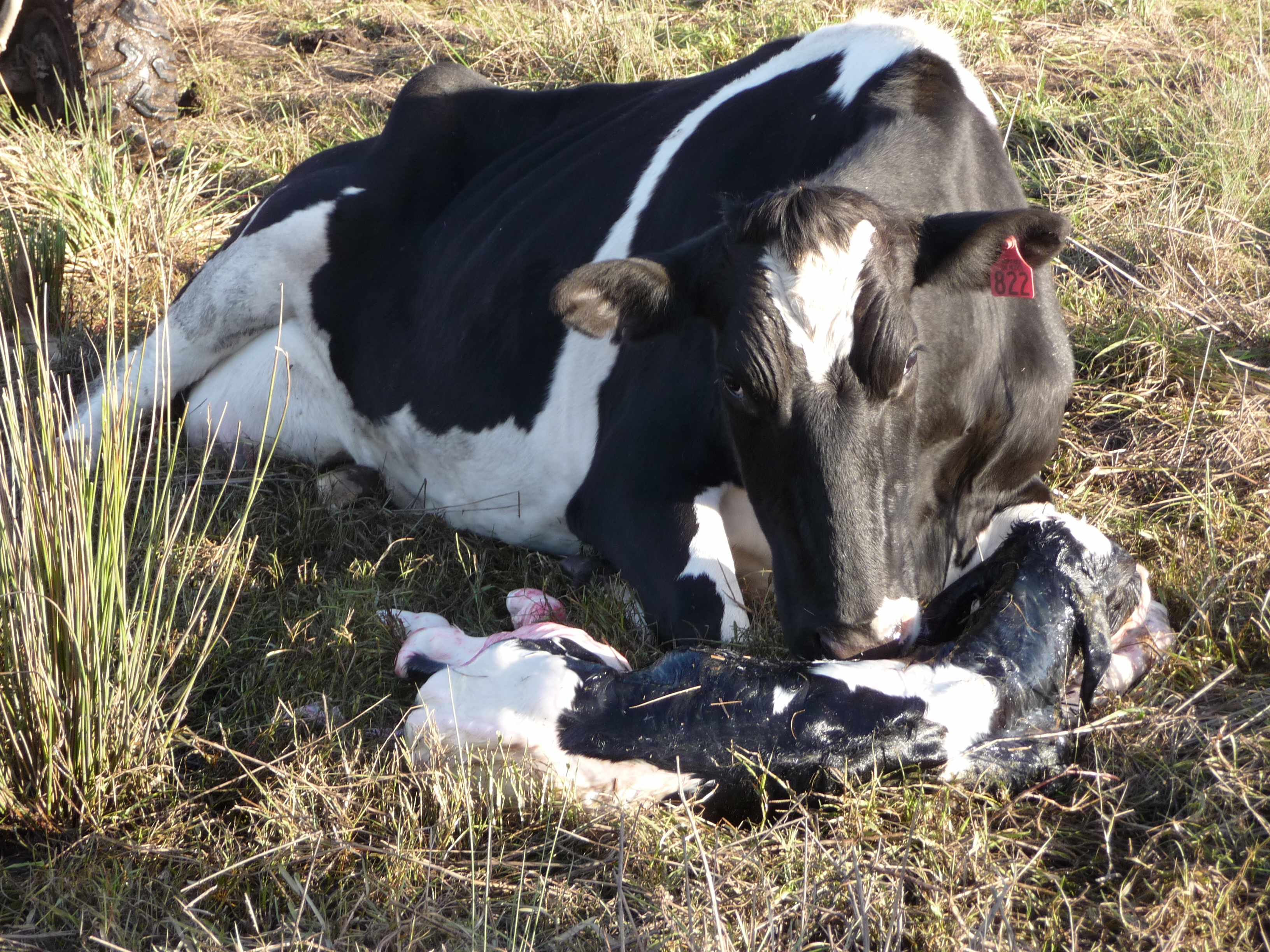
Newborn calf welcomed by the cow

New life

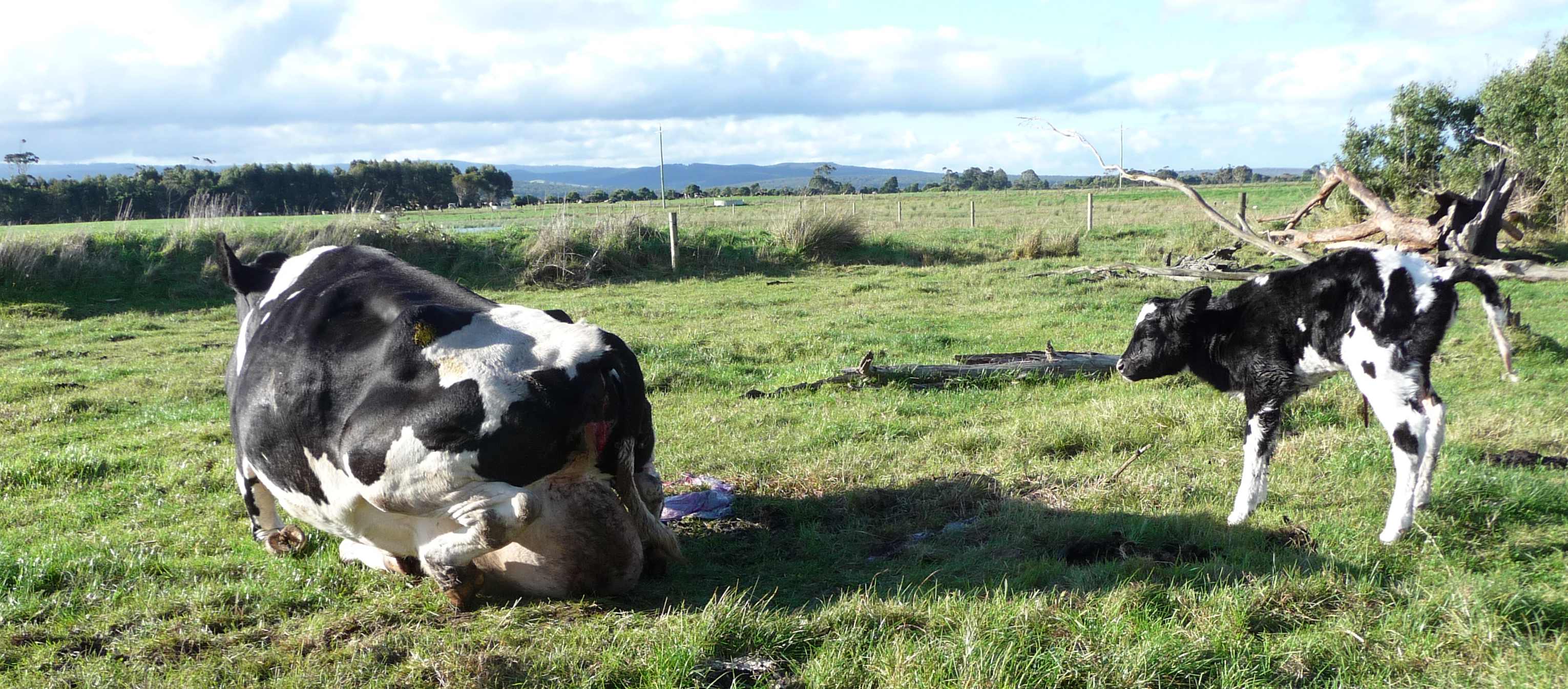
While the floods have given us a good shaking, the circle of life continues to turn. We lost one cow last night because her calf tried to come out with all four feet at once but were delighted to assist the delivery of this lovely little calf.

Most cows manage calving on their own with ease (at least relative ease compared to human birth) and we don’t intervene unless we must for the sake of the cow and calf.

Typically, cows tend to head off to a quiet spot on their own to calve, often pacing around and around as the contractions begin. We look for two front feet first, then a nose. The calf should seem to be diving out of the cow! The whole labour shouldn’t take more than two hours or so.

Wow! After seeing thousands of calves born over my lifetime, it still amazes me.

What’s so special about this calf?

Emily Brown of Linderlan Brown Swiss is a very clever young woman and dairy farmer and I am really pleased she accepted an invitation to write a guest post for me. Over to you, Emily!

First I’d like to thank The Milk Maid Marian for inviting me to do a guest blog! I feel very honoured and somewhat famous…

I’d like to introduced you to Olga, a brand new baby calf born recently, what’s so special about her you ask? (apart from how obviously adorable she is of course!) Well lots of things!

Olga the calf

Olga


Olga is a pure bred Brown Swiss dairy calf, she is four weeks old and loves to drink milk, eat grain and hay, and run circuits of the calf paddock at full speed with all her mates, but that’s not all, Olga came into the world in a very unusual way!

Olga was born via embryo transfer. This is where a superior cow is selected to produce embryos which get implanted into other, less valuable cows, resulting in more offspring from the very best cows. This is done by a special vet who gives the mother or ‘donor cow’ injections to stimulate multiple eggs to be formed, kind of like when someone has twins or triplets. They are then fertilised via artificial insemination, and after seven days flushed out and either implanted into another cow, or frozen to be implanted at a later date. Olga’s mum made six in one go!

So why do dairy farmers sometimes do embryo transfer? Well, we are always looking to use the best technology to ensure that we are breeding the healthiest, most productive animals we can. This enables them to live longer and better lives, which is great for the animal and the farmer!

But there’s another reason Olga’s mum was selected to produce embryos: not only has she lived a long time and produced a lot of high quality milk but two of her daughters and one of her grand-daughters have won Champion of their age groups at the biggest and most glamorous dairy show in Australia – International Dairy Week. This is where the most beautiful cows of the six dairy breeds strut their stuff every year.

Olga's Mum

Olga’s Mum

Let’s hope little Olga follows in her big sisters footsteps in the future, but with a little brother or sister on the way 10 weeks after she was born she might have some competition!!!

Olga's crew

Olga’s crew

What is going on in the calving paddock?

Calving trouble

Trouble with a capital T

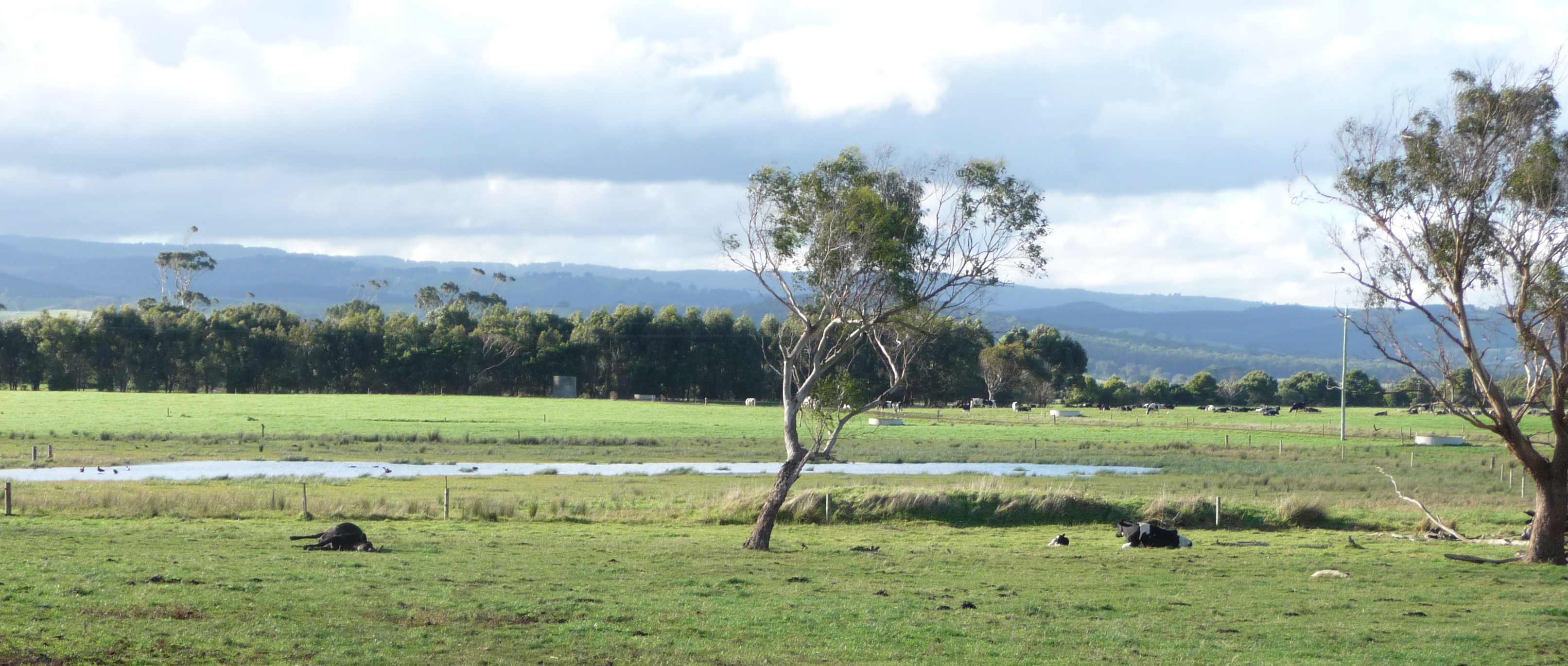
A cow lying on her side with her legs stuck straight out like this is not a good sign. “She’ll just be in the throes of calving,” I told myself as Zoe, baby and I bounced across the calving paddock.

It was not to be – the little cow was trying to push out a massive bull calf who had become stuck just after his shoulders. His tongue was pink, his eyes shone but, sadly, he was gone. Our attention turned immediately to the cow for if left too long, she would almost certainly suffer paralysis.

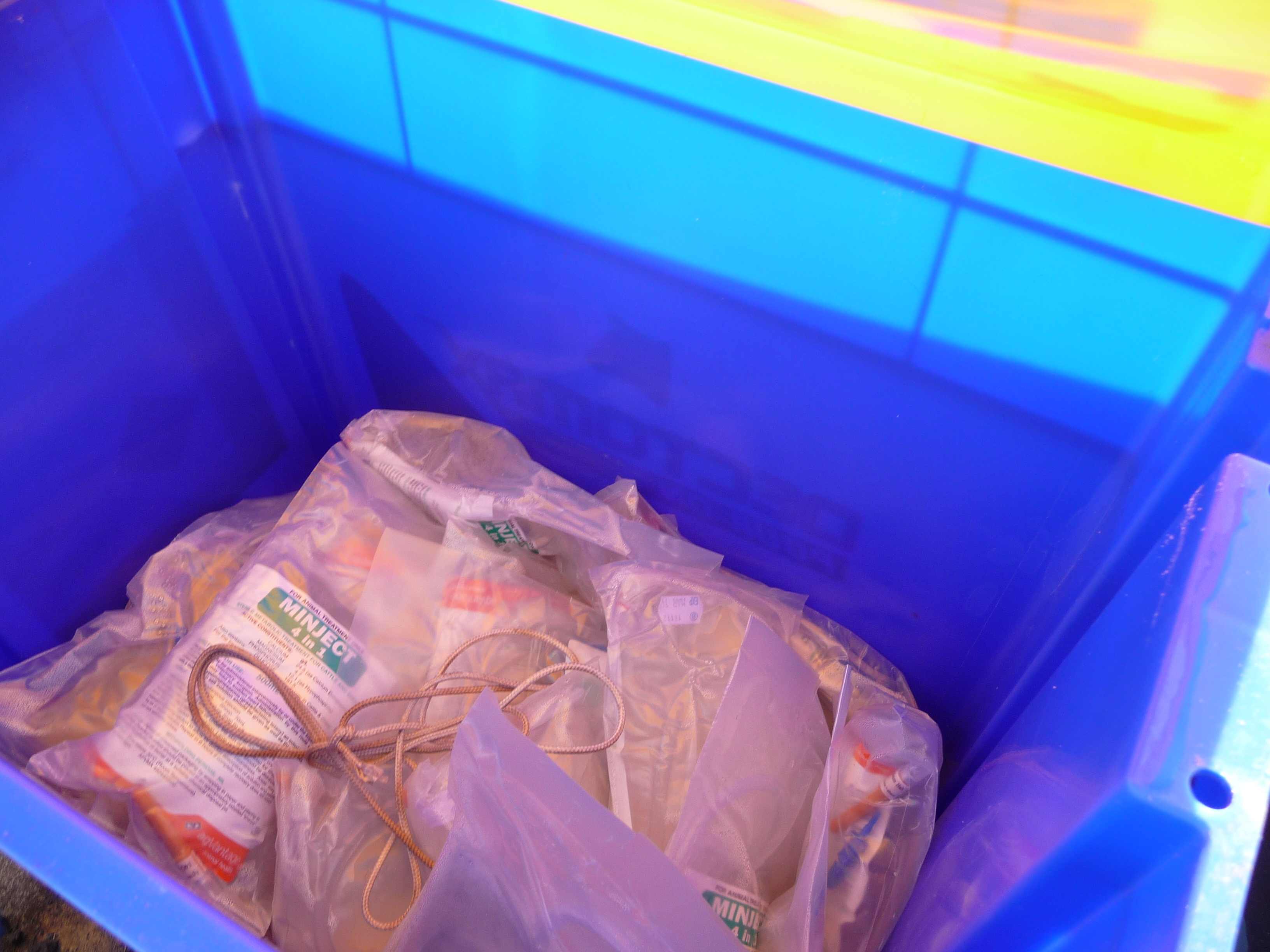
We keep a strong rope in the calving paddock’s medicine chest to help with calvings when necessary. Although we select bulls with smooth shoulders and of medium stature in an attempt to avoid trouble, calves are sometimes just too big, turned the wrong way or the cow is simply too weary to manage it on her own.

Dairy cow calving medicine chest

Emergency supplies are kept in a chest in the calving paddock

I looped the ends of the cord around the calf’s feet, stepped into the circle and eased back with the cow’s contractions. Nothing. I tried again but the calf could not be budged. Heavy reinforcements in the shape of husband Wayne were called in and, thankfully, the calf was out.

By then, I’d discovered there was another cow in trouble. 196, who is 14 years old, had earlier given birth to a beautiful heifer calf and when I went to check on her, this is all she could manage.

Milk fever

My legs aren’t working!

Dear old 196 was suffering from milk fever. This is really a metabolic disorder suffered by cows who just can’t get enough calcium into their blood streams after calving. Calcium is vital in the control of muscles, which is why she didn’t have the energy to stand up. Because the heart is a giant muscle, milk fever can also cause heart failure and immediate treatment is vital.

We minimise the risk of milk fever by feeding the cows very differently in the three weeks before calving. Instead of grass, they get hay that’s low in potassium and grain, while we add anionic salts to their water. This regimen encourages the cows to release calcium into their bloodstream so it’s available in the hours of peak demand after calving. When milk fever does strike, we give the cows a drip that includes calcium and sugar. Most cows are as right as rain again in no time, as was 196!

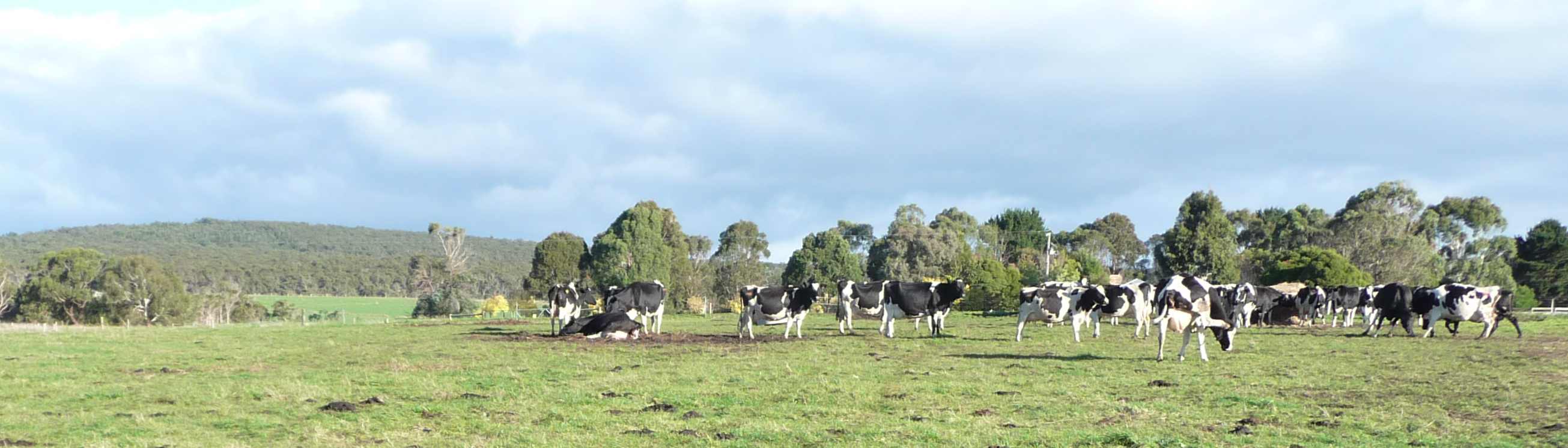
Both cows taken care of, we turned around to go and goodness gracious, it was all happening, including yet another calving underway!

Calving Paddock

It’s all happening in the calving paddock!

A concrete step forward ahead of winter

The entrance and exit to a dairy yard is often a miserable place. If you have an average herd of 250 cows, it gets trodden on by 1000 hoofs each day and bearing in mind that each cows weighs about 550 to 600kgs, that’s an awful lot of work. It also gets heavily “fertilised”!

Here’s how ours looked in summer.

Dairy yard entrance

Already boggy in January

I wasn’t looking forward to seeing it in winter! The rain has set in early and the feeling I have in my waters is that it’s going to be another nasty wet winter this year, so fixing up the bog-hole quickly became a high priority. Mud like this is a recipe for disaster in the form of lameness and mastitis – two things every dairy farmer tries to avoid at all costs.

Every season, we put loads of gravel in there and, every season, it seems to disappear before our eyes. I decided we had two problems: first, a concrete lip designed to force the cows to lift their hoofs, depositing the gravel back outside the yard had the twin effect of forcing each cow to step in precisely the same spot. Second, the legacy of loads and loads of gravel is that you end up building a mountain that, in our case, drained right back to the bog hole with nowhere for the water to escape.

So, we’ve taken a deep breath, got the excavator in to remove the mountain and the concreting crew in to provide a firm footing at the end of the yard.

New concrete at the end of the yard

Bog hole be gone!


Several seasoned characters have since wagged their heads, saying “You’ll only move the problem, you know…” but I don’t think it will be as bad. There’s now no need for the cows to so precisely follow in each others’ footsteps and the watery muck drains away from the track instead of into it. (Duh!) Wish us luck!

The love drug

Cows and women both fall under the spell of an amazing love drug every time they produce milk: oxytocin. As a breastfeeding mother, I know the dreamy feeling that it brings first-hand and the cows might just enjoy the same sensation in the dairy.

Oxytocin triggers the “let down” reflex amongst other things (sexual arousal included!) but its action is pretty much blocked by stress hormone, adrenaline.

This is really obvious in the dairy. We make sure there aren’t too many people in the dairy, avoid shouting or having barking dogs nearby and even keep the radio on the same station. Upset the routine at all and the cows start to get jumpy. And that means lots of cow poo and golden showers plus a very slow milking coupled with less milk in the vat.

So, if you visit your local dairy farmer, try not to get too excited in the shed. Walk slowly and gently and, if you must make noise, make it a lullaby.