Why we raise calves away from the herd

We don’t leave calves with the herd because, if we did, many would die and I’ve discovered that, sadly, many do die on hobby farms in the district despite the best intention of their carers.

On our farm, we take calves into a shed when they are one day old. They are kept in a pen on a bed of clean sawdust with one or two other newborns so we can make sure they suckle well and get enough colostrum (special antibody-rich milk produced by a cow immediately after calving) in the first vital 48 hours of life. This long-time farming practice has been supported by studies, which show colostrum intake affects the health and milk production of a cow right thoughout her life.

We can’t take for granted that the calf will get enough colostrum in the paddock because some calves just don’t get the idea of suckling early enough and some cows (often the youngest) are not the most attentive of parents.

Another good reason to keep the calves separate from the herd is to prevent the transmission of Bovine Johnes Disease (BJD). Calves are the most likely to be infected by this horrible and fatal wasting disease, described this way by DPI Victoria:

“Cattle are usually infected when less than 12 months of age. However, due to a long incubation period, clinical disease is often not seen until the affected animal is 4 or 5 years or older. Signs may appear after a period of stress such as calving, poor nutrition, heavy milk production or any other cause.

As the bacteria lodge and multiply in the wall of the small intestine, the cow responds by producing inflammatory cells. This combination of bacteria and cells leads to a thickening and distortion of the gut wall. Eventually the gut fails to absorb water and nutrients. In dairy cattle, the first sign is often a drop in milk production. Affected animals then develop chronic diarrhoea. Cattle gradually lose weight and become emaciated, while still maintaining a good appetite. They may also develop ‘bottle jaw’, a swelling under the jaw.”

After about a week, most calves are really good feeders, so we take them out into a small grassy sheltered paddock with a group of about 20 other calves. From there, they “graduate” to a larger paddock with up to 40 other calves. After they are eating about 1.5kg of pellets or grain each per day plus hay, they are weaned. Well fed and in the company of their peer group, this is a stress-free and exciting time for the calves.

The calves are fed a special high protein (18%) ration of grain, together with grass to keep them growing at their optimum. They are split into size groups so that none of the little ones miss out. Left in the herd, the smaller ones would not be able to compete for this essential food for growing bodies.

The herd is also a tough place for little creatures. Our cows are classed as medium-stature Friesians, yet weigh in at an average of 550kg each. I’d hate to have calves weighing just 40kg in a yard with 250 car-sized cows twice a day.
The poison farm

The Poison Garden is an oddly captivating blog on many weird and wonderful poisonous plants. Since spending some time there, I’ve realised our dairy yard is ringed by hemlock – the deadly plant Socrates drank as his death sentence.

I was thrilled when The Poison Garden’s author, John Robertson, agreed to write this post for the Milk Maid Marian.

The only type of question I dread about poisonous plants begins ‘Should I remove…?’ You can’t say that it is fine to leave the plant(s) alone because that’s sure to mean the questioner’s dog ends up dead within a few weeks but it has to be remembered that, in the majority of cases, the plant concerned has been growing in gardens, parks or open country for hundreds of years and rarely, if ever, caused a problem.

But what about farmland? Loss of a beloved pet may be heart-rending but loss of a herd of cattle because of some unrecognised risk could bring financial ruin on top of the emotional upset.

Instances of poisoning due to plants are, thankfully, rare but they do happen and they do happen more with farm animals than anything else. Just this week, I saw this (pdf) report of an incident in the Republic of Ireland where a herd of cattle fell ill, and some died, three weeks after being turned out to a new pasture. Thorough investigations proved that the cause was ensiled ragwort, Jacobaea vulgaris, in the feed the animals had been given prior to being let out but it would have been natural to assume that there must have been something in that new pasture since the cattle showed no signs of illness prior to their release.

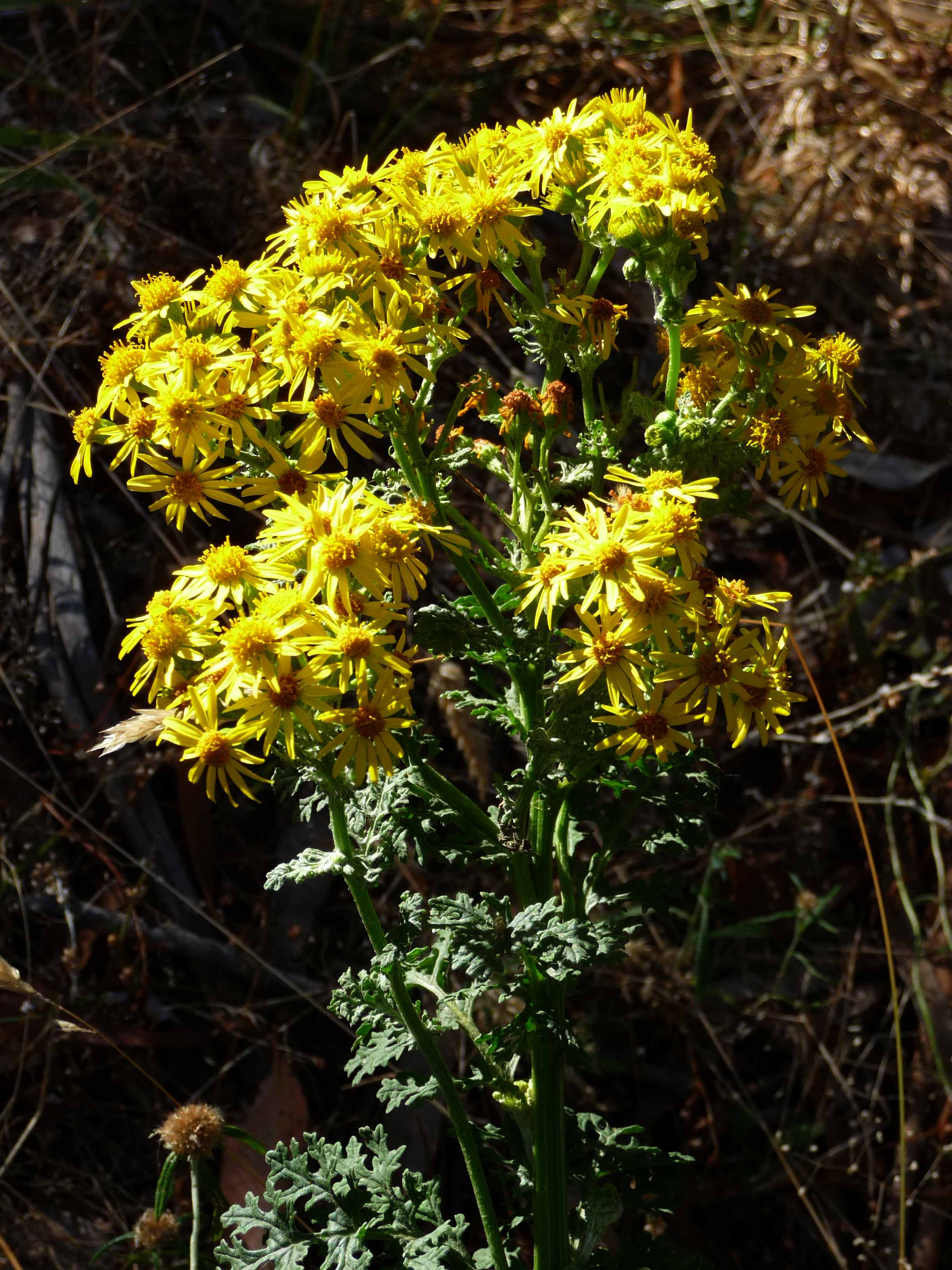
Ragwort

The buttery yellow flowers of ragwort

I mentioned this case to Esther Hegt who runs the website ‘Ragwort, myths and facts’ and she replied by telling me about a case some years ago in the Netherlands where 250 cattle suffered ragwort poisoning after being fed hay that was badly contaminated with ragwort.

So what should a farmer do? Well, as I said at the start these poisonous plants have been around for a very long time and only rarely do harm. That may be because the taste deters consumption in normal times or it may be that the animal has evolved not to be attracted to a particular plant. Especially in this age where bio-diversity is king and farmers are expected to protect the environment and feed people, it is not possible to tour every inch of land and remove anything that just might cause problems.

What is important is to be on the lookout for the unusual. The recent poisoning of a Chinese chef in Canberra occurred when an exceptional spell of weather produced fruiting bodies on the Amanita phalloides, death cap mushroom, at the ‘wrong’ time of year and past incidents involving cattle often result from something different happening. A very dry spell early in the spring leading to the ground shrinking and exposing the roots of Oenanthe crocata, hemlock water dropwort, resulted in deaths in cattle though the same pasture had been used for many years with no trouble.

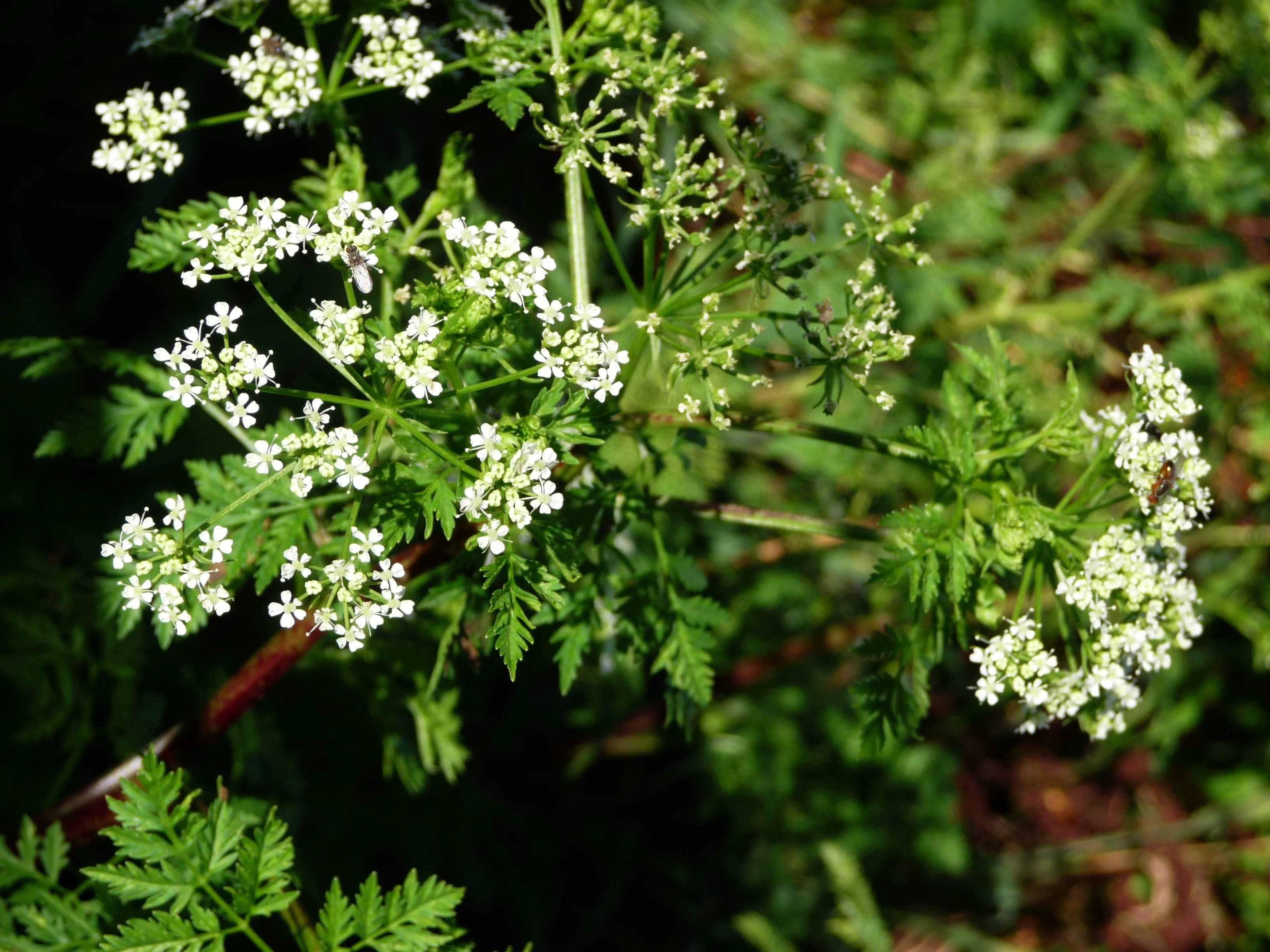
Hemlock

The pretty yet deadly hemlock rings Milk Maid Marian's dairy

Of course, the other thing that can lead to poisoning incidents is lack of knowledge. A number of incidents have occurred when people didn’t realise that Taxus baccata, yew, or Nerium oleander, oleander, were toxic and thought they were being helpful by feeding clippings from these plants to farm, or zoo, animals.

Something different is mostly the cause of one of these rare incidents so it is worth saying that there is something different about modern farming where, perhaps, not enough consideration is being given to possible plant poisonings.

Whether as a commercial venture or in order to be more transparent about farming practices, more farmers are inviting the public onto their farms. It is almost certainly worth spending a couple of minutes making sure those visitors understand why they shouldn’t feed treats, of any sort, to any of the animals they will meet during their visit.

The perfect poo – a noble quest

Just like the mother of a newborn babe, dairy farmers spend a lot of time examining the poo of their charges.

The perfect patty?

Perfection in poo is a noble quest

It’s not easy to live on grass. The stuff is very hard to digest and that’s why cows have developed an amazing digestive system that this really nice little video explains beautifully in a little over a minute. As you’ll see, the rumen and its helpful bugs play a vital role.

Manure is the dairy farmer’s window into the rumens of the cows. If their diet gets out of balance, they can get “acidosis”, which means the bugs die off and the cows find it very hard to digest their food. Not surprisingly, this is bad news! If it gets bad enough, the cows get extremely sick but it can also be subclinical, only affecting milk production. One of the first signs is the wrong type of poo.

According to Dairy Australia’s informative Feed Fibre Future Quick Checks Fact Sheet D (c’mon DA, couldn’t you have come up with a more friendly name?):

“Manure has a porridge-like consistency. Forms a soft pile 40–50 mm high, which may have several concentric rings and a small depression in the middle. Makes a plopping sound when it hits concrete floors and will stick to the toe of your shoe. This is what you are aiming for.”

Because we’ve increased the cows’ grain ration with the onset of spring, we’ve matched that with extra fibre in the form of silage to prevent acidosis and I’ve been Chief Manure Monitor to check we’ve got it right.

I thought that when our farm consultant, Matt, arrived earlier this week he’d be proud of me. Well, he was but said that, if he was to be really picky, perhaps the poo was slightly too firm. As a consequence, we’ve upped the grain a little and backed off the silage by one roll.

Oh, the road to perfection has no end!

Crunch time

The pastures are still green but they’re barely growing and, now, we must make hard decisions about what to feed and to whom.

Already, we’re feeding seven rolls of silage (each weighing about 800 kg) and a very hearty meal of grain to the milkers and if I want to keep the cows milking really well, I’ll need to step that up even more in the next few weeks. Any cow who is not producing at least 10 litres of milk per day is not paying her way. If she’s in calf, we will let her take a holiday. If not, we must sell her. Fortunately, the vast majority of cows are in calf, so we should be able to keep almost every one.

The reality that farm animals are working animals rather than pets is one of the hardest lessons of life but a valuable one, I think. Farm kids learn from an early age that the circle of life is inescapable but it is in a farmer’s power, though, to make every life a good one. What an awesome privilege.

Sprinkle the cow track with rose petals

If I could, I’d sprinkle the cow track with rose petals! The cows average a 3.6km walk to and from the dairy every day and can easily become quite tender-footed, so the surfaces they walk on are incredibly important. If you can’t walk on it barefoot, you can’t expect your cows to walk on it either.

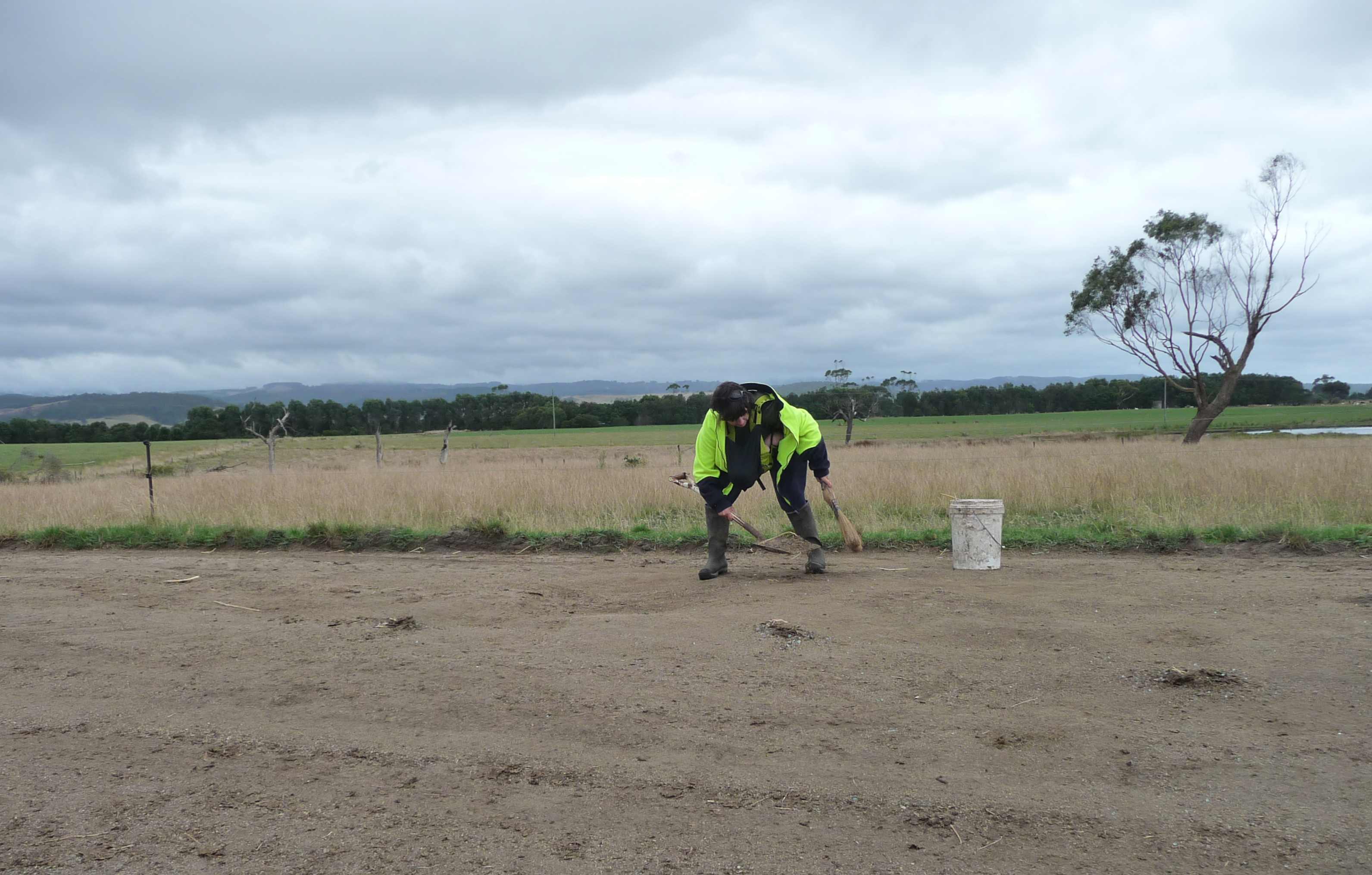
When a tractor window got smashed on the track, the only thing for it was to sweep all the glass up. Nearly broke Old Macdonald’s back!

Sweeping the cow track

Sweeping the track as Alex enjoys a hammock ride

The track is soft gravel for maximum cow comfort while providing a relatively mud-free surface. Last year, when the wet was at its worst and the cows’ feet were extra soft, we had loads of pine mulch spread on the tracks to provide more cushioning. Mulch works really well but unfortunately traps mud and eventually breaks down into a horrible mushy gumboot-gobbling goop.

The dairy yard is concreted for durability. Because smooth concrete can get too slippery for the cows, one of our first farm improvements was to have diamond-shaped grooves cut. The grooves help to drain the concrete and make it more grippy without becoming abrasive.

Grooved yard

What a groovy place to hang out

Nightmarish scenes on farm because dogs loved too much

The only thing worse for a young girl than the sight of a sheep mauled to death is knowing that there will be more laying by the riverside trying to breathe through open wounds in their throats.

The appearance of feral cats around our home and @OwdFred’s haunting description of his traumatised cattle stirred a terrifying memory of childhood autumn mornings at my grandparents’ sheep farm. For weeks, my father lay awake with his gun in darkened paddocks and for weeks, he returned with that gun and me in the crisp light of dawn to find and relieve the dead and dying of their suffering.

I must have been about 10 at the time and it was my job to stand in the back of the ute to spot striken sheep as he drove slowly back and forth along the riverbank. Some sheep simply drowned in their attempt to flee from the predators, others crashed through fences and, inevitably, the young and old suffered the most.

When a neighbour had 100 sheep penned and lost 30 overnight, the story hit the news with appeals for all dog owners to contain their pets at night but still the carnage continued.

Then, one night during Dad’s vigil, a pack of dogs appeared and began its ugly sport. Dad fired as many shots as he could, clipping one dog’s ear. It turned out these dogs were local pets who “wouldn’t hurt a fly”. Bored dogs allowed to roam free at night. Pampered pooches with blood lust.

Instead of fanciful schemes to track the “black panther”, one day I hope we will instead look to our own backyards.

Salmonella wipes the smiles from our faces

All four of us were enjoying sending the cows to the crop this afternoon sun when we realised something was wrong with one of our young cows. 1201 is not normally at the back of the herd but this afternoon she just wanted to bumble along slowly. This little cow is extra special to me because she was the first calf to be born after I took over the reins of the family farm and I always smile when I see her. Not today.

As I drew up beside her, I saw she was breathing heavily and to my horror, I found orange mucus trickling from her nostrils. We called the vet and nudged her gently along the track to the crush for an examination.

Pete arrived and checked for sugars in her urine, smelled her manure and found mucus in it, listened to her gut, heart and lungs, then reached into her gullet. The diagnosis: salmonella. Pete took a blood sample to confirm the diagnosis and ascertain the strain so we can respond appropriately if more cows fall ill, prescribed a course of antibiotics to fight the infection and delivered fluids straight to her gut to keep her hydrated.

We suspect the source of the contamination may have been the wildlife attracted by the crop and the dam (ducks love eating rape). Because salmonella infections in cattle can be passed on to humans, we will be washing our hands with the zeal of Lady Macbeth from now on.

The little cow is now in quarantine close to the house where we can keep an extra close eye on her and offer plenty of TLC.

Find out why these cows are soooo excited

Do you know why these cows are so excited? Surprisingly, it’s not my cinematography skills (apologies) but the prospect of a wonderful meal of luscious green rape.

We planted the rape crop on November 19 to provide some quick, high energy, high protein food for the cows during summer. It was done at low cost and with the intention of grazing it off as soon as the caterpillars launched an attack because I don’t have the stomach for chemical warfare on farm.

With clouds of white butterflies hovering over the crop, I decided today was the day. We sectioned off a small part of the crop with a temporary electric fence and let the cows in for a belated Christmas feast. Really, it was more of an appetizer because you have to make sure cows don’t gorge themselves on brassicas to prevent the dreadful kale anemia.

Cows grazing forage rape

Delicioso!

Why Australians become vegans and why it matters to this farmer

According to 2010 Newspoll research sponsored by Voiceless, only 1% of Australians call themselves vegans, with vegetarians accounting for another 5%, but the reasons why people consider veganism reveal some very interesting things about our attitudes towards food.

Overall, 56% of Australians say there are one or more things that would encourage them to become vegan. These are:
• evidence that many farming practices cause stress and pain for millions of animals every year (36%)
• evidence they can be healthy on a vegan diet (35%)
• evidence that being vegan is better for the environment (31%)
• more vegan menu items in cafes or restaurants (25%)
• being vegan costing less than their current lifestyle (23%)
• family or friends that are vegan (20%)
• more vegans in general (17%)

The research also found that “47% of Australians think making cows pregnant every year and taking their calves from them to obtain milk is unacceptable”.

Veganism is the canary of the disconnect between farmers and other Australians. Those who choose to avoid eating the food we produce on the grounds of morality are telling us we are falling short. Some will have made their minds up but most Australians are quite receptive to the true story.

The good news is I don’t think there is a large gap between mainstream dairying practices and what most Australians perceive as “ethical” farming. I do think we can bridge it if we find a way to work with others who share our passion for animals. We must also learn to talk about it with confidence and pride.

Charlie Arnot of the US Center for Food Integrity wrote an excellent post on just this topic today, which includes this comment:

For far too long, many in this discussion have resorted to attacking those who don’t share their beliefs – an “us vs. them” mentality that limits the opportunity for meaningful discussion about complex food issues. This polarizing debate is unfortunate and unproductive. What would be far more beneficial is an informed discussion of food system issues that will allow us to meet the growing global demand for food, while decreasing our impact on the environment and assuring responsible farming.

Just as a balanced diet that includes a variety of foods is a sound strategy for good nutrition, a balanced discussion of the complex issues related to food is a sound strategy for making good decisions on food policy.

I learned a great deal from agricultural leaders in Australia and I look forward to learning more. The open exchange of ideas makes everyone better. I pledge to use that same approach to other issues in the coming year. The next time someone raises a concern about today’s food system I’m going to welcome the question, encourage a discussion and learn more about the issue. I’m going to reject the appeal of culinary colonialism and work to assure we all have the opportunity to make informed choices about our food.

Hear, hear, Charlie!

Should farmers be embarrassed to talk about money?

A very thought-provoking piece by Terry Etherton deserves some discussion in dairy circles, I think.

Is it considered a little shabby for dairy farmers to be concerned with profit? Certainly, animal activists are quick to label farmers as greedy at the expense of their animals and the environment. Their web sites and advertisements paint “profit” and “money” as very dirty words indeed.

In contrast, Terry Etherton makes the point very well that:

“My perspective is that sustainable should first be viewed through the ‘lens’ of economic sustainability. Farms are businesses. If they don’t make money they close…pretty simple.”

“However, sustainable gets used in a myriad of confusing ways. For example, some in society talk about sustainable in the context of this being the ‘best’ food production practice to embrace. I am sure many readers have seen the marketing message: organic food production is more sustainable than other agricultural production practices and, therefore, better.”

Mr Etherton is right and Australian dairy farms are even more precariously balanced than their US counterparts, receiving no taxpayer-funded subsidies at all. We do have to be keenly focussed on the almighty dollar to survive. On the other hand, that doesn’t mean we cut corners when it comes to animal wellbeing.

A dairy farmer with a dislike of animals would soon quit. We work with them all day, 365 days of the year. They’d also quite likely get “sacked by the bank” because being mean is not profitable. Our livestock, our land and our people are our greatest assets – generations of farmers and cows know that.

So, how do we respond when we are labelled as “greedy farmers who exploit animals”? The US experience is that it’s best to say little about the link between profitability and animal welfare, preferring instead to focus on the values that we as farmers hold.

I agree because it’s true that values are much more powerful than profit. When the chips are down during drought, fire or pestilence (so to speak), it is the farm family that goes without, not the cows.