I knew our heifers would be okay but I had to check

Yearling heifers

Our yearlings look lovely in their holiday home

Back in June, we were in big trouble. We’d had waaaay too much rain and there literally wasn’t enough dry pasture on the farm to feed all our animals.

I decided we had to send our precious heifers away on agistment. We were lucky enough to find a caring farmer just an hour away with just the right amount of land. While we know they are in good hands, it’s our responsibility to check in on them every few weeks and see how they’re going. Well, here they were today – looking great!

You can tell when yearlings are feeling good. They literally jump out of their skins. I walked into their paddock and caused massive excitement as they leapt and frolicked all over the place.

It’s been 12 weeks since their last drench and vaccinations, so we’ll organise another dose in the next fortnight to keep them looking terrific. They’ll meet their Jersey beaux later in the spring.

Dogs and ducks, genomics and designer bulls

Training working dogs with ducks

Paul McPhail training working dogs with ducks

Outside the pavilion, hundreds watched working dog trainer Paul McPhail show how young dogs are schooled herding ducks. Inside the pavilion, a small crowd lunched with researchers investigating genomic testing of bulls.

This scene from the Dairy Expo at Korumburra yesterday struck me as a really interesting statement about modern farming. It’s the meshing of age-old skills and cutting-edge science.

Zoe and I couldn’t resist watching the pups – one just four months old – rounding up the ducks. The warmth of Paul McPhail’s training and the dedication of his dogs were mesmerising. Nor could I resist the chance to find out what science will bring to our dairy farm in the next few years. One of the most interesting was the genomic testing – as distinct from genetic modification – of bulls.

Normally, bull calves are selected for breeding based on pedigree and their conformation or “type score”. Their semen is then collected and used to breed daughters, who must then get in calf so we know how fertile they are, and then be milked at age three before we know the real value of the bull as a sire.

It’s all based on observed and measured performance. On the other hand, genomic testing compares the DNA of new sires with the DNA of historically well-performing sires as a benchmark. More work needs to be done to increase the reliability of this testing but it promises a shortening of that four-year timeframe.

There is also hope that the testing will soon be affordable for mass screening of our cows. We will be able to verify the parentage of our animals and gauge their genetic merit very early on. This should “speed up” improvements in our herd with powerful animal welfare outcomes. By better selecting cows for breeding, we should be able to reduce the number that become lame, have bad udders and need to be treated for mastitis.

The scientists, who were from the DairyFutures CRC and are also working on designer forages, will help Australia’s dairy farmers remain competitive on the world stage.

Exciting stuff!
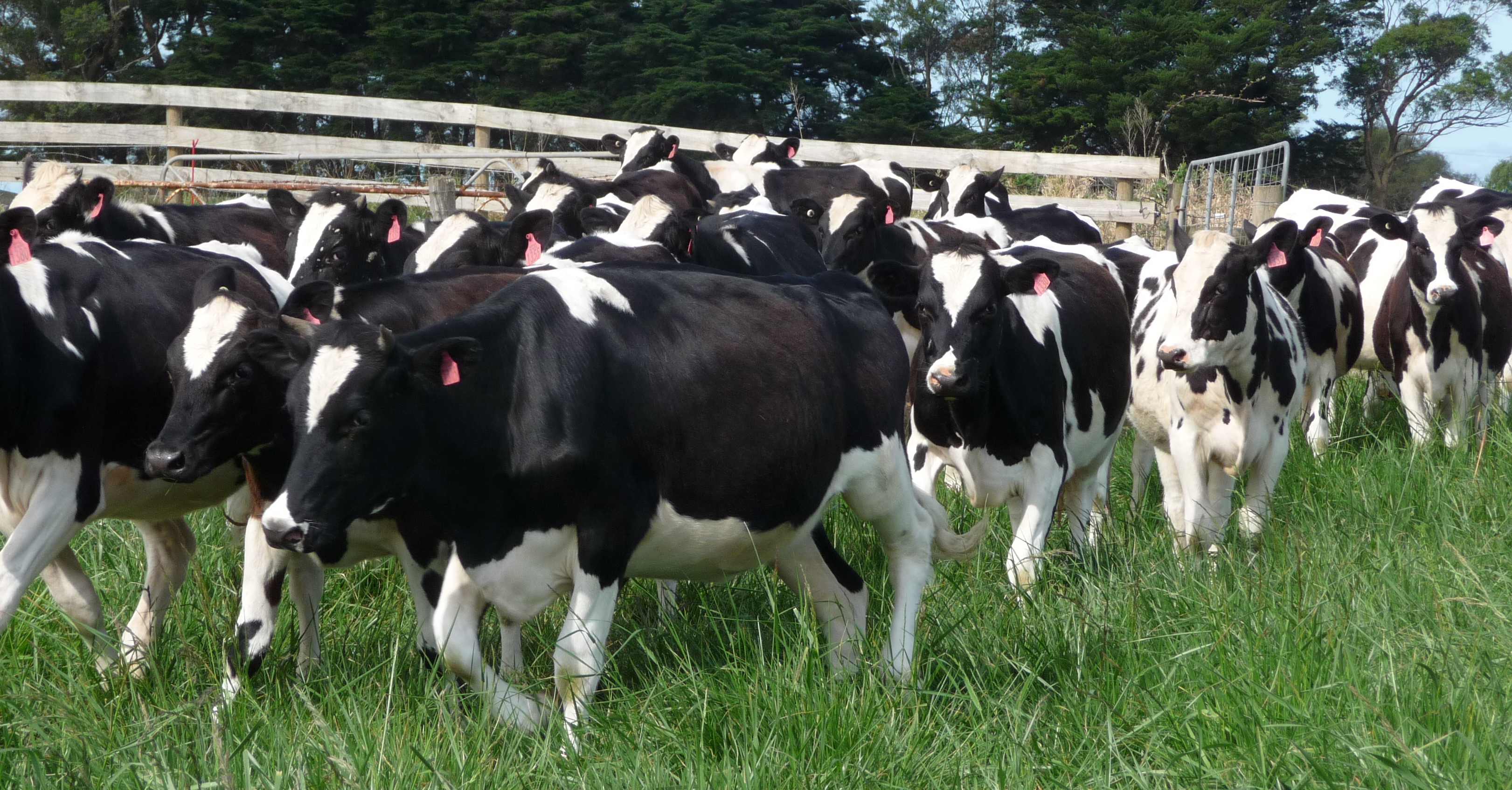
Feeding the cows who feed us

Gone are the days when dairy cows just ate grass. These days, there are people who get really geeky about feeding cows. Starch, protein, fat, fibre (only the right type, mind you) and energy levels can be perfected for optimal health and milk production.

This can really only be achieved when cows are fed a total mixed ration (TMR) and is more tricky when cows like ours are largely pasture-fed. Still, we can do better, so I was delighted when local DPI extension officer David Shambrook visited today to talk about what we’re feeding.

At the moment, the cows each eat just over 7kg of a rolled wheat, triticale, canola oil, limestone and salts mix during milking. The herd is also allocated about 2.9 hectares of fresh grass per day and fed two bales of top quality vetch hay (10.3 megajoules of energy and 22.8% crude protein for the benefit of farmer readers).

David had a look at the pasture they’ve left in the paddock, the pasture they’ll go to next, the milk production stats, the cows’ body condition score, whether they are chewing their cuds, their manure and rumen fill (indicated by how much a triangle of flesh bulges out). All these signs point to whether the cows are being well fed.

I have a gut feel (forgive the pun) for all of this but am determined to learn more about dairy cow nutrition. The combination of intellectual and physical challenges is one of the things I love most about dairy farming.

New part of the farm opens up

First grazing since the wet

The first time this paddock's been grazed since autumn

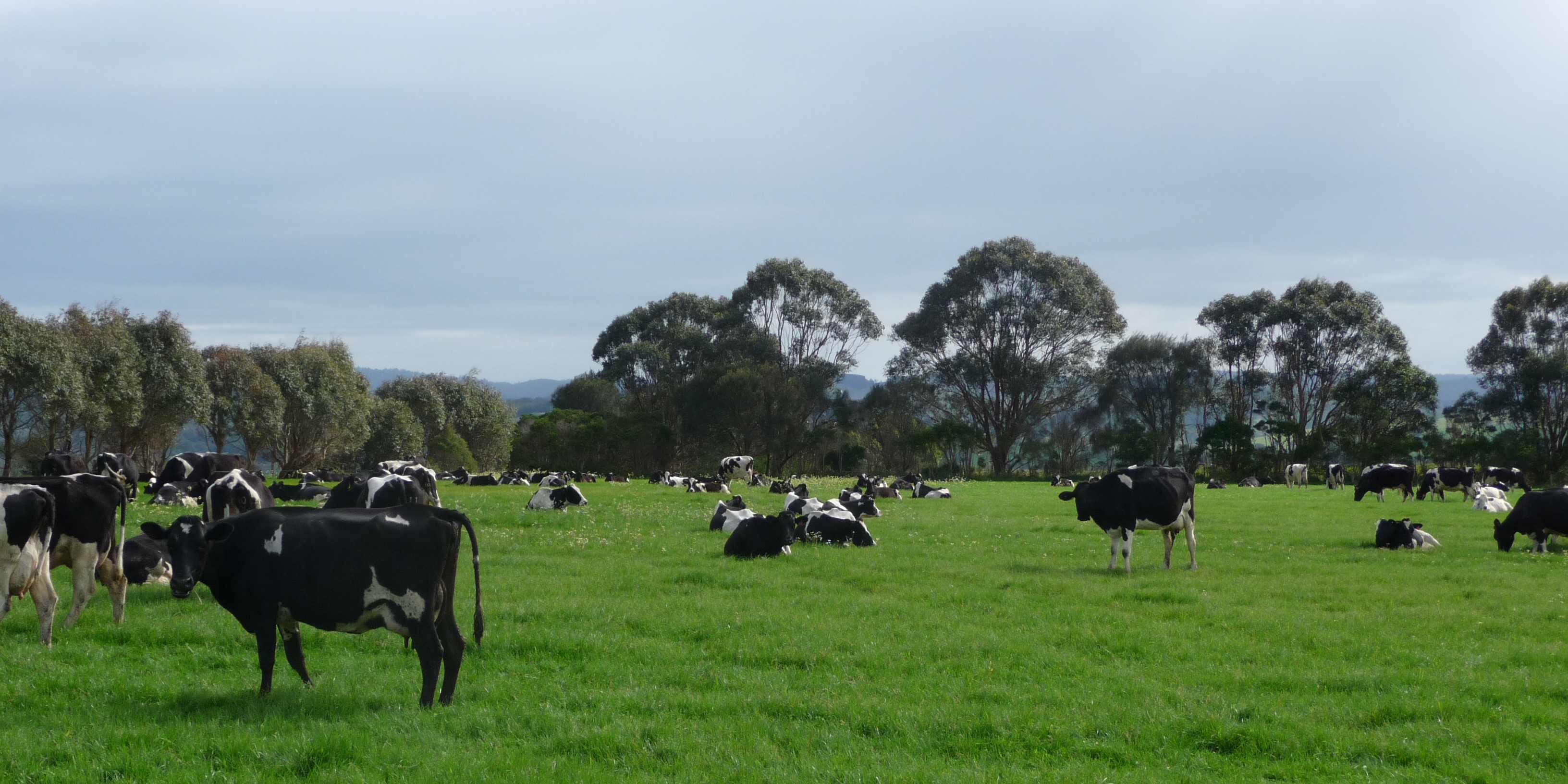
Here’s a view of the farm you haven’t seen before simply because it’s been too wet to get there until now! Spring has arrived and suddenly, there are four paddocks we can access that have been out of action since they were renovated in autumn. And don’t the cows love them! The pic above shows cows that have just left the dairy, while the ladies below have left the dairy, eaten their fill and decided it’s time for a snooze.

According to scientists quoted in The Weekly Times, rest time is really important for cows:

Promoting the idea that “cows should be cows”, Dr Burgi said on a daily basis a cow should spend five to five and a half hours eating, 12-14 hours lying down, two to three hours resting, standing or walking, half an hour drinking and two and a half to three and a half hours milking.

Cows resting in the paddock

Cows resting in the paddock after milking

Weaned calves acclimatise to new surroundings with maremma guardians

Weaned calves take in their new surroundings

Weaned calves take in their new surroundings

We’ve weaned a bunch of calves and they love their new surroundings by the forest. When I took this picture, they were still a little overwhelmed, walking quietly around the paddock.

At our farm, calves are weaned relatively late. The calf rearing experts say you can wean a calf as soon as she’s eating at least 1.5kg of grain or pellets per day but, in my view, it doesn’t hurt to offer them milk for a bit longer. Calves are the future of our dairy farm and we don’t skimp on their wellbeing.

We’ve chosen a paddock far from the dairy that offers shelter from cold weather and shade from the sun. Cows are kept off this pasture to minimise the risk of transmitting disease like Bovine Johnes Disease from one generation to another. Aside from buying in bulls to preserve genetic diversity, we have a closed herd and no history of the muscle-wasting BJD but it’s good practice to keep stock under 12 months old off pasture that’s been grazed by mature cows.

While the pic doesn’t show them, maremmas Charlie and Lola have been staying close to their charges and I’m hopeful the transition will extend their range.

Why we don’t want huge calves like this whopper

Huge calf

Big calves are a big risk

This calf was born yesterday and, sadly, survived only a few minutes, leaving his poor mother exhausted. Having sat her up, Wayne and Zoe are giving her a dose of sugars, calcium and mineral salts to give her a boost after her ordeal. Big calves tend to cause a lot of calving trouble and are also often stillborn. We’ve had a few this year, which I think is partly due to the wonderful condition of the cows.

We do actively try to keep the size of calves manageable in other ways. When we are selecting bulls for our herd, we look for those who have a record of easy calvings (though not too easy in case we end up breeding cows with hopelessly tiny pelvises) and those of medium stature. We don’t want to breed giants and internationally, Holsteins have been getting bigger and bigger.

As well as the calving ease, our desire for medium-sized cows is about fitness. Most of the semen originates from lines bred in America and Europe, where cows live in barns most of the time and walk very little while, here in Australia, our cows live out in the paddocks all year round.

I think they have better lives as a result but the downside (if you can call it that) is that they must be fit enough to walk from the paddock to the dairy and back twice a day. Massive bodies are hard on feet and legs.

Breech birth but cow hates hospital

Cow facing a breech birth

Cow facing a breech birth

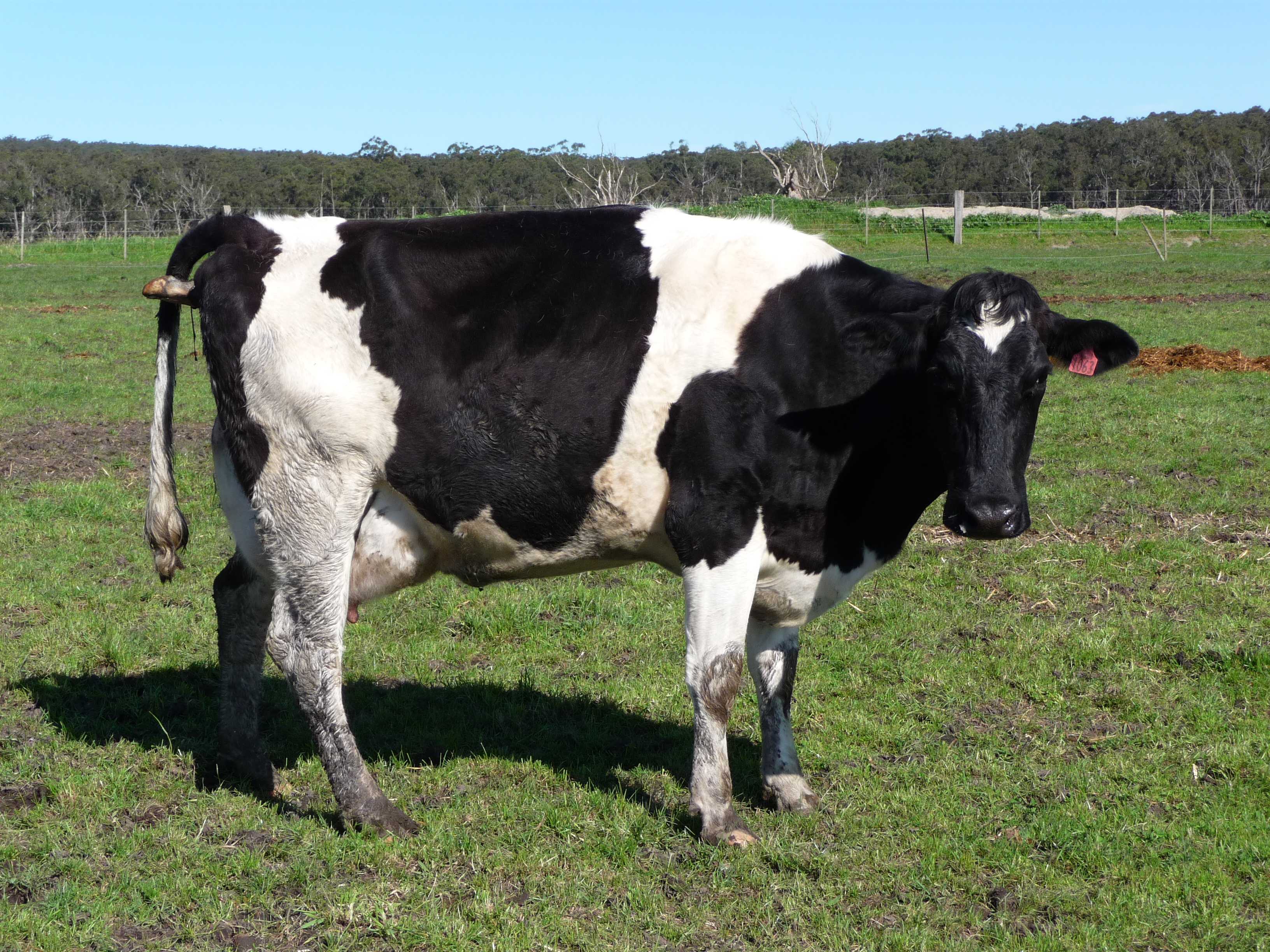
This cow led us on a merry dance. Zoe and I had spotted a single, dry hoof on its way out and up the wrong way – a sure sign of big calving trouble. Two front hoofs should appear to “dive” out of the cow, closely followed by a nose and it should all happen too quickly for the membranes to dry in the sun.

Despite her predicament (breech births are difficult and life threatening) and little Zoe’s sage advice, 1063 raced around the paddock like the Artful Dodger. She even paused defiantly for me to take her picture before we set off on another game of cat and mouse. Eventually, we got her into the yards and, 25 minutes later with a lot of help from Clarkie, 1063 gave birth to a stillborn bull calf. We were just glad she was okay.

As in humans, breech presentations are unpredictable and unpreventable. Most calving problems at our farm are caused by calves that are just too big. To minimise the likelihood of difficult calvings, we choose bulls with narrow shoulders and medium rather than large statures. We also mate our maiden heifers (cows who have never calved before) with Jersey bulls. Because this breed is significantly smaller than the Friesian cows we milk, the calves pose little risk for heifers.

Have we got your goat?

Lost goat

Goatie is extremely friendly so must be missed

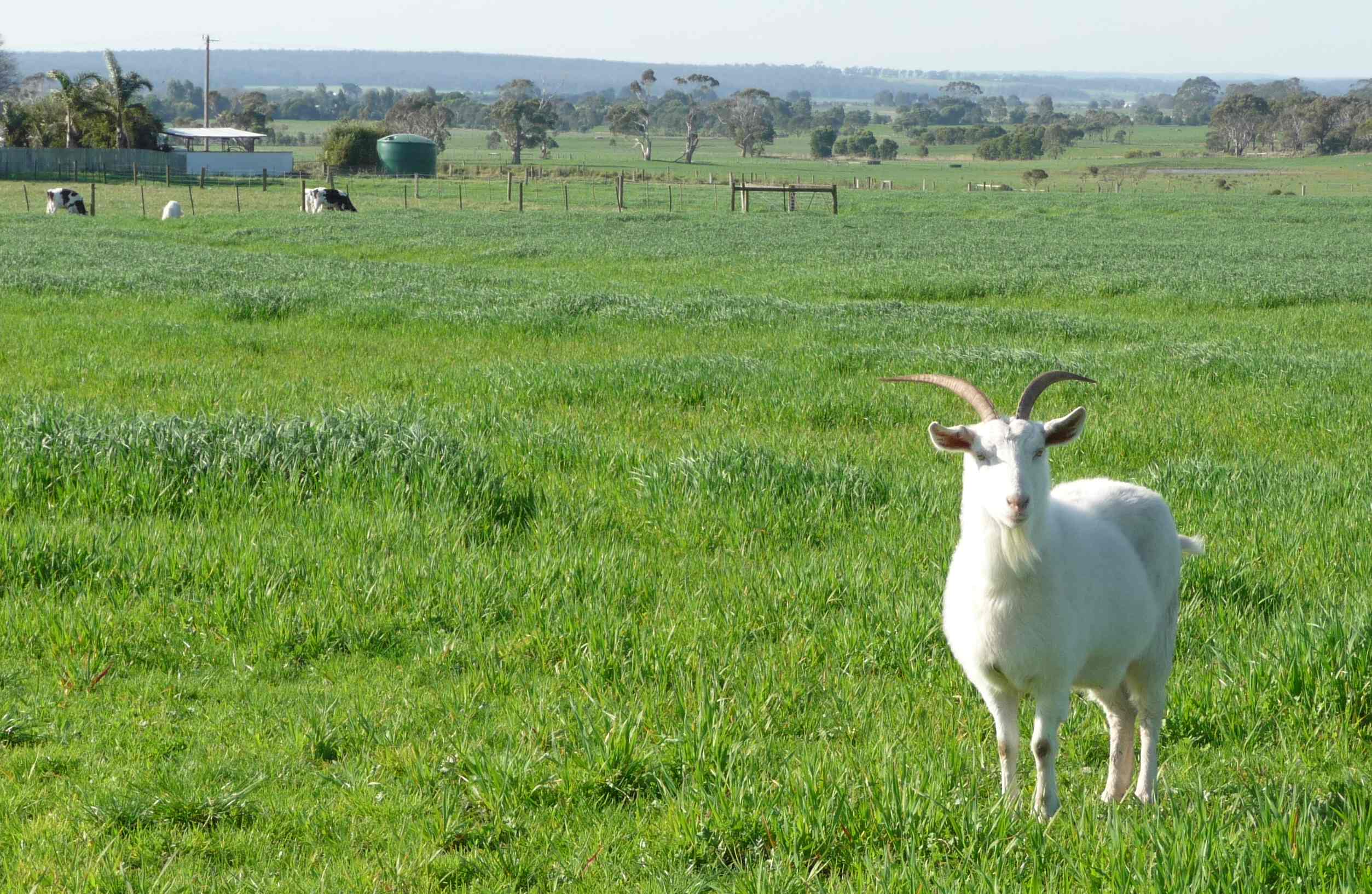
This delightful goat arrived yesterday and, after calls to the vet and a dozen families in an eight kilometre radius, we still haven’t found an owner. Goatie is so friendly we’re describing him/her (no, I haven’t looked) as the “labrador with horns”. We don’t want to call the pound but please get in touch if Goatie is your four-legged family member.

Cows have best friends too

Here’s fascinating research reported in the Daily Mail:  Cows have herd mates and the bonds can affect yields, according to UK researchers.

Krista McLennan, an animal welfare researcher at Northampton University measured heart rates and cortisol levels of cows to see how they cope when isolated, penned with their best friend or with an unfamiliar cow. “When heifers have their preferred partner with them, their heart rates are reduced compared with if they were with a random individual,” McLennan said. “Keep an eye out for those cows which like to keep their friends with them. It could have some real benefits, such as improving their milk yields and reducing stress.”

I’ve noticed this myself. Just the other day, the herd was walked past a paddock of two-year-olds and I watched one of them gallop up to sniff noses across the fence with two herd members. The amazing thing was that their ear tags revealed they were all born in the same year. What I’d assumed was a two-year-old turned out to be a three-year-old late-calver conveniently paddocked with the younger ones. Old friends were catching up!

Floods, bogs and mud, mud, mud

Flood 22 July

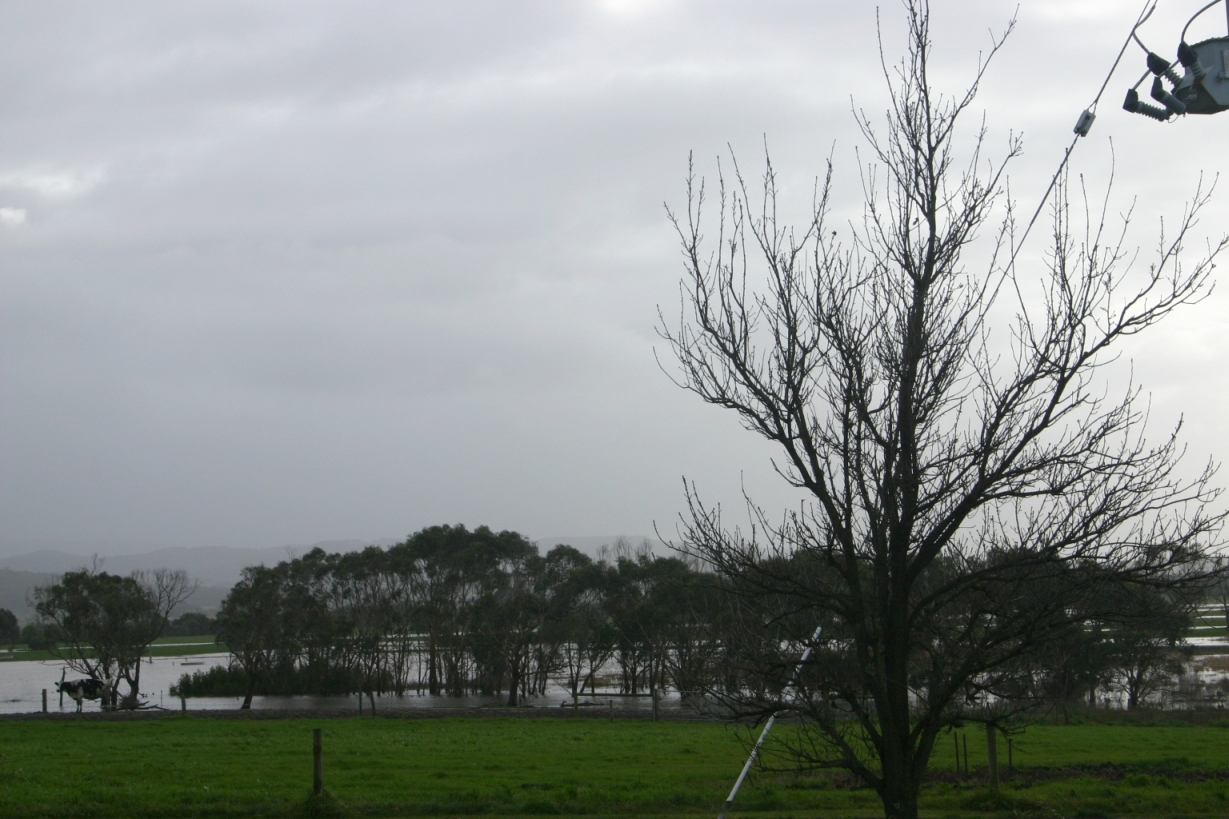
Partial view of the flood from the house this morning

The rain came…again. Yesterday, Yarram airport received 48.5mm and today, all the roads to town are closed, a third of the farm is cut off with at least another four paddocks underwater and the car is still sitting bogged in the driveway. Thankfully, the house is nice and high, so no sand bags needed (but thanks for the offer, Julie and Doug)!

Most of this is a temporary inconvenience. The good news is that the local rivers are short and empty into the sea quickly, so the roads should be open again in the next day or so. More important is the longer lasting issue of saturated pastures and muddy tracks.

Saturated pastures (they were already saturated before this jolly east coast low pressure system decided to pay us a visit) are very vulnerable. The damage done now by cows’ hooves will cause compaction of the soil so that, come summer, water will run off rather than soak in and roots will find it harder to penetrate the soil, exposing them to heat and denying them sub-surface moisture. If you’re a gardener, you’ll understand!

Muddy pastures and tracks are also a perfect recipe for lameness and mastitis, both painful conditions that are difficult and expensive to treat.

Of course, sopping wet soil is also no good for growing grass, which means we must step up our imported feed. This means more cost, long days and heavy tractors on fragile pastures.

Those weather gods need an urgent performance review so they can refocus on their KPIs!