You’re better off playing two-up than believing the weatherman

Grazing in March

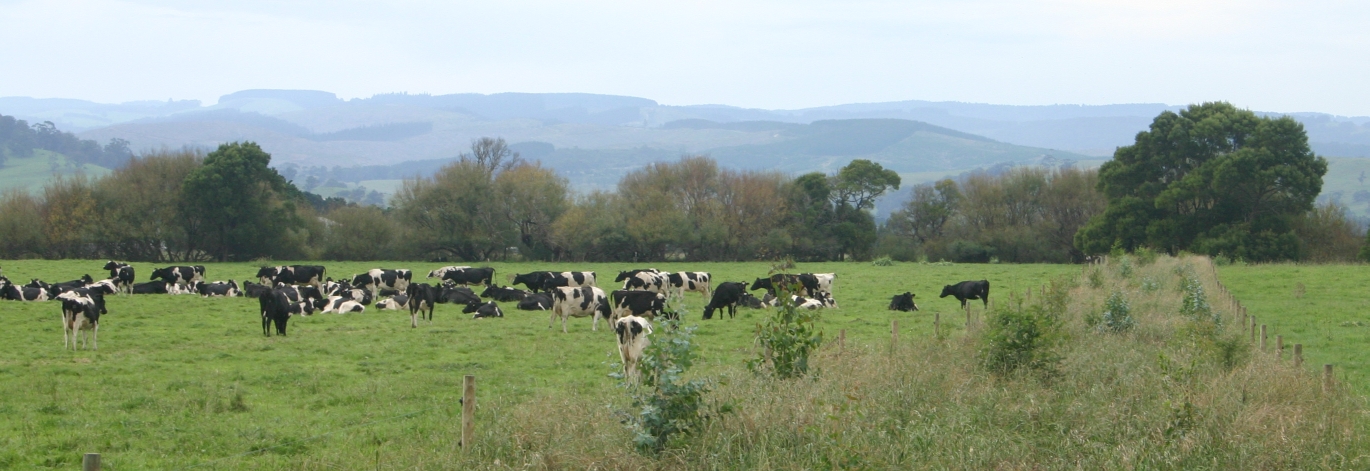
An amazingly good pasture for March


If you tossed a coin to issue the next three monthly outlook, you’d be more accurate than the weather gurus at the Bureau of Meteorology. I am not being cheeky either – it’s a fact reported by the Bureau itself.

The seasonal outlook below shows a relatively dry winter is expected in our part of Australia (a good thing).

National Rainfall Outlook

What we're supposed to be getting

But when you dig a little deeper, you find this matching map (not a good thing):

Seasonal Climate Outlook Assessment

The pink says "We get it wrong more often than we get it right"

We are in one of the pink zones. If I understand it correctly, this means the Bureau’s outlook is right 45-50% of the time. In other words, “If we say it’s going to be dry, it’s more likely to be wet”.

Don’t think I’m suggesting the weather forecasters are dummies. Absolutely not! Just as no dairy farmer would suggest she has a handle on all the natural systems that make a farm tick, weather is notoriously, ridiculously complex and difficult to predict. I take my hat off to those who get it kinda right most of the time.

What I don’t understand is that if the Bureau’s learned fellows are so honest as to say: “We think we have a 45% chance of getting this right”, why issue a forecast at all? Maybe they just love to use their colourful highlighters? 😉
I just found out about greenhouse gases on my dairy farm

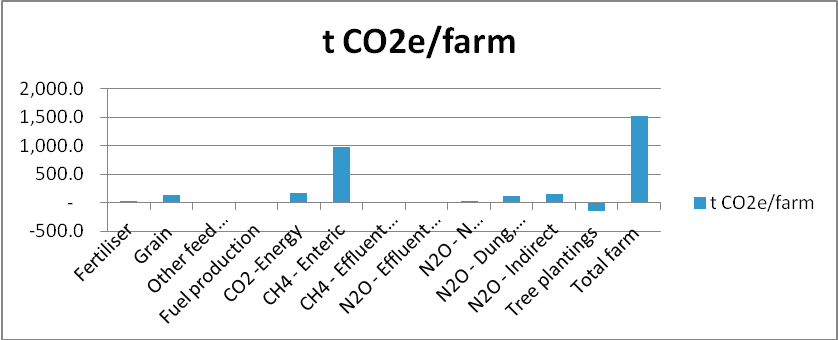
Well, that was an interesting exercise. Gillian Hayman took all our farm data and produced some colourful charts with the Dairy Greenhouse Gas Abatement Strategy calculator. Like most animal-centred farms, the vast majority of our emissions come from the methane burped up by the cows.

Source of farm greenhouse gas emissions

Where our greenhouse gases come from

In total, our farm produced 13.3T CO2e per tonne of milk solids in 2010/11 – quite a bit above the average 10.2T CO2e per tonnes of milk solids recorded by the DPI Farm Monitor Project of 2009/10. Why is it so? Ironically, it could well be because our cows eat so much grass rather than grain.

So, what should a dairy farmer do?
According to the authorities:

“Production improvement options and best management practices are most often linked to greenhouse gas emissions reduction. At present, well managed farms have few options to reduce emissions without significant changes to their farming or feeding system…A great deal of research is underway within the Australian dairy industry to decrease the release of methane and nitrous oxide from farming systems.”

In the meantime, we will keep planting trees and be judicious with our fertiliser use.

Rain post

Bah humbug! I am going to hang washing out on the line this morning, despite the Bureau’s flash flooding warnings because my diligent preparations for yesterday’s forecasted deluge seems to have put a hex on the arrival of the huge east coast low.

For a week now, the forecasters have been issuing dire alerts, urging us to get hay into sheds and move cattle to high ground. I duly grazed out the flats and arranged for the cows to go to the slopes, cranked the dam siphon into action for a day (flooding the swamp paddock in the process), brought in all the loose garden furniture and watched the radar.

A huge storm raged all day in Bass Strait but nothing arrived here. Even the easterly wind faded away to nothing and small puffy clouds arrived from the south-west. Disgusted, I finally drove up the dam wall to turn off the siphon. When I turned to see how much of a mess I’d made of the paddock in the siphon’s path, this is what I saw:

It had snuck up on me

It had snuck up on me

Wheeling around towards the south-east, I was astonished to see it even had its own “twister”!

Twister

The finger of doom?

Well, I reckon we’d be lucky to see 3mm in the gauge this morning.

The thinking behind this post is that the more public I go with my disbelief, the more likely the weather gods will shame me. So, please tell everyone you know that Milk Maid Marian says it’s not going to rain today. I dare you!

How much did you get?

“How much did you get?” will be the standard greeting in town for the next week or so.

What a downpour

Bikini weather

If not for Alex, I would have stripped off and run outside when the thunderstorm hit this afternoon. Until today, we’d been well settled into a very dry weather pattern typical of a traditional scorching summer. The grass was going backwards fast and the amount of milk we’ve been sending has been shrinking every week. My trusty forecasting website, Oz Forecast, had seen it coming for almost a week though and I was ready.

Feeling bold but a little nervous, I’d laid thousands of dollars on the line by having urea (a fertiliser that is 46% nitrogen) spread across a swathe of paddocks last Friday. Nitrogen is amazing stuff, more like water than fertiliser really: its effect lasts only a few weeks so you need continual top-ups but under the right conditions, it makes grass grow like nothing else.

It’s not cheap though and the wrong conditions can see it quite literally evaporate, or “volatilise”. A fact sheet by esteemed University of Melbourne scientist, Richard Eckard sums it up this way:

What is Volatilisation?
This occurs when urea fertiliser is converted to ammonia gas, a process which takes place in the first 48 hours after application. Conditions during that first 48 hours are critical to the amount of nitrogen lost.
How much is lost?
Trials conducted recently at Ellinbank showed losses to volatilisation are highest in February and are commonly around 14% on the nitrogen applied as urea. However, loss between May and November are substantially less, being between 3 and 6% of the nitrogen applied as urea. Other sources of nitrogen do not volatilise under our conditions, although on DAP would justify the price difference if only 14% is lost from urea.
How to minimise volatilisation losses?
1) Low wind speed: In one experiment a 14% loss was reduced to around 4% the next week where there was almost no wind. One strategy, adopted by some farmers, is to apply nitrogen a few days before grazing. This reduces wind speed at ground level almost zero due to the longer grass and any surplus ammonia gas produced is absorbed direct into the leaves of the pasture.
2) Lime application: In a similar experiment a loss of 12.5 % of nitrogen from urea was increased to 22.5 % by applying urea where 2.5 t/ha of lime had recently been applied. A simple solution where both urea and lime are required would be to apply the urea first, then apply the lime a week later.
3) Rainfall: In another experiment at Ellinbank rainfall was simulated in February by irrigating after applying urea. Urea volatilisation losses were only 4 % where 23 mm ‘rain’ was applied within 24 hours of the application of urea. Likewise with 9mm ‘rain’ losses were 7 % and with 3mm ‘rain’ losses were 14 %. However, applying urea the day after 23mm ‘rain’ resulted in a 21% loss!

Those nerves when I ordered the urea were justified. I would have lost a lot of nitrogen in those first 48 hours but I’d paid an extra $15 per tonne of “insurance” in the form of Green Urea. According to its manufacturer, Green Urea is “treated with the urease inhibitor, N-(n-butyl) thiophosphoric triamide (NBPT), to delay hydrolysis of urea into nitrogen forms that may be lost to the atmosphere”. In other words, we had seven days to get the weather right rather than 48 hours.

If the forecasters continue to excel and deliver the promised mild conditions over the next week, the grass will rocket away, pleasing the cows, the farmer and her banker no end!

As the grass grows golden everything changes again

Feed bails

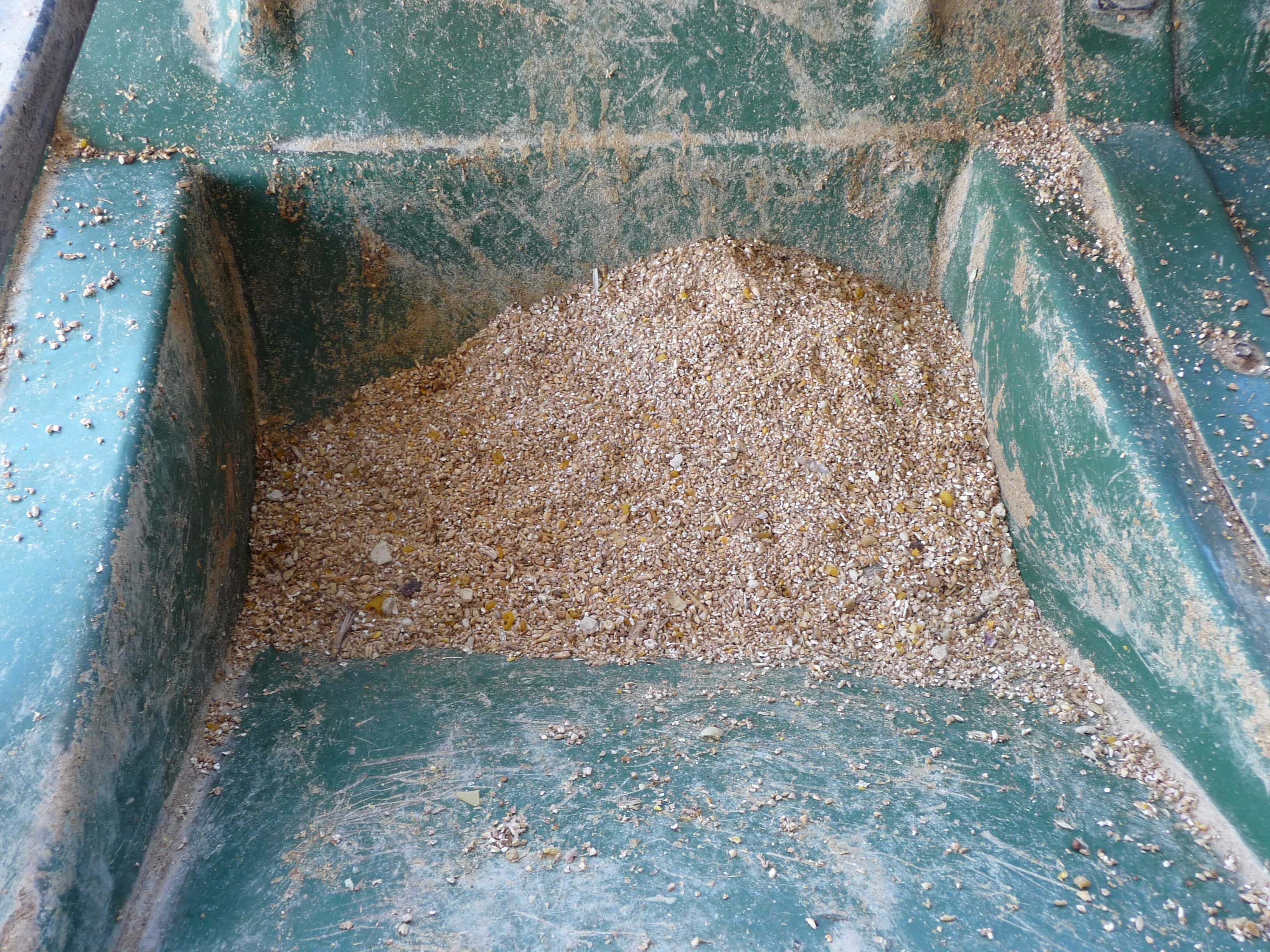
The new feed ration ready for tonight's diners


I shouldn’t admit this but I use the lawn as a bit of a guide to pasture growth rates. Our lawn is far from manicured and includes just about every grass species known to man. Of course, it’s not grazed either, so it’s really easy to see how it is performing. And, this week, we raised the mower’s cutter deck in an attempt to preserve its greenness.

That’s not to say I don’t watch the paddocks like a hawk. Out on the farm, we’ve been battling to prevent the grass from bolting to head, raising seed heads atop stalky stems that fill the cows with fibre rather than goodness. The seed heads also signal senescence – a type of hibernation for grass – dramatically reducing growth rates.

It means that rather than being able to graze a paddock, say, every 21 days, we must rest it for up to 60 days when summer really kicks in. To manage this, we strip graze the paddocks so the cows get a much smaller yet still fresh portion each day. With less grass on offer, we must make up the daily ration with supplementary feed. I have some gorgeous vetch hay waiting in the shed and there’s all that silage we baled just a few weeks ago.

My first step though is to lift the amount of grain we’re feeding to balance out the increasing fibre in the grass. Just a 1kg boost – easy enough to turn up the dial but, oh, what a performance it turned out to be!

The feed system is governed by a timer rather than a checkweigher, so we have to guess how much extra time to dial up, scoop samples into buckets, weigh and review if necessary but the scale’s batteries were flat. Determined to get it right though, I dumped a 1 litre juice bottle on top of a bucket of the current ration and, with Clarkie’s help, set up a rudimentary scale with a scrap metal rod suspended from a roof truss with hay band. It wasn’t glamorous but it worked a treat!

All I want for Christmas now is a yard hydrant wash system, an underpass and a pasture meter like Graeme’s.

Our cows are so cool

Our cows are dignified ladies who like to keep their cool in more ways than one. Bred in cooler climes than Australia, Holstein Friesians start to feel the heat once the mercury climbs over 25 degrees Celsius.

We’ve been really busy preparing the farm to help them deal with hot summer days:

  • planting thousands of trees for shade

    New plantation for shade and wildlife

    New plantations will provide shade for the cows and corridors for wildlife

  • installing 4 kilometres of large capacity water pipes and 17 massive water troughs. Milking cows can drink up to 250 litres each on a hot day or 20 litres in a minute!

    Water trough

    Installing water troughs has been a 3 year project

  • putting up sprinklers in the dairy yard to offer a cool shower while they wait to be milked and

    Yard sprinkler

    A shower cools the cows, the concrete underfoot and offers relief from flies

  • adding salt, minerals and zinc to their diets.

    Feed in the bail

    Zinc is added to the cows' feed during summer

I also select the paddock for the day with a keen eye on the forecast. Today is pretty uncomfortable, so they’ve been sent to a paddock ringed with trees and will graze a more open paddock tonight.

Cool cows are happy, healthy cows who make more milk, suffer fewer illnesses, carry pregnancies better and are nicer to work alongside! Dairy research body, Dairy Australia, has done lots of work on heat stress in dairy cows and you can access lots of useful info at the Cool Cows website.


Farming with a baby in the summer sun

Keeping a baby safe, cool and protected from the sun while doing farm work is something of a challenge. And we all know how farmers rise to a challenge, equipped with hay band, tape and either WD40 or silicone!

In my case, it was half a dozen paper lunch bags taped onto the top of the baby carrier to form a “verandah” of sorts that got the fashionistas talking. I’ve since moved on and think I have achieved perfection.

Peeping out of a baby carrier

Peeping out

Some of Wayne’s old XXL cotton shirts have been seconded for a noble mission and you can see the result in the pic above. I just put one of these oversize shirts on over my singlet and the carrier and do up the bottom few buttons. Little man can be nudie rudie under the shirt and safe from the stinging sun.

Sun protection is equally as important for Zoe, who has just got a new hat and sunnies for summer (yes, I know it’s not strictly summer quite yet but it sure feels like it!).

Zoe in new farm hat and sunnies

Slip, slop, slap and splash with the yard hose makes for a cool farm girl

Gotta be quick to respond as Spring springs

Spring has pounced…at last and with a flourish!

Each week, I monitor the growth rate of our grass and by golly it’s shot away in seven days. This means we can offer the cows a larger slice of each paddock per day, knowing that we won’t run out of grass or punish the pastures. We treat our little ryegrass plants with TLC, you see.

To explain why, I’ll need to tell you a little bit about the ryegrass plant (only a speed-date style of introduction because I know you’re probably not as excited about watching grass grow as I am).

In most cases, rye grass only ever grows three leaves per plant before the oldest leaf dies off. It’s at its best when it has 2.5 to 3 leaves, which is also when it grows fastest because it has the most “solar panels” to generate sugar and sustain itself.

The grass draws on sugar reserves stored in its stem to produce the first leaf, the second is self-sufficient and the third offers about 50% more herbage than the first two combined.

If you let the cows chew the grass down too hard or bring them back when it’s just used up its sugar reserve to get the first leaf out, you do enormous damage to the plant. It may not recover and will certainly take a long time to get up and running again.

Because Australian milk is sold at such low prices, we have to be super efficient and that means grazing the pasture at its most productive rather than relying on lots of expensive grain. A DPI expert once told me that what farmers do in the 12 weeks of Spring dictates how profitable we are for the whole year, so I am extra vigilant at the moment.

With the warmer, drier weather of the last week, we’ve seen growth rates soar. Rather than taking about 14 days to emerge, the first leaf is out in seven or eight. I’ve asked Wayne to reduce the amount of grain we’re feeding the cows (just by half a kilo every four days so we don’t upset the bacteria in their finely tuned digestive systems) and I’ll ring the silage contractor tomorrow to give him the heads-up.

That same DPI guy also told me that it doesn’t cost anything to be on time but being late in farming could cost a year’s profit. I’d better get out there!

I’m not afraid of La Nina

So, she’s on her way back, is she? La Nina wreaked havoc across Australia last season and forecasts predicting her return this summer have hit the headlines. But I’m not scared of her. In my region, La Nina is no grand dame.

In fact, the Bureau of Meteorology’s analysis of 12 La Nina years shows average rainfall in our region of south-east Victoria.

I had no idea this was the case until I subscribed to the fascinating and very informative Victorian DPI program, Milking the Weather. A more realistic seasonal outlook means we need to look at a whole series of climate drivers that Milking the Weather nicknames “Climate Dogs”. In their September newsletter, the DPI’s Bree Walsh and Zita Ritchie say:

“It is easy to look to the sky, irrigation dams and soil moisture levels and think the good old days of plenty of rain have returned. However, based on history an average outlook could mean rainfall could go either way, as rainfall events rely on a good moisture feed from the Pacific and/or Indian oceans.”

With this in mind, the smart money is not on building an ark or buying in vast quantities of fodder just yet. As Bree and Zita conclude:

“In summary, 2011 looks unlikely to mimic 2010, taking into account the current climatic indicators and model predictions. When comparing the seasonal outlook from year to year, it is important to keep risk in the back of you mind. Many factors affect our weather, with each region having their own specific risks which need to be considered in the context of the broader model forecasts. Managing climatic risk is complex, one of the hardest management decisions is around how all of these outlooks come together and affect your farm.”