Calving slows, now, when to take the bulls out?

Over the past week, only half a dozen cows have calved. The next decision will be when to take the bulls out of the herd.

Traditionally, our herd begins to calve in mid-July but we’re in transition towards a new start date. Because the winters seem to be warmer and the springs shorter here, we began to mate the cows last July for an April 20 start to calving (like people, cows have a nine-month gestation period).

This is designed to match the cows’ peak production of milk with the peak growth of grass and reduce the need to maintain high energy levels over summer, which is a tough time to keep fodder up to the cows on a rain-fed rather than an irrigated farm.

So, when to stop? Some farmers arrange mating dates to have a couple of batches of calves throughout the year, relatively few calve all year round and most aim for seasonal calving over a period of eight to 12 weeks. These days, it’s becoming increasingly hard to get all the cows in calf each year and not all cows need to be pregnant annually to produce well. Extended lactation, as it’s called, is now very common for a portion of dairy herds and, according to the gurus like Greg O’Brien at the Department of Primary Industries, could be quite viable.

Since I want to shift our start date and rapidly shorten the calving season from our current transitory (and excruciating) six months, I’m inclined to be reassured by Greg’s advice and pull the bulls out earlier rather than later. Last year, it was New Year’s Day, this year, I’m considering mid-November. It’ll be mostly the late calvers who miss out under this regime and because we’ll be mating again in July, extended lactation is even less of an issue – it’s not a two-year lactation, anyhow.

In the next couple of weeks, we’ll arrange a pregnancy test for the cows who either calved early this year or didn’t calve at all. The vets are confident of due dates when pregnancies are at least eight weeks.

Wish me luck!

Toad rush is more fallout from the wet

Toad rush

Toad rush has overwhelmed this paddock, lending it a yellow hue

Some of our paddocks have been so saturated for so long that the newly sown perennial pastures have been overwhelmed by toad rush.

Toad Rush is a weed described by the RIRDC in this cheerful way:

“Toad rush tends to thrive where soils are waterlogged and poorly drained. Although toad rush is a small, shallow rooted plant, it germinates in extremely high numbers and the seed is viable in the soil for over 10 years. Toad rush can use over 30% of the available nitrogen in the topsoil and can substantially reduce crop yields.”

Not happy. I’ll have to wait until the paddocks firm up enough to spray it out and then look at these options:

  1. Resow with more perennial seed in spring and hope the summer is mild enough for it to establish itself (expensive and too risky)
  2. Sow a brassica crop like turnips or rape (sick of ravenous caterpillars)
  3. Sow a summer crop like sorghum or millet (poor quality feed/not reliable)
  4. Sow an Italian ryegrass (Lolium multiflorum)

Looks like the Italians are the way to go. A spring sowing should yield some silage and because it’s after the frosts are over, the grass should stay lush if there’s summer rain rather than bolting to head.

Getting ready for another downpour (will it flood again?)

Signs of the flood on gates

The hallmarks of the last flood remain while we prepare for the next one

We’ve been flat chat the last couple of days, preparing for the rain forecast for tonight and this week: another couple of inches, although the expected totals seem to be changing every few hours. I suspect this means it could be anything!

Fresh sawdust has been added to the calf shed while it’s dry. We’ve been grazing the most low-lying and distant pastures first, while setting up temporary fences on the higher ground. Repairs to the fences on the river flat have been called to a halt for now. Extra silage has been delivered while it’s accessible.

In fact, any outdoor job that could be done is being done. Now we can only cross our fingers.


Floods, bogs and mud, mud, mud

Flood 22 July

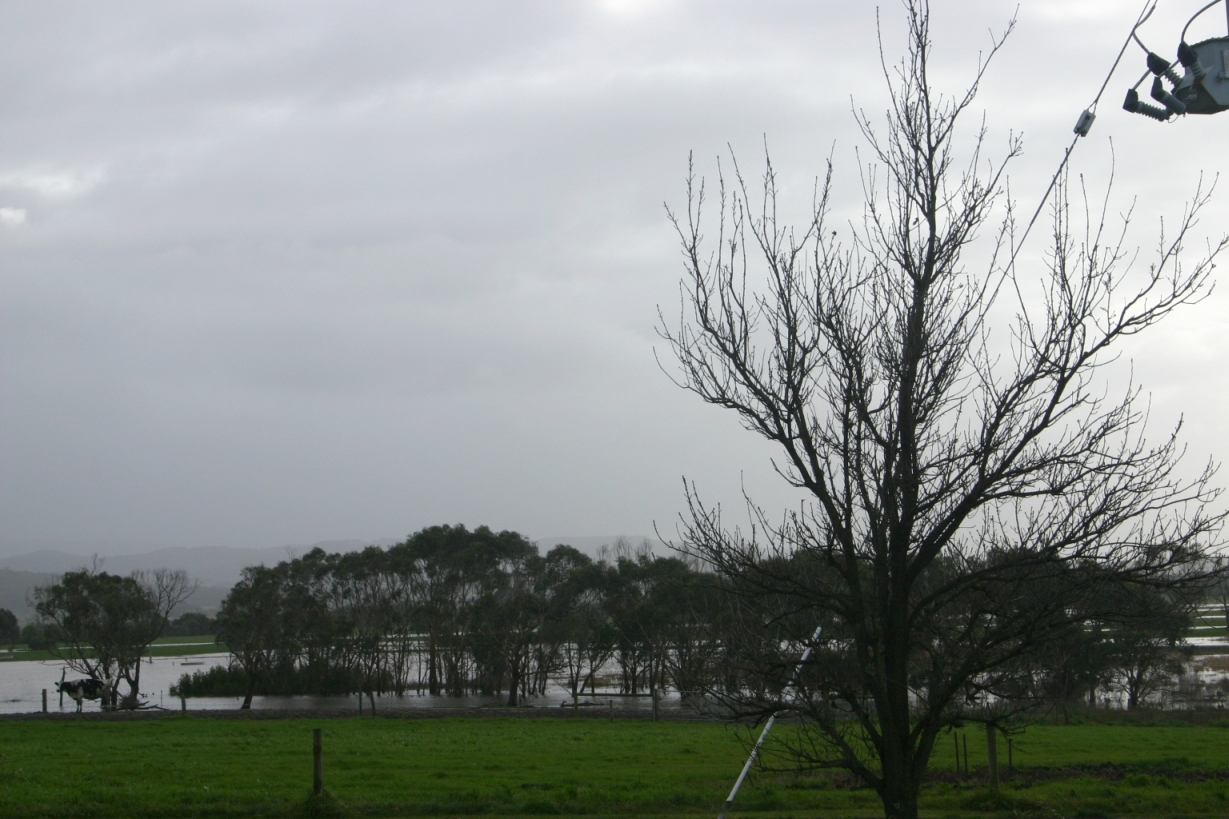
Partial view of the flood from the house this morning

The rain came…again. Yesterday, Yarram airport received 48.5mm and today, all the roads to town are closed, a third of the farm is cut off with at least another four paddocks underwater and the car is still sitting bogged in the driveway. Thankfully, the house is nice and high, so no sand bags needed (but thanks for the offer, Julie and Doug)!

Most of this is a temporary inconvenience. The good news is that the local rivers are short and empty into the sea quickly, so the roads should be open again in the next day or so. More important is the longer lasting issue of saturated pastures and muddy tracks.

Saturated pastures (they were already saturated before this jolly east coast low pressure system decided to pay us a visit) are very vulnerable. The damage done now by cows’ hooves will cause compaction of the soil so that, come summer, water will run off rather than soak in and roots will find it harder to penetrate the soil, exposing them to heat and denying them sub-surface moisture. If you’re a gardener, you’ll understand!

Muddy pastures and tracks are also a perfect recipe for lameness and mastitis, both painful conditions that are difficult and expensive to treat.

Of course, sopping wet soil is also no good for growing grass, which means we must step up our imported feed. This means more cost, long days and heavy tractors on fragile pastures.

Those weather gods need an urgent performance review so they can refocus on their KPIs!

At least there aren’t white caps in paddock 17 today

Flooded paddock 17

Flooded paddock 17

Paddock 17 and part of 18 are underwater today but at least there are no white caps. White caps? Yes, the ones sailors dread on an angry sea were whipped up in paddock 17 a week ago. The waters have barely subsided since then and all of the three forecast models I follow on OzForecast.com.au are predicting lots more rain in the next few days.

I’m a weather geek at the best of times but now I’m now compulsive about checking the forecast. Almost all our ready-to-graze pastures are on the river flats across the gully, which is infamous for flash flooding. A big downpour on the range to our south would see the cows marooned. There’s no bridge – only a concrete fjord – and I reckon building one would certainly usher in a drought!

Seriously though, I know many dairy farmers are facing much tougher times than we are with this amazingly wet season. Good luck to those still struggling with floods. Our thoughts are with you.

Timing makes good suppliers golden

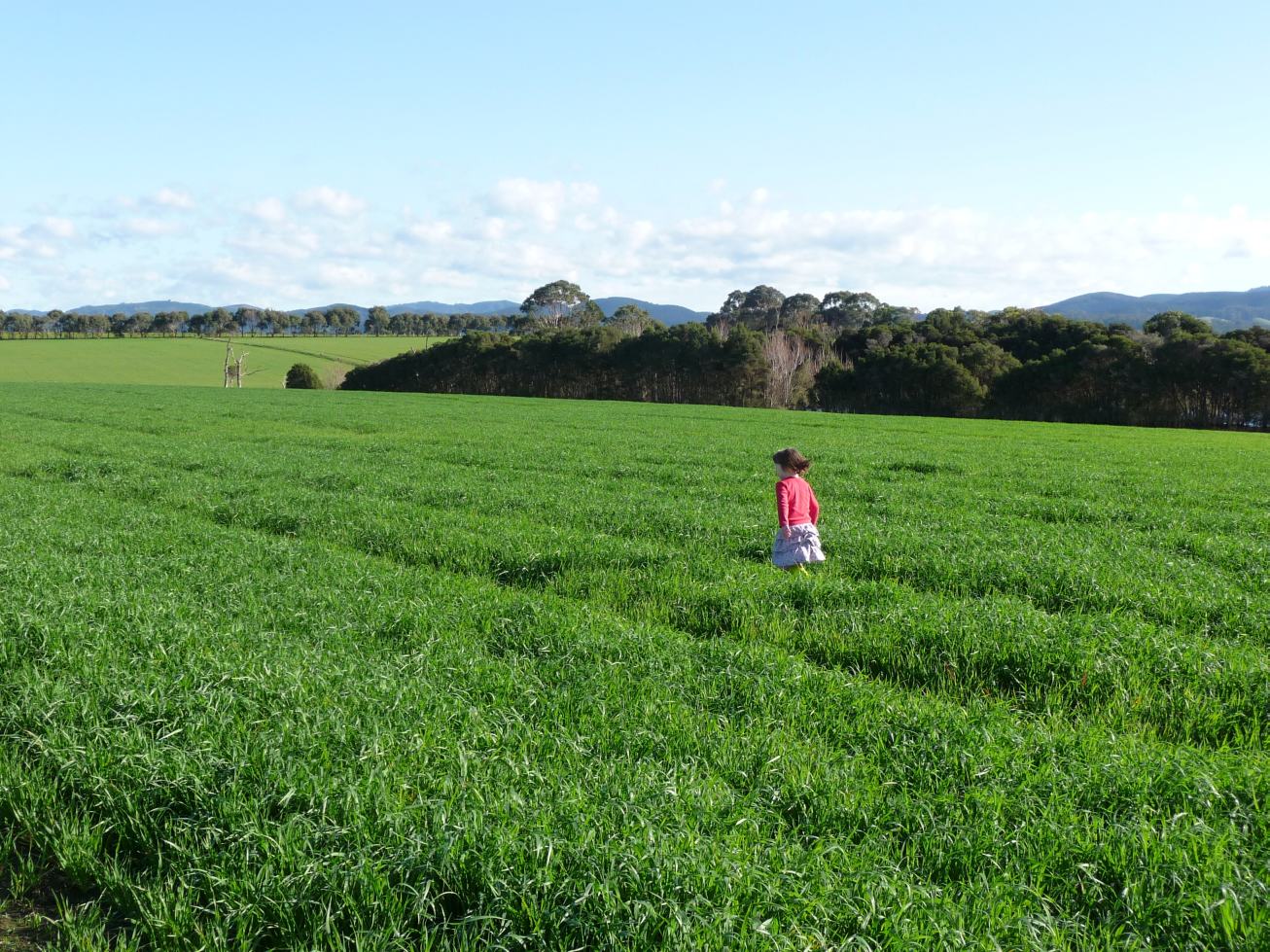
Healthy oats where it's not too wet

Healthy oats where it's not too wet

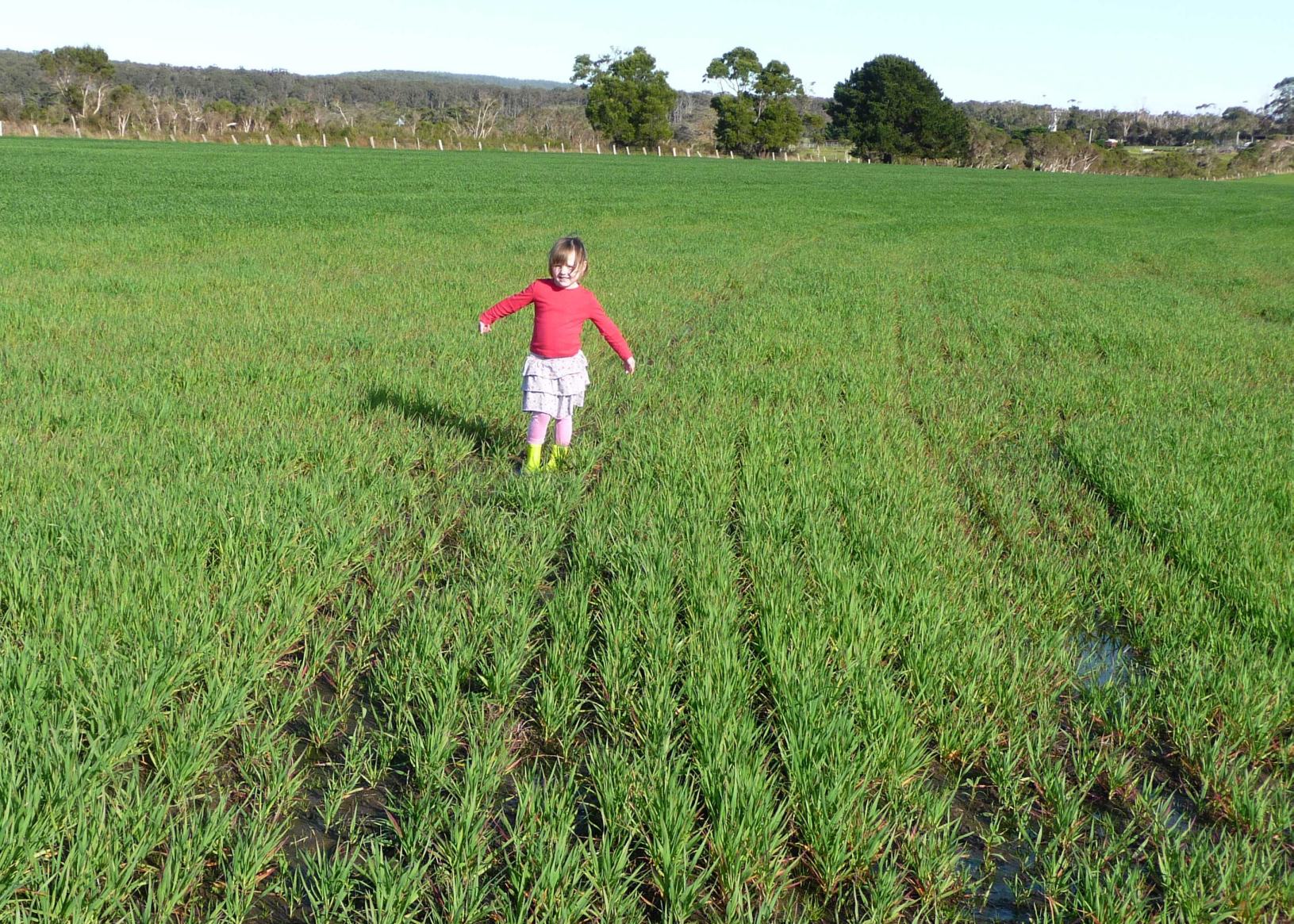
Too much water has stunted these oats

Too much water has stunted these oats

On Monday, I realised a fantastic opportunity was about to pass me by. For months now, most of our newly sown pastures have sulkily refused to grow in their sodden paddocks. The wet interferes with their ability to take up nutrients from the soil and also prevents me getting fertiliser on. Each of the massive fert trucks weighs 8000kg unloaded! Not pretty if they get bogged.

All the same, I decided to take a walk and survey the scene up close. I was astonished to find three of the paddocks were just trafficable but, with 25 to 30mm of rain forecast over the next few days starting in the next few hours, they wouldn’t be for long. A quick call to fertiliser supplier Robert had the urea and potash on in two hours.

Timing is everything in farming because we’re at the mercy of the very temperamental Mother Nature. That’s why we rely so heavily on the responsiveness of our suppliers; from the people who plant the seed just in time for a break in the weather (thanks Wayne) to the vets who rush to the aid of our cows in an emergency.

Thanks guys – you are appreciated.

Farming and the carbon tax

Cow wearing a monitor to detect methane gas production

Cow wearing a monitor to detect methane gas production - pic by DPI Victoria

Donald Rumsfeld could have been talking about the impact of the carbon tax on farming and agriculture when he infamously said:

“Reports that say that something hasn’t happened are always interesting to me, because as we know, there are known knowns; there are things we know we know. We also know there are known unknowns; that is to say we know there are some things we do not know. But there are also unknown unknowns — the ones we don’t know we don’t know.”

The politics of carbon are still in full swing and it’s too early to say for sure how we will be affected but there are some things we do know:

1. Agriculture is the second biggest source of Australia’s greenhouse gas emissions – just ahead of transport

2. Much of current best-practice farming minimises emissions

In a recent study (see link at point 2 above), Department of Primary Industry researchers say:

“We calculate, therefore, that in 1980 an Australian dairy cow emitted approximately 33 gm of methane for each litre of milk produced. But, in 2010, because of better feeding practices, genetic improvements, higher per cow milk production, and efficiency improvements adopted by the Australian dairy industry, this number has fallen to approximately 24 gm of methane per litre of milk produced.”

Great news! We are doing well, you say? The only problem is that until science provides us with some more tools, we cannot achieve a lot more. As the researchers go on to say:

“As a greenhouse gas, methane is about 25 times more powerful than carbon dioxide and methane emissions from cows constitute about 65 per cent of the total dairy farm greenhouse gas emissions.”

Meanwhile, as Neil Lane of the Carbon Ready Dairy Demonstration Project notes:

“Highly digestible feed and cereal supplements, along with products like Rumensin, are the best way to minimise emissions at the moment. Many dairy farmers are already doing this.”

This may be why agriculture has been excluded from the carbon tax, although our inputs, like fertiliser and fuel will not be exempt. On the other hand, the much-touted Carbon Farming Inititiative seems equally as impotent to this dairy farmer.

Reforestation and revegetation isn’t really an option because each planting needs to be at least 2ha and 10 metres wide. Soil sequestration sounds wonderful but the fact is that the rich fertile soils of dairy farms are generally already high in carbon content. The other options of reduced fertiliser emissions and effluent management are already being practised on our farm and, as I understand it, would therefore be ineligible under the CFI.

Will be interesting to see how it all pans out and I would love to hear from anyone who sees lots of emerging opportunities for dairy farmers to actively participate in the carbon economy.

The whingeing farmer

Farmers are infamous for never being happy with the weather. For years, we’ve been battling awful conditions – unreliable or non-existent autumn breaks, short springs and searing summers. The one blessing has been warmer and therefore more productive than normal winters.

This year, though, has been one out of the box. The landscape remained a verdant green right through summer and, with a precious bank of water in the soil, I took the opportunity to convert plenty of pastures from annual to perennials and when the “whole hog”, fully cultivating beautiful seed beds.

My gamble may still pay off but right now, the strategy has come back to bite me. The sun refuses to shine, the rain continues and that bank of soil moisture has been continually topped up to the point that very little of the new pasture is trafficable at a time when it desperately needs fertiliser and a trim. We may not be able to let the cows into some paddocks until spring.

So, as I type this post on a cold, wet, sunless day, I’m afraid I live up to the stereotype of the whinger. I have a good excuse but no good reason –  exposed to commodity price cycles, currency fluctuations, all the normal business hazards and mother nature herself, farming is innately a risky business but still we choose it as a way of life. After all, an affinity with mother nature is what binds us to it.

Why bother being green?

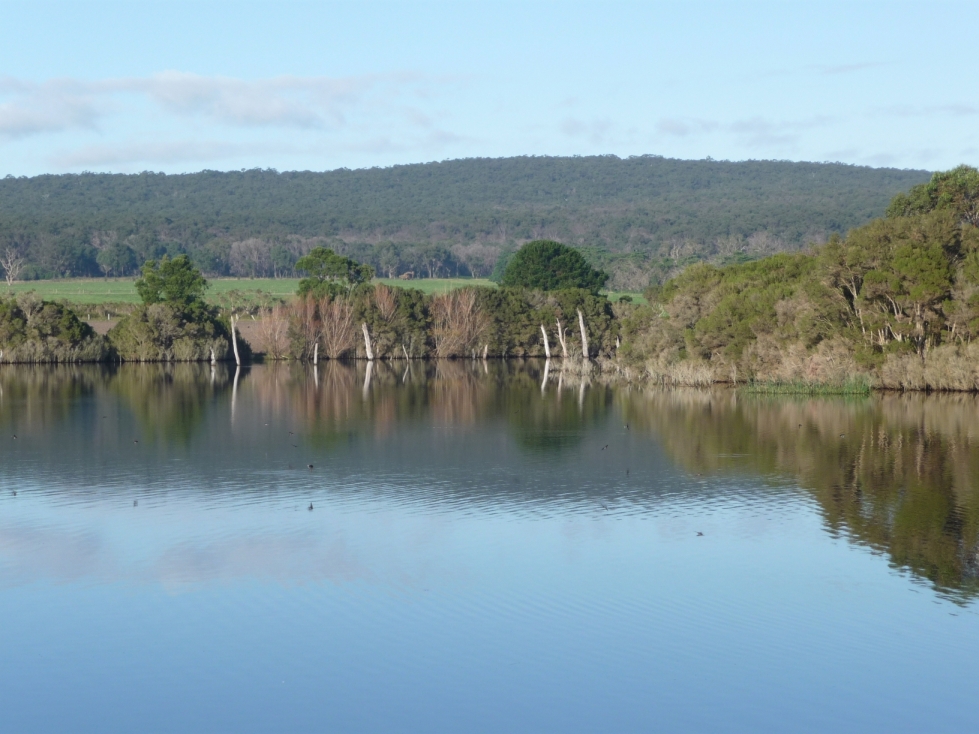
Land for Wildlife dam

Our Land for Wildlife dam

Our farm dam is a real jewel. Flanked by trees planted almost 30 years ago, it’s a beautiful 8 acre stretch of water that hosts an enormous range of bird species. The farm is only about 10km from the coast and the internationally significant Corner Inlet Ramsar site, so our dam hosts both inland and sea bird life – it’s not unusual to see cygnets gliding across the ripples behind their parents while pelicans roost above them. Dad had the foresight to register the dam under the Land for Wildlife program back in the ’80s to help protect the birds.

The dam sits at the heart of the farm, which is bounded by native state forest to the south and the Albert River to its north. The farm also incorporates 27 acres of remnant forest, a wetland and revegetated gully. We’re planting more trees every year.

Why? First of all, because of the much denigrated “warm and fuzzy feeling” that giving something back to nature brings. It’s not all about economics when it comes to the place you love! Second, because I firmly believe trees add to the sustainability not just of the planet but of our small patch, creating micro-climates that will protect people, animals and pastures as we endure increasingly more variable weather patterns.

Unfortunately, it’s really expensive to plant trees – allow $7 per metre for fencing, then spray for weeds, $1.10 per tree in a tube, plus the hard yakka involved with getting them in the ground – and you’re up for thousands of dollars in the blink of an eye. That’s nothing to complain about but it does limit the amount we can plant each year.

Fortunately, we can sometimes get grants for extra plantings and some volunteer groups make the plantings physically possible. These people, like the Victorian Mobile Landcare Group should be nominated for sainthood. Last October they came to help us plant 800 trees and are volunteering to help us again this year. Not everybody walks the talk like they do!