Australian dairy: does it matter if it’s sold to China?

Worth saving?

Worth saving?

Does Australian milk matter? We have to decide.

It seems two of Australia’s milk processors, United Dairy Power and Warrnambool Cheese and Butter, are about to be sold to China. Firms backed by the Chinese government are having unofficial talks that would put the price of WCB at a staggering $10 per share.  Meanwhile, the ruthless but charming Canadians continue to acquire a bigger stake of WCB.

Here, close to home, another Chinese firm has already purchased a formerly decommissioned factory and is repackaging milk powder to send back to China. (It’s been a debacle, with outraged and distraught workers regularly featured in the local papers desperate to be paid.)

It’s not limited to the dairy processing sector, either. The Chinese have been buying up our breeding stock for years and now, they want our farms, as Brett Cole reports in the Business Spectator:

“For more than a year, China Investment Corporation has contemplated acquiring Van Diemen’s Land Co, which owns and operates 25 dairy farms with 30,000 dairy stock. Other Chinese companies have moved decisively amid concerns about their nation’s safety standards.”

All this while our Australian farmer co-op, currently the highest bidder for WCB, languishes in the competition tribunal as it ponders – for months – whether we are allowed to bid at all.

Do you care? If you’re a dairy farmer, hell yes, you should. No foreign company cares about your future like you do or your co-op does. Perhaps worse still, once these assets are sold, the fragmentation and inefficiency of our processing sector is locked in, forever limiting the price farmers are paid for our milk.

If you’re not a farmer but an Aussie, there’s an awful lot to be lost. These international companies and governments so keen to pay more than twice the value of WCB are not irrational. They want control of their food. Does that matter to you?

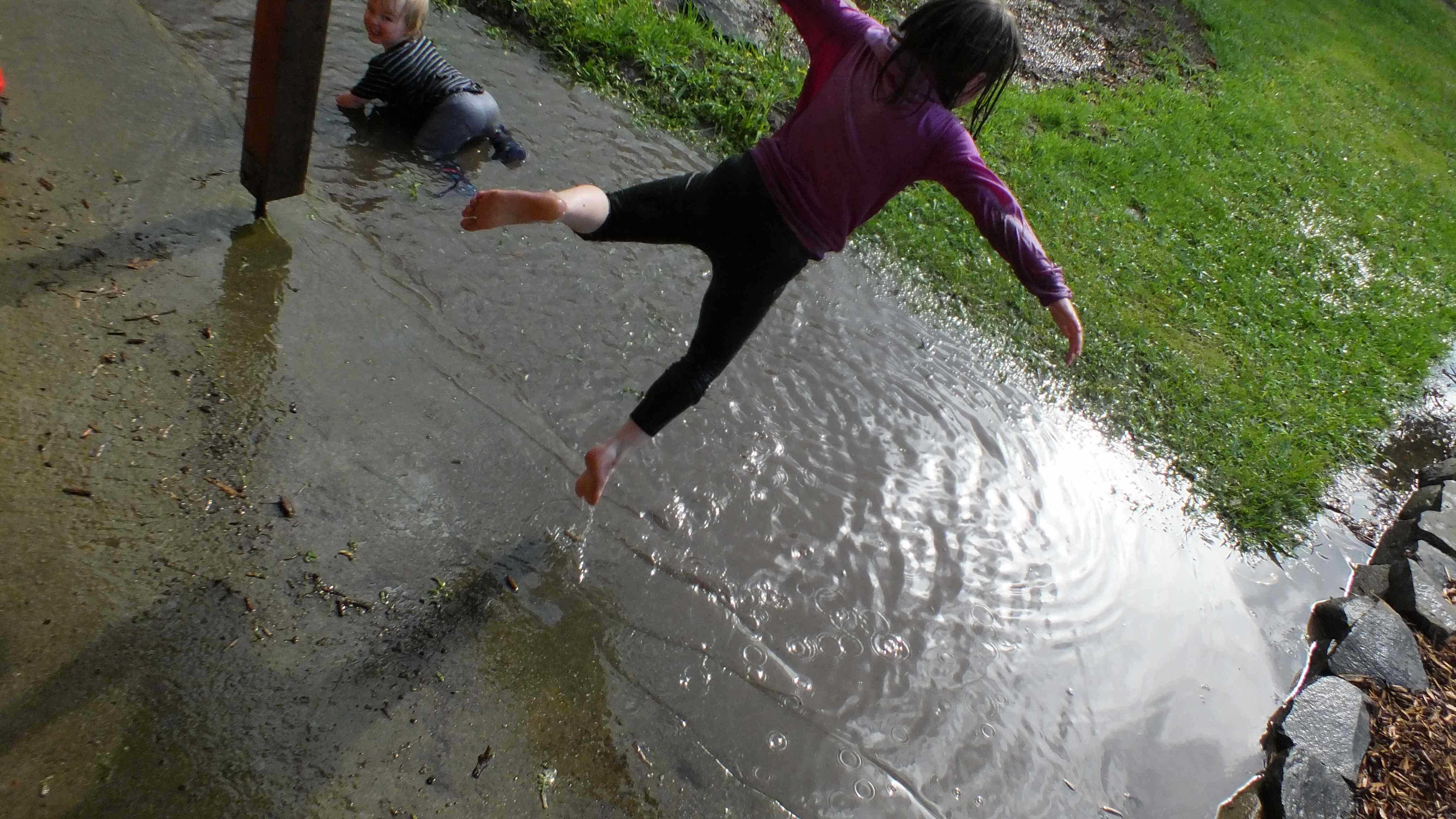
Gonna sue the ABC: look what Peppa Pig did to my children

SplashingInTheMudLoRes

We love the ABC. We need the ABC. Please leave the ABC alone.

I write Milk Maid Marian in the hope of building bridges between farmers and those who care about what we do and how we do (or don’t) look after the land, animals and your food. But my humble little blog does a poofteenth of the work that the ABC does.

No other media outlet provides the coverage – both in terms of content and accessibility – that the ABC does and I am incredibly grateful for it. If you feel the same way, please let your MP know.


For our children

Have you seen this?

Yes, it’s by Unilever. Yes, you’re entitled to be cynical and yes, I love it.

The global manufacturer and ice-cream maker has just accredited Australian dairy production as meeting its Sustainable Agriculture Code – a huge accomplishment, which is also a world first. Of course it doesn’t mean Australian dairying is perfect and Dairy Australia has published a Sustainability Framework that will nudge us all to do better.

Here on the farm, our family does a bite-sized project for the environment every year. We have:

When I say “our family”, I have to stress that we haven’t been able to do all this without help. Grants from Landcare, Greening Australia and the Wellington Shire, work by the West Gippsland Catchment Management Authority, together with the hard yakka of volunteers from the Victorian Mobile Landcare Group and some of our friends have made the tree planting possible.

It just goes to show what we can do when everyone pulls together.

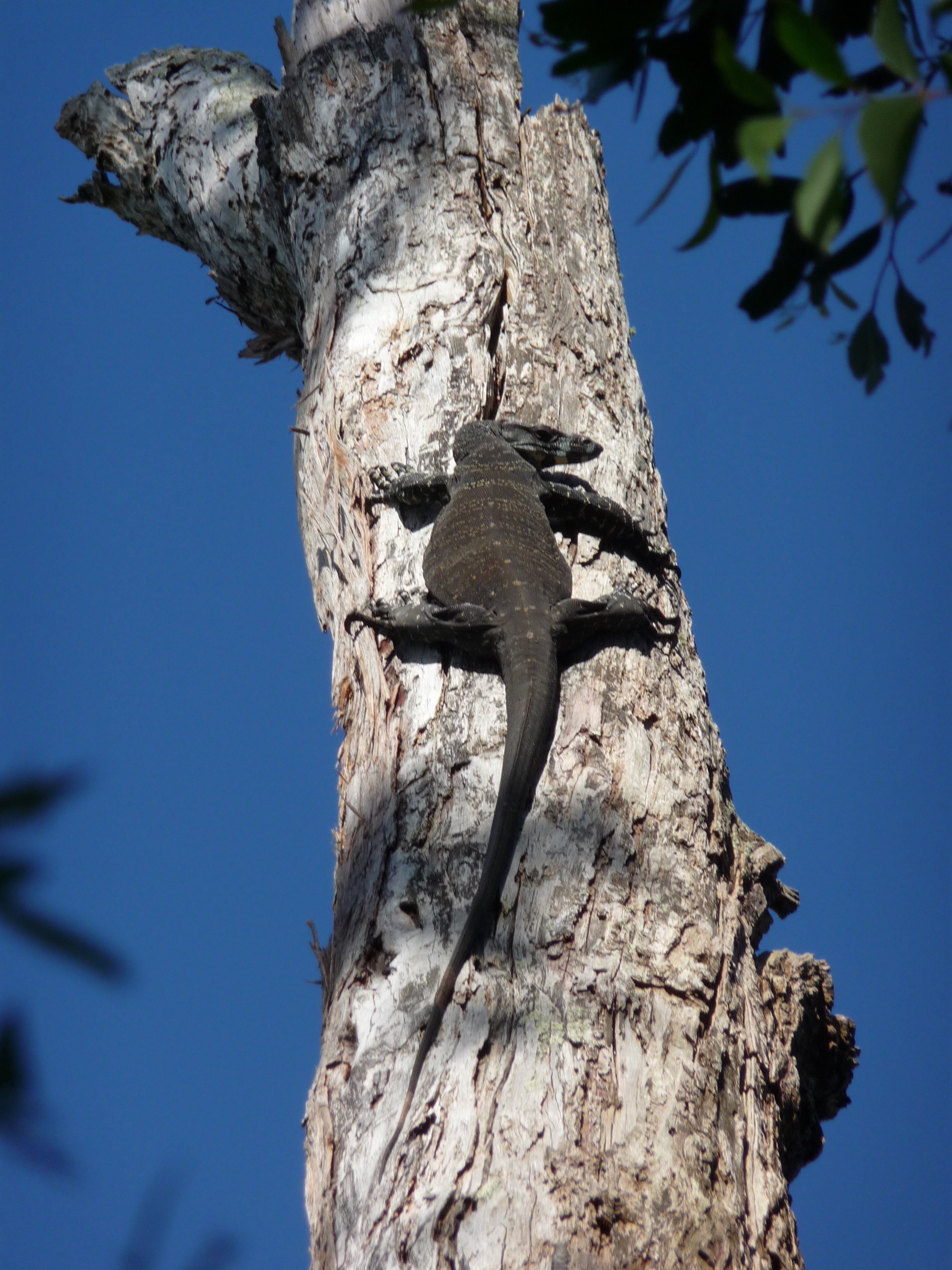
Goanna

The heart of the co-op

Devondale

I have to share what I’d anticipated would be a fairly dry discussion, and was instead a conversation that I am unlikely ever to forget.

Ahead of today’s AGM where our co-op’s board is expected to announce it is considering a partial share market listing, I phoned Professor Tim Mazzarol to discuss the implications of different ownership structures for co-operatives. Around 18 months ago, the professor wrote a story for The Conversation about Fonterra’s restructuring, which may well become a model for our own Murray Goulburn Co-op and I wanted to learn more.

Tim’s title is but he and his team have done some remarkable research on the nature of co-operatives. What it reveals is that co-operative members wear four “hats”:

  1. Patron
    As patron, we are concerned mostly with the transactions we have with the co-op. In my case, that’s sending milk, buying goods at the trading store and so on.
  2. Investor
    As investor, I look at the financial returns offered by the co-op. Once the emphasis is placed heavily on this aspect, Prof Mazzarol notes, there’s often pressure to demutualise.
  3. Ownership
    Quite unlike the traditional investor (or shareholder of a listed company), I have a sense of ownership over the direction of the co-op and a much higher involvement with it.
  4. Effective community
    The co-op provides a feeling of belonging to a broader community.

In other words, a farmer co-operative is much, much more than just a farmer-owned company.

“Co-operatives need to keep reminding themselves of their original purpose,” says Professor Mazzarol. “When managers don’t share the vision, they can shift from a proper co-op to a farmer owned business. If you own the business and have substantial capital in it, you are interested in control.”

Professor Mazzarol believes the Fonterra TAF model, which allows farmers to trade their shares, weakens the role of the co-operative.

“If you separate investment from ownership, you raise the spectre of decisions being made by a board dominated by people with no interest in the members.”

In practical terms, he says, that could mean refusing to collect milk from less profitable suppliers, for example.

What co-operatives offer Australian farmers

“The average Australian farmer has increased productivity by 50% or more in the past decade but captured very little of that,” Professor Mazzarol says.

“The value of that investment is siphoned off by choke points in the supply chain, where there is a concentration of market power. The only way producers can deal with that is to circumvent those choke points by value adding and selling direct or belong to a co-operative with increased bargaining power that will return the value to farmers.”

“MG is acting like a pace-maker co-op, ‘keeping the bastards honest’, and if it disappeared from the market tomorrow, prices would start to fall. ‘Suppliers are treated with respect’ is very different from ‘we exist to maximise returns for our members’.”

The co-operative as community canary

The steady disappearance of co-operatives, Professor Mazzarol says, signals a change in Australian society.

“Co-operatives are a bellwether of social capital,” he says. “A co-operative needs three things: trust, reciprocity and a network. If these break down, so do co-ops.”

A gloomy observation, indeed. Let’s hope that when push comes to shove, trust, reciprocity and community are still alive and well among Australia’s farmers.

Life in the farm lane

Image courtesy of Dynamite Imagery / FreeDigitalPhotos.net

Image courtesy of Dynamite Imagery / FreeDigitalPhotos.net

Something has shifted in me. Standing on the footpath on a balmy Melbourne evening only last month, I was afraid.

Just a couple of metres and a shallow gutter was all that separated our tender little family from a roaring battery of motorbikes, cars, buses and even semis bouncing along the bitumen at 80km/hr. I gripped Alex’s still baby-soft hand protectively and found that despite his fascination with the unfamiliar lights, sounds and smells, I could take it no longer.

It wasn’t always like this. I lived in the city for a decade or so, growing my career and establishing a flourishing micro business that fed my curiousity. True, it always felt as though I were on a camping trip rather than at home but I had my bearings.

Perhaps it was the fear that comes with being a mother that propelled me to usher the little people back to our hotel room. Perhaps it was simply that I am now acclimatised to life in a different lane: the farm lane.

The background sounds tonight are the chorusing of frogs and the intermittent bellowing of bolshie bulls. The scent that wafts through my office window is pure freshly cut grass. Gentle, calming, natural.

But don’t be fooled. Nature sets the pace here, where a sense of urgency courses through the day. She demands the farmer rises before dawn to gather the cows, who must also be fed and protected from her vagaries, only to congregate once again at sunset. And if something goes awry, whether mechanical, physical or personal, Mother Nature is unforgiving.

We, too, know deadlines, budgets, the rat race and all the anxieties they bring. Like most parents, we worry that our children are somehow missing out, and, like most children thrust into the realities of adult responsibilities, we despair that so much is passing us by.

Don’t imagine we are so different: what binds us is so much stronger than that which divides us.

Rush hour in the farm lane

Rush hour in the farm lane

What the cold, cold heart of Coles reveals

The man who directs the face and voice of Coles must have become a little overconfident. In a breathtaking display of arrogance, Coles’ general manager of corporate affairs, Robert Hadler, addressed an audience of spin doctors with this presentation: http://www.documentcloud.org/documents/800088-reputation-coles.html#document/p5

Plenty of people have discussed why this presentation was in such bad taste. Callous, even.

But the part that really caught my attention was the role of our co-op, Murray Goulburn, in Hadler’s “case study”. The gloating Hadler describes the deal with Murray Goulburn as “The game changer”.

Hadler’s right about this but not in the way he means, I suspect. The Hadler case study goes to show just one thing: no matter how Coles tried to spin $1 milk, Australians knew it stank and none of their ads, infographics or appearances by Curtis Stone could fix it. Until, finally, Coles actually did something to address the damage caused by the milk war: an unprecedented 10-year deal that was too good for the co-op to refuse.

Now that’s not a case study in spin, Mr Hadler, that’s a case study in people power.

PS: If you would like to keep up the pressure for Coles to do the right thing, add your voice to this petition by Queensland ag teacher, Lisa Claessen, who was compelled act after her students became casualties of the ColesWorths milk war.
 

One woman’s kindness is another’s cruelty

Animal welfare is one of those things that often falls into the realm of sex, politics and religion. It’s an emotionally-charged topic at the best of times and when standards need to be set, conflict is inevitable. Consider this:

“Rear the calf in safety away from the herd so it can lead a healthy life”
vs
“Take the calf from its mother so farmers can steal the milk”

Both statements put the calf first, yes, but advocate diametrically-opposed practices. Vets say science supports the hand-rearing of calves, animal rights bodies say that’s immoral. So, what’s a farmer to do? At the moment, farmers have a lot of freedom to do whatever we think is right, so long as the calf’s healthy.

But animal welfare is increasingly becoming a political hot potato as vocal lobby groups demand more of a say in, and greater scrutiny of, farming practices. We farmers can’t stick our heads in the sand and hope this will all go away.

And, to be frank, many of the farmers I’ve discussed the issue with would like to see our representatives raise the bar to match the standards almost all of us meet every day. Few choose farming as a career just for the money (that concept never fails to raise a chuckle) – most do it because we love being outdoors with the animals. Why should we let a few rotten apples bring us all down?

But who decides what those standards should be? The dairy community? Well, no, we can’t do it by ourselves because external input is important to progress. The attitudes of the wider community have to be part of the decision-making process.

The thorny question really is: who represents the views of the wider community? Neilson research presented by Courtney Sullivan at the Australian Dairy Conference a couple of years ago showed that most Australians have little knowledge of where their food comes from, that they are aware of their ignorance and that, to put it bluntly, ignorance is bliss. Price was the main driver. Quality was taken for granted.

Ironically, this is a view that is eschewed by farmers and animal welfare bodies alike. It probably comes about because we farmers are trusted to do the right thing – a perception that some animal welfare activists would like to change.

Farmers have the opportunity to be proactive and show the good faith of the community is deserved. Why on earth not?

PS: If you want to know more about how we rear our calves and why, the answers are here on the Milk Maid Marian blog.

How the political parties responded to a Milk Maid’s questions

For the first time in my life, I really don’t want to cast a vote, such is my disenchantment with the politics of our times. It seems more about point scoring and personalities than ever before. And now, perhaps more than ever before, ag needs leadership: we are on the cusp of a food boom with the promise of new golden agrarian age. An age that may never dawn for Australian farmers as we struggle with inadequate investment coupled with a tilted trading field (more on that soon).

So, waaaay back in February, when the election was but a twinkle in Julia and Tony’s eyes, I invited Joe Ludwig (the then Minister for Ag) and John Cobb (the Coalition’s Shadow Minister for Ag) to answer four fundamental questions here on Milk Maid Marian:

1. What are the three biggest challenges facing Victorian dairying?
2. How will you as a government address each of these?
3. What are our three most significant opportunities?
4. Please outline the top three policies that will help us seize those opportunities

After countless phone calls and emails to both politician’s offices, I received two recycled and general media releases from John Cobb’s office that didn’t answer my questions. Earlier this week, I did, however, get this post and pic from Joe Ludwig’s successor, Joel Fitzgibbon.

Good luck making the right choices tomorrow and over to Joel Fitzgibbon!

Joel Fitzgibbon meets a Hunter farmer

Joel Fitzgibbon meets a Hunter farmer


My deep thanks to Marian for the opportunity to speak directly with dairy farmers, families and their communities through her blog. It is a great project and as an MP from a country seat, and as Agriculture Minister, I appreciate the chance to outline Labor’s support for the dairy industry.

Labor’s strong plan for Australian agriculture will help dairy farmers become more productive, competitive and profitable. This is important for both those with a domestic focus and those looking to grab the opportunities of the Asia-led ‘Dining Boom’.

Challenges like drought, a high Australian dollar and falling prices have given the industry a tough decade and farmers are rightly looking to Government for assistance.

In response we have done a number of things. Our $420 million farm debt relief is now starting to help farmers who are viable but in need of a bit of short-term help. Our additional $20 million to help fight our war on weeds will help maintain pastures. Our ‘Fair Go For Farmers’ package seeks to redress the power imbalance between the supermarket chains and producers. Our ‘Planting the Seeds for Australian’s Farming Future’ will encourage young people into agriculture and give them the skills they will need. We have also committed more than $20 million to promote agriculture in primary and secondary schools. The Food in the Australian Curriculum initiative helps students better connect with food and appreciate the important role of producers. We must make sure there is a ‘next generation’ of Australian dairy farmers.

Each year the Government provides $18 million for dairy research and development. We have also invested $28 million into the Dairy Futures Cooperative Research Centre to invest in large-scale research projects and, more recently, $1 million through the Energy Efficiency Information Grants program for Dairy Australia to conduct on-farm energy assessments to help reduce energy costs for a number of dairy farmers nationally.

For those with an eye to export markets, our National Food Plan and our efforts to improve market access are important. Since 2005-06, Australian cheese exports to China have grown from less than $10 million to nearly $37 million in 2011-12. Cheese exports to Japan during the same period have grown from $298 million to over $422 million in 2011-12. The value of skim milk powder exported to China has grown from $14 million to $49.6 million at the same time. We can build further on this success.

Infrastructure, both soft and hard, will help everyone in regional Australia. That’s why we are building the National Broadband Network (NBN). It will transform the way dairy businesses operate, as well as the way your health services are delivered, and how students and your children (of all ages) access educational opportunities.

Road, rail and port infrastructure will be vital to help the dairy industry grow as new markets are opened, so Labor has delivered a record $60 billion towards transport infrastructure. Much of this investment occurs in regional Australia and dairy and other agricultural industries will benefit from resulting infrastructure improvements.

Australia is a great producer of milk and dairy product. Together we must ensure it stays that way.

You can find more on Labor’s strong plans for agriculture and regional Australia at http://www.alp.org.au

Hon Joel Fitzgibbon MP
Minister for Agriculture, Fisheries and Forestry

A very unpopular dairy blog post

I suspect I am about to make a lot of enemies because there is an elephant in the room and few are in a position to point it out.

Here are the facts:

  • the last season has been dreadful
  • dairy farmers have free access to lots of information about we can keep cows healthy during fodder shortages
  • many dairy farmers who couldn’t afford skyrocketing feed costs have sold a lot of cows at ridiculously low prices so they can feed the remainder of their cows properly
  • farmers have gone broke but kept their cows healthy
  • cows do not starve overnight and watching them weaken over weeks or months would be more than I could bear yet reports of them dying in their hundreds have hit the national news

I was stunned. Perhaps people who would normally sell their cows off long, long before they reached the point of starvation couldn’t for some reason? Maybe they were hoping for a miracle? Maybe they were in denial?

It just doesn’t ring true, at least not for hundreds of cows as media reports suggest.

And it’s come out today that some published pictures of “starving cattle” were actually the carcasses of cows that had died of other causes. In fact, the vet whose leaked email urging MPs to act sparked the media stories, Dr Mike Hamblin, has since told Warrnambool newspaper The Standard that there is no animal welfare problem in SW Victoria:

“Warrnambool veterinarian Mike Hamblin said there was no animal welfare crisis in the region and that he believed farmers were looking after their livestock well in a difficult financial situation. Dr Hamblin said that while some stock were thinner than normal, he had not seen any starving.”

Yes, people need help. Yes, it is wonderful that the media stories have finally got the Victorian government to reach agreement with the Commonwealth on low-interest loans.

But do we really need to paint already suffering farmers as cruel by presenting pictures of dead cows to our political leaders before action is taken? The reality is that most farmers skip their own dinners to feed our animals. These dirty tactics may have won concessional loans for a few farmers but they have blown a lot of trust and, at the end of the day, we will all be the losers.

There has to be a better way to avert what is a genuine human crisis than fabricating an animal welfare one.

Help for our dairy farmers and their cows

There certainly is light at the end of the financial tunnel for dairy farmers but many are still finding the going incredibly difficult.

I’m a tough old stick but there have been times in the last few months where things unravelled a bit before I could piece myself together again, so I know how it feels first-hand. For me, the saving grace has been to get help from our expert farm consultant, Neil, and build an action plan to insulate the cows from the fodder shortage.

It’s gone beyond that for some farmers who are in desperate positions. I asked Dairy Australia’s issues manager, Julie Iommi, what the dairy farming representative bodies are doing to help.

1. Anyone wishing to donate fodder or funds to buy fodder – please contact the UDV/VFF on 1300 882 833. Want to help but have no hay of your own? Farmer mental health dynamo, Alison Fairleigh, has linked her handy blog to “Buy a Bale“, an initiative of Aussie Helpers, where anyone can donate time or money for fodder to go to people who are in dire straits.

2. VFF, supported by ADF, is pushing the state government to immediately review the resourcing to the Rural Financial Counselling network to ensure they have the capacity to deal with current demand.

3. VFF, supported by ADF, has asked the state and federal governments to introduce the low interest loan support program immediately.

4. The state and federal governments have also been requested to review other forms of emergency support immediately.

5. VFF and ADF are also pushing the state and federal agriculture Ministers to meet the bank sector to encourage them to continue to take the long-term view when assessing their support of farm businesses.

Dairy Australia is promoting the Taking Stock program, which can help dairy farmers review their individual situations and create their own action plans – Julie says there are still around 50 spots available.

DA also has good info on its site about coping with fodder shortages.

Last of all, if you know someone who might be battling to stay afloat, why not drop them a line, phone or do the good old-fashioned thing and turn up with a cake? It might be just the lifeline they need without you ever knowing it.