NFF Blueprint written with a thumbnail dipped in tar

The NFF Blueprint is finally here and it’s a great document. I’ve only dedicated half an hour of speed reading to the report but, really, the report is so well laid out, you don’t need much more time than that to get the gist of it.

There are just seven themes: Innovation, Research, Development and Extension; Competitiveness; Trade and Market Access; People; Agriculture in Society; Natural Resources and Transformational Issues.

It’s big picture stuff and so high-level that it could be accused of having about the same level of meaning as most corporate mission statements. For example, there are three goals set for Agriculture and Society:

“Build better community understanding of and trust in agriculture”

“Improve credibility, cooperation and goodwill, including with activist groups”

“Develop coordinated and proactive approaches to communication”

All three are rated as high priority. The matching strategies are equally as broad and after reading the report, I have little idea of who, what or how these will be achieved.

I don’t think that’s a bad thing. As the NFF says:

“The launch of the final Blueprint report is not be (sic) the end of the road for the Blueprint. The Blueprint document will provide a starting point for the discussion of the key issues and for collaborative action on those issues that are shared across the sector.”

“The NFF will work with key stakeholders across the Australian agriculture sector and government to host a series of forums scheduled for 2013 onwards, designed to drive the Blueprint forward. These forums will develop specific strategies, assign responsibilities, provide resources and set timelines for the next stage of the Blueprint – the legacy phase.”

As it stands, the Blueprint is just a rough map written with a thumbnail dipped in tar. The legacy phase will be telling: can the NFF harness enough energy to make sure that once the rubber hits the road, we gain traction and will it be able to steer the course? It’s in everyone’s interests to make sure it does.

I’m not a member of the NFF but this report signals that Australian agriculture may be developing just the leadership farmers so desperately seek. You’ve won a fan!

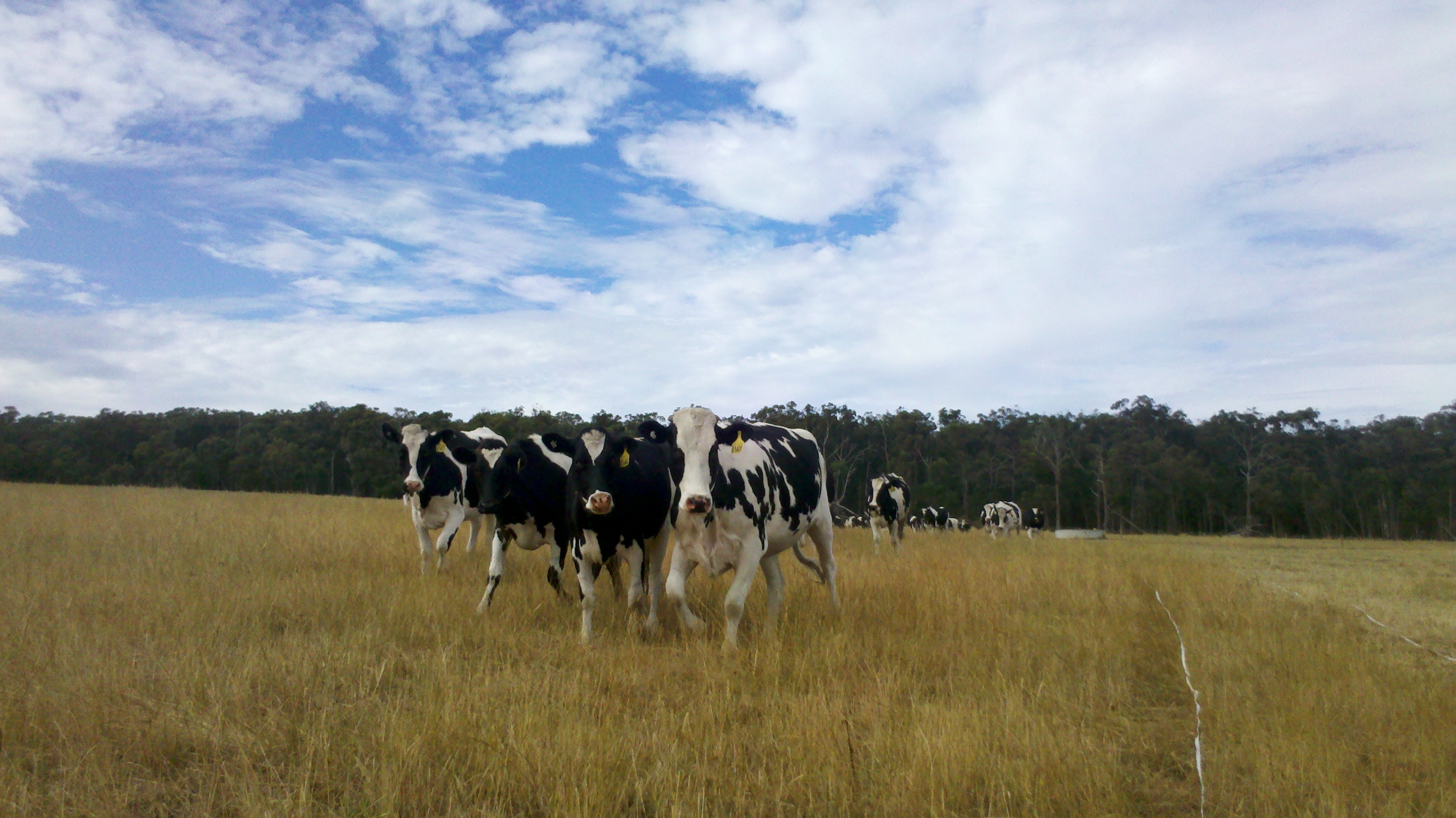
How does it feel?

The sideshow continues: Coles claiming farmers are lucky to see milk sacrificed, animal activists making uninformed allegations of cruelty, vegans banging on about growth hormones (which are illegal here anyway).

Sitting in the stifling heat of the office and reading it all in one hit on one page tortured with anger, confusion and deceit, it is as if the world is against you.

So, with the kids asleep and only the crickets to keep you company, you step outside to fill your lungs with fresh, cool twilight air. And it feels like the world is yours.

My reality

My reality

No wonder so few farmers have an appetite to take their dairy lives beyond the farm gate.

So what should farmers be saying to other Aussies?

We’ve all been there: trapped by a bore who talks incessantly about him or herself without drawing breath. It starts off confusing, grows to be annoying until, finally, the desperation to get away and have a real conversation becomes overwhelming.

I think we farmers may be guilty of this social sin. Too often, we are presented as whingers who fail to appreciate that urban Aussies with equally as noble callings (from educating our children through to curing our cancers) can also do it tough.

In our defense, the media generally isn’t so interested in good news stories and the only time we have traditionally appeared on the 12-inch (no, make that 60-inch) screen is during a drought, flood, fire or pest-induced famine. Times when a cheery countenance would be both unlikely and ridiculous!

The face of farming throughout all the challenges was presented in a glorious Dodge Super Bowl ad the other day. In response to my post about it, farmer John Alexander, described it as, “…one of the best Ag ads out there (possibly ever), and I wish we could replicate it in Australia as soon as possible.”.

He’s not concerned that it might alienate city dwellers and neither are people like former career politician, @HenryPalaszczuk, who says, “Aussies have a quiet respect for our people on the land. This ad wold send a shiver down their backs.”.

I know that’s true of many Australians. But I want more. I want to see Australian farmers talk with non-farmers rather than at them and I hope we will learn to do it in a way that resonates for all.

The Dutch have had a go at exactly that. This ad for milk is not perfect (who wants farmers cast as peasants?) but it extends the hand of friendship to our city cousins in a way that “God made a farmer” cannot.

Love of animals, love of land, courage, humility, honesty, purity. These, the essence of Australian farming are values cherished by Australians everywhere. Isn’t it time we celebrated what unites us?

Who or what makes a farmer?

Yesterday, while rounding up the cows, Zoe announced: “When I grow up, I want to be a farmer and have two children.”.

“True? How come?”

“So I can be like you, Mama.”

It gets into the blood of farm kids early. Much earlier, I suspect, than the children of, say, accountants or writers. At six, our little girl knows when a paddock is ready to graze and has that sixth sense for when a cow seems not her normal self. Because she’s already a farmer.

Since I don’t have religious faith, I don’t believe any of this is God’s doing. Take a look at this ad, which just made its debut during the Superbowl.

This evangelical message has got farmers around the world twittering with delight. It’s nice to get a pat on the back once in a while. But I have a confession: it simultaneously makes me proud and embarrassed.

Why must we farmers talk so much about how hard we work? Yes, it is a farming fact of life but, no, it does not make us saints or martyrs. We do it because we want to.

And when I asked Zoe what she thought would be great about being just like me, it came down to this: “I can have fun with the cows every day!”. Perfect!

The totem of $1 milk

Two years ago today, Coles offered up milk as a sacrifice in the name of market share. It’s now become totemic in Victoria.

The reality is that about two-thirds of Australia’s milk comes from Victoria’s cows but not a lot of my farm’s milk ends up in the supermarket fridge.

We supply the Murray Goulburn Co-op, which processes about one-third of Australia’s milk and has the technology to make a huge variety of dairy foods and ingredients. It sells to the highest bidder, so the percentage that gets exported depends on how well global commodity prices compare with local dairy markets. In 2011/12, 49 per cent was exported, which is pretty typical.

But Victorian farmers are demoralised. Many are in desperate financial positions. The effects of the collapse in global commodity prices, skyrocketing energy prices, high feed costs and the high Australian dollar are clear but shrouded in secrecy is the impact of the supermarket war.

While $1 milk gets all the attention, other dairy products like butter and cheese have also been hit by the supermarket price war. Murray Goulburn has invested heavily in relaunching its supermarket brands and CEO Gary Helou infamously got all hot under the collar last month about Coles’ refusal to stock MG’s Devondale cheese. But nobody can talk about how Coles and MG negotiate our livelihoods behind the tinted windows of “Darth Vader’s Castle” as the Coles HQ is fondly nicknamed by its suppliers.

We’ll probably never know just what the damage has been – only that our situation is very different from that in states like NSW and Queensland where there is pretty much total reliance on fresh milk sales.

But what those claiming to be “the voice of reason” dismiss is the effect ‘milk that’s cheaper than water’ has on the psyche. It signals to farmers that a fair go no longer matters. And that’s what hurts the most on Australia Day.

Could you be suffering from cow envy?

CuriousHeifersRun

The ethics of food is so complex. Vegans following a conscientious diet are told they are inadvertently starving Peruvians, causing deforestation and even eating with blood on their vegetarian hands. It’s not easy being green and I don’t blame vegans for being so passionate about their choice.

Life on farm is a microcosm of those ethical dilemmas. Every day, we must make decisions that impact on the well-being of an animal. Often, there is no easy answer. Should we euthanase that cow now or wait although she’s in discomfort in the hope she recovers? Should we raise that calf away from her mother or risk deadly disease transmission? And the big one: should I send heifers to China if milking just won’t pay the bills?

If nothing else, it forces you to stare hard in the mirror and here’s what I see: yes, I am a commercial dairy farmer and, hell yes, I care about our animals and our land.

Although this is something vegans on Twitter seem to find inconceivable, in my experience, this mindset is not only possible but typical of dairy farmers. It’s what keeps us on the land for generations and I am incredibly grateful to be here. My farm may not be a “cow sanctuary” as one vegan put it but I’m doing my best to make sure the cows never realise.

(Special note to my vegan friends: I realise what a privilege this is and wouldn’t blame you for some serious cow envy!)

Why it’s great to work with kids and animals

I’m so grateful for the support of people around Australia and as far afield as Canada in response to my post about how to save Australian dairy. It’s been so heartening.

But then, a rather nasty person appeared out of the blue on Twitter today and cast a cloud over my morning – for 10 minutes anyhow. Because, after that, I got to do some work in the paddock and enjoyed the company of my two little farmers and some other members of our team. Kids and animals are the perfect antidote for trolls.

How to rescue dairy – from the nutty to the tricky

Dairy farmers gathered in their hundreds in south-west Victoria last night for a crisis meeting. What makes it a crisis? Very simply, dairy farmers are working seven days a week for free and petrified of losing our shirts.

Local agribusiness bankers tell me they are busy refinancing and arranging extra debt but land sales are at a standstill around here. Reporting on last night’s dairy crisis meeting, Simone Smith of The Weekly Times, described a “dire picture”:

“Warrnambool-based Coffey Hunt farm accounting specialist Garry Smith said across his client-base, farmers milking mostly between 450-500 cows, average feed costs were up 15 per cent – a $150,000 rise – with the cost of power for the first quarter of the year up 50 per cent.”

“He estimated across his client-base earnings would be 10 per cent down on last year with a combination of cash-flow and income down $260,000.

“Charles Stewart real estate agent Nick Adamson said better quality farms had dropped in value between 8-15 per cent, while others were up to 45 per cent down on peaks of several years ago.”

None of this is pretty and astonishingly, Peter Reith decided to appear on ABC’s The Drum website with a six-point plan that, at first, I thought was a spoof. Take a look and make up your own mind.

It’s not as simple as cutting petrol taxes and municipal rates. It’s tricky because of this conundrum: milk and dairy foods are considered so important that nobody wants to pay what they are worth to produce.

Every day I read comments on Twitter that go something like this: “My kids drink three litres of milk every two days, so I can only afford to buy $1 milk”. I know first-hand how tough it is to feed a family when you’re on struggle street, so I have a lot of sympathy for people in this predicament and it’s impossible to respond with anything other than compassion.

It’s hardly surprising, then, that there is no political appetite for an increased milk price. But the truth is this: dairy farmers should not and cannot fund an ersatz Australian welfare system by subsidising the cost of food. Welfare is the role of government.

So, while my dander is up, here’s a simple list of five tricky things that would make a big difference to this dairy farmer:

1. Deal with the supermarket duopoly
Down, Down, Down is not about you, dear milk drinker. The real reasons for the supermarket war are expressed in corporate ROIs rather than family budgets. At the end of the day, it will be the little people with the least market power – you, the shopper, and me, the farmer – who will pay.

2. Level the global playing field
Julia Gillard announced that Australia would be Asia’s food bowl but guess what? Unlike the world’s most powerful dairy exporters, the Kiwis, we do not have a free trade agreement with China, putting Australian dairy at an immediate 15% disadvantage. Nor do we receive the government subsidies that support our European and North American competitors.

3. Assist with the impact of the carbon tax
Australian dairy farmers are suffering a double whammy under the carbon tax. First, processors are passing the extra cost onto us in the form of lower farm gate prices (because the consumer won’t pay extra and nor will global commodity markets), reducing our incomes by around $5,000 each per year. At the same time, our costs – especially electricity and refrigerants – are rising in quantum leaps each quarter.

4. Support smart farming
Long exposed to the blow-torch of global export markets without subsidisation, Australia’s dairy farmers are among the most efficient in the world, according to research body, Dairy Australia. We can produce very high quality milk at a very low cost because we have invested in research and development. No longer. We are spending less and less on R&D and the Victorian government has just made massive staff cuts to our brains trust, the Department of Primary Industries.

5. Remember, I am the goose that lays the golden egg
I will not be able to continue to deliver high quality milk at such a low price while enhancing the environment and caring for our cows without sacrificing the basic wellbeing of my family and that, I refuse to do.

How to get farmers wearing helmets on quad bikes

With my hair plastered to my head with sweat and feeling woozy, I conceded defeat. I’d been rounding up in 30 degree heat on a quad bike with a road bike helmet on and just couldn’t do it. At 2 km/hr behind 250 cows, each literally giving off the same amount of heat as a 1500 watt hair dryer, sitting astride a hot engine, the heat got to me and I was not far from passing out.

Road bike helmets are designed for use on bitumen at high speed and have no effective ventilation at speeds of one to three kilometres per hour. Having one strapped on in this type of environment could be lethal.

Why had I been so stupid, you ask? Because I was trying to do what the regulators would have me do and, as an employer, insist everyone else does it too. And yet I’m in The Weekly Times today saying we all wear helmets here; I won’t let our kids on quads; and that we have Quadbars on our bikes.

What the story doesn’t explain is that I won’t wear a road bike helmet. This seems to be something of a taboo and sadly, this means many farmers ride quad bikes without a helmet at all and simply hope nobody gets hurt.

This situation has arisen because:

–     Quad bike manuals stipulate the wearing of a road bike helmet that meets Australian Standard AS1618

-`    An Australian Standards committee dominated by helmet manufacturers refused to ratify a New Zealand off-road quad bike helmet standard.

I would never argue that riding quad bikes on farm – even at slow speed – without a helmet should be permitted but far lighter helmets are legal in much more hazardous circumstances.

Thousands ride pushbikes down Melbourne’s busiest thoroughfares at 40 kilometres an hour alongside semi-trailers wearing very light, yet legal, helmets. Thousands more ride horses equally as fast wearing cool helmets strong enough to withstand a collision with horse hoofs and a fall onto a hard surface at speeds of up to 55km/hr.

And that’s been our solution: we’ve chosen a light, really well ventilated equestrian helmet. Everyone here wears them without complaint whatever the weather, all of the time.

While many WorkSafe inspectors appreciate the hazards created by wearing road bike helmets for low-speed agricultural use, they are hamstrung by the absence of a specific standard. A new Australian Standard seems destined to be stymied by cost and disregard of the realities by those who work in air-conditioned offices rather than hot paddocks.


Farmers just need to…

Complete the sentence: “Farmers just need to…”

A few I’ve heard recently are:

  • “Work smarter”
  • “Be more innovative”
  • “Drive for >5% cost reductions”
  • “Scale up to meet the world’s insatiable need for protein”
  • “Don’t JUST farm. Add a few more feathers to your cap”

Most of these comments have been made quite flippantly, with little or no background knowledge of Australian dairy farming and, to be frank, they give me the irrits.

What makes me really angry, though, is when our leaders parrot the “Scale up to meet the world’s insatiable need for protein” line.

We farmers need to justify investing more money, blood, sweat and tears in growth – both to our families and our bankers. Unless farm gate prices for milk increase substantially, that’s a very difficult proposition. According to official figures, most of the state’s dairy farms have a return on investment of 1 to 3 per cent, forcing a focus on financial survival. Much higher returns can be made elsewhere with less work and far lower risk.

To those whose simplistic response is “work smarter, diversify or value-add”, let me point out some realities. Click the link to see how the average Australian dairy farmer is paid compared to dairy farmers around the world:

https://milkmaidmarian.com/wp-content/uploads/2011/10/figure-8-international-farmgate-milk-prices-us-per-100kg.pdf

What does this mean for a farming family like mine? We want to improve the farm, so Wayne and I are both holding down second jobs (in other words, we are not “just farming”). The plan is that these improvements will make the farm more profitable and sustainable. We are making progress but farm life is currently anything but sustainable from a personal point of view. You just can’t work this many hours forever.

Perhaps we are dullards and are just not efficient enough but I doubt it. The farm I run now bears almost no resemblance to the farm of my childhood 30 years ago. It’s the same 500 acres but we milk 50 per cent more cows and each produces around 55 per cent more milk than her ancestor did in the 1980s: a huge leap in productivity.

Although these numbers are impressive, we are far from exceptional. According to Dairy Australia, Victoria’s raw milk production peaked in 2001-02 at 7.4 billion litres – more than double the 3 billion litres produced in 1980-81. Yield per cow also increased from 3,012 litres in 1979-1980 to 5,864 litres in 2008/09.

Sadly, we are unlikely to continue to make such gains. Our brains trust, the Victoria’s Department of Primary Industries, is being savagely pruned, reducing our ability to innovate and work smart. We don’t enjoy the subsidies that support our US and European counterparts or the free trade agreement with China that advantages our Kiwi neighbours. And now, we face an estimated $7000 carbon tax cost that will nobble us even further.

The playing field is far from level and getting steeper all the time.