Getting kangaroos off the farm without fences or guns

Moving the maremma hotel

Moving the maremmas' home

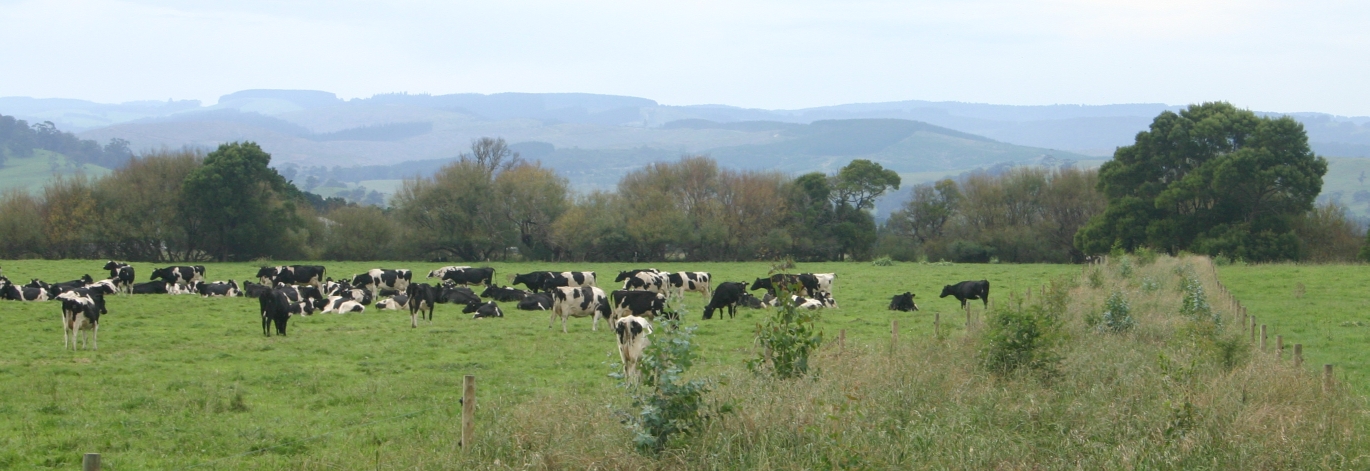
Our farm shares kilometres of boundaries with state forest and, unfortunately, tonnes of its feed with hundreds of kangaroos and wallabies. While animal activists quote research carried out in semi-arid lands that found no competition between livestock and macropods, nothing could be further from the truth here.

The kangaroos and wallabies decimate luscious dairy pastures and crops. Last year, an oat crop adjoining the forest was cropped to just four inches high near the bush and grew to around a metre tall on the other (inner) side of the same paddock.

Our neighbours have installed massive fences in an attempt to keep the kangaroos and wallabies out, with mixed success. The other alternative is to shoot them and I do have a licence to cull 40. I haven’t used it because I hate the thought of it.

Instead, I’ve been looking at ways to deter them from the farm. A promising study used dingo urine but this seems to have come to a premature halt due to staffing issues. Many researchers have found ultrasonic deterrents ineffective.

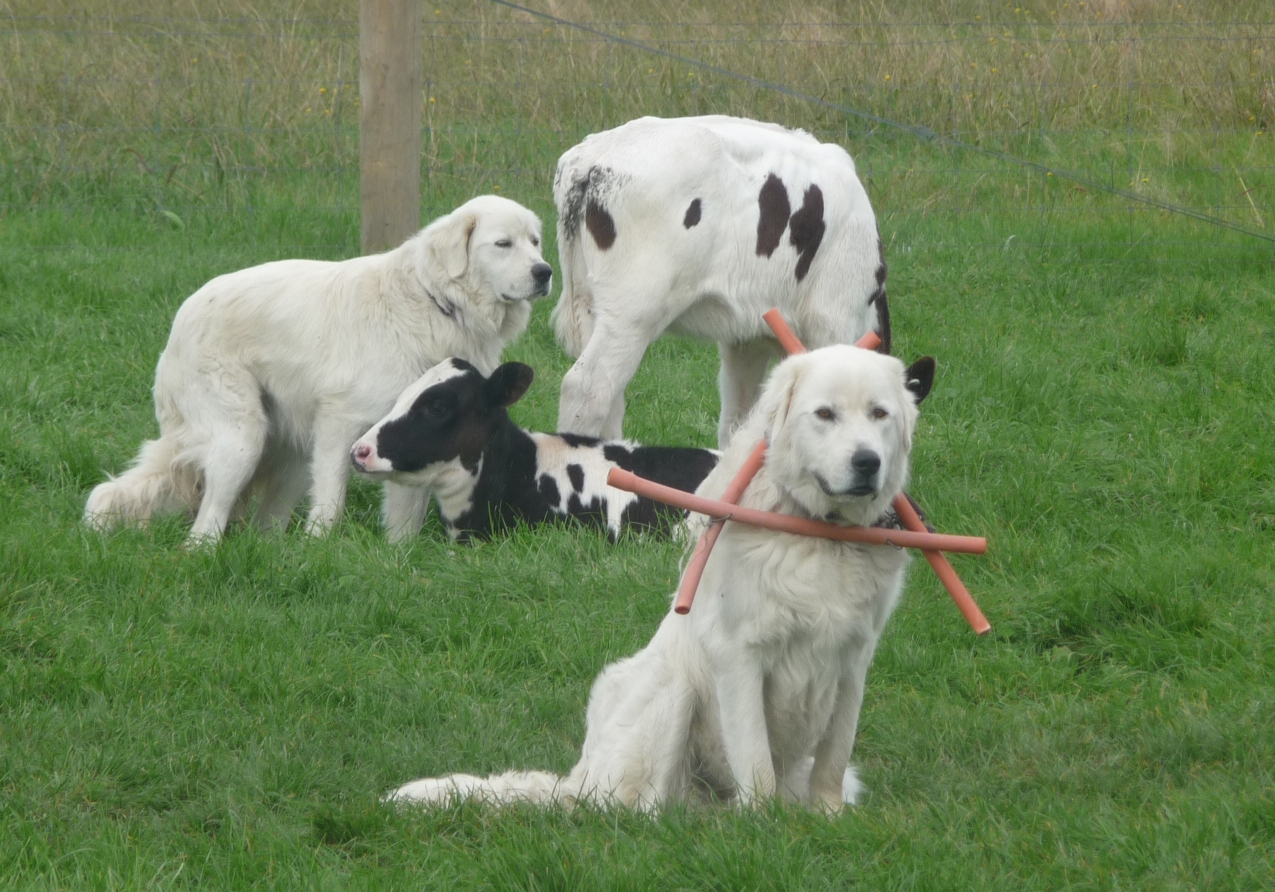
I’m hoping we’ve found the solution. We’ve been bonding two maremma livestock guardian dogs, Charlie and Lola, to our calves and teaching them to respect the boundary fences. Fluffy white 35-kilogram bounders, these gentle dogs have a formidable bark and presence. They are also very protective of their “family” – us and the calves.

The only hitch to date has been getting them to roam far enough from their charges, so we’ve moved them and a couple of bovine mates to join a much larger mob living by the forest. Charlie was happy to go but Lola hung behind in her more familiar paddock. Fingers crossed they make the transition!

Why bother being green?

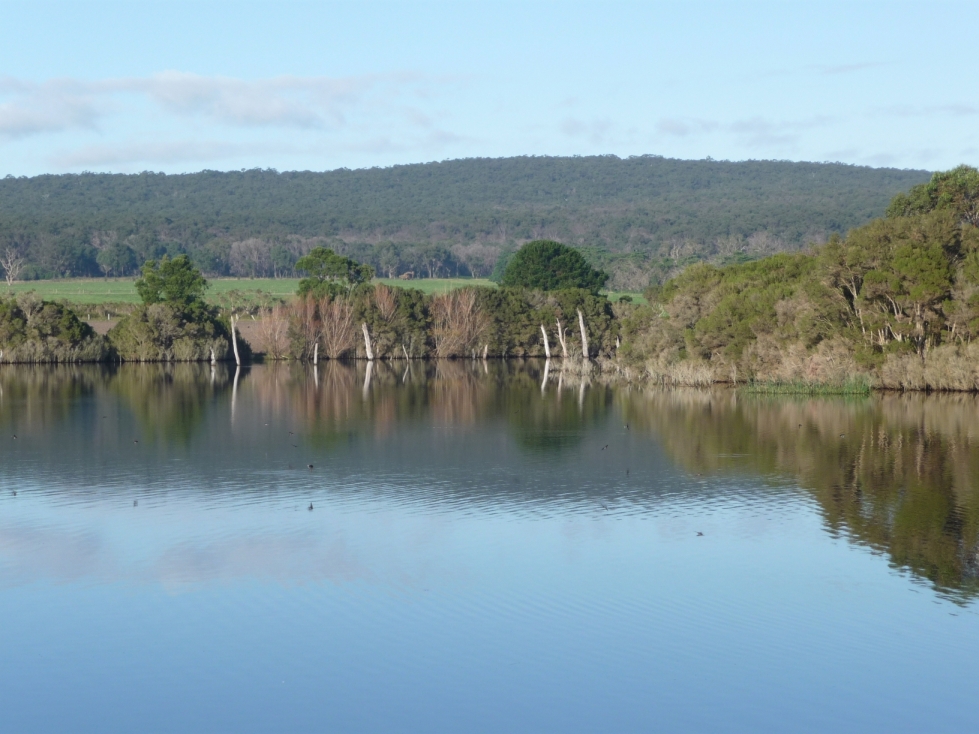
Land for Wildlife dam

Our Land for Wildlife dam

Our farm dam is a real jewel. Flanked by trees planted almost 30 years ago, it’s a beautiful 8 acre stretch of water that hosts an enormous range of bird species. The farm is only about 10km from the coast and the internationally significant Corner Inlet Ramsar site, so our dam hosts both inland and sea bird life – it’s not unusual to see cygnets gliding across the ripples behind their parents while pelicans roost above them. Dad had the foresight to register the dam under the Land for Wildlife program back in the ’80s to help protect the birds.

The dam sits at the heart of the farm, which is bounded by native state forest to the south and the Albert River to its north. The farm also incorporates 27 acres of remnant forest, a wetland and revegetated gully. We’re planting more trees every year.

Why? First of all, because of the much denigrated “warm and fuzzy feeling” that giving something back to nature brings. It’s not all about economics when it comes to the place you love! Second, because I firmly believe trees add to the sustainability not just of the planet but of our small patch, creating micro-climates that will protect people, animals and pastures as we endure increasingly more variable weather patterns.

Unfortunately, it’s really expensive to plant trees – allow $7 per metre for fencing, then spray for weeds, $1.10 per tree in a tube, plus the hard yakka involved with getting them in the ground – and you’re up for thousands of dollars in the blink of an eye. That’s nothing to complain about but it does limit the amount we can plant each year.

Fortunately, we can sometimes get grants for extra plantings and some volunteer groups make the plantings physically possible. These people, like the Victorian Mobile Landcare Group should be nominated for sainthood. Last October they came to help us plant 800 trees and are volunteering to help us again this year. Not everybody walks the talk like they do!

Sustainable and cheap food: how does a farmer get there?

On the path to slow food

Slow food versus cheap food conundrum for farmers

Quality food, lowered emissions, biodiversity, soil health, maximum animal welfare, cheap food. So many messages coming from consumer groups, so many implications for how we farm.

Slow Food Australia has a philosophy that resonates with me as a farmer:

“SLOW Food fosters community awareness of food that is good, clean and fair – that the food we eat tastes good and should be good for us; that it is grown and made in ways that respect animals, the environment and our health; and that the producers who grow or create it should be fairly rewarded for their endeavour.

Slow Food Australia’s website also carries a media release that says, “Almost $40 of every $100 spent by Australian households now lands in the cash registers of either Coles or Woolworths”. In light of the milk wars, this is a worrying statistic. While Coles denies the price cuts will be passed on to farmers, Woolworths admits they will. Even consumer advocate group, Choice, agrees farmers will bear the brunt. It’s hard to imagine that any company wielding that amount of market power won’t put pressure on suppliers to lower costs, which will inevitably flow on to those with the least market power – farmers.

The milk wars will have their greatest impact on farmers in states like Queensland, Western Australia and New South Wales but the story is no more rosy in my state, Victoria. According to official figures, most of the state’s dairy farms have a return on investment of 1 to 3 per cent, forcing a focus on financial survival.

Our farm is similarly affected. We want to improve the farm, so Wayne and I are both holding down second jobs. The plan is that these improvements will make the farm more profitable and sustainable. We are making progress but farm life is currently anything but sustainable from a personal point of view. You just can’t work this many hours forever.

So what’s the answer? For our family farm, in the short-term, it means no compromise on milk quality or animal welfare, while planting as many trees as we can afford. At the same time, we invest in anything that will make the farm more efficient and profitable.

In the long term, it means incorporating more and more organic principles into our farming methods and marketing our own milk directly to consumers who appreciate what we’re trying to achieve. The problem is that none of this comes cheaply and is out of the reach of most farmers (including us, right now).

If consumers really do care about sustainable food, driving prices “Down, down, down” is not the way to make it happen.

Does grass grow on trees?

A few of the trees planted last spring

Trees Dad planted along a gully 12 years ago

Money may not grow on trees but I’m beginning to see that grass just might.

Our most productive pastures in summer are those that are sheltered on three sides by thick stands of willows. These are clapped out old ryegrass species but they outperform much newer pastures. I think that mostly it comes down to the relief the trees provide from those roasting NW winds. The cows also love the deep shade under the willows’ spreading branches, which must minimise heat stress. In other words, they create a more temperate micro-climate.

But willows are not universally loved, especially if you’re a native fish. Our farm draws water for cows and to clean the dairy machinery from the Albert River, so it is in our interests to protect the river’s health. I’m trying to see those shady willow windbreaks as “infestations” but without enough alternative shade, tearing them out is not a consideration.

So what are we doing? Planting hundreds and hundreds of native trees each year. If I had enough funding, I’d plant thousands every year! By doing this, we’re also creating wildlife corridors linking our gorgeous Land For Wildlife dam (which stretches over 8 acres) with two waterways and a wetland.

I’m so impatient. I can visualise the beauty of the farm in 20 years’ time, the cool oases of shade and the relief from the howling SW winter weather that these trees will bring. If the scientists are right, those refuges are going to be even more valuable as our climate becomes increasingly variable. If I’m lucky, I’ll be able to celebrate my 60th birthday in the summer of 2030 and Zoe’s 18th in the winter of 2024 in a very different and much more sheltered landscape to the one we enjoy now.

Charlie and Lola the maremmas

Charlie and Lola love their bovine friends


We’ve had Charlie and Lola since they were just 10 weeks old but, while they love us, we’re not their real family. The calves are. Now nearly two years old, they’ve slept, played and eaten alongside calves ever since they arrived.

The idea is that these beautiful Maremmas, bred as paddock-dwelling livestock guardians, will protect our calves from foxes and chase kangaroos and wallabies from the paddocks.

You see, I am a bit of a softie. Although I have a permit, I can’t bear to shoot at the 200 or more kangaroos and wallabies that visit us every day even while they’re decimating our fodder reserves and quite literally eating us out of house and home. The solution? I’m not sure I’m onto a winner yet but bonding the maremmas with the calves has been a two-year training phase in a grand Milk Maid experiment in macropod control. Over the last few weeks, we’ve been training Charlie and Lola to respect the 4km boundary fence and will soon let them out of the calf paddock to roam their 200-acre domain. I can hardly wait to see how they, the livestock and the wildlife respond and am practically twitching with excitement. Will keep you posted.

Cows do a LOT of poo but nothing goes to waste

Cows do a LOT of poo. About 40 litres of the green stuff per day (that’s besides number ones). Because they spend all their time grazing in paddocks, most of it goes straight back onto the grass as nature’s own organic fertiliser. The stuff that gets dropped onto the yard twice a day while they’re waiting to be milked is a different matter, though. It would be environmentally wrong and illegal to let it run into waterways, so this yard manure is hosed into large ponds for storage and digestion by aerobic and anaerobic bugs.

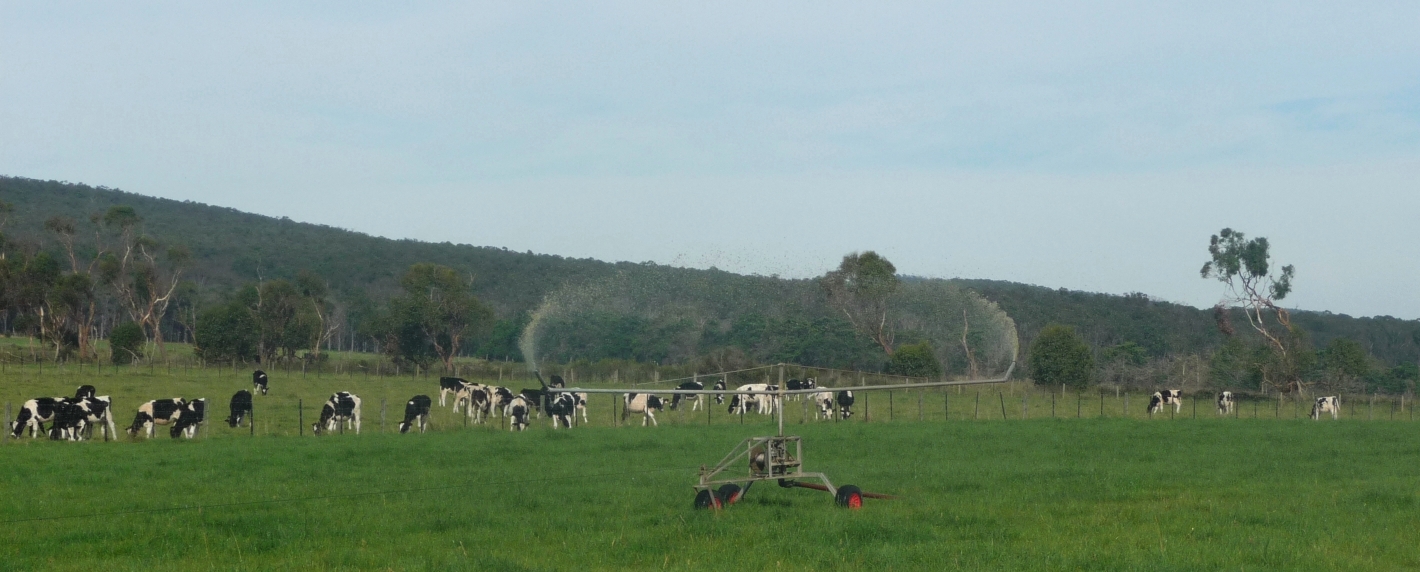
When it’s dry during summer and autumn, we pump the effluent on to paddocks using a little travelling irrigator hooked up to a fire-fighting pump. The effluent is full of great nutrients and beneficial bugs, we save trucking in inorganic fertiliser (not to mention the concept of peak phosphorous) and avoid polluting our rivers. When the pond is just TOO full for me and the irrigator to keep up with, we engage a contractor to come and pump it out and spread it with a huge tanker.

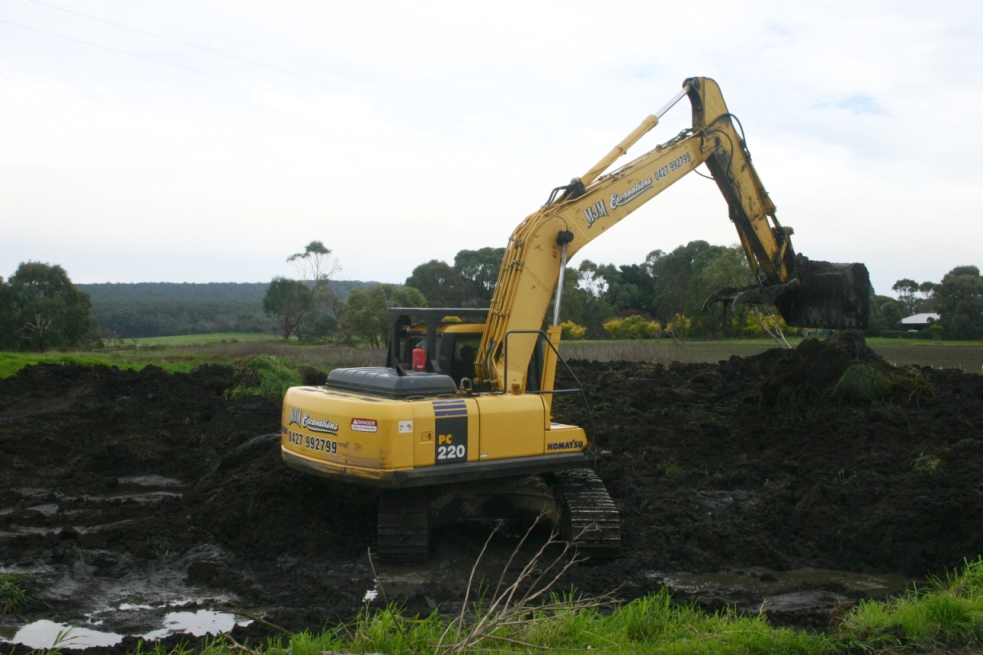
That’s been something of a challenge this year. The tractor and fully laden tanker weigh about 45 tonnes and, because  summer was so wet, access has been very limited. In fact, they just can’t get in at the moment. The effluent spreader shook his head and suggested calling for some rock. The quarry owner shook his head and suggested calling in the grader, excavator and the bank manager. I just hung my head and looked at my boots. Then, my lightbulb moment! If I can’t get the track to the pond, bring the pond to the tanker! I’m getting the excavator in to extend the pond so it’s really close to an existing cow track. Mark, the excavator supremo, expects it to be here in a couple of weeks, so I should have some boys’ toys pics up then.