Finding pleasure in the small stuff

Gully reflections

Smile at the small stuff

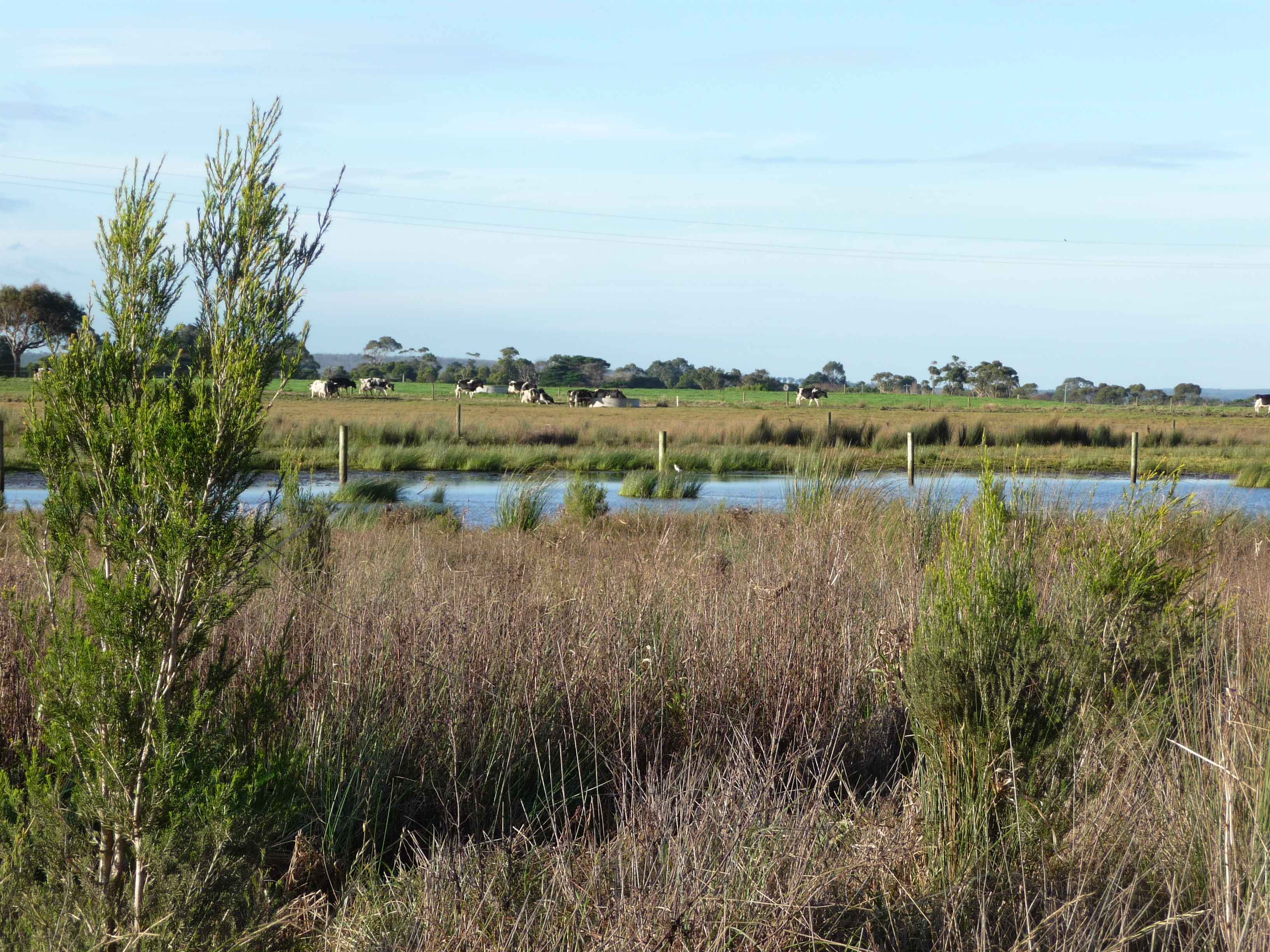
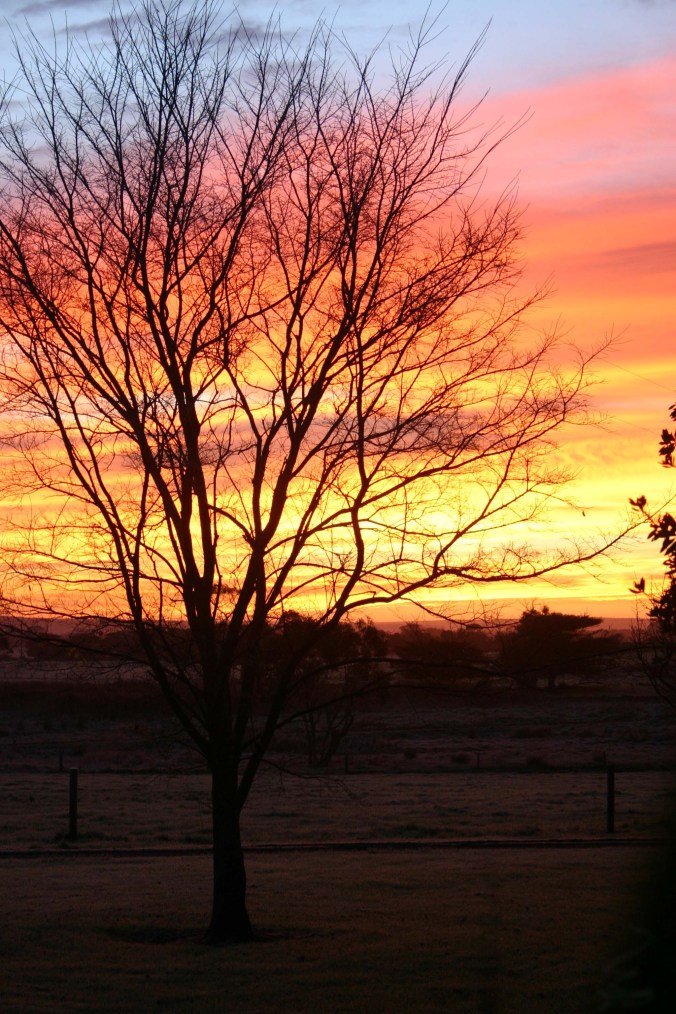
The silver lining to the devastation of the flood is that I’m enjoying some of the farm’s special secret spots. The relentless hunt for shorts in the fence bring me to lovely quiet places like this where time seems to stand still and there is no mobile reception.

I’ve been impressed to see how well the trees planted last summer with the Victorian Mobile Landcare Group fellows have not only coped but thrived in the wet conditions.

9 month old trees

Only nine months after planting, these trees are firing on all cylinders

Even trees that I gave up for dead are emerging. The wetland was planted out with 800 blackwoods, melaleucas and swamp gums two years ago. The hardy melaleucas are staging a comeback after months of at least partial submersion!

New trees in the wetland

Swamp paperbarks emerge from the morass

The favoured maxim might be “don’t sweat the small stuff” but I must admit to savouring the small stuff, especially when it’s such an important part of the big picture.

Among the most popular posts on Milk Maid Marian are those about permeate, so I thought that, for only the second time, I’d break my “never reblog” rule and highlight this post from science communicator, Heather Bray.

Heather Bray's avatarStuff & Things

Today I butted in on a twitter conversation. [View the story “So what is permeate?” on Storify] The question that caught my eye was this:

What is permeate?

I’ve been following the discussion about permeate and I knew that Lynne Strong from Clover Hill Dairies had recently posted something on the subject.

Now my friends who were having the original discussion are not your average consumers. They are scientists! They felt frustrated that they could not find the answers that they were looking for. They could find out that permeate was a natural by-product of milk processing, but could not find out what it actually was.

So I decided to do some research and find out for myself.

I should add that I find the biochemistry of lactation fascinating and I very nearly did my PhD on it. Lactation defines and unites us as mammals on a…

View original post 554 more words

Do you have the stomach to adopt a heifer?

I was amazed by Mike’s comment suggesting an “adopt a heifer” program following my last post about the impact of falling milk prices on my dairy cows and even more amazed by the responses it generated.

One of my fellow dairy farmers, Jessa, has had the same thought but a few reservations have held her back. The biggie is: “What if the heifer dies?”.

To that, I’d add: “What if the heifer turns out to be infertile, bad feet that send her lame often or gets intractable mastitis?”. The reality is that, ordinarily, she’d be sent to market. There is no ‘fat’ in the price farmers are paid for their milk and, consequently, no room for infirm passengers on farm. How would you feel if your adopted heifer had to go? Especially if I posted a picture of her big brown eyes.

The scenario gets at the heart of what it is to be a farmer. We love animals. But we can only look after them properly if we are profitable farmers and that means some animals are created more equal than others (with apologies to Mr Orwell).

Farm animals are cherished but not in the same way as pets – mostly. I still remember the day 30 years ago when my father sent Queen Bessie to market. For a decade or more, Queen Bessie stood regally at the head of the dairy entrance demanding scratches until she simply became too old to thrive. Dad was shattered for weeks but, nevertheless, she was sold.

It’s only with a philosopher’s eye for the big picture that farmers manage the balancing act of love, business and the welfare of the herd. Could you stomach it or is that where the “adopt a heifer” experiment would come unstuck?


A taste of my own medicine

Last night, I had a shocking taste of my own medicine. The farm, you see, is almost entirely fenced with single strand electric wires.

These “hot wires” are kinder than barbs, low-cost and flexible. And while they are also less vulnerable to floods, the trio we had recently left our fences in a state of disarray. I have snipped the connections to all non-essential sections in order to keep the power up to the core and am going around fixing paddock by paddock ahead of the cows.

At the same time, Alex at 13 months is getting heavy. With 12 kgs of wriggling toddler on my chest, fencing work is becoming something of a challenge, so I decided to trial him on my back.

I ended up with an extra burden of mother guilt. Suffice to say, I am not used to crawling under electric fences with an extra load “up top”. Zap!

That horrid sensation of pulsing muscles hit me just as I crept tentatively under a fence. It must have connected with Alex on the carrier but he didn’t seem to notice at all, as he carried on with his babbling, happy as a lark while mum staggered to her feet.

Glad none of the cows were watching!

“MG understands dairy farming profitably…will be very challenging…”

Yesterday, Murray Goulburn Co-op, which buys and processes our milk announced how much we will be paid from next week. It equates to roughly 33 cents per litre.

In the letter announcing the farm-gate milk price, Murray Goulburn CEO, Gary Helou, writes:

“MG understands that dairy farming profitably at these opening and forecast prices will be very challenging
and we will do everything possible to increase farmgate returns in the short and long term.”

I appreciate Mr Helou’s frankness but, to be honest, it sent shivers up my spine. It reminded me of 2009, when it was clear that no matter how long, hard or smart we worked, we would lose money. In fact, the average dairy farmer took on $220,000 extra debt. This year, it looks like we’ll lose about 3 cents for every litre of milk we supply. Ironically, that could mean we try to produce more milk in an attempt to offset our fixed costs or a lot less milk if we instead decide to sell cows. It will also mean I spend more time trying to earn an off-farm income to reduce the impact on our family.

This is essentially what makes dairy farming a very tricky business: we have one product that we sell to one customer at a price they set. No wonder we’re a resourceful bunch.

Warning: perfectionist in the paddocks

In a deep and meaningful conversation with our farm consultant, he told me I think too much and he’s right. Like my father before me and his before him, I was born to worry and my way of dealing with that trait is to really know my material. This can be very useful when you’re in a business like dairy farming that typically makes a 1 to 2 percent return.

It can also be a very destructive trait, however, if it boils over into a perfectionistic control-freak manifestation. There is no place for a control freak in Australian dairy farming – you are at the mercy of the weather, everything else Mother Nature can throw at you, international commodity prices and exchange rates.

You have to resign yourself to your fate to a degree and then (if you’re a worrier like I am) start researching your way out of trouble.

The great thing about dairy farming is that we are very good at sharing our ideas. I’ve walked around countless farms on field days, soaking up the freely-offered knowledge of farmers and technical experts. Farmers often are happy to tell you as much about their failures as their triumphs.

Feeling alone while under real physical and emotional pressure can be dangerous: another great reason to attend all those field days, where the unsaid but crucial take-home message could well be “thank goodness I’m not the only idiot dealing with this @#$%”.

Three floods in 30 days

Sunrise

Red in the morning, shepherd’s warning

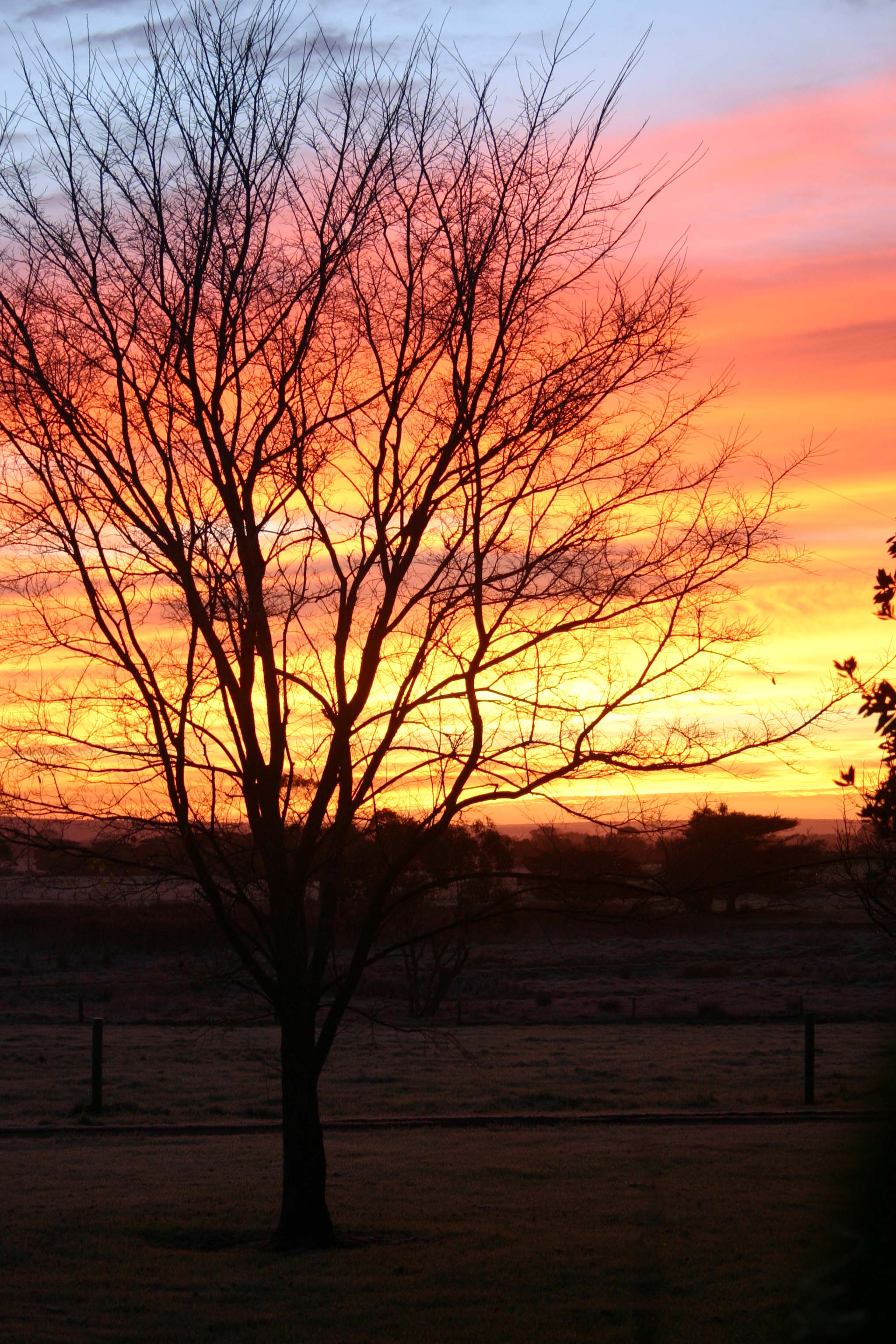
It all started with this glorious yet ominous sunrise over the first heavy frost of the year. But the chill of the glittering, icy landscape (and the weather forecast, for that matter) gave no hint of what was to come – three days of rain that have limited us to just two paddocks for the milking herd until the third flood in 30 days releases its grip on the farm.

Flood three

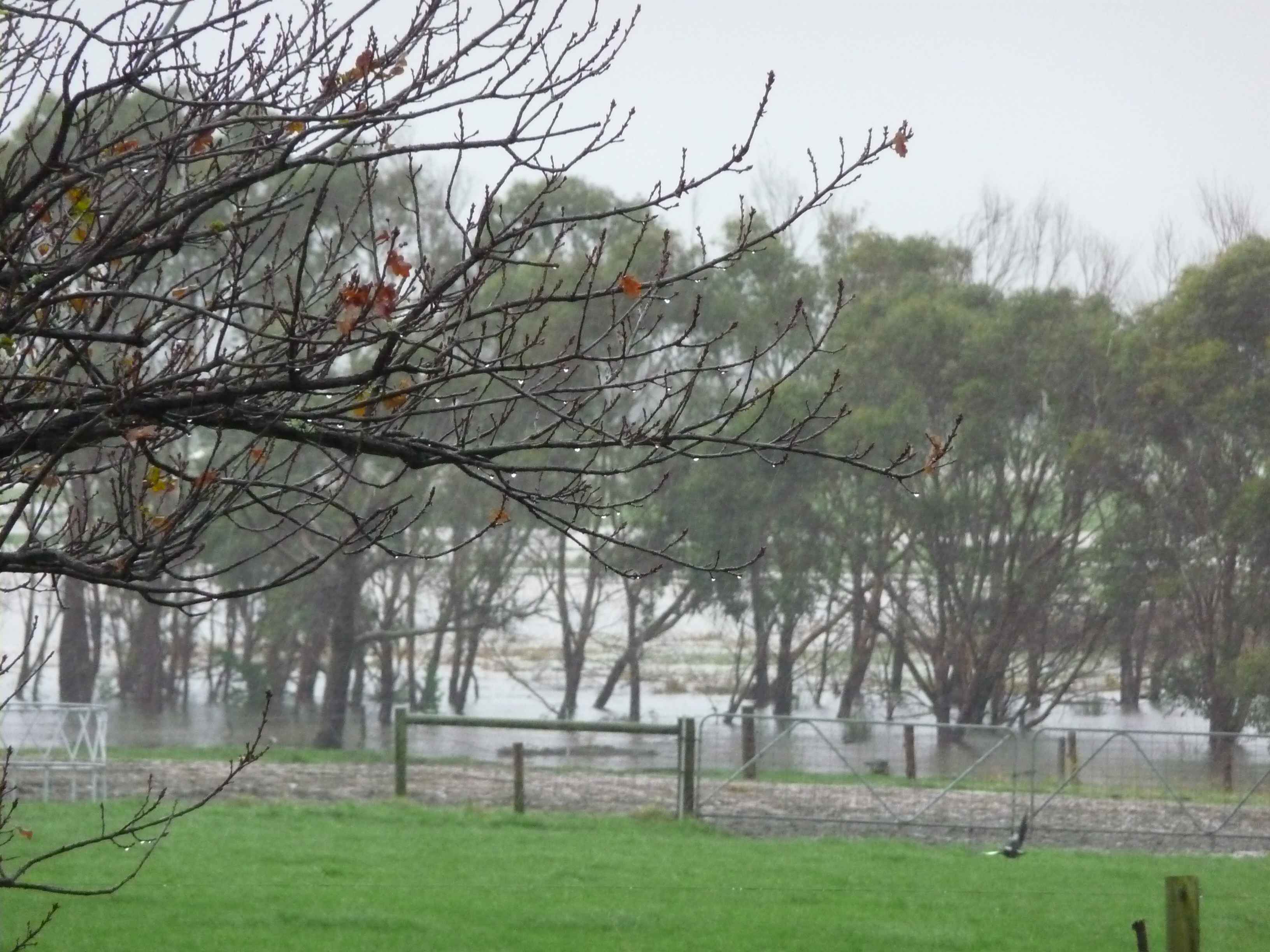
The third flood in 30 days

Normally, a minor flood like this one wouldn’t cause us any angst. We’d still have two-thirds of the farm, after all. The river flats are cut off but we also have undulating paddocks that never see a flood.

Unfortunately, we are halfway through calving and need to have six different groups of cattle in different paddocks: calves, large and small yearlings, dry cows, springing (soon to calve) cows and milkers. We also have nine “high ground” paddocks out of action due to renovation.

On top of this, we have been making up for punishing the high ground during the last two floods with remedial doses of fertiliser, including urea.

Urea is 45 per cent nitrogen, an element that is every bit as essential for plant growth as sunshine and rain. It’s even fed to animals sometimes to boost the protein level of their feed but too much of a good thing can be lethal. Nitrate poisoning brings a sudden, horrific death.

According to University of Melbourne guru Richard Eckard:

“The timing of grazing, relative to nitrogen fertiliser application, may adversely affect cows. Figure 1 shows the pattern of nitrogen uptake, as nitrate-nitrogen or crude protein in the plant, after grazing and subsequent application of nitrogen fertiliser. The following observations, from Figure 5.1, are important:

  • depending on condition, it usually takes around 4 to 5 days for the applied nitrogen fertiliser to dissolve into the root zone and to be taken up by the plant;
  • nitrate levels in the plant peak around 7 to 14 days post nitrogen application;
  • protein levels in the plant peak slightly later, usually around 16 to 18 days;
  • usually nitrate levels in the pasture drop off to acceptable levels by 18 to 21 days post nitrogen application.”

In other words, don’t let the cows into the paddock for 18 days after you spread urea. It’s 10 days right now.

Oh bother, oh dear, holy cow. I want to go home! (Hang on, this is home. Damn.)
Robotic milking: the gentle touch of machine on moo?

FutureDairy project leader Dr Kendra Kerrisk is something of an icon in her field of milking automation and so it’s very exciting to have her write this guest post for Milk Maid Marian. There are already a handful of robotic dairies in Australia and this looks to be the way of the future. Ironically, Kendra explains, it may allow dairy farmers to spend even more “quality time” with their cows.

Robotic milking is a relatively new concept for Australian dairy farmers even though our European counterparts are well accustomed to the idea. It is a technology that I have had the honour of working with for 10 years now and there a lot to be send for this new way of milking cows.

To the less informed, the concept may conjure up images of metal on flesh that are less appealing than the tender human touch. In fact the contact with the cow is every bit at gentle as the conventional approach and one of my fondest observations is that robotic milking farmers have an increased ability to enjoy the time that they spend with their cows when they no longer have to attach milking cups to every teat of every cow twice every day. It seems that the saying “quality not quantity” has a place when it comes to farmer/cow interactions.

Robotic milking farmers are unanimous in their opinion that the technology creates a farm system that results in very relaxed and laid back cows. The idea of robotic milking is that milking occurs 24 hours per day and that the process is voluntary (i.e. the cow completes the process without human intervention). Whenever I spend time with visitors at a robotic dairy (either our research facility or on commercial farms) the visitors are always deeply influenced by how quite and calm the milking process is with robots.

With robotic milking the cow chooses when to be milked and moves around the farm system at ‘cow pace’.

Cows in paddock with robotic milker in background

The cows are moving one by one hoorah hoorah…

Whilst I have been involved in researching the application of robotic milking I have also had the pleasure of being involved with many commercial farmers as they adopt this new way of farming. The farmer must learn a new management style whereby the farm is managed in such a way that the cows makes choices that suit the farmer and the farm targets. Cows move around the farm to gain access to incentives and by default can find themselves at the dairy for milking when their time is due.

Cow walks through robotic gates

With robotic milking the cows bring themselves to the dairy (they even operate specially designed one-way gates themselves) and take themselves back to the paddock.

The concept of robotic milking is creating a work environment that allows farmers and their employees to focus on higher level management tasks. In this manner they have the opportunity to manage their herd through an increase in the level of real time data that becomes available to them allowing them to focus on individual cows that require attention. The real attraction is the more flexible working hours that reduce the need for the early morning starts and commitment to milking cows twice a day. And the bonus for the cows is that they can now manage themselves in a manner that best suits them as individuals or as social groups.

Robotic dairy

These ladies know exactly how to manage the system to ensure they don’t miss out on the “treats” and “rewards” that are available to them.

Cows are creatures of habit and they truly appreciate a predictable environment. Robotic milking is exactly that and the outcome is a herd of cows that are very easy to work with since they become extremely calm and ‘chilled out’. With all of my experience in the area of robotic milking I have absolutely no doubt that this is a way of farming that is going to be increasingly adopted on commercial dairy farms in Australia and around the world.

Possibly one of the greatest bonuses is that I reckon dairy farming is going to increase in appeal with the younger generation which is exactly what our industry needs if we are to remain sustainable far into the future. If we achieve that they we are all winners because it goes a long way to securing our ability to continue to provide Australians with fresh, safe and nutritious dairy products that are produced in our own backyard!

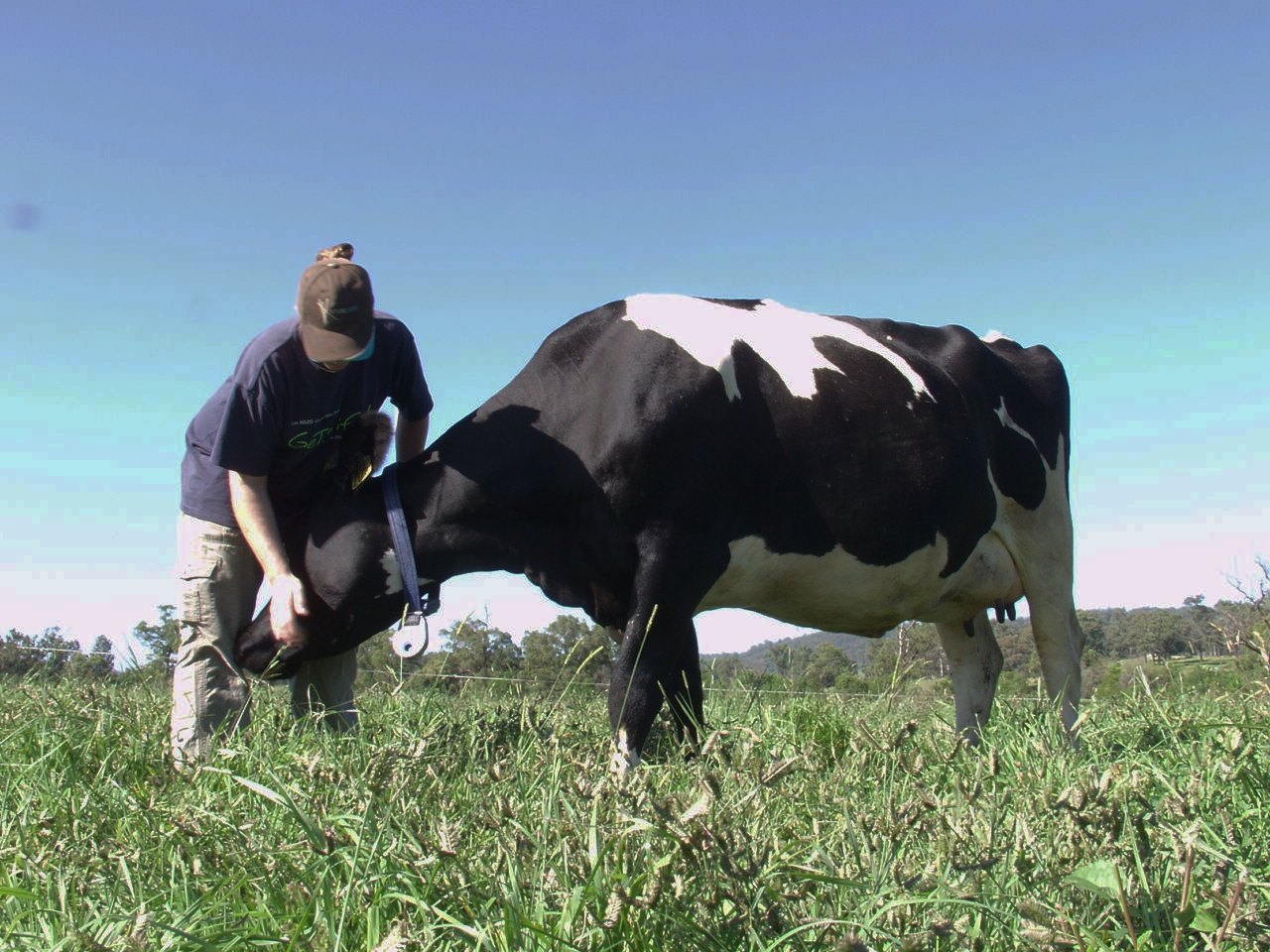
There’s always time for a good scratch!!

There’s always time for a good scratch!!

The morning after

I lay awake listening to rain on the roof and when dawn broke, this was the view that greeted Alex and me yesterday.

Flood June 4

No better than the day before – even the water troughs disappeared!

Wayne was in Melbourne, Zoe still curled up in bed. The cows were missing their milker, Clarkie, who was on the other side of the flood waters. Sticklers for routine, they’d started coming into the yard and would not be happy! As soon as Zoe woke, we packed breakfast and headed off in the car, looking for a way through.

Flooded road

The most likely option

I sat contemplating the water for a couple of minutes and turned back – not worth the risk. After about three-quarters of an hour of back road exploration, we made it to town! A quick call to Clarkie and he was on his way.

Yay! Our patience is rewarded![/caption]

The cows were milked a few hours late but everyone was safe and Zoe made it to school in time for morning tea. The rest of the day was spent hunkered down with farm consultant Matt, poring over spreadsheets, while Alex entertained us with his antics. The waters are still quite high today but this afternoon’s farm tour will reveal the extent of the damage.

All part of the thrills and spills of life on the land and I guess we had better get used to it – if the scientific community has it right, the climate rollercoaster will only get more and more “exciting”.

Two floods in ten days

My kitchen is a picture of domestic bliss: gingerbread men fashioned by Zoe in the oven, chicken curry in the pressure cooker. But the reality is that Zoe is home early from school because the roads to town are sure to be cut by now with the second flood in 10 days.

The second flood

Groundhog day

A neighbour tells me he tipped 94mm out of the gauge this morning and it hasn’t stopped raining since. The cows are on high ground (as is the house, thankfully) but they ate those pastures out only a week ago to give the flats a chance to recover and the grass is still short.

What will we do? Redo our budgets, then call the gravel contractor to get first in line for track repairs, followed closely by the fodder supplier.

The cows will have soft, tender feet so we’ll have to take them extra gently along the tracks and we’ve already earmarked a “sacrifice” paddock to spare our saturated soils from pugging and compaction.

None of this would be too, too terrible if it was November but it’s only June 4 and as the wry @Hoddlecows noted on Twitter, optimism about the new season seems to be washing away with the flood waters.