Spongey paddocks and rocky roads

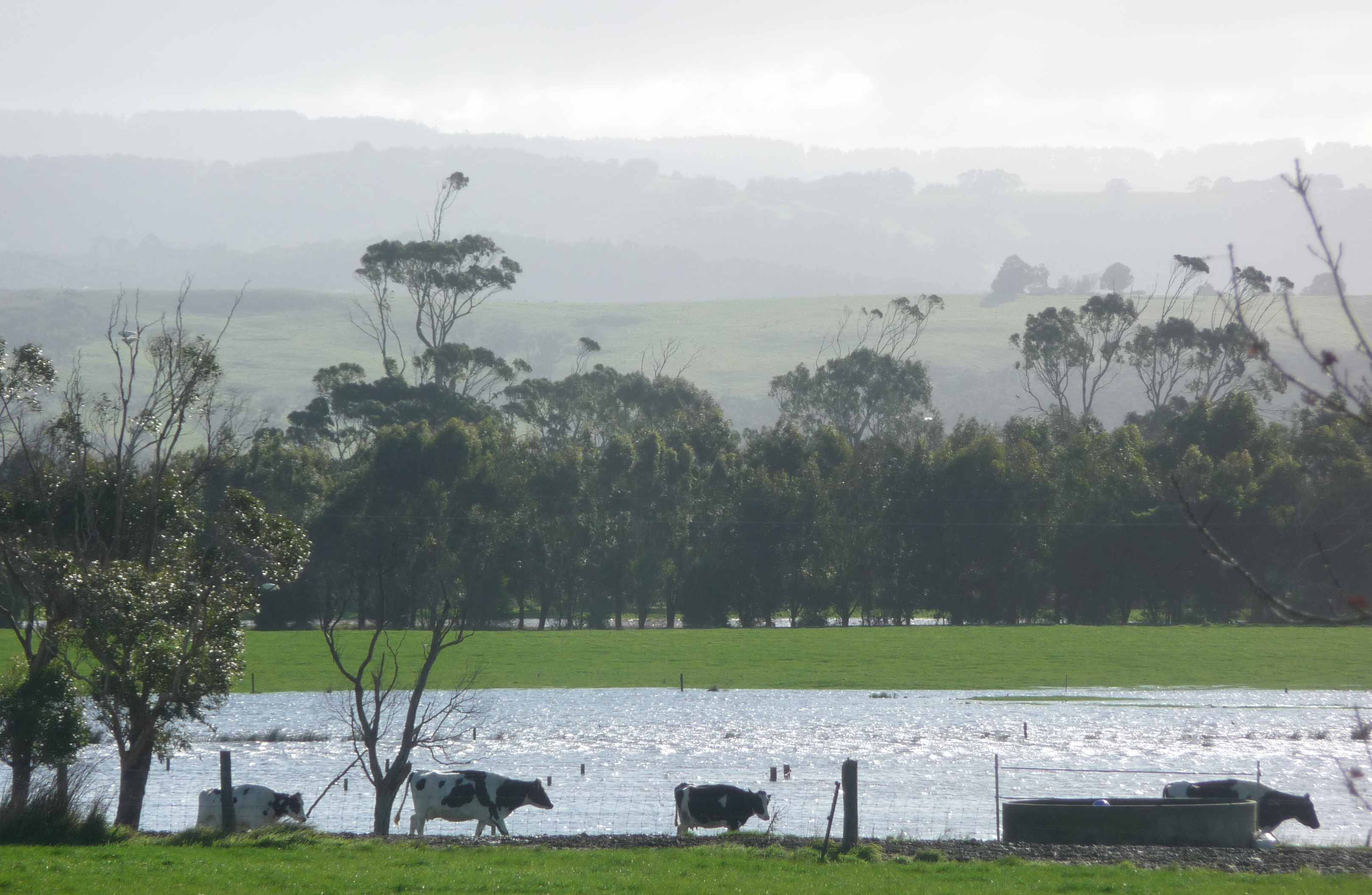
This is what the farm looked like a week ago.

May flood

The first flood of the season

In the short term, it’s bad news in the form of fence repairs, lost gravel and porridgey paddocks. In the long term, it’s what has shaped and maintains this beautiful landscape.

The floodwaters bring silt and nutrients that build deep chocolatey soils bursting with life. The alluvial soils seem perfectly adapted to the floods too. Rather than succumb to saturation, they drain quickly but hold back just enough moisture to sustain pastures year-round.

Enough romanticism though – the focus is now on resurfacing the track to avoid a herd of tender-footed cows!

Gracious visitor to the farm

It’s an understatement to call it wet here at the moment. We have a mini-flood across the river flats and the dam is overflowing so last night I started up the siphon again and look who I saw!

White bellied sea eagle

Her Majesty, the White Bellied Sea Eagle, seated on her (or is that “his”?) throne.

Apologies for the photo quality – it was getting dark and the eagle was right in the centre of the dam, which is a big ask of my farm-going point and shoot! To appreciate its majesty, take a look at these photos of the white bellied sea eagle.

I was very lucky indeed to see it. According to a DPI fact sheet, the eagle is very rare here:

The total Victorian population is thought to be extremely low: possibly only 100 breeding pairs survive (R. Bilney pers. comm.). Distribution records indicate two population concentrations – approximately 25 pairs around the
Gippsland Lakes and 25 pairs around Corner Inlet – and a further 50 pairs scattered throughout the rest of Victoria.

The bird is about the size of a small wedgetail, with a wingspan of up to 2.2 metres. Like the wedgie, this one was harassed by smaller birds as she literally took off into the sunset.

Sea Eagle in Flight

Off into the blue yonder

Life lessons for a dairy dog

Patch was just sniffing about while I was moving a temporary fence this morning when all of a sudden, he yelped, dived into a drain in sheer panic and splashed over to the other side. The dousing must have done him some good because he emerged calm but with a reproachful look that suggested I had committed a terrible crime.

Patch, you see, has working dog blood running through his veins but this town-bred pup has had a lot to learn since we adopted him from the volunteers at Homeless Hounds this Easter. One of them is to treat all fences as though they are electric.

After that disgusted stare, he took off down the paddock, refusing to answer my calls. All I could think of was: “What will I tell Zoe if he disappears?”. Zoe and Patch have become inseparable. A sample of her writing exercises from her school book includes:

“I have a nu dog and i love mi nu dog” and “i love mi dog and he love me” and “This is mi star and this is what it says homeless hounds rescue dog” and so on and so on.

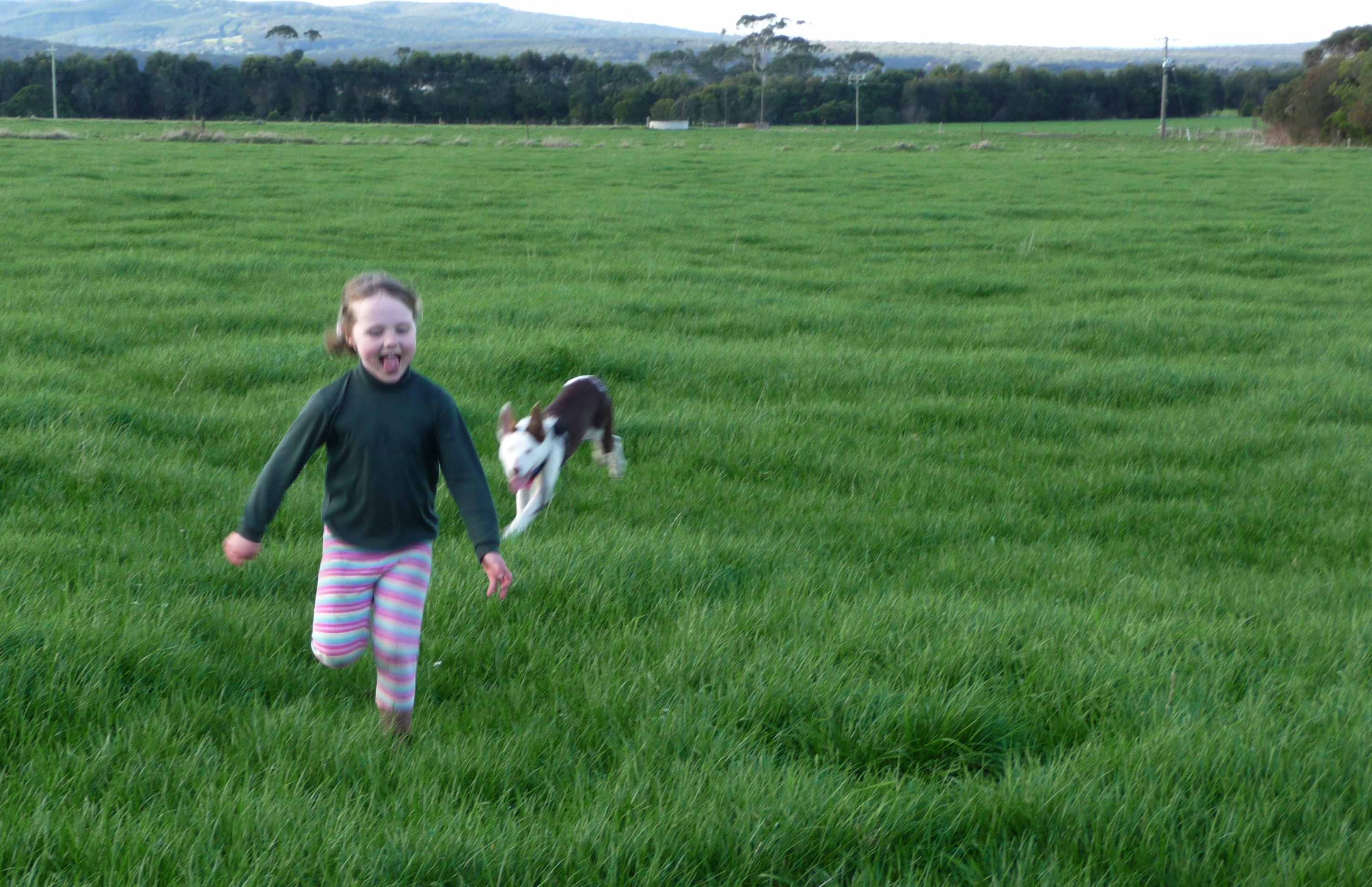
Zoe and Patch in the paddock

Zoe and Patch on Sunday. Yes, they were running very fast!

Thankfully, the bedraggled Patch ran home and was happy to be reunited but it got me thinking about some of the lessons he’s had to learn about farm life.

Lesson 1: When mum says to be quiet, listen!
Remember when Patch met the cows for the first time?

Lesson 2: Bulls are bullies
Patch decided to take on a bull and lost. Nothing broken but he was sore for a couple of days.

Patch and the bull

The working dog instinct needs to be matched with experience

Lesson 3: Sometimes it rains ice
Patch didn’t want to ride in the Bobcat the day after the hail incident.

Lesson 4: Don’t run too close behind the Bobcat when the track is muddy

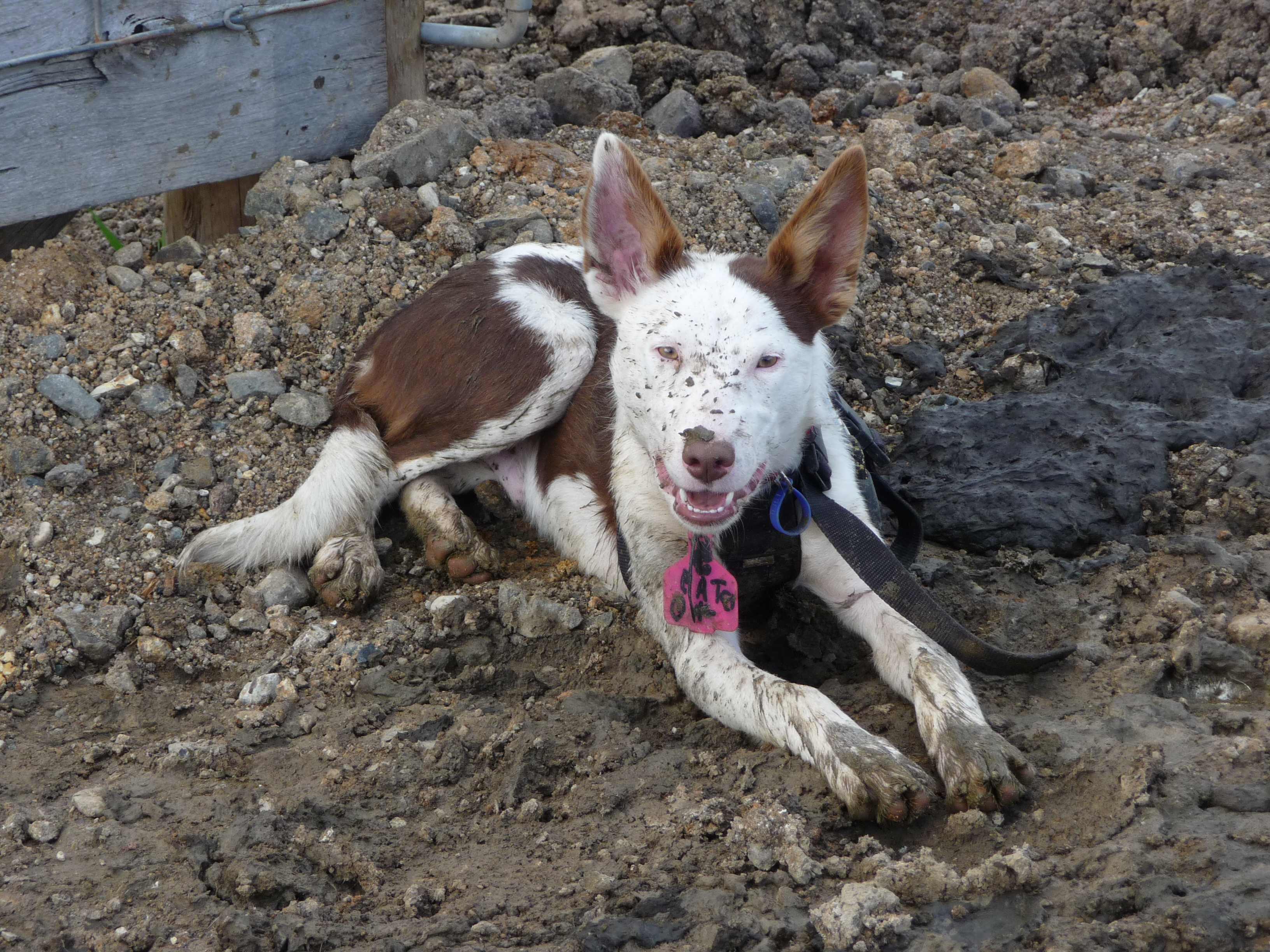
Muddy Patch

What mud?

Lesson 5: Don’t run into the Bobcat
Ouch! Patch ran into the side of the Bobcat while it was motoring along (slowly) and ended up with a black streak on one leg. He’s now aware of traffic.

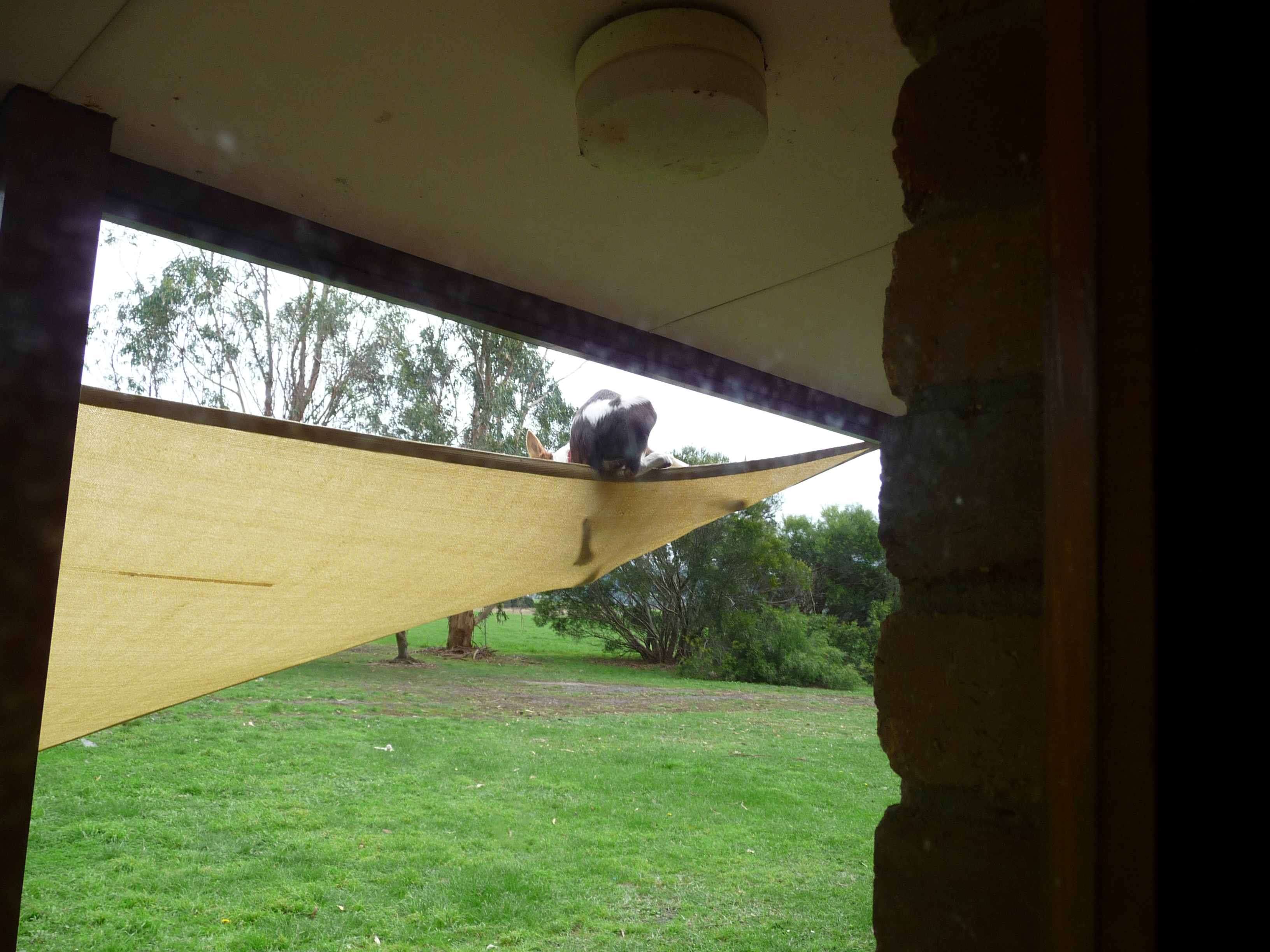
Lesson 6: Shade sails are fun to climb but don’t try to get down at the top

Patch on the shade sail

Nice day to go for a sail

Lesson 7: Farm life is fun
Patch is one of the happiest dogs in the world.

Zoe and Patch

“Mi dog Patch is cleva”

Carbon tax misfires

I imagined there would be riots when the average Australian family faced a 10% cut in income as a result of the carbon tax. But for some reason, nobody seems to be making a big deal about it.

I suspect it’s pretty quiet because although mine is a very average family (two kids and a dog), we’re not on the political radar.

The carbon tax is expected to slug us around $5000 per year – a whopping 10% of the average dairy farm family’s income. As reported in The Land and the Australian Financial Review:

The three majors that will pay the new tax from July 1 are already investing in low-carbon technologies but Murray Goulburn Co-operative estimates rising electricity prices will cut the annual income of the average farmer by $5000 a year, The Australian Financial Review reports.

“Profit in the average dairy business in recent years has averaged $50,000,” one MGC general manager, Robert Poole, said. “So that represents a 10 per cent cut. For the average dairy farmer, the tax is going to cut hard into their profits.”

How can this be? Well, because even though I plant 1000 trees or more on the farm every year and have built some of the most carbon-rich soils in the country (up to 22% organic matter content), I cannot participate in the poorly framed Carbon Farming Initiative.

The milk processor we supply, Murray Goulburn, will face increased costs of $10 million per annum and will pass those costs onto farmers – guaranteed. It is guaranteed to do so because MG is 100% farmer-owned so the buck quite literally stops with us. Our fertiliser, fuel and electricity prices will also rise.

Ironically, if MG was spewing out far more greenhouse gases, we might not face this crippling tax because “emission intensive” businesses that export just 10% of their products are considered “trade exposed” and given special concessions. MG exports around half of our milk but because it’s not that “emission intensive” (aka dirty), it misses out on concessions.

Please, can somebody explain the logic behind this?

Antibiotics in milk keeps us up at night

Yesterday I made a phone call that could cost our family thousands of dollars.

It had all started during the routine rounding up for the afternoon milking. I love rounding up. It’s a great time to chill out, enjoy the scenery, check the fences and troughs and admire the cows. I take my little red book and write down the numbers of any cows that need attention and have a look at the pastures to check the cows got the perfect amount of grass.

While scanning the herd, my eye rested on a young black cow with a ridiculously round belly and very little milk. I knew her. Only two weeks ago, I’d had her preg tested and sent on her annual holiday. On Sunday, I’d decided she was closer to calving than first thought and put her in the calving paddock.

But here she was with the milkers. After freezing in my tracks for a moment and taking a deep breath, I turned around and rushed to the house to start making phone calls. The first phone call was to our field officer at the co-op, Gregor.

“Gregor, I’ve just seen a cow in the herd who must have been milked this morning during her withhold period. What happens now?”

The problem was that this cow, 1216, had been treated with an antibiotic to cure and prevent mastitis during the critical calving period. That morning, Clarkie had found a lot of white “stuff” in one of the filters after milking. Now that I’d seen her, I knew it must have been teat seal – which is used to keep nasty bugs out of her teats, while holding in the antibiotics. The $64,000,000 question was: had the automatic cup removers taken the milking machines off in time to prevent antibiotics reaching the vat?

If there was even a trace of antibiotics in there, a whole day’s milk would have to be poured down the drain.

The only thing to do was take a sample from the vat into the local vet centre to be tested, a process which could take up to four hours. When I got back outside, Clarkie had taken over rounding up, wondering what on earth I was up to. Once I explained, he sent the cows back to the paddock while I shot off to town with a sick stomach and one of Zoe’s water bottles filled to the brim with milk.

On the way home after school, I explained to Zoe what it all meant, including the implications of pouring the milk down the drain and the implications of not being honest with Murray Goulburn about spotting the cow in the first place. It was a quiet trip and a long, long few hours while we waited to hear from vet Amy who’d stayed back late to test our sample. But our patience was finally rewarded with a negative result – four hours after normal milking time and at the end of an already very long working day, Clarkie fired up the machines again and topped up the vat with the day’s milk.

I am so appreciative of the support from Clarkie, Gregor and Amy during this crisis on old Macdonald’s farm. And, today, I am off to buy another electric fence unit that will be dedicated to the calving paddock.
Caring for Our Country requires a team effort

If it takes a village to raise a child, it takes a country to take care of its land.

Our family has set a target of planting at least 1000 trees on our dairy farm every year but we’ve only been able to do it with a lot of help.

  • Greening Australia helped me develop a whole farm plan and funded the refencing of 11ha of remnant vegetation plus 800 trees that our friends helped us to plant.
  • Our local Landcare group provided a good chunk of the funding for fencing off and revegetating a wetland that volunteers from the Victorian Mobile Landcare Group came down from the city and planted with us.
  • The West Gippsland Catchment Management Authority funded kilometres of fencing and thousands of trees along the gully and anabranch, plus connecting wildlife corridors.
  • Again, the volunteers from the Victorian Mobile Landcare Group came and planted 1200 trees for us last year.
  • The Wellington Shire Council funded the planting of trees along the roadside bounding our farm a year ago and has funded more work in the wetland this year.

We are so, so grateful for all this help. Revegetation is an expensive affair that involves a lot of planning and hard yakka. It’s so worthwhile! This is one of the trees planted by Bruce, Chris and David of the VMLG last October.

Six month old tree

The trees will provide wildlife habitats, help to keep the water table healthy, protect our rivers and the ocean and make a small contribution to reducing carbon pollution. They will also make our cows more comfortable in unpleasant weather and enhance the beauty of our landscapes.

With all this in mind, it was a relief to hear that the doomsayers’ predictions of funding cuts to the chief national environmental program, Caring for Our Country, that helps to fund all this work failed to materialise in the federal budget. There are unwelcome cuts (on top of previous cuts) but it is still here.

A concrete step forward ahead of winter

The entrance and exit to a dairy yard is often a miserable place. If you have an average herd of 250 cows, it gets trodden on by 1000 hoofs each day and bearing in mind that each cows weighs about 550 to 600kgs, that’s an awful lot of work. It also gets heavily “fertilised”!

Here’s how ours looked in summer.

Dairy yard entrance

Already boggy in January

I wasn’t looking forward to seeing it in winter! The rain has set in early and the feeling I have in my waters is that it’s going to be another nasty wet winter this year, so fixing up the bog-hole quickly became a high priority. Mud like this is a recipe for disaster in the form of lameness and mastitis – two things every dairy farmer tries to avoid at all costs.

Every season, we put loads of gravel in there and, every season, it seems to disappear before our eyes. I decided we had two problems: first, a concrete lip designed to force the cows to lift their hoofs, depositing the gravel back outside the yard had the twin effect of forcing each cow to step in precisely the same spot. Second, the legacy of loads and loads of gravel is that you end up building a mountain that, in our case, drained right back to the bog hole with nowhere for the water to escape.

So, we’ve taken a deep breath, got the excavator in to remove the mountain and the concreting crew in to provide a firm footing at the end of the yard.

New concrete at the end of the yard

Bog hole be gone!


Several seasoned characters have since wagged their heads, saying “You’ll only move the problem, you know…” but I don’t think it will be as bad. There’s now no need for the cows to so precisely follow in each others’ footsteps and the watery muck drains away from the track instead of into it. (Duh!) Wish us luck!

Confidence to grow: could foreign ownership be a godsend?

Farmers are a little enigmatic.

On one hand, we must be the most optimistic people on earth: we don’t give up easily because a great season could be just around the corner. On the other hand, we’re not typically the type that goes out and buy lots of stuff in the good times: we know another bad season could be just around the corner.

One thing of which you can be certain is that we know how to pull our horns in and refuse to open the cheque book when times look a little shaky. This seems to be just one of those times. The bank tells me that business is “quiet”, dozens of farms are for sale but not selling and one rural financial counsellor noted that she’s seeing more and more depressed farmers.

The market for dairy farms is now so quiet that I can’t tell you how much our own farm is really worth because there’s simply no benchmark. This in itself leads to a lack of confidence and, so, a vicious cycle ensues.

It was with all this in mind that I read Jonathan Dyer’s (@dyerjonathan on Twitter) blog post on foreign ownership of Australian farmland this morning. Referring to the purchase of farmland near his own property by a Qatari corporation, Jonathan remarks:

“Perhaps because we don’t know just how amazing our natural wealth is we aren’t appreciative of it and are happy for it to be sold off. We don’t value it and look after it like we should. If that is the case, if we don’t value what we have and aren’t willing to develop it, then maybe it’s good that others who do value and need quality food production are getting a chance here in Australia.”

I couldn’t agree more. What I am hoping though, is that the interest of foreigners in our natural wealth will encourage Australians to reconsider the way we view our amazing land. If we are to remain one of the world’s leading food bowls, we must have the confidence to grow.

Welcome to the Big Outdoors, suckies!

Yesterday, these seven to 10-day-old calves rediscovered the joy of the Great Outdoors. They’ve been in our little calf shed since birth, warm and safe from foxes. Most importantly of all, we’ve been making sure they’ve had enough colostrum – the special milk produced by cows in the first days after calving – to set them up for long, healthy lives.

Ethical milk – which brand to buy?

There’s a feeling “out there” in the Twitterverse that milk aint what it used to be. So, what to choose?

The first piece of good news is that there’s lots you don’t need to worry about. Growth hormones are illegal on Australian dairy farms for a start. Free range cows are also the norm (I haven’t seen a housed herd in Australia and wouldn’t even know where to find one).

Thanks to what raw-milk advocates often call Australia’s “ridiculously stringent” food safety laws, you can be confident your dairy foods are safe for even your most frail family members; the Chinese melamine disaster won’t happen here. Despite the marketing campaigns of a large multinational corporation, permeate (check my all about permeate post to find out more) is also safe and nutritious.

If want farmers to receive a fair price for milk, you can still shop at the big supermarkets with a clear conscience if you buy a brand-name milk. It’s even better if you can buy the Devondale brand of dairy products because they are made by the 100% farmer-owned co-op, Murray Goulburn. If you can access a farmstead brand of milk, that’s okay too. Don’t feel guilty if you can’t find or afford a farmstead brand though – very, very few dairy farmers can afford to set up a milk processing plant after all and we are grateful that you are supporting us by choosing not to buy the generic stuff.