What a farm upbringing brings

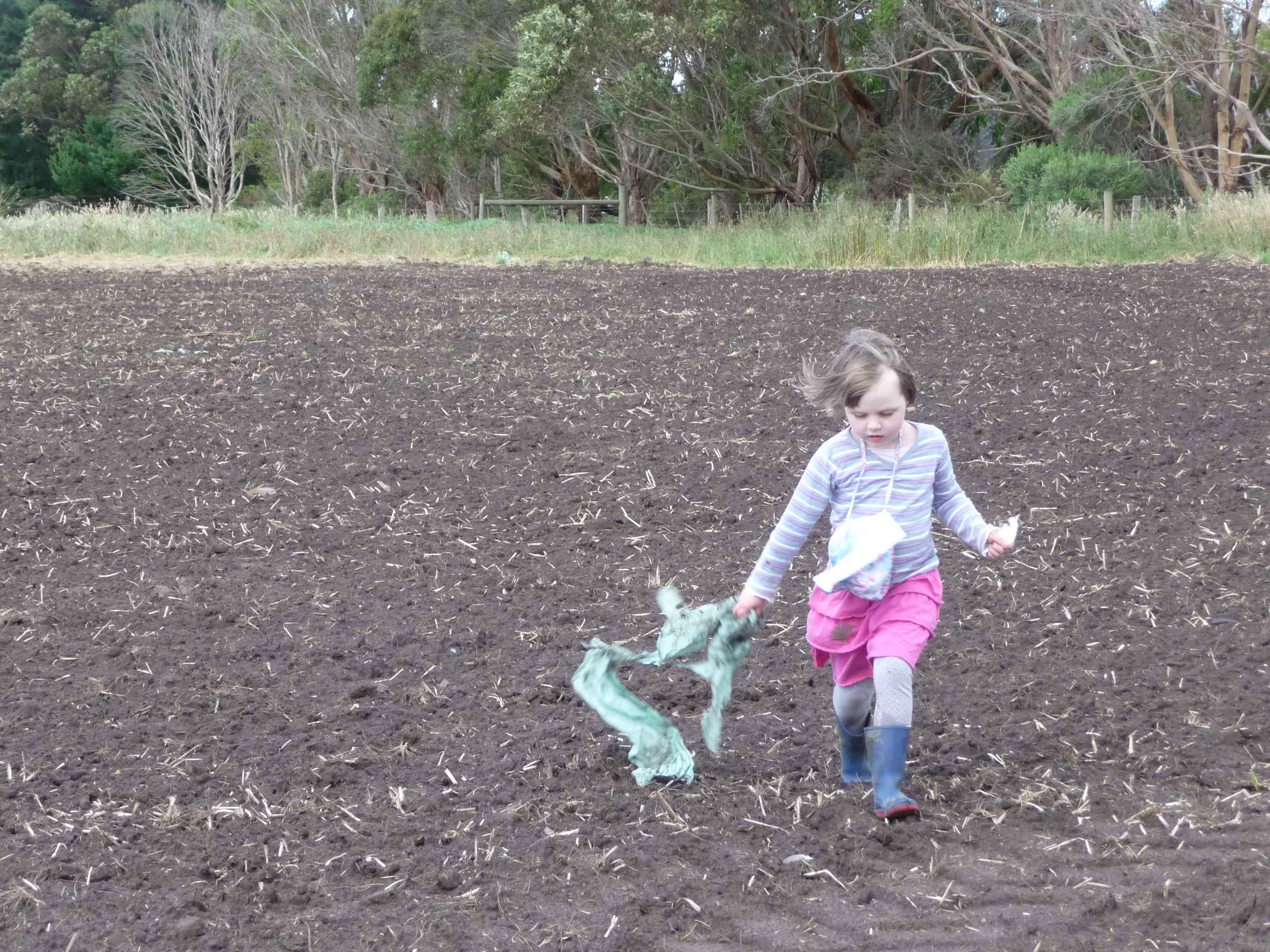
I am a very proud mama. Zoe loves to run and while I was setting up a paddock for the cows, she galloped off along the track and challenged me to beat her to the next gate. I watched the little dot bob along the track and reckoned she might just win, too. Instead, I found her three-quarters of the way to the “finish line”, doing this:

Picking Up Rubbish

"Rotten rubbish"

Just being part of farm life teaches children responsibility, care for animals, respect for the environment and a sense of pride in their own work. We are very, very lucky.

How transparent should farmers be?

There is no counter argument out there. Could it be because there is no humane practice?

Can’t take your word for it. You need to explain your practices and where your product goes. What happens to your male calves? Etc.

Show me! Tell me! I would like to keep consuming dairy.

The campaign against you is growing.

Honestly. I’m very open to being educated. It was an FYI. “You” = “dairy industry”.

One of your biggest hurdles is that like the cattle industry, u appear secretive. Transparency might be too late.

These tweets from a journalist with a self-proclaimed “love for our living planet and my opposition to her corporate destruction” has made an understandable choice: to believe a charity dedicated to the welfare of animals rather than an “industry”. Yes, although 98 per cent of Australian dairy farms are family farms where cows roam free, the perception is that we act as an industry in perpetrating animal cruelty on factory farms in the name of profit.

Why do I say it’s understandable? Do a little test to see for yourself. Google “bobby calf”.

Animal welfare organisations dominate the results. The people who live and breathe animal care – farmers – are missing. Our voices are not being heard.

I don’t really believe that Animals Australia campaigns will cause a noticeable drop in milk consumption because Aussies love to drink milk but these activists and their followers have worked hard to win the attention of policy makers.

Some of their views are valid, some are ludicrous, and some of the policymakers may well be swayed to adopt them. If we want to be able to operate farms free from a tangle of compliance or, worse, mandatory practices that are actually bad for animal welfare, we must learn from our detractors.

Animals Australia knows that science and logic do not resonate when it comes to animal welfare. Emotions quite rightly do because animal welfare only triumphs when the custodians hold the care of their animals close to their hearts. And because everyone knows that politicians are quick to follow popular opinion, we cannot be satisfied with lobbying in Canberra. We’ve got to tell the story like it is to anyone who will listen.

Tonight, Twitter forum AgChatOz will host a discussion on bobby calf welfare and other dairy practices. I will be there (baby bedtime permitting) and I hope lots of other dairy farmers will be too.

Would I advise my kids to become farmers? Country Hour asks the question

Do farmers want their kids to be farmers? A Victorian parliamentary inquiry is looking at why young people don’t want to further their education in agricultural studies. Early submissions says farming parents are one of the greatest deterrents… Hear more on the Country Hour today, and tell us, would you advise your kids to get a career in farming?

In just a few minutes, ABC Radio’s Country Hour will ask the million-dollar question: if life is so good on the land, would you recommend farming to your children?

I would, so long as Zoe and Alex have a passion for animals and the land and don’t have expensive tastes. Farming is nothing if not exciting and challenging. On the other hand, it’s anything but lucrative, particularly if you’re still struggling with a large debt burden as many young farmers must.

Even if they decide to become farmers, I wouldn’t recommend ag studies. The tradition of many farming families is to “get another trade to fall back on first” and it’s wise, whether that trade is boiler making or journalism. It makes sense to learn from other workplaces, acquire fresh skills, make new circles of friends, establish an independent identity and to experience being an employee before you become a manager.

Perhaps even more importantly, second jobs for farmers are incredibly common and the average Australian dairy farming family makes about as much income off the farm as on it. Employment helps us survive the bad years and ride out cash flow droughts.

And, if the worst happens, there are always options.

Farming with a baby in the summer sun

Keeping a baby safe, cool and protected from the sun while doing farm work is something of a challenge. And we all know how farmers rise to a challenge, equipped with hay band, tape and either WD40 or silicone!

In my case, it was half a dozen paper lunch bags taped onto the top of the baby carrier to form a “verandah” of sorts that got the fashionistas talking. I’ve since moved on and think I have achieved perfection.

Peeping out of a baby carrier

Peeping out

Some of Wayne’s old XXL cotton shirts have been seconded for a noble mission and you can see the result in the pic above. I just put one of these oversize shirts on over my singlet and the carrier and do up the bottom few buttons. Little man can be nudie rudie under the shirt and safe from the stinging sun.

Sun protection is equally as important for Zoe, who has just got a new hat and sunnies for summer (yes, I know it’s not strictly summer quite yet but it sure feels like it!).

Zoe in new farm hat and sunnies

Slip, slop, slap and splash with the yard hose makes for a cool farm girl

Unless we learn to work together, the animals will be the losers

You know, something diabolical has happened to our sensibilities as we use animals to feed ourselves. We have lost something in the process. It’s called CONSCIENCE.
I don’t know how dairy farmers can lie straight in bed, when they kill the babies … just as the baby seals are killed for their fur, these poor little animals don’t even get a chance to grow a pelt, let alone have time to be alive!!!! Where are we going as a species, to use other creatures in such callous, cruel ways? I am beyond disgusted, I’m appalled and ashamed. GET A CONSCIENCE FOR GODS SAKE, ALL THOSE IN THE DAIRY INDUSTRY.
Friday at 18:19

I don’t blame Sally Hook for that comment posted on the Bush Telegraph Facebook page. Her response to the reported dairy practices was very typical and I’d feel the same way if I wasn’t better informed. Sally and every other Australian has a right to know her food is ethically produced and if we dairy farmers feel slighted by the comments that misinformation brings, we only have ourselves to blame.

Farmers are understandably wary of the vitriol that drips from the tongues of many animal activists.  But that is no excuse to keep people in the dark. Nor can we leave it to our “leaders” to communicate with the rest of the world because it is impossible to delegate telling your own story. Sally needs to hear it from the horse’s mouth, no matter how scary that might be for us.

At the same time, I’m hoping the animal activists will also take a step closer to the table. Sally did. After two days of online “talks” with real farmers, as distinct from agripoliticians, she posted this comment:

I urge the good people of the dairy industry to keep pushing.
Sunday 2 hours ago

We can and must build bridges with Australians who share our passion for animals. Defending the indefensible minority, as industry people caught like rabbits in the spotlight tried and failed miserably to do on national radio, is not only morally bankrupt but counterproductive in the extreme.

Sally is right. The good people of the dairy industry must keep pushing.

Easy to forget what makes farm life unforgettable

MyFarm screenshot

The incredible MyFarm experiment

Both bold and bizarre, the National Trust’s MyFarm online experiment in farming and food production gives 10,000 members of the public a say in the running of a real working farm. I had a look at the MyFarm website for the first time today and was astonished by the account of a farmer assisting a calving. I count myself as someone who appreciates (actually, loves) farm life but reading about it from an observer’s standpoint is something else. People were moved.

MyFarm is a ground-breaking project bridging the gap between farmers and other members of the community.  While we don’t have anything like that here in Australia, there are lots of opportunities to connect people and farmers.  Farm Day does an amazing job of getting people out to farms and meeting real farmers, while the Archibull Prize and Picasso Cows help students learn about agriculture. Farming is even on Facebook with Farming is the New Black and quite a few farmers have begun blogs like mine to offer a window into life on the land.

Isn’t it odd that something as abstract as the internet is having such a role in bringing the very earthy lives of farmers closer to those of townfolk?

Day in the life of a South African Jersey dairy cow

A little while ago, clever teenage farmer Firn Hyde made a guest post on the Milk Maid Marian blog and it was so popular I begged her for more! So here is your next instalment – a day in the life of a South African Jersey dairy cow written by Firn.

Hi everyone!
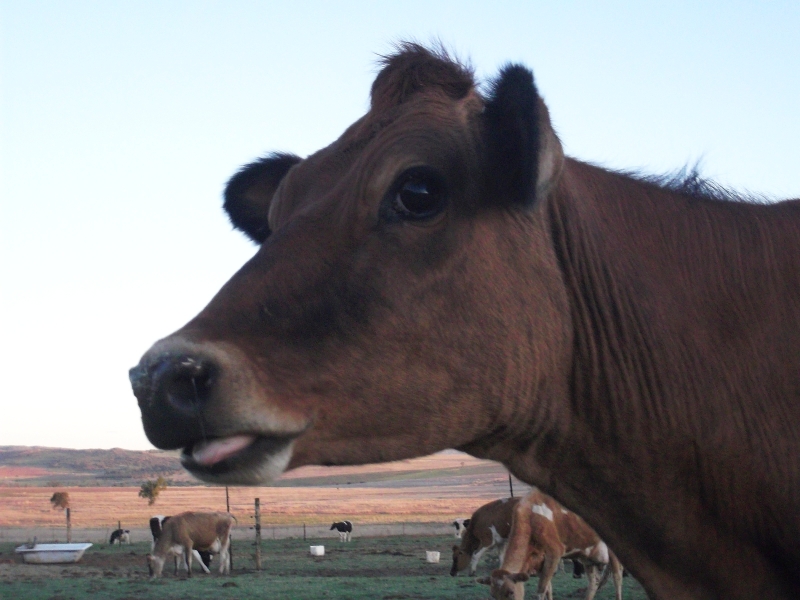
My name is Hydeaway Kalos Barbara, but most people just call me Barbara. I’m a young Jersey cow living on Hydeaway Farm in South Africa. I’ve only just had my first calf, and my friends know me as goofy but loveable.
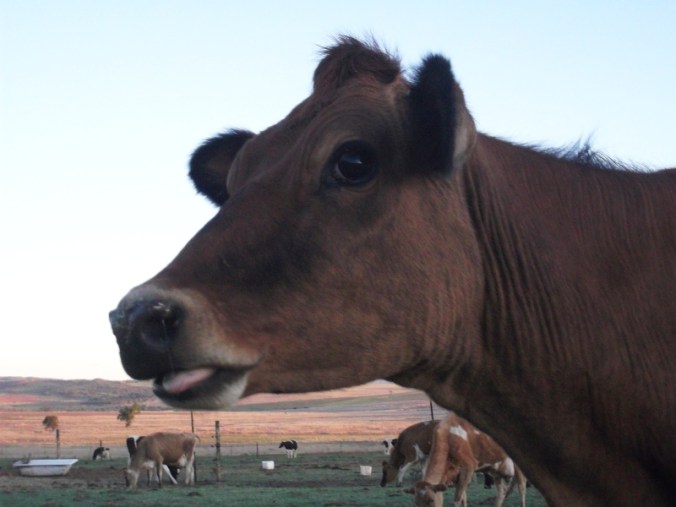
Barbara the Jersey cow

Introducing Barbara

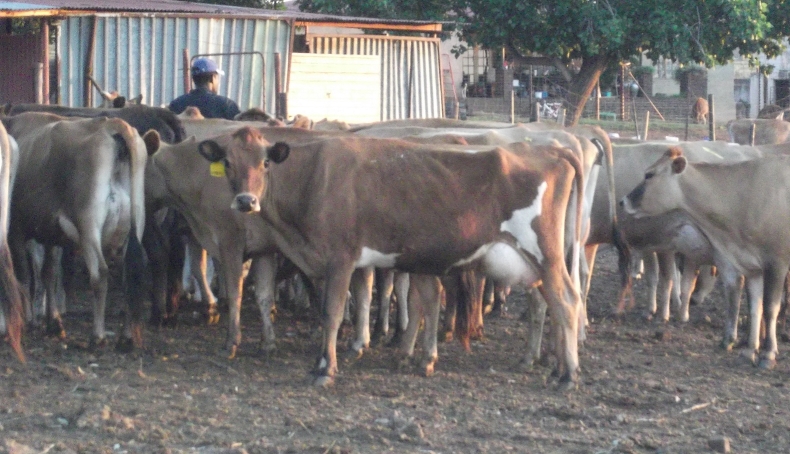
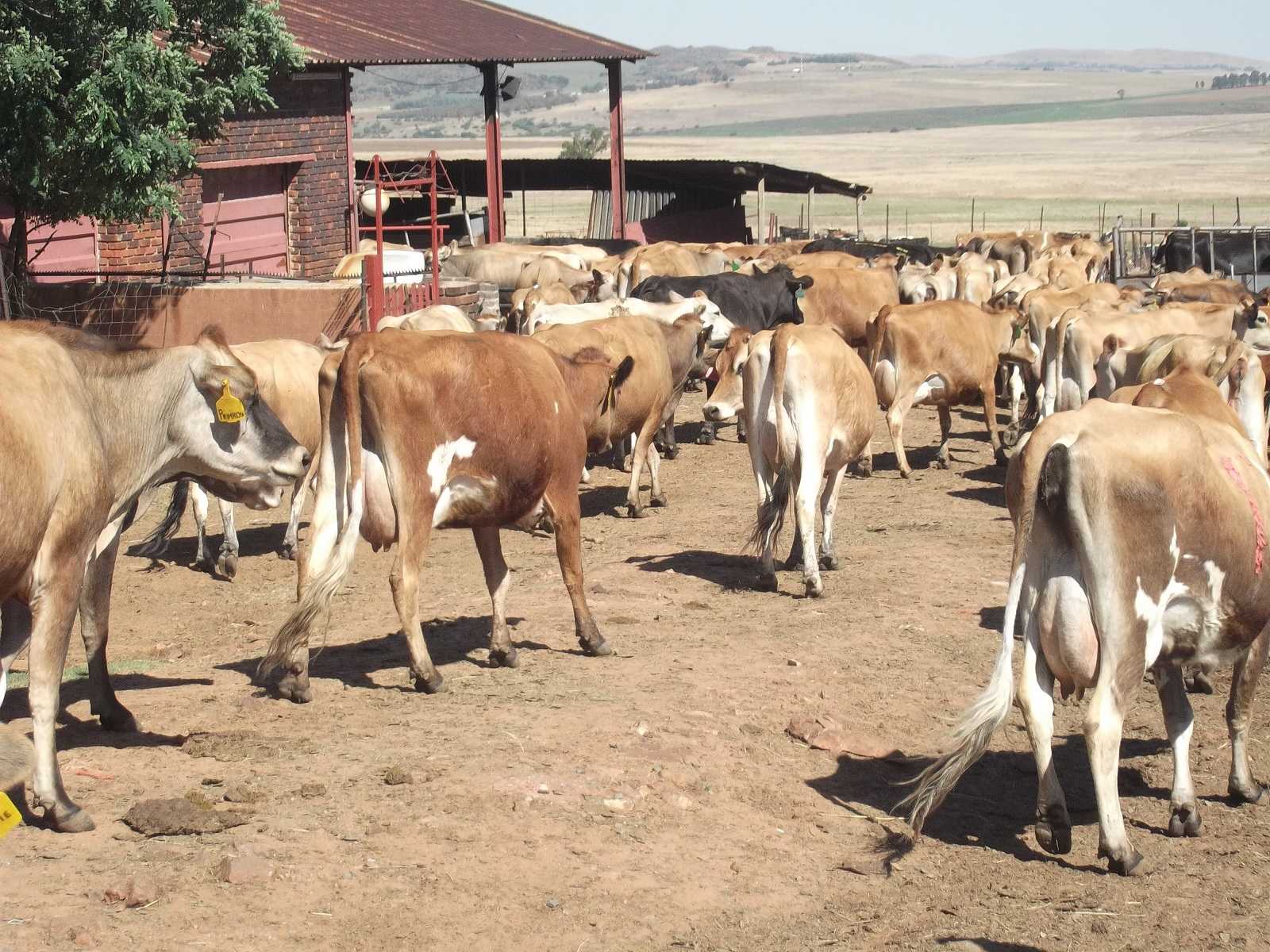
Early every morning, we walk up to the top of our paddock to get milked. Some of our humans come to fetch us, but we know to come as soon as we hear the milking machine bellow. We have lots of humans who for some reason walk on their hindlegs and are very noisy and not like cows at all, but they feed us and milk us so we’re quite fond of them.
Here I am waiting to go into the parlour to be milked.
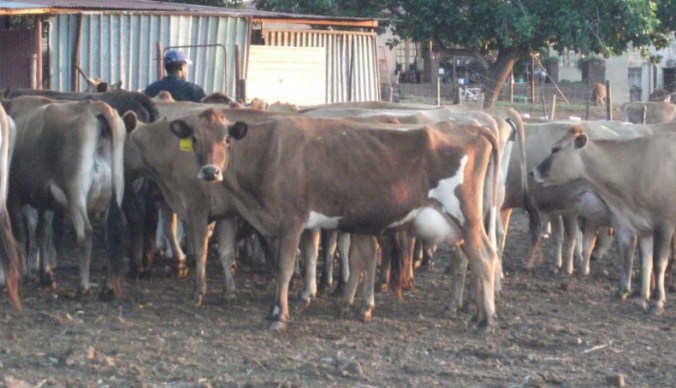
Waiting to be milked

Waiting to be milked

The parlour is really noisy. At first I was scared of going inside it with all the noise, and I used to kick at the human putting the machine on my udder to suck my milk out, but now I’m used to it. We get to eat some nice food while we’re being milked, and when I’ve been milked I feel a lot more comfortable.

Milking

Milking time

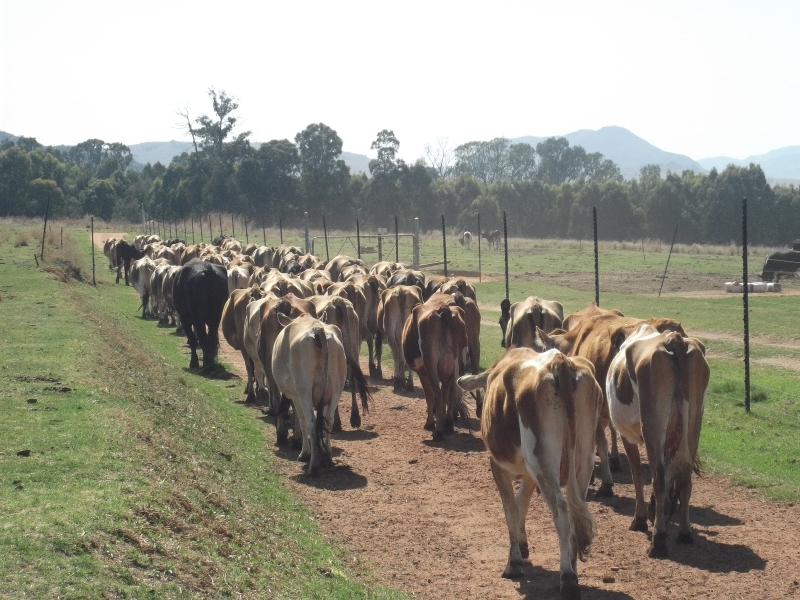
After being milked, we wait in a paddock until milking is finished. I’m usually one of the last cows to be milked because I’m smaller and younger than the others, so they push me out of the way and I’ve learned to wait my turn. Once the milking machine has stopped bellowing, our humans open the gates for us so that we can go outside for the day. I love going outside, there’s so much food and space!
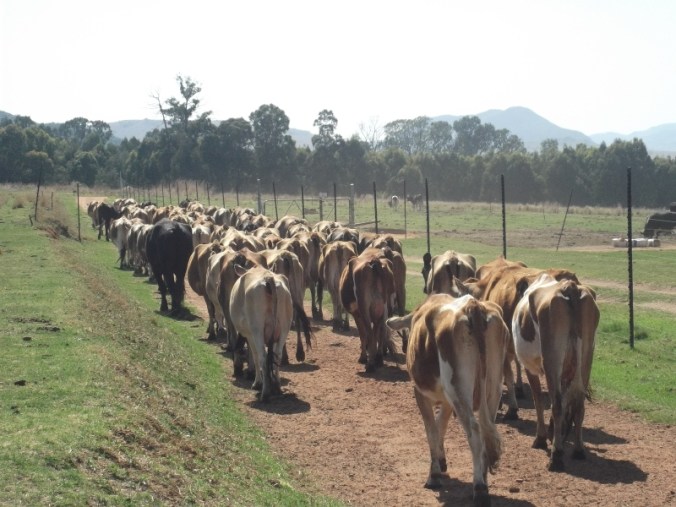
Off to the Paddock

Off to the Paddock

Do you see the big black cow on the left? Well, we’re all supposed to be Jersey cows, but he’s not a cow at all; he’s half Holstein and half Jersey, and he’s an ox. He has a little heifer human who keeps him as a pet. She likes to lie on his back and scratch his ears.

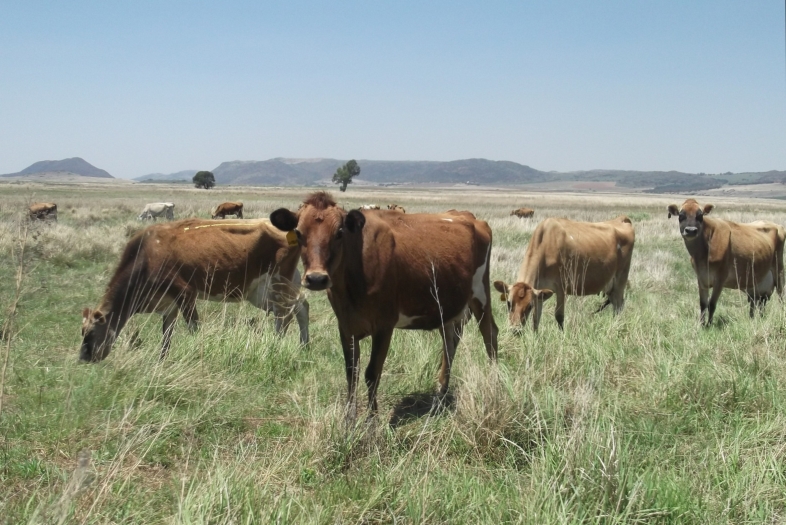
Now we spend the whole day grazing in the veld. Our humans think the grass isn’t good enough for us, but I like it. Here I am with some of my friends.
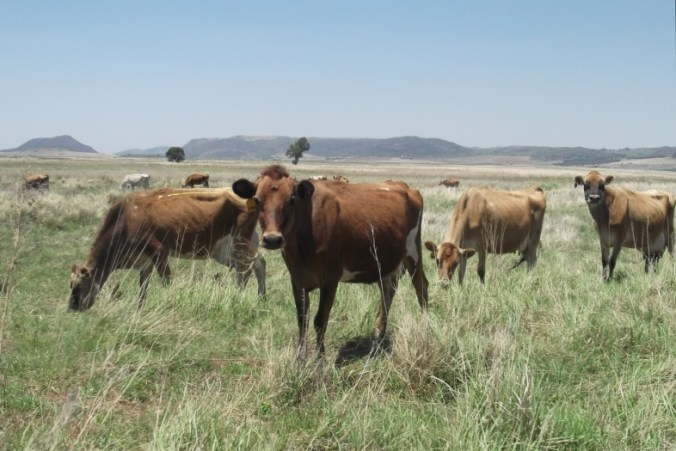
Barbara with her bovine friends

With friends

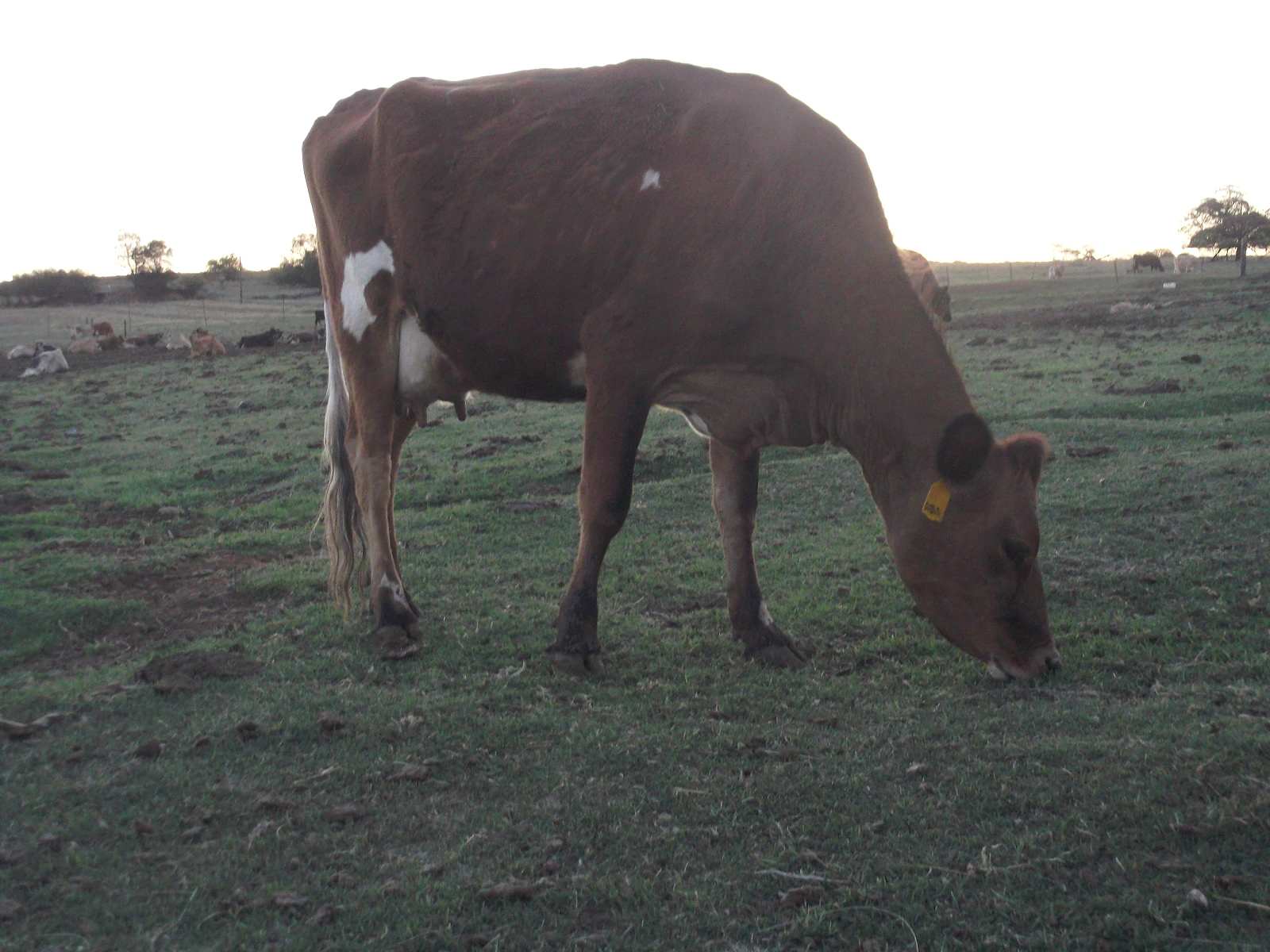
The grass tastes really good!

Barbara grazing

Delicious!

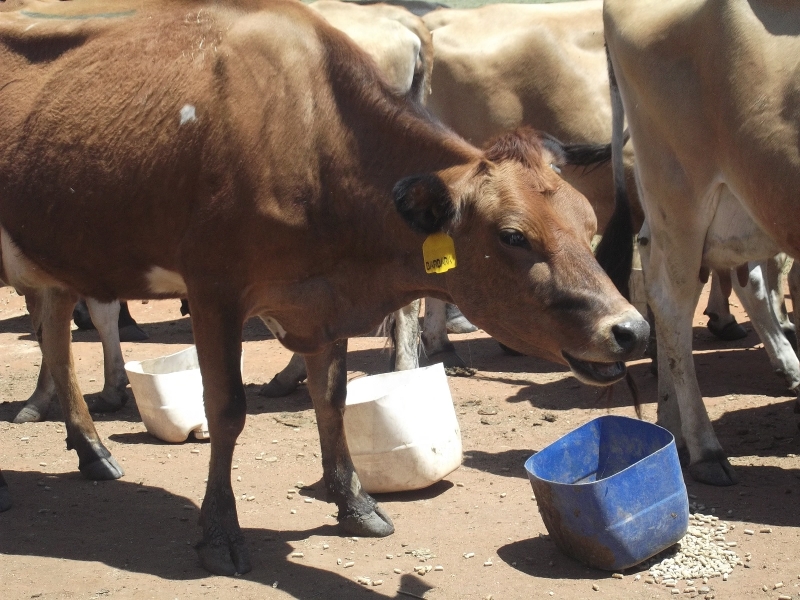
It’s not long before our humans come in a tractor to bring us our lunch. We each get our own bowl full of food. There is a bit of squabbling at the start, and sometimes us young cows get pushed out of the way, but there’s enough for everyone.

Lunch

Lunch

We spend a few more hours grazing away before our humans come to fetch us again and escort us back to the milking parlour. By then my udder is all tight and I’m ready for my supper.
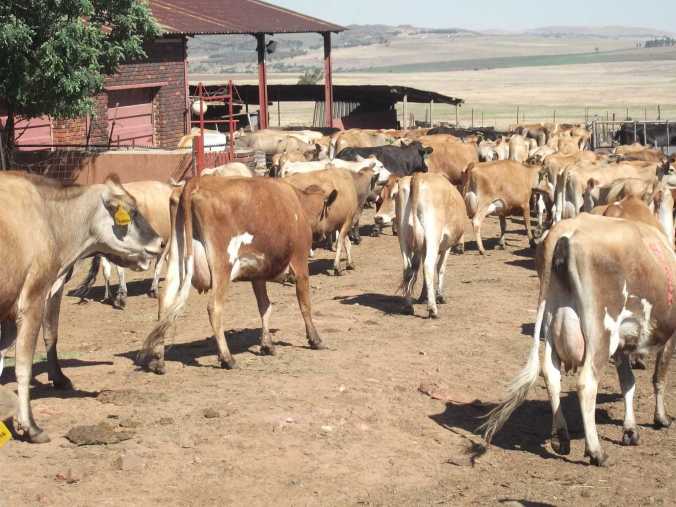
Supper time

Supper time

After getting milked again, we go into our paddock for the night. We have two big round bales of hay, but I also like to nibble on the green kikuyu grass that grows there. The milking machine goes quiet and the whole world settles down for the night. As the sun retreats below the horizon and the silence of Africa spreads its wings around us, everything is very peaceful, and I graze among my friends knowing that tomorrow is going to be just as happy as today was for a young Jersey cow on Hydeaway Farm.

Day's end
Day's end

The year turns the corner

Today’s very belated celebration with around 20 members of Wayne’s extended family of Alex’s birth in May and Zoe’s birthday in June signalled something else: the turning of the year in our family’s favour.

Back in June, we were beside ourselves. We were halfway through a marathon six-month calving period, welcoming a colicky new baby and coping with the wettest season in a very long time. Absolutely stretched to the limit.

We’ve finally turned the corner. Calving is finished and almost all the suckies are weaned, silage is well underway and Alex is a jovial, thriving five-month-old (mind you, no cake for his Mama thanks to his plethora of food intolerances).

Every dairy-farming family knows the annual cycle of crazy winter/spring workloads followed by the hiatus of December through to March. The heat slows pretty much everything on farm and is the perfect time to catch up – with everything from maintenance chores to entertaining friends. Summer is already in the air!

Lucky to be alive

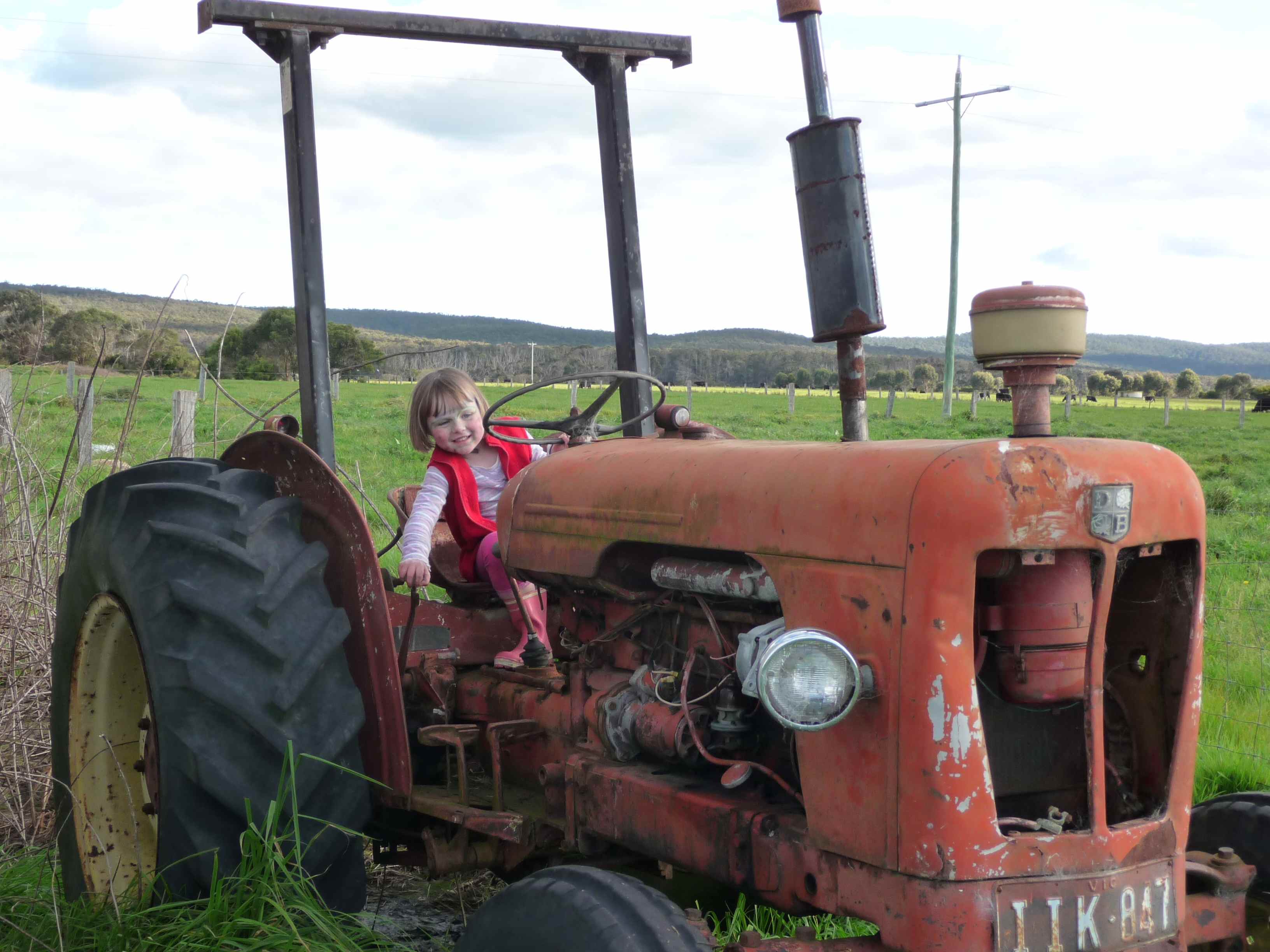
Zoe drives the David Brown

Zoe drives the David Brown

I used to mow and rake the hay with this tractor and the brakes were so hard to operate, I had to stand up to put all my teenage weight on them to get the David Brown to stop. Those were the days before Roll Over Protection Systems (ROPS), let alone cabins, on tractors.

Today’s tractors must have ROPS by law and most have cabs as standard. Thank God. My husband, Wayne, was unloading a B-Double truck of hay recently, when one of the huge rectangles (8x4x3) weighing just over 500kg fell off the front end loader tynes, bounced off the tractor where the windscreen meets the roof and came to rest perfectly balanced on the bonnet. Without the ROPS built into the cabin, he would almost certainly have been killed.

Even though we are much better protected these days, tractors and quad bikes cause almost all the deaths on Australian farms. The introduction of ROPS on tractors was really contentious back in the 1990s (was it that long ago?) and now, the introduction of Crush Protection Devices on quads is causing the same controversy today. The sooner we just put them on and get on with it, the more lives we’ll save.

People who drive conservation by walking the talk

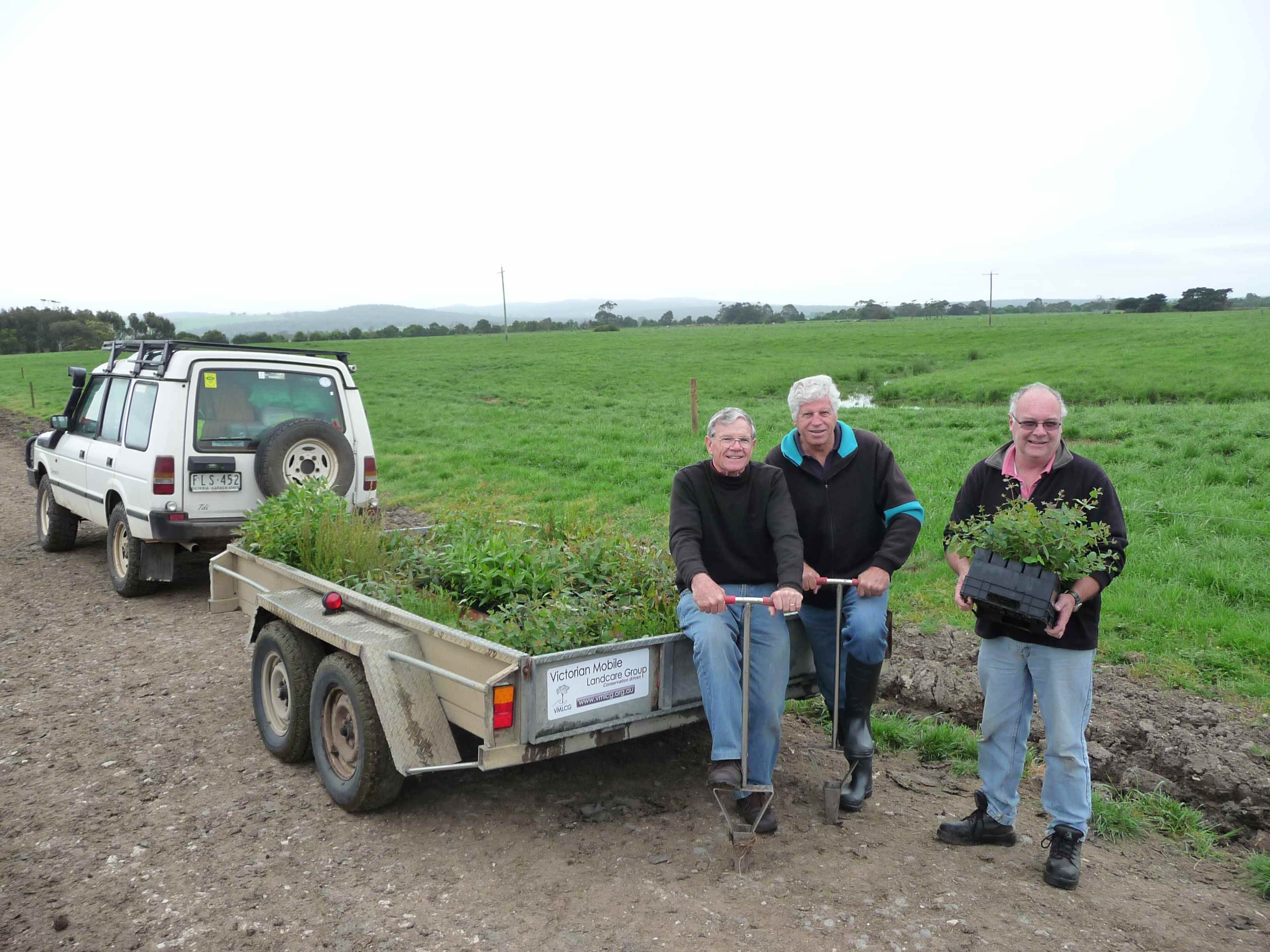
Three men drove up to five hours (each way) to get to our farm and then worked tirelessly all day for nothing except the sense of satisfaction that comes with doing something good.

David, Chris and Bruce are members of the Victorian Mobile Landcare Group, which is unique because rather than being a collective of environmentally-aware landholders keen to make their properties more sustainable, this is a group of environmentally-aware volunteers who plant tens of thousands of trees all over the state.

As they explain on the group website, VMLG members are “people passionate about land care through responsible 4WD use, we are a non-profit association tightly affiliated with Landcare Australia and 4WD Victoria”.

Last year, the VMLG helped us plant 800 trees and we were wrapt that they could come again this year to add 1200 more. Here they are at the start of the day, ready to get stuck into planting.

Victorian Mobile Landcare Group volunteers

Victorian Mobile Landcare Group volunteers: Bruce, Chris and David (L-R)

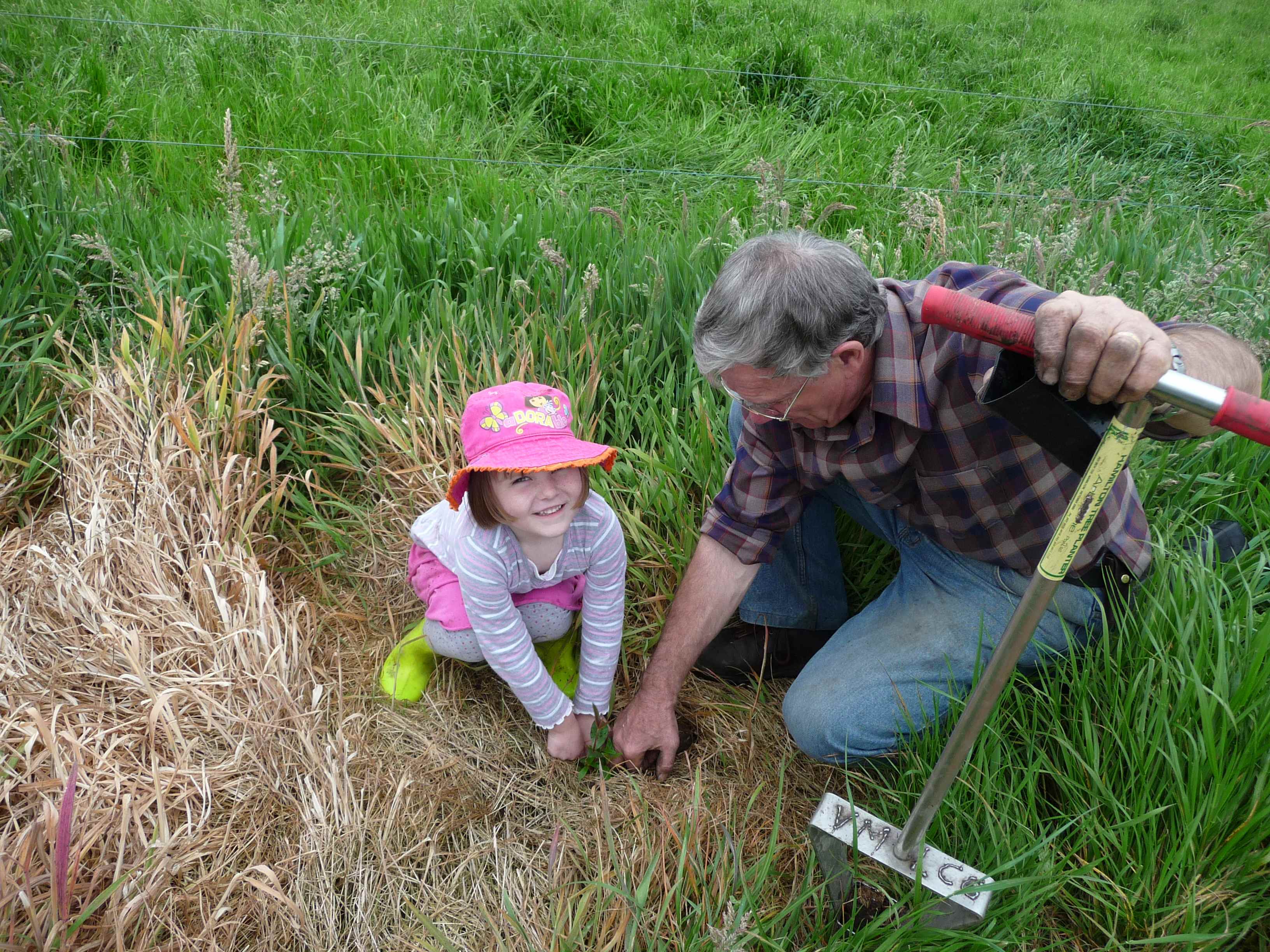
Bruce, Chris and David soldiered on in the rain (“just one more tray,” eh Chris?), stopping only for an hour-long BBQ lunch. I was proud to have Zoe working alongside these fellows who do so much more than talk about their commitment to the environment.

Bruce shows Zoe how to plant trees

Bruce shows Zoe how to plant trees

At the end of the day, we had created two wildlife corridors and shelter for the cows – a great outcome for the environment, our animals and the landscape. One tree was set aside for Zoe and ceremonially planted in the garden to remind us of the day.

Members of the VMLG and Zoe with a ceremonial tree

Members of the VMLG (David, Bruce and Chris) and Zoe with a ceremonial tree

Thanks guys. We couldn’t have got this done without your help. Thanks also to the West Gippsland Catchment Authority for spraying and 800 metres of fencing and to the Yarram Yarram Landcare Network for the donation of 400 trees.