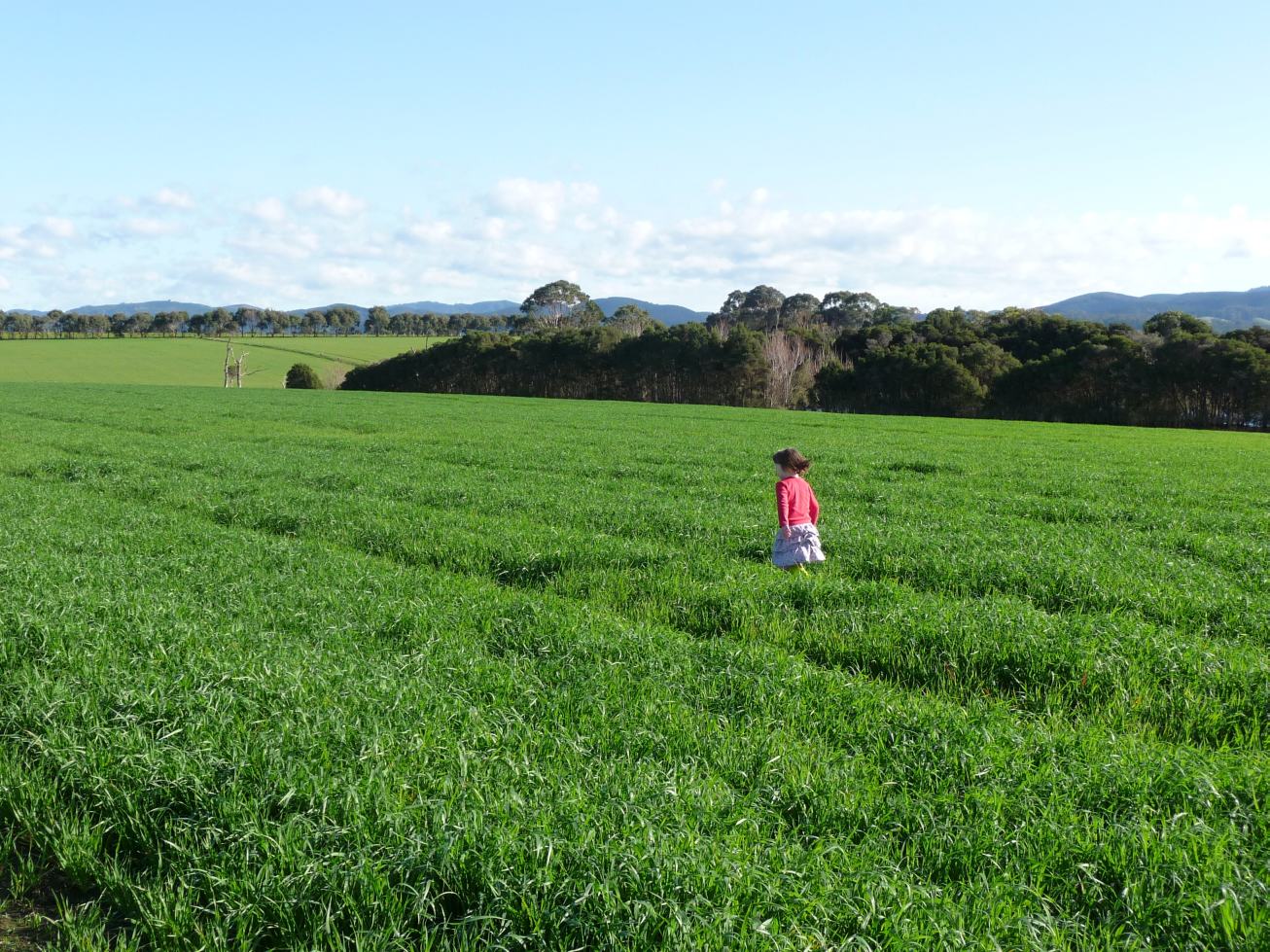
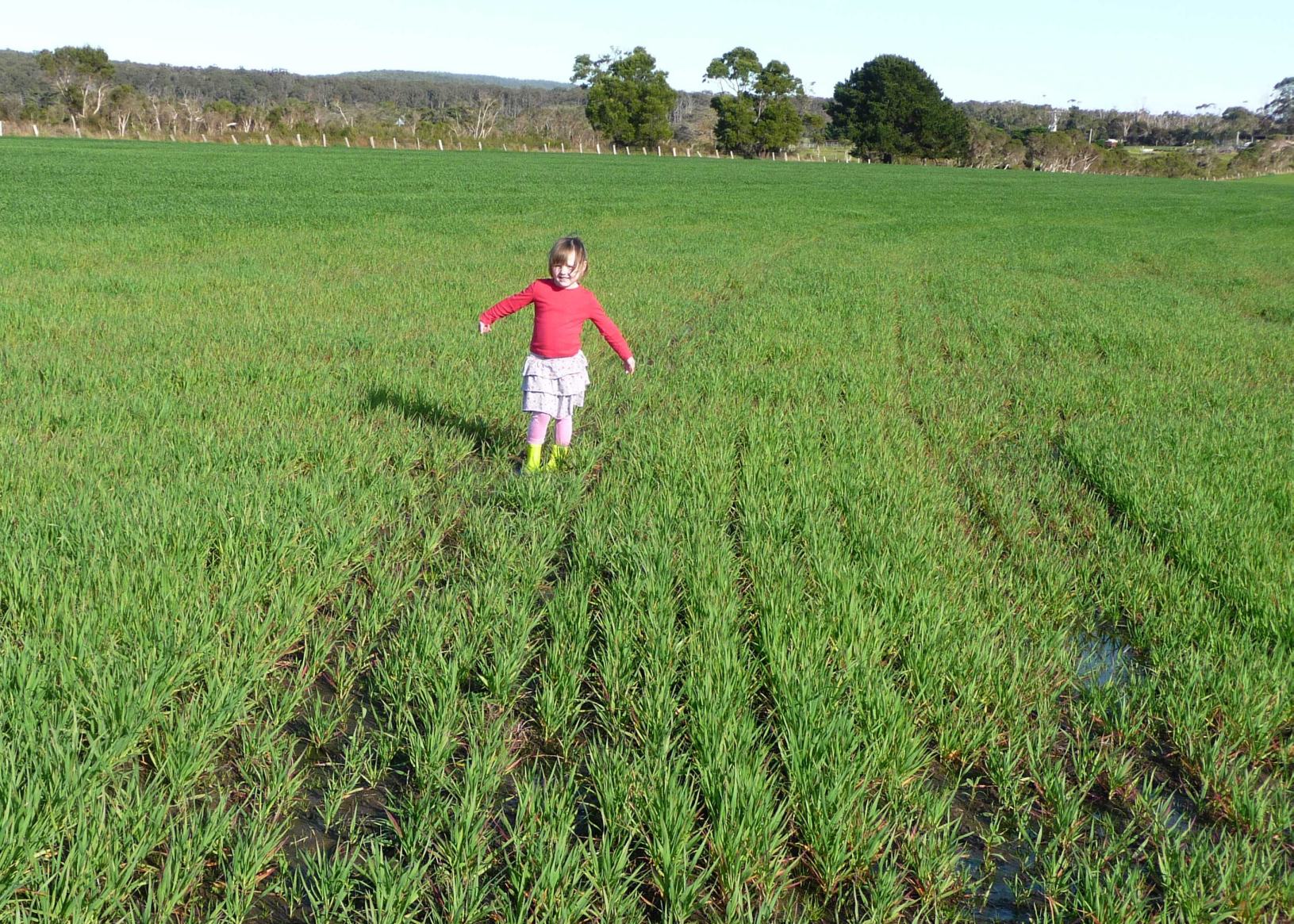
At least there aren’t white caps in paddock 17 today

Flooded paddock 17

Flooded paddock 17

Paddock 17 and part of 18 are underwater today but at least there are no white caps. White caps? Yes, the ones sailors dread on an angry sea were whipped up in paddock 17 a week ago. The waters have barely subsided since then and all of the three forecast models I follow on OzForecast.com.au are predicting lots more rain in the next few days.

I’m a weather geek at the best of times but now I’m now compulsive about checking the forecast. Almost all our ready-to-graze pastures are on the river flats across the gully, which is infamous for flash flooding. A big downpour on the range to our south would see the cows marooned. There’s no bridge – only a concrete fjord – and I reckon building one would certainly usher in a drought!

Seriously though, I know many dairy farmers are facing much tougher times than we are with this amazingly wet season. Good luck to those still struggling with floods. Our thoughts are with you.

Animal welfare is not just about dairy farmers doing the right thing

“If not appropriately handled, animal welfare concerns could threaten the long-term viability of several livestock industries. Even though the industries operate within their legislated requirements, there is a real risk they could lose public acceptance.”

This excerpt reportedly from a brief by the Agriculture, Fisheries and Forestry Department for the incoming Minister Ludwig makes sense. Farmers don’t have a monopoly on caring about animals and everyone has a right to feel comfortable that the food they’re eating is ethical. At the moment, much of that is based on trust that we farmers will do the right thing but when that trust is sufficiently shaken, Aussies will understandably demand that we are made to do the right thing.

In the wake of the Indonesian cruelty revelations, who could blame urban Australians for asking more questions about animal welfare, whether at the abattoir on the farm? Rather than being defensive about farming practices, I think it’s time to open the “farm gates” and show everyone what really goes on so they can judge how we are doing for themselves.

That blasted bull just had to go

It was with a sense of triumph that Clarkie and I closed the gates behind the tall bull today.

As you may have gathered, I’m a bit of a softie and almost always feel a pang of regret selling one of our animals but Tall Bull is going to market and will not be missed. This Friesian monster towers over cows and our other bulls, gallops like a racehorse and leaps fences like a showjumper. He’s also (pardon the pun) a bully. We were awestruck when we saw him toss a Jersey bull over a fence onto the road with a toss of his massive, triangular head.

Recently, he’s just begun moving around the farm at will, too. He’s too cocky to be called safe, too big to sire easy birthing progeny and too uncontrollable to have near people, infrastructure or calves.

The decision to send him away was easy. Getting him on the truck played on my mind a little more. It started off badly. We offered him companions on his walk across the farm to the yards but he rejected them, opting to leap a fence and take on a rival. Thankfully, his speed ended up playing into our hands – he was easy to separate from everyone else because all were left far behind.

A regal presence, certainly, but not a fitting king for our farm. So long, Tall Bull!

Timing makes good suppliers golden

Healthy oats where it's not too wet

Healthy oats where it's not too wet

Too much water has stunted these oats

Too much water has stunted these oats

On Monday, I realised a fantastic opportunity was about to pass me by. For months now, most of our newly sown pastures have sulkily refused to grow in their sodden paddocks. The wet interferes with their ability to take up nutrients from the soil and also prevents me getting fertiliser on. Each of the massive fert trucks weighs 8000kg unloaded! Not pretty if they get bogged.

All the same, I decided to take a walk and survey the scene up close. I was astonished to find three of the paddocks were just trafficable but, with 25 to 30mm of rain forecast over the next few days starting in the next few hours, they wouldn’t be for long. A quick call to fertiliser supplier Robert had the urea and potash on in two hours.

Timing is everything in farming because we’re at the mercy of the very temperamental Mother Nature. That’s why we rely so heavily on the responsiveness of our suppliers; from the people who plant the seed just in time for a break in the weather (thanks Wayne) to the vets who rush to the aid of our cows in an emergency.

Thanks guys – you are appreciated.

One woman down just when the farm (and the man) needs her

Fix fence with baby on board

Fix fence with baby on board

I’ve agonised over this post but, as a neighbour reminded me, it’s important to let non-farmers hear what life’s really like on farm, warts and all. And the wart-encrusted truth is that, right now, my frustration is matched only by the desperation of my husband.

He hasn’t been back to the house for a break since he left at 5am. Since then, he’s rounded up, milked, washed up, fed the calves, fed out 60kg of grain to the springers, fed four rolls of silage to the milkers and another three to the dry and young ones, rescued a sick cow, buried a still-born calf, and with our help, brought in a new calf and cow. He still has to muck out the calf pens before rounding up again at 3pm. It’s 1.50 as I type.

Still on doctor’s orders not to lift anything, plus a five-week-old strapped to my front and a five-year-old beside me, the list of things I must not do is far, far longer than the list of things I can. I’ve been doing the finances while feeding Alex, fixing fences, working out pasture rotations and shifting stock. Nothing like my normal contribution or even what I did during late pregnancy. Not enough to make a dent on my husband’s workload. Not enough to avert a creeping sense of failure.

The rational me alternates between the compassionate “you’re doing everything you can” and the sterner “just get on with it” stiff upper lip. We’ve faced tougher tests and will get  through this one but if anyone thinks life on the land is cruisy, think again.

Untangling how much farmers are paid for milk

The most anticipated email of the year popped into my inbox just before midnight. It was our co-op’s announcement of its opening milk price: “a weighted average price of $4.90/kg milk solids”.

Ironically, farmers are not paid for milk – just the fat and protein it contains, which we call “milk solids”.  Here’s the tricky part: protein is 2.5 times more valuable than fat, different herds (and the individual cows within them) produce different ratios of both, the price per kg changes almost monthly and the amount each cow makes shifts throughout her lactation and as her diet changes.

We are also subject to charges based on how often our milk is collected, if milk quality drops, and even milk volume.

For all these reasons, the price a farmer receives for a litre of milk is as individual as the farm.  To further complicate the picture, the co-op introduced  a new payment system last year that allowed farmers to select from three pricing models reflecting different pattens of production over a season.

I opted for the Domestic Incentive and committed the farm to supply at least 40% of our milk between mid-February and mid-August. It was the right decision at the time but that record-breaking wet summer affected the normal pattern of supply. With just one tanker of milk to be collected, it’s touch and go. About the same amount as the cost of my tractor engine rebuild is riding on how well the girls milk tonight. Wish me luck!

PS: The pricing system I’ve described applies only to our co-op. Other farmers, particularly those interstate, may have radically different structures.

Do you trust farmers? What with?

A Reader’s Digest poll has proclaimed farmers to be one of Australia’s most trusted professions. We come in at number 7, ahead of GPs and even our friends, the vets. Weather forecasters got their just desserts ;), ranking a miserable 26.

It’s a pleasant surprise, particularly given the much-discussed growing urban-rural divide.

In fact, we climbed two spots in the last year but I wonder whether this year’s poll was conducted before or after those shocking episodes of animal abuse at Indonesian abbattoirs were screened and whether this has changed the way Aussies feel about farmers.

I hope not. The farmers I know are sickened by the cruelty. Fortunately, I can sleep well knowing that none of our cows have been subjected to that treatment. Dairy heifers are sometimes exported to countries desperate to build their own herds with Australia’s world-leading breeding stock but are handled very carefully on the journey to ensure they arrive in peak condition.

I’d love to hear from you about all this. Why do you think farmers are so highly trusted?

When there are just too many mouths to feed

We’ve hit the wall. We’re officially overstocked. The wet season has left too many paddocks out of rotation and we just don’t have enough grass.

Our options are:

1. Keep feeding out large quantities of hay, grain and silage

This is expensive and time consuming. Days are being consumed behind the tractor wheel and the guys are quickly becoming exhausted, even with extra labour. It’s also less than desirable to drive heavy machinery over soft pastures.

2. Sell stock

Not an option either. We need more milkers rather than fewer and a short term sell-off to buy back later is a poor choice – we like to keep a closed herd to reduce the risk of importing disease and so we can be sure of our bloodlines.

3. Find some more land

Our preferred option is to find top quality agistment reasonably locally for our yearlings. That means nice, well fertilised pastures, proper animal welfare practices, shelter, good fences and reliable water. Not easy to find just now, it turns out! For this reason, we’re touring far-flung pockets of Gippsland looking for the ideal home away from home for our little ones.

Any suggestions?

Getting kangaroos off the farm without fences or guns

Moving the maremma hotel

Moving the maremmas' home

Our farm shares kilometres of boundaries with state forest and, unfortunately, tonnes of its feed with hundreds of kangaroos and wallabies. While animal activists quote research carried out in semi-arid lands that found no competition between livestock and macropods, nothing could be further from the truth here.

The kangaroos and wallabies decimate luscious dairy pastures and crops. Last year, an oat crop adjoining the forest was cropped to just four inches high near the bush and grew to around a metre tall on the other (inner) side of the same paddock.

Our neighbours have installed massive fences in an attempt to keep the kangaroos and wallabies out, with mixed success. The other alternative is to shoot them and I do have a licence to cull 40. I haven’t used it because I hate the thought of it.

Instead, I’ve been looking at ways to deter them from the farm. A promising study used dingo urine but this seems to have come to a premature halt due to staffing issues. Many researchers have found ultrasonic deterrents ineffective.

I’m hoping we’ve found the solution. We’ve been bonding two maremma livestock guardian dogs, Charlie and Lola, to our calves and teaching them to respect the boundary fences. Fluffy white 35-kilogram bounders, these gentle dogs have a formidable bark and presence. They are also very protective of their “family” – us and the calves.

The only hitch to date has been getting them to roam far enough from their charges, so we’ve moved them and a couple of bovine mates to join a much larger mob living by the forest. Charlie was happy to go but Lola hung behind in her more familiar paddock. Fingers crossed they make the transition!

Farming and the carbon tax

Cow wearing a monitor to detect methane gas production

Cow wearing a monitor to detect methane gas production - pic by DPI Victoria

Donald Rumsfeld could have been talking about the impact of the carbon tax on farming and agriculture when he infamously said:

“Reports that say that something hasn’t happened are always interesting to me, because as we know, there are known knowns; there are things we know we know. We also know there are known unknowns; that is to say we know there are some things we do not know. But there are also unknown unknowns — the ones we don’t know we don’t know.”

The politics of carbon are still in full swing and it’s too early to say for sure how we will be affected but there are some things we do know:

1. Agriculture is the second biggest source of Australia’s greenhouse gas emissions – just ahead of transport

2. Much of current best-practice farming minimises emissions

In a recent study (see link at point 2 above), Department of Primary Industry researchers say:

“We calculate, therefore, that in 1980 an Australian dairy cow emitted approximately 33 gm of methane for each litre of milk produced. But, in 2010, because of better feeding practices, genetic improvements, higher per cow milk production, and efficiency improvements adopted by the Australian dairy industry, this number has fallen to approximately 24 gm of methane per litre of milk produced.”

Great news! We are doing well, you say? The only problem is that until science provides us with some more tools, we cannot achieve a lot more. As the researchers go on to say:

“As a greenhouse gas, methane is about 25 times more powerful than carbon dioxide and methane emissions from cows constitute about 65 per cent of the total dairy farm greenhouse gas emissions.”

Meanwhile, as Neil Lane of the Carbon Ready Dairy Demonstration Project notes:

“Highly digestible feed and cereal supplements, along with products like Rumensin, are the best way to minimise emissions at the moment. Many dairy farmers are already doing this.”

This may be why agriculture has been excluded from the carbon tax, although our inputs, like fertiliser and fuel will not be exempt. On the other hand, the much-touted Carbon Farming Inititiative seems equally as impotent to this dairy farmer.

Reforestation and revegetation isn’t really an option because each planting needs to be at least 2ha and 10 metres wide. Soil sequestration sounds wonderful but the fact is that the rich fertile soils of dairy farms are generally already high in carbon content. The other options of reduced fertiliser emissions and effluent management are already being practised on our farm and, as I understand it, would therefore be ineligible under the CFI.

Will be interesting to see how it all pans out and I would love to hear from anyone who sees lots of emerging opportunities for dairy farmers to actively participate in the carbon economy.