What’s in your milk and why permeate is a dirty word

“We only drink milk that doesn’t have any of that permeate stuff you guys add to your milk,” a friend told my husband yesterday.

We don’t add anything to milk. At the farm, milk comes straight from the cows through a cooler into a refrigerated stainless steel vat for collection by the co-op. What happens there is more complex but no more sinister. Basically, fresh milk on Australia’s supermarket shelves has been heated (pasteurised) to make sure any bugs are killed, mixed so the cream doesn’t rise to the top (homogenised) and filtered.

Filtering the milk means you get to choose milk with your favourite protein and fat content – whether that’s skim or milk with an “extra dollop of cream”. It also helps the co-op deal with the natural variation in the protein and fat content of milk over a season. Yesterday, for example, our herd averaged 4.49 per cent butterfat and 3.39 per cent protein whereas, back in October, it got as low as 3.57 per cent butterfat and 3.28 per cent protein.

Dairies have been dealing with this variation in milk production and tastes for hundreds of years by separating cream from milk to make other foods like butter, cream and yoghurt.

So, where does “permeate” come into it? When the milk is filtered to even out fat and protein, the sugars, minerals and vitamins in milk are separated before going back into the milk. Some nerd gave them this ugly name (I think it sounds like plastic) and it’s been used and abused ever since.

Sustainable and cheap food: how does a farmer get there?

On the path to slow food

Slow food versus cheap food conundrum for farmers

Quality food, lowered emissions, biodiversity, soil health, maximum animal welfare, cheap food. So many messages coming from consumer groups, so many implications for how we farm.

Slow Food Australia has a philosophy that resonates with me as a farmer:

“SLOW Food fosters community awareness of food that is good, clean and fair – that the food we eat tastes good and should be good for us; that it is grown and made in ways that respect animals, the environment and our health; and that the producers who grow or create it should be fairly rewarded for their endeavour.

Slow Food Australia’s website also carries a media release that says, “Almost $40 of every $100 spent by Australian households now lands in the cash registers of either Coles or Woolworths”. In light of the milk wars, this is a worrying statistic. While Coles denies the price cuts will be passed on to farmers, Woolworths admits they will. Even consumer advocate group, Choice, agrees farmers will bear the brunt. It’s hard to imagine that any company wielding that amount of market power won’t put pressure on suppliers to lower costs, which will inevitably flow on to those with the least market power – farmers.

The milk wars will have their greatest impact on farmers in states like Queensland, Western Australia and New South Wales but the story is no more rosy in my state, Victoria. According to official figures, most of the state’s dairy farms have a return on investment of 1 to 3 per cent, forcing a focus on financial survival.

Our farm is similarly affected. We want to improve the farm, so Wayne and I are both holding down second jobs. The plan is that these improvements will make the farm more profitable and sustainable. We are making progress but farm life is currently anything but sustainable from a personal point of view. You just can’t work this many hours forever.

So what’s the answer? For our family farm, in the short-term, it means no compromise on milk quality or animal welfare, while planting as many trees as we can afford. At the same time, we invest in anything that will make the farm more efficient and profitable.

In the long term, it means incorporating more and more organic principles into our farming methods and marketing our own milk directly to consumers who appreciate what we’re trying to achieve. The problem is that none of this comes cheaply and is out of the reach of most farmers (including us, right now).

If consumers really do care about sustainable food, driving prices “Down, down, down” is not the way to make it happen.

Where there’s mud, there’s mastitis

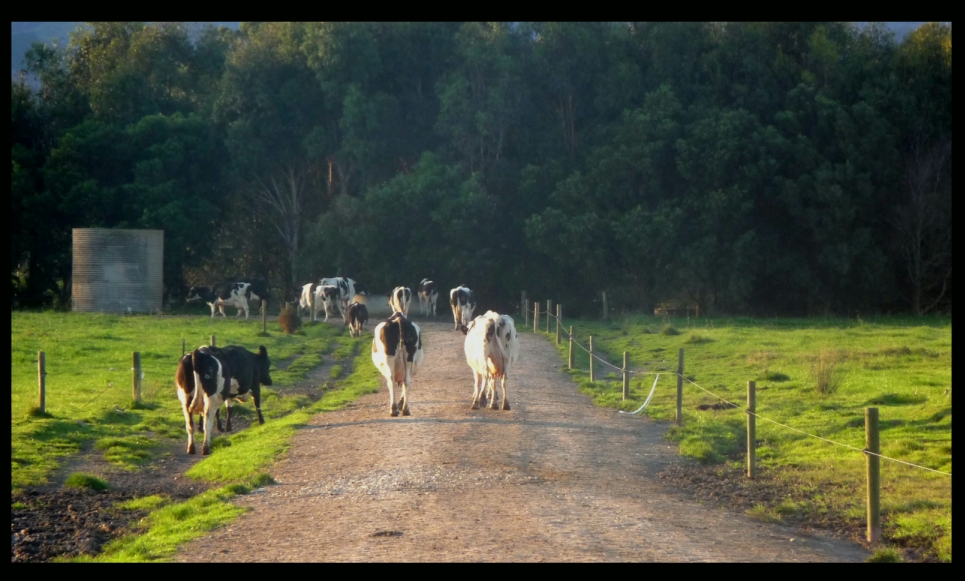
The track with one fence moved in and one more to do

The track with one fence moved in and one more to do

“Where there’s mud, there’s money,” is the old farming adage but I’m a bit of a contrarian. Where there’s too much mud, there’s also lameness and mastitis.

Muddy tracks to and from the dairy hit cows with a double whammy: they soften the hoof and then coat it with the perfect breeding ground for nasty bugs. It’s heart-breaking to see a cow hobble along, so we rest lame cows and, if their hoofs become infected, treat them with antibiotics.

Mud also contributes to mastitis, a painful infection that afflicts cows and women alike. Dairy farmers have been tackling mastitis for decades from practically every angle. We can choose sires based on the resistance of their daughters to mastitis, have learned that being quiet around cows makes them less prone to infection and developed new detection and treatment techniques. We know exactly how much mastitis is in the herd: the milk processors give us daily test results as part of their stringent milk quality standards and if our milk shows evidence of too much mastitis, we are paid less.

Dairy Australia’s web site offers some great tips on combatting both lameness and mastitis. One of the recommendations is to get cow tracks in order.

Ours aren’t bad but they could be better. One 400 metre section in particular has the fences set too far back from the gravel of the track and some cows like to walk along the sides, which quickly turn to slosh. Today, we’re moving the fences in. It’s a pretty simple job that should save us a lot of grief when winter comes.