Timing makes good suppliers golden

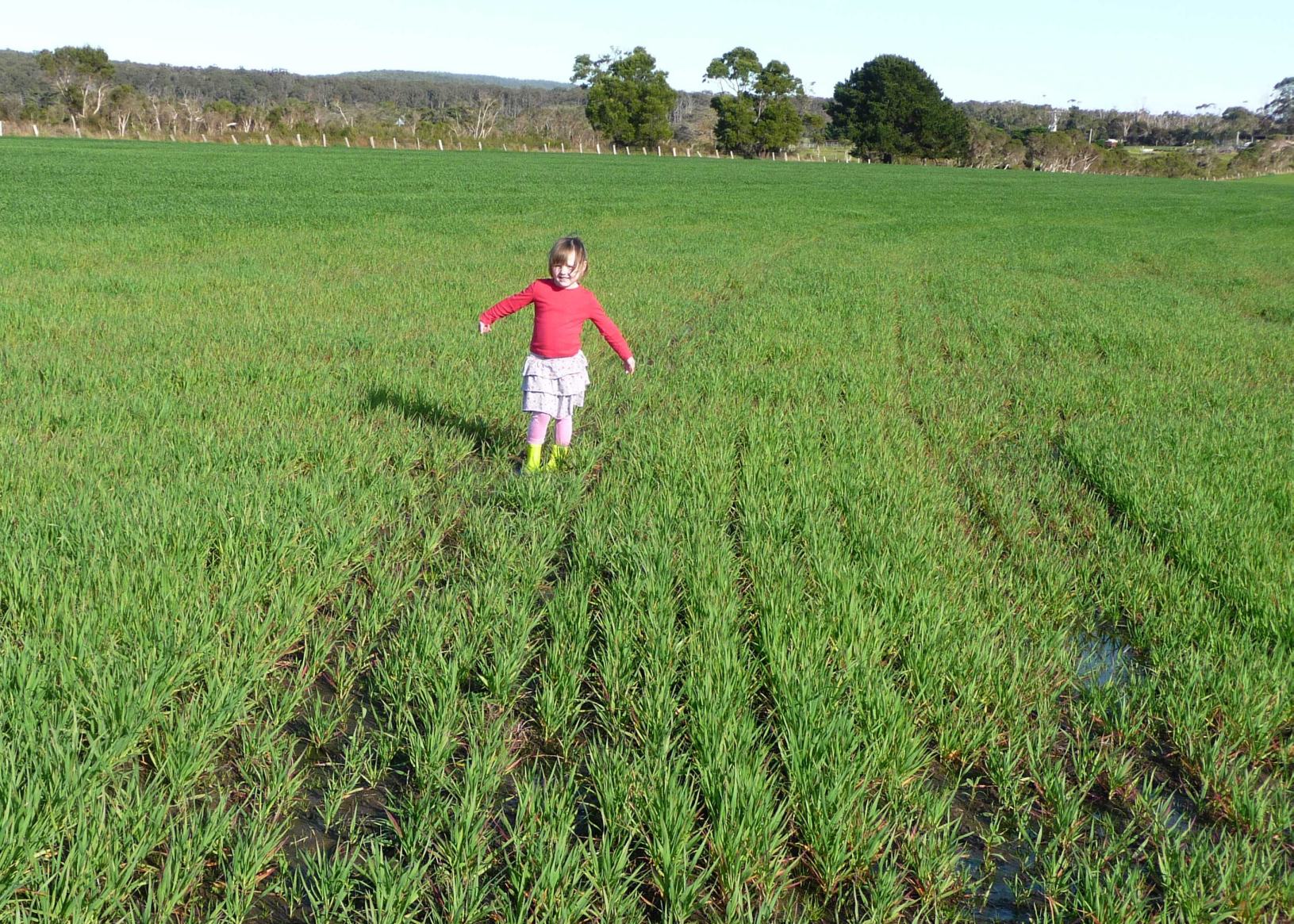
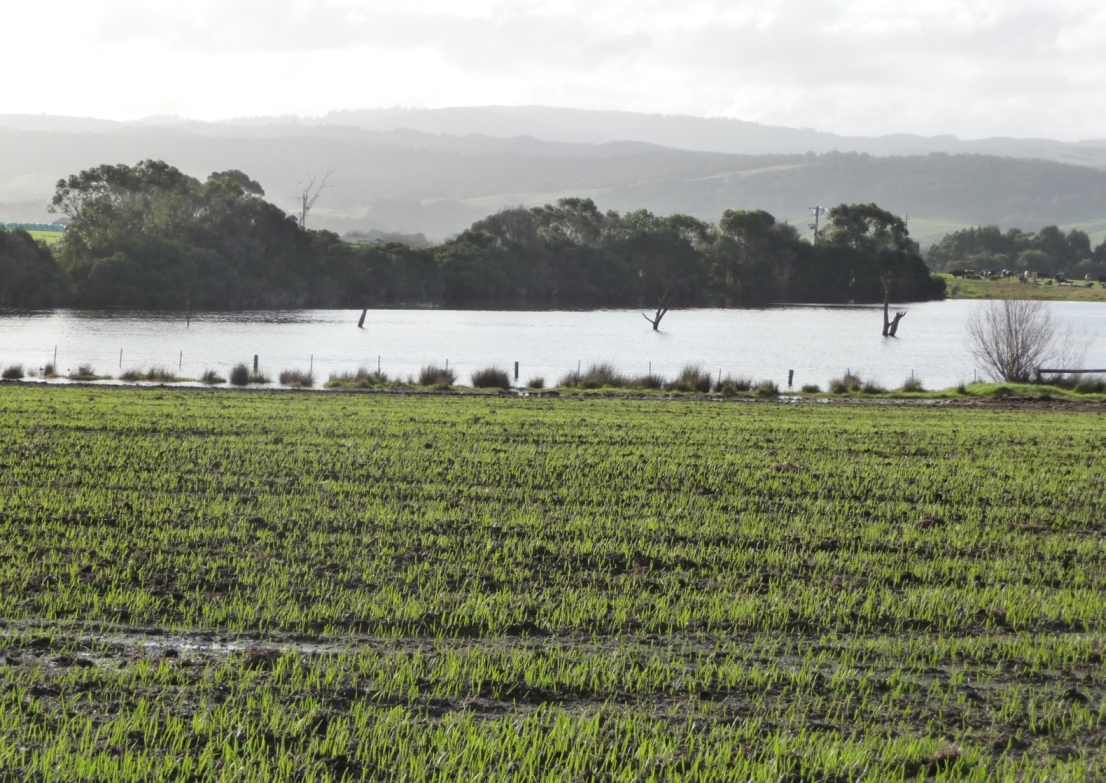
Healthy oats where it's not too wet

Healthy oats where it's not too wet

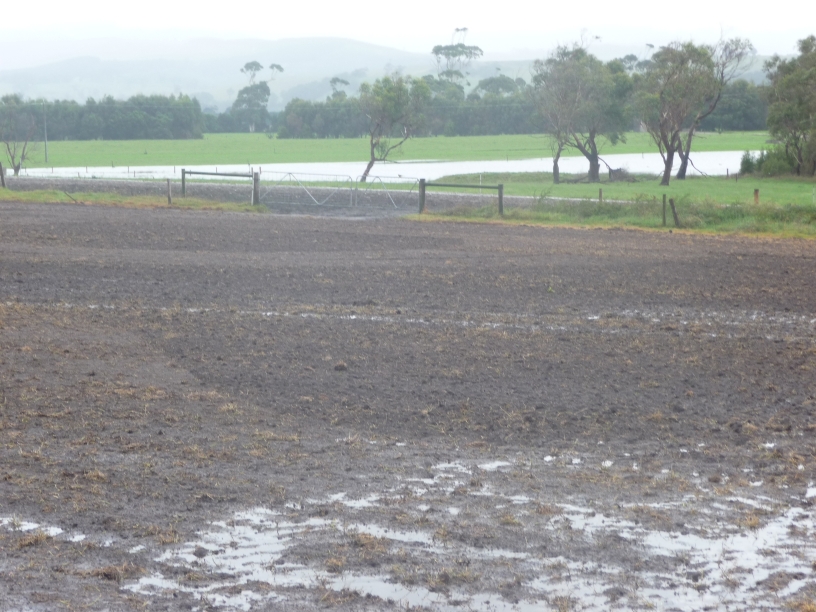
Too much water has stunted these oats

Too much water has stunted these oats

On Monday, I realised a fantastic opportunity was about to pass me by. For months now, most of our newly sown pastures have sulkily refused to grow in their sodden paddocks. The wet interferes with their ability to take up nutrients from the soil and also prevents me getting fertiliser on. Each of the massive fert trucks weighs 8000kg unloaded! Not pretty if they get bogged.

All the same, I decided to take a walk and survey the scene up close. I was astonished to find three of the paddocks were just trafficable but, with 25 to 30mm of rain forecast over the next few days starting in the next few hours, they wouldn’t be for long. A quick call to fertiliser supplier Robert had the urea and potash on in two hours.

Timing is everything in farming because we’re at the mercy of the very temperamental Mother Nature. That’s why we rely so heavily on the responsiveness of our suppliers; from the people who plant the seed just in time for a break in the weather (thanks Wayne) to the vets who rush to the aid of our cows in an emergency.

Thanks guys – you are appreciated.

The whingeing farmer

Farmers are infamous for never being happy with the weather. For years, we’ve been battling awful conditions – unreliable or non-existent autumn breaks, short springs and searing summers. The one blessing has been warmer and therefore more productive than normal winters.

This year, though, has been one out of the box. The landscape remained a verdant green right through summer and, with a precious bank of water in the soil, I took the opportunity to convert plenty of pastures from annual to perennials and when the “whole hog”, fully cultivating beautiful seed beds.

My gamble may still pay off but right now, the strategy has come back to bite me. The sun refuses to shine, the rain continues and that bank of soil moisture has been continually topped up to the point that very little of the new pasture is trafficable at a time when it desperately needs fertiliser and a trim. We may not be able to let the cows into some paddocks until spring.

So, as I type this post on a cold, wet, sunless day, I’m afraid I live up to the stereotype of the whinger. I have a good excuse but no good reason –  exposed to commodity price cycles, currency fluctuations, all the normal business hazards and mother nature herself, farming is innately a risky business but still we choose it as a way of life. After all, an affinity with mother nature is what binds us to it.

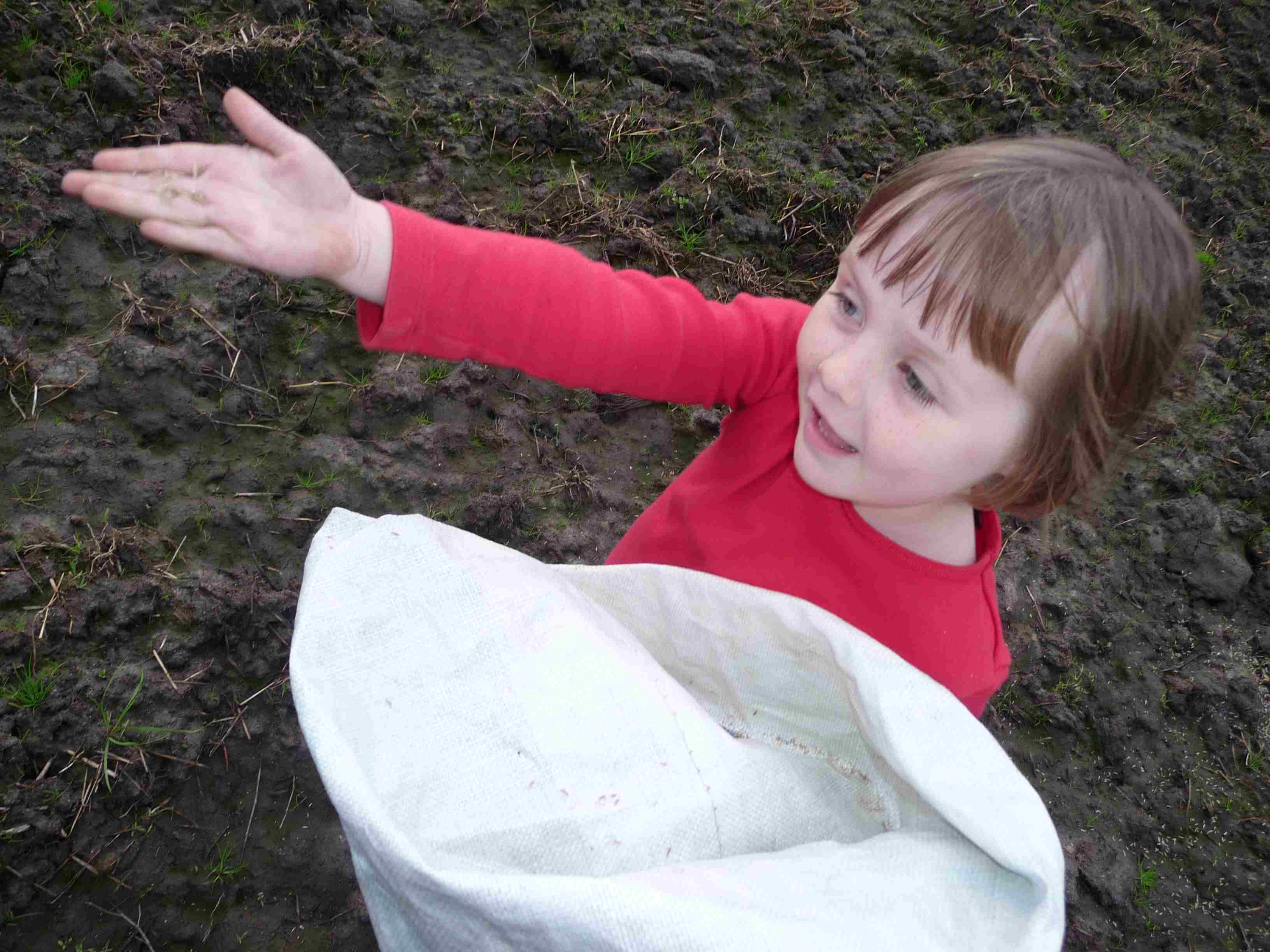
Sowing by hand

Sowing seed by hand

The only way to get seed onto the paddock

Zoe sows the paddock

Sowing by hand is a novelty

When the going gets tough, the tough get going! Paddock number 2 was so wet when it was time to sow that part of it was just not trafficable. Now that the rest of the seed has shot, we decided we’d better fill the blank spot with seed. It’s about the size of a quarter-acre house block and, normally, we’d mix the seed in with some fertiliser and spread it behind the ute but it’s still so wet, you couldn’t even ride over it with a quad bike.

So, we decided to do it the old-fashioned way: by hand. It was fun, even as the cockatoos eyed off our bounty!

A day in the life of an Australian dairy farming family

I kept a time log yesterday. Here’s how our busy but not unusual day went.

5.00am Wayne hops on the quad bike to round up the cows and slowly and quietly bring them to the dairy

5.45am Milking starts

6.30am Marian hits her desk to catch up on paperwork before Zoe wakes and checks the online forecast. All three computer models agree there’s a little rain coming tomorrow. Better get the nitrogen onto those paddocks we just grazed early tomorrow morning!

8.15am Milking’s finished and the cleaning begins

8.30am Zoe and Marian shift the effluent irrigator, fill the pump with petrol and get it going.

Zoe with effluent irrigator

Time to shift the irrigator

9.00am Marian and Zoe arrive on the Bobcat to give Papa a kiss and cuddle before we head off to feed the springers grain and anionic salts. The new calf spotted being born last night is a baby bull, who will be reared by one of our neighbours. We bring him and his mother back to the shed.
Anionic salts

Anionic salts (Zoe pic)

9.30am The milking machines, the yards and the vat room are spotless.

9.40am The three of us walk a couple of cows across the road to start their annual two-month holiday before they calve.

Cows going on holiday

Cows going on holiday

9.45am Wayne feeds three rolls of silage to the milkers

10.10am Zoe and Marian bring back two cows from the holiday paddock to join the springers in the TLC paddock.

10.45am Zoe and Marian refill the effluent pump and set it off again
Refuel Pump

Refuel pump again! (Zoe pic)

10.55am We all meet up again to feed the youngest calves and muck out pens. Discover one is sick and Wayne heads off to town to get treatment for her and refill the jerry cans.

11.30am Zoe and Marian are starving. Lunch time!

12.50pm Treat the sick calf and muck out more pens while Wayne welds up a broken gate in the dairy

1.20 pm Wayne’s off to feed silage to the dry cows, calves and heifers. Zoe and Marian take a look at the heifers to see if any should join the springers. We decide to do a big sort out in one to two weeks.

1.40 pm Refuel the effluent pump and get it running again

1.50 pm Load up 10 buckets of grain to feed to the youngest of the one-year-old calves. They are very happy to see us!
Feeding Calves Grain

Grain for calves (Zoe pic credit)

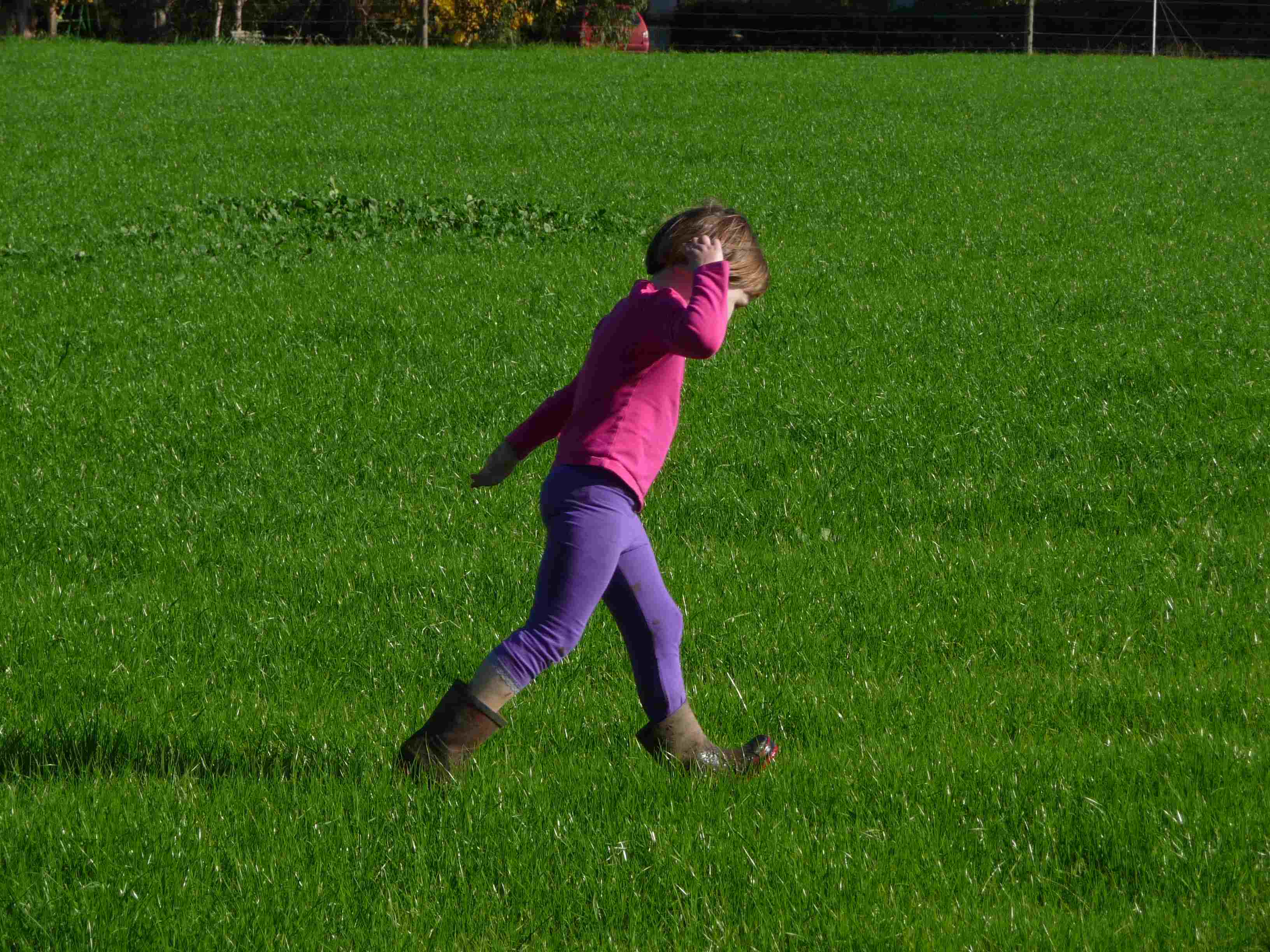
2.30 pm Check a new pasture on the way back

Zoe checks new pasture

Check new pasture

2.40 pm Quick snack and conflab with Wayne. 15 minutes later, we go off to round up while he feeds our maremmas, Charlie and Lola, and takes a bit of a break before milking.

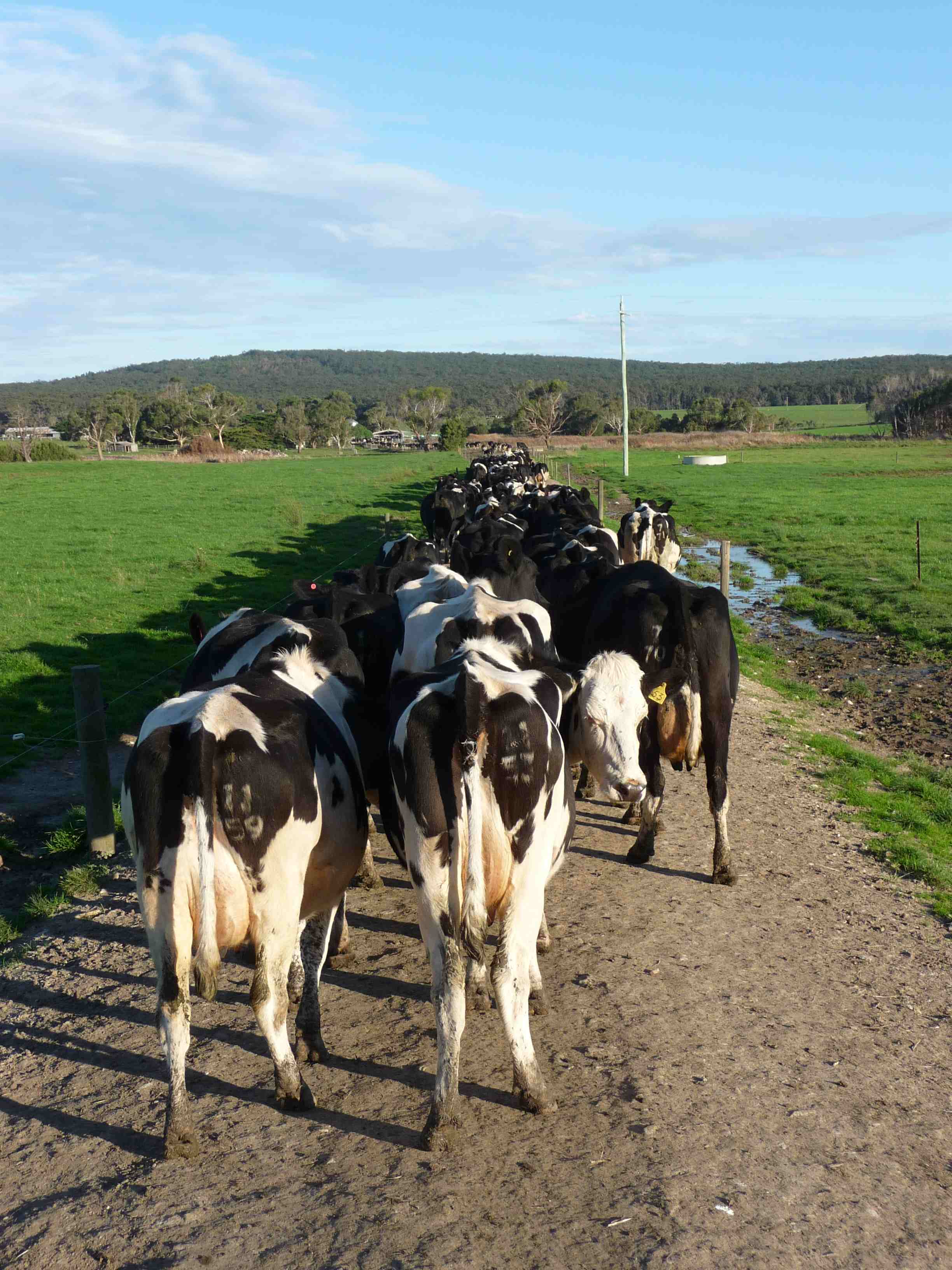
Cows on the track

Rounding up

4.10 pm Finally get all the cows into the yard – Wayne’s already got the first 32 cows milked. The cows were in one of the furthermost paddocks from the dairy, we had to set up paddocks along the way and deal with a broken fence. Also discovered a major water leak 😦

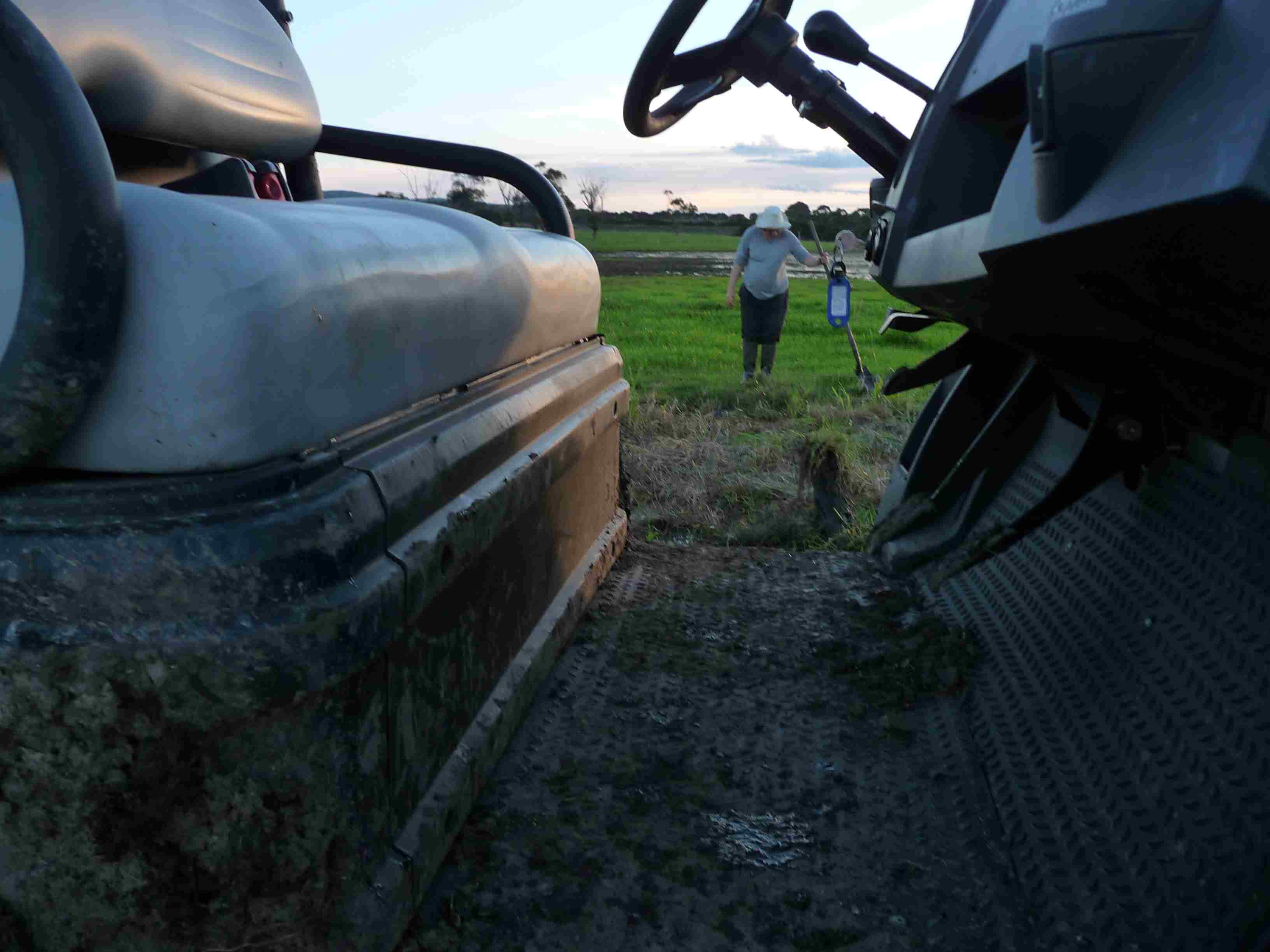
4.20 pm Equipped with tools, start prodding around in the mud.
Zoe’s taking pics now while Mama makes a mess.

Zoe's pic of Mama looking for the leak

Mama looks for the leak

Oops! Zoe’s got a bootful but let’s make it funny.

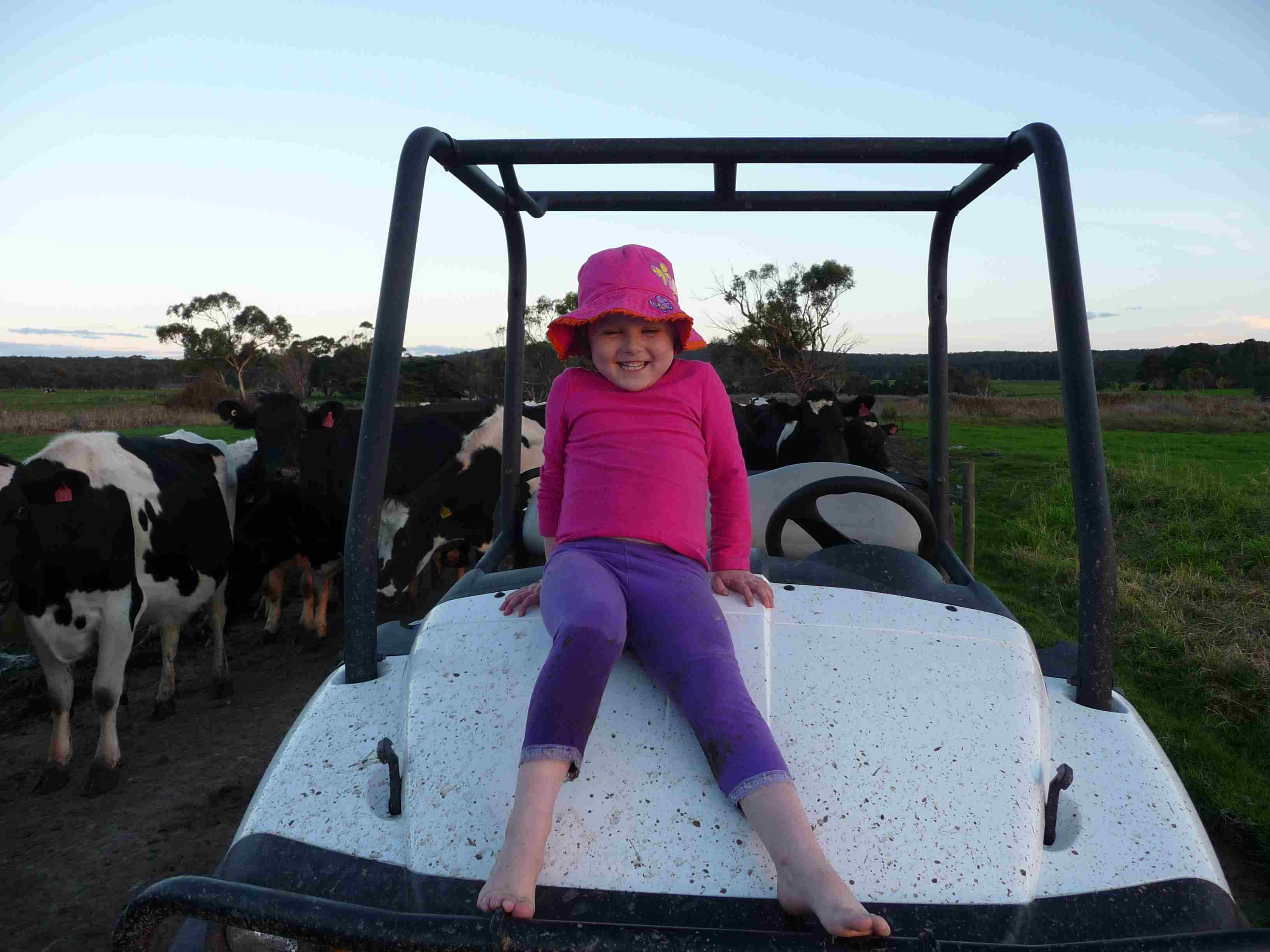
Zoe on the Bobcat after mud accident

After a boot full of water

The cows crowd around us on their way back to the paddock.

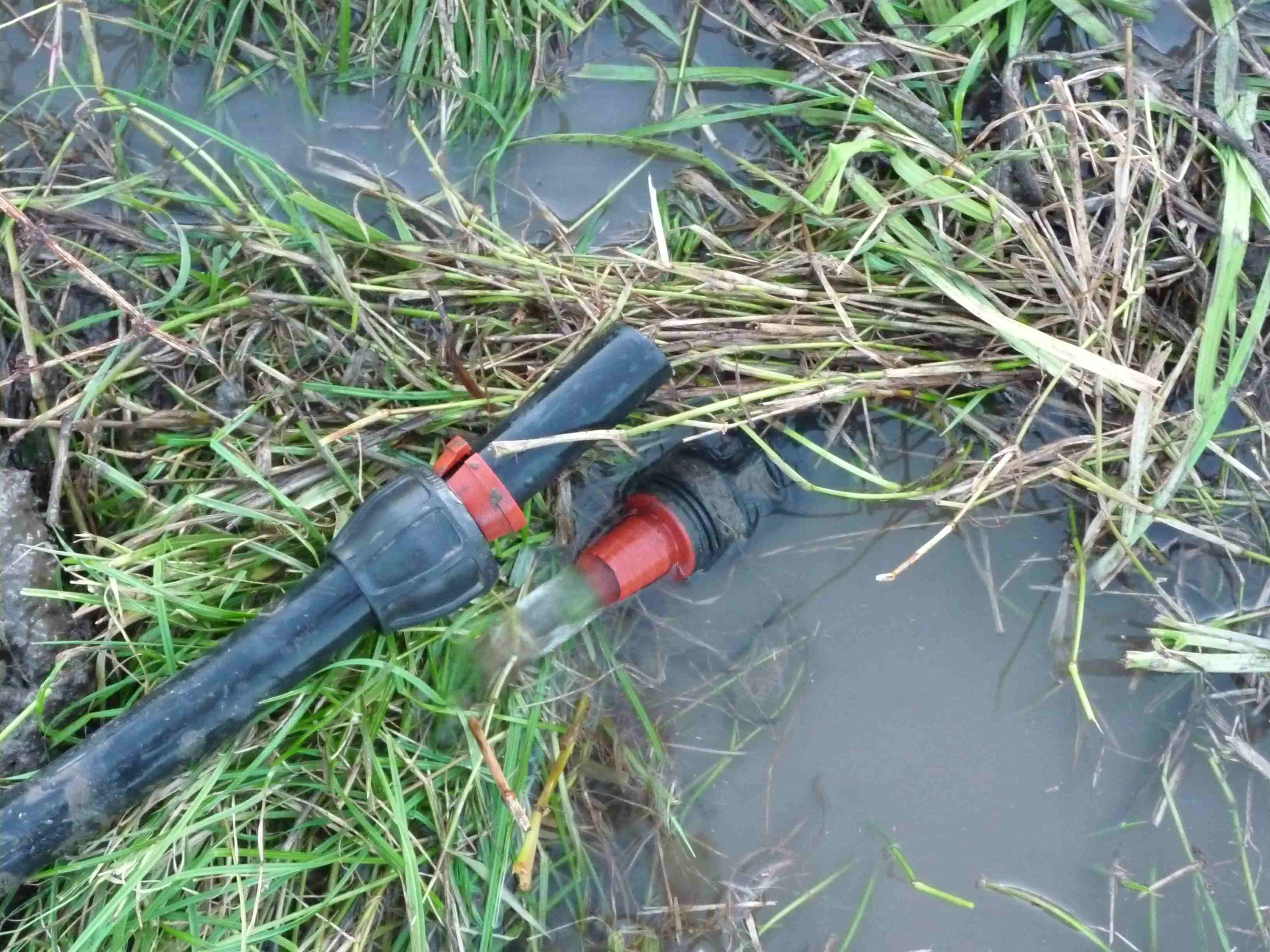
5.06 pm The Eureka Moment! An old (but still connected) water line has burst a fitting.

Pipe fitting

Unearthed the blasted leak

5.10 pm Outta there.

5.15 pm Set the travelling effluent irrigator on a new path, refuel pump and pull the rip cord!

5.35 pm Marian and Zoe home at last!

6.25pm Wayne’s home from milking. The end of a big day.
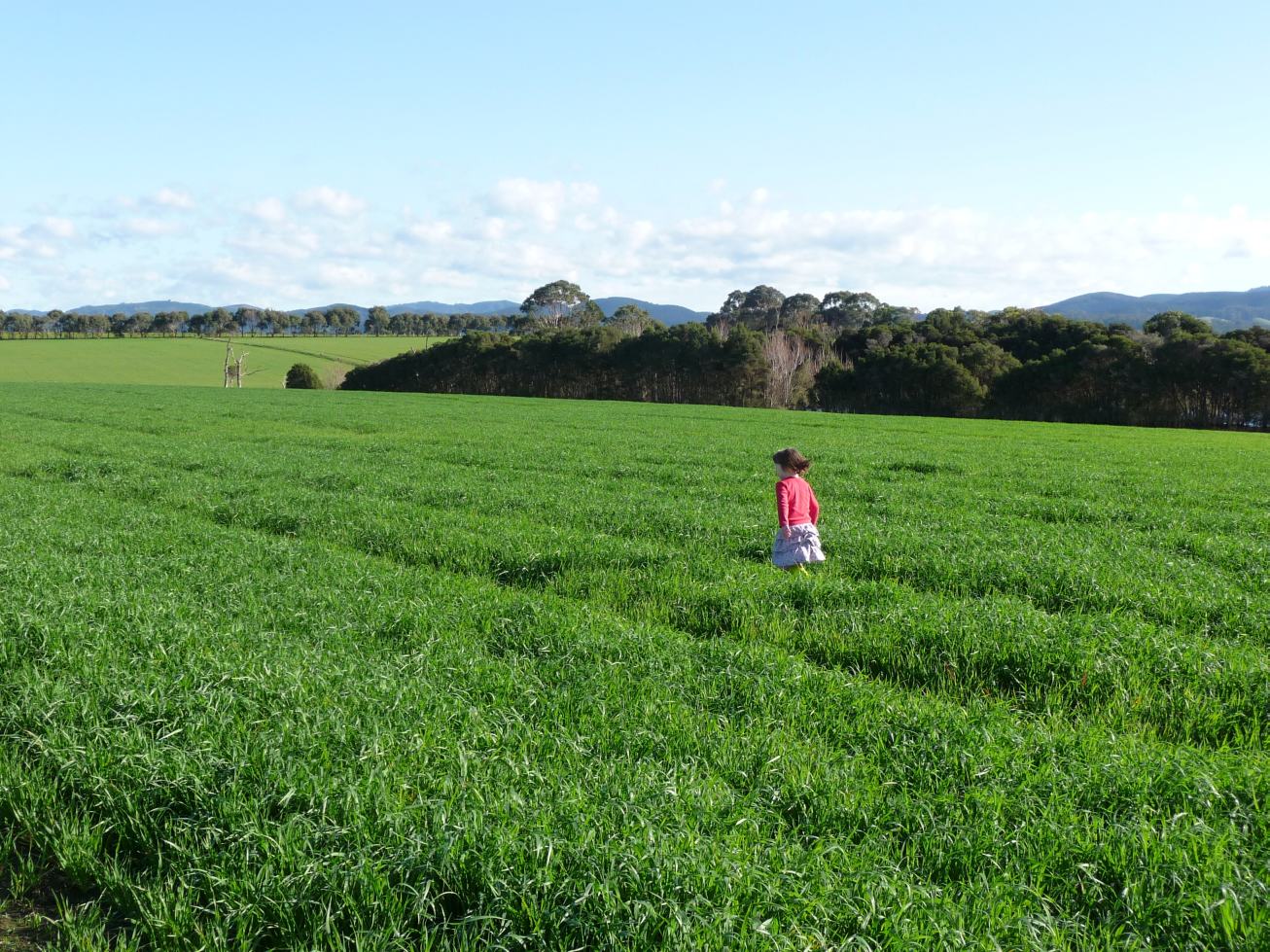
How a paddock changes in four weeks

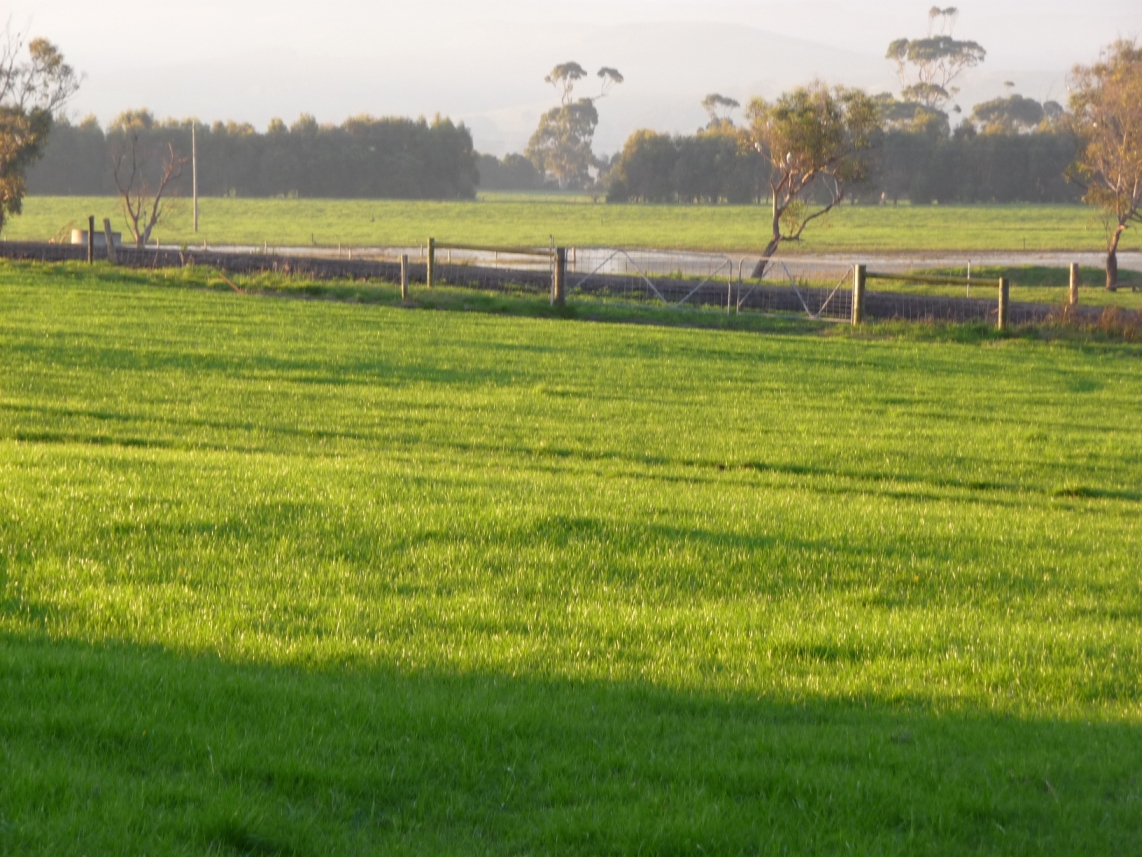
It’s exciting to see a paddock take shape and marvellous how quickly it gets going under the right conditions. This paddock, which is wrapped around the garden, has been sown to a perennial rye grass (One50 for all those farmers wondering) and a couple of different clovers. Clover is not only top quality feed for cows, it helps make nitrogen available to grass, reducing our reliance on fertilisers.

Here’s the house paddock on April 8

House paddock on April 8

Here it is on April 13

House paddock April 13

House paddock April 13

Progress by April 25

House paddock on April 25

House paddock on April 25

May 19 and it’s almost ready to graze – two more weeks to go, I think!

House paddock on May 19

House paddock on May 19

Weeds are part of my master plan

Zoe with marshmallow

Marshmallow is just one of the weeds to take off this season

“Weeds are part of my master plan” sounds like a phrase the Dr Evil of Dairy might use, doesn’t it?!

We’ve had a brilliant summer and autumn, which has made the grass and, ahem, the weeds, grow like crazy. Of course, there’s always a silver lining to every cloud and we’re seeing this as an opportunity to eradicate large banks of seed that has acccumulated over time without germinating.

Naturally, the weeds grow best on our best land, the river flats. The flats are next on my list of priorities for renovation and I don’t want new pastures overhwhelmed with thistles, nettles and other unpalatable – or even toxic – weeds.

The flats are rich, deep alluvial soils that retain moisture well during dry times yet drain well during wet times. They get us through summer and their pastures are always the quickest to recover but because the grass species are so old, quality is sometimes lacking.

Still, I’m a little reluctant to renovate them for a few reasons:

1. We rely on them being productive while our drier slopes are close to dormant over summer
2. They do flood and I don’t want to risk erosion
3. We need to be careful not to disturb the balance of soil life

The answer will be to temper my enthusiasm a little, take it gently, and renovate just a couple of our delicious river flat paddocks at a time.

False messiahs of the soil

Oats planted into a deep-ripped paddock

Oats planted into a deep-ripped paddock keep the soil open

There are plenty of people out there at the moment promising farmers an organic/biodynamic/permaculture nirvana. “Use less fertiliser, restore soils, improve animal health and fertility,” they cry. That’s a very attractive set of propositions to a dairy farmer like me and I have been tinkering around the edges, listening, sifting and learning.

Although alternative farming practices have been around for centuries, they’ve never been commercialised and marketed to the mainstream in the way they are today. In my experience, with that marketing has come some very questionable “experts”. I guess it’s like any emerging school of thought – there will be a mix of true visionaries, snake oil salesmen, good practitioners and fools. The trick is to work out who’s who!

Yet it seems almost every proponent of these alternative farming movements does have something to offer. Composting, for example, is a great way to improve the biological health and structure of our soils and this seems to be a universal tenet of all the alternative farming philosophies. It also resonates with me as a gardener. If I could afford to, I would “garden” the entire 500 acres but the intensive treatment we give our veggie plots is not feasible on such a large scale. Whatever we do has to be manageable.

I was all set to do an 11 hectare composting trial this year until a set of logistical nightmares stopped me in my tracks. The plan was to deep rip the soil, add lime and then hay soaked with effluent on one half of the paddock, while using more conventional treatments on the other half. I am almost certain it would have been a great success, so will have another go next season.

I think it will work best on our most troublesome soils. Some parts of the farm have a layer of compacted soil or “hard pan” caused by an acidic reaction, which prevents water from penetrating deeply. This means that those paddocks get very wet soon after rain but dry out extremely quickly. I’m aiming to break down that layer to increase the plant available water capacity of the soil. Paddocks of this type that are due for renovation have been deep ripped, limed and planted to oats, which have long, quick-growing roots. In the last couple of seasons, I’ve found that deep-ripped paddocks planted to long-rooted plants like brassicas and oats have remained more permeable than those planted immediately to rye grass.

I’ll keep on learning more about alternative farming techniques (with ears and eyes open) and gradually trial them on farm.

Watching grass grow really is exciting

We’ve been preparing for this for two years now. The house paddock has been limed to manage its acidity, soil tested, fertilised to balance the nutrients, treated with effluent and deep ripped to improve its water storage capacity. Since then, we’ve had it sprayed with a biodegradeable weed-killer, disced, sown with perennial ryegrass seed and rolled. It’s a big investment, which is why I’ve been patrolling the paddock almost constantly.

And look!

The house paddock on April 25

The house paddock on April 25

Here it was on April 13, just under a fortnight ago:

The house paddock on April 13

The house paddock on April 13

Now all we need to do is watch out for ravenous creepy crawlies and apply some nitrogen once it gets a little more established.