The aftermath of the flood

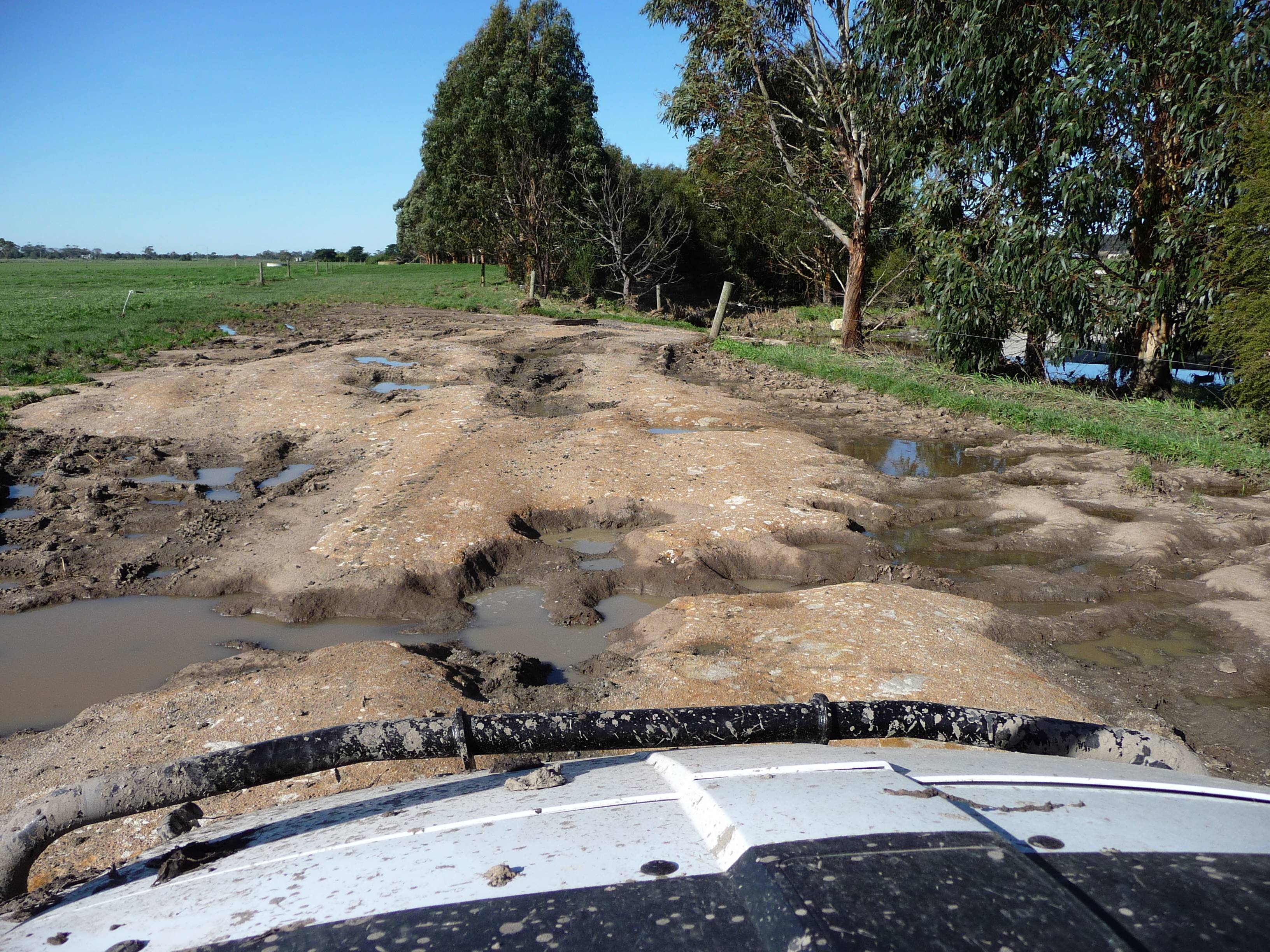
I haven’t posted for a while because the flood left the farm in a big mess that will take time – and a lot of money – to put right. The most obvious cost will be in track repairs.

Farm track after the flood

Farm track after the flood

The other big piece of vulnerable infrastructure is fencing. So, when I went looking for a fresh paddock while Clarkie rounded up (nothing like a little pressure, eh?), I decided to cross the gully and check on the boundary fence. Gone.

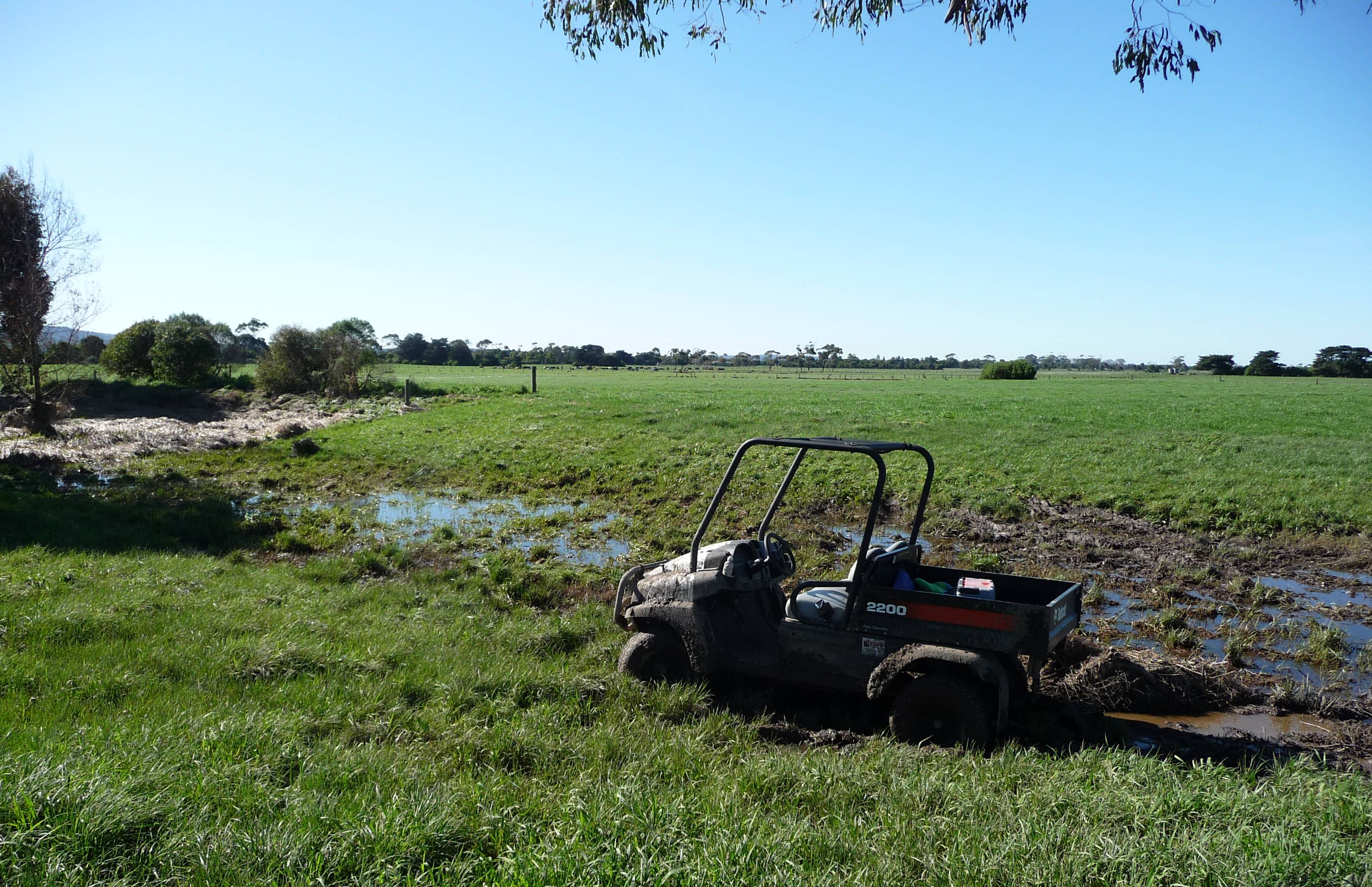
Dashed back across the gully towards the track and, after 10 minutes of showering Zoe, Alex and myself in mud, had to concede defeat. What a miserable day. Nowhere to put the cows, the tractor stuck at the other end of the farm with a tyre blowout, the tracks, the fences…

Bogged farm UTV

The Bobcat slid in the mud for 10 minutes before we pronounced it bogged

On the long march homewards, a pair of kookaburras began to cackle. Zoe said, “Listen Mama, they’re laughing at you for trying to cross the gully and getting bogged.” I felt instantly better.

What a fool I was. Feeling sorry for myself while holding the hand of my lovely little girl with my baby son on my chest as we walked through glorious country in the winter sun. It’s all about perspective.

That blasted bull just had to go

It was with a sense of triumph that Clarkie and I closed the gates behind the tall bull today.

As you may have gathered, I’m a bit of a softie and almost always feel a pang of regret selling one of our animals but Tall Bull is going to market and will not be missed. This Friesian monster towers over cows and our other bulls, gallops like a racehorse and leaps fences like a showjumper. He’s also (pardon the pun) a bully. We were awestruck when we saw him toss a Jersey bull over a fence onto the road with a toss of his massive, triangular head.

Recently, he’s just begun moving around the farm at will, too. He’s too cocky to be called safe, too big to sire easy birthing progeny and too uncontrollable to have near people, infrastructure or calves.

The decision to send him away was easy. Getting him on the truck played on my mind a little more. It started off badly. We offered him companions on his walk across the farm to the yards but he rejected them, opting to leap a fence and take on a rival. Thankfully, his speed ended up playing into our hands – he was easy to separate from everyone else because all were left far behind.

A regal presence, certainly, but not a fitting king for our farm. So long, Tall Bull!

Timing makes good suppliers golden

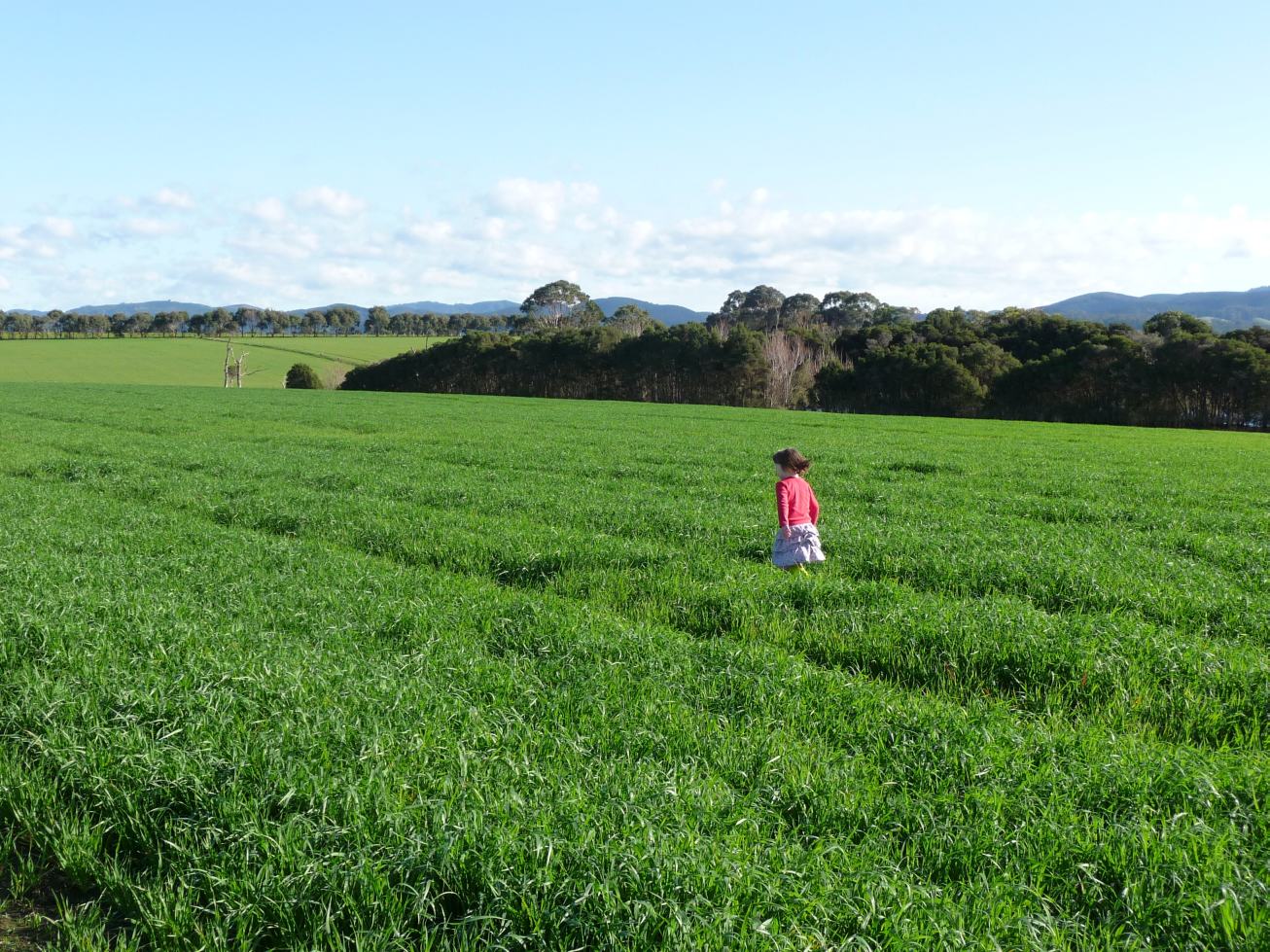
Healthy oats where it's not too wet

Healthy oats where it's not too wet

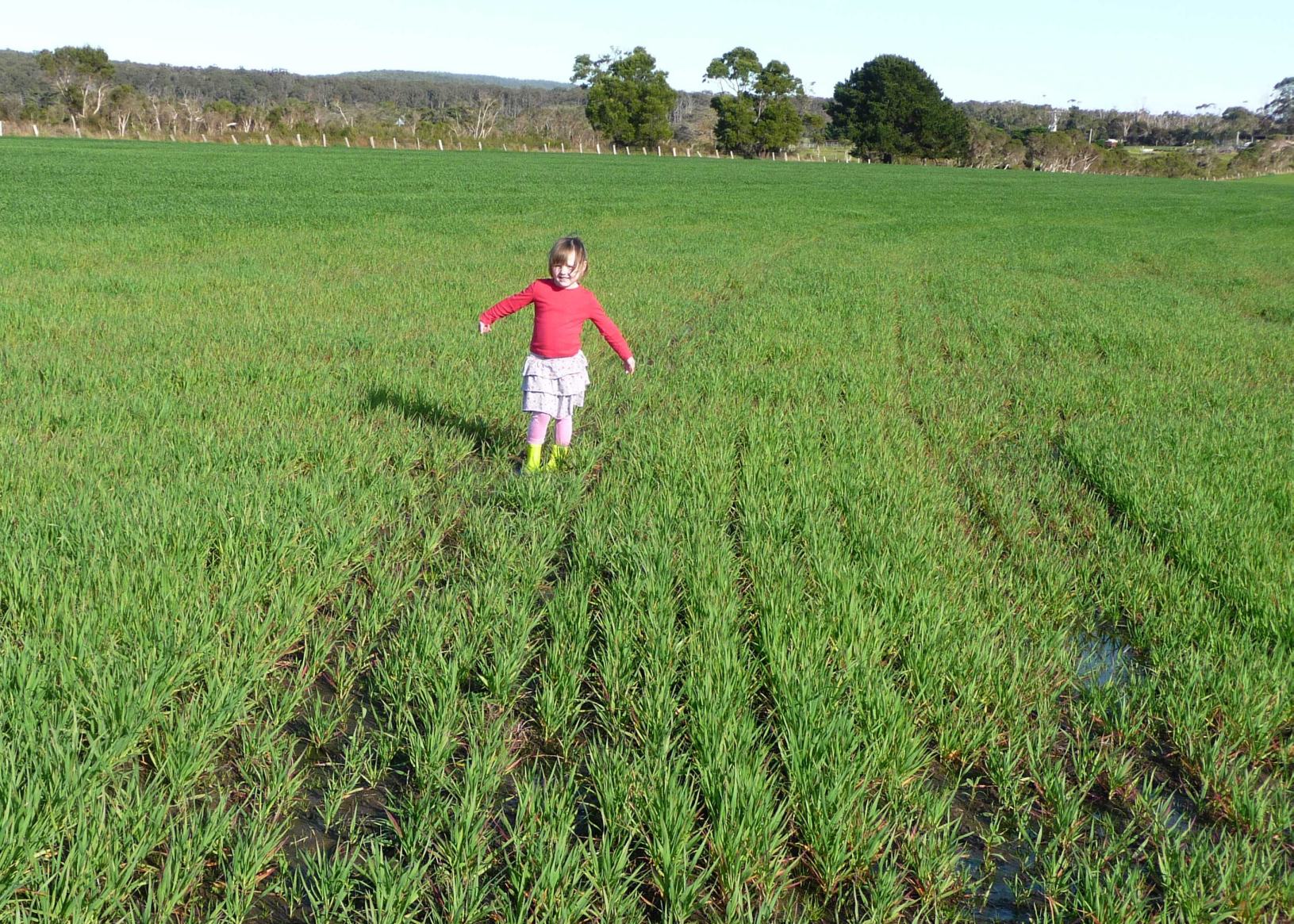
Too much water has stunted these oats

Too much water has stunted these oats

On Monday, I realised a fantastic opportunity was about to pass me by. For months now, most of our newly sown pastures have sulkily refused to grow in their sodden paddocks. The wet interferes with their ability to take up nutrients from the soil and also prevents me getting fertiliser on. Each of the massive fert trucks weighs 8000kg unloaded! Not pretty if they get bogged.

All the same, I decided to take a walk and survey the scene up close. I was astonished to find three of the paddocks were just trafficable but, with 25 to 30mm of rain forecast over the next few days starting in the next few hours, they wouldn’t be for long. A quick call to fertiliser supplier Robert had the urea and potash on in two hours.

Timing is everything in farming because we’re at the mercy of the very temperamental Mother Nature. That’s why we rely so heavily on the responsiveness of our suppliers; from the people who plant the seed just in time for a break in the weather (thanks Wayne) to the vets who rush to the aid of our cows in an emergency.

Thanks guys – you are appreciated.

One woman down just when the farm (and the man) needs her

Fix fence with baby on board

Fix fence with baby on board

I’ve agonised over this post but, as a neighbour reminded me, it’s important to let non-farmers hear what life’s really like on farm, warts and all. And the wart-encrusted truth is that, right now, my frustration is matched only by the desperation of my husband.

He hasn’t been back to the house for a break since he left at 5am. Since then, he’s rounded up, milked, washed up, fed the calves, fed out 60kg of grain to the springers, fed four rolls of silage to the milkers and another three to the dry and young ones, rescued a sick cow, buried a still-born calf, and with our help, brought in a new calf and cow. He still has to muck out the calf pens before rounding up again at 3pm. It’s 1.50 as I type.

Still on doctor’s orders not to lift anything, plus a five-week-old strapped to my front and a five-year-old beside me, the list of things I must not do is far, far longer than the list of things I can. I’ve been doing the finances while feeding Alex, fixing fences, working out pasture rotations and shifting stock. Nothing like my normal contribution or even what I did during late pregnancy. Not enough to make a dent on my husband’s workload. Not enough to avert a creeping sense of failure.

The rational me alternates between the compassionate “you’re doing everything you can” and the sterner “just get on with it” stiff upper lip. We’ve faced tougher tests and will get  through this one but if anyone thinks life on the land is cruisy, think again.

Do you trust farmers? What with?

A Reader’s Digest poll has proclaimed farmers to be one of Australia’s most trusted professions. We come in at number 7, ahead of GPs and even our friends, the vets. Weather forecasters got their just desserts ;), ranking a miserable 26.

It’s a pleasant surprise, particularly given the much-discussed growing urban-rural divide.

In fact, we climbed two spots in the last year but I wonder whether this year’s poll was conducted before or after those shocking episodes of animal abuse at Indonesian abbattoirs were screened and whether this has changed the way Aussies feel about farmers.

I hope not. The farmers I know are sickened by the cruelty. Fortunately, I can sleep well knowing that none of our cows have been subjected to that treatment. Dairy heifers are sometimes exported to countries desperate to build their own herds with Australia’s world-leading breeding stock but are handled very carefully on the journey to ensure they arrive in peak condition.

I’d love to hear from you about all this. Why do you think farmers are so highly trusted?

Cows with attitude

The video footage showing an Irish “cowdini” making her escape got me thinking about some of the characters in our dairy herd.

First, there was the infamous “Lipstick”, who terrorised me as a child. She didn’t like to be messed with and she didn’t baulk at the flailing arms of anyone under 6′ tall either. Her daughter and grand-daughter, who bore the trademark black lips and white face were equally as formidable.

Queen Bessie was, on the other hand, a charming yet dignified old lady. Big brown eyes and long lashes batted drowsily as she soaked up loving scratches. One of the few times I saw tears well in Dad’s eyes was when Queen Bessie died after more than a decade of owning the square of yard at the entrance to the dairy.

Thirty years on, Zoe is in love with Pearlie Girlie. This diminutive three-year-old hangs back during rounding up and is happy to be patted until she decides enough is enough and dismisses her young adorer with a regal toss of the head.

A dog has a master, a cat only servants, and cows…courtiers.

A new baby and being a farmer

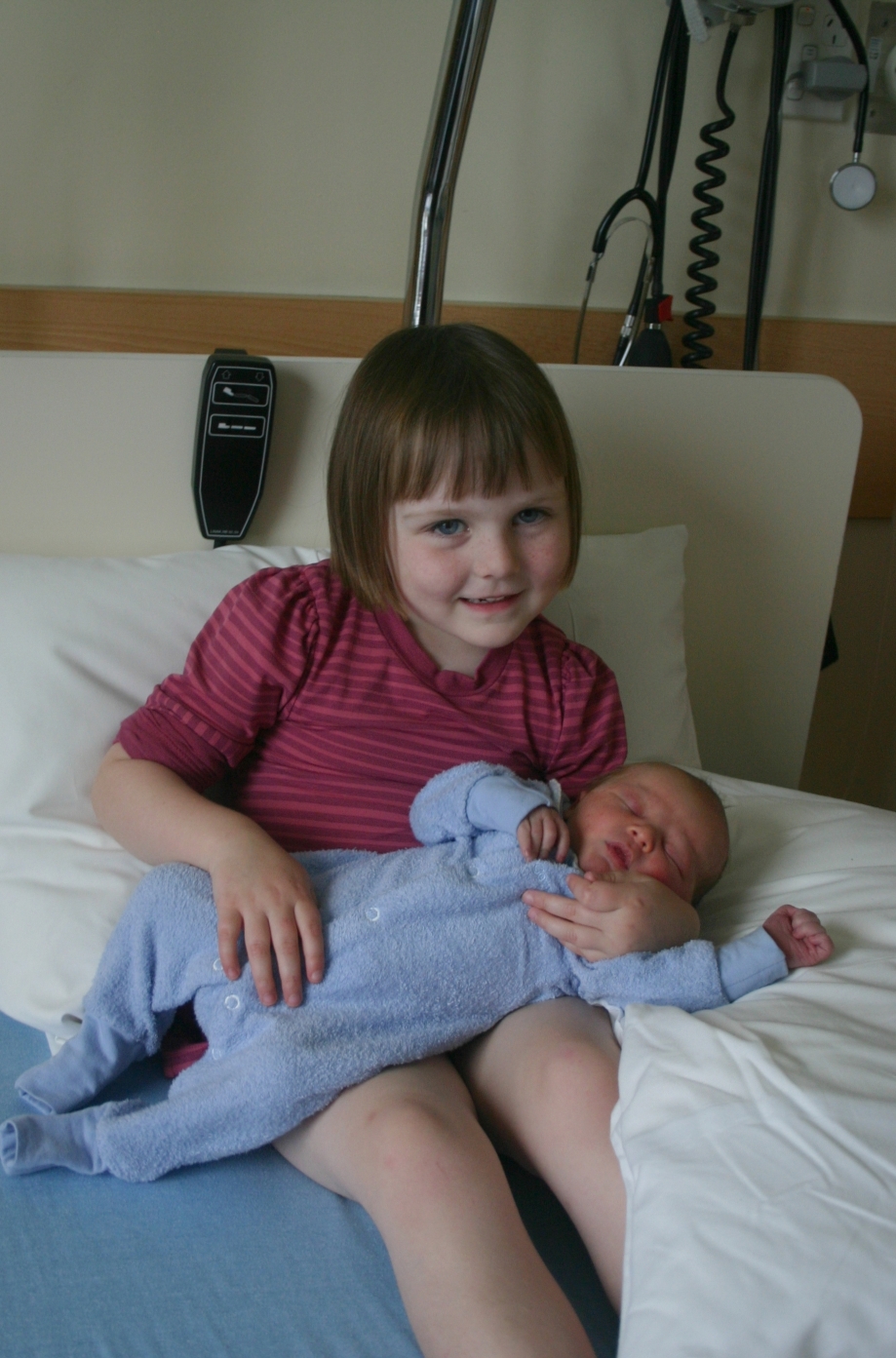
Zoe and baby Alex

Zoe and baby Alex

Alex has arrived and now I can’t wait to get out and show him the world with a suddenly very grown up Zoe as our guide. With my csection wound still very fresh and little man still so, so… though, an adventure bumping around the farm tracks today seems a little premature.

My “confinement” to a less physical but no less demanding existence for now has retuned my connection to the farm. Paddocks wrap themselves around the house and I can almost feel it breathing. Although I only spent four days away, the oats have galloped off and the new pasture in the house paddock is clearly thicker.

It doesn’t take long to fall out of touch with such a dynamic place and what this experience reinforces for me is that no one person can be the total master of all the systems on a dairy farm. And, if you’re a woman with a very young family, it’s an even more tricky balancing act. So, I guess it should come as no surprise that so many “women in agriculture” events focus on the support role a woman plays to a farmer husband. Another topic, another time!

Could I eat Laura?

Laura at 5 weeks

Laura at 5 weeks (left) with a friend

A while ago, I told you the story of Laura, a surviving twin heifer. Here she is today, about five weeks old, after her breakfast. When I came in for my own breakfast a little while later, I found this story about Facebook founder Mark Zuckerberg’s mission to eat only what he kills. I can see the merit in his argument but could never follow his lead.

I’m certainly not one of those people who can rear a steer called “Chops” and happily call the mobile butcher. Nor am I alone in being one of those people who likes to eat meat but doesn’t want to think about where it comes from. Maybe that makes me a hypocrite, yet it shows the strength of our bond with the animals around us and, as their custodians, that’s surely anything but shameful.

Why do farmers accept low milk prices?

During the recent publicity surrounding the milk price wars, I noticed a lot of comments following newspaper stories asking why dairy farmers continued to supply milk if it wasn’t financially rewarding. Simple question, complex answer.

Then yesterday, I went to a dairy farmer forum where respected farm consultant John Mulvany said, “A milk price of $5.00 to $5.50 per kilogram of milk solids is required for the foundation business of the industry (owner-operator farms) to receive an adequate return on the assets plus capital growth. This assumes ‘best practice’ management in the top 25 per cent.”

Also, that: “A large corporate investor will require a milk price of $5.50 to $6.00 per kilogram of milk solids to generate a return to shareholders in addition to growth.”

Then he presented a table that showed milk prices had only reached $5.00 per kilogram of milk solids twice since 1994/95.

If we accept John’s numbers, they raise two really important questions: why do dairy farmers keep going and why should family-run farms accept lower profits than corporate investors would? John’s always said that dairy farmers are optimistic by nature and I guess that’s part of the answer. But, if you can make a better return on the share market without working seven days per week, why wouldn’t you?

Every farmer will have a different answer to this question but I think it’s because we’re pretty much locked in, whether that’s emotionally or financially or a bit of both.

The financial ties that bind us are debt and the cost of exiting (and re-entering) milk production. Unlike broadacre farmers, we cannot readily shift our production focus in line with commodity price movements. We have a herd of cows that cannot be replaced overnight or “redeployed” and costly infrastructure that must be used to service debt. Nor can we readily wind back production. Cows must be well fed, no matter what, and that costs a lot of money. So when milk prices fall below profitable levels, we don’t withdraw supply immediately – instead, we draw on the buffer that equity in our land provides. Sadly, that’s just not good enough for many farmers and we are seeing a slow but constant attrition in farm and cow numbers as the decades roll on.

The emotional ties are harder to explain. After my father died, my accountant’s advice was to sell and invest the money elsewhere. “You’ve got other skills. Why work so hard when you could buy a nice little property out of town and be comfortable?” he reasoned. Sound advice but I wanted desperately to farm because, as corny as it sounds, I love the land, the animals, the life skills it will teach my children and the wind in my face. Something no corporate investor would value.