Devondale’s new TV ads spread the love, but who to?

Well, you saw it here first. MG’s new ads will air on TV from tonight but they’re already up on its Devondale website.

I can’t help but wonder if this ad is a direct consequence of the much-despised Dev and Dale commercials that presented the co-op’s own farmer-shareholders as bogans. The deeply unpopular ads set MG directors’ phones alight and were pulled early in response.

Watching it reminds me of Dairy Australia’s own embryonic Legendairy campaign and even the Dodge “God Made a Farmer” Super Bowl ad that unashamedly pandered to a despairing target audience in desperate need of some moral support.

What do you think? Will this ad sell more Devondale cheese, milk and butter? Is it just too cynical of me to suggest that perhaps I and my fellow dairy farmers are the real targets? Or maybe it’s not me they have in mind but the NSW suppliers MG needs to woo in order to meet its Sydney Coles contract.

While you’re having a think about it, check out another new Devondale product ad!

I love the land, so it’s time to stand up for our national parks

Inspiration for a green farmer

Inspiration for a green farmer

There’s a special spot high up on the hill through the forest at the back of our place. It’s a scene that inspires me to be a better custodian of our own land.

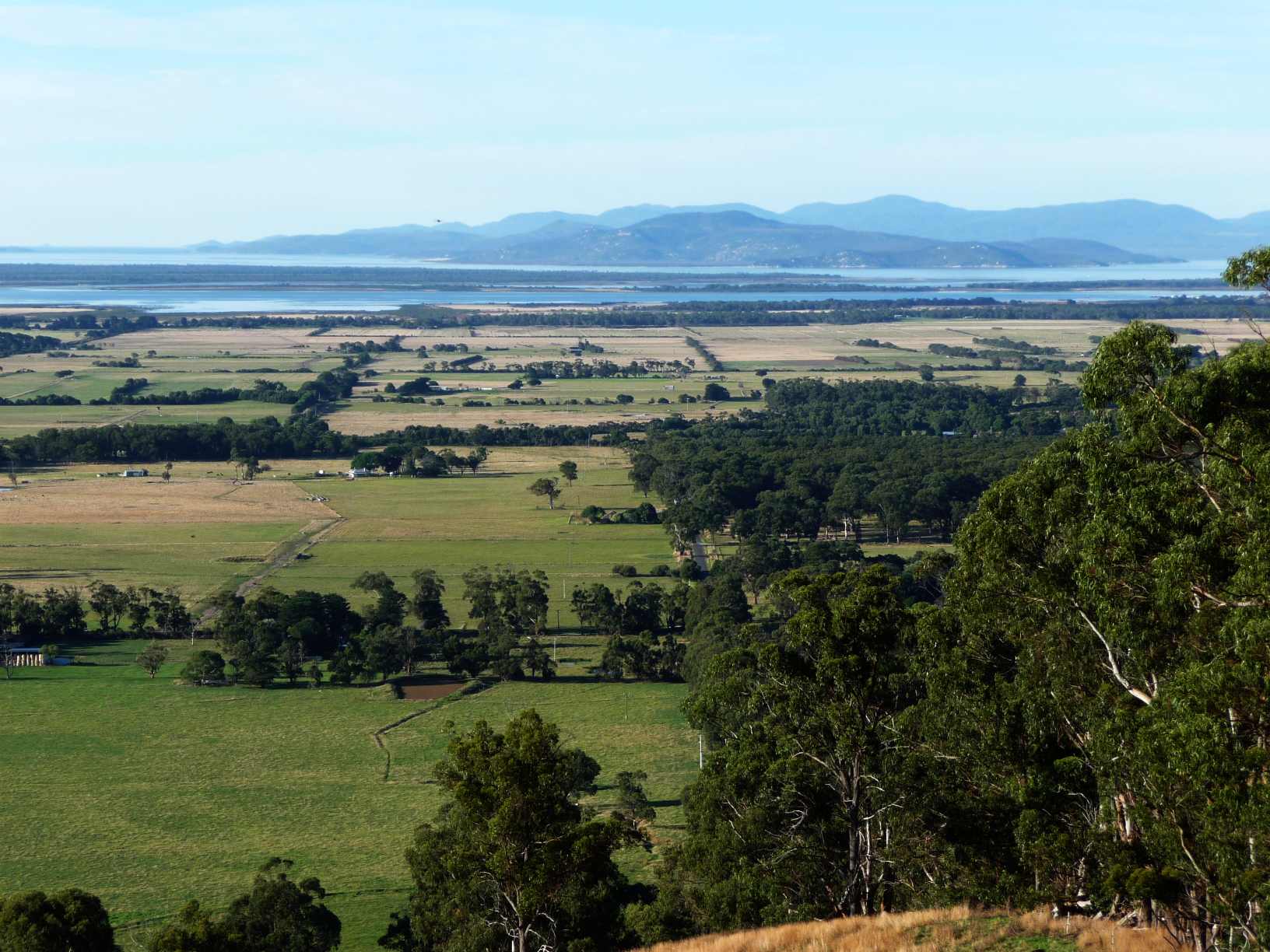
You can see right across Corner Inlet all the way to Wilson’s Prom. Under the water lie swaying seaweed forests that sustain life in the irreplaceable bird breeding grounds of this Ramsar-listed site. A little while back, the Catchment Management Authority even arranged a canoe tour to ever-so-gently ram the message home to landholders along the river: we are responsible for these delicate forests and everything that depends on them.

Stepping up to the plate, we’ve been planting trees as environmental buffers, reducing the risk of fertiliser leaching into the river and improving our effluent management. It’s a huge commitment that we’ve made because we treasure our beautiful landscape and its creatures.

The jewel in the centre of all this is Wilson’s Promontory National Park, a magical wilderness studded with granite peaks. Amazingly, its conservation values were recognised by government in the 1800s – a time when land-clearing was the priority. According to Parks Victoria:

“Following campaigns by the Field Naturalists Club of Victoria, and lobbying by the Royal Society of Victoria, the Victorian government temporarily reserved most of the Promontory as a national park in 1898. Permanent reservation followed in 1908, although the Yanakie area north of the Darby River was not added until the 1960s.”

Remarkably, it seems the 2013 Victorian government does not share the foresight of those who occupied their honorable seats in 1898. Rather than protecting the Prom, it plans to offer private developers leases of up to 99 years. I asked our local member and leader of the Victorian National Party, Peter Ryan, why the government had chosen this course. Among the material emailed by his office was this explanation:

“The government is keen to attract more international visitors to Victoria. There is growing demand for nature-based tourism and Victoria is keen to compete with other states to meet this demand. The guidelines provide certainty of process for unsolicited projects.”

“The move makes Victoria more competitive with other states in Australia, by supporting sensible and sensitive investment in national parks that complements environmental, heritage and other values and generates a net public benefit.”

To its credit, the government plans to control development in national parks to ensure that it is “sensitive” but lots of other issues bother me:

  • Where will the new buildings go? The Tidal River settlement is already very crowded. Will it be enlarged to encroach further onto the park or will it nudge out the low-cost camping that has made the Prom so accessible for generations of Victorian families?
  • It opens the door. Remember that multi-storey luxury hotel overlooking the beach Jeff Kennett wanted for the Prom back in the ’90s?
  • Why not simply enhance development outside the Park boundary? There’s plenty of tourist accommodation minutes from the park offered by small business owners who deserve the support of the government rather than competition from it.

The Tidal River Strategic Directions Plan 2010-2015  recognises that Wilsons Promontory National Park is already making a huge contribution to the economy of the surrounding region and the state as a whole.

“A 2003 study estimated that in relation to employment and business development it generated economic benefits of about $50 million per year for the region and the state.
“The Prom receives around 400,000 visits each year, most of them between November and April with peaks during the January and Easter holidays. Visitor facilities and services are concentrated at Tidal River, the largest visitor accommodation centre in a Victorian national park. It provides for a maximum of 4,000 overnight visitors at any one time.”

Why would we risk killing the goose that laid the golden egg?

Tidal River

Tidal River

Jousting for poll position

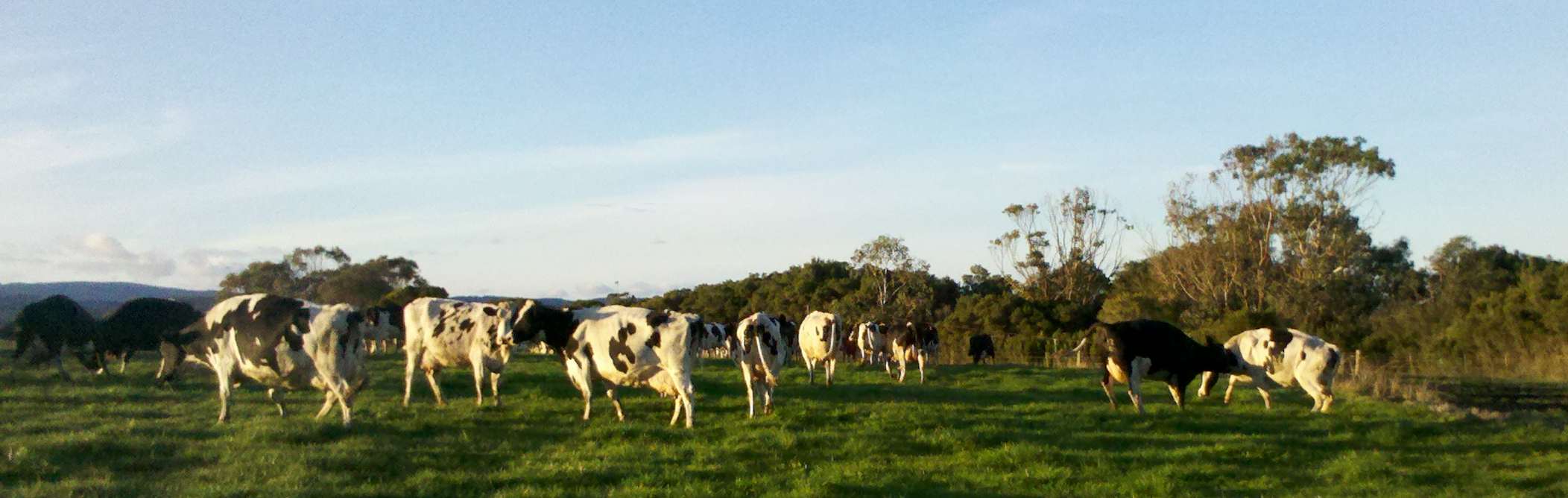
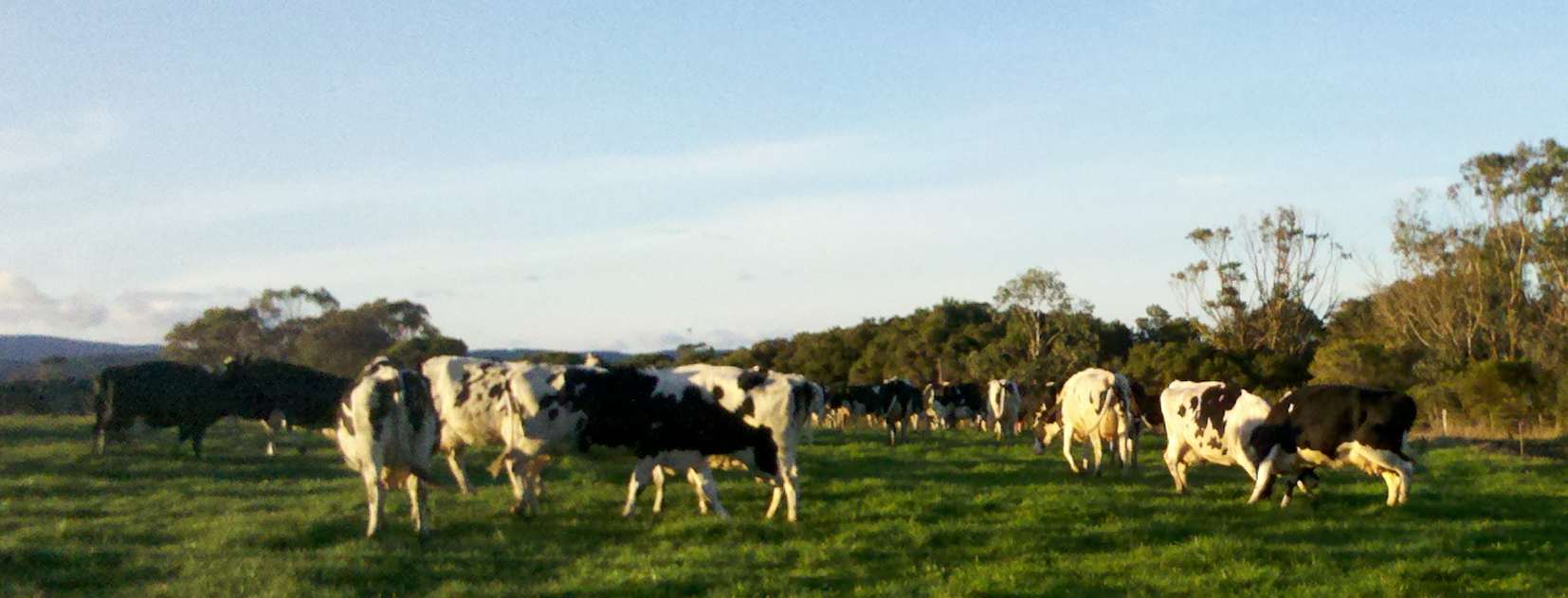
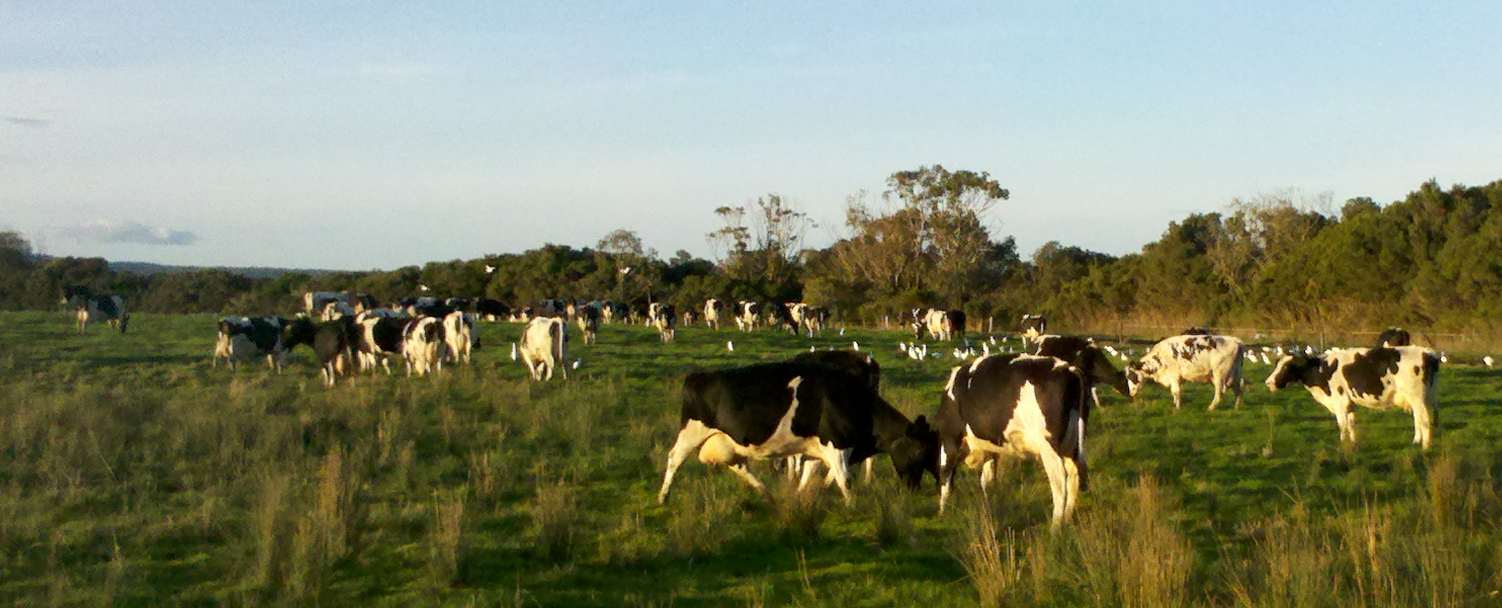
Scuffles broke out right across the paddock as the weak winter sun lit the stage for a bovine pugilism festival. The cows were feeling magnificent and, unable to contain their energy, were ready to take on all comers.

jousting jousting2 jousting3

The kids and I love watching the cows “do butter-heads” and the cows seem to love it, too. For every pair or trio engaged in warfare, there will be a group of curious onlookers and one scuffle seems to inspire more outbreaks.

Does butter-heads have a serious purpose though? Yes, it does. The herd has a very structured pecking order. Cows come into the dairy in roughly the same order every milking and the smallest and most timid are inevitably last. Mess them up by splitting the herd into seemingly random groups for a large-scale vet procedure like preg testing and you can expect trouble. There are cows thrust into leadership positions who don’t want to go into the yard first and lots more poo than usual.

I am sure that in days gone by, these battles were often fought to the death. Strong, razor sharp horns with 550kg of muscle and bone behind them are fearsome weapons. Our calves have their horn buds removed as painlessly as we can manage it early on to avoid far greater traumas later in life and for our own protection.

Soon, they will be spared even this discomfort. Dairy cows are being bred “polled” (without horns) and, eventually, we will have a herd that is naturally hornless. It’s not easy finding suitable polled bulls yet but our breeding centre tells me that demand from dairy farmers for polled semen is now “huge”.

I have my eyes on a couple of German polled beaux for our ladies. I only hope we can get them in time for this year’s mating season.

A very unpopular dairy blog post

I suspect I am about to make a lot of enemies because there is an elephant in the room and few are in a position to point it out.

Here are the facts:

  • the last season has been dreadful
  • dairy farmers have free access to lots of information about we can keep cows healthy during fodder shortages
  • many dairy farmers who couldn’t afford skyrocketing feed costs have sold a lot of cows at ridiculously low prices so they can feed the remainder of their cows properly
  • farmers have gone broke but kept their cows healthy
  • cows do not starve overnight and watching them weaken over weeks or months would be more than I could bear yet reports of them dying in their hundreds have hit the national news

I was stunned. Perhaps people who would normally sell their cows off long, long before they reached the point of starvation couldn’t for some reason? Maybe they were hoping for a miracle? Maybe they were in denial?

It just doesn’t ring true, at least not for hundreds of cows as media reports suggest.

And it’s come out today that some published pictures of “starving cattle” were actually the carcasses of cows that had died of other causes. In fact, the vet whose leaked email urging MPs to act sparked the media stories, Dr Mike Hamblin, has since told Warrnambool newspaper The Standard that there is no animal welfare problem in SW Victoria:

“Warrnambool veterinarian Mike Hamblin said there was no animal welfare crisis in the region and that he believed farmers were looking after their livestock well in a difficult financial situation. Dr Hamblin said that while some stock were thinner than normal, he had not seen any starving.”

Yes, people need help. Yes, it is wonderful that the media stories have finally got the Victorian government to reach agreement with the Commonwealth on low-interest loans.

But do we really need to paint already suffering farmers as cruel by presenting pictures of dead cows to our political leaders before action is taken? The reality is that most farmers skip their own dinners to feed our animals. These dirty tactics may have won concessional loans for a few farmers but they have blown a lot of trust and, at the end of the day, we will all be the losers.

There has to be a better way to avert what is a genuine human crisis than fabricating an animal welfare one.

Help for our dairy farmers and their cows

There certainly is light at the end of the financial tunnel for dairy farmers but many are still finding the going incredibly difficult.

I’m a tough old stick but there have been times in the last few months where things unravelled a bit before I could piece myself together again, so I know how it feels first-hand. For me, the saving grace has been to get help from our expert farm consultant, Neil, and build an action plan to insulate the cows from the fodder shortage.

It’s gone beyond that for some farmers who are in desperate positions. I asked Dairy Australia’s issues manager, Julie Iommi, what the dairy farming representative bodies are doing to help.

1. Anyone wishing to donate fodder or funds to buy fodder – please contact the UDV/VFF on 1300 882 833. Want to help but have no hay of your own? Farmer mental health dynamo, Alison Fairleigh, has linked her handy blog to “Buy a Bale“, an initiative of Aussie Helpers, where anyone can donate time or money for fodder to go to people who are in dire straits.

2. VFF, supported by ADF, is pushing the state government to immediately review the resourcing to the Rural Financial Counselling network to ensure they have the capacity to deal with current demand.

3. VFF, supported by ADF, has asked the state and federal governments to introduce the low interest loan support program immediately.

4. The state and federal governments have also been requested to review other forms of emergency support immediately.

5. VFF and ADF are also pushing the state and federal agriculture Ministers to meet the bank sector to encourage them to continue to take the long-term view when assessing their support of farm businesses.

Dairy Australia is promoting the Taking Stock program, which can help dairy farmers review their individual situations and create their own action plans – Julie says there are still around 50 spots available.

DA also has good info on its site about coping with fodder shortages.

Last of all, if you know someone who might be battling to stay afloat, why not drop them a line, phone or do the good old-fashioned thing and turn up with a cake? It might be just the lifeline they need without you ever knowing it.

What heaven looks like for a dairy cow

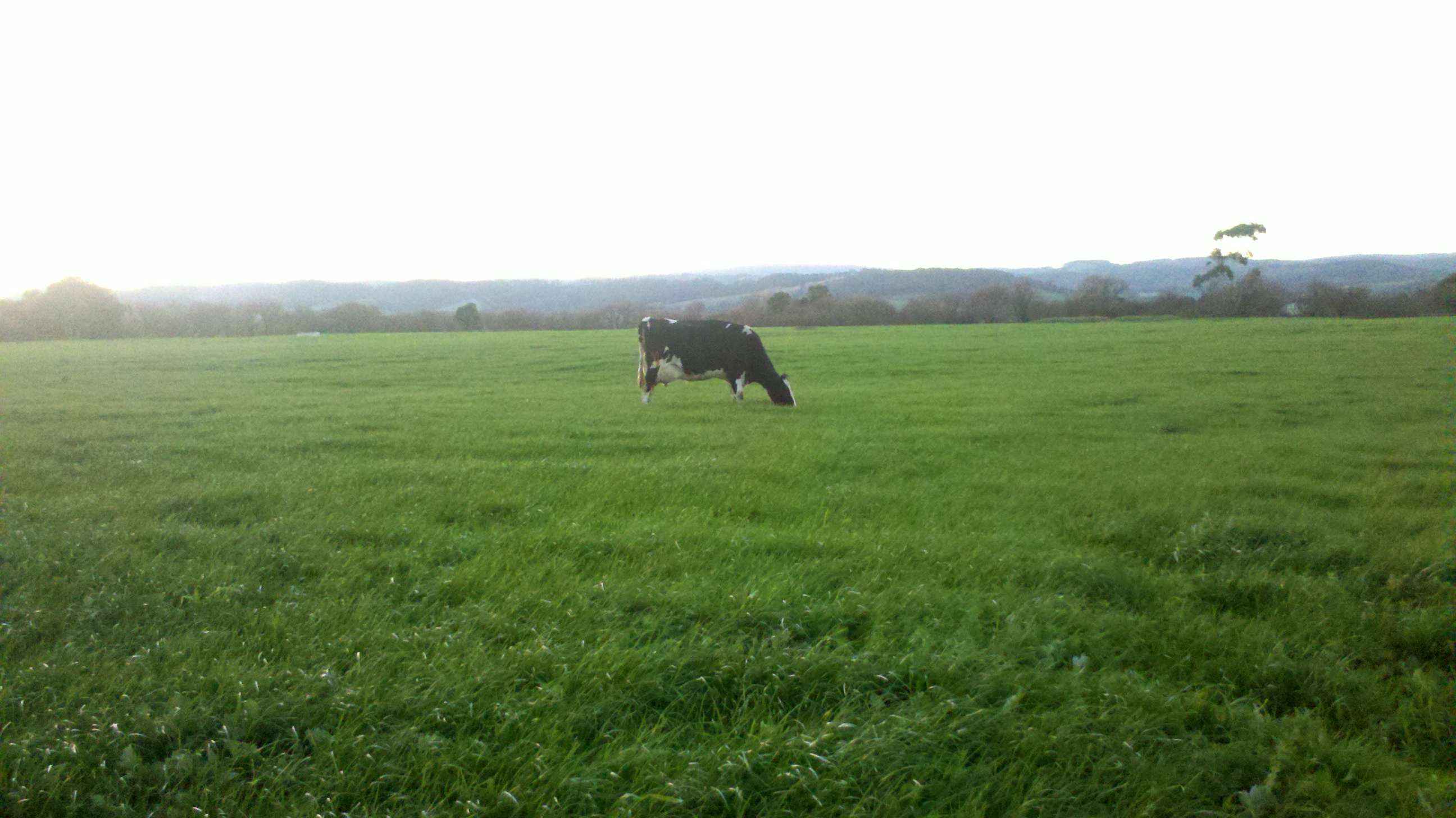
Last night I’d just finished setting up a fresh paddock for the cows when the first of our ladies to leave the dairy strolled in.

Black and white bliss

Black and white bliss

I reckon I could have sat on this cow’s back stark-naked playing the banjo for all she cared. She was in a heaven all her own. Her herd mates weren’t far away though and when they saw what was waiting for them…

It’s only the second time they’ve grazed this newly-renovated pasture and they love it. The grass comes with a special type of fungus called the AR37 endophyte, which makes the grass naturally more resistant to pests (with huge environmental gains). Endophytes are nothing new but, traditionally, they come at a cost: the taste test. Cows seem not to like the old endophytes as much and they can even cause health issues for the cows.

AR37, on the other hand, is meant not to have any impact on palatability or cow health and, judging by the cows’ reactions, I’d say they’d give it three Moochelin stars!

Stealing the calf’s milk

There’s an urban myth that dairy farmers rear calves away from the herd so we can harvest the special buttercup-yellow milk that comes with the first milkings after calving called colostrum. The irony is that one of the main reasons we collect calves early is to ensure they get plenty of colostrum.

According to a Dairy Australia fact sheet on colostrum management:

“Unlike humans, the placenta of the cow keeps the maternal blood supply separate from that of the unborn calf. This prevents the transfer of antibodies from the cow to the calf before birth and the calf is born with no ability to fight disease.”

“Colostrum is the substance that provides the antibodies that form the main protection from infectious diseases for the calf in the first 6 weeks of life, until the calf can develop antibodies of its own. Without colostrum, a calf is likely to die.”

What’s more, calves need it immediately, as DA goes on to explain:

“It is important to be clear about two key facts relating to colostrum:
• The calf’s intestine absorbs the large IgG molecules easily straight after birth
• The intestine’s ability to absorb antibodies decreases after birth—it decreases by 30–50 % within 6 hours of birth
• It stops completely between 24 to 36 hours after birth”

Yes, it’s vital to our calves.

We don’t sell a drop of the precious stuff (few farmers do, which is why it’s so expensive) and we’re not allowed to mix it with the rest of the milk because it goes off quickly. “Stealing colostrum from calves” is certainly not why we raise the calves away from the herd.

Let them eat cake

Good quality hay is like bread. Dairy cows love it for its balance of fibre, energy and protein. This winter, you cannot buy good quality hay for less than a king’s ransom, if you can buy it at all. So, with none to be had, we’ve been forced to get creative, introducing three different delicacies for the cows.

Almond hulls
At first, I wondered if the cows would ever eat this stuff. The smell is nice but almond hulls look like a mix of sawdust and fine wood chips.

Delicacy of the day: almond hulls

Delicacy of the day: almond hulls

Each cow gets an average of 5kg of the hulls each day but, judging by the way they wolf it down, I reckon they want more!

The 5 o'clock swill

The 3 o’clock swill

Trying to push the cows past a heap of almond hulls is like trying to push back the tide. Run one side of the ring and they’re already attacking the side you just left. Not because they’re starving, either. The cows are getting lashings and lashings of energy and nutrient-rich food – they just love the stuff!

Mmmmm, delicious

Mmmmm, delicious

Straw for scratch fibre
Although the almond hulls are fibrous, the cows need long fibre to wake-up their complex digestive systems, so they’re getting a couple of bales of straw as well (though they like to use it as a luxurious mattress, it seems).

Goo for the good bugs
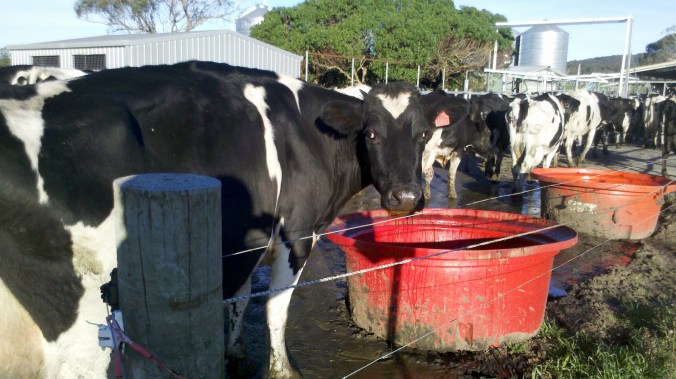
Also new to our cows is a special brew delivered in fancy red tubs. A mixture of molasses, non-animal protein and minerals, the goo is not really for the cows. It’s for the bugs that digest their food in one of those four stomach chambers called the rumen. The idea is that the “goo for good bugs” turns them into super-bugs that can release the maximum value from everything the cow eats.

It’s a sweet-and-sour mix designed to stop the cows gorging themselves on the goo but they still seem to enjoy a generous swig on the way in and out of the dairy!
RedTrough

Grain for breakfast and dinner
The cows continue to enjoy two sittings of corn, barley, wheat and minerals each day during milking.

Most important of all – juicy, juicy grass
Despite all the other stuff on the menu this winter, nothing is more important to our cows than grass.

WintryPasture

Are they missing their hay? I think not.
The silver lining to the big dry

FloodJune14Std

I thought we’d “only” had 93mm but it was actually more like 144mm (that’s more than 5 and half inches) in three days. Normally, that would have been a massive disaster. Instead, it’s moderate flooding and, so long as the weather gods hold their tempers for a while, we’ll have dodged a bullet.

Such a relief.

I put our narrow escape down to the lingering effects of the exceptionally dry summer and autumn of 2012/13. While the pastures were green last week, you only had to dig down a few inches before the soil became very dry. The catchment sopped up most of this rain like a giant jade sponge before it got to the waterways.

The weather bureau is forecasting a warmer and wetter than average winter and although it has very little confidence in that seasonal rainfall outlook, the forecasters are actually very good at predicting temperatures. A warm winter would be welcome indeed. Fingers crossed!