The morning after

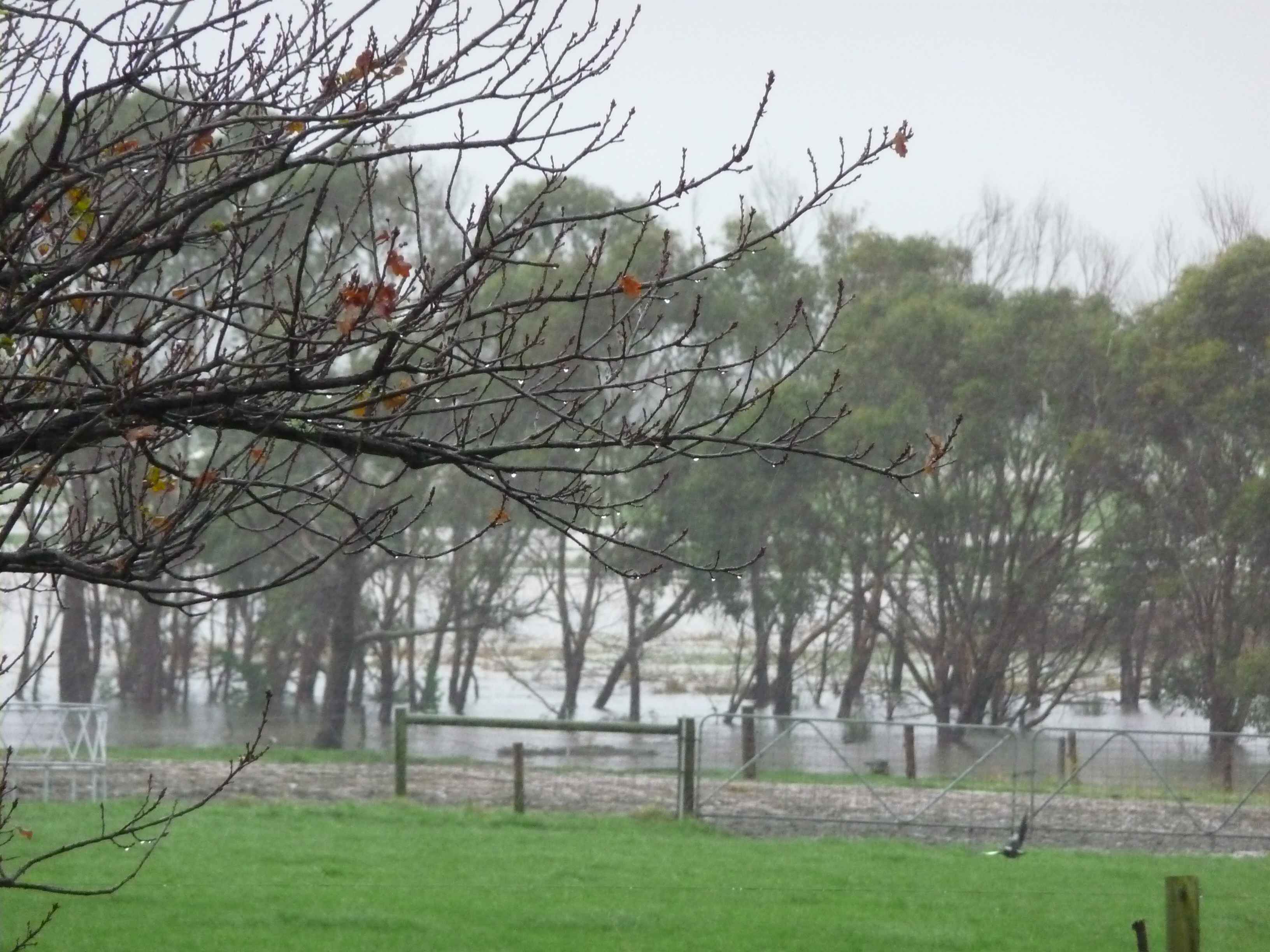
I lay awake listening to rain on the roof and when dawn broke, this was the view that greeted Alex and me yesterday.

Flood June 4

No better than the day before – even the water troughs disappeared!

Wayne was in Melbourne, Zoe still curled up in bed. The cows were missing their milker, Clarkie, who was on the other side of the flood waters. Sticklers for routine, they’d started coming into the yard and would not be happy! As soon as Zoe woke, we packed breakfast and headed off in the car, looking for a way through.

Flooded road

The most likely option

I sat contemplating the water for a couple of minutes and turned back – not worth the risk. After about three-quarters of an hour of back road exploration, we made it to town! A quick call to Clarkie and he was on his way.

Yay! Our patience is rewarded![/caption]

The cows were milked a few hours late but everyone was safe and Zoe made it to school in time for morning tea. The rest of the day was spent hunkered down with farm consultant Matt, poring over spreadsheets, while Alex entertained us with his antics. The waters are still quite high today but this afternoon’s farm tour will reveal the extent of the damage.

All part of the thrills and spills of life on the land and I guess we had better get used to it – if the scientific community has it right, the climate rollercoaster will only get more and more “exciting”.
Two floods in ten days

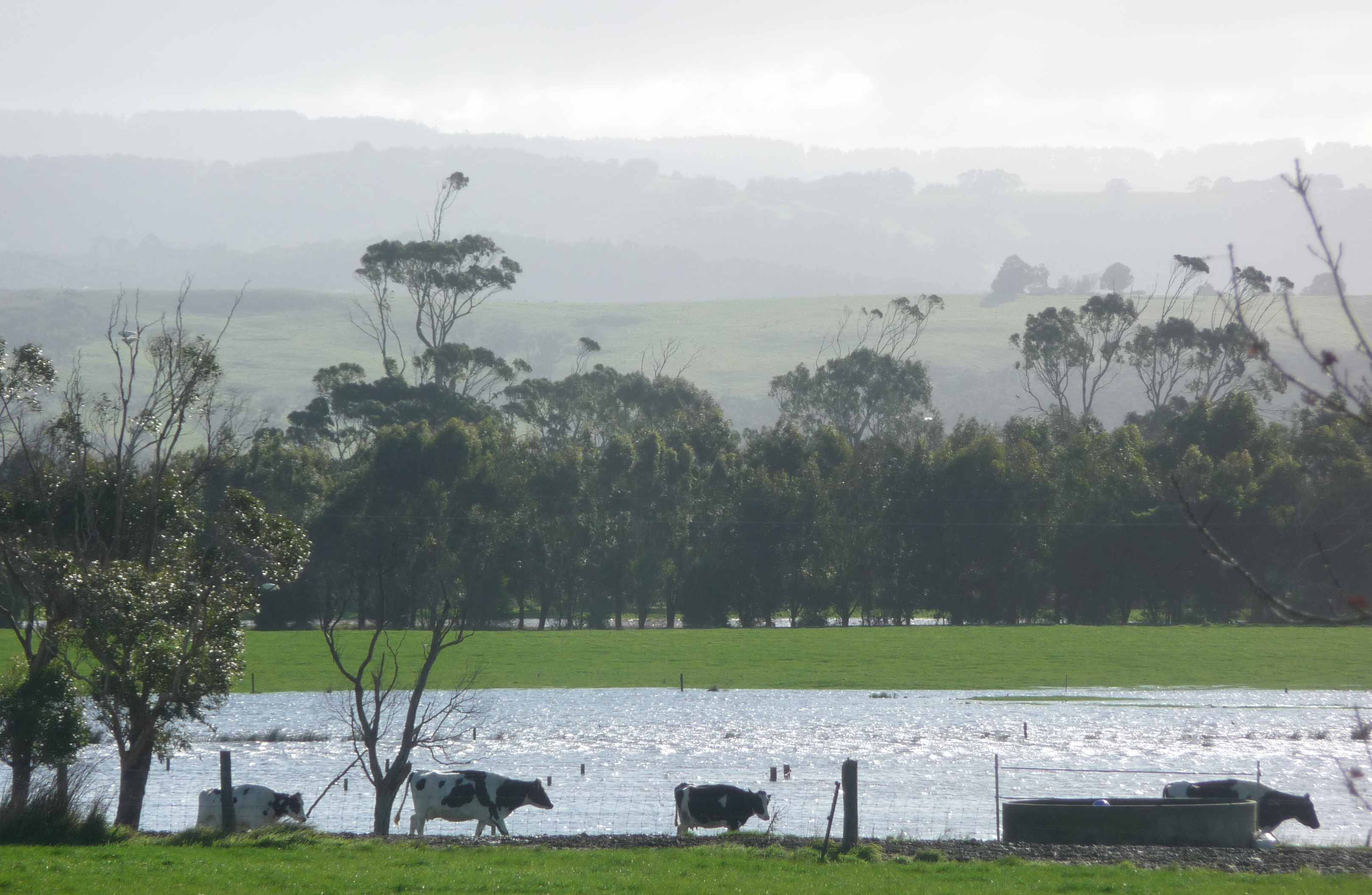
My kitchen is a picture of domestic bliss: gingerbread men fashioned by Zoe in the oven, chicken curry in the pressure cooker. But the reality is that Zoe is home early from school because the roads to town are sure to be cut by now with the second flood in 10 days.

The second flood

Groundhog day

A neighbour tells me he tipped 94mm out of the gauge this morning and it hasn’t stopped raining since. The cows are on high ground (as is the house, thankfully) but they ate those pastures out only a week ago to give the flats a chance to recover and the grass is still short.

What will we do? Redo our budgets, then call the gravel contractor to get first in line for track repairs, followed closely by the fodder supplier.

The cows will have soft, tender feet so we’ll have to take them extra gently along the tracks and we’ve already earmarked a “sacrifice” paddock to spare our saturated soils from pugging and compaction.

None of this would be too, too terrible if it was November but it’s only June 4 and as the wry @Hoddlecows noted on Twitter, optimism about the new season seems to be washing away with the flood waters.

Spongey paddocks and rocky roads

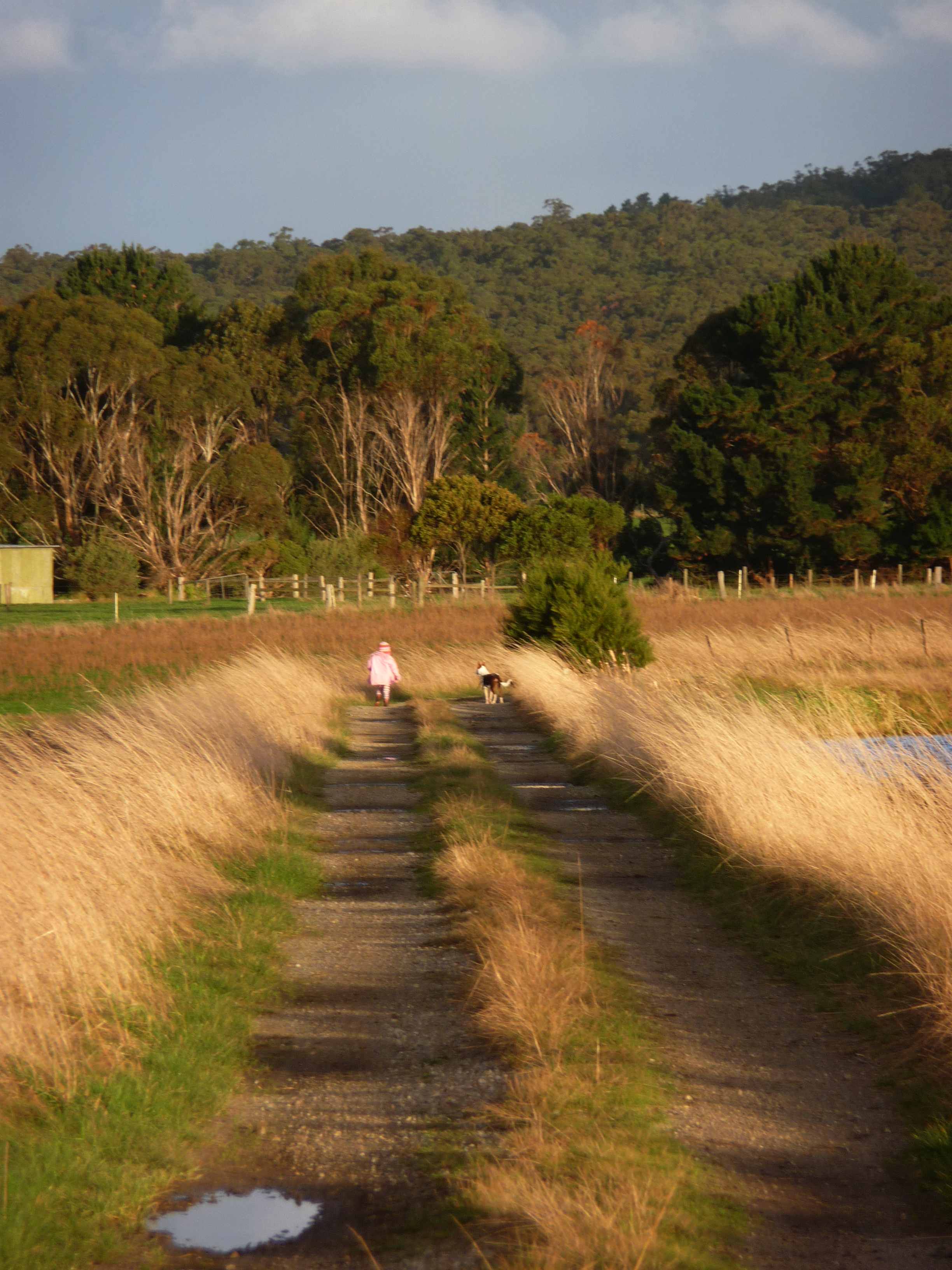
This is what the farm looked like a week ago.

May flood

The first flood of the season

In the short term, it’s bad news in the form of fence repairs, lost gravel and porridgey paddocks. In the long term, it’s what has shaped and maintains this beautiful landscape.

The floodwaters bring silt and nutrients that build deep chocolatey soils bursting with life. The alluvial soils seem perfectly adapted to the floods too. Rather than succumb to saturation, they drain quickly but hold back just enough moisture to sustain pastures year-round.

Enough romanticism though – the focus is now on resurfacing the track to avoid a herd of tender-footed cows!

Questions for Aus Dairy Farmers president, Chris Griffin

Australian dairy farmers are represented by the aptly named Australian Dairy Farmers Limited and I am very pleased that its president, Chris Griffin, was happy to be my guest on Milk Maid Marian. It is the first of a series of guest posts that I have planned featuring dairy leaders. If you would like to suggest more guests for MMM, please drop me a note!

Chris Griffin

Australian Dairy Farmers Limited president, Chris Griffin.

MMM: Why are you a dairy farmer?
CG: Growing up on a dairy farm I have always wanted to be a dairy farmer. I have always been interested in issues beyond my front gate that affect our industry and especially now as President of Australian Dairy Farmers (ADF) I want to ensure that our industry is given the recognition it deserves for all of the hard work that we do on a daily basis.

MMM: What are the hot topics discussed by dairy farmers?
CG: There are many topics that we farmers are concerned about, in particular Water, Carbon, Animal Health & Welfare and the retail supermarket milk price – not only what farmers receive but also the retail price that milk is being sold at in our supermarkets.

MMM: What is not being discussed that should be?
CG: Genetic Modification (GM) – there is potential coming out of the Cooperative Research Centre (CRC) on genomics and better pasture species. This is an exciting development and has the potential to have increased productivity gains for the industry. I also believe that we need to focus on the future of our industry and Australia’s need to produce high quality products. Our export ability will also continue to generate wealth for Australia.

MMM: What are the biggest challenges and opportunities for the dairy community?
CG: One challenge for farmers is returning our production to those of the pre-drought levels. As an industry, we also need to ensure that we continue to provide career paths for our younger generations. We also need to ensure that there are people continuing to contribute to our industry and understand the value and need for advocacy and representation at local, state and national levels.

MMM: If you had a magic wand…
CG: I would want to eliminate the urban/rural divide that has impacted our industry for some time. Farmers must be recognised for the value that they contribute in caring for their land, caring for their livestock and continually providing high quality products and nutritious food.

Chris Griffin

Chris on the farm

Gracious visitor to the farm

It’s an understatement to call it wet here at the moment. We have a mini-flood across the river flats and the dam is overflowing so last night I started up the siphon again and look who I saw!

White bellied sea eagle

Her Majesty, the White Bellied Sea Eagle, seated on her (or is that “his”?) throne.

Apologies for the photo quality – it was getting dark and the eagle was right in the centre of the dam, which is a big ask of my farm-going point and shoot! To appreciate its majesty, take a look at these photos of the white bellied sea eagle.

I was very lucky indeed to see it. According to a DPI fact sheet, the eagle is very rare here:

The total Victorian population is thought to be extremely low: possibly only 100 breeding pairs survive (R. Bilney pers. comm.). Distribution records indicate two population concentrations – approximately 25 pairs around the
Gippsland Lakes and 25 pairs around Corner Inlet – and a further 50 pairs scattered throughout the rest of Victoria.

The bird is about the size of a small wedgetail, with a wingspan of up to 2.2 metres. Like the wedgie, this one was harassed by smaller birds as she literally took off into the sunset.

Sea Eagle in Flight

Off into the blue yonder

Would you like ethics with that?

A consultant once told me: “My services can be described as cheap, good and quick but you can only have two of the three at once.”

When it comes to milk, the choices are: cheap, good and ethical. Under the umbrella of “ethical” comes animal wellbeing, the environment and the welfare of farming families.

I don’t have any input on which pair wins out – you and the thousands of others who drink our milk or eat our cheese do. At the moment, with prices falling and consumers celebrating milk that’s cheaper than water, it seems “ethical” is the loser.

As someone who farms because she loves the land and her animals, this is very, very sad news. Currently, it is my family that is missing out rather than land or animal. Eventually though, we won’t be able to carry the burden and we will be the ones facing three choices:

1. Find a way to fund niche value adding for ethical products;
2. Industrialise our farming practices and see a fall in animal wellbeing and environmental outcomes; or
3. Leave farming.

Only time will tell.

With this in mind, it was interesting to read this comment in response to Lynne Strong’s point that consumers have a role to play in animal welfare standards following a story on The Conversation:

“Is it the case that, in buying a $5.00, 2L carton of milk in Australia, I can be assured that the product was sourced more ethically than the $2 Coles brand?”

Of course not but you can be sure that by purchasing unsustainably priced milk, you will be putting pressure on ethical standards right across the country.

Life lessons for a dairy dog

Patch was just sniffing about while I was moving a temporary fence this morning when all of a sudden, he yelped, dived into a drain in sheer panic and splashed over to the other side. The dousing must have done him some good because he emerged calm but with a reproachful look that suggested I had committed a terrible crime.

Patch, you see, has working dog blood running through his veins but this town-bred pup has had a lot to learn since we adopted him from the volunteers at Homeless Hounds this Easter. One of them is to treat all fences as though they are electric.

After that disgusted stare, he took off down the paddock, refusing to answer my calls. All I could think of was: “What will I tell Zoe if he disappears?”. Zoe and Patch have become inseparable. A sample of her writing exercises from her school book includes:

“I have a nu dog and i love mi nu dog” and “i love mi dog and he love me” and “This is mi star and this is what it says homeless hounds rescue dog” and so on and so on.

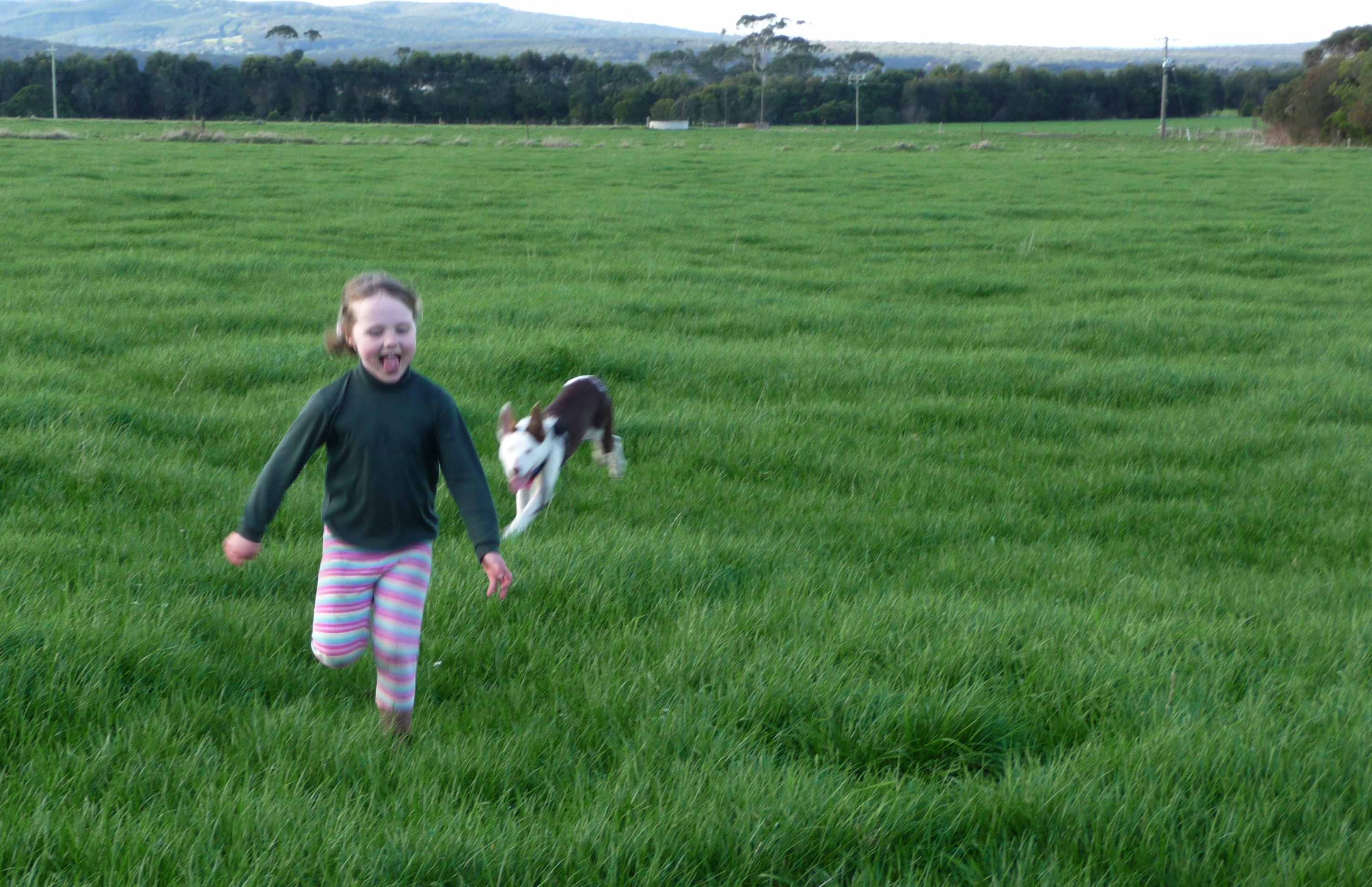
Zoe and Patch in the paddock

Zoe and Patch on Sunday. Yes, they were running very fast!

Thankfully, the bedraggled Patch ran home and was happy to be reunited but it got me thinking about some of the lessons he’s had to learn about farm life.

Lesson 1: When mum says to be quiet, listen!
Remember when Patch met the cows for the first time?

Lesson 2: Bulls are bullies
Patch decided to take on a bull and lost. Nothing broken but he was sore for a couple of days.

Patch and the bull

The working dog instinct needs to be matched with experience

Lesson 3: Sometimes it rains ice
Patch didn’t want to ride in the Bobcat the day after the hail incident.

Lesson 4: Don’t run too close behind the Bobcat when the track is muddy

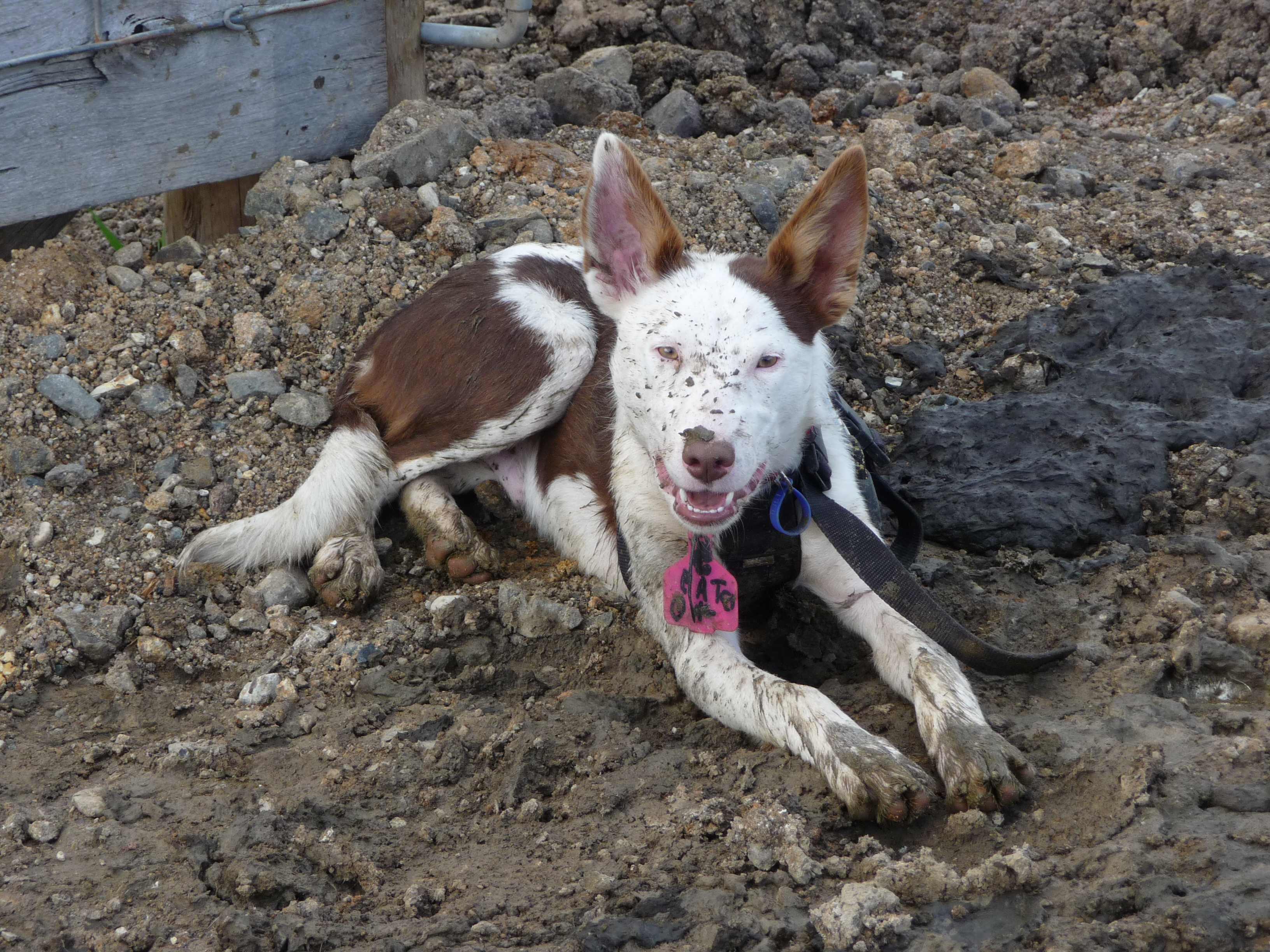
Muddy Patch

What mud?

Lesson 5: Don’t run into the Bobcat
Ouch! Patch ran into the side of the Bobcat while it was motoring along (slowly) and ended up with a black streak on one leg. He’s now aware of traffic.

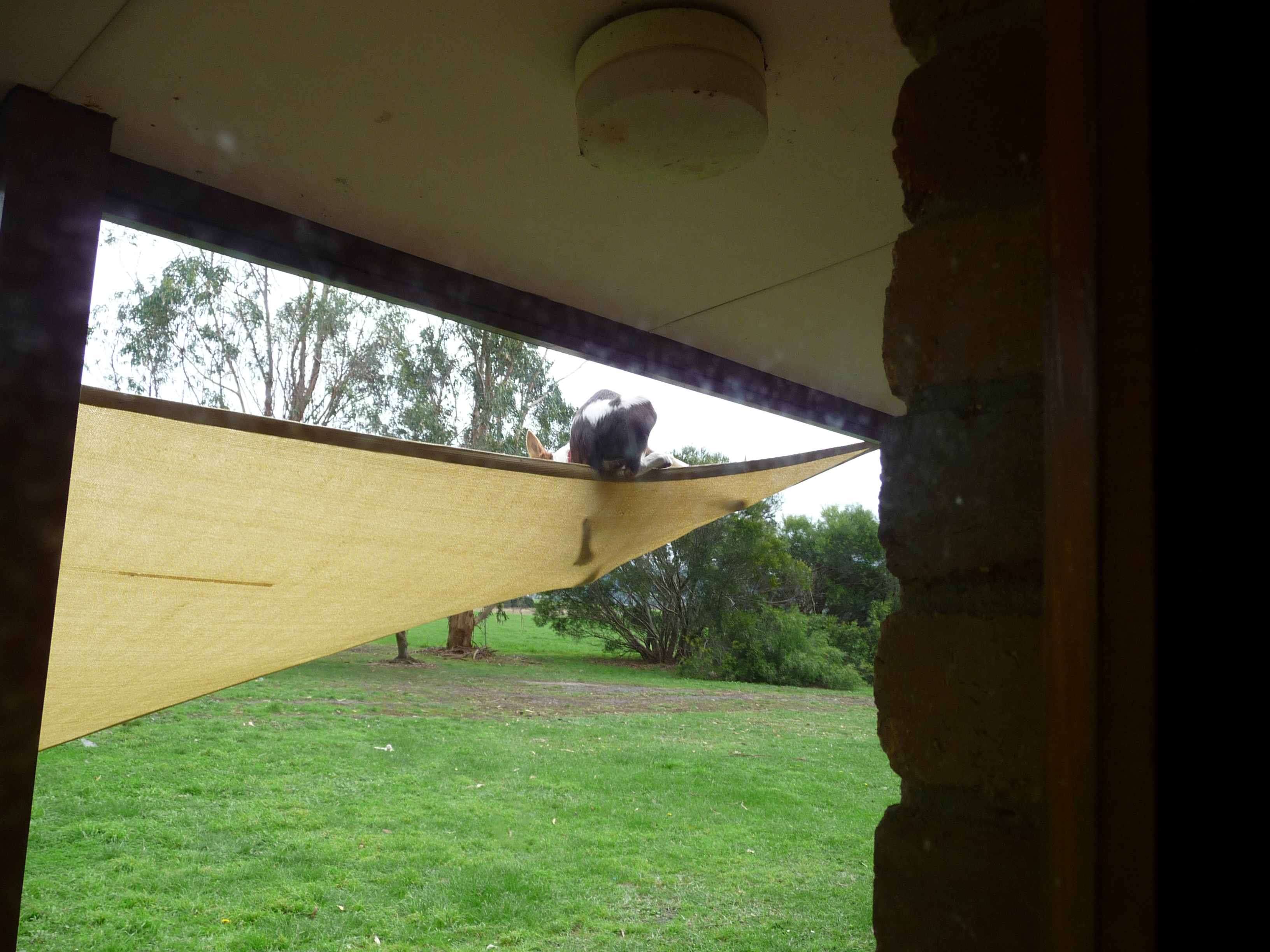
Lesson 6: Shade sails are fun to climb but don’t try to get down at the top

Patch on the shade sail

Nice day to go for a sail

Lesson 7: Farm life is fun
Patch is one of the happiest dogs in the world.

Zoe and Patch

“Mi dog Patch is cleva”

Carbon tax misfires

I imagined there would be riots when the average Australian family faced a 10% cut in income as a result of the carbon tax. But for some reason, nobody seems to be making a big deal about it.

I suspect it’s pretty quiet because although mine is a very average family (two kids and a dog), we’re not on the political radar.

The carbon tax is expected to slug us around $5000 per year – a whopping 10% of the average dairy farm family’s income. As reported in The Land and the Australian Financial Review:

The three majors that will pay the new tax from July 1 are already investing in low-carbon technologies but Murray Goulburn Co-operative estimates rising electricity prices will cut the annual income of the average farmer by $5000 a year, The Australian Financial Review reports.

“Profit in the average dairy business in recent years has averaged $50,000,” one MGC general manager, Robert Poole, said. “So that represents a 10 per cent cut. For the average dairy farmer, the tax is going to cut hard into their profits.”

How can this be? Well, because even though I plant 1000 trees or more on the farm every year and have built some of the most carbon-rich soils in the country (up to 22% organic matter content), I cannot participate in the poorly framed Carbon Farming Initiative.

The milk processor we supply, Murray Goulburn, will face increased costs of $10 million per annum and will pass those costs onto farmers – guaranteed. It is guaranteed to do so because MG is 100% farmer-owned so the buck quite literally stops with us. Our fertiliser, fuel and electricity prices will also rise.

Ironically, if MG was spewing out far more greenhouse gases, we might not face this crippling tax because “emission intensive” businesses that export just 10% of their products are considered “trade exposed” and given special concessions. MG exports around half of our milk but because it’s not that “emission intensive” (aka dirty), it misses out on concessions.

Please, can somebody explain the logic behind this?

What’s so special about this calf?

Emily Brown of Linderlan Brown Swiss is a very clever young woman and dairy farmer and I am really pleased she accepted an invitation to write a guest post for me. Over to you, Emily!

First I’d like to thank The Milk Maid Marian for inviting me to do a guest blog! I feel very honoured and somewhat famous…

I’d like to introduced you to Olga, a brand new baby calf born recently, what’s so special about her you ask? (apart from how obviously adorable she is of course!) Well lots of things!

Olga the calf

Olga


Olga is a pure bred Brown Swiss dairy calf, she is four weeks old and loves to drink milk, eat grain and hay, and run circuits of the calf paddock at full speed with all her mates, but that’s not all, Olga came into the world in a very unusual way!

Olga was born via embryo transfer. This is where a superior cow is selected to produce embryos which get implanted into other, less valuable cows, resulting in more offspring from the very best cows. This is done by a special vet who gives the mother or ‘donor cow’ injections to stimulate multiple eggs to be formed, kind of like when someone has twins or triplets. They are then fertilised via artificial insemination, and after seven days flushed out and either implanted into another cow, or frozen to be implanted at a later date. Olga’s mum made six in one go!

So why do dairy farmers sometimes do embryo transfer? Well, we are always looking to use the best technology to ensure that we are breeding the healthiest, most productive animals we can. This enables them to live longer and better lives, which is great for the animal and the farmer!

But there’s another reason Olga’s mum was selected to produce embryos: not only has she lived a long time and produced a lot of high quality milk but two of her daughters and one of her grand-daughters have won Champion of their age groups at the biggest and most glamorous dairy show in Australia – International Dairy Week. This is where the most beautiful cows of the six dairy breeds strut their stuff every year.

Olga's Mum

Olga’s Mum

Let’s hope little Olga follows in her big sisters footsteps in the future, but with a little brother or sister on the way 10 weeks after she was born she might have some competition!!!

Olga's crew

Olga’s crew

Murray Goulburn Co-op sheds jobs: why it’s happening

The co-op we supply, Murray Goulburn, has made an announcement that immediately made me sad. In an email sent to its farmers yesterday, managing director Gary Helou, wrote:

“The change program embarked on by MG is even more critical given increasing cost pressure and the recent significant decline in world market prices due to higher global milk supply. This initiative will help reduce the impact of falling world prices and a high Australian dollar on our supplier/shareholders. As a result of these changes, MG’s total workforce is set to reduce by 12% or 301 roles.”

While it makes me sad, I’m not surprised. Farmers are struggling to survive (less water, increasing costs, horrible prices and now the carbon tax slug estimated to cost us $7,500 each) and milk flows have dropped as a result. When appointed as the new CEO a few months ago, Mr Helou announced he would cut the co-op’s operating costs by a whopping 25%. That’s a lot of money.

As he went on to write in yesterday’s email:

“We continue to employ more than 2,100 people, mostly in rural and regional Australia, and contribute an estimated $6 billion to the Australian economy. These changes will make a significant contribution to our goal of reducing operating costs by $100 million this year and set us on the path to becoming a world leader in dairy foods”.

To give you some background, MG is Australia’s last big dairy farmer co-operative and processes around 35% of the country’s milk. You can’t own shares in MG unless you supply the co-op milk, so all the profits go straight back to farmers. The other big players are privately owned and profit from buying milk at the lowest possible price and selling it at the highest possible price. In effect, this means that MG tends to set the benchmark for the price dairy farmers like me are paid for their milk.

This is why I feel torn about the “change program”. On one hand, I am worried that somewhere along the way, we will weaken MG’s co-op values but, on the other, we desperately need MG to be strong and efficient. Neither the 2,100 MG workforce or Australia’s dairy farmers can afford to lose this gentle giant. Please be careful, Mr Helou, and good luck.