Gasp: the cows love fescue (and I do too)

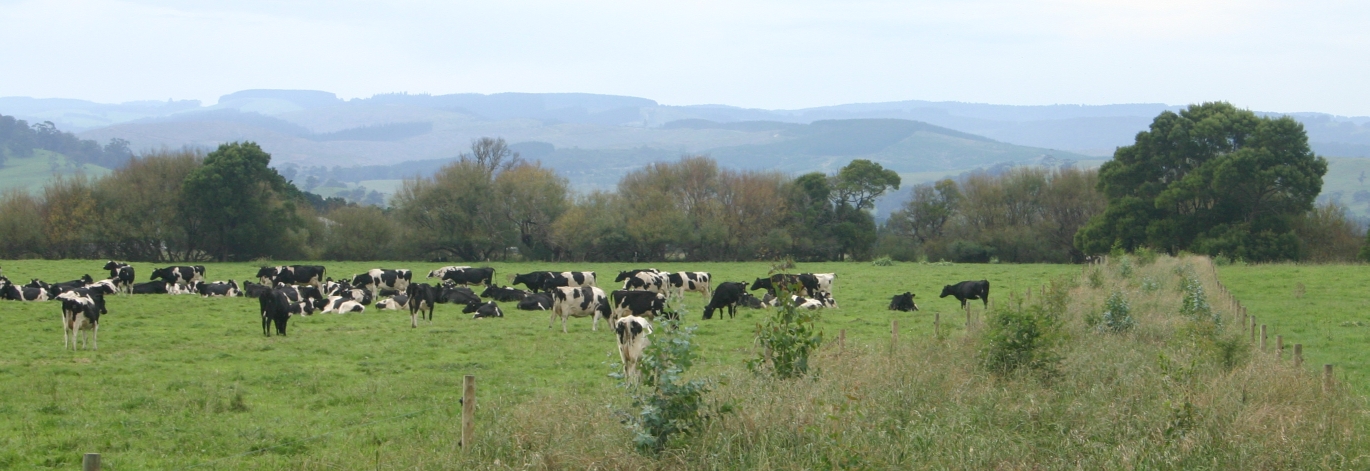
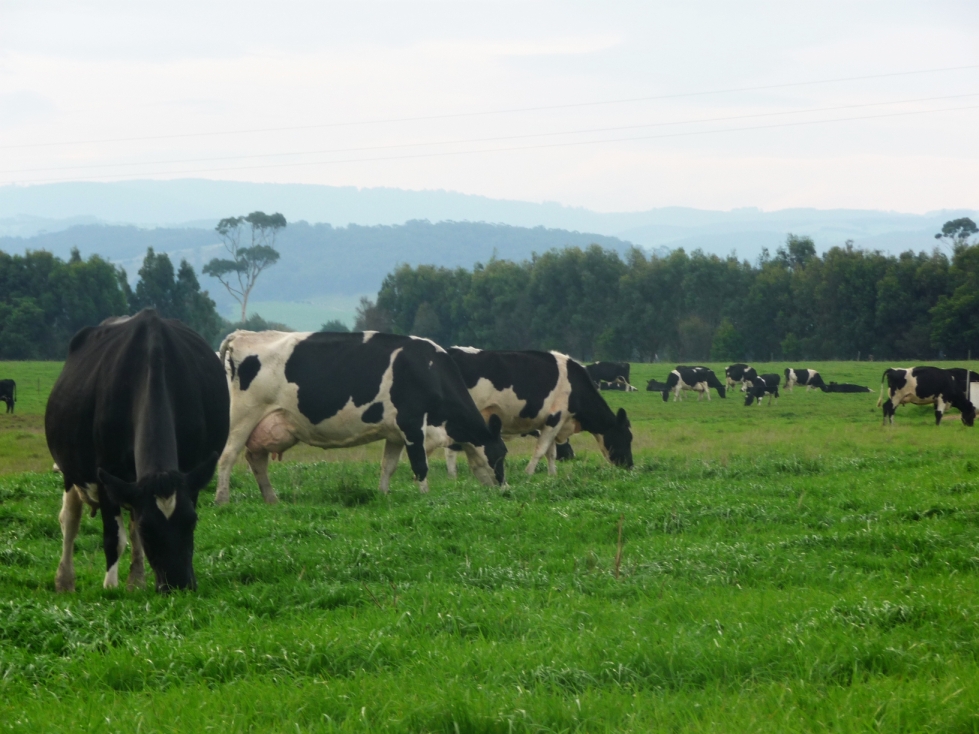
Cows grazing Advance Tall Fescue

The cows really seem to prefer the Advance tall fescue over ryegrass

I’m beginning a clandestine (well maybe I’m coming out of the closet with this blog) love affair with fescue and cocksfoot. Our Gippsland dairy farm has always relied on a combination of ryegrass and clover, although prairie grass loves to volunteer. Because the weather patterns have changed so much, I’ve started to experiment with other pasture types.

We sowed the aptly-named swamp paddock with Advance tall fescue last year. It doesn’t mind waterlogging and produces massive volumes of feed in summer – just when the swamp paddock can withstand grazing without getting pugged. I’d had the paddock sown to an annual ryegrass which reshot and seemed to overwhelm it, so had the whole lot sprayed out with glyphosate. To my delight, the ryegrass was knocked out and the fescue has come back in force.

The cows seem to love Advance. I had them in the adjacent paddock of gorgeous perennial ryegrass but when I lifted the fence to let them into the rear of the still partially inundated swamp paddock, they rushed in and stayed there to eat the fescue.
The farming community celebrates

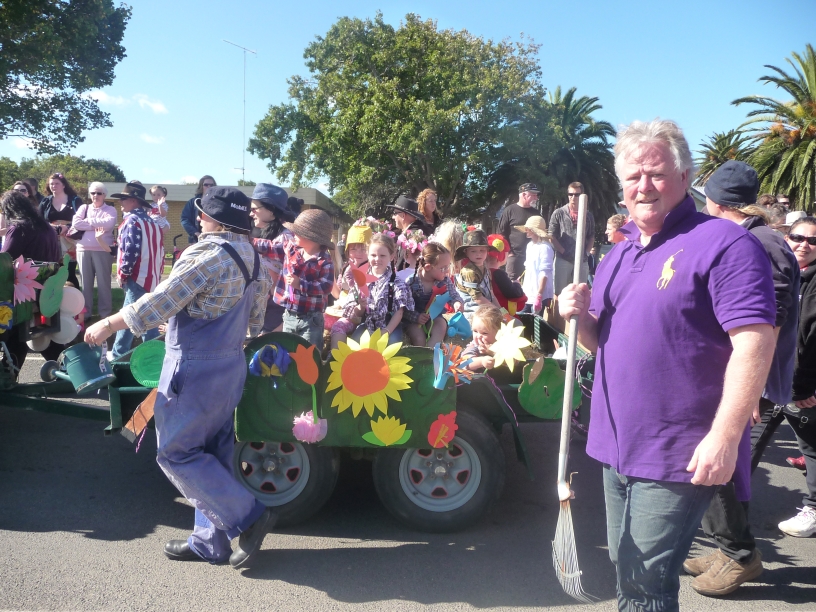
Zoe's first Tarra Festival parade

Today was huge. Every Easter our local town, Yarram, celebrates the Tarra Festival and at its heart is the parade. Colourful floats representing just about every facet of community life pass by thousands gathered on the footpaths and the centre plots. This morning, Zoe sat proudly among her friends on the kindergarten float, resplendent in yellow gardening hat and apron while waving a paper sunflower regally at the crowds. It was something of a rite of passage – I still remember clumsily twirling a Calesthenics baton decades ago along the same route – and she was in awe.

At the tail of the parade came three trucks: two B-Double milk co-op trucks and one belonging to the parade sponsor. The milk trucks are part of the community too and were warmly applauded.

The co-op's milk trucks are part of Yarram

The co-op's milk trucks part of the festival parade

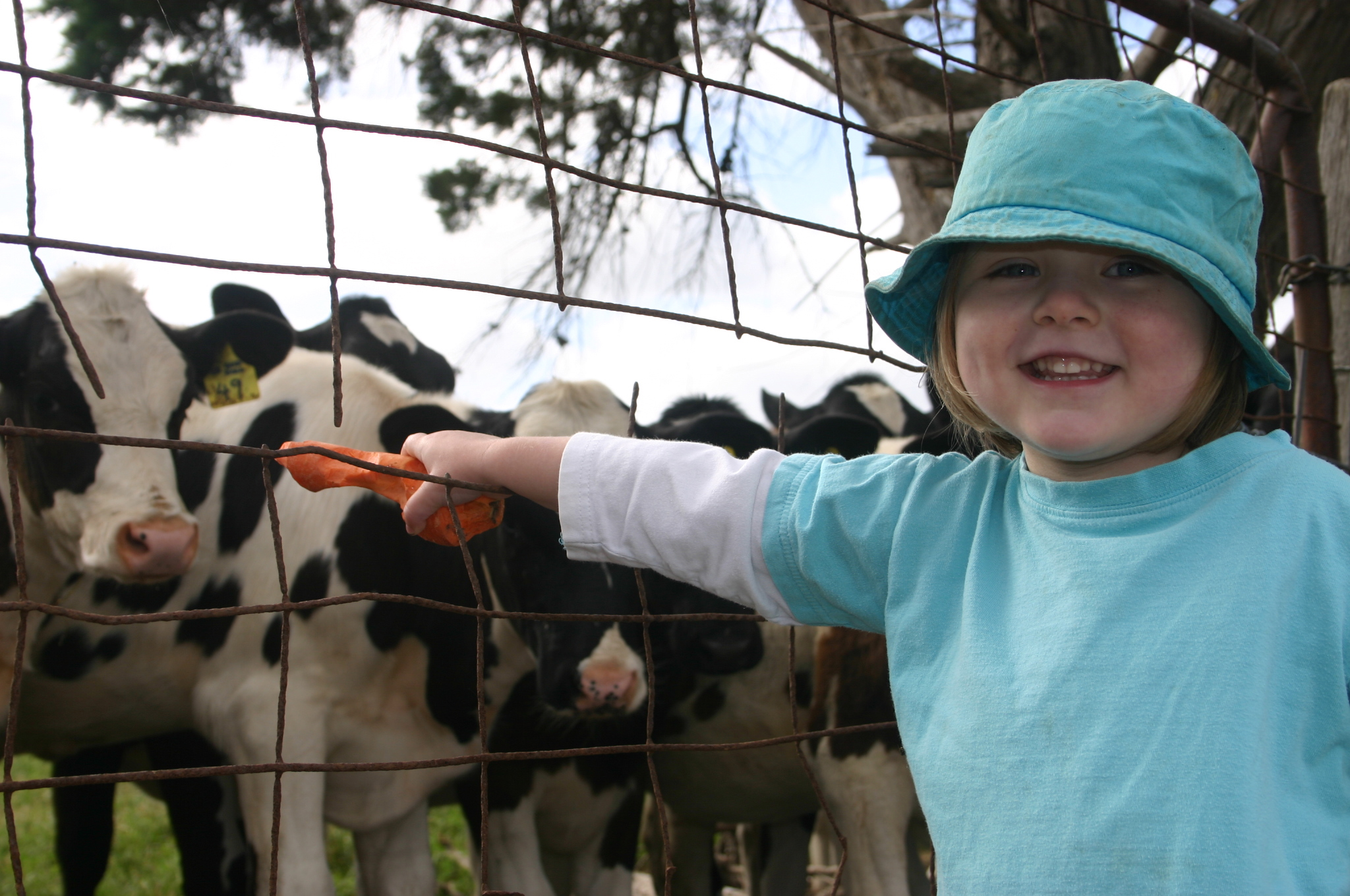
After face-painting, slides, marvelling at the magicians, laughing at the clowns, catching up with friends and gobbling way too much fairy floss, we headed home to round up the cows. I was very proud of my tired little girl. She walked the cows in to the yard over 1.7 kilometres while making up lots of silly songs and giving me important directions.

Madame Butterfly stops traffic at the trough

We have a rule to let the cows drink for as long as they like on their way into the yard and in the picture you’ll see Madame Butterfly giving orders to stay clear of the drinking cows. After that, we checked two groups of cows, got in two mums and their newborns, fed grain to the yearlings and the springers, shifted the rising two-year-olds into a fresh paddock and checked in on a very sleepy and well-fed Laura.

Zoe will sleep well tonight!

No more twin calves please!

Laura the little survivor calf sleeps after a BIG feed

The good news is that our first batch of premmie twins – Ella and Bella – are absolutely thriving. The bad news is that we’ve now had four sets of twins out of 10 cows.

At first blush, you’d think I’d be overjoyed but lots of twins is not a cause for celebration on a dairy farm. Twins take their toll on the mother cow, who is more likely to have trouble calving, more likely to be sick afterwards and all this also affects her production and ability to get back in calf next season. The calves are also more likely to be unwell because they tend to be smaller and suffer more difficult births. The female twin of a male/female pair is nearly certain to be a freemartin, unable to breed.

One of our favourite cows, 771, gave birth to a small but gutsy heifer this morning and then we discovered another set of hoofs coming out. Sadly, Wayne had to give 771 help and, despite us acting immediately, the second little girl was stillborn. As I held the first little calf, Laura, while she had her first drink, I couldn’t help but feel a lump in my throat as I heard Wayne carry her dead twin away.

I wonder what’s causing this? I hope it’s just a run of bad luck but other farmers have reported increased twinning on their farms too this season. The research suggests that lots of great quality feed at breeding time might be the cause and, yes, nine months ago, the cows did have a wonderful diet. Maybe that’s the reason but it does leave a farmer scratching her head and crossing her fingers (if it’s possible to do both at once!).

Does grass grow on trees?

A few of the trees planted last spring

Trees Dad planted along a gully 12 years ago

Money may not grow on trees but I’m beginning to see that grass just might.

Our most productive pastures in summer are those that are sheltered on three sides by thick stands of willows. These are clapped out old ryegrass species but they outperform much newer pastures. I think that mostly it comes down to the relief the trees provide from those roasting NW winds. The cows also love the deep shade under the willows’ spreading branches, which must minimise heat stress. In other words, they create a more temperate micro-climate.

But willows are not universally loved, especially if you’re a native fish. Our farm draws water for cows and to clean the dairy machinery from the Albert River, so it is in our interests to protect the river’s health. I’m trying to see those shady willow windbreaks as “infestations” but without enough alternative shade, tearing them out is not a consideration.

So what are we doing? Planting hundreds and hundreds of native trees each year. If I had enough funding, I’d plant thousands every year! By doing this, we’re also creating wildlife corridors linking our gorgeous Land For Wildlife dam (which stretches over 8 acres) with two waterways and a wetland.

I’m so impatient. I can visualise the beauty of the farm in 20 years’ time, the cool oases of shade and the relief from the howling SW winter weather that these trees will bring. If the scientists are right, those refuges are going to be even more valuable as our climate becomes increasingly variable. If I’m lucky, I’ll be able to celebrate my 60th birthday in the summer of 2030 and Zoe’s 18th in the winter of 2024 in a very different and much more sheltered landscape to the one we enjoy now.

Cycle of life adapts to a new climate

The calves are offered a special treat


Whether you call it climate variability or climate change, one thing’s for sure: we’re dealing with very different weather patterns in our part of Gippsland. The summers are hotter and tougher. The dryness now often begins in November and sometimes stretches into May. On the other hand, winter is warmer and grass grows far better in June and July than ever before.

This has fundamentally changed the farm, right down to the cycle of life. Instead of planning the calving season to begin in mid-July, we’ve decided to begin on April 20 this year. We’ve been surprised to see four premature calves (including twins Ella and Bella) born already – best laid plans often come undone at the hands of mother nature.

The reasoning is that we want to match the cows’ need for grass with the time when it grows best. Naturally, cows need the most energy when they produce the most milk, so we’re hoping to hit peak production in July/August/September, which is the period when the farm’s pastures are most productive under the new conditions.

The cows will have their two-month annual holiday from mid-February until calving begins in April – the time when grass is hardest to grow and when the cows’ energy needs are lessened. It will take time (two or three years) for us to get the whole herd into this pattern but it will be worth it. There will be less pressure on all of us.