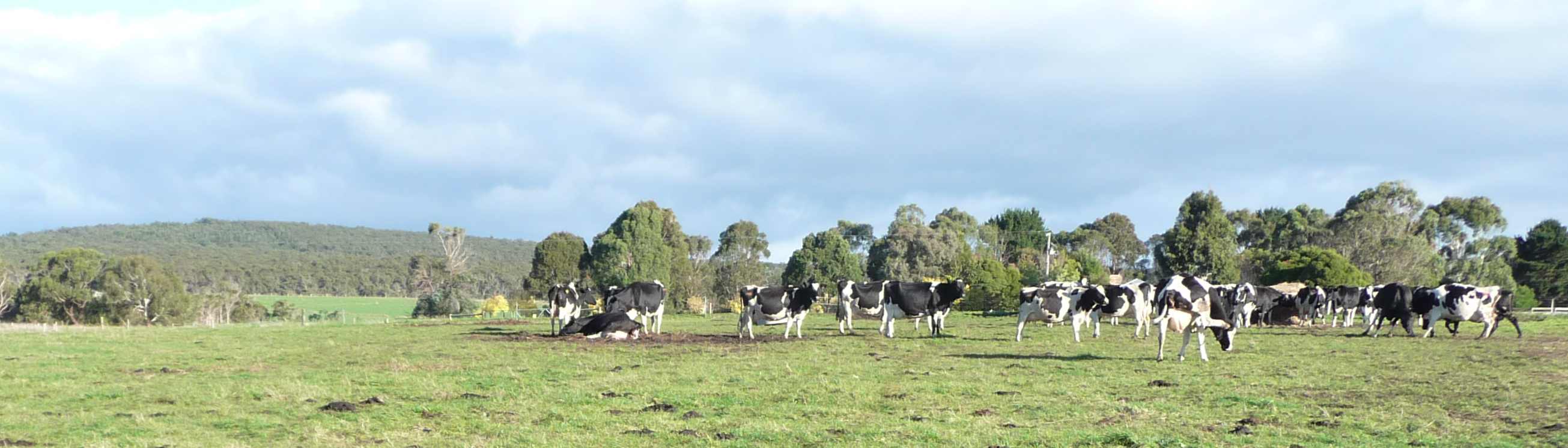
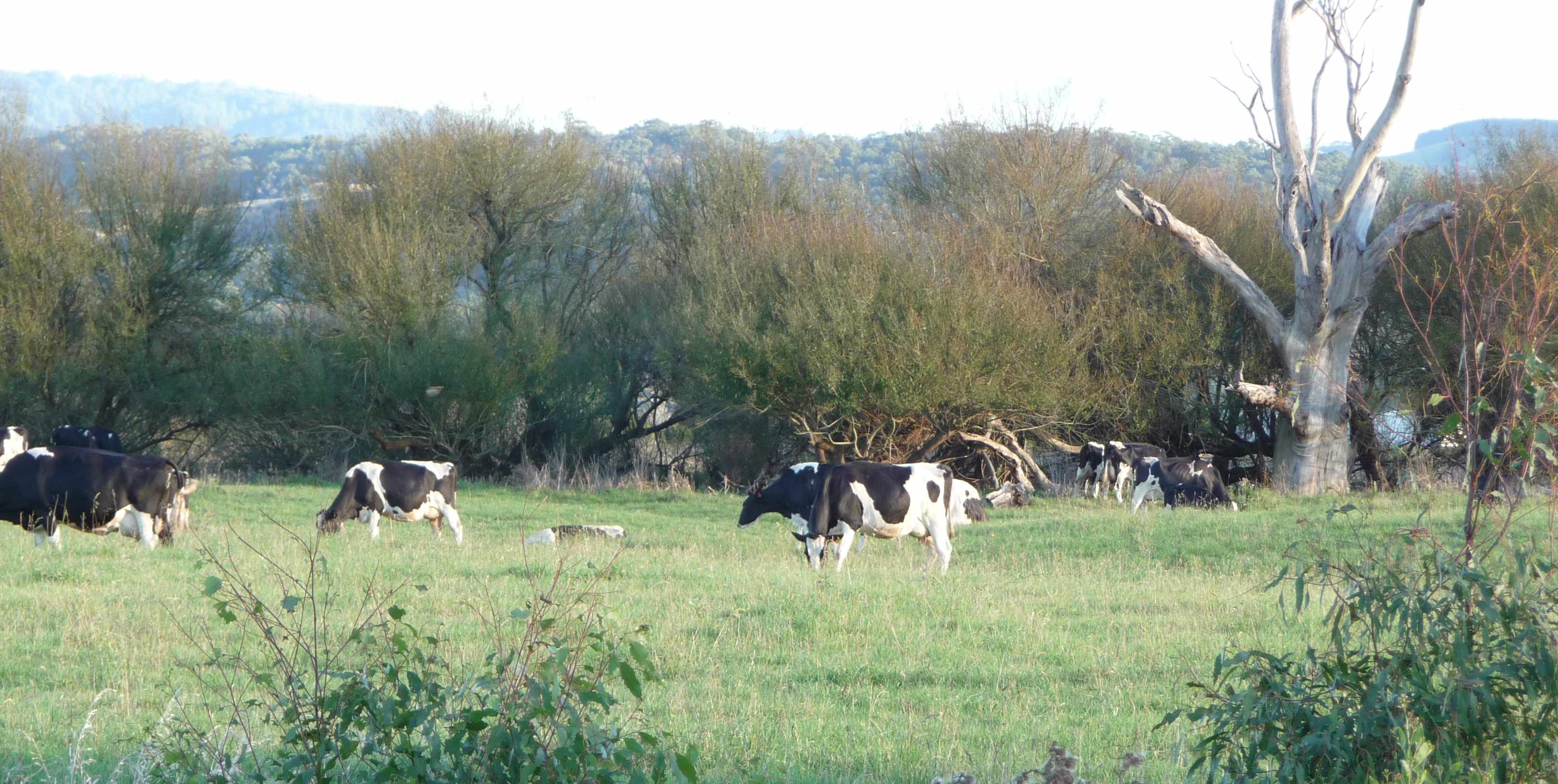
How falling milk prices affect my dairy cows

When milk prices fall, the first ones to suffer are the members of dairy farming families – Alex, Zoe, Wayne and me. The second ones are the people who make an income from supplying dairy farmers: feed merchants, vets, milking machine mechanics, fertiliser suppliers, the local newsagent and so on – our friends and neighbours. The next ones to suffer are cows.

With the price we are paid for our milk falling below the cost of production this year, I have some tough decisions to make and they come down to this: sell milkers, sell young cows, try to produce even more to meet our fixed costs (like the mortgage) or feed the cows less. Feeding the cows equates to about 40% of our income, so that’s a pretty obvious target and so is selling young stock.

It costs a lot (say $1500) to feed a young cow for two years until she’s ready to calve but, at about 12 months, I can sell her for about $1000. That’s very handy money when milk alone won’t pay the bills. Yes, it equates to selling the silverware but at least we live to fight another day.

Here’s the catch: if I sell her locally, she’ll probably be slaughtered at a value of, say, $500. If I sell her to a Chinese dairy farmer, I get the $1000. I’m assured that, as precious breeding stock, she’ll have a wonderful trip on the air-conditioned boat and she’ll join a herd of up to 30,000 other cows, with feed that arrives on a conveyor belt at their noses and whose manure is carried away by another conveyor belt at their tails. A very different life to the free range pasture based one she’d have here in Australia.

What should I do?


Robotic milking: the gentle touch of machine on moo?

FutureDairy project leader Dr Kendra Kerrisk is something of an icon in her field of milking automation and so it’s very exciting to have her write this guest post for Milk Maid Marian. There are already a handful of robotic dairies in Australia and this looks to be the way of the future. Ironically, Kendra explains, it may allow dairy farmers to spend even more “quality time” with their cows.

Robotic milking is a relatively new concept for Australian dairy farmers even though our European counterparts are well accustomed to the idea. It is a technology that I have had the honour of working with for 10 years now and there a lot to be send for this new way of milking cows.

To the less informed, the concept may conjure up images of metal on flesh that are less appealing than the tender human touch. In fact the contact with the cow is every bit at gentle as the conventional approach and one of my fondest observations is that robotic milking farmers have an increased ability to enjoy the time that they spend with their cows when they no longer have to attach milking cups to every teat of every cow twice every day. It seems that the saying “quality not quantity” has a place when it comes to farmer/cow interactions.

Robotic milking farmers are unanimous in their opinion that the technology creates a farm system that results in very relaxed and laid back cows. The idea of robotic milking is that milking occurs 24 hours per day and that the process is voluntary (i.e. the cow completes the process without human intervention). Whenever I spend time with visitors at a robotic dairy (either our research facility or on commercial farms) the visitors are always deeply influenced by how quite and calm the milking process is with robots.

With robotic milking the cow chooses when to be milked and moves around the farm system at ‘cow pace’.

Cows in paddock with robotic milker in background

The cows are moving one by one hoorah hoorah…

Whilst I have been involved in researching the application of robotic milking I have also had the pleasure of being involved with many commercial farmers as they adopt this new way of farming. The farmer must learn a new management style whereby the farm is managed in such a way that the cows makes choices that suit the farmer and the farm targets. Cows move around the farm to gain access to incentives and by default can find themselves at the dairy for milking when their time is due.

Cow walks through robotic gates

With robotic milking the cows bring themselves to the dairy (they even operate specially designed one-way gates themselves) and take themselves back to the paddock.

The concept of robotic milking is creating a work environment that allows farmers and their employees to focus on higher level management tasks. In this manner they have the opportunity to manage their herd through an increase in the level of real time data that becomes available to them allowing them to focus on individual cows that require attention. The real attraction is the more flexible working hours that reduce the need for the early morning starts and commitment to milking cows twice a day. And the bonus for the cows is that they can now manage themselves in a manner that best suits them as individuals or as social groups.

Robotic dairy

These ladies know exactly how to manage the system to ensure they don’t miss out on the “treats” and “rewards” that are available to them.

Cows are creatures of habit and they truly appreciate a predictable environment. Robotic milking is exactly that and the outcome is a herd of cows that are very easy to work with since they become extremely calm and ‘chilled out’. With all of my experience in the area of robotic milking I have absolutely no doubt that this is a way of farming that is going to be increasingly adopted on commercial dairy farms in Australia and around the world.

Possibly one of the greatest bonuses is that I reckon dairy farming is going to increase in appeal with the younger generation which is exactly what our industry needs if we are to remain sustainable far into the future. If we achieve that they we are all winners because it goes a long way to securing our ability to continue to provide Australians with fresh, safe and nutritious dairy products that are produced in our own backyard!

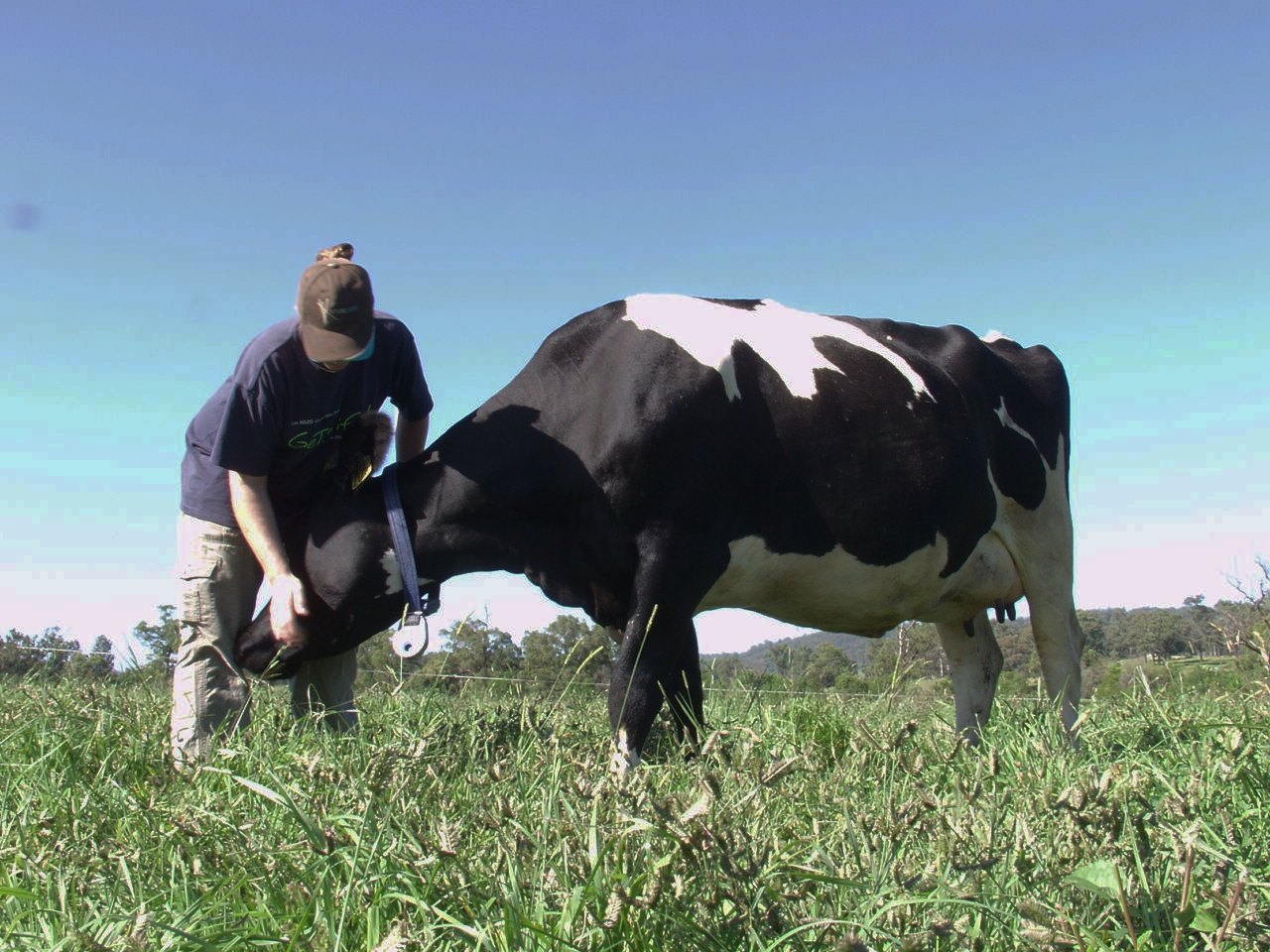
There’s always time for a good scratch!!

There’s always time for a good scratch!!

What is going on in the calving paddock?

Calving trouble

Trouble with a capital T

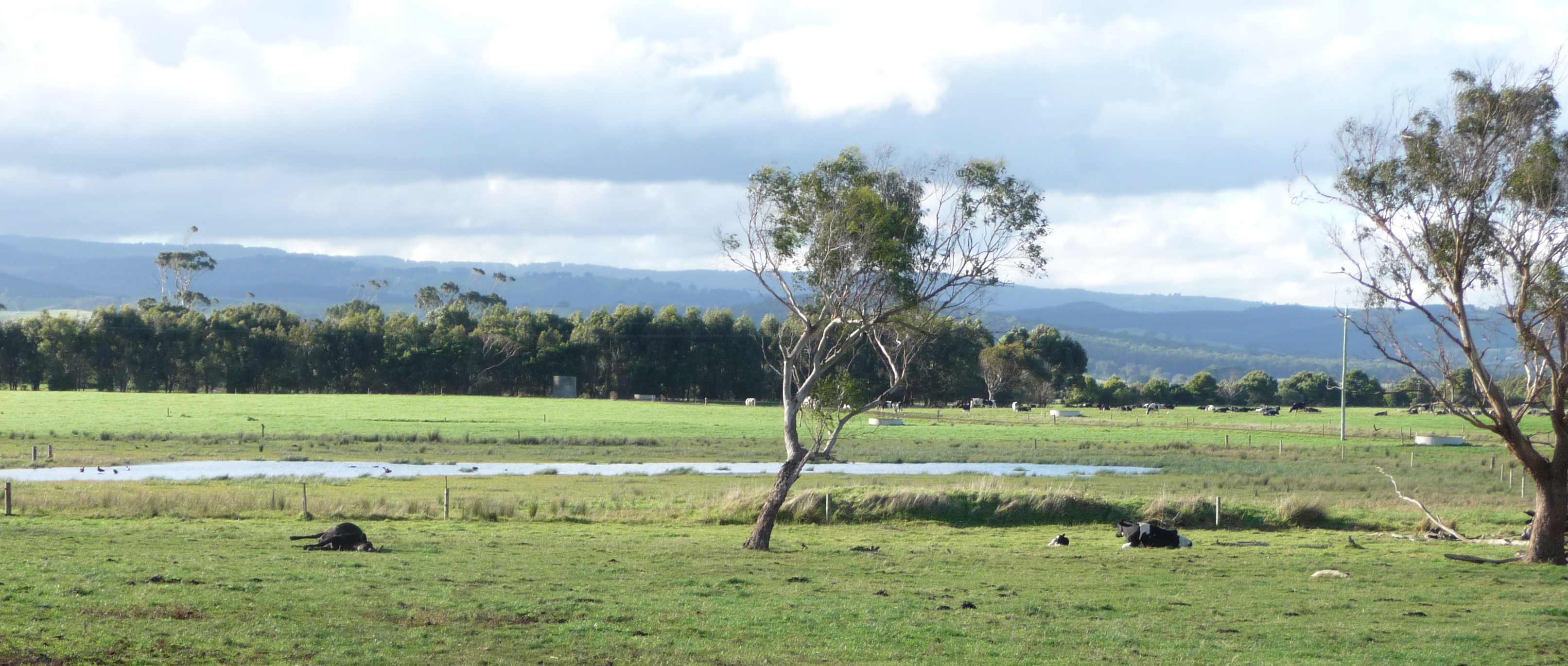
A cow lying on her side with her legs stuck straight out like this is not a good sign. “She’ll just be in the throes of calving,” I told myself as Zoe, baby and I bounced across the calving paddock.

It was not to be – the little cow was trying to push out a massive bull calf who had become stuck just after his shoulders. His tongue was pink, his eyes shone but, sadly, he was gone. Our attention turned immediately to the cow for if left too long, she would almost certainly suffer paralysis.

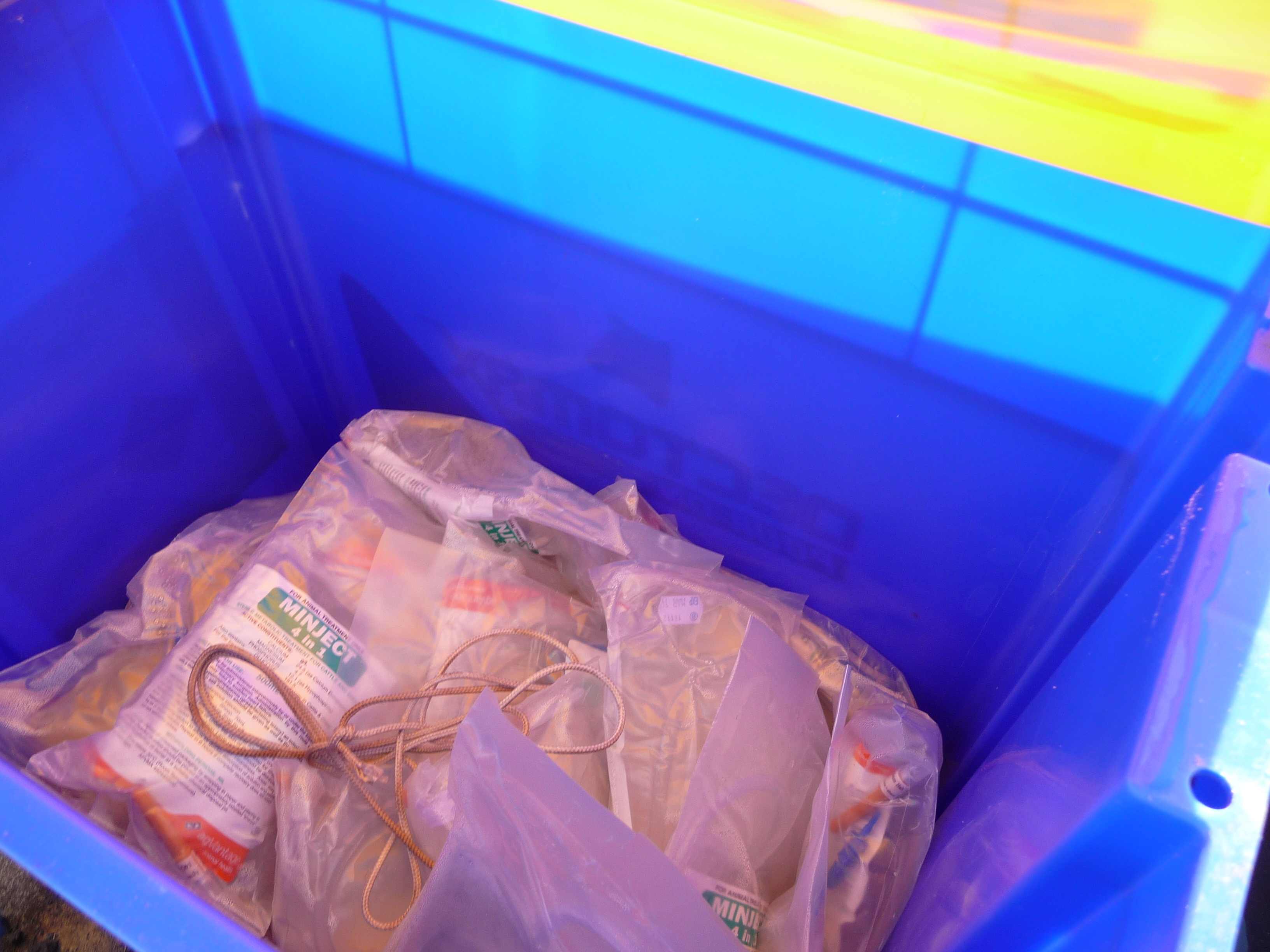
We keep a strong rope in the calving paddock’s medicine chest to help with calvings when necessary. Although we select bulls with smooth shoulders and of medium stature in an attempt to avoid trouble, calves are sometimes just too big, turned the wrong way or the cow is simply too weary to manage it on her own.

Dairy cow calving medicine chest

Emergency supplies are kept in a chest in the calving paddock

I looped the ends of the cord around the calf’s feet, stepped into the circle and eased back with the cow’s contractions. Nothing. I tried again but the calf could not be budged. Heavy reinforcements in the shape of husband Wayne were called in and, thankfully, the calf was out.

By then, I’d discovered there was another cow in trouble. 196, who is 14 years old, had earlier given birth to a beautiful heifer calf and when I went to check on her, this is all she could manage.

Milk fever

My legs aren’t working!

Dear old 196 was suffering from milk fever. This is really a metabolic disorder suffered by cows who just can’t get enough calcium into their blood streams after calving. Calcium is vital in the control of muscles, which is why she didn’t have the energy to stand up. Because the heart is a giant muscle, milk fever can also cause heart failure and immediate treatment is vital.

We minimise the risk of milk fever by feeding the cows very differently in the three weeks before calving. Instead of grass, they get hay that’s low in potassium and grain, while we add anionic salts to their water. This regimen encourages the cows to release calcium into their bloodstream so it’s available in the hours of peak demand after calving. When milk fever does strike, we give the cows a drip that includes calcium and sugar. Most cows are as right as rain again in no time, as was 196!

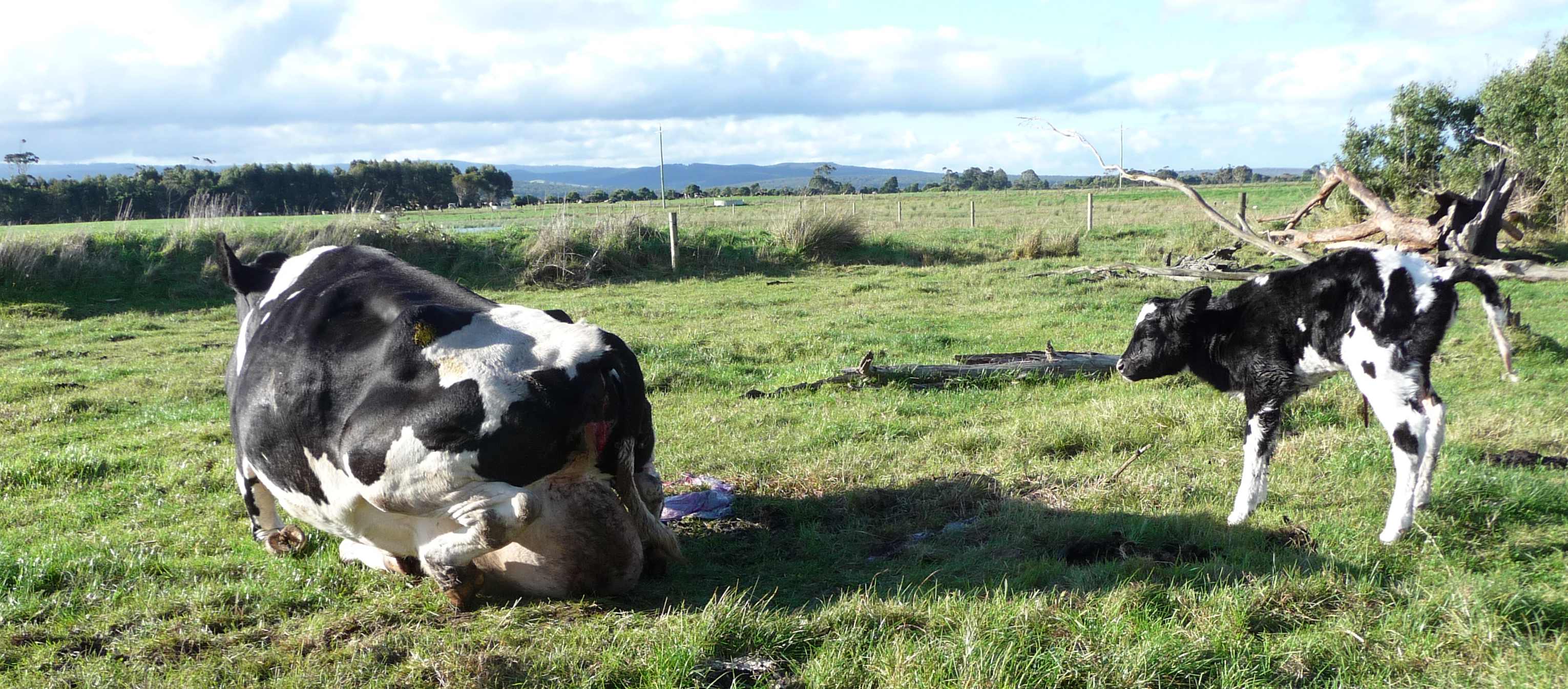
Both cows taken care of, we turned around to go and goodness gracious, it was all happening, including yet another calving underway!

Calving Paddock

It’s all happening in the calving paddock!

The love drug

Cows and women both fall under the spell of an amazing love drug every time they produce milk: oxytocin. As a breastfeeding mother, I know the dreamy feeling that it brings first-hand and the cows might just enjoy the same sensation in the dairy.

Oxytocin triggers the “let down” reflex amongst other things (sexual arousal included!) but its action is pretty much blocked by stress hormone, adrenaline.

This is really obvious in the dairy. We make sure there aren’t too many people in the dairy, avoid shouting or having barking dogs nearby and even keep the radio on the same station. Upset the routine at all and the cows start to get jumpy. And that means lots of cow poo and golden showers plus a very slow milking coupled with less milk in the vat.

So, if you visit your local dairy farmer, try not to get too excited in the shed. Walk slowly and gently and, if you must make noise, make it a lullaby.

Herd meets hound

Our dairy cows are used to being rounded up morning and night, seven days per week and love routine. They amble in at a very leisurely pace at about 1.5 to 2km an hour. This is frustratingly slow if you’re in a hurry but it’s great for their well-being.

Now, we took Patch out with us (tied up in the back of the Bobcat) to round up the cows for milking last night. As soon as we got to the paddock, he decided to bark in a very commanding fashion and I had to growl and rap him on the nose. Ignoring my warnings, he barked again. It was then that the herd decided to take control.

Took moments for Patch to get the message, sit down and stay quiet. Took a long time to get the cows heading in the right direction. I suspect today Patch will be a better dairy dog.

What we feed our dairy cows

When I think of feed for our dairy cows, I think of grass. Unlike cows in much colder climates, ours live in the paddocks all year round and pasture is the “bread and butter” of their diets. Really, apart from hay baled in the summer and fed out in the depths of winter, that’s all our cows used to eat when I was a kid.

Everything changed, though, when a vicious drought desiccated Australia in 1982/83. That year, a massive dust storm blanketed Melbourne, ensuring that even inner-city dwellers felt the searing fury of mother nature. Like their neighbours, Mum and Dad cut every expense they could, right down to cancelling their newspaper subscription.

In desperation, they turned to grain to supplement the cows’ diets. And never looked back. We’re lucky in Australia to have such great wheat growers practically on our doorsteps. With grain at reasonable prices, we are able to buffer our cows from mother nature’s tantrums, keeping our cows well-fed, no matter whether it rains too much or too little. It also means our cows are able to produce more milk from less land – something that’s increasingly important as the population continues to climb.

Just as I created a breakfast for Zoe with the right building blocks of protein, fibre and carbs this morning, we offer the cows fibre, starch, protein and energy in the form of hay, silage and GM-free grain to top up their grass. So yes, Australian dairy cows are still pasture-fed but, these days, their diet has just a little added variety.

Making up for the heat

Do you tend to eat less in the heat? I do and so do our cows. This is the third day of hot weather here and there’s another on its way.

Once the mercury rises over about 25 degrees Celsius, the cows begin to find it uncomfortable. We’ve sent them to a shady paddock for the day and to make up for the fact that they’ll spend most of it under the spreading branches of the willows, we’ve also changed their feed pattern.

Shady paddock

A cool spot for a hot day

According to the gurus at Cool Cows:

  • Cows will eat less overall, so increase the energy density of your diet where possible. More starch or added fat can be useful tools.
  • The risk of ruminal acidosis is increased during hot weather by several factors:
    • Cows prefer to eat in “blocks” in the cooler times of the morning and evening each day in hot weather;
    • Cows tend to select against low quality forage/fibre; and
    • The natural buffering system the cow relies on to combat ruminal acidosis does not work as well in hot weather.
  • Feeding of a high quality fibre source in the diet that helps maintain a stable rumen, but still contributes energy rather than just gut fill, is therefore essential in hot weather. For high-producing herds already being fed plenty of starch via grain / concentrates, this is particularly crucial.
  • Recent research work in Arizona (where they know a bit about heat!) suggests that heat stressed cows switch metabolism and have an increased need for glucose within their bodies. Feedstuffs and feeding strategies that either provide the cow with more glucose or spare the amount she uses in her normal body processes may therefore be useful in hot weather.

For these reasons, they’re getting some extra grass tonight in a fresh new paddock. What about the farmers? Lots of refreshing baths for baby Alex, the minimum of farm chores and an early morning sojourn into the cool forest.

A cool place to hang out

A cool place to hang out

Are our dairy cows “forcibly artificially impregnated” each year?

Not for the last two years, no, we’ve gone au naturale. We will return to annual artificial inseminations but our experience of natural matings shows that’s really not out of the ordinary if you have the body of a cow.

In response to our changing weather patterns, I decided to start the cows calving on April 21 (also the date of our wedding anniversary but, honestly, no connection!) rather than our traditional mid-July. Now that winter is milder, an autumn calving means we’ll have more lush green grass just when the cows need it the most.

Moving calving in this direction is tricky. Cows have nine-month gestations and it’s at least three weeks after calving before they are ready to conceive again. For example, a cow that calves in August won’t conceive until September at the absolute earliest and her calf would be due in May or June.

It also requires a very keen eye to see who is in the window of fertility that lasts just hours and, often, we miss it.

For all of those reasons, I bought a host of pedigree bulls and introduced them to the cows in July. The bulls are on the job 24/7 and nobody is more expert at detecting the fluttering of long bovine lashes.

The result is that our conception rates have lifted and we have moved the herd’s calving date forward by a month each year.

In other words, left to their own devices with suitable Romeos, the cows don’t need to be “forcibly impregnated” (to borrow an alarmist vegan phrase) each year because it happens naturally. When we go back to annual artificial insemination, it will be with a clear conscience.

Crunch time

The pastures are still green but they’re barely growing and, now, we must make hard decisions about what to feed and to whom.

Already, we’re feeding seven rolls of silage (each weighing about 800 kg) and a very hearty meal of grain to the milkers and if I want to keep the cows milking really well, I’ll need to step that up even more in the next few weeks. Any cow who is not producing at least 10 litres of milk per day is not paying her way. If she’s in calf, we will let her take a holiday. If not, we must sell her. Fortunately, the vast majority of cows are in calf, so we should be able to keep almost every one.

The reality that farm animals are working animals rather than pets is one of the hardest lessons of life but a valuable one, I think. Farm kids learn from an early age that the circle of life is inescapable but it is in a farmer’s power, though, to make every life a good one. What an awesome privilege.

Sprinkle the cow track with rose petals

If I could, I’d sprinkle the cow track with rose petals! The cows average a 3.6km walk to and from the dairy every day and can easily become quite tender-footed, so the surfaces they walk on are incredibly important. If you can’t walk on it barefoot, you can’t expect your cows to walk on it either.

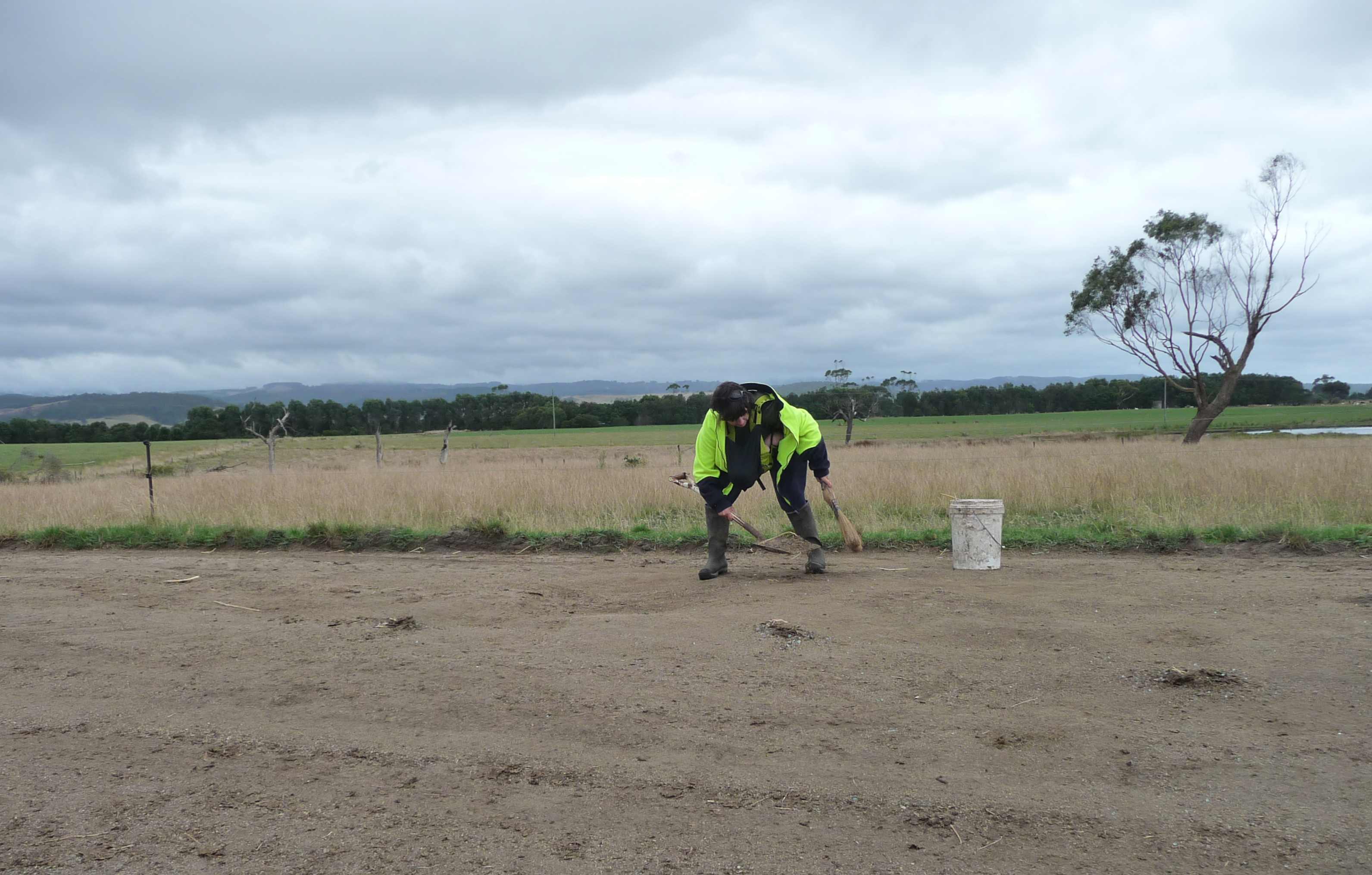
When a tractor window got smashed on the track, the only thing for it was to sweep all the glass up. Nearly broke Old Macdonald’s back!

Sweeping the cow track

Sweeping the track as Alex enjoys a hammock ride

The track is soft gravel for maximum cow comfort while providing a relatively mud-free surface. Last year, when the wet was at its worst and the cows’ feet were extra soft, we had loads of pine mulch spread on the tracks to provide more cushioning. Mulch works really well but unfortunately traps mud and eventually breaks down into a horrible mushy gumboot-gobbling goop.

The dairy yard is concreted for durability. Because smooth concrete can get too slippery for the cows, one of our first farm improvements was to have diamond-shaped grooves cut. The grooves help to drain the concrete and make it more grippy without becoming abrasive.

Grooved yard

What a groovy place to hang out