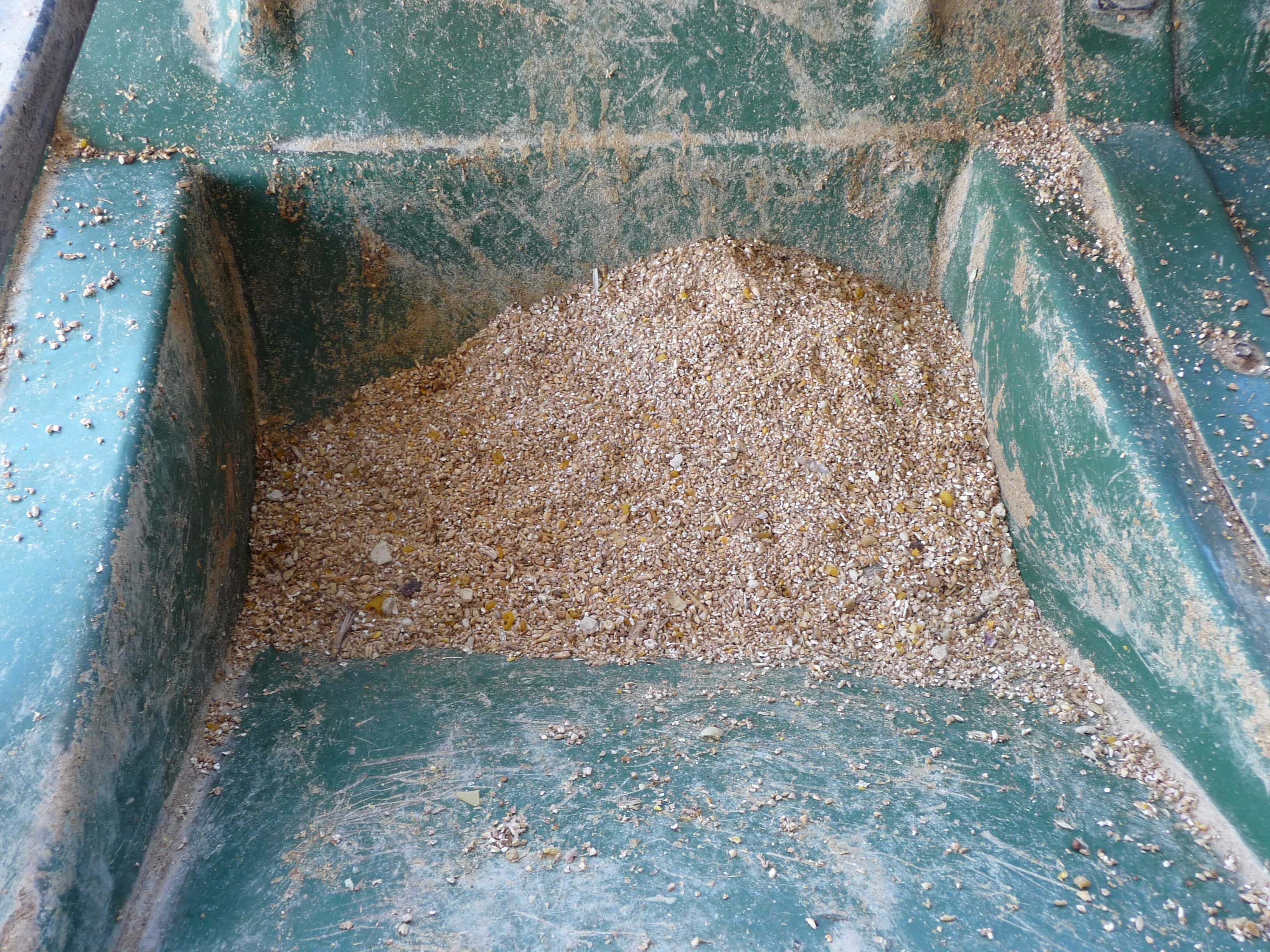
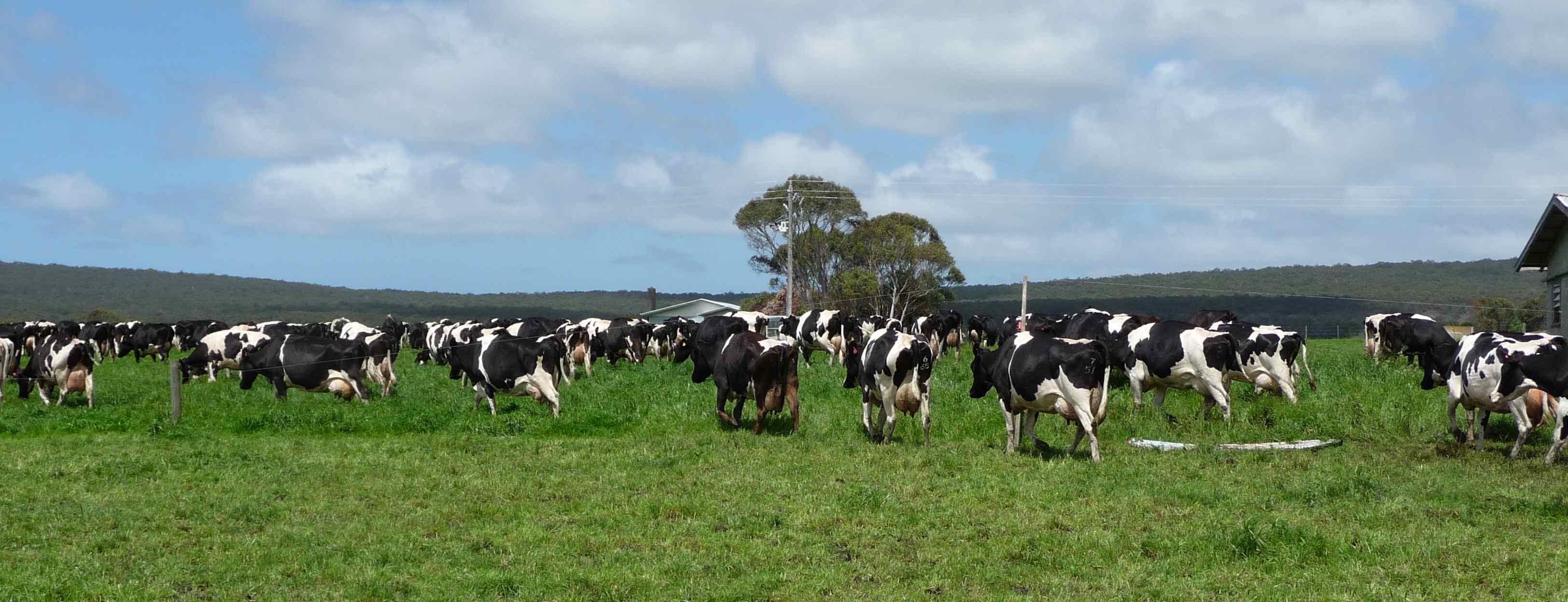
Our cows are so cool

Our cows are dignified ladies who like to keep their cool in more ways than one. Bred in cooler climes than Australia, Holstein Friesians start to feel the heat once the mercury climbs over 25 degrees Celsius.

We’ve been really busy preparing the farm to help them deal with hot summer days:

  • planting thousands of trees for shade

    New plantation for shade and wildlife

    New plantations will provide shade for the cows and corridors for wildlife

  • installing 4 kilometres of large capacity water pipes and 17 massive water troughs. Milking cows can drink up to 250 litres each on a hot day or 20 litres in a minute!
    Water trough

    Installing water troughs has been a 3 year project

  • putting up sprinklers in the dairy yard to offer a cool shower while they wait to be milked and

    Yard sprinkler

    A shower cools the cows, the concrete underfoot and offers relief from flies

  • adding salt, minerals and zinc to their diets.
    Feed in the bail

    Zinc is added to the cows' feed during summer
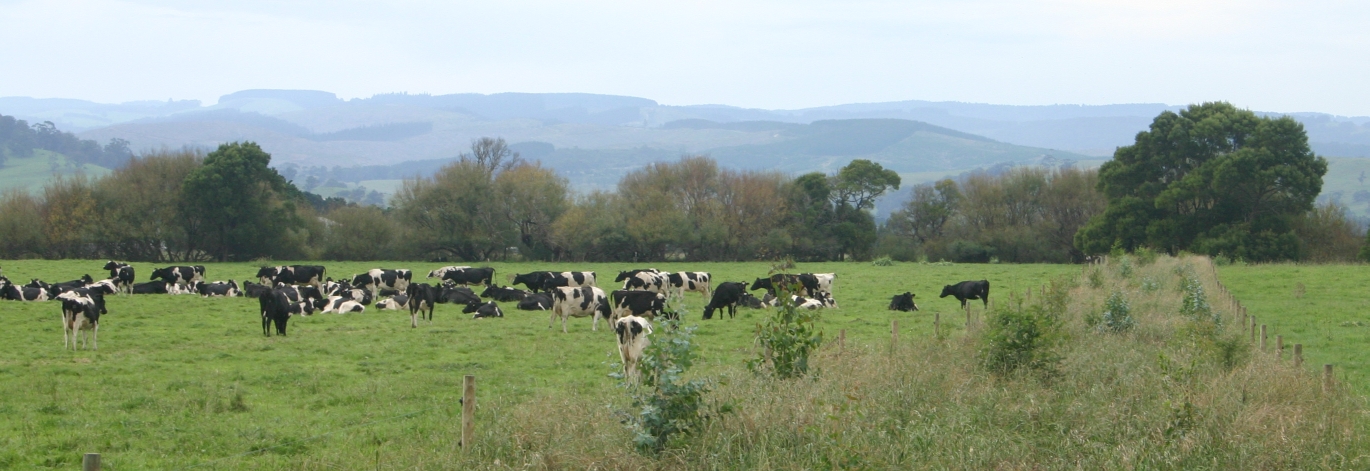
I also select the paddock for the day with a keen eye on the forecast. Today is pretty uncomfortable, so they’ve been sent to a paddock ringed with trees and will graze a more open paddock tonight.

Cool cows are happy, healthy cows who make more milk, suffer fewer illnesses, carry pregnancies better and are nicer to work alongside! Dairy research body, Dairy Australia, has done lots of work on heat stress in dairy cows and you can access lots of useful info at the Cool Cows website.
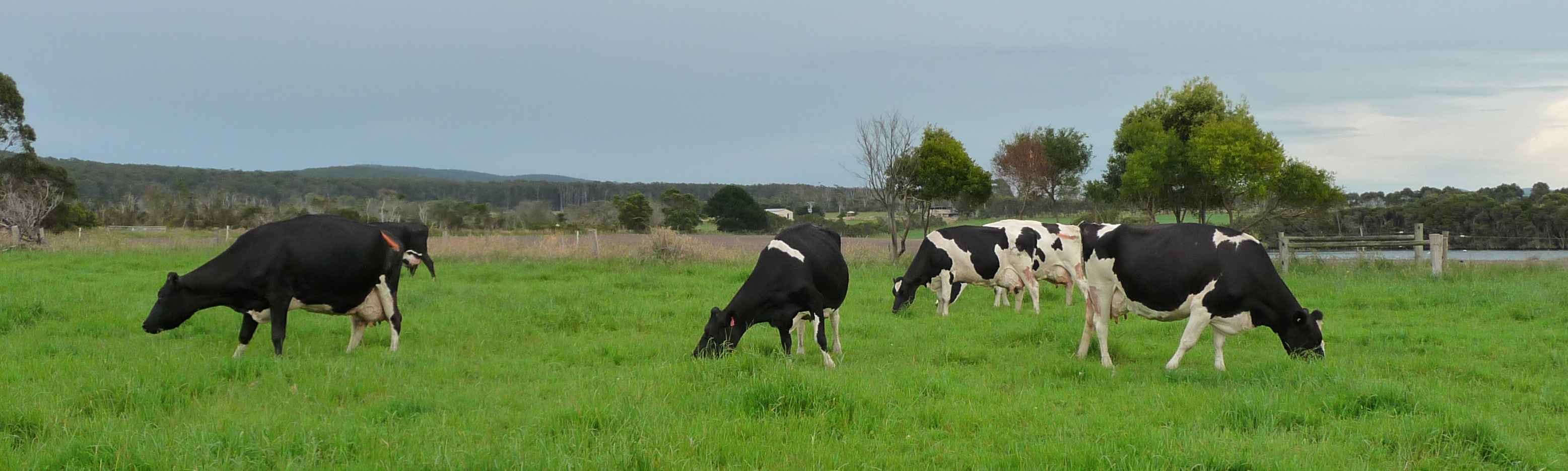


Look at my sick dairy cows

Cows in hospital paddock

Cows in hospital paddock


These cows look fine but they’re in the hospital paddock because they have mastitis. It’s an infection of the udder that can be caused by bugs out on the farm, stress or some form of “mechanical damage”, like a bump or malfunctioning milking machines.

Sadly, it’s been a big problem for dairy farmers in southern Victoria this season. Very wet conditions are the perfect breeding ground for the bugs, which include e. coli and staph. Our cows have not been immune and the co-op’s milk testing showed up increased levels of white blood cells – a sign that the cows are fighting infections.

Our first step was to look for cows with the classic symptoms: hot, firm quarters and clots in the milk. We do this routinely but we stepped it up a notch, closely examining every single cow and her milk in one night. We found a couple of cases but not enough to explain our herd’s elevated cell counts, so there was nothing for it but to carry out a spot herd test.

To do this, we divert a little milk from each cow into sealed tubes for analysis at the lab. They tell us which cows have high cell counts but can’t identify the bugs. So, yet another sample was taken from each of the high cell count cows, frozen and couriered to yet another lab. Four days later, we have the results and vet Amy has created a treatment program for each of the cows!

They’ll stay in the hospital paddock, though, until their course of treatment is complete and the milk tests free of antibiotic residue.

Is it cruel to use bulls to get dairy cows in calf?

Bull  waits for cows

Hello ladies!

A dairy farmer speaking with ABC Rural reporter Michael McKenzie the other day didn’t really get to explain himself after suggesting that using bulls rather than artificial insemination was linked with inductions.

For decades, it’s been pretty standard practice on Australian dairy farms to use straws of frozen sperm rather than natural matings. Artificial insemination (AI) doesn’t hurt and using frozen semen allows farmers to select traits from the best bulls around the world.

Each bull is given a numerical rating for the characteristics they pass on to their daughters. The scope is amazing – everything from teat length through to temperament is measured – and we can use that information to select sires that will correct problems in the herd. If, for example, we have quite a few cows with short teats, we can choose a mate whose daughters tend to have unusually long teats.

In this way, our cows get naturally healthier and stronger, generation after generation. Better legs and feet means less lameness, while better udders means less mastitis (oh, and susceptibility to mastitis itself is on the list, too!).

There is a drawback though. People are rarely as good as bulls are at detecting when a cow is fertile. Bulls curl back their lips to seemingly drink in the pheromones undetectable to humans while frozen semen may also be less potent than that of a bull.

For this reason, most farmers who aim to have the herd calve over just a few weeks use AI followed by a short period of natural matings with “mop up” bulls.

The farmer was trying to say that he used just the AI, effectively mating his cows over less time. That’s his choice but I can’t see how it has any impact on whether a farmer uses drugs to induce an early calving. If you want a lot of calves in a short time, feed the cows well, choose sires well ranked for fertility and pull the bulls out early.

As you can see from other Milk Maid Marian blog posts, I believe inductions for any reason other than the welfare of the mother cow should be banned. I am not alone – most dairy farmers detest it. The practice is already almost wiped out, with only 1.58 per cent of Australia’s dairy cows induced in 2010. Still too many but a long, long way off the epidemic suggested in media reports.

Cows are discerning diners

Dairy cows are every bit as discerning about their food as a MasterChef judge. They don’t like grass that’s too long, a species that’s unfamiliar and, less surprisingly, anything that’s got mud, manure or urine on it.

They don’t like longer grass because it gets fibrous. Our girls are thoroughly spoilt and only lush and juicy will do – so much so, they’d rather make a bed of it than eat stalky pasture.

This means that if you don’t have the grass eaten down far enough, it will get stalkier and stalkier as time goes by and the cows continue to refuse it.

According to the gurus, we should aim for a residual of four to six centimetres after the cows have left the paddock. If there’s only enough grass for half a grazing, you’re left with the dilemma of leaving it too long and seeing quality spiral or running out of feed. The textbook answer is to skip the paddock and “top” it with a mower but we don’t have enough people to do those types of jobs.

My alternatives are to save it for silage (topping’s automatically thrown in) or graze it and move them at lunchtime. And here they are:

Moving the cows

Mmmm...dessert!

Most of our farm’s internal fences are single-strand electric, which lends them perfectly to this type of manoeuvre. It took the cows five minutes or so to realise what I’d done but you can see how enthusiastic they were about their “second course” once the first pioneering diner ventured into cow nirvana.

Gotta be quick to respond as Spring springs

Spring has pounced…at last and with a flourish!

Each week, I monitor the growth rate of our grass and by golly it’s shot away in seven days. This means we can offer the cows a larger slice of each paddock per day, knowing that we won’t run out of grass or punish the pastures. We treat our little ryegrass plants with TLC, you see.

To explain why, I’ll need to tell you a little bit about the ryegrass plant (only a speed-date style of introduction because I know you’re probably not as excited about watching grass grow as I am).

In most cases, rye grass only ever grows three leaves per plant before the oldest leaf dies off. It’s at its best when it has 2.5 to 3 leaves, which is also when it grows fastest because it has the most “solar panels” to generate sugar and sustain itself.

The grass draws on sugar reserves stored in its stem to produce the first leaf, the second is self-sufficient and the third offers about 50% more herbage than the first two combined.

If you let the cows chew the grass down too hard or bring them back when it’s just used up its sugar reserve to get the first leaf out, you do enormous damage to the plant. It may not recover and will certainly take a long time to get up and running again.

Because Australian milk is sold at such low prices, we have to be super efficient and that means grazing the pasture at its most productive rather than relying on lots of expensive grain. A DPI expert once told me that what farmers do in the 12 weeks of Spring dictates how profitable we are for the whole year, so I am extra vigilant at the moment.

With the warmer, drier weather of the last week, we’ve seen growth rates soar. Rather than taking about 14 days to emerge, the first leaf is out in seven or eight. I’ve asked Wayne to reduce the amount of grain we’re feeding the cows (just by half a kilo every four days so we don’t upset the bacteria in their finely tuned digestive systems) and I’ll ring the silage contractor tomorrow to give him the heads-up.

That same DPI guy also told me that it doesn’t cost anything to be on time but being late in farming could cost a year’s profit. I’d better get out there!