The farming community celebrates

Zoe's first Tarra Festival parade

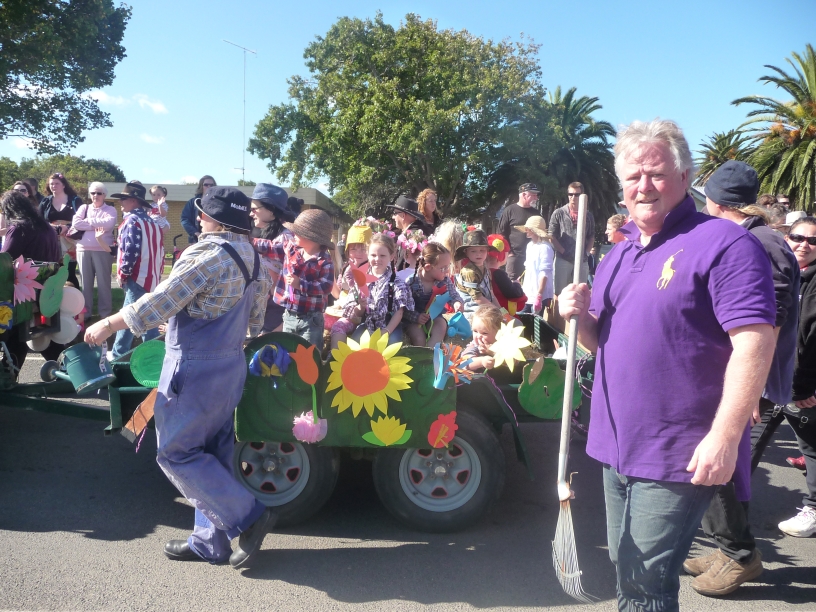
Today was huge. Every Easter our local town, Yarram, celebrates the Tarra Festival and at its heart is the parade. Colourful floats representing just about every facet of community life pass by thousands gathered on the footpaths and the centre plots. This morning, Zoe sat proudly among her friends on the kindergarten float, resplendent in yellow gardening hat and apron while waving a paper sunflower regally at the crowds. It was something of a rite of passage – I still remember clumsily twirling a Calesthenics baton decades ago along the same route – and she was in awe.

At the tail of the parade came three trucks: two B-Double milk co-op trucks and one belonging to the parade sponsor. The milk trucks are part of the community too and were warmly applauded.

The co-op's milk trucks are part of Yarram

The co-op's milk trucks part of the festival parade

After face-painting, slides, marvelling at the magicians, laughing at the clowns, catching up with friends and gobbling way too much fairy floss, we headed home to round up the cows. I was very proud of my tired little girl. She walked the cows in to the yard over 1.7 kilometres while making up lots of silly songs and giving me important directions.

Madame Butterfly stops traffic at the trough

We have a rule to let the cows drink for as long as they like on their way into the yard and in the picture you’ll see Madame Butterfly giving orders to stay clear of the drinking cows. After that, we checked two groups of cows, got in two mums and their newborns, fed grain to the yearlings and the springers, shifted the rising two-year-olds into a fresh paddock and checked in on a very sleepy and well-fed Laura.

Zoe will sleep well tonight!

No more twin calves please!

Laura the little survivor calf sleeps after a BIG feed

The good news is that our first batch of premmie twins – Ella and Bella – are absolutely thriving. The bad news is that we’ve now had four sets of twins out of 10 cows.

At first blush, you’d think I’d be overjoyed but lots of twins is not a cause for celebration on a dairy farm. Twins take their toll on the mother cow, who is more likely to have trouble calving, more likely to be sick afterwards and all this also affects her production and ability to get back in calf next season. The calves are also more likely to be unwell because they tend to be smaller and suffer more difficult births. The female twin of a male/female pair is nearly certain to be a freemartin, unable to breed.

One of our favourite cows, 771, gave birth to a small but gutsy heifer this morning and then we discovered another set of hoofs coming out. Sadly, Wayne had to give 771 help and, despite us acting immediately, the second little girl was stillborn. As I held the first little calf, Laura, while she had her first drink, I couldn’t help but feel a lump in my throat as I heard Wayne carry her dead twin away.

I wonder what’s causing this? I hope it’s just a run of bad luck but other farmers have reported increased twinning on their farms too this season. The research suggests that lots of great quality feed at breeding time might be the cause and, yes, nine months ago, the cows did have a wonderful diet. Maybe that’s the reason but it does leave a farmer scratching her head and crossing her fingers (if it’s possible to do both at once!).

Cows do a LOT of poo but nothing goes to waste

Cows do a LOT of poo. About 40 litres of the green stuff per day (that’s besides number ones). Because they spend all their time grazing in paddocks, most of it goes straight back onto the grass as nature’s own organic fertiliser. The stuff that gets dropped onto the yard twice a day while they’re waiting to be milked is a different matter, though. It would be environmentally wrong and illegal to let it run into waterways, so this yard manure is hosed into large ponds for storage and digestion by aerobic and anaerobic bugs.

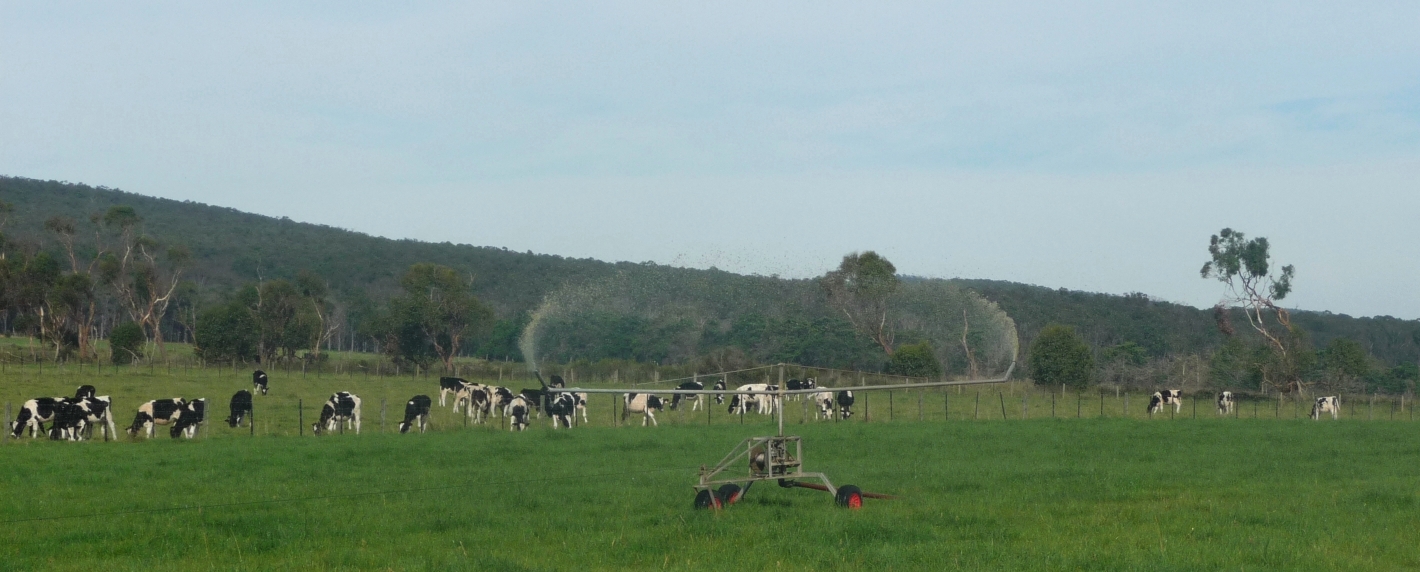
When it’s dry during summer and autumn, we pump the effluent on to paddocks using a little travelling irrigator hooked up to a fire-fighting pump. The effluent is full of great nutrients and beneficial bugs, we save trucking in inorganic fertiliser (not to mention the concept of peak phosphorous) and avoid polluting our rivers. When the pond is just TOO full for me and the irrigator to keep up with, we engage a contractor to come and pump it out and spread it with a huge tanker.

That’s been something of a challenge this year. The tractor and fully laden tanker weigh about 45 tonnes and, because  summer was so wet, access has been very limited. In fact, they just can’t get in at the moment. The effluent spreader shook his head and suggested calling for some rock. The quarry owner shook his head and suggested calling in the grader, excavator and the bank manager. I just hung my head and looked at my boots. Then, my lightbulb moment! If I can’t get the track to the pond, bring the pond to the tanker! I’m getting the excavator in to extend the pond so it’s really close to an existing cow track. Mark, the excavator supremo, expects it to be here in a couple of weeks, so I should have some boys’ toys pics up then.