This has been a tedious morning of fence repairs – bending staples in decades-old wobbly hardwood posts and untangling cantankerous strands of barbed wire – so when we found a tree over the fence in the bush block, the kids and I broke it with a little “adventure”.
Inside our boundaries lies just 11 hectares of largely unremarkable bush. But it is a wonder, too, full of secret paths, dripping lichen and toadstools. After early hesitation, the kids relished their chance to explore this forgotten forest, darting here and there down the wallaby tracks, ducking under monstrous spider webs and peering into mysterious hidey-holes.
Thank you. When I began writing Milk Maid Marian in a fury two years ago, I had no idea whether anyone would be interested. It’s turned out to be incredibly fulfilling, thanks to the often unexpectedly feisty discussions sparked by stories from the farm.
I can’t tell you how encouraging your comments are as I thump away at the keyboard.
Please, tell me what you’d like to see more of in 2014 and what bugs you about the blog. Best wishes to all (even the relentless people who want me to advertise ugg boots) for the New Year.
This November has been one out of the box: hail, bad hair and now, fleas.
The hail I didn’t photograph. The hair? I’ll let Alex show you:
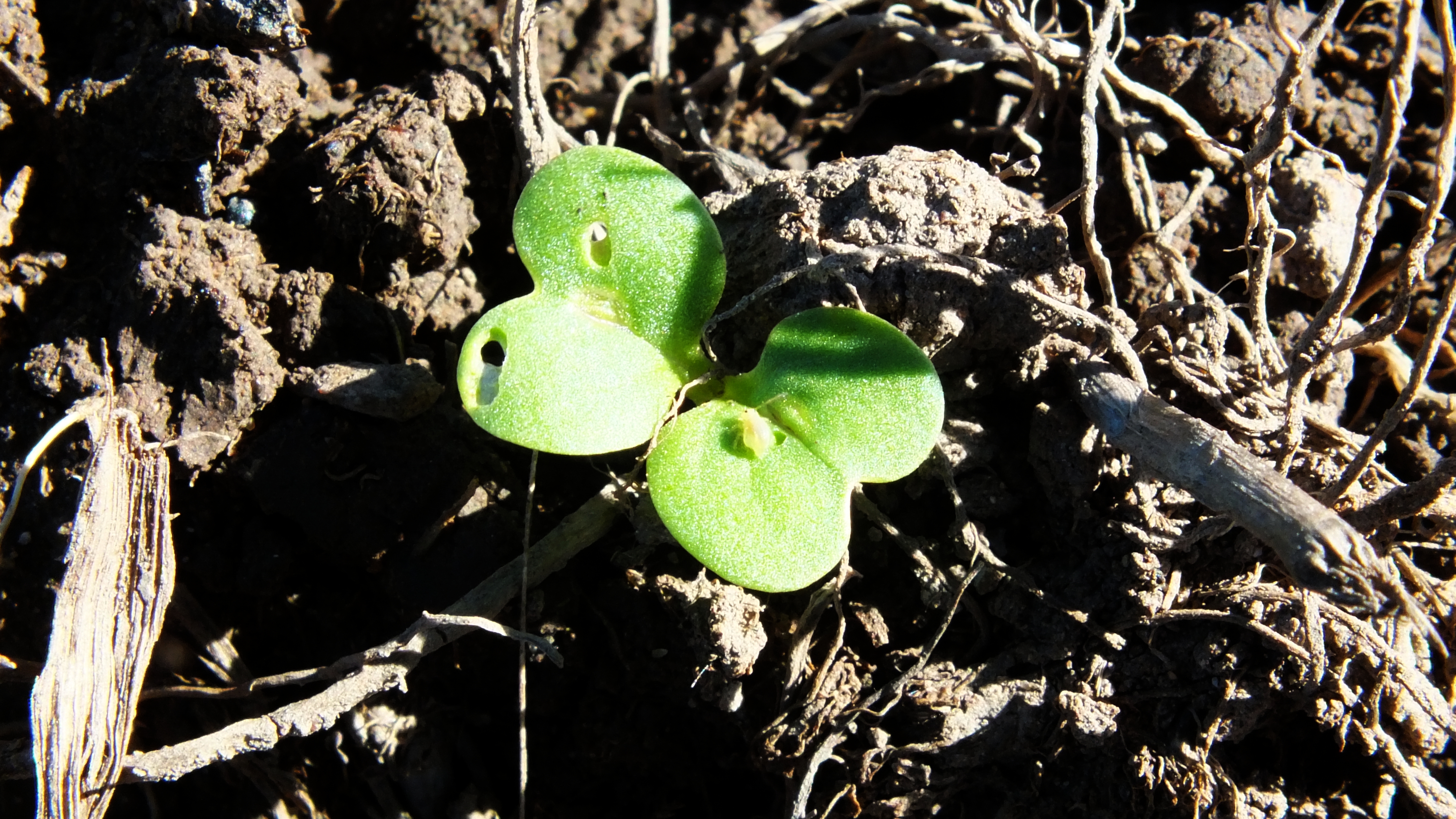
The fleas? Today, I was out crawling around in the paddock (as you do on a sunny Saturday afternoon), when I discovered someone had been out to lunch on the juicy new rape salad I’ve been growing for summer.
Yikes, there are fleas in my salad!
This little fella is tiny (see those wriggly twig things on the top right? They’re rye grass roots) but he and all his lucerne flea mates are marauders with super powers. Think I’m drawing a long bow? Watch the video.
We’ll have to do something about these microscopic pole vaulters in the next few days or be left with a lot of explaining to do when the cows are looking for their New Year’s Day dinner.
Fleas are not the only pests on the extermination list this November. To my shame, we’ve been harbouring three minibus-sized box thorns since I took over the farm. A member of the nightshade family, African box thorns are classified noxious weeds and are really nasty. This year, I decided these taloned monsters had to go.
You’d measure these thorns in inches
The box thorns were so big and brutal, the only way to get rid of them was with a 12-tonne excavator. It only took Michael the Man in the Machine a few hours to uproot and squash all three. All I had to do was light a match so Alex and I sallied forth, armed with three plump copies of The Weekly Times (one for each of the crumpled behemoths) and a box of redheads.
Little Man against the mountain
Oh, what a pathetic figure I’d cut as a smoker. All three editions of The Weekly Times were waged against the first monster before it finally roared into oblivion.
Ablaze at last
The ridding of another fearsomely armoured yet fleshy menace was less flashy but no less spectacular.
We got more help in, this time to face a battalion of variegated thistles. Newly renovated pastures had stirred seed banks and the wet paddocks had made early access impossible. The result was chest-high walls of thistles up to 100 metres long.
Within days of spraying, they began to take on glorious, tremendously satisfying tortured shapes. Revenge is best served cold indeed.
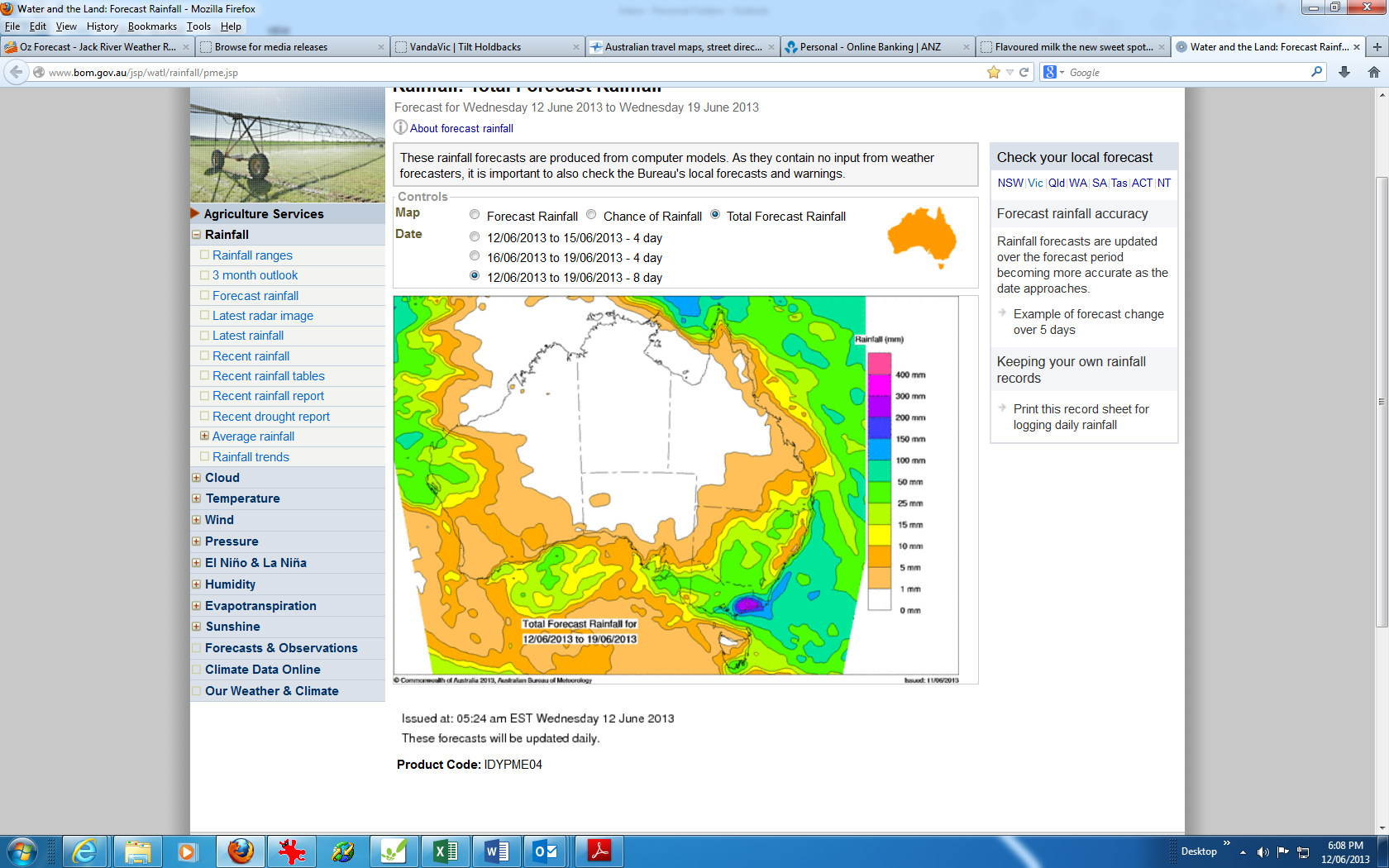
It’s not a good sign when the local weather forecaster gets a spot on ABC Radio’s National news. Our forecast is so shocking that, yes, it made headlines today.
A massive chunk of Victoria is about to go underwater and, with it, a massive chunk of our farm. We’ve had an inch of rain in the last two hours and the prediction is for between 51 and 102mm tomorrow, followed by another 20 or 30mm over another couple of days.
I’m thankful for the undulations at the southern end of the farm. The cows will at least be safe.
I’m also thankful for the Bureau of Meteorology’s timely warnings. It gave us time to:
Set up safer paddocks for the cows
Ask Scott, the grain merchant, to deliver more feed before we get flooded in
Remove the power units from the electric fences on the river flats
Bring all the eight new calves born during the last 48 hours into the warmth of the poddy shed
Stock up at the supermarket
Pile the verandah high with dry kindling and wood to keep the kids warm
As the flood sets in, we’ll be:
Offering extra TLC for newborns and freshly-calved cows
Feeding out more of our precious and rapidly dwindling stock of hay while hitting the phones looking for more ridiculously scarce fodder
Keeping an even keener eye out for mastitis
Walking the cows extra gently to the dairy to reduce the risk of lameness
Hoping like hell that the damage to the fences and tracks isn’t too bad
Monitoring the condition of paddocks to minimise pugging (mud, mud, mud)
Stocking the dairy snack bar with a bottomless supply of soup and raisin bread
It’s often said that good farmers only worry about what they can control. I’ll do my best!
The slow burn of mother guilt catches me unawares sometimes but on other occasions, it’s as sharp as a knife. Or more accurately, as shrill as a tired toddler’s screech.
Just In Time (JIT) fencing
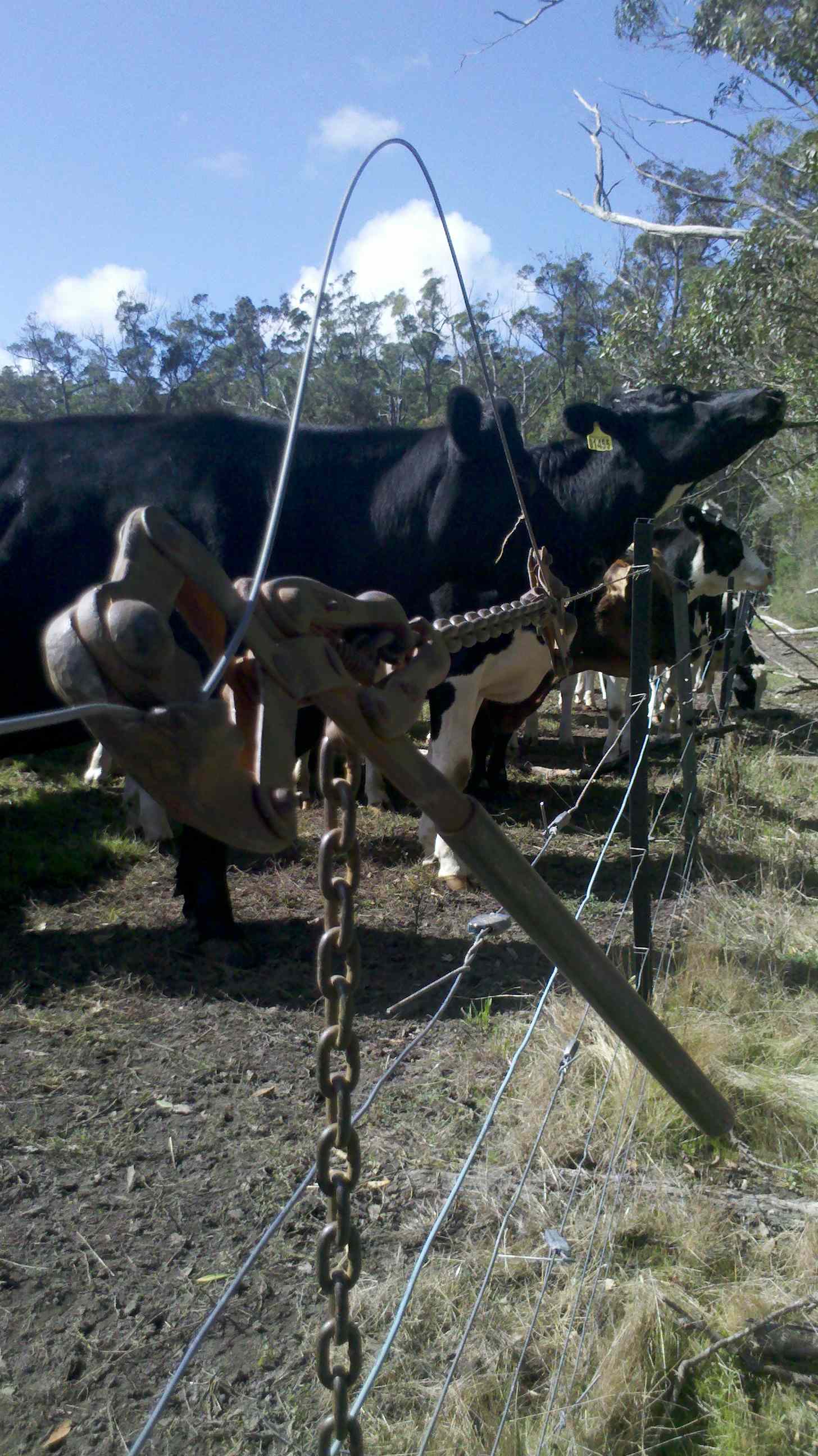
When a knock on the door from a concerned motorist signals a heifer and bull trotting down the road, which in turn reveals that a mob of skittish kangaroos have rendered your fence as floppy as a spoonful of fettuccine, a farmer has little choice but to report to the scene, sirens wailing. If the farmer is also the mother of a toddler, the ramifications can be far more serious: Nap Time Deferral (NTD).
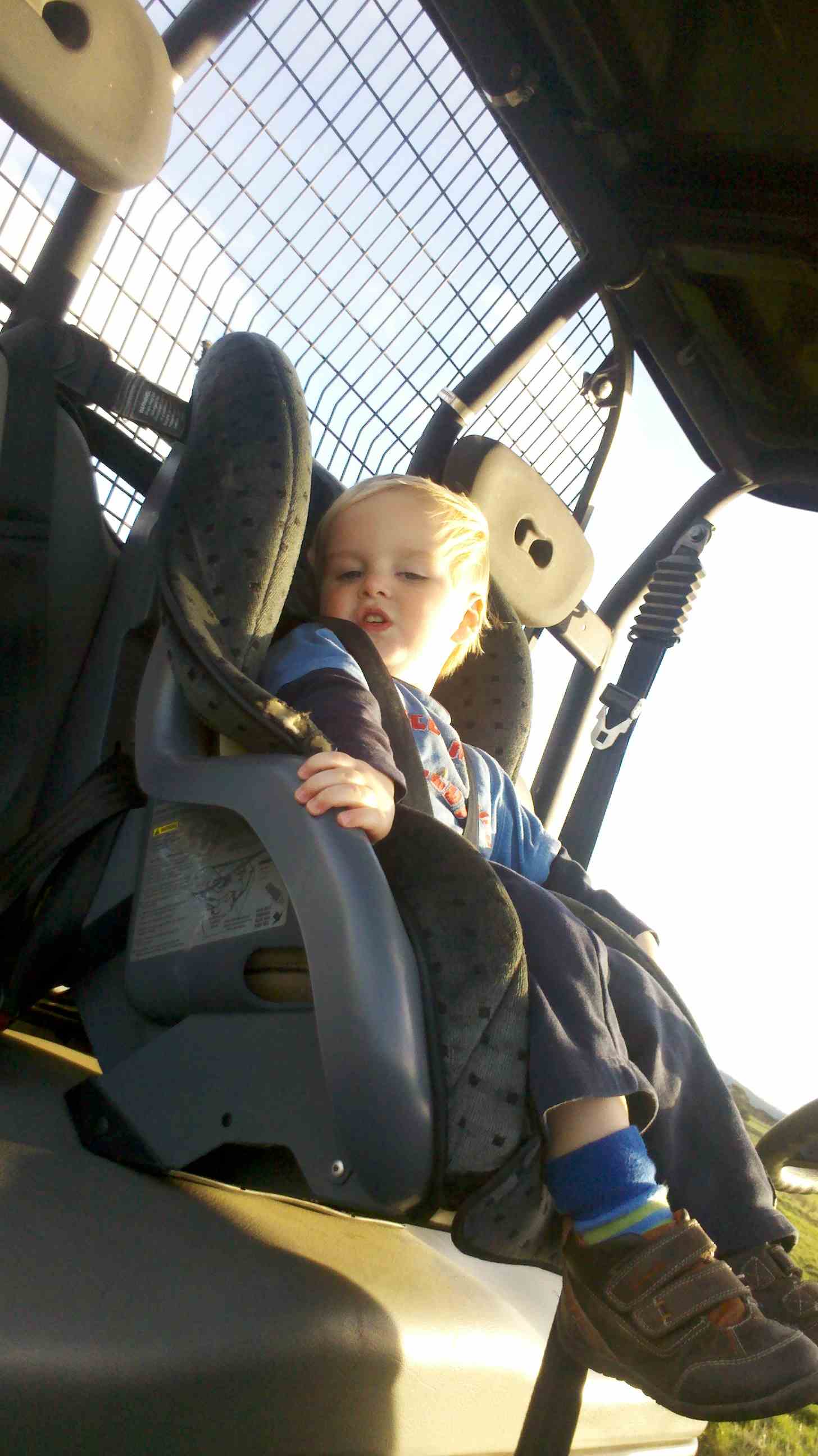
Strapped to the Bobcat seat, my Little Man finds it hard to understand why Mama is singing lullabies as she fumbles with the fence strainer when she should be singing them at the bedside.
“Home, peese”
“Sorry, Little Man, I promise I’ll be as quick as I can, I just have to get this done…”
I know Mother Guilt is not limited to farming or, indeed, mothers. On Twitter’s AgChatOz forum the other day, fellow dairy farmers told of their dismay.
And, then, Shelby posted a link to this:
Cat’s in the Cradle always “gets me”, too. It’s times like these that I wonder if I am doing the right thing. My children see more of me going about daily life than they would if I was an office worker but, with farm returns so low, it seems we spend most of our time working and less of their time playing.
With the heifer paddock hastily patched up, Zoe, Alex and I returned last weekend to do the major works. As I wrestled with wire and strainers, they gambolled about the picturesque hidden paddock. Flanked by forest, they were out of the chilly wind, away from roads and so carelessly happy. I smiled as their little heads bobbed across the pastures and my spirits soared as their laughter echoed around the trees.
A gambol cures a dose of mother guilt
I was cured. Well, almost. What mother would stand back and film this?
Look into a woman’s handbag and you see deep into her soul. Tucked into its folds, you’ll find clues about what makes her feel secure, competent and even sexy. Oh, and boring stuff like grocery lists.
That’s how I like to think of my paddock handbag. Escaped heifers, broken fence, tired kids on board? No problem – with my paddock handbag, I’m Superwoman. Compartment A (the glovebox) is kitted out with wipes, toys, snacks and drinks. Compartment B has just about every tool to deal with almost every agrarian contingency.
Ready for surgery
A good girl scout is always prepared…
And if all else fails, the big guns
I guard my paddock handbag with my life. Yes, the fellas are allowed to borrow select items from time to time but must promise to return said item on pain of death. Call me a drama queen with control issues? Maybe so, but I dare you to return toddler on the verge of a meltdown to within cooee of home “just to grab another set of pliers” and then whisk him away again. It had better be an exciting agrarian emergency with helicopters (aka “copot”), trains and whooshing irrigators aplenty or we’ve already lost the battle.
On second thoughts, maybe I’ll get a padlock fitted to that paddock handbag.
Back before the beginning of time, when Wayne told an acquaintance he was soon to marry a dairy farmer’s daughter, her response was, “Ker-ching! You’ve found the pot at the end of the rainbow there!”
She was a city-slicker who thought simply being farmers qualified our family as wealthy. There’s some truth in that, according to the Australian Bureau of Statistics (ABS). In its feature on Australian farms and farmers, the ABS points out that:
“…the average weekly disposable income of farmers in 2009-10 ($568) was considerably lower than that of people working in other occupations ($921)…”
“While the reported income of farmers might have been relatively low, it is important to recognise that income is only one aspect of economic wellbeing. Wealth, in the form of bank accounts, shares, superannuation or property, is another important component, and can be drawn upon to smooth and support consumption over time, including during periods of low income. Indeed, wealth is particularly crucial for farming families given that farming income is often at the mercy of climatic conditions. The average equivalised net worth (taking into account both assets and liabilities) of farming households in 2009-10 was $1.3 million, much higher than the average across other households ($393,000). However, such high levels of wealth are not enjoyed by all farming households. In fact, 10% of farming households could be classified as having relatively low levels of wealth (i.e. in the lowest 40% of the wealth distribution). However, the bulk of farming households (71%) were in the top 20% of the wealth distribution. The high levels of wealth explain why, despite relatively low income, only a fraction (5%) of farming households are classified as having low economic resources, compared with a fifth (21%) of other households.”
One day, if my children decide not to become farmers and sell the place, all that wealth will come in handy! And while my postcode may not be prestigious, my home boasts a rather large backyard, unparalleled privacy and stunning views. But I have something even more priceless: a vocation, as the ABS explains.
“Farming as a vocation tends to be characterised by a high degree of self-employment and long working hours. In 2011, half (50%) of farmers worked 49 hours or more a week. Only 17% of other workers put in such long hours. More than half (56%) of Australia’s farmers were self-employed owner managers (compared with 15% of other workers), with a further 17% working as employees managing farms owned by someone else.”
“Although people who are self-employed generally work longer hours than others, this only goes part of the way to explaining the working hours of farmers. Even when comparing just among the self-employed, farmers were still much more likely to work long hours, with 56% farmers working 49 hours or more a week, compared with 30% of self-employed people in other occupations. This may in part reflect the nature of farm work which can necessitate tending to crops and animals at various times of the day and night.”
I think the last sentence is a little twee, don’t you? All sorts of people must attend to their work around the clock – firefighters, police, nurses, chefs, to name a few – but they share the workload with colleagues. The unvarnished truth is that because farm incomes are so low, few farmers can afford to employ enough help. That, my friend, is the downside of farming.
Still the upsides are pretty darned glorious and something a statistician could never hope to capture.
Although I was just a tween during the 82/83 drought, I remember it vividly. That was the year the school bus was overwhelmed by a dust storm and the year my parents cancelled the newspaper deliveries just so they could be sure they’d saved every dollar they could.
It was also the first year we fed our cows grain and, gosh, it taught us a lot. Cleaning up, I stumbled across some notes written by my father’s farm consultant (and even a farm consultant was a new concept) that December:
“Feed grain, increasing slowly to 4kg, watching carefully for signs of grain poisoning.”
Grain poisoning is not funny but that little sentence make me laugh out loud. These days, cows start the season on 4kg, which is seen as pretty much a minimum supplement level, even in the flush of spring. No risk of grain poisoning there.
We manage dry spells so much better now than we did then and the cows, the farmers and even the environment are the winners. No longer are paddocks stripped bare, exposing the topsoil and all the life in it to the cruelties of the Australian summer. We graze just enough to keep the grass from becoming stalky.
This modern way of farming also means the pastures are quicker to respond to the rains when they do come. Just look at it.
Just add water…
Modern farming attracts plenty of critics but I think that, in many ways, the way we farm now would make our early environmentalists very proud indeed.
Two miniature horses, two sleek chocolate goats, two barrel-shaped red cows and two donkeys were the stars of the circus yesterday. The team of eight struck impossibly cute and clever poses in an incredibly endearing performance.
It all felt very familiar. Circus acts have barely changed since I was six years old, except (and it’s a BIG except) that the animals are far less exotic than the stunning Siberian tigers I remember. The resourceful circus folk have adapted artfully to changing community expectations, shifting the role of performance animals from that of mesmerising danger to beguiling charm.
Of course, some animal activists believe there is no place for animals in a circus at all. I don’t really understand why not. The faces of the two trainers were as much a delight as those of the animals. They coaxed, were proud of their little charges and, when something went wrong, swapped understanding tiny smiles rather than tight-lipped grimaces. In other words, they loved.
Those four-legged circus performers are clearly among the globe’s most treasured creatures – hardly exploited and overworked.
“Exploitation” is a charge often directed at the human carers of working animals, including farmers. But is it a bad thing? Yes, we do exploit the cow’s amazing ability to nourish us, just as the heightened senses of search and rescue dogs are exploited to rescue victims. Working together, humans and animals can achieve so much more than alone. The fundamental question is this: what do the animals rightfully deserve in return for their help?
Diesel fumes have always left me feeling sick and it turns out my queasiness is justified. A report in the West Australian explains:
“Researchers from the WA Institute for Medical Research and the Telethon Institute for Child Health Research found that children with fathers who were exposed to diesel exhaust fumes at work about the time of conception were 62 per cent more likely to have brain tumours.”
“The results, published in the International Journal of Cancer, also showed that children of women exposed to diesel fumes at work before the birth had twice the risk of brain tumours.”
“Experts at the World Health Organisation (WHO) say diesel engine exhaust fumes can cause cancer in humans. They say they belong in the same potentially deadly category as asbestos, arsenic and mustard gas.”
We are lucky to live far from city pollution but we do have a diesel car, diesel tractor and diesel UTV that gets me and the kids around the farm. That new UTV came with a roof and windscreen – a combination that, ironically, may have threatened our children’s health. Unfortunately, it seems the windscreen created negative pressure and built up a vacuum that sucks air from behind and around the UTV back over the cabin. With it came a lot of dust and a strong smell of diesel fumes.
The windscreen is now stacked neatly against a garage wall and we are breathing easy once more.






 The Milk Maid Marian