Grand plans

Dream big

Dream big


Dad loved the Grand Plan. So do I.

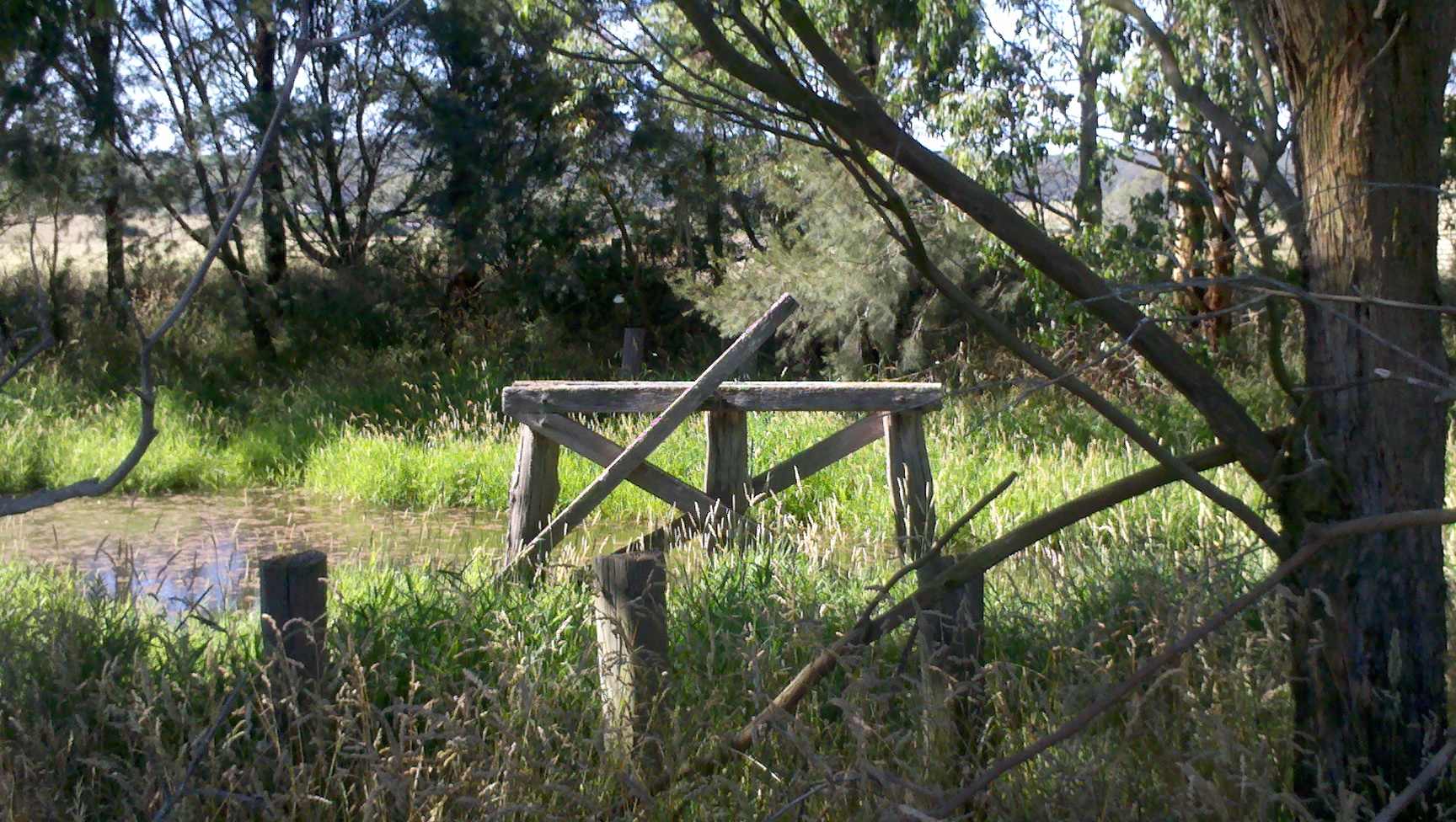
I don’t know why he decided not to finish the building of this bridge but there’s a feeling of romance about it. There would have been hours of planning, sourcing of materials, chattering about the project and, then, the wondrous day the pylons were driven. Perhaps it all got too hard or funds dried up with a scorching season.

It doesn’t matter really. The incomplete bridge is a symbol of progress because, for every white elephant, there were three glittering successes.

On one hand, farmers these days are often cast as peasants and, in some ways, we are – living at the whim of nature, commodity markets and the duopoly. On the other, few Australians are more empowered to bring their Grand Plans to life.

Farm meets laboratory

It takes a lot of science to make our dairy farm tick these days. Our place is no factory farm either. With around 250 free-range milking cows, it’s a very typical Australian dairy farm.
Yet, only today, I have been keeping four different labs busy:

Environmental lab: what’s in our water?

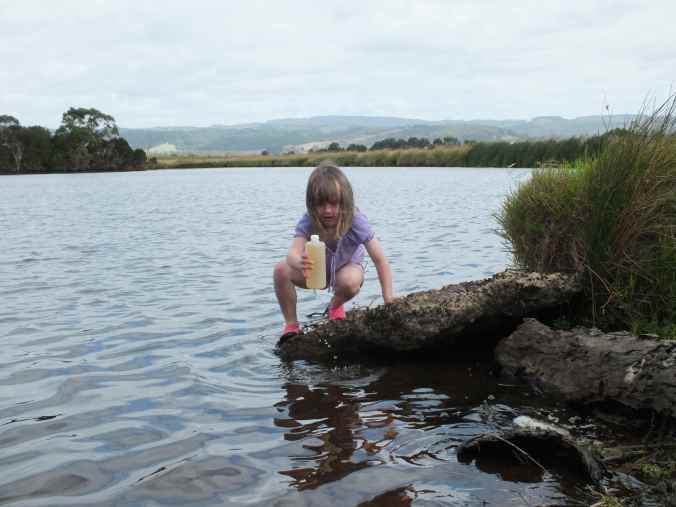
Sampling water from the farm dam

Don’t fall in!

We’re considering moving the water supply from the river to the dam but need to be sure the water is up to scratch first. While we don’t irrigate our farm, we need high quality water for the cows to drink and to keep the milking machinery hygienic and sparkling clean. We’re having it tested for minerals and nasty bugs like e-coli.

Animal health testing lab – looking for hand grenades in the grass

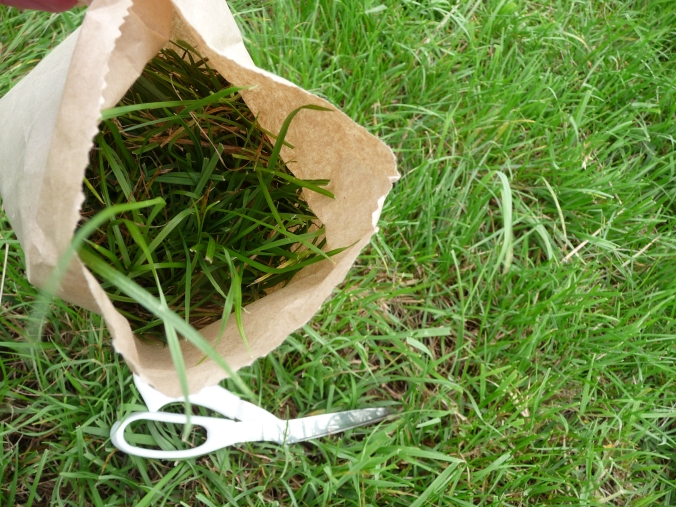
GrassClippingsOur farm has volunteered to be a ‘sentinel’ for the spores that cause the life-threatening condition of facial eczema. Collecting samples from a couple of paddocks only takes a few minutes but it could save hundreds of cows untold suffering.

Dairy nutrition lab – feeding the bugs that feed the cows

Yesterday, someone on Twitter asked Dr Karl how cows manage to get fat on grass while humans lose weight on veggies. The secret lies in four-chambered guts filled with life-giving bugs that do a lot of the work for the cows.

Our bovine ladies are athletes – each gives us around 7,000 litres of milk per year – and they and their bugs demand nothing short of perfection from us as chefs! Feed reports allow me to balance the cows’ diets with the right mix of fibre, energy and protein.

Soil nutrient lab – getting the dirt on our soils

Soil data allows me to apply the right fertiliser in the right amounts to the right places – lifting the productivity of our farm, reducing costs and preventing leaching into the river. I test the soils of all our paddocks every year. Some would regard that as wildly extravagant but a $110 test is nothing compared to the cost of a tonne of excess fertiliser.

Dairy farming is still the earthy, honest lifestyle it always has been but, these days, it pays to be a touch tech-savvy as well.

EDIT: Oh my goodness! Mike Russell (@mikerussell_) just pointed out that I forgot the bleeding obvious: the testing of our milk! It’s tested to an inch of its life – fat and protein content, sugars and cell counts are all tracked daily. Thanks Mike!

OHS inductions for the city cousins?

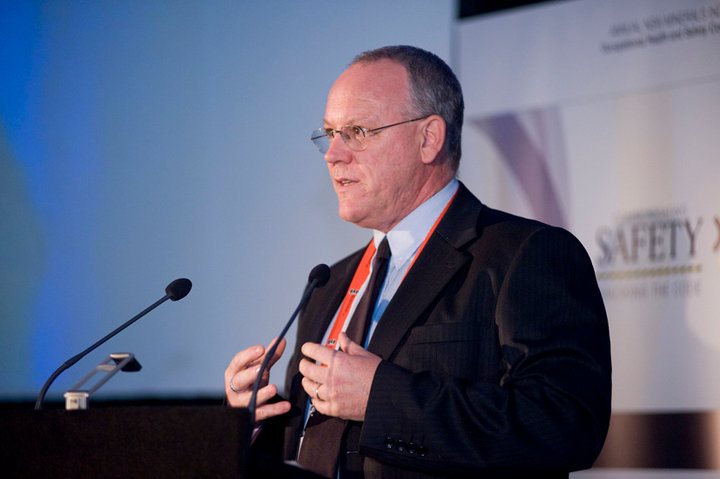
“City cousin season” is fast approaching for many farmers. It’s a time we look forward to here but we do have to be extra careful. With new safety laws emphasising the need to include volunteers and visitors to the farm in safety systems, I asked Kevin Jones, OHS consultant, freelance writer and editor of the award-winning SafetyAtWorkBlog.com what it all means.

Kevin Jones

Kevin Jones

Some media has been reporting anger and outrage about the Government imposing new work health and safety duties on small business, volunteers, farmers and many others. There are new safety laws in many States but largely these reflect the moral and safety responsibilities that have always existed. If farms have been doing the right thing in the past, they are likely to be doing the right thing in the future.

OHS laws are always going to be seen as an imposition from the city when things were pretty good the way they were. Things may have seemed to be pretty good but plenty of families lost relatives in farm accidents, many lost limbs or struggle to cope with economic stress. There is plenty of statistical evidence to show that things in the country weren’t as good as many thought and the Government felt obliged to act. Perhaps the original work health and safety laws, developed in the cities in the 1980s, were not suited to the country or the application of these laws needed a different approach from that in the city. But the intention of these laws is always to reduce harm, injury, death and the related impacts on farming families.

These occupational health and safety (OHS) laws may also require paperwork but so does public liability insurance, Business Activity Statements, and a range of other paperwork all businesses are obliged to provide. Paperwork has always felt to be a major distraction to why we set up our businesses in the first place.

Over the last twenty years OHS laws have broadened from the physically-defined workplace to include the impact of work on others such as visitors, neighbours and customers. But the workplace has also changed to an extent where it is hard to know where a workplace starts and a workplace ends. Many in the city struggle with these laws but farming communities have always worked with an almost invisible delineation between a workplace and a home. Where others went outside for a smoke, farmers often went for a smoke and checked on the animals. Farmers are hardly ever not working, and this means that farms are almost always workplaces, so when visitors come to the farm for a weekend break, they are visiting a workplace and so OHS laws will apply.

This unreal demarcation is a major reason why the new laws focus on Work and not the workplace. Dealing primarily with the work activity focuses on the reduction of harm to the worker rather than making a workplace safe. Often the best, most tidy, most organised workplaces still had unsafe work being done.

Do the new laws mean that all visitors require a safety induction before entering the farm and to sign a document saying they understand the rules? Usually, no, but if they come to undertake farming activities (ie. work), maybe there should be an introduction to the farm – where to go, where not to go, what to touch, what not, what to drive, what to keep away from. Maybe the signs in the milking shed need to be written for visitors instead of in family shorthand. Maybe pits should be covered instead of assuming the pit will be in the same state next morning.

If WorkSafe is called to a farm, for whatever reason, showing the inspectors that you know about your OHS obligations and apply basic safety procedures to equipment, tractors, quad bikes, and industrial and agricultural chemicals is going to reassure them that you know what you’re on about and that you are active about managing the safety of your workers, visitors and family. Will you be found to be in compliance with the OHS laws? Probably not, but neither are most of the small businesses in the cities either.

OHS is often dismissed as only common sense. But OHS is almost always common sense, after an incident. Why didn’t we cover that pit? Why did I leave the keys in the quad bike? Why didn’t I chain up the dog when I knew kids were coming over? These and many other daily questions are all made safer through the common sense of covering or fencing the pit, hanging up the keys, chaining the dog. If safety is only common sense why then don’t we apply it?

The new Work Health and Safety laws are not yet active in all States and Safe Work Australia, or your local OHS regulators, are a good place to watch and see if and when these laws apply to specific circumstances and industries.
How a girl becomes a cow-girl

Zoe gets cows. She really undersands them but there’s still lots to learn and, early this morning, we had a fun little lesson with the “teenagers” on the farm.

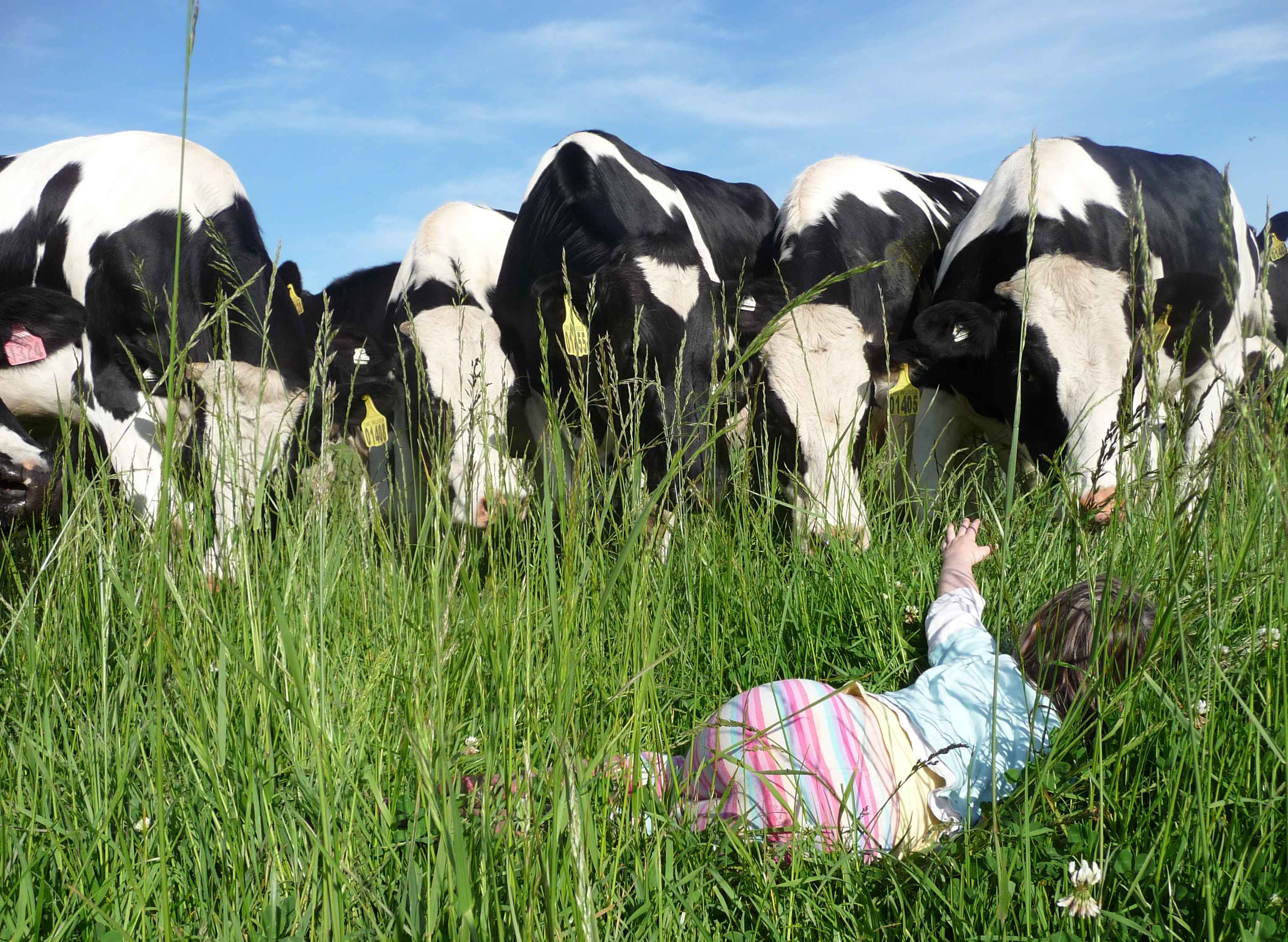
Step one is to lie down nice and still in the grass. Step two is to stay still (and quiet). Step three is to wait a little bit longer.

Heifers and Zoe reach out

“You can trust me”

If you’re patient enough, they’ll come. Snuffling, chewing their cud and nudging forward little by little with unbridled curiosity. It’s not exactly “Gorillas in the Mist” but it is an awesome, humbling experience and everybody should try it.

Please can we do some more farm jobs?

Apparently, Australian agriculture needs to be made more “sexy” to attract young people. I don’t think so. While you can get paid ridiculous amounts of money to work in mining, the call of the land is strong for those who really love it.

Already, I can see it’s in Zoe’s blood.

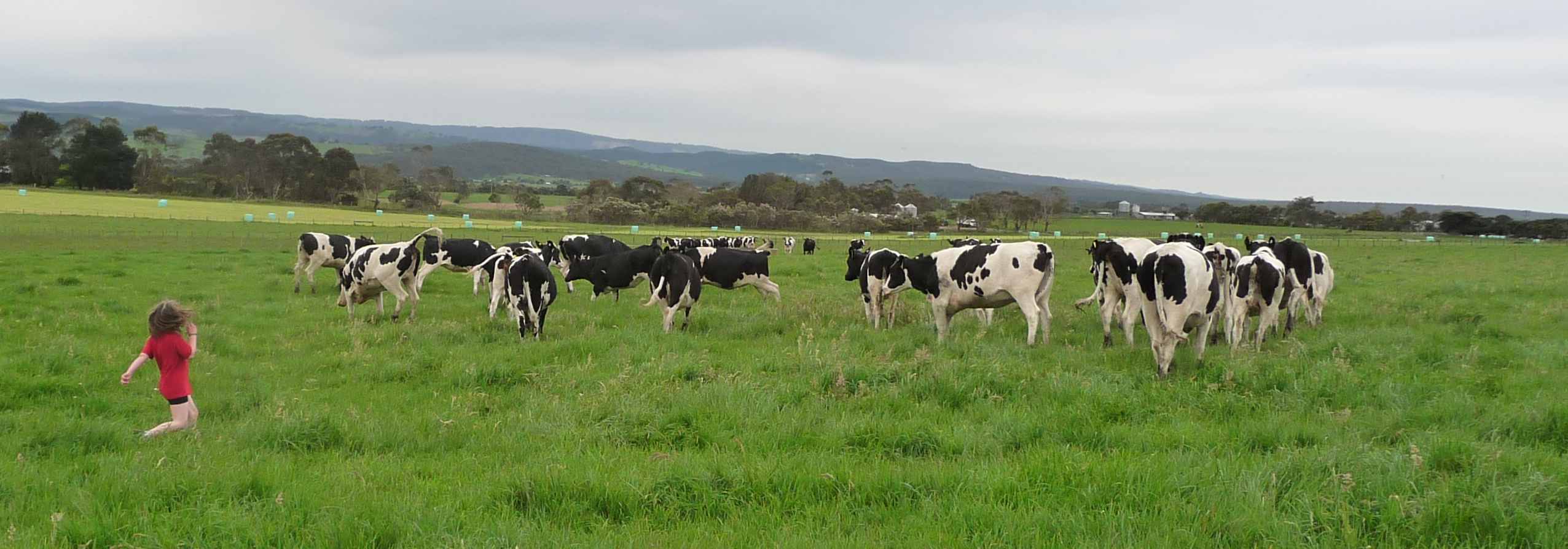
Zoe chases the heifers

“I’ll get them, Mum, I can do it, you watch!”

Straight off the school bus, she launched into moving the yearlings with great gusto. It was like watching Patch. She ran around them in circles first, then made some crazy dashes right through the centre of the mob. Pure unadulterated fun!

We got them all out a few minutes later, with flushed cheeks and the wind in our hair. “Please, Mum, can we do some more farm jobs before we go home?”

My gut tells me Australian farming and fresh food has a great future. My head tells me that’s so too, with one caveat: before they can feed the world, there has to be a sustainable return so they have confidence there’ll be enough to feed themselves.

How a farmer hangs out her washing (or desperation is the mother of invention)

At 15 months, Alex loves “riding” the quad bike.

The little man is drawn to anything he can climb, toot or wobble, especially if it has buttons and the quad has all those magical qualities with the added bonus that it’s his Dad’s.

The mite’s adventurousness is only slightly hampered by his wet blanket of a Mama. When Wayne bought Zoe a hot pink mini-quad for Christmas last year, I refused to let him bring it home. Quads are seriously dangerous bits of gear and, besides, a pushie is still the best way to burn up all that excess energy.

But whether it was out of sheer exhaustion or the joie de vivre that comes with the first truly warm day of Spring, I relented just a touch today and took Alex for an illicit ride on the quad. As we’d passed the quad with the washing basket, he’d somehow become firmly attached to the Suzuki’s grimy plastic faring. A moment later, his padded posterior was straddling the gear shift.

It turns out that the trip from the laundry to the washing line with a toddler is gloriously smooth-sailing when you’re riding a quad – albeit at a snail’s pace. It also turns out that the quad makes an excellent table for the washing basket and is just the right height for pegging up everything from unmentionables to our Sunday best. Don’t tell anyone, will you?

O-week for a young cow

The first member of the class of 2012 has calved and she’s lovely! To help her learn the ropes, we’ve had her with the milking herd for a couple of weeks prior to calving. The noises of the dairy are already familiar and the dinner served during milking must have been divine because she only kicked at the cups once – even though it’s the first time anyone’s handled her teats, let alone milked her.

That’s a big deal for us as farmers. A quiet cow is a happy cow and that means she lets down her milk readily and is less likely to suffer mastitis. And we are less likely to get hurt. In the dairy, we have to reach between the powerful hind legs of 550 kg cows, 500 times a day. Getting kicked can mean broken fingers, hands, arms and faces.

Anyhow, this young cow is a pretty cool customer, even when being pestered by a silly pup who wants to slurp up some delicious cow poo (never let a farm dog lick your face).

A sad discovery that is good for my green farm girl

We were off setting a dinner-time paddock for the cows yesterday afternoon when Zoe spotted something that looked like a dead calf on one of the cow tracks. But it was something even more heartbreaking.

Fallen Pelican

“I will really miss that fellow” – Rob

The pelican lay below the power lines near our Land for Wildlife dam.

“What should we do with him? Can we give him to someone to look after?”

Even though she knew he was beyond hope, Zoe shared my impulse to somehow rescue the magnificent aviator from such an ignominious resting place. Perhaps someone would like to study him. We rang our next-door neighbour, Rob, whose network of environmentalists outstrips mine.

“Oh, that’s very sad. I will really miss that fellow,” he said. Rob’s place has hectares of very beautiful wetlands that he and wife Jenny have preserved and regenerated over three decades. A former engineer, Rob said there was a new power line swing arm design that should reduce bird deaths but this seemed little comfort as we stood by the gorgeous bird’s body.

A quick Google afterwards showed that our pelican is far from alone in his fate. In South Africa, for example, 12 per cent of blue cranes – the country’s national bird – are dying every year due to collisions with power lines and the UN has released guidelines in an attempt to curb the destruction.

But, not surprisingly, Rob had no contacts who’d like a dead pelican, no matter how magnificent. In the end, we decided to study him ourselves. The curved tip of his beak, his amazing expandable gullet and those outstretched wings. If nothing else, Mr Pelican offered my little farm girl an even greater appreciation of what it takes to fly.

Coles won’t rule out CCTV on Australian farms

Despite a barrage of requests on Twitter and emails to the Coles executive interviewed by ABC Radio, Coles has refused to rule out video surveillance of Australian farming families.

All it would say was that it has “no plans” for the cameras. It’s a remarkable turnaround given the enthusiasm for CCTV on farms so publicly expressed by one of its most senior executives on Wednesday. Either Jackie Healing was way out of line or Coles could do with a little more transparency of its own.

Seeing as the retail Goliath decided not to respond, here’s my best attempt at answering the questions Coles apparently found too hot to handle:

  1. What do you consider are the benefits of video cameras on farm?
    The presence of the cameras could lift the awareness of animal welfare, while reassuring the wider community that farm animals are well treated.
  2. Do you see any potential problems?
    A family farm is also a home and I will not have our little family watched by millions via spy cameras. Imagine CCTV on your backyard streaming live to the internet. Totally unacceptable.
  3. Do you have any concerns that practices in the best interests of animals (restraint for vaccinations or veterinary procedures, for example) could be misconstrued by viewers?
    The viewers would deserve an explanation for some of the practices they’d see. Veterinary treatment for an eye cancer, for example, could very well look like animal abuse on video.
  4. Do you anticipate Australian farmers will volunteer to host the cameras?
    No.
  5. Have you (Coles) discussed the possibility of cameras with farmer organisations? If so, what has been the response?
    I don’t know.
  6. If Australian farmers do not volunteer to host the cameras, how will Coles respond?
    I am guessing they would refuse to pay for the milk but Coles won’t say.
  7. Does Coles plan to offer education for consumers about animal husbandry practices?
    This would be critical but was not mentioned by Coles quality manager, Jackie Healing. It would be a gargantuan undertaking.
  8. Where would cameras be mounted on a typical 500-acre dairy farm?
    To be effective, they’d need to be in the dairy, the calf sheds, the yards, the ute, the quad bikes, the tractor and the paddocks. That’s around 50 cameras on my farm alone.
  9. How would the dairy supply chain need to be “remodelled”?
    If Coles does intend to follow the Tesco example, it will try to contract farmers directly, giving it incredible control over the food consumers get and the price farmers are paid.
  10. Will Coles install cameras in the food preparation areas of supermarkets?
    I suspect not.

I am hoping that, despite its silence, Coles has got the message. Please pass it on. The supermarket wants to become a superpower and it has to hear loud and clear that Australians from every walk of life reckon it’s gone too far this time.

Why dairy farmers loathe their leaders

Okay, we don’t all loathe all our leaders but I’d argue that generally, we do. Far more often than I hear a word of praise, I hear our R&D body, our co-op managers and even our own elected representatives criticised for not being “real” farmers, for forgetting us, having their noses in the trough or being plain idiots.

Why? Perhaps it is because too many of our leaders attempt to be leaders rather than hosts as Lynne Strong experienced in Canberra last week. But then, perhaps it is because we are lazy.

Lazy is not normally a description I’d apply to any dairy farmer – it’s hard work – and that’s exactly why we leave so much up to our leaders. Most of us are too busy fighting alligators to swim the political waters. It’s generally the older, better established farmers with adult children running the farm who can take days off at a time to attend meetings in the city.

Of course, there’s nothing lazy about a farmer unable to attend meetings because she’s working too hard but it does mean we tend to stop thinking about what’s happening beyond the farm gate. That’s what my husband calls “laziness of the mind”. We say “they” ought to “(insert colourful adverbs here) do something about it” and stop there.

So, what’s the answer? I don’t know but I think the question is obvious: how do we get farmers and their representatives talking?