Do you trust farmers? What with?

A Reader’s Digest poll has proclaimed farmers to be one of Australia’s most trusted professions. We come in at number 7, ahead of GPs and even our friends, the vets. Weather forecasters got their just desserts ;), ranking a miserable 26.

It’s a pleasant surprise, particularly given the much-discussed growing urban-rural divide.

In fact, we climbed two spots in the last year but I wonder whether this year’s poll was conducted before or after those shocking episodes of animal abuse at Indonesian abbattoirs were screened and whether this has changed the way Aussies feel about farmers.

I hope not. The farmers I know are sickened by the cruelty. Fortunately, I can sleep well knowing that none of our cows have been subjected to that treatment. Dairy heifers are sometimes exported to countries desperate to build their own herds with Australia’s world-leading breeding stock but are handled very carefully on the journey to ensure they arrive in peak condition.

I’d love to hear from you about all this. Why do you think farmers are so highly trusted?

The whingeing farmer

Farmers are infamous for never being happy with the weather. For years, we’ve been battling awful conditions – unreliable or non-existent autumn breaks, short springs and searing summers. The one blessing has been warmer and therefore more productive than normal winters.

This year, though, has been one out of the box. The landscape remained a verdant green right through summer and, with a precious bank of water in the soil, I took the opportunity to convert plenty of pastures from annual to perennials and when the “whole hog”, fully cultivating beautiful seed beds.

My gamble may still pay off but right now, the strategy has come back to bite me. The sun refuses to shine, the rain continues and that bank of soil moisture has been continually topped up to the point that very little of the new pasture is trafficable at a time when it desperately needs fertiliser and a trim. We may not be able to let the cows into some paddocks until spring.

So, as I type this post on a cold, wet, sunless day, I’m afraid I live up to the stereotype of the whinger. I have a good excuse but no good reason –  exposed to commodity price cycles, currency fluctuations, all the normal business hazards and mother nature herself, farming is innately a risky business but still we choose it as a way of life. After all, an affinity with mother nature is what binds us to it.

The farmer is dead, long live the farmer: succession is rarely so easy

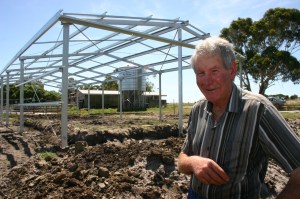
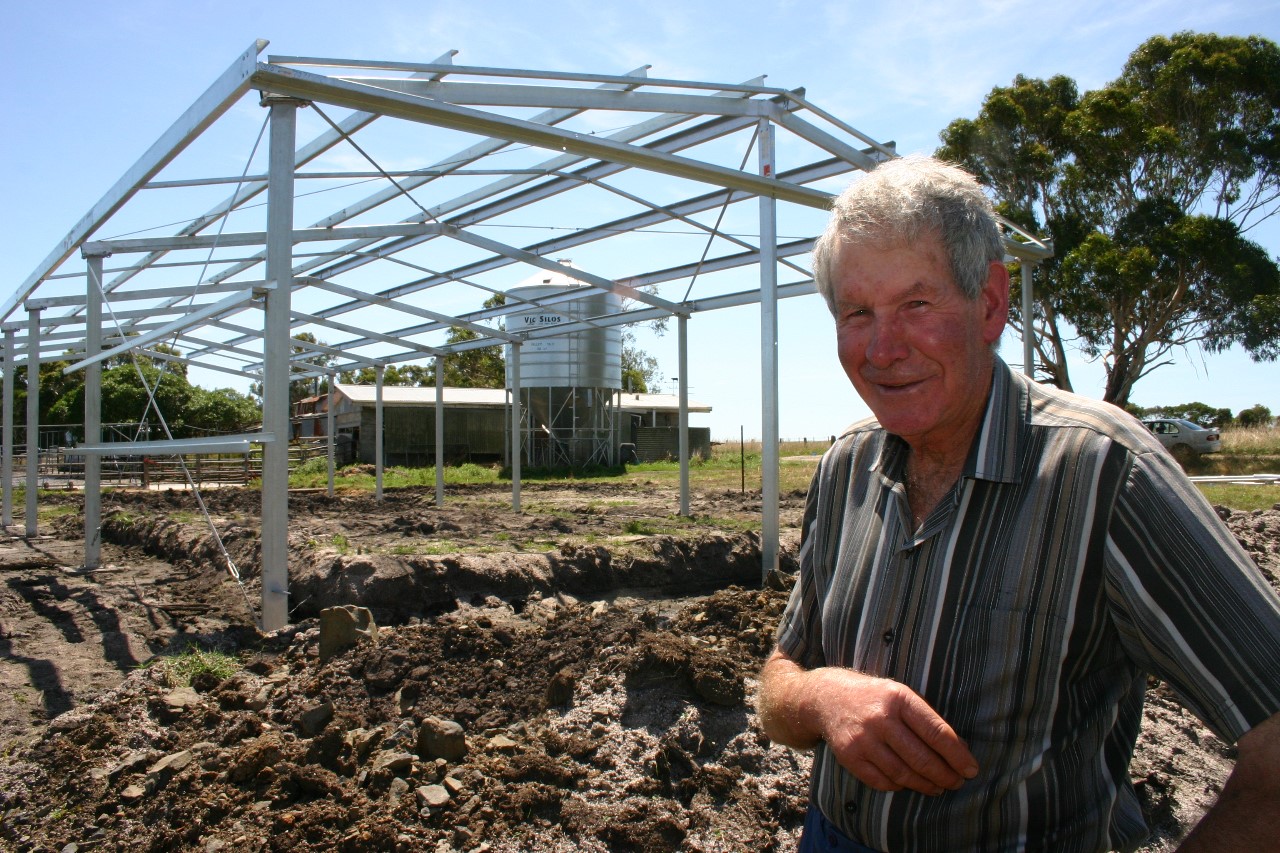
Dad with the dairy under construction

Dad missed out on his dairy

The royal wedding got me thinking about succession. Nobody maps it out more clearly than the Windsors. From the moment they are born, everyone knows exactly where they stand. Not so for many Australian farming families, including ours.

Dad and I loved each other but there just wasn’t enough room for both of us on the farm: financially, emotionally or in terms of management style. Although immensely proud of his university-trained daughter, I think he felt the farm was no place for a “girl” and, besides, this was his domain.

As Dad aged and grew more tired, it was great to have his daughter on hand to milk, feed calves, fix fences, drive tractors and so on but the subject of succession planning was taboo. He would tell anyone who cared to listen that he wanted to be “found dead in the dairy at 97”.

The dairy itself ended up being a rather poignant reminder of Dad’s determination and, ultimately, frustration. The dairy farmer who prided himself on always milking alone built a new 16-aside double-up herringbone in 2005/06. Sadly, he only milked in it a few times. Prostate cancer claimed Dad, aged “just” 77, in December 2006.

His last year was difficult. Dad did not want to admit defeat, so struggled on farming for many months despite being incredibly weak. Finally, the tipping point came when he fell off a tractor and had to be rushed into hospital unconscious.

In the weeks leading up to Dad’s death, the will was able to be discussed. He had remarried only five years earlier and the assumption was made that his wife would sell the farm. I was desperate to keep the farm and it became a bitter battle. In the last two or three weeks before his death, Dad decided that if he did die, I should be given the chance to pay her out and try my hand at farming.

It was almost too late and the indescribable stress was unfair on everyone. Tragically, this scenario is not unique and gets even more complicated when siblings are involved. Don’t let it happen to your family. Get everyone involved early and take advantage of all the resources and expert advice you can find.

Would love to hear how your family has approached this sometimes tricky topic.
Dairy farming a glamorous job?

At a social get-together today, someone said dairy farming was glamorous. Rewarding, challenging, interesting, in touch with nature, a great way to raise a family, yes. Glamorous? I’d never thought of it that way. My friend (not a farmer) pointed out that many urban professionals might envy the freedom and sense of purpose enjoyed by dairy farmers.

It’s all about perspective, I guess. My husband saw me engrossed in reading a farmer’s newsletter last night and said: “You really love your farming, don’t you?”. “Yes,” I said, “Look at this! Turns out the nitrogen in the first effluent pond is much less volatile and…”. Well, there’s nothing sexy about a primary effluent pond. Realising how ridiculous I sounded, all I could do was laugh at myself. I do love it – especially learning how all the natural systems that come together in a farm work – even though there are days when it’s a really hard, dirty and uncomfortable grind that’s anything but glamorous.

But how do other Australians see us? According to one 2010 poll, as trustworthy. I wonder how the milk wars have affected public perceptions.