Spring has pounced…at last and with a flourish!
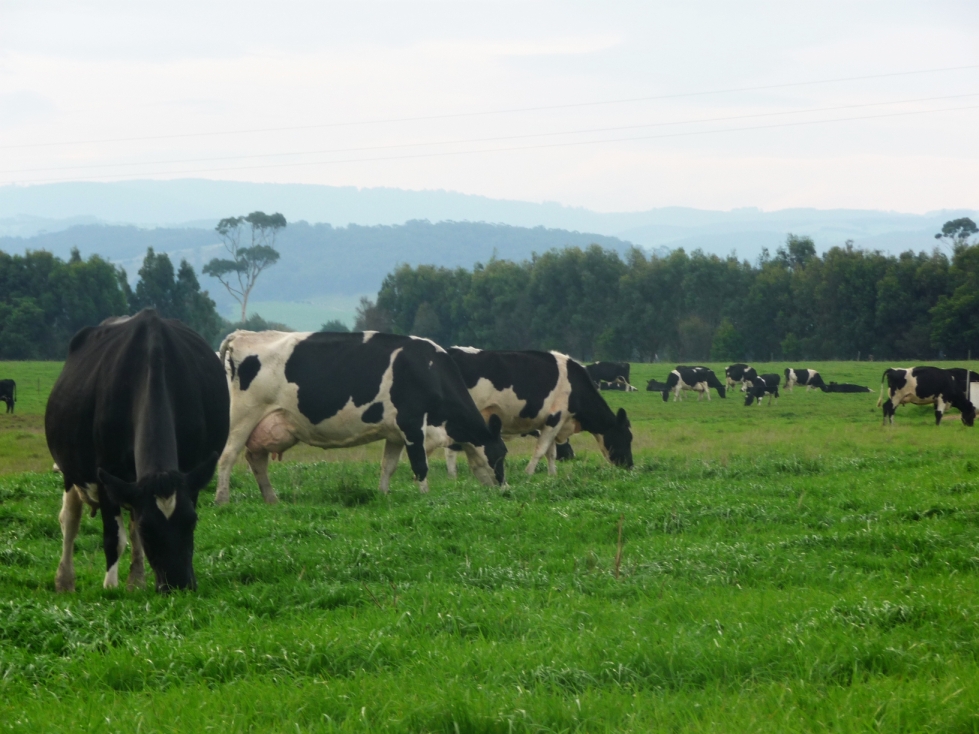
Each week, I monitor the growth rate of our grass and by golly it’s shot away in seven days. This means we can offer the cows a larger slice of each paddock per day, knowing that we won’t run out of grass or punish the pastures. We treat our little ryegrass plants with TLC, you see.
To explain why, I’ll need to tell you a little bit about the ryegrass plant (only a speed-date style of introduction because I know you’re probably not as excited about watching grass grow as I am).
In most cases, rye grass only ever grows three leaves per plant before the oldest leaf dies off. It’s at its best when it has 2.5 to 3 leaves, which is also when it grows fastest because it has the most “solar panels” to generate sugar and sustain itself.
The grass draws on sugar reserves stored in its stem to produce the first leaf, the second is self-sufficient and the third offers about 50% more herbage than the first two combined.
If you let the cows chew the grass down too hard or bring them back when it’s just used up its sugar reserve to get the first leaf out, you do enormous damage to the plant. It may not recover and will certainly take a long time to get up and running again.
Because Australian milk is sold at such low prices, we have to be super efficient and that means grazing the pasture at its most productive rather than relying on lots of expensive grain. A DPI expert once told me that what farmers do in the 12 weeks of Spring dictates how profitable we are for the whole year, so I am extra vigilant at the moment.
With the warmer, drier weather of the last week, we’ve seen growth rates soar. Rather than taking about 14 days to emerge, the first leaf is out in seven or eight. I’ve asked Wayne to reduce the amount of grain we’re feeding the cows (just by half a kilo every four days so we don’t upset the bacteria in their finely tuned digestive systems) and I’ll ring the silage contractor tomorrow to give him the heads-up.
That same DPI guy also told me that it doesn’t cost anything to be on time but being late in farming could cost a year’s profit. I’d better get out there!

 The Milk Maid Marian