There is so much to learn on a farm. Aged just 5, Zoe can correctly identify plants from rye grass to melaleuca, wildlife from willy wagtails to wedgetail eagles and stock from heifers to old cows.
Yesterday, she came across the beautiful Paterson’s Curse for the first time. It’s not a problem here – the occasional plant pops up from time to time. Zoe took this pic to remind herself of it.
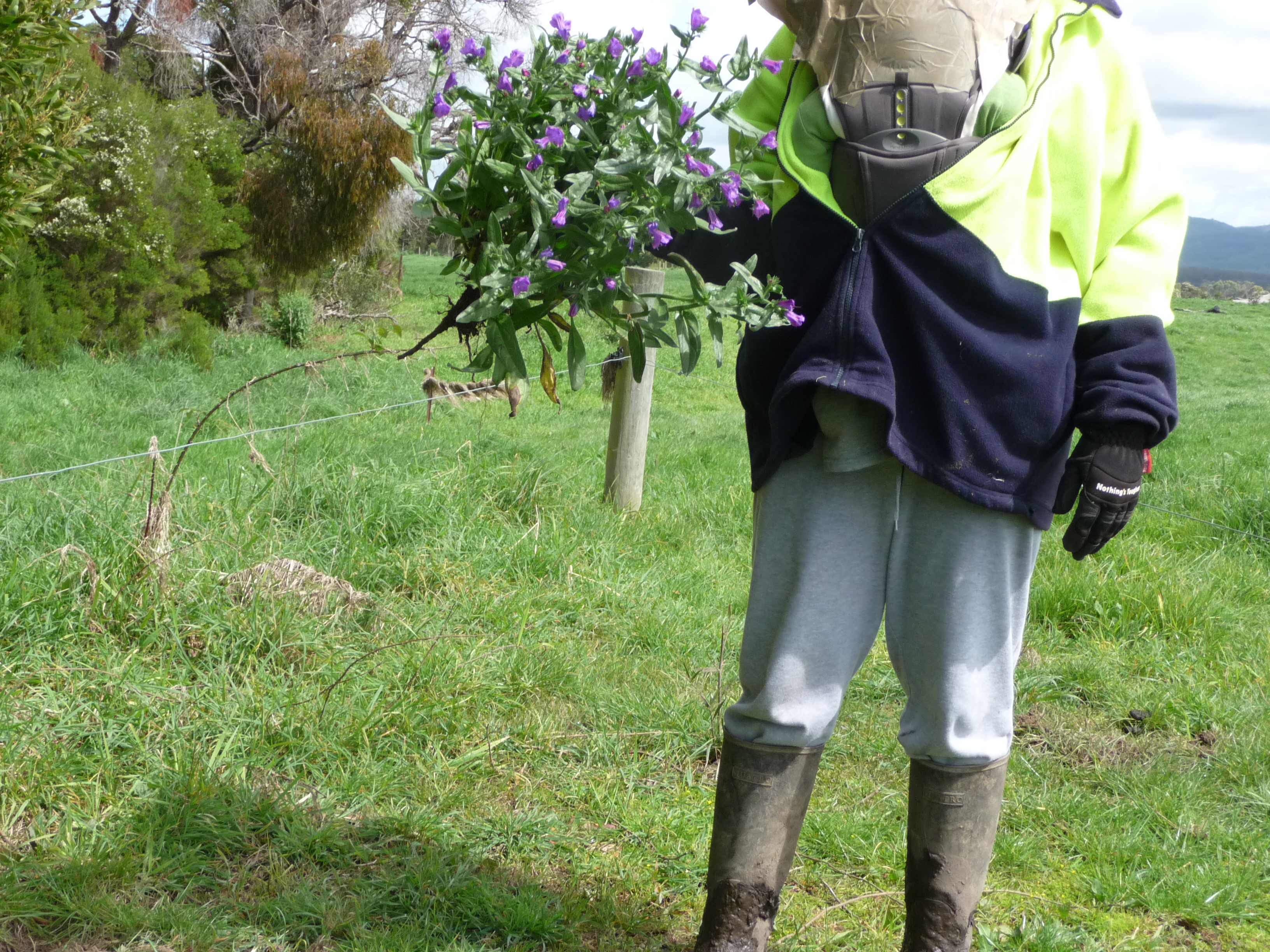
Patersons Curse
When I was Zoe’s age, ragwort was the weed we battled all summer. The paddocks turned a buttery yellow in late spring and the grass and other weeds on the river flat scratched at the ute windows. I haven’t seen a ragwort plant here in years and though the blackberries and thistles persist, they are at vastly reduced levels. The grass is also tamed to juicy, shin-high herbage. I think it comes down to the intensification of dairy farming in the last 30 years.
When my brother and I were out in the paddocks pulling up ragwort in the late 1970s and early 1980s, we had 120 cows on 300 acres. Now, we milk 265 cows on about the same area (with dry stock on another 200 acres), although we might be a bit overstocked. Back then, we had three paddocks and now we have 24 on the milking pastures.
Someone reminded me that Dad never paid any attention to daylight savings in the 1980s because he couldn’t find the cows in the dark in those massive hundred-acre paddocks! Now, they are contained in 3 to 4-hectare paddocks. It means the grass is far better managed and forms a thick sward that is harder for opportunistic weeds to penetrate. It also means we are more alert to changes in the pasture – there are no more “lost forests”.
 The Milk Maid Marian