A very unpopular dairy blog post

I suspect I am about to make a lot of enemies because there is an elephant in the room and few are in a position to point it out.

Here are the facts:

  • the last season has been dreadful
  • dairy farmers have free access to lots of information about we can keep cows healthy during fodder shortages
  • many dairy farmers who couldn’t afford skyrocketing feed costs have sold a lot of cows at ridiculously low prices so they can feed the remainder of their cows properly
  • farmers have gone broke but kept their cows healthy
  • cows do not starve overnight and watching them weaken over weeks or months would be more than I could bear yet reports of them dying in their hundreds have hit the national news

I was stunned. Perhaps people who would normally sell their cows off long, long before they reached the point of starvation couldn’t for some reason? Maybe they were hoping for a miracle? Maybe they were in denial?

It just doesn’t ring true, at least not for hundreds of cows as media reports suggest.

And it’s come out today that some published pictures of “starving cattle” were actually the carcasses of cows that had died of other causes. In fact, the vet whose leaked email urging MPs to act sparked the media stories, Dr Mike Hamblin, has since told Warrnambool newspaper The Standard that there is no animal welfare problem in SW Victoria:

“Warrnambool veterinarian Mike Hamblin said there was no animal welfare crisis in the region and that he believed farmers were looking after their livestock well in a difficult financial situation. Dr Hamblin said that while some stock were thinner than normal, he had not seen any starving.”

Yes, people need help. Yes, it is wonderful that the media stories have finally got the Victorian government to reach agreement with the Commonwealth on low-interest loans.

But do we really need to paint already suffering farmers as cruel by presenting pictures of dead cows to our political leaders before action is taken? The reality is that most farmers skip their own dinners to feed our animals. These dirty tactics may have won concessional loans for a few farmers but they have blown a lot of trust and, at the end of the day, we will all be the losers.

There has to be a better way to avert what is a genuine human crisis than fabricating an animal welfare one.

Stealing the calf’s milk

There’s an urban myth that dairy farmers rear calves away from the herd so we can harvest the special buttercup-yellow milk that comes with the first milkings after calving called colostrum. The irony is that one of the main reasons we collect calves early is to ensure they get plenty of colostrum.

According to a Dairy Australia fact sheet on colostrum management:

“Unlike humans, the placenta of the cow keeps the maternal blood supply separate from that of the unborn calf. This prevents the transfer of antibodies from the cow to the calf before birth and the calf is born with no ability to fight disease.”

“Colostrum is the substance that provides the antibodies that form the main protection from infectious diseases for the calf in the first 6 weeks of life, until the calf can develop antibodies of its own. Without colostrum, a calf is likely to die.”

What’s more, calves need it immediately, as DA goes on to explain:

“It is important to be clear about two key facts relating to colostrum:
• The calf’s intestine absorbs the large IgG molecules easily straight after birth
• The intestine’s ability to absorb antibodies decreases after birth—it decreases by 30–50 % within 6 hours of birth
• It stops completely between 24 to 36 hours after birth”

Yes, it’s vital to our calves.

We don’t sell a drop of the precious stuff (few farmers do, which is why it’s so expensive) and we’re not allowed to mix it with the rest of the milk because it goes off quickly. “Stealing colostrum from calves” is certainly not why we raise the calves away from the herd.

Let them eat cake

Good quality hay is like bread. Dairy cows love it for its balance of fibre, energy and protein. This winter, you cannot buy good quality hay for less than a king’s ransom, if you can buy it at all. So, with none to be had, we’ve been forced to get creative, introducing three different delicacies for the cows.

Almond hulls
At first, I wondered if the cows would ever eat this stuff. The smell is nice but almond hulls look like a mix of sawdust and fine wood chips.

Delicacy of the day: almond hulls

Delicacy of the day: almond hulls

Each cow gets an average of 5kg of the hulls each day but, judging by the way they wolf it down, I reckon they want more!

The 5 o'clock swill

The 3 o’clock swill

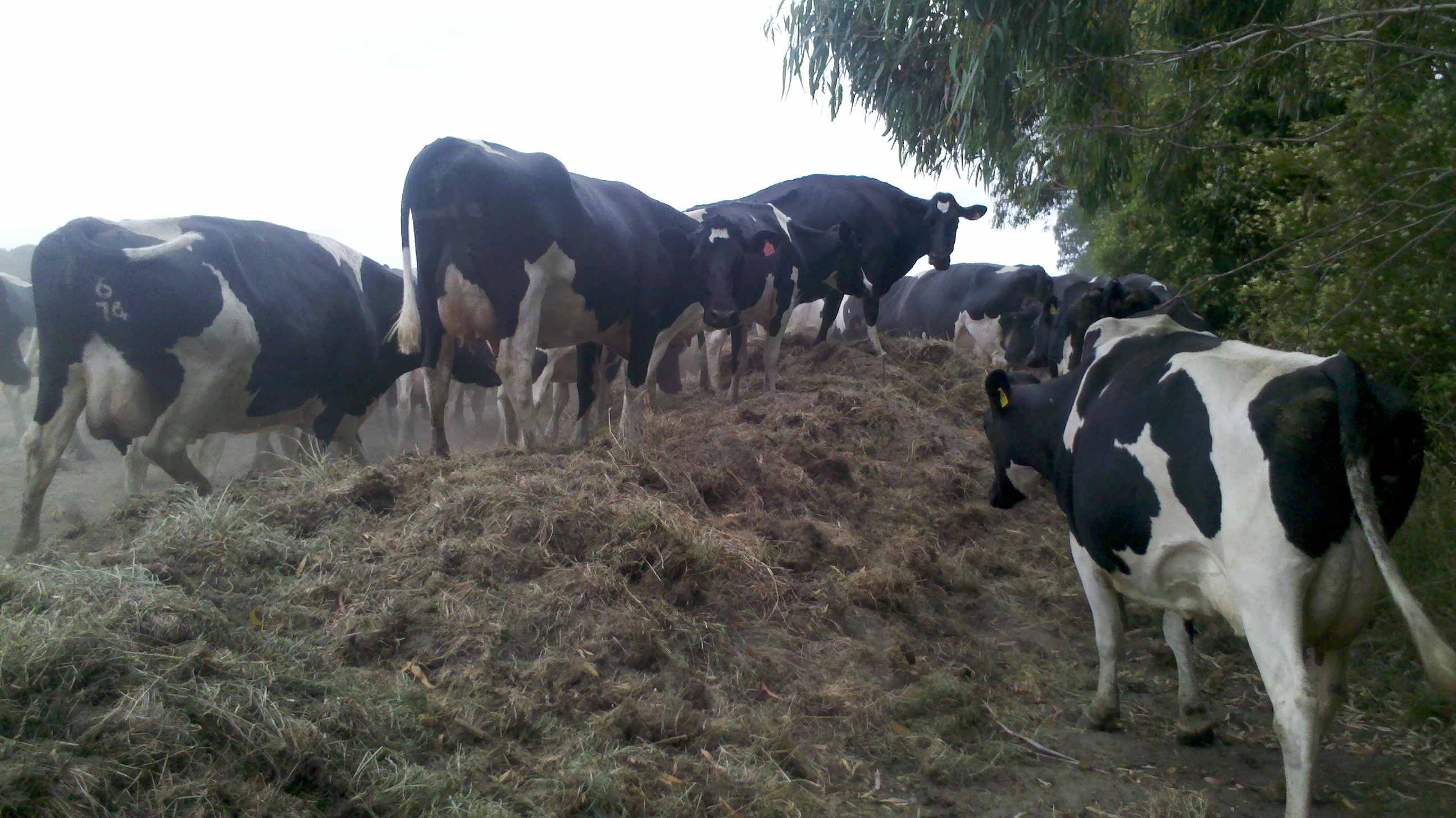
Trying to push the cows past a heap of almond hulls is like trying to push back the tide. Run one side of the ring and they’re already attacking the side you just left. Not because they’re starving, either. The cows are getting lashings and lashings of energy and nutrient-rich food – they just love the stuff!

Mmmmm, delicious

Mmmmm, delicious

Straw for scratch fibre
Although the almond hulls are fibrous, the cows need long fibre to wake-up their complex digestive systems, so they’re getting a couple of bales of straw as well (though they like to use it as a luxurious mattress, it seems).

Goo for the good bugs
Also new to our cows is a special brew delivered in fancy red tubs. A mixture of molasses, non-animal protein and minerals, the goo is not really for the cows. It’s for the bugs that digest their food in one of those four stomach chambers called the rumen. The idea is that the “goo for good bugs” turns them into super-bugs that can release the maximum value from everything the cow eats.

It’s a sweet-and-sour mix designed to stop the cows gorging themselves on the goo but they still seem to enjoy a generous swig on the way in and out of the dairy!

RedTrough

Grain for breakfast and dinner
The cows continue to enjoy two sittings of corn, barley, wheat and minerals each day during milking.

Most important of all – juicy, juicy grass
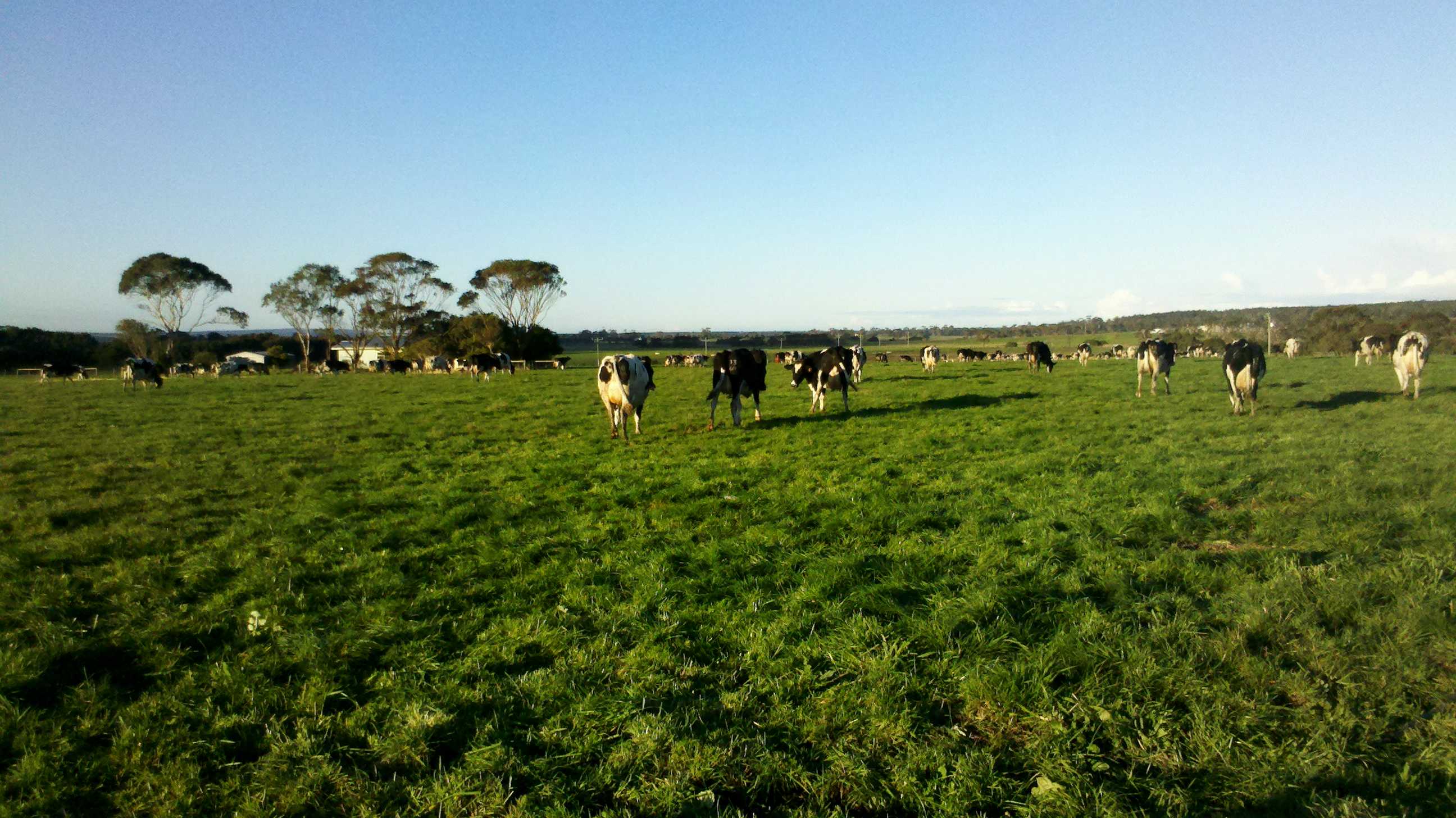
Despite all the other stuff on the menu this winter, nothing is more important to our cows than grass.

WintryPasture

Are they missing their hay? I think not.

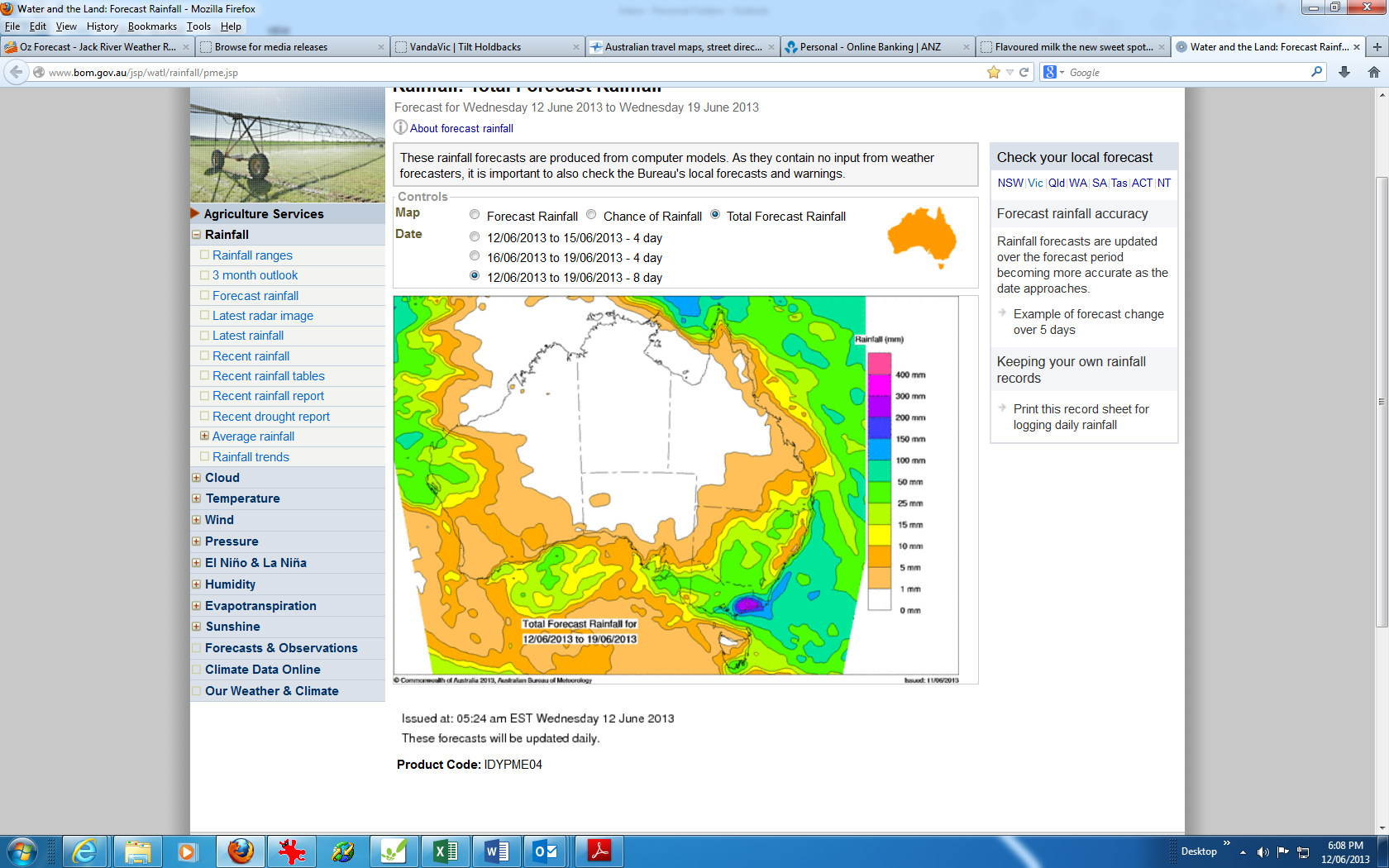
A purple blister on the weather map is coming to get us

Holy cow

Holy cow

It’s not a good sign when the local weather forecaster gets a spot on ABC Radio’s National news. Our forecast is so shocking that, yes, it made headlines today.

A massive chunk of Victoria is about to go underwater and, with it, a massive chunk of our farm. We’ve had an inch of rain in the last two hours and the prediction is for between 51 and 102mm tomorrow, followed by another 20 or 30mm over another couple of days.

I’m thankful for the undulations at the southern end of the farm. The cows will at least be safe.

I’m also thankful for the Bureau of Meteorology’s timely warnings. It gave us time to:

  • Set up safer paddocks for the cows
  • Ask Scott, the grain merchant, to deliver more feed before we get flooded in
  • Remove the power units from the electric fences on the river flats
  • Bring all the eight new calves born during the last 48 hours into the warmth of the poddy shed
  • Stock up at the supermarket
  • Pile the verandah high with dry kindling and wood to keep the kids warm

As the flood sets in, we’ll be:

  • Offering extra TLC for newborns and freshly-calved cows
  • Feeding out more of our precious and rapidly dwindling stock of hay while hitting the phones looking for more ridiculously scarce fodder
  • Keeping an even keener eye out for mastitis
  • Walking the cows extra gently to the dairy to reduce the risk of lameness
  • Hoping like hell that the damage to the fences and tracks isn’t too bad
  • Monitoring the condition of paddocks to minimise pugging (mud, mud, mud)
  • Stocking the dairy snack bar with a bottomless supply of soup and raisin bread

It’s often said that good farmers only worry about what they can control. I’ll do my best!

The sun is up and so is the sparky (or, the day began pear-shaped)

Dairy cows are rounded up before dawn but, today, they slept in. We had a bit of a disaster in the dairy last night that would have meant the girls missed breakfast. That certainly would not do, so while they waited for the sparky to weave his magic in the grain auger control box, this is how the cows enjoyed watching the sunrise.

Sleeping in

Sleeping in

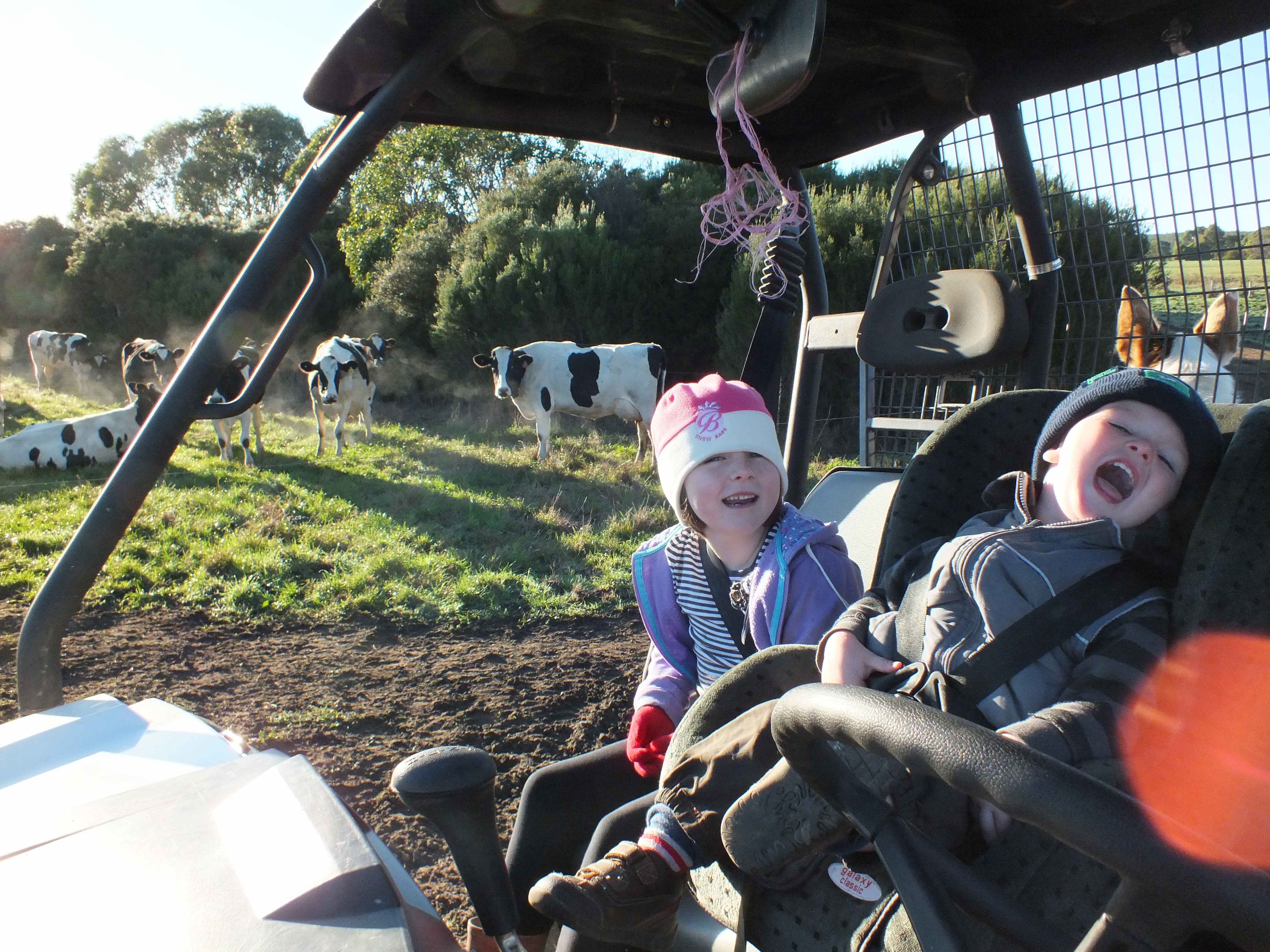
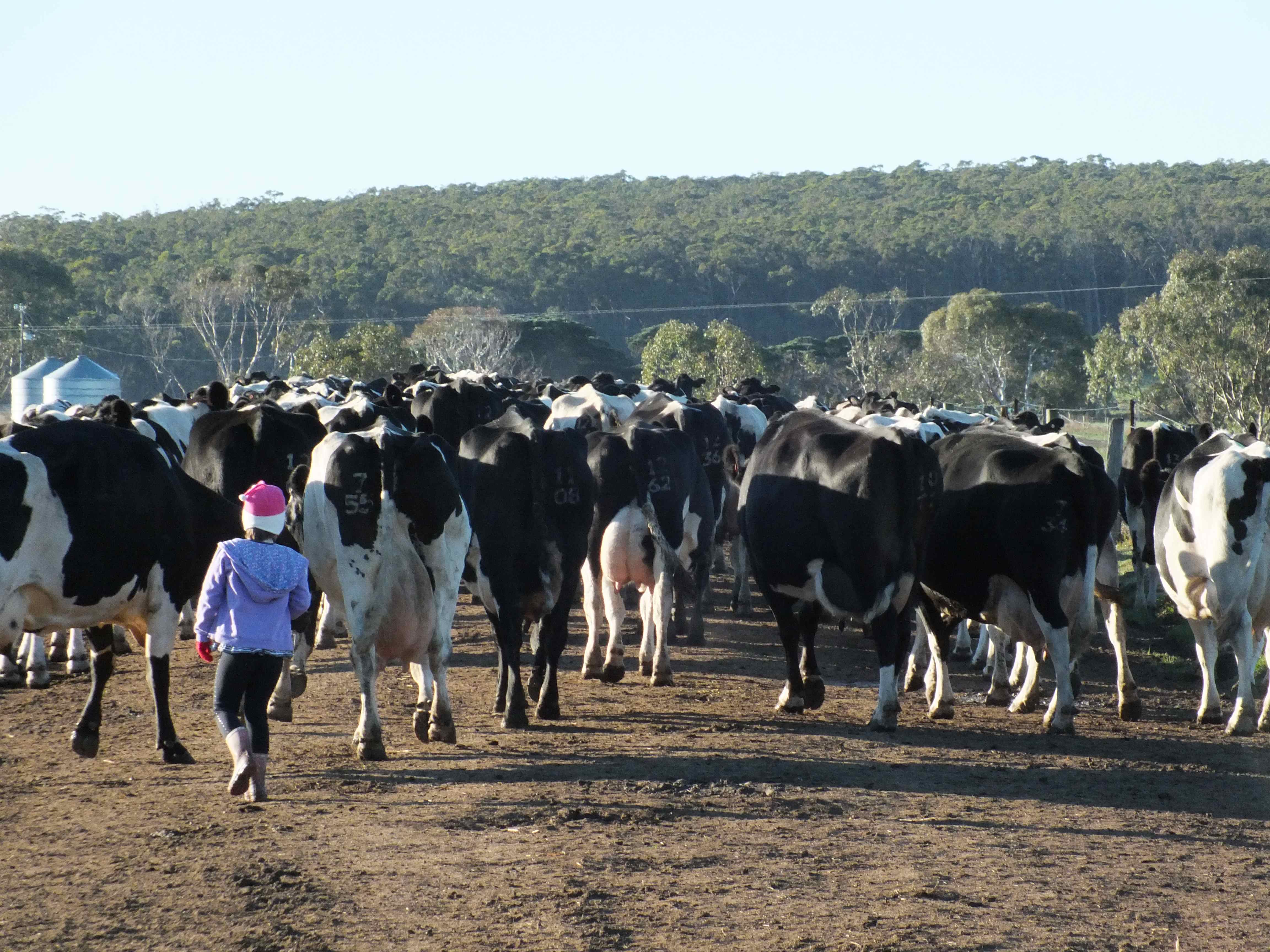
Two hours later than normal, with steaming breath and swaddled in layers of clothes to ward off the still chilly air, the kids and I had the rare treat of a family morning round up.

Rounding up was noisier than usual, too!

Rounding up was noisier than usual, too!

The cows seemed to take it all in their stride but we are lucky this has happened late in the season when milk production is falling away. Farmers are so fastidious about rising early because a late morning milking means painfully-full udders and the risk of mastitis. Wayne took the opportunity to do a heap of other farm chores while the feed system was repaired and will milk the cows late tonight to help even things out for the cows again.

A big thank you to Dutchy the sparky for getting out of bed so early on a frosty Sunday morning. It turns out that, in dairy country, the cows rule the lives of farmers, their families and even the local electricians.

Cows having a sleep in

This cow cannot take a trick

The last cow into the dairy on Friday morning had Wayne stumped. It had been an uneventful milking, she’d gobbled up her ration of grain for breakfast but, when Wayne turned to spray the teats, there she was calmly sitting underneath her neighbour. No matter what we tried, there she stayed, refusing to budge. This little cow is only five years old, six months in calf and in great health. We didn’t want to lose her.

SheShallNotBeMovedFriday

Sarah the vet was duly called but could find nothing wrong. We figured she’d just slipped and was gathering her nerves before trying to get back up. She didn’t. She wouldn’t, even to follow a tempting trail of wheat.

Mmm, you smell nice

Mmm, you smell nice

When the time for afternoon milking came around, Wayne had to slither her along the platform and then lift her over a fence with the hip clamps. We sat her in the shade with grass, silage and water. She ate well, looked bright and feisty but her legs just wouldn’t work. It was an enormous relief to see her up and about at daybreak on Sunday morning, pushing against the gate to get back with her herd mates.

She still looked a bit tottery yesterday afternoon, so we let her have the afternoon off but felt really confident she was going to be alright.

So when I had to move the cows unexpectedly at lunchtime and saw her being pushed backwards down a slope towards the gully by a big bully cow, my heart leapt into my mouth. With the bully heaving low under her belly, the poor little cow toppled sideways – seemingly in slow motion – into this ignominious position.

UpsideDown

Now, this crazy-looking pose called “dorsal recumbency” is deadly for a cow. I had minutes to get her upright. For emergencies like this, I carry a heavy drag chain in the Bobcat and had her sitting upright again in less than five minutes. It’s a delicate job that has to be done with a lot of grunt and that’s always a risky combination.

Thank goodness, it worked. After some gentle coaxing from me and enthusiastic yapping from Patch, she struggled to her feet and joined the herd. Fingers crossed, little cow.

Inconvenient dairy truths

I am not a spokesperson for the dairy community. I’m simply an average dairy farmer who likes to write.

The way my family cares for our cows is very typical of what happens on farms right across Australia. It’s important that more of us share what we do, why we do it and why that matters with non-farming Australians because there is much to be proud of.

It’s equally important that average dairy farmers like me are constantly challenged to do better and that we, in turn, challenge others involved in dairy to improve the way we care for our land and cows.

I am ashamed when dairy spokespeople try to defend the indefensible actions of the minority of farmers who cling onto practices that the rest of us wouldn’t entertain. It’s embarrassing that I have done so little to try to influence them to represent (and lead) all of us.

Someone who has gone beyond the call in her role as Dairy Australia’s animal welfare manager is Bridget Peachey, who was never afraid to tell the good stories and work with farmers to lift our standards. Bridget leaves DA this week and I will miss her leadership, knowledge and sense of what really matters to farmers and the animals in our care.

Is autumn really here? No, it’s coming, so cows are going

AutumnLeaf

Golden leaves carpet the farmhouse driveway. Yes, it’s autumn at last but I’m not sure whether the ash are superbly tuned into the seasons or simply too water stressed to hold onto their leaves any longer. The crisp autumnal mornings are yet to arrive – it was already 26 degrees Celsius when Alex and I checked the weather outlook just before six this morning – and the farm is again desperately dry.

But a dairy farmer is always planning ahead. Last weekend we sent a handful of cows on their annual two-month maternity leave, with a dozen or so more to join them in a fortnight.

The summer millet crops are getting their final grazing today and tomorrow so we can prepare for sowing new perennial pastures when the “autumn break” finally arrives. We’re testing the soils of each paddock so we can apply just the right levels of nutrients – enough to maintain fertility without risking leaching into the river or water table.

In anticipation of rain (and mud), our cow tracks are also about to get a makeover to help prevent two of the most troublesome afflictions for dairy cows: lameness and mastitis.

Autumn is the time when dairy farmers lay the foundations of a successful season and it’s strangely exciting. I wonder what will mark this year?

Love at the circus

Two miniature horses, two sleek chocolate goats, two barrel-shaped red cows and two donkeys were the stars of the circus yesterday. The team of eight struck impossibly cute and clever poses in an incredibly endearing performance.

It all felt very familiar. Circus acts have barely changed since I was six years old, except (and it’s a BIG except) that the animals are far less exotic than the stunning Siberian tigers I remember. The resourceful circus folk have adapted artfully to changing community expectations, shifting the role of performance animals from that of mesmerising danger to beguiling charm.

Of course, some animal activists believe there is no place for animals in a circus at all. I don’t really understand why not. The faces of the two trainers were as much a delight as those of the animals. They coaxed, were proud of their little charges and, when something went wrong, swapped understanding tiny smiles rather than tight-lipped grimaces. In other words, they loved.

Those four-legged circus performers are clearly among the globe’s most treasured creatures – hardly exploited and overworked.

“Exploitation” is a charge often directed at the human carers of working animals, including farmers. But is it a bad thing? Yes, we do exploit the cow’s amazing ability to nourish us, just as the heightened senses of search and rescue dogs are exploited to rescue victims. Working together, humans and animals can achieve so much more than alone. The fundamental question is this: what do the animals rightfully deserve in return for their help?

Cows on top

You and whose army?

You and whose army?

Cows rule, okay?

No dairy farmer worth her salt treats a cow as anything other than a queen. A cow track is only fit for a cow if her farmer finds it comfortable barefoot, a perfectly balanced dinner must arrive at the right time and in the right portion or there will be hell to pay and, most importantly, it is the cow who sets the timetable.

Milkings should be as evenly spaced as possible and the cow is a masterful timekeeper. If we are half an hour late, she will arrive at the dairy demanding better service and if we are early, well, we must simply wait for her to gather herself.

With all this in mind, I should have known better than to cut it fine rounding up before my regular rendezvous with the school bus. They should not, would not be hurried.

Cow comfort is actually a big deal for dairy farmers. We spend a lot of time worrying about (and researching) resting time, dairy ventilation, “traffic” flow, yard design, walking surfaces, excessive noise and avoiding heat stress.  The biggie when rounding up for milking is to just let them come in gently. Yep. Should have got out there 15 minutes earlier.