How to rescue dairy – from the nutty to the tricky

Dairy farmers gathered in their hundreds in south-west Victoria last night for a crisis meeting. What makes it a crisis? Very simply, dairy farmers are working seven days a week for free and petrified of losing our shirts.

Local agribusiness bankers tell me they are busy refinancing and arranging extra debt but land sales are at a standstill around here. Reporting on last night’s dairy crisis meeting, Simone Smith of The Weekly Times, described a “dire picture”:

“Warrnambool-based Coffey Hunt farm accounting specialist Garry Smith said across his client-base, farmers milking mostly between 450-500 cows, average feed costs were up 15 per cent – a $150,000 rise – with the cost of power for the first quarter of the year up 50 per cent.”

“He estimated across his client-base earnings would be 10 per cent down on last year with a combination of cash-flow and income down $260,000.

“Charles Stewart real estate agent Nick Adamson said better quality farms had dropped in value between 8-15 per cent, while others were up to 45 per cent down on peaks of several years ago.”

None of this is pretty and astonishingly, Peter Reith decided to appear on ABC’s The Drum website with a six-point plan that, at first, I thought was a spoof. Take a look and make up your own mind.

It’s not as simple as cutting petrol taxes and municipal rates. It’s tricky because of this conundrum: milk and dairy foods are considered so important that nobody wants to pay what they are worth to produce.

Every day I read comments on Twitter that go something like this: “My kids drink three litres of milk every two days, so I can only afford to buy $1 milk”. I know first-hand how tough it is to feed a family when you’re on struggle street, so I have a lot of sympathy for people in this predicament and it’s impossible to respond with anything other than compassion.

It’s hardly surprising, then, that there is no political appetite for an increased milk price. But the truth is this: dairy farmers should not and cannot fund an ersatz Australian welfare system by subsidising the cost of food. Welfare is the role of government.

So, while my dander is up, here’s a simple list of five tricky things that would make a big difference to this dairy farmer:

1. Deal with the supermarket duopoly
Down, Down, Down is not about you, dear milk drinker. The real reasons for the supermarket war are expressed in corporate ROIs rather than family budgets. At the end of the day, it will be the little people with the least market power – you, the shopper, and me, the farmer – who will pay.

2. Level the global playing field
Julia Gillard announced that Australia would be Asia’s food bowl but guess what? Unlike the world’s most powerful dairy exporters, the Kiwis, we do not have a free trade agreement with China, putting Australian dairy at an immediate 15% disadvantage. Nor do we receive the government subsidies that support our European and North American competitors.

3. Assist with the impact of the carbon tax
Australian dairy farmers are suffering a double whammy under the carbon tax. First, processors are passing the extra cost onto us in the form of lower farm gate prices (because the consumer won’t pay extra and nor will global commodity markets), reducing our incomes by around $5,000 each per year. At the same time, our costs – especially electricity and refrigerants – are rising in quantum leaps each quarter.

4. Support smart farming
Long exposed to the blow-torch of global export markets without subsidisation, Australia’s dairy farmers are among the most efficient in the world, according to research body, Dairy Australia. We can produce very high quality milk at a very low cost because we have invested in research and development. No longer. We are spending less and less on R&D and the Victorian government has just made massive staff cuts to our brains trust, the Department of Primary Industries.

5. Remember, I am the goose that lays the golden egg
I will not be able to continue to deliver high quality milk at such a low price while enhancing the environment and caring for our cows without sacrificing the basic wellbeing of my family and that, I refuse to do.
Hot milk

Remember yesterday’s 41 degree Celsius heat? Now, imagine you were standing outside in it being blasted by 250 1500-watt hair dryers. How do you feel now? Ready to do athletics?

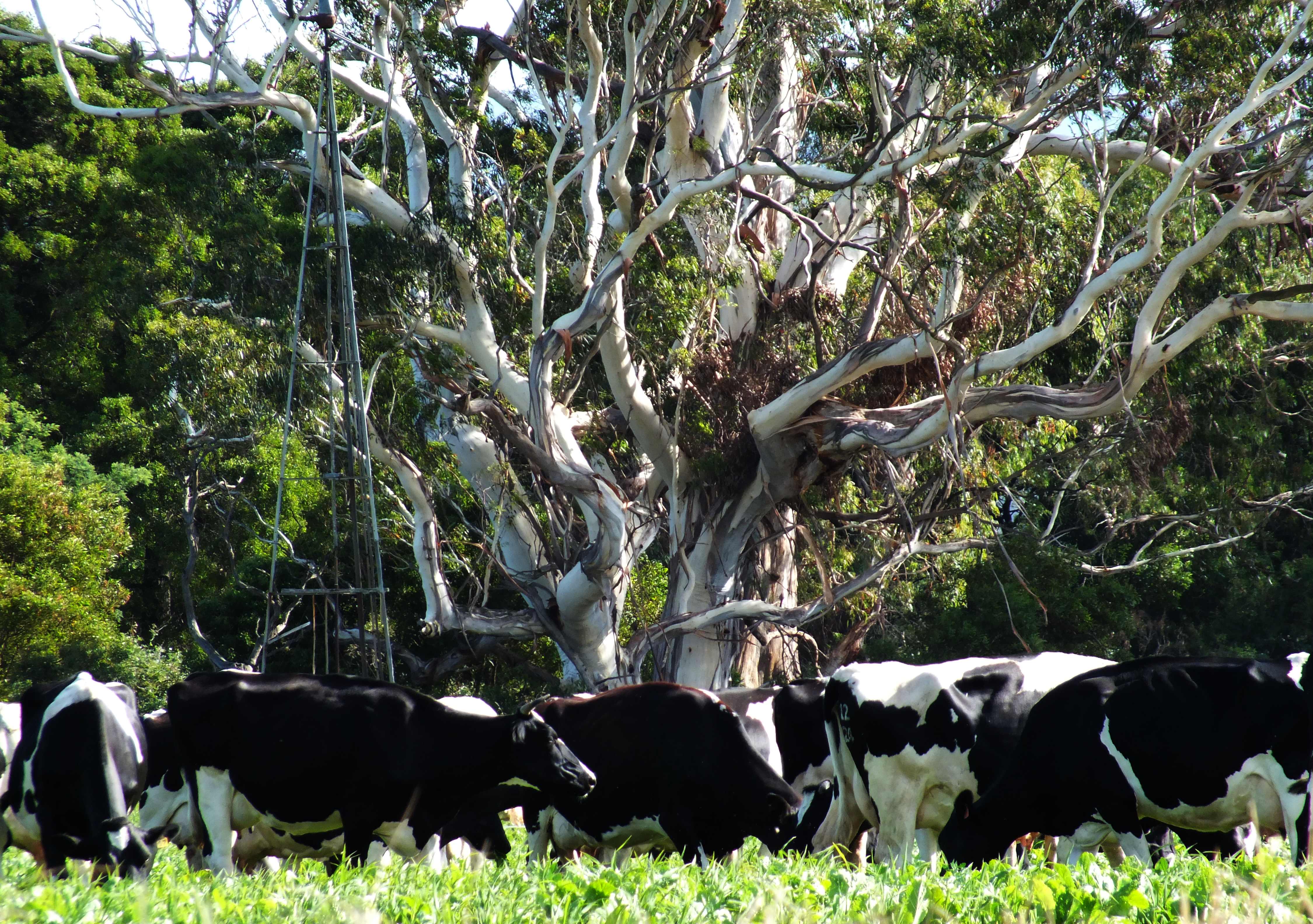
Grazing the lush crop

Icy poles for cows

Believe it or not, each of our dairy cows gives off body heat equivalent to a 1500-watt hair dryer on a hot day. Yet, incredibly, each still made an average of 29 litres of milk for us yesterday. We nursed them through with some very careful planning based on the principles of the Cool Cows program.

  • Wayne got up an hour earlier to milk before the sun’s rays began to sting and milked two hours later than usual. This meant that the cows spent less time in the sun on the concrete yard waiting to be milked.
  • We hosed the whole yard down about 45 minutes before the afternoon milking. It’s amazing how much cooler the yard felt afterwards.
  • The yard sprinklers were activated as the cows came towards the yard. (You remember the fun of dancing through sprinklers on the lawn!)
  • The cows’ diet changed a little for the day. The cows got a little more grain, a little more green crop and a little less hay yesterday. It takes more energy to digest high-fibre foods, which adds to heat stress. Rather than feeding out the hay during the day, Wayne stayed up late and offered the cows a “night-cap” in the relative cool of the evening.
  • We chose the coolest paddock on the farm, ringed by the deep shade of mature willow trees.
  • On a hot day, dairy cows can slurp up a staggering 250 litres each. Our extra-large troughs ensured they had plenty of fresh, cool water to drink when they chose to emerge from their hideouts.

Poor girls. According to the Cool Cows program leader, Dr Steve Little, dairy cows start to seek out shade when it gets to about 25 degrees C. I think the farm’s cows, dogs and humans all felt the need to go into summer hibernation yesterday.

Farm meets laboratory

It takes a lot of science to make our dairy farm tick these days. Our place is no factory farm either. With around 250 free-range milking cows, it’s a very typical Australian dairy farm.
Yet, only today, I have been keeping four different labs busy:

Environmental lab: what’s in our water?

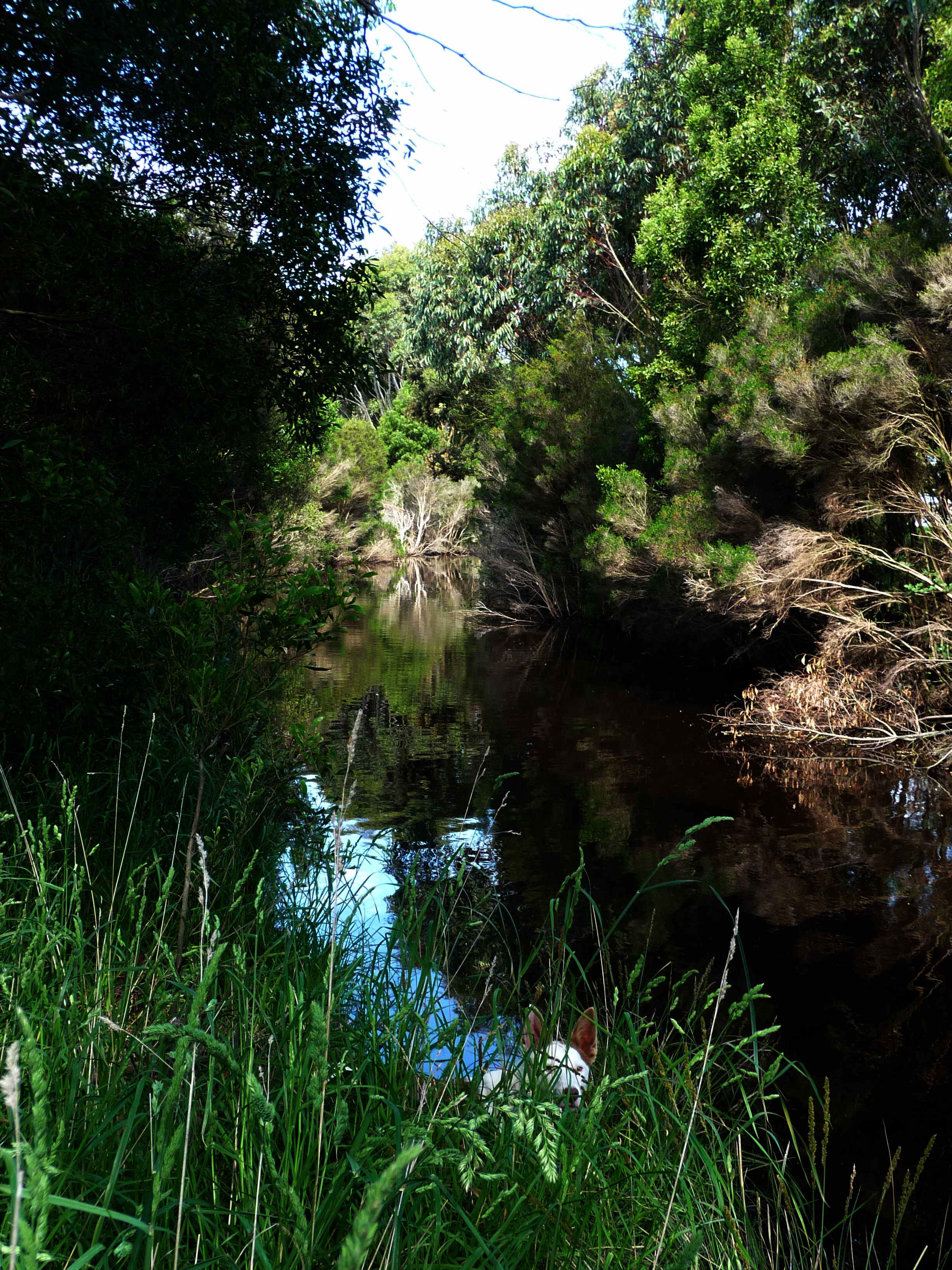
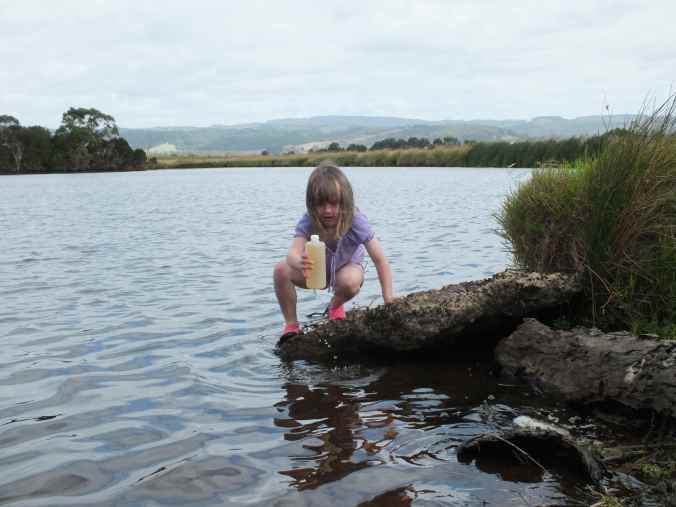
Sampling water from the farm dam

Don’t fall in!

We’re considering moving the water supply from the river to the dam but need to be sure the water is up to scratch first. While we don’t irrigate our farm, we need high quality water for the cows to drink and to keep the milking machinery hygienic and sparkling clean. We’re having it tested for minerals and nasty bugs like e-coli.

Animal health testing lab – looking for hand grenades in the grass

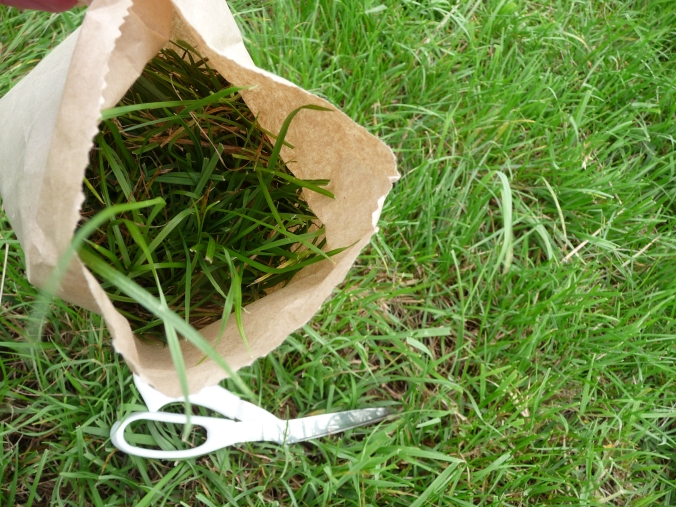
GrassClippingsOur farm has volunteered to be a ‘sentinel’ for the spores that cause the life-threatening condition of facial eczema. Collecting samples from a couple of paddocks only takes a few minutes but it could save hundreds of cows untold suffering.

Dairy nutrition lab – feeding the bugs that feed the cows

Yesterday, someone on Twitter asked Dr Karl how cows manage to get fat on grass while humans lose weight on veggies. The secret lies in four-chambered guts filled with life-giving bugs that do a lot of the work for the cows.

Our bovine ladies are athletes – each gives us around 7,000 litres of milk per year – and they and their bugs demand nothing short of perfection from us as chefs! Feed reports allow me to balance the cows’ diets with the right mix of fibre, energy and protein.

Soil nutrient lab – getting the dirt on our soils

Soil data allows me to apply the right fertiliser in the right amounts to the right places – lifting the productivity of our farm, reducing costs and preventing leaching into the river. I test the soils of all our paddocks every year. Some would regard that as wildly extravagant but a $110 test is nothing compared to the cost of a tonne of excess fertiliser.

Dairy farming is still the earthy, honest lifestyle it always has been but, these days, it pays to be a touch tech-savvy as well.

EDIT: Oh my goodness! Mike Russell (@mikerussell_) just pointed out that I forgot the bleeding obvious: the testing of our milk! It’s tested to an inch of its life – fat and protein content, sugars and cell counts are all tracked daily. Thanks Mike!

The dairy farmer’s calendar

Summer is the laziest time of year for a dairy farmer but when Wayne and I started writing a “to do” list yesterday, my head began to spin a little. Not satisfied with a mild head rush, I went on to draft a rough calendar:

The Annual Milk Maid’s To-Do List

Lazy Summer Days

  • Milk cows
  • Pay bills
  • Deal with crises (pump breakdowns are popular this season)
  • Begin drying cows off for their annual holiday
  • Make hay
  • Have we conserved enough fodder? Consider buying more
  • Begin feeding silage, crops and hay
  • Return cow effluent back to pastures
  • Spend a day changing rubberware in the dairy
  • Control blackberries
  • Vaccinations, drenching, branding, preg testing
  • Big maintenance projects (the stuff you put off the rest of the year)
  • Dream of the next Great Leap Forward

Autumn Anxieties

  • Milk cows
  • Pay bills
  • Deal with crises (milk quality issues popular this season)
  • Continue drying cows off for their annual holiday
  • Special feeding regime for expectant cows
  • Welcome and nurture new calves
  • Test soils for nutrient levels
  • Repair cow tracks
  • Sow new pastures
  • Fertilise pastures
  • Return cow effluent back to pastures
  • Chase revegetation grants and order trees
  • Maintenance
  • Still feeding silage and hay
  • Nude rain dancing in full swing

Winter Woes

  • Milk cows
  • Pay bills
  • Deal with crises (calving emergencies popular this season)
  • Welcome and nurture new calves
  • Fence and spray areas for revegetation
  • Spend a day changing rubberware in the dairy
  • Feed three groups of cows different rations
  • Mating program in full swing
  • Consider another drenching
  • Buy new gumboots and practise rain dancing in reverse
  • Redo budgets after milk factory announces opening price
  • Keep chin up

Supercharged Spring

  • Milk cows
  • Pay bills
  • Deal with crises (unpredictable weather popular this season)
  • Train the new members of the herd
  • Visit the accountant (and maybe the banker)
  • Fertilise, fertilise, fertilise
  • Vaccinate and wean calves
  • Thoroughly clean and disinfect the calf shed
  • Plant trees
  • Control thistles
  • Make silage
  • Sow summer crops
  • Make grass angels

I know I’ve missed stuff – lots of it – but it should give you an idea of what happens day-to-day and season-to-season on our very average Australian dairy farm. So, dear Reader, as we head into 2013, what do you want to know more about?

Not because I’m a nasty farmer

A grainy video of people holding their children down while they were being stabbed with pins would cause outrage around the world…until someone explained they were lucky kids receiving lifesaving vaccinations.

It’s a similar thing with farming and that’s one of the reasons I write a dairy farmer’s blog – so you have the explanations about our practices that you deserve.

Since I started writing Milk Maid Marian almost two years ago, I’ve had people express their relief about the truth about all sorts of topics but one that never seems to go away is: “why do you take the calves away from their mothers?”.

The reasons why we raise the calves away from the herd are compelling. And, if you thought the risk of animal wasting disease, Bovine Johnes Disease was remote and a poor justification, read this heart-breaking news story about a Queensland cattle station, where BJD is new.

Farmers are cautious, yes, but it would be cruel to be anything less than scrupulous about the way we raise our youngsters, don’t you think?

Who are these billabong refugees and what are they doing?

The job had got to that point where you have to stop for a minute and stare at it, just to ‘process’ its sheer enormity. Before me was a truly terrifying tangle of high tensile wire that had pleased the contractor by wrapping itself around the ploughing discs.

The knot was about the same size as the Bobcat and, without safety glasses for little Alex (do they make safety glasses for toddlers?), I had to accept that the wretched thing was going to beat me.

With the dawning realisation of defeat came the sound of something equally beyond the realms of reality: a babbling waterfall coming from the gully billabong. A very nice and very timely distraction.

The fish had gaping golden lips and flashy golden bellies to match. Each seemed about 2-feet long and oh-so-muscular. I may be a piscean but I know nothing about fish. Perhaps this group of half a dozen or so monsters are the dreaded carp, washed into the gully during one of this year’s floods. And what are they doing? Breathing or breeding?

Carp are considered the lowest of all fish around here: categorised as “noxious fish” by the Department of Primary Industries for the environmental damage they cause while being pilloried by cooks and anglers for their muddy taste.

But perhaps Charlie Carp deserves better. The big fish make excellent organic fertiliser and, according to one account on ABC Radio, might be alright on the menu if we Aussies learned the secret to eating carp.

Anyhow, the whole fishy dancing performance went on for five minutes and would have lasted longer if not for Patch. Yes, our most accident prone pooch had to investigate and was so intrigued, he forgot he couldn’t walk on water. Turns out he’s not that good at swimming, either. Crazy dog!

Patch had to come and take a look

Shame I missed the “after” pic. The memory card was full of fish video and photos. Patch isn’t the only silly one.

The working dog from St Albans

Patch Rounds Up The Yearlings

I was born to do this

Patch runs rings around them - literally.

Just look at his face. When Wayne collected Patch from suburban St Albans this Easter, it was clear he was a working dog breed (or three) but I doubt his rescuers from Homeless Hounds would have envisaged this. Only problem is, he likes it too much.

It took me nearly half an hour to retrieve him from the yearling paddock and when he decided to round up Zoe yesterday, I decided something had to be done, and fast. You must not, cannot let a working dog get out of control, no matter what.

I called Paul Macphail of Beloka Kelpies for help and, 20 minutes later, Zoe, Alex, Patch and I were in training at his school in Welshpool. Paul quickly summed Patch up as a tad “arrogant” and swiftly put him in his place. I have not been a tough enough boss.

A litte while later, Patch, who had never seen a sheep before, was in the pen working a mob and then in the paddock masterfully bringing another (albeit rather tame) mob back to Paul. Just like Babe, really. Pig dog turns hero. “He’s a natural,” says the laconic Paul.

I am so impressed, I will be back at Paul’s with Patch in a week to see if I he will reach his calling as a semi-automatic dairy cow rounding up dog with the speed of a cheetah and the gentleness of a dove.

People and animals tell the farm’s story

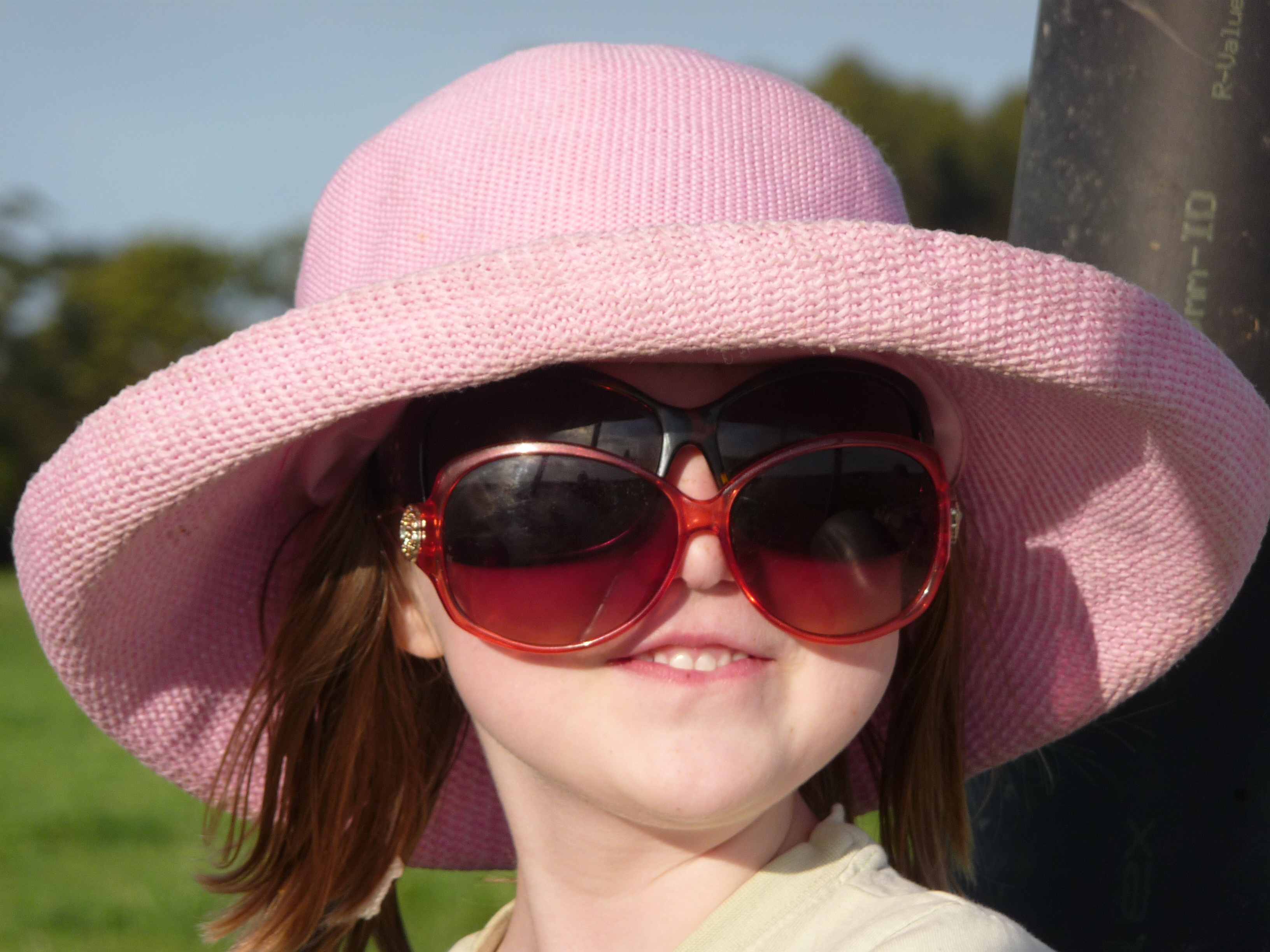
This was Zoe on the Bobcat as I moved the electric tape in paddock 6 on Friday. It really was sunny enough to dig out the zinc!

Yes, two pairs of oversized sunglasses are apparently “hot” right now

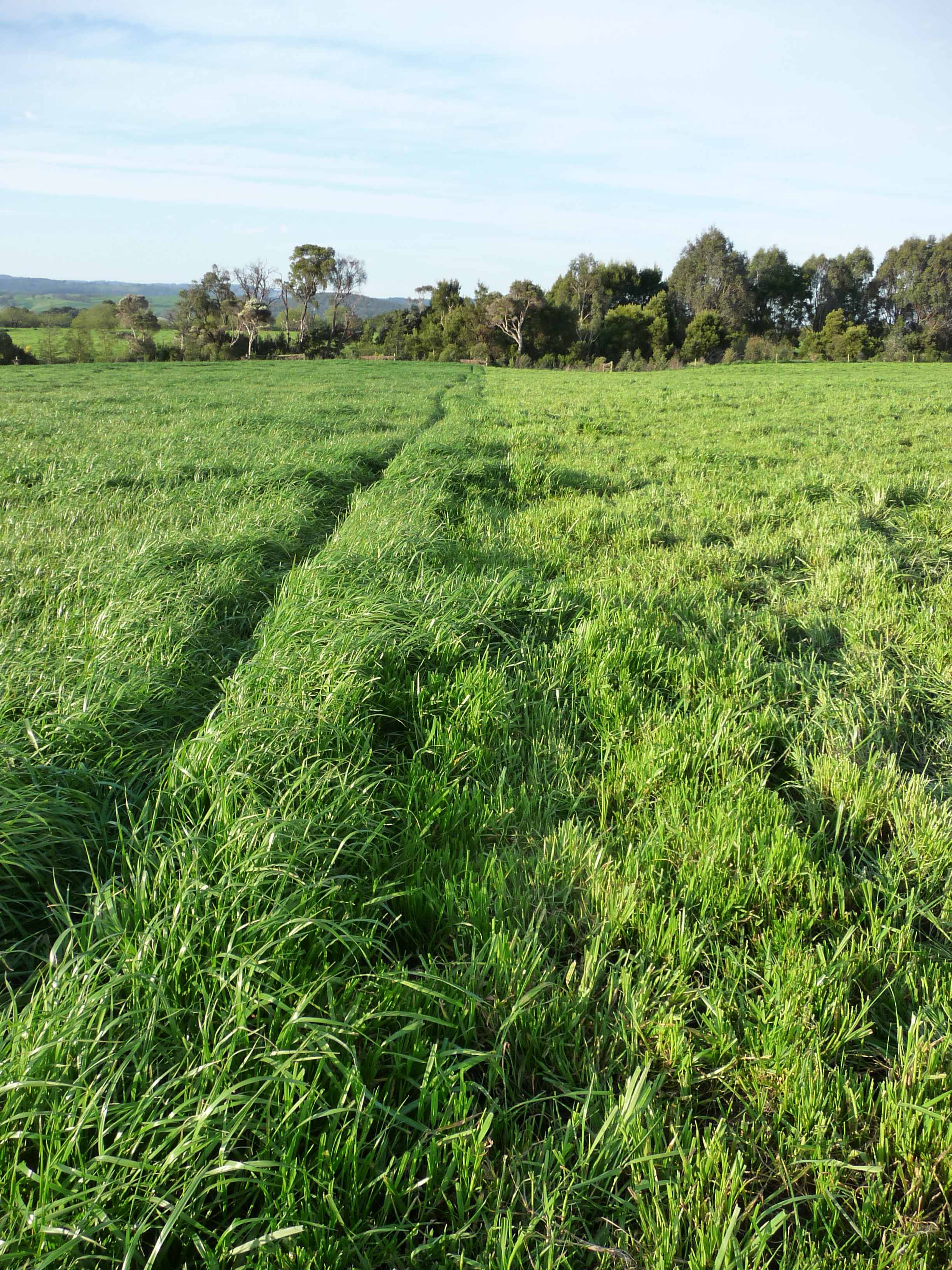
I’d been away from the paddock for a week and things had got away. It’s newly sown to a high performance grass and zoomed off once the saturated soil turned to plasticene over a balmy few days. We had to get the cows in at once if there was any chance of keeping grass quality levels up over Spring.

At this time of the year, it’s really important to divide the paddock into small strips. Let them into the whole lot at once and most will be wasted as the engorged cows make nests to sleep it off. The trick is to have the cows absolutely full to pussy’s bow, but only just. It’s good for the cows, good for milk production and good for the grass.

The grass on the right has just been grazed, the grass on the left is for dinner

Grass growth will have come to a skidding halt over the last couple of glacial days though. Everything is mushy and muddy all over again. Including Patch.

Whadda you mean I can’t come inside?


First day of spring and the bulls are a-leaping

It’s officially the first day of Spring in Australia and it feels like it, too. This was the view from the garden this morning. I almost wanted grass on my rice cakes!

House paddock

Welcome to Spring!

The cows seem to feel it, too. They play “butter-heads” (as Zoe calls it) at almost every turn and are shedding their scruffy winter coats, revealing glossy new hair underneath. The male of the species, I must say, is also enjoying himself.

We run three bulls with the herd while resting another group of four at any one time because it’s hard work jumping on cows all day (yes, I know what you’re thinking). There was a change of shift for the bulls this morning and I thought I’d capture a little of the courting game for you.

The first bull opened with an impressive display, enrapturing the cows, well not quite…Oh dear – I have a video but YouTube is taking all afternoon – sorry. Let me put it this way, while Buster bull roared, sang and dug up dirt, the cows simply continued to eat. I told you the grass was good!

The next step is to have a good sniff of everyone.

Sniffing bull

Ooooh, you smell gooooohd!

The curled lip is called the “Flehmen Response” and shows the bull thinks she might just be “in the mood”.

Sadly, she wasn’t. He got it wrong and she quickly scurried off. Oh well, Bully Boy, better luck next time!

O-week for a young cow

The first member of the class of 2012 has calved and she’s lovely! To help her learn the ropes, we’ve had her with the milking herd for a couple of weeks prior to calving. The noises of the dairy are already familiar and the dinner served during milking must have been divine because she only kicked at the cups once – even though it’s the first time anyone’s handled her teats, let alone milked her.

That’s a big deal for us as farmers. A quiet cow is a happy cow and that means she lets down her milk readily and is less likely to suffer mastitis. And we are less likely to get hurt. In the dairy, we have to reach between the powerful hind legs of 550 kg cows, 500 times a day. Getting kicked can mean broken fingers, hands, arms and faces.

Anyhow, this young cow is a pretty cool customer, even when being pestered by a silly pup who wants to slurp up some delicious cow poo (never let a farm dog lick your face).