Let them eat cake

Good quality hay is like bread. Dairy cows love it for its balance of fibre, energy and protein. This winter, you cannot buy good quality hay for less than a king’s ransom, if you can buy it at all. So, with none to be had, we’ve been forced to get creative, introducing three different delicacies for the cows.

Almond hulls
At first, I wondered if the cows would ever eat this stuff. The smell is nice but almond hulls look like a mix of sawdust and fine wood chips.

Delicacy of the day: almond hulls

Delicacy of the day: almond hulls

Each cow gets an average of 5kg of the hulls each day but, judging by the way they wolf it down, I reckon they want more!

The 5 o'clock swill

The 3 o’clock swill

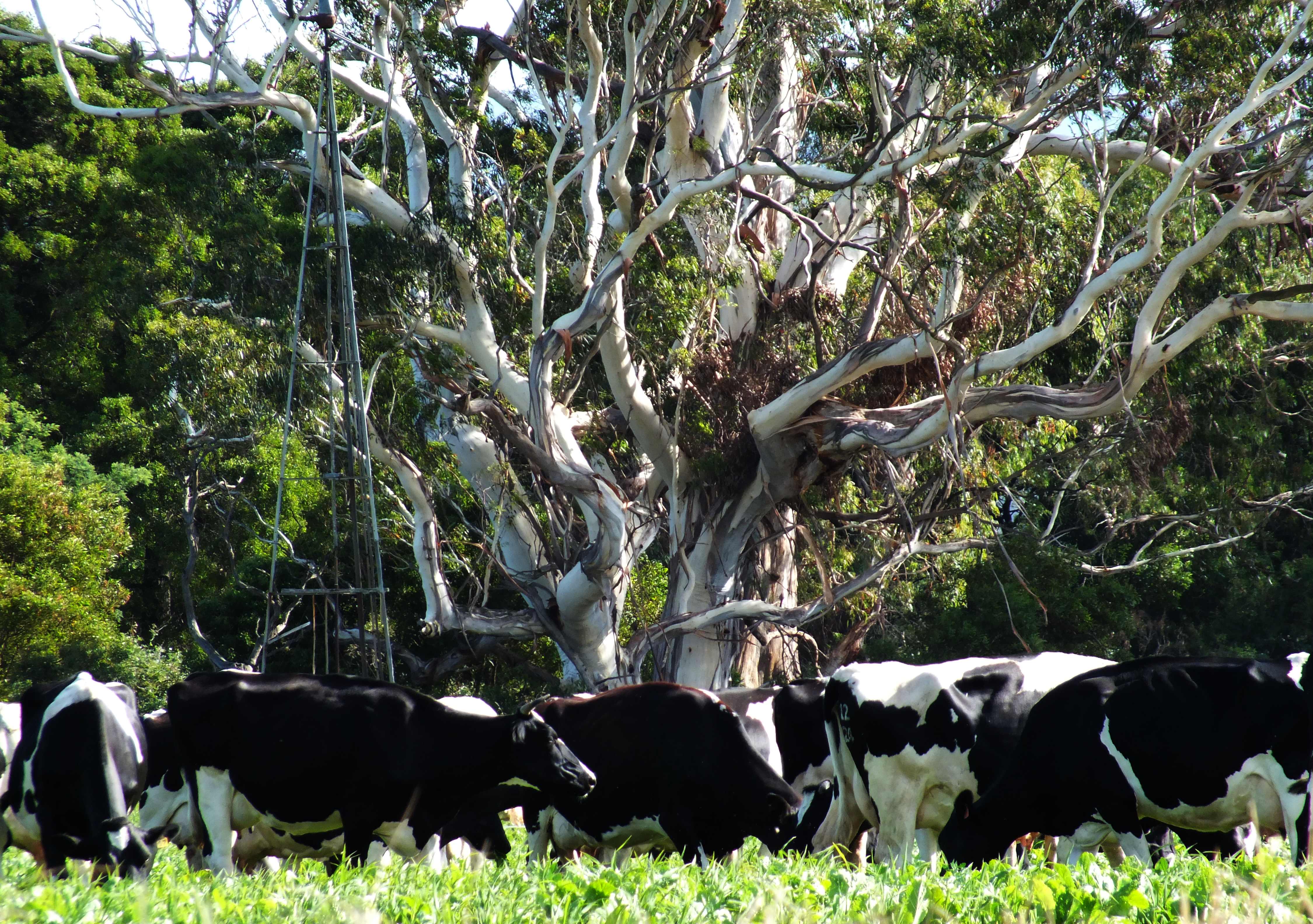
Trying to push the cows past a heap of almond hulls is like trying to push back the tide. Run one side of the ring and they’re already attacking the side you just left. Not because they’re starving, either. The cows are getting lashings and lashings of energy and nutrient-rich food – they just love the stuff!

Mmmmm, delicious

Mmmmm, delicious

Straw for scratch fibre
Although the almond hulls are fibrous, the cows need long fibre to wake-up their complex digestive systems, so they’re getting a couple of bales of straw as well (though they like to use it as a luxurious mattress, it seems).

Goo for the good bugs
Also new to our cows is a special brew delivered in fancy red tubs. A mixture of molasses, non-animal protein and minerals, the goo is not really for the cows. It’s for the bugs that digest their food in one of those four stomach chambers called the rumen. The idea is that the “goo for good bugs” turns them into super-bugs that can release the maximum value from everything the cow eats.

It’s a sweet-and-sour mix designed to stop the cows gorging themselves on the goo but they still seem to enjoy a generous swig on the way in and out of the dairy!

RedTrough

Grain for breakfast and dinner
The cows continue to enjoy two sittings of corn, barley, wheat and minerals each day during milking.

Most important of all – juicy, juicy grass
Despite all the other stuff on the menu this winter, nothing is more important to our cows than grass.
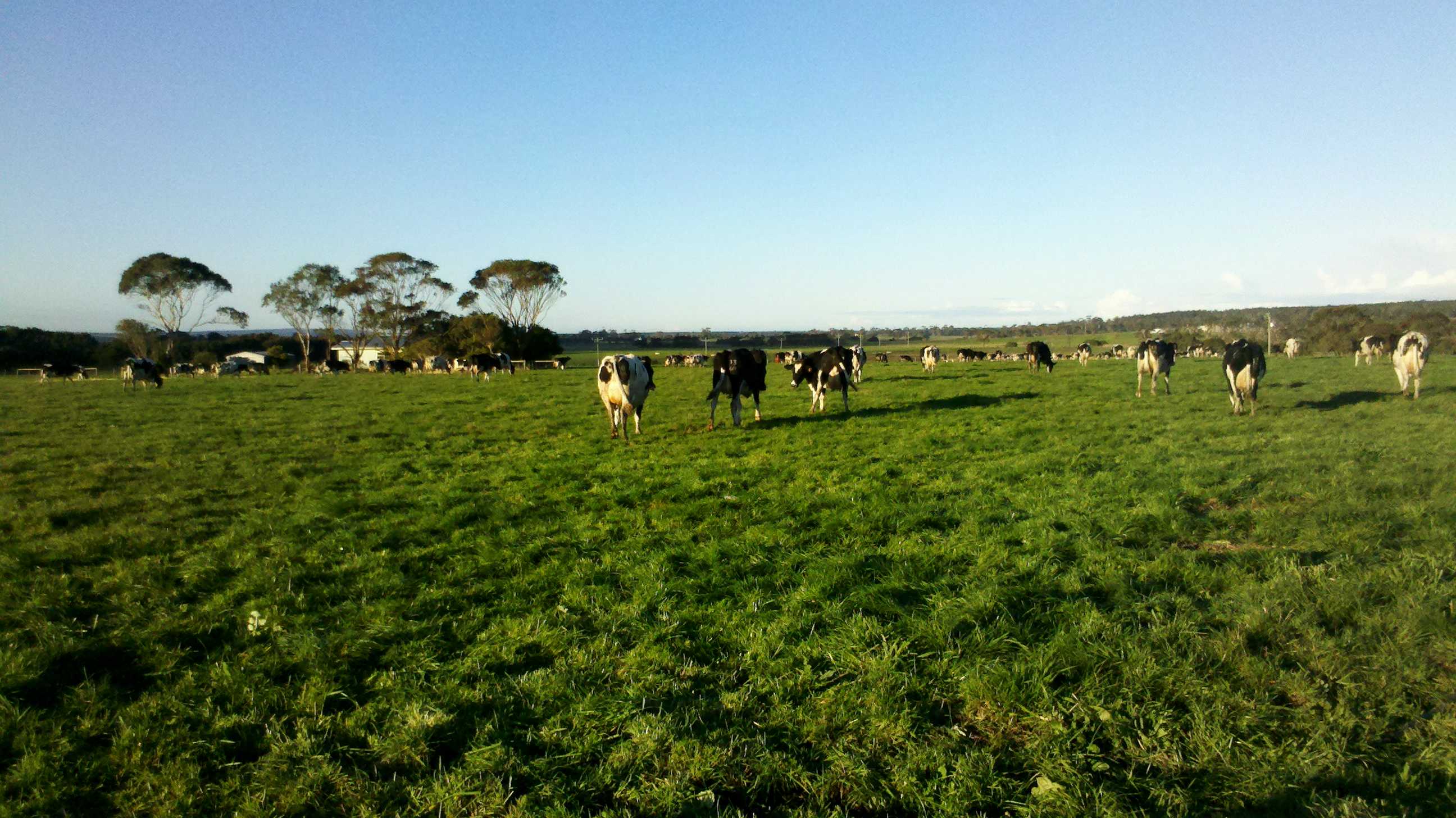
WintryPasture

Are they missing their hay? I think not.

The silver lining to the big dry

FloodJune14Std

I thought we’d “only” had 93mm but it was actually more like 144mm (that’s more than 5 and half inches) in three days. Normally, that would have been a massive disaster. Instead, it’s moderate flooding and, so long as the weather gods hold their tempers for a while, we’ll have dodged a bullet.

Such a relief.

I put our narrow escape down to the lingering effects of the exceptionally dry summer and autumn of 2012/13. While the pastures were green last week, you only had to dig down a few inches before the soil became very dry. The catchment sopped up most of this rain like a giant jade sponge before it got to the waterways.

The weather bureau is forecasting a warmer and wetter than average winter and although it has very little confidence in that seasonal rainfall outlook, the forecasters are actually very good at predicting temperatures. A warm winter would be welcome indeed. Fingers crossed!

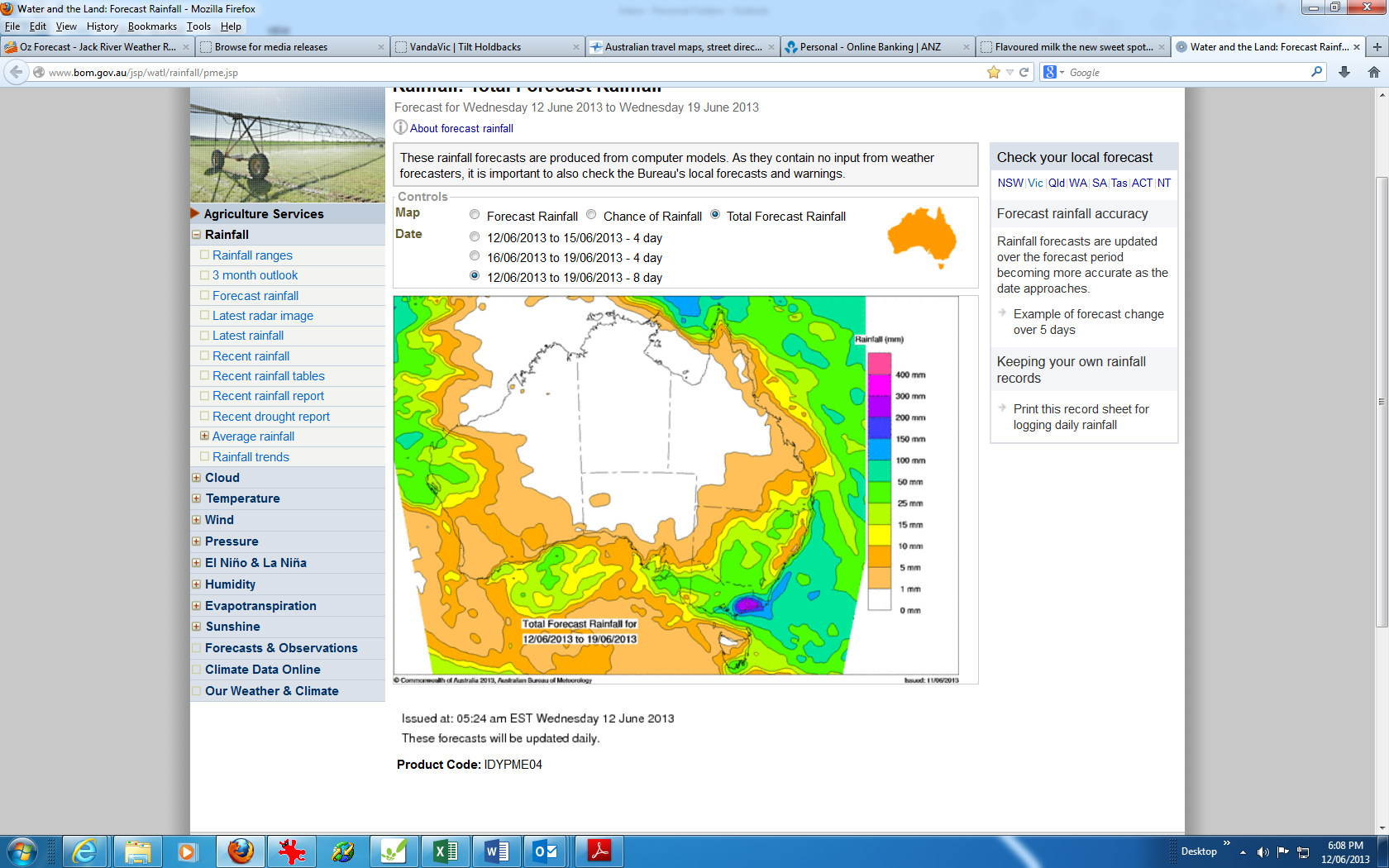
A purple blister on the weather map is coming to get us

Holy cow

Holy cow

It’s not a good sign when the local weather forecaster gets a spot on ABC Radio’s National news. Our forecast is so shocking that, yes, it made headlines today.

A massive chunk of Victoria is about to go underwater and, with it, a massive chunk of our farm. We’ve had an inch of rain in the last two hours and the prediction is for between 51 and 102mm tomorrow, followed by another 20 or 30mm over another couple of days.

I’m thankful for the undulations at the southern end of the farm. The cows will at least be safe.

I’m also thankful for the Bureau of Meteorology’s timely warnings. It gave us time to:

  • Set up safer paddocks for the cows
  • Ask Scott, the grain merchant, to deliver more feed before we get flooded in
  • Remove the power units from the electric fences on the river flats
  • Bring all the eight new calves born during the last 48 hours into the warmth of the poddy shed
  • Stock up at the supermarket
  • Pile the verandah high with dry kindling and wood to keep the kids warm

As the flood sets in, we’ll be:

  • Offering extra TLC for newborns and freshly-calved cows
  • Feeding out more of our precious and rapidly dwindling stock of hay while hitting the phones looking for more ridiculously scarce fodder
  • Keeping an even keener eye out for mastitis
  • Walking the cows extra gently to the dairy to reduce the risk of lameness
  • Hoping like hell that the damage to the fences and tracks isn’t too bad
  • Monitoring the condition of paddocks to minimise pugging (mud, mud, mud)
  • Stocking the dairy snack bar with a bottomless supply of soup and raisin bread

It’s often said that good farmers only worry about what they can control. I’ll do my best!

Changing down to go up a notch

It seemed Mother Nature had played a classic nasty trick on us: the false break.

Each autumn, we take a punt on when the first downpour that heralds regular rains has arrived. Too early and some seed just won’t germinate costing us thousands in fresh seed and fertiliser, too late and we could miss out on autumn growth altogether, costing us thousands in replacement feed.

We get it right most of the time but when the early rains aren’t followed up with more, we end up with the worst of all worlds: seedlings shrivelling in the sun. That’s the way it was shaping up this season until we got 26mm of rain just the other day. Wow, what a relief and what a difference it makes.

The rains have come and the farmer and her cows are ecstatic!

The rains have come and the farmer and her cows are ecstatic!

Oddly enough, this means the cows will get less rather than more grass in the short term. This follow up rain was our signal to pile on the fertiliser across a huge slab of the farm to ensure the grass gets ahead before falling temperatures and longer nights slow growth once more. While the fertiliser does its job, we have to keep the cows away, limiting them to a smaller than normal area for grazing.

Just another couple of weeks to go, moos – until then, it’s a smorgasbord of grain, hay and silage.

A very special present from a dairy farmer’s son

Our new pastures were sown in the rain into lovely moist soil the first day after Easter. Nothing’s come up yet and although the farm is pretty green, it’s stopped raining! I can’t help checking in on the forecast every day hoping that a deluge is on its way.

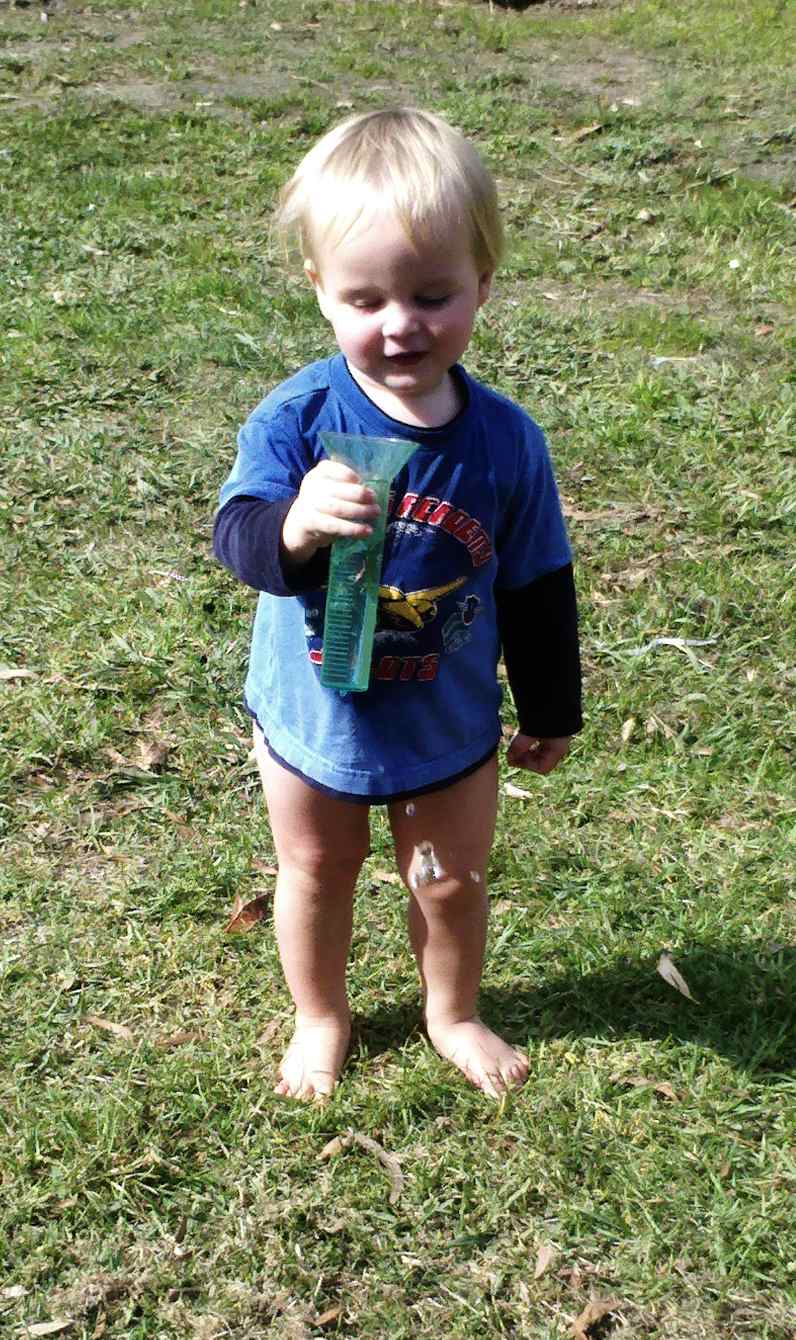
Even one-year-old Alex seems to know how exciting a trip to a full rain gauge is during Autumn and, this afternoon, he arranged a special present for me.

"Mama! Mls!"

“Mama, Mama! Mils!”

Alex ran up with the “rain” he’d prepared, shouting “Mama, Mama, mills!”.

“How much?”

“Four!”

“Great work, Alex, keep it up!”

Our farm is rain-fed rather than irrigated and I must admit that I often look enviously across the valley towards neighbouring farms soaking in water during summer and critical times like these.

Typically, Aussie dairy farmers also daydream of the seemingly perfect New Zealand climate. While Australia’s dairy exports stagnated during our 12-year drought, Kiwi exports soared. This year is different. The Kiwis have had a drought of their own and without a grain industry to help them maintain their cows’ diets, milk production has plummeted.

It’s a cruel irony that the misery of our Kiwi counterparts has already begun to see the international milk prices rise and with it, our hopes for the next season.

Is autumn really here? No, it’s coming, so cows are going

AutumnLeaf

Golden leaves carpet the farmhouse driveway. Yes, it’s autumn at last but I’m not sure whether the ash are superbly tuned into the seasons or simply too water stressed to hold onto their leaves any longer. The crisp autumnal mornings are yet to arrive – it was already 26 degrees Celsius when Alex and I checked the weather outlook just before six this morning – and the farm is again desperately dry.

But a dairy farmer is always planning ahead. Last weekend we sent a handful of cows on their annual two-month maternity leave, with a dozen or so more to join them in a fortnight.

The summer millet crops are getting their final grazing today and tomorrow so we can prepare for sowing new perennial pastures when the “autumn break” finally arrives. We’re testing the soils of each paddock so we can apply just the right levels of nutrients – enough to maintain fertility without risking leaching into the river or water table.

In anticipation of rain (and mud), our cow tracks are also about to get a makeover to help prevent two of the most troublesome afflictions for dairy cows: lameness and mastitis.

Autumn is the time when dairy farmers lay the foundations of a successful season and it’s strangely exciting. I wonder what will mark this year?

And the rollercoaster goes up!

This was the farm 48 hours ago. Shrouded in smoke from the bushfires, the place was tinder dry.

January 25

January 25

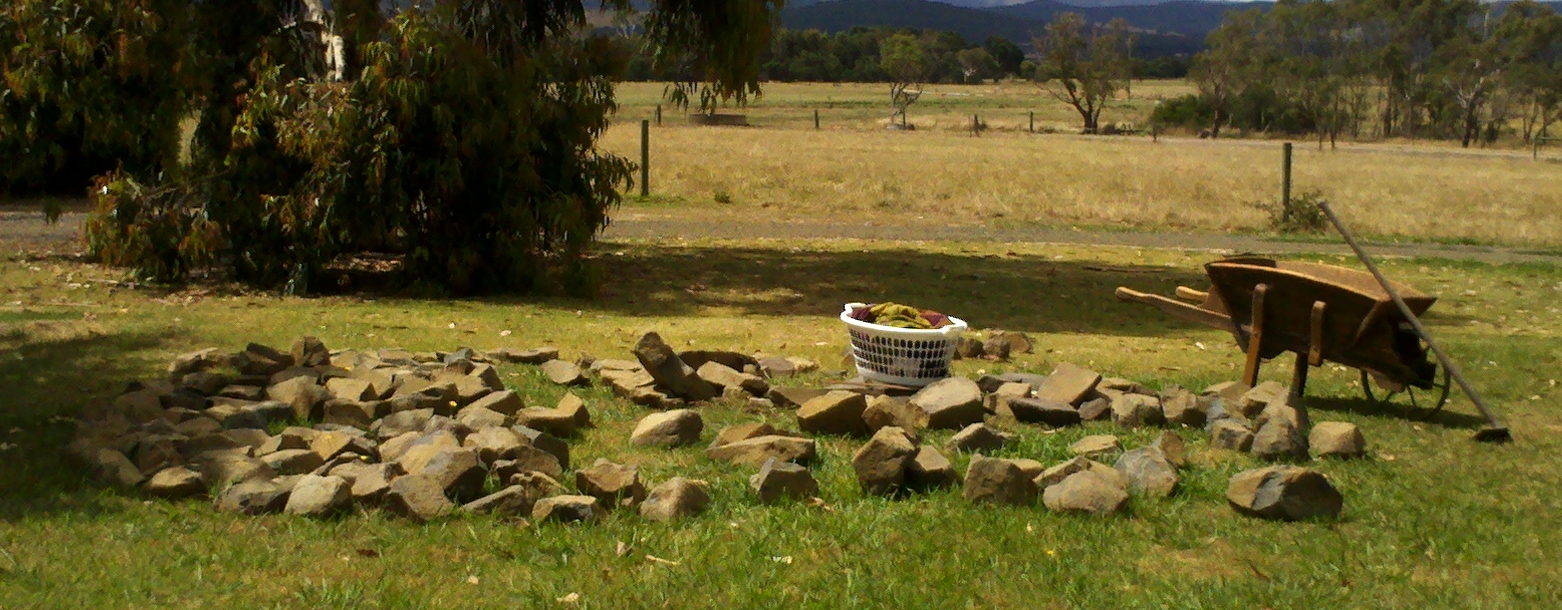
I went to bed last night with 4 inches of water in the house tank and hoped like hell that the easterly over Bairnsdale would grace us with its presence. We had gone all out, after all. The cairn dedicated to Thor is almost complete, the washing line was full of dry clothes and, to top it off, Wayne left the quad bike in the centre of the lawn with his helmet upturned like a giant goblet, ready to receive the sacrament.

Thor delivered.

Almost 18mm of gentle rain!

Almost 18mm of gentle rain!

There is not a puddle to be seen but the place smells wonderful and the plants are already responding.

What a difference 12 hours makes

What a difference 12 hours makes

We had to celebrate!

The Thor Cairn was the perfect place to celebrate and pay homage

The Thor Cairn was the perfect place to celebrate and pay homage

What makes this rain even more special is that there is more rain forecast over the next week and not a day over 30 degrees. The cows will love it! Can’t wait to snap another panorama at the end of the week to see new life breathed into the farm.

Project “Thor”

After a record wet winter followed by a fleeting Spring, it hasn’t rained here in a long time.

In fact, despite several attempts at emulating the Sioux rain dance ritual shown in the remarkable footage (bear with it, not all stills) below, we have had little success – other than the 2.5mm of rain we got after our fourth performance a week ago, there’s been nothing in the gauge for a few weeks now.

Perhaps the problem lies in our execution. Since the materials used by the Sioux are not all readily available here in Australia, we have been forced to improvise with picnic blankets, turquoise hayband, the feathers of wedge-tail eagles, dyed hessian sacks and rubber boots adorned with eucalyptus leaves and shells.

We are getting desperate and it shows.

Under construction: will Thor be impressed?

Rain Dance Ampitheatre under construction

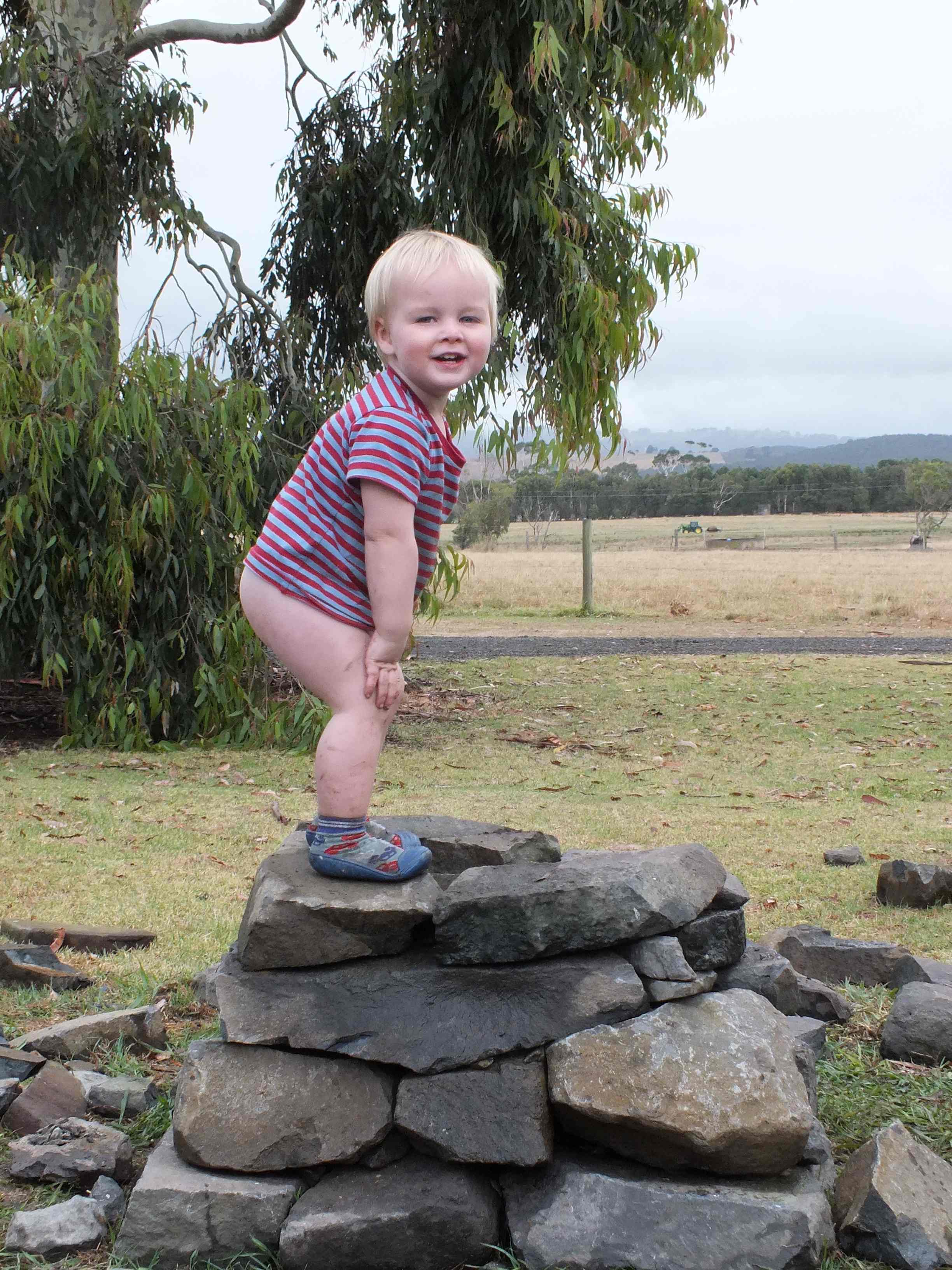
Drawing upon my husband’s Scandinavian heritage, I am building a stone amphitheatre to honour Thor with a special sacrifice: a washing basket full of damp linen. With a toddler in the midst of toilet training and the truly spectacular laundry that makes our dairy-farming family infamous, you’ll understand the meaning of such an offering.

I know I must show total faith in Thor’s generosity but any tips would be gratefully received.

Hot milk

Remember yesterday’s 41 degree Celsius heat? Now, imagine you were standing outside in it being blasted by 250 1500-watt hair dryers. How do you feel now? Ready to do athletics?

Grazing the lush crop

Icy poles for cows

Believe it or not, each of our dairy cows gives off body heat equivalent to a 1500-watt hair dryer on a hot day. Yet, incredibly, each still made an average of 29 litres of milk for us yesterday. We nursed them through with some very careful planning based on the principles of the Cool Cows program.

  • Wayne got up an hour earlier to milk before the sun’s rays began to sting and milked two hours later than usual. This meant that the cows spent less time in the sun on the concrete yard waiting to be milked.
  • We hosed the whole yard down about 45 minutes before the afternoon milking. It’s amazing how much cooler the yard felt afterwards.
  • The yard sprinklers were activated as the cows came towards the yard. (You remember the fun of dancing through sprinklers on the lawn!)
  • The cows’ diet changed a little for the day. The cows got a little more grain, a little more green crop and a little less hay yesterday. It takes more energy to digest high-fibre foods, which adds to heat stress. Rather than feeding out the hay during the day, Wayne stayed up late and offered the cows a “night-cap” in the relative cool of the evening.
  • We chose the coolest paddock on the farm, ringed by the deep shade of mature willow trees.
  • On a hot day, dairy cows can slurp up a staggering 250 litres each. Our extra-large troughs ensured they had plenty of fresh, cool water to drink when they chose to emerge from their hideouts.

Poor girls. According to the Cool Cows program leader, Dr Steve Little, dairy cows start to seek out shade when it gets to about 25 degrees C. I think the farm’s cows, dogs and humans all felt the need to go into summer hibernation yesterday.