Alex was excited as he pulled on his boots this morning. He had full custodianship of the big Dolphin torch and lit our way through the paddock to open the gates in time for the cows.
With the gates open and the track diverted, Alex checked the operation of the trough, just as the sun’s glow lit the sky.
The Little Man is growing up with the call of the farm in his blood, something that makes him unusual for Australian kids these days, something that’s a real privilege.
He doesn’t realise it yet and I suspect many of the Year 8 students I met today don’t, either. Two DEPI experts and I were part of a panel drawn together to help inspire a new generation to follow their passions and keep learning all the way through life. A lofty aim that’s somewhat daunting, for it took two tragedies to find my way here.
During the questions that followed, one boy illuminated the elephant in the room: “Is it better to get a job you really like even if it pays badly or should you go for one that pays really well?”
For me the answer is clear. While Lynne Strong is undoubtedly correct when she writes that an adequate financial reward is key to seeing more young people return to agriculture, it’s not the only thing. Profits support a passion but rarely do they invoke one.
A week or two ago on Twitter, CEO of NSW dairy body Dairy Connect Mike Logan made an intriguing reference to a “blueprint for NSW dairy”. There’s only a limited amount you can learn from the 140 characters of a tweet, so I invited Mike to elaborate on Milk Maid Marian and here’s what he had to say:
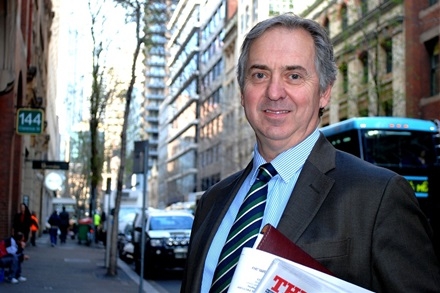
Mike Logan, Dairy Connect CEO
In the NSW dairy industry the issue is that the value chain is not adding value at the farm gate. Since deregulation the farmers have descended from being strategic partners in the value chain, to an input that must be minimised.
Perhaps this is similar around the rest of Australia – I am not qualified to say. However, it is easy to assume that the dairy model in NSW is flawed as we watch our cousins across the ditch (dutch) grow their businesses, convert sheepmeat farms to dairy and build new kitchens. (The ‘New Kitchen Meter’ is a reasonable measure of success in agriculture.)
It is also easy for the NSW dairy industry to look at the New Zealand dairy industry and suggest we should emulate their model of ‘one big co-operative’. Without doubt that is the best model in the world at the moment. I call it the United Soviet Socialist Republic of Dairy (USSRD) and Barnaby Joyce says that Fonterra is a Maori word meaning ‘single desk’.
As much as we would like to, we shouldn’t emulate their model.
Firstly, because we can’t. The legislation required would make the current budget look easy. Between Clive Palmer and David Leyonhjelm it would be a nightmare.
Secondly, it is because we need to think about the next model after New Zealand. What is better than the USSRD?
Our current model of the value chain in NSW dairy seems to look a bit like this:
Sort of messy eh?
The real problem with that value chain is that the farmer is held a long way from the representative of the consumer – otherwise known as the retailer. There are lots of ticket clippers, gatekeepers and a few value adders in the chain. There is not sufficient transparency and doubtful equity. The last person to make any money is the farmer.
So who is making the money?
Well, certainly the retailer. Here in Australia we have two of the three most profitable supermarkets in the world (Woolworths then Walmart then Coles/Wesfarmers).
Also the banks. The four most profitable banks in the Western world are right here. I needn’t name them. There are more profitable banks in China and Russia.
The distribution and transport sector is quite profitable. Linfox is not going out backwards.
Oddly, the processing sector in dairy is not making that much money. They are making more than the farm sector, but not an inordinate amount more. They only have about 25% of the capital invested when compared to the farm sector but they are mostly in control of the milk, its destiny and its value. They are the gatekeepers. The profit of the processors precedes the profit of the farmers.
So, what would a better model look like in NSW?
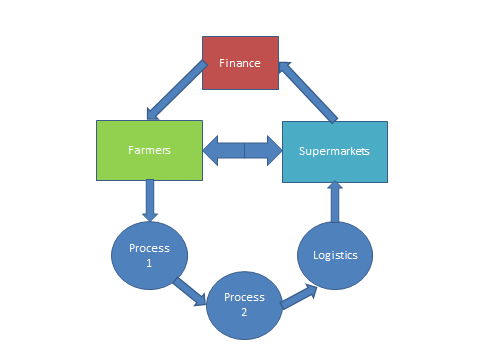
We suggest a value chain that is circular. We could call it a ‘value cycle’;
The most important part of the value cycle is that the farmers and the retailers are side by side. The needs and values of the farmers and the supermarkets align. They align because the farmers have a secure supply of a high quality product and the supermarkets need a secure supply of a high quality product. Both want transparency and equity.
The first time I saw the value cycle work in NSW dairy was with the Woolworths Farmers’ Own brand and the group of seven dairy farmers in the Manning. The farmers were told by their processor that they couldn’t get any more money from the supermarkets for their fresh milk. They were told how tough it is dealing with the supermarkets. To their credit, the farmers took the challenge and decided to find out how tough it is to deal with the supermarkets.
The processor was half right. It is tough to deal with the supermarkets, but there was more money available. Both the supermarket and the farmers got what they needed because their values aligned. The system is transparent and equitable.
If that is right here in Australia, is it right in the export market?
Yes it is. Along with Norco and the logistics company Peloris Global Sourcing, the NSW dairy industry facilitated by Dairy Connect has developed contacts in the retail sector in China for the sale of fresh milk. Again, the milk is worth more with a direct deal with the consumers. The model does work.
It is easy to scoff at the volumes for fresh milk to China, I will tell you that they are small but they are invaluable.
If we can deliver albeit small volumes of fresh milk into the fastest growing dairy consumer market in the world at a profit by developing direct relationships with the supermarket sector in China, then what is next?
Can we develop those relationships to deliver other NSW dairy products without having to enter the export commodity circus that is mostly controlled by the USSRD?
Of course we can. The NSW dairy industry is actively seeking investment and partnerships with the Chinese retail sector to access the infant formula market. Again, the processors are right, it is tough. The farmers in the Manning too are right; it will bring value back to the farm gate.
“Toto, I’ve a feeling we’re not in Kansas anymore.” – Wizard of Oz
Hayshed gets a makeover
Our dairy farm now boasts a hay shed roof that spans 20 acres. Bits of it, anyway.
We knew yesterday’s winds were coming, so had shifted the cows, heifers and calves to shelter.
The calves big enough to be weaned in the next couple of weeks were bunkered down in the hay shed when Mother Nature began her renovation work. Thankfully, none of them or the Maremmas who live with them were injured.
Nor were any of the yearlings who could have escaped through crushed fences Alex and I discovered during “border patrol” this morning. We count ourselves very lucky.
Every now and then you have a day like Friday, a day marred by a flat tyre, stripped wheel nut, machinery breakdowns and a string of bad luck.
I was scrabbling through my paperwork with Alex tucked in for his midday nap when one of our Holstein bulls ambled across the lawn past the cubby house.
As I watched in dismay, the one-tonne giant turned nonchalantly to scrub his massive head against the base of a tree. Until that moment, I’d decided to sit tight and hope he would settle in for a quiet graze until Little Man awoke. But head scrubbing is the first step in an avalanche of bullish destruction that, set in my treasured garden, is too awful to contemplate.
I rushed outside with flailing arms and a bark bigger than its bite. It was enough to distract Bos Perditor and buy me time to rustle up the Little Man.
The Little Man is always up for an adventure and woke with bright eyes when I explained that we were going bull hunting. “Bull hunting, Mama? Like the bear hunt, it’s a beautiful day?”
Bouncing into the Bobcat, we pursued Bos into the wilds of the windbreak, where he turned and faced me. In the ensuing standoff, I broke a flimsy stick over his broad head. Bos didn’t flinch. Simply stood, staring, and then in his own time, wandered out to the road back towards the gate he’d broken and his buddy. So far, so good, but then his mood changed and off he went down the road.
By now I was on foot again with another stick and managed to get in front of him as a 4WD rounded the curve and slowed. The bull sized me up, lowered his head and simply stood there.
I wasn’t scared, For I have never been afraid. Of anything. Not very.
This stick, too, broke across his poll without any effect as the 4WD glided by. Now I was getting desperate and ran back to Alex and the Bobcat – at 730kg, the machine weighs almost as much as the beast and makes a more formidable opponent than a flimsy middle-aged farmer.
But by then, the man in the 4WD had done something wonderful. He reversed, pushed the nose of his vehicle towards the bull and tooted the horn like he meant business. My heart leapt. Together, we could win this. Armed a little more meaningfully with a star picket, I marched up to Bos, who turned and swaggered through the gate to join his buddy.
I didn’t get to thank the 4WD driver wearing his Chubb uniform – apart from a smile and a wave – but by taking three minutes out of his day, he made mine. Sometimes, it feels like we’re living in a dog-eat-dog world but a scratch of trouble reveals beauty that lies just below the surface.
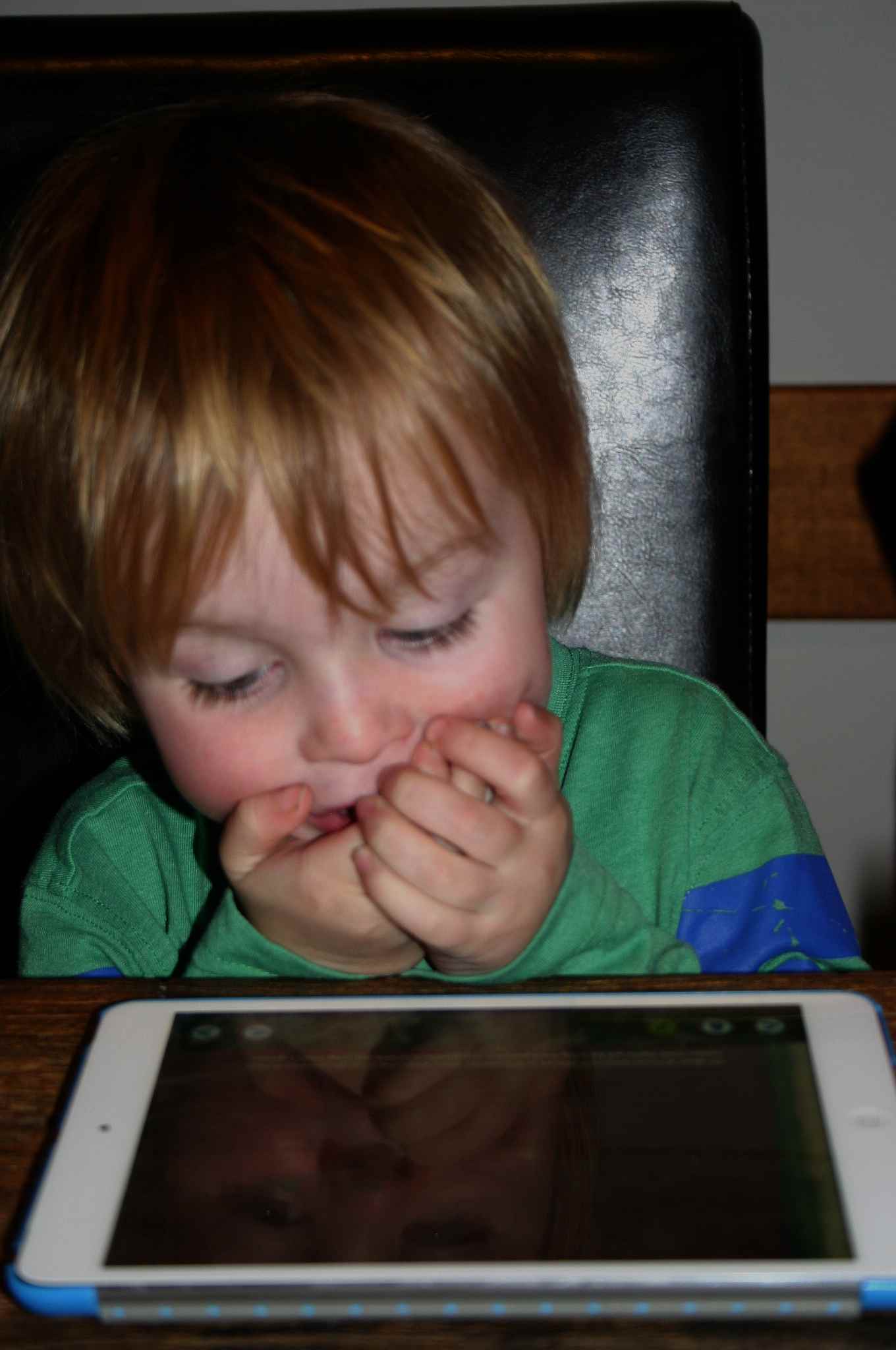
Before the sun was up this morning, 3-year-old Alex was gasping in horror as football-crazy “George the Farmer” missed a bleeping seed drill alarm.
“Oh no, there will be bare patches in the paddock,” the little fellow moaned.
“Oh no, there will be bare patches in the paddock!”
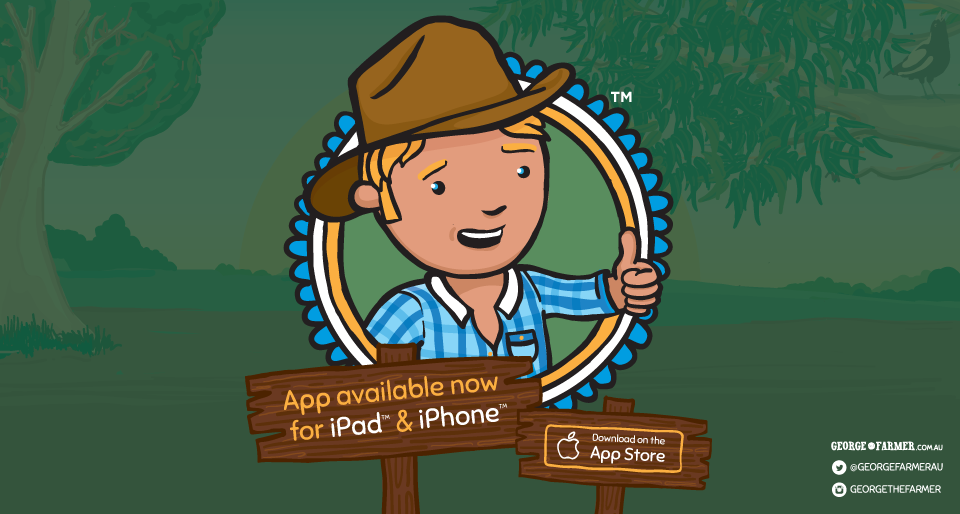
George the Farmer is the brand new app that transported Alex and eight-year-old Zoe to the Australian wheat fields. It brings farmers and other Aussies together in such a charming way and I wanted to learn more, so contacted George the Farmer’s creators, Simone Kain and Ben Hood.
The pair are partners in regionally based creative agency, helloFriday (based in the south east of South Australia) and both Simone and Ben grew up on farms.
Simone hadn’t been able to find any Australian farming apps for her then two-year-old son, George. So, making use of their creative skills over a two-year period when business slowed, they wrote, illustrated, produced an animated children’s story book and game App, which we downloaded at iTunes.
Here’s Simone’s story:
Q: Tell me about this interesting farming character.
A: George the Farmer is everyone’s friend. With his trusty dog Jessie by his side, George tackles the day to day activities of Australian farming life with enthusiasm, a can-do attitude and most importantly a big smile. Unfortunately George’s obsession with sports often plays havoc with not being able to finish jobs off in their entirety! Lucky for George, his beautiful and talented wife Ruby is always there to lend a helping hand. The importance and power of team work shines through in George’s Australian farming adventures.
George’s personality was modeled off of a few local farming friends traits and the stories that form George’s adventures have generally been created from issues that have arisen on my husband Justin’s, family farm. Whenever Justin arrives home at night and tells me about a problem that he’d encountered on the farm that day, I quickly pen down a new story line! The challenges that face George and Ruby closely reflect and make fun of the daily tasks that make up farming life, which makes it amusing not only for the one to eight age group, but adults alike.
Q: Why a farming character?
A: Although I could find some farming Apps for my son George, they weren’t great and they were either very American or English using terms such as field, fall and barn, for example. There was definitely a gap in the market for a children’s story whose primary focus was on Australian farms. The more we researched the idea, the more it became apparent that both city and rural children could benefit in learning about farm practices and food and fibre production in a fun, yet simple way.
Q: What has the feedback been like so far?
A: It is only early, however the responses that we’re receiving back are amazing. People have started following George through social media (Facebook, Twitter and Instagram) right across Australia and into New Zealand, the UK, US and Canada with App purchases so far in Australia, the US and Canada. Although George’s stories are based in Australia, it really seems to have international appeal. A follower from Perth wrote, “Fantastic! I have four little farm kids and the only farming apps for kids we’ve found have been American, which as we all know, is a fair bit different to our Aussie farm life!”
Q: What can you do with the App?
A: The App comes with the first story called, ‘George and the Seeder’ which follows George as he plants a wheat crop and then accidentally runs out of seed unknowingly. The story has a read to me function for those children too young to read, which has been narrated by ABC 891 (South Australia and Broken Hill) presenter Peter Goers, OAM, who has a really, lively voice that I think typifies a country Australia. The story can also be read on it’s own while still containing the additional farming sounds effects.
Along with the story there is also a memory game, colouring in game and a sing-a-long feature where the kids can sing-a-long to the George the Farmer theme song.
Children are enjoying the interaction of the story, being able to watch a tractor move, make a dog bark and a magpie warble, while at the same time unconsciously learning about aspects of seeding a wheat crop and what foods are produced from wheat.
My twin boys Louis and Frank (20 months) are crazy about the tractor and Jessie the dog in the story. They know how to use the iPad and out of the 40 or so Apps I have on the device, it is the main one that they like to open by themselves and use.
Q: The App has been welcomed across the agricultural industry with national media coverage, what’s in George’s future?
A: Ben and I are already deep in to the next George story which will be available as an in-app purchase through the current App in November. As long as there is interest in the character, we will continue to create stories and build on this App as well as others. Our dream would be for George to become a household name like Bob the Builder and Fireman Sam, also helping to highlight farming as a worthwhile career choice.
NOTE: I have not been paid to write this post, I just loved the app and thought you might, too!
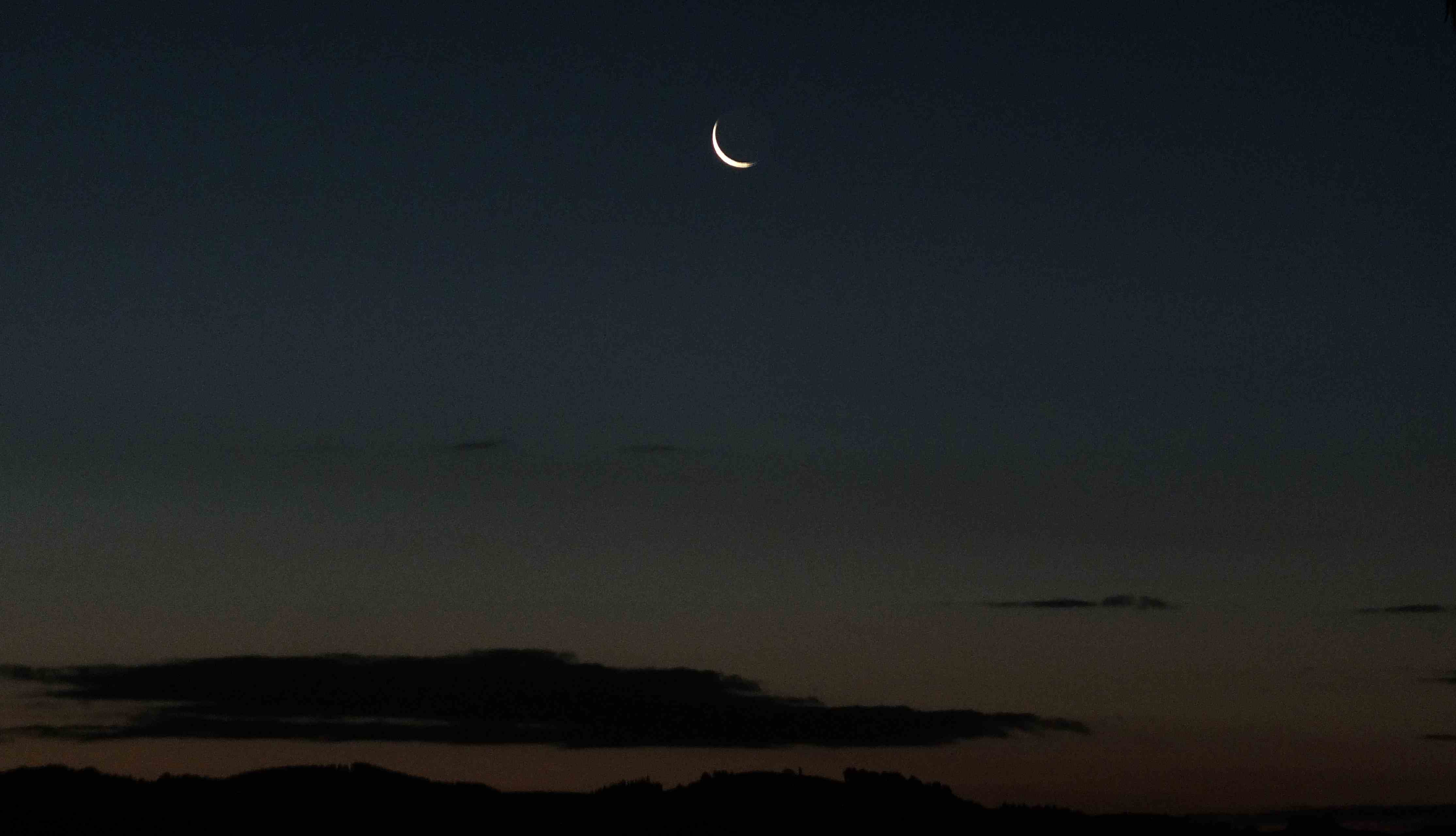
The sunset was fading as the moon rose slowly above the treetops last evening when Zoe remarked, “You know what? Amy was so amazed by the sunset that she took a picture of it on her phone.”.
Not long ago, when the moon was but a slip, Zoe’s city cousins came to visit. They didn’t go much beyond the confines of the garden but it was an experience of “country” all the same.
We built a little fire on the driveway to toast marshmallows and nurse steaming hot drinks. Normally languid teens who had never before struck a match crashed around in the darkness under the eucalypts for old branches to feed the flames. Uncles and aunts remembered childhood camping trips at Cockatoo and the whole group came alive with sightings of satellites drifting among the stars.
You don’t need to be from the country to see what makes life on the farm so invigorating but you do need a taste of it now and then. We’re lucky to have relatives from the city who love to visit but not everybody’s in the same boat – after all, less than 2 per cent of working Australians call themselves farmers.
It’s a real shame then, that Farm Day, which brings farmers and other Australians together once year, is in recess due to OHS liability concerns. Best of luck to Deb and her team in finding a solution.
Me (a little louder but still almost inaudibly): “You need brain surgery. Tomorrow.”
You: “Wha…why?”
Me (with great confidence): “Because I am a brain surgeon and it will make you better in every way.”
You: “What do you mean?”
Me: “Look, if you keep on like that, you’ll never get anywhere.”
You: “What is this surgery?”
Me: “I haven’t yet decided on the details but I am a surgeon and you would do well to respect my expertise. In any case, I will have finalised the details by tomorrow. If you have any more questions, you’ll have ample opportunity to ask them on the way to theatre. Thank you for your interest and attending this consultation.”
Our co-op, MG, is rushing onwards with a “capital raising project” that would forever change it from being 100% farmer-owned to “farmer-controlled”. It’s one of the biggest changes in the co-op’s history.
It might well be wonderful but what’s certain is that the ramifications are complex. It’ll take time for us to:
understand why we really need to raise half a billion dollars of external capital
understand the proposal
tease out the pros and cons
consider the alternatives and
debate it.
Our Kiwi counterparts took five years to make such an important decision about their co-op. We seem hell-bent on doing it in weeks. Why?
I was scared. The earth was scorched bare, cockchafers had decimated our paddocks and feed was at record prices. I’d been brought up on the land but was new to the experience of actually holding the reins.
I didn’t want to let my husband know how scared I was, either. He was new to farming altogether and we were betting everything we had on my skills, our sweat, the international commodity price cycle and the weather.
When we became eligible to apply for exceptional circumstances funding, I sought guidance from a Rural Financial Counsellor then locked myself in the office for two long days and sweated over the paperwork.
The first envelope in return said my application had been rejected because I was not a farmer. I was, and still am, earning some off-farm income to feed the family and the assessing officer had decided that, since I would naturally be working 38 hours a week in total, and I was clearly spending time non-farming, I was not farming at all. The reality was that I was working into the small hours to survive. After a lot of persuasion and quoting industry statistics, he conceded that, yes, perhaps I was a farmer.
The next envelope said my application had been rejected because our farm was unviable. He told me I had to show we could pay back all our loans in 10 years as well as achieving an 8% return on investment to prove my viability. My bank manager just laughed when I told him. “I don’t think of any of my clients could achieve all that,” he said.
I gave up.
Why am I telling you all this? Because there are a whole lot of people out there under the impression that drought aid is dished out like boiled lollies. Maybe I went about it the wrong way. Maybe I hit a particularly tough assessor having a tough time. But don’t tell me it’s easy pickings.
Apparently farmers cannot be trusted with anything. Not even to want the highest farm gate milk price for ourselves.
Bega has just sold its stake in Warrnambool Cheese & Butter to Saputo, putting the Canadian billionaire on the brink of controlling WCB even though a higher price was on offer from Aussie farmer co-op, MG.
This happened because our co-op hasn’t been allowed to bid during the bidding period.
Australian farmers who want to invest in their own futures and who are willing to pay the highest price for WCB have been stymied by a government artifice in the name of protecting…you guessed it…farmers from themselves. Apparently, another processor that thrives on a low farmgate milk price is better for us farmers than having an efficient farmer-owned co-op.
This Aussie dairy farmer will never forgive Joe Hockey for sitting by and watching.
So, where to now? That, my fellow source of low-cost milk, is up to us, for although Saputo can buy WCB’s stainless steel, it cannot buy our future. Only Australia’s dairy farmers decide where our milk flows and our fortunes lie.
Thank you. When I began writing Milk Maid Marian in a fury two years ago, I had no idea whether anyone would be interested. It’s turned out to be incredibly fulfilling, thanks to the often unexpectedly feisty discussions sparked by stories from the farm.
I can’t tell you how encouraging your comments are as I thump away at the keyboard.
Please, tell me what you’d like to see more of in 2014 and what bugs you about the blog. Best wishes to all (even the relentless people who want me to advertise ugg boots) for the New Year.






 The Milk Maid Marian