Spot the missing calf

A cow calved in the herd on Saturday. This isn’t supposed to happen. All the cows are pregnancy tested between eight weeks and five months after joining to confirm their status and due dates but the tests are not infallible. We obviously missed 585 somehow and she arrived in the dairy sporting afterbirth.

Zoe, Alex and I headed down to the paddock to find her calf but it was nowhere to be seen. We checked drains and even wombat holes but still nothing. It was easy to spot the patch of squashed grass and membranes where 585 had given birth and I expected the calf to be nearby. After an exhaustive search, we decided to put the cows back in the same paddock overnight and see whether the calf emerged from its hiding place.

It didn’t, so we looked again. And here it was:
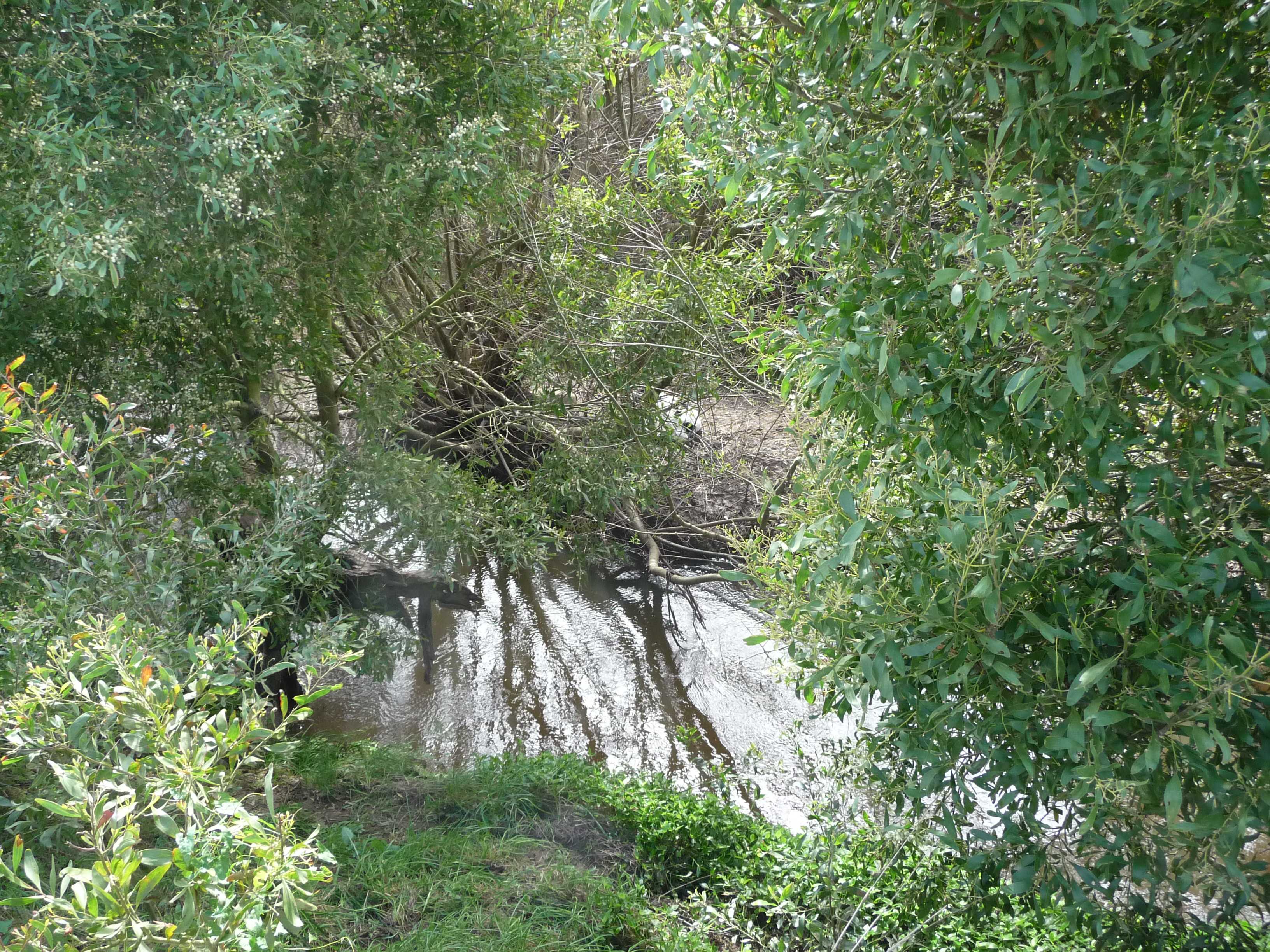
Spot the missing calf

Can you see the missing calf?

Can’t see it? Look here:
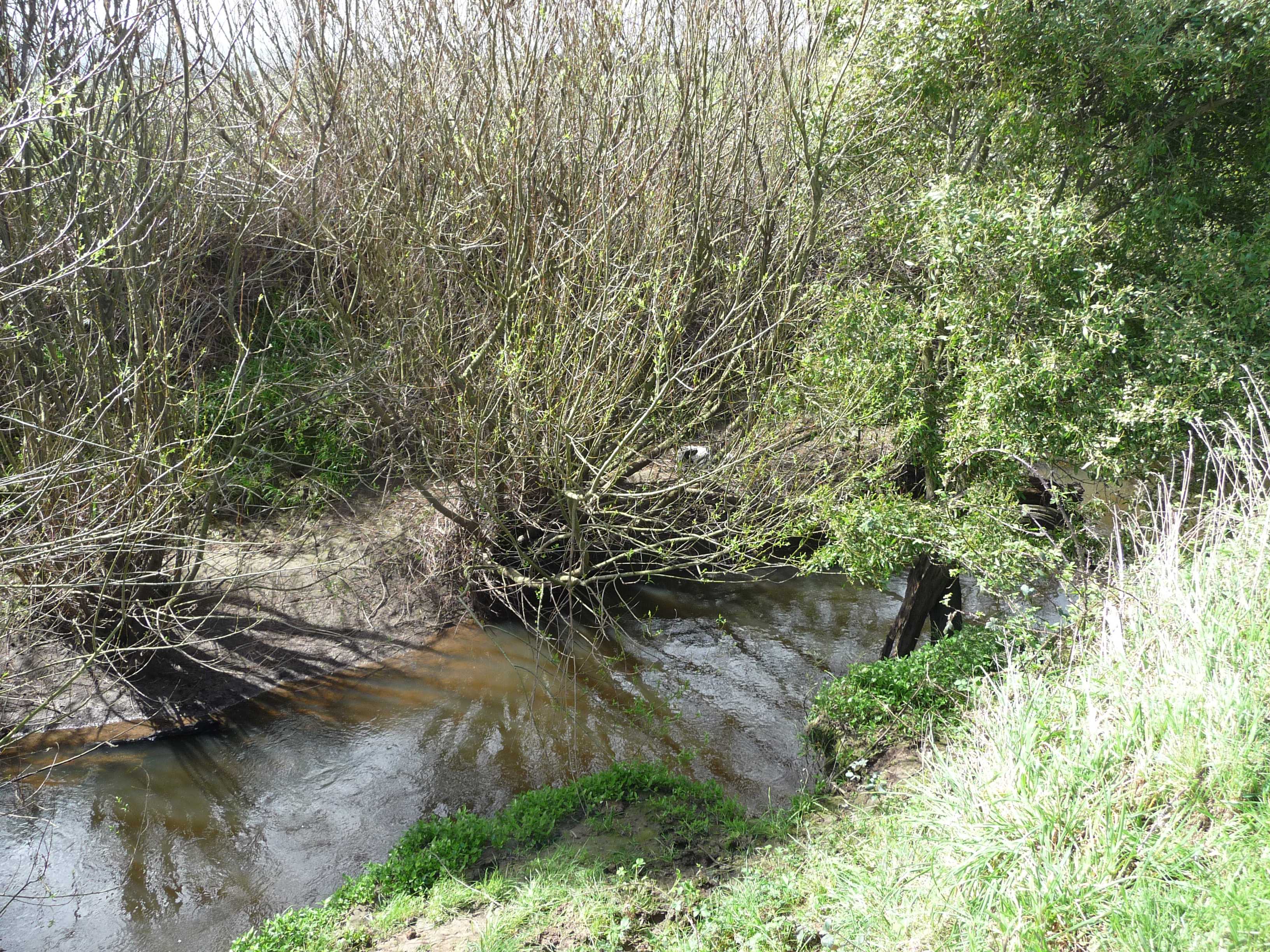
Spot the missing calf

Can you see him here?

Yes, the little creature had either fallen or walked into the river down a very steep bank, got across and found a nice sunny spot for a snooze. What a great little survivor and what a relief!

Fortunately, our neighbours across the river raise our bull calves and Dave was pleased to find the calf in perfect health and rang to thank me for the express delivery. We won’t be floating calves across for you as a regular service though, Dave!

Weaned calves acclimatise to new surroundings with maremma guardians

Weaned calves take in their new surroundings

Weaned calves take in their new surroundings

We’ve weaned a bunch of calves and they love their new surroundings by the forest. When I took this picture, they were still a little overwhelmed, walking quietly around the paddock.

At our farm, calves are weaned relatively late. The calf rearing experts say you can wean a calf as soon as she’s eating at least 1.5kg of grain or pellets per day but, in my view, it doesn’t hurt to offer them milk for a bit longer. Calves are the future of our dairy farm and we don’t skimp on their wellbeing.

We’ve chosen a paddock far from the dairy that offers shelter from cold weather and shade from the sun. Cows are kept off this pasture to minimise the risk of transmitting disease like Bovine Johnes Disease from one generation to another. Aside from buying in bulls to preserve genetic diversity, we have a closed herd and no history of the muscle-wasting BJD but it’s good practice to keep stock under 12 months old off pasture that’s been grazed by mature cows.

While the pic doesn’t show them, maremmas Charlie and Lola have been staying close to their charges and I’m hopeful the transition will extend their range.

Why we don’t want huge calves like this whopper

Huge calf

Big calves are a big risk

This calf was born yesterday and, sadly, survived only a few minutes, leaving his poor mother exhausted. Having sat her up, Wayne and Zoe are giving her a dose of sugars, calcium and mineral salts to give her a boost after her ordeal. Big calves tend to cause a lot of calving trouble and are also often stillborn. We’ve had a few this year, which I think is partly due to the wonderful condition of the cows.

We do actively try to keep the size of calves manageable in other ways. When we are selecting bulls for our herd, we look for those who have a record of easy calvings (though not too easy in case we end up breeding cows with hopelessly tiny pelvises) and those of medium stature. We don’t want to breed giants and internationally, Holsteins have been getting bigger and bigger.

As well as the calving ease, our desire for medium-sized cows is about fitness. Most of the semen originates from lines bred in America and Europe, where cows live in barns most of the time and walk very little while, here in Australia, our cows live out in the paddocks all year round.

I think they have better lives as a result but the downside (if you can call it that) is that they must be fit enough to walk from the paddock to the dairy and back twice a day. Massive bodies are hard on feet and legs.

Breech birth but cow hates hospital

Cow facing a breech birth

Cow facing a breech birth

This cow led us on a merry dance. Zoe and I had spotted a single, dry hoof on its way out and up the wrong way – a sure sign of big calving trouble. Two front hoofs should appear to “dive” out of the cow, closely followed by a nose and it should all happen too quickly for the membranes to dry in the sun.

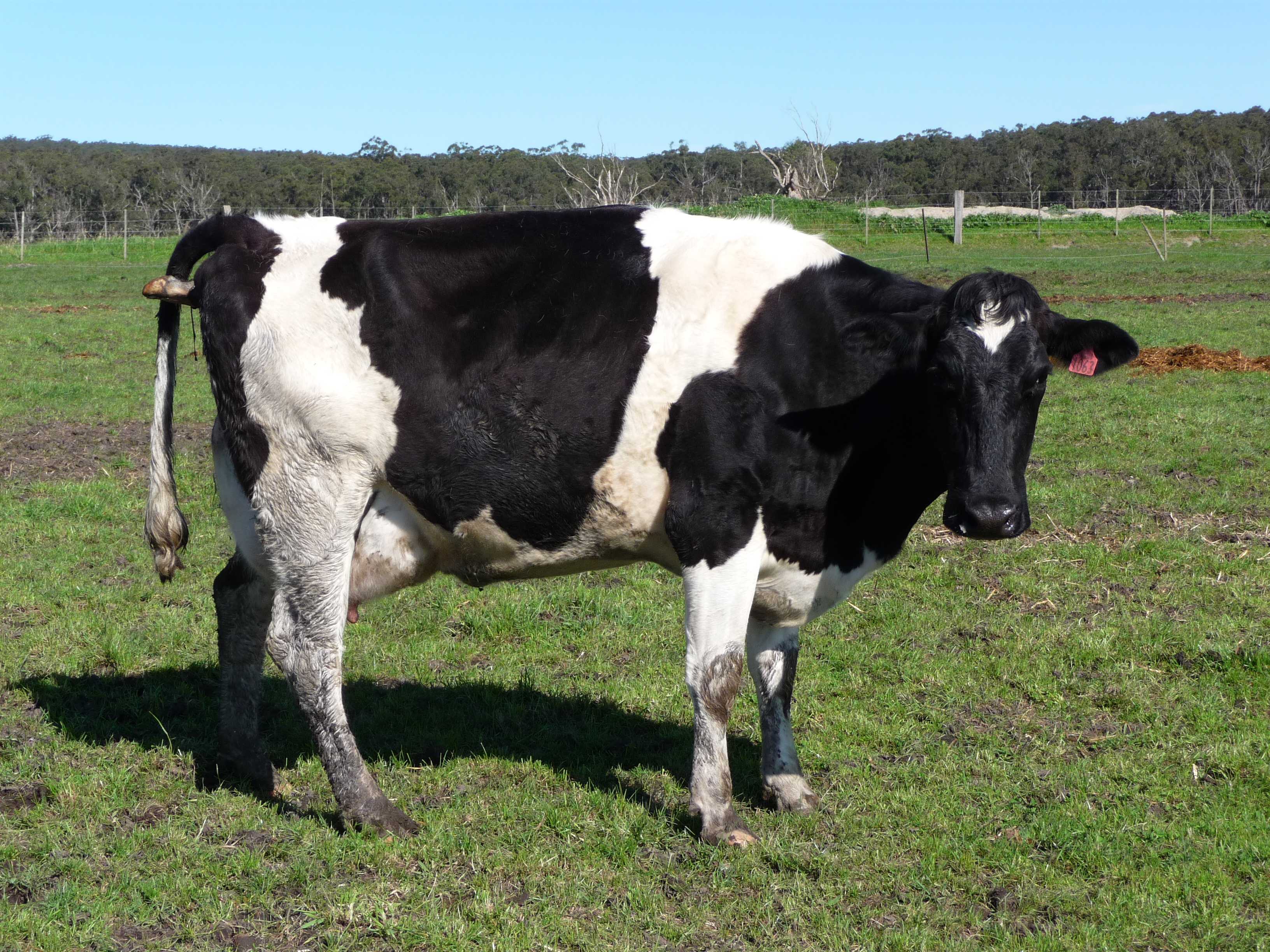
Despite her predicament (breech births are difficult and life threatening) and little Zoe’s sage advice, 1063 raced around the paddock like the Artful Dodger. She even paused defiantly for me to take her picture before we set off on another game of cat and mouse. Eventually, we got her into the yards and, 25 minutes later with a lot of help from Clarkie, 1063 gave birth to a stillborn bull calf. We were just glad she was okay.

As in humans, breech presentations are unpredictable and unpreventable. Most calving problems at our farm are caused by calves that are just too big. To minimise the likelihood of difficult calvings, we choose bulls with narrow shoulders and medium rather than large statures. We also mate our maiden heifers (cows who have never calved before) with Jersey bulls. Because this breed is significantly smaller than the Friesian cows we milk, the calves pose little risk for heifers.

Cows have best friends too

Here’s fascinating research reported in the Daily Mail:  Cows have herd mates and the bonds can affect yields, according to UK researchers.

Krista McLennan, an animal welfare researcher at Northampton University measured heart rates and cortisol levels of cows to see how they cope when isolated, penned with their best friend or with an unfamiliar cow. “When heifers have their preferred partner with them, their heart rates are reduced compared with if they were with a random individual,” McLennan said. “Keep an eye out for those cows which like to keep their friends with them. It could have some real benefits, such as improving their milk yields and reducing stress.”

I’ve noticed this myself. Just the other day, the herd was walked past a paddock of two-year-olds and I watched one of them gallop up to sniff noses across the fence with two herd members. The amazing thing was that their ear tags revealed they were all born in the same year. What I’d assumed was a two-year-old turned out to be a three-year-old late-calver conveniently paddocked with the younger ones. Old friends were catching up!

Floods, bogs and mud, mud, mud

Flood 22 July

Partial view of the flood from the house this morning

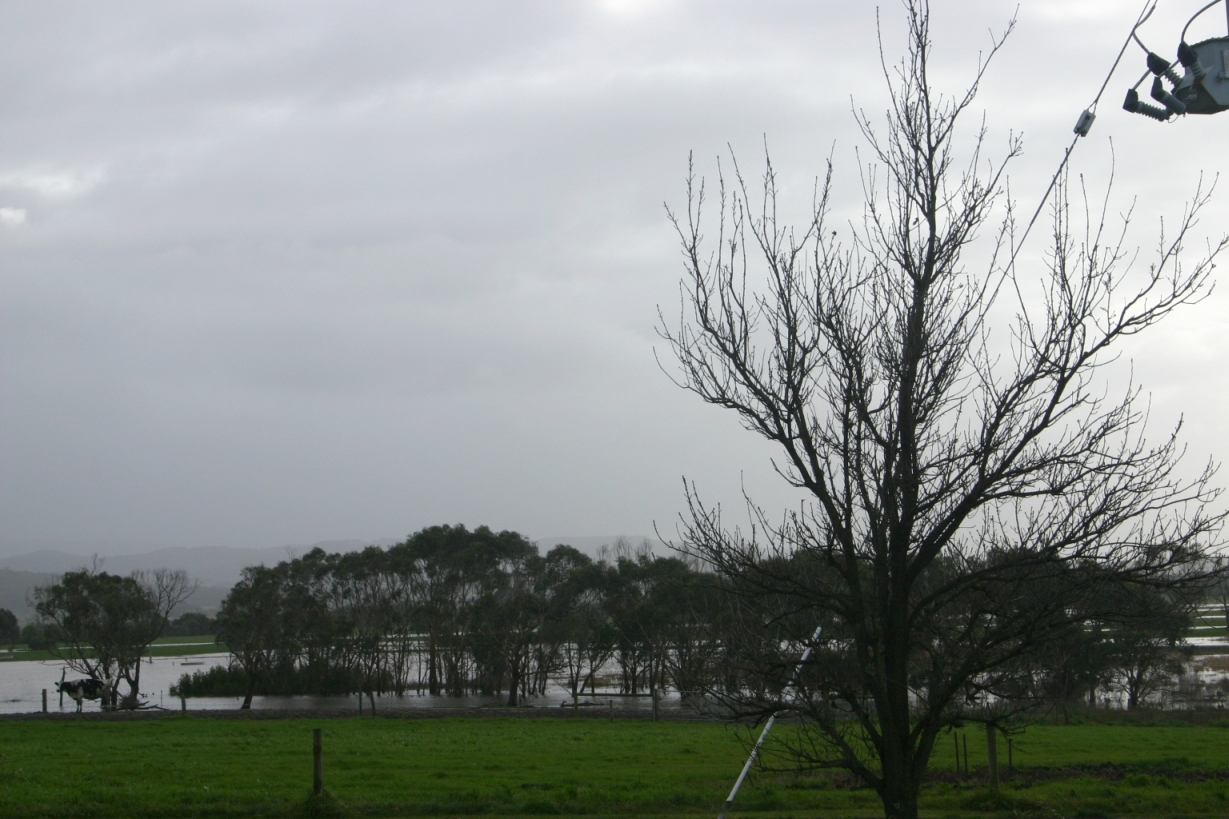
The rain came…again. Yesterday, Yarram airport received 48.5mm and today, all the roads to town are closed, a third of the farm is cut off with at least another four paddocks underwater and the car is still sitting bogged in the driveway. Thankfully, the house is nice and high, so no sand bags needed (but thanks for the offer, Julie and Doug)!

Most of this is a temporary inconvenience. The good news is that the local rivers are short and empty into the sea quickly, so the roads should be open again in the next day or so. More important is the longer lasting issue of saturated pastures and muddy tracks.

Saturated pastures (they were already saturated before this jolly east coast low pressure system decided to pay us a visit) are very vulnerable. The damage done now by cows’ hooves will cause compaction of the soil so that, come summer, water will run off rather than soak in and roots will find it harder to penetrate the soil, exposing them to heat and denying them sub-surface moisture. If you’re a gardener, you’ll understand!

Muddy pastures and tracks are also a perfect recipe for lameness and mastitis, both painful conditions that are difficult and expensive to treat.

Of course, sopping wet soil is also no good for growing grass, which means we must step up our imported feed. This means more cost, long days and heavy tractors on fragile pastures.

Those weather gods need an urgent performance review so they can refocus on their KPIs!

That blasted bull just had to go

It was with a sense of triumph that Clarkie and I closed the gates behind the tall bull today.

As you may have gathered, I’m a bit of a softie and almost always feel a pang of regret selling one of our animals but Tall Bull is going to market and will not be missed. This Friesian monster towers over cows and our other bulls, gallops like a racehorse and leaps fences like a showjumper. He’s also (pardon the pun) a bully. We were awestruck when we saw him toss a Jersey bull over a fence onto the road with a toss of his massive, triangular head.

Recently, he’s just begun moving around the farm at will, too. He’s too cocky to be called safe, too big to sire easy birthing progeny and too uncontrollable to have near people, infrastructure or calves.

The decision to send him away was easy. Getting him on the truck played on my mind a little more. It started off badly. We offered him companions on his walk across the farm to the yards but he rejected them, opting to leap a fence and take on a rival. Thankfully, his speed ended up playing into our hands – he was easy to separate from everyone else because all were left far behind.

A regal presence, certainly, but not a fitting king for our farm. So long, Tall Bull!

Untangling how much farmers are paid for milk

The most anticipated email of the year popped into my inbox just before midnight. It was our co-op’s announcement of its opening milk price: “a weighted average price of $4.90/kg milk solids”.

Ironically, farmers are not paid for milk – just the fat and protein it contains, which we call “milk solids”.  Here’s the tricky part: protein is 2.5 times more valuable than fat, different herds (and the individual cows within them) produce different ratios of both, the price per kg changes almost monthly and the amount each cow makes shifts throughout her lactation and as her diet changes.

We are also subject to charges based on how often our milk is collected, if milk quality drops, and even milk volume.

For all these reasons, the price a farmer receives for a litre of milk is as individual as the farm.  To further complicate the picture, the co-op introduced  a new payment system last year that allowed farmers to select from three pricing models reflecting different pattens of production over a season.

I opted for the Domestic Incentive and committed the farm to supply at least 40% of our milk between mid-February and mid-August. It was the right decision at the time but that record-breaking wet summer affected the normal pattern of supply. With just one tanker of milk to be collected, it’s touch and go. About the same amount as the cost of my tractor engine rebuild is riding on how well the girls milk tonight. Wish me luck!

PS: The pricing system I’ve described applies only to our co-op. Other farmers, particularly those interstate, may have radically different structures.

Cows with attitude

The video footage showing an Irish “cowdini” making her escape got me thinking about some of the characters in our dairy herd.

First, there was the infamous “Lipstick”, who terrorised me as a child. She didn’t like to be messed with and she didn’t baulk at the flailing arms of anyone under 6′ tall either. Her daughter and grand-daughter, who bore the trademark black lips and white face were equally as formidable.

Queen Bessie was, on the other hand, a charming yet dignified old lady. Big brown eyes and long lashes batted drowsily as she soaked up loving scratches. One of the few times I saw tears well in Dad’s eyes was when Queen Bessie died after more than a decade of owning the square of yard at the entrance to the dairy.

Thirty years on, Zoe is in love with Pearlie Girlie. This diminutive three-year-old hangs back during rounding up and is happy to be patted until she decides enough is enough and dismisses her young adorer with a regal toss of the head.

A dog has a master, a cat only servants, and cows…courtiers.

Milk free from growth hormones

The internet is awash with scary stories about growth hormones in milk. They are said to cause cancer and even breast development in babies fed a milk-based formula. Cows injected with growth hormones are also said to have much shorter lifespans than the 12-plus years ours enjoy.

I’m happy to say I can’t offer you any insight into this bitterly debated issue. Although bovine growth hormone (BGH)  is commonly used in the US, it and BST or bovine somatotropin are outlawed here in Australia.

Every litre of Aussie milk is guaranteed to be free from growth hormones!