Is autumn really here? No, it’s coming, so cows are going

AutumnLeaf

Golden leaves carpet the farmhouse driveway. Yes, it’s autumn at last but I’m not sure whether the ash are superbly tuned into the seasons or simply too water stressed to hold onto their leaves any longer. The crisp autumnal mornings are yet to arrive – it was already 26 degrees Celsius when Alex and I checked the weather outlook just before six this morning – and the farm is again desperately dry.

But a dairy farmer is always planning ahead. Last weekend we sent a handful of cows on their annual two-month maternity leave, with a dozen or so more to join them in a fortnight.

The summer millet crops are getting their final grazing today and tomorrow so we can prepare for sowing new perennial pastures when the “autumn break” finally arrives. We’re testing the soils of each paddock so we can apply just the right levels of nutrients – enough to maintain fertility without risking leaching into the river or water table.

In anticipation of rain (and mud), our cow tracks are also about to get a makeover to help prevent two of the most troublesome afflictions for dairy cows: lameness and mastitis.

Autumn is the time when dairy farmers lay the foundations of a successful season and it’s strangely exciting. I wonder what will mark this year?
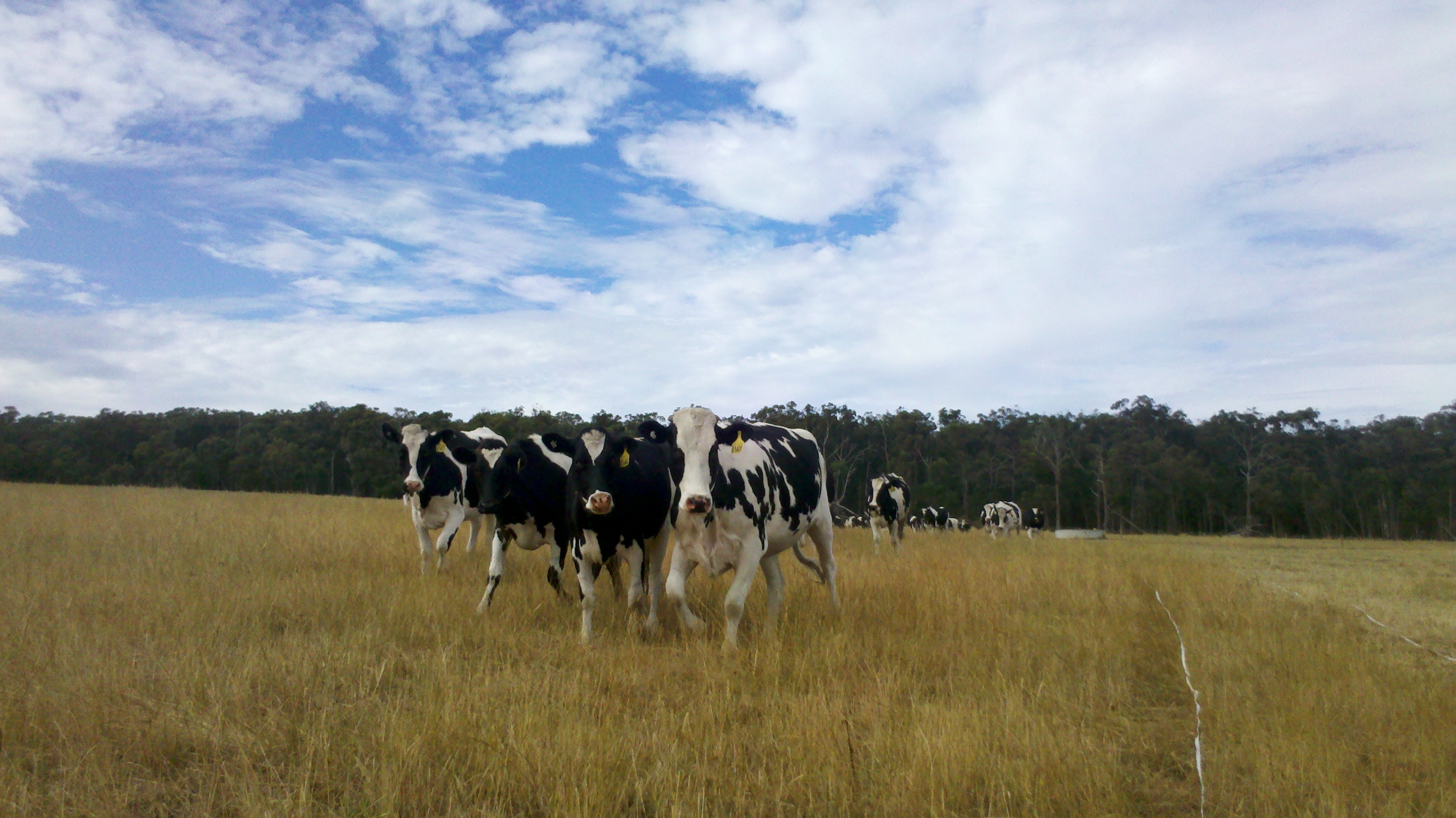
Who or what makes a farmer?

Yesterday, while rounding up the cows, Zoe announced: “When I grow up, I want to be a farmer and have two children.”.

“True? How come?”

“So I can be like you, Mama.”

It gets into the blood of farm kids early. Much earlier, I suspect, than the children of, say, accountants or writers. At six, our little girl knows when a paddock is ready to graze and has that sixth sense for when a cow seems not her normal self. Because she’s already a farmer.

Since I don’t have religious faith, I don’t believe any of this is God’s doing. Take a look at this ad, which just made its debut during the Superbowl.

This evangelical message has got farmers around the world twittering with delight. It’s nice to get a pat on the back once in a while. But I have a confession: it simultaneously makes me proud and embarrassed.

Why must we farmers talk so much about how hard we work? Yes, it is a farming fact of life but, no, it does not make us saints or martyrs. We do it because we want to.

And when I asked Zoe what she thought would be great about being just like me, it came down to this: “I can have fun with the cows every day!”. Perfect!

Could you be suffering from cow envy?

CuriousHeifersRun

The ethics of food is so complex. Vegans following a conscientious diet are told they are inadvertently starving Peruvians, causing deforestation and even eating with blood on their vegetarian hands. It’s not easy being green and I don’t blame vegans for being so passionate about their choice.

Life on farm is a microcosm of those ethical dilemmas. Every day, we must make decisions that impact on the well-being of an animal. Often, there is no easy answer. Should we euthanase that cow now or wait although she’s in discomfort in the hope she recovers? Should we raise that calf away from her mother or risk deadly disease transmission? And the big one: should I send heifers to China if milking just won’t pay the bills?

If nothing else, it forces you to stare hard in the mirror and here’s what I see: yes, I am a commercial dairy farmer and, hell yes, I care about our animals and our land.

Although this is something vegans on Twitter seem to find inconceivable, in my experience, this mindset is not only possible but typical of dairy farmers. It’s what keeps us on the land for generations and I am incredibly grateful to be here. My farm may not be a “cow sanctuary” as one vegan put it but I’m doing my best to make sure the cows never realise.

(Special note to my vegan friends: I realise what a privilege this is and wouldn’t blame you for some serious cow envy!)

Why it’s great to work with kids and animals

I’m so grateful for the support of people around Australia and as far afield as Canada in response to my post about how to save Australian dairy. It’s been so heartening.

But then, a rather nasty person appeared out of the blue on Twitter today and cast a cloud over my morning – for 10 minutes anyhow. Because, after that, I got to do some work in the paddock and enjoyed the company of my two little farmers and some other members of our team. Kids and animals are the perfect antidote for trolls.

Well hello, Luscious Legs, how pregnant are we?

luscious legs

Ooh la la!

These shapely legs belong to the beleaguered wearer of “The Shirt”. Apparently, it was too hot to wear long pants or anything waterproof today doing a Big Job.

Anyhow, the Big Job was a special occasion: we got to find out how pregnant we are (or more correctly, how pregnant the cows are). Preg testing qualifies for the title of Big Job because it entails lining up 125 cows a day for an internal examination by the vet. Not painful for the cows but a big change in routine like this always means added excitement.

The good news is that almost all of our 250 milkers have indeed conceived to our irresistible team of bulls. All expectant cows will take a two-month holiday before calving and we will greet the next generation from late April onwards.

A sizeable group of cows will not calve at all in 2013 – I pulled the plug on mating early – and will instead enjoy our company twice a day, seven days a week for the next 18 months.

What does the missing dairy farmer look like?

Shi#t

Shi#t

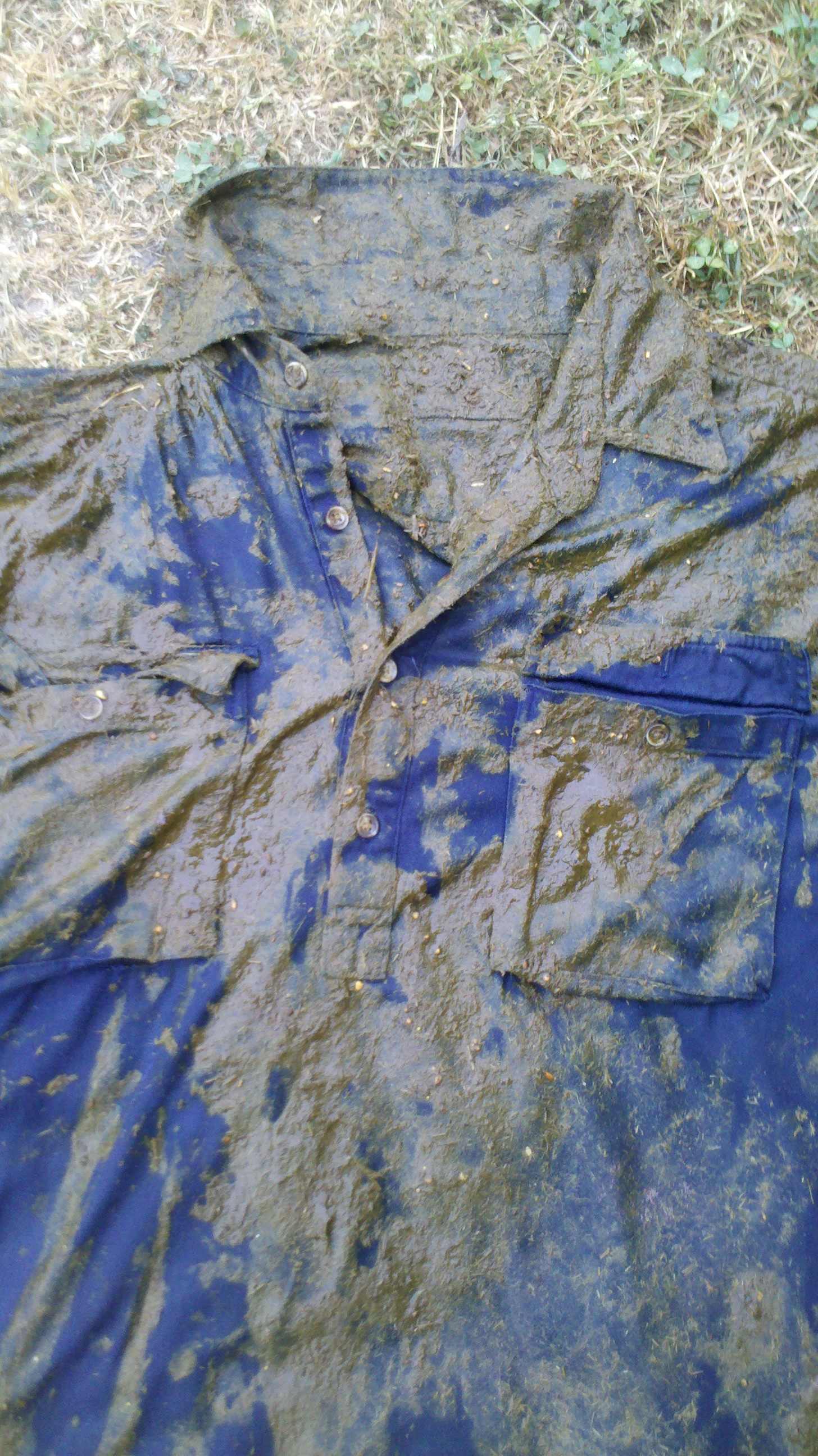
This is the shirt that had to be left on the lawn because it was too dirty for the laundry. Check out the collar. He was wearing it when it became…soiled. Imagine the man.

Me: “So, who got you? Was it 1257 or 800?”

Him: “I don’t know – it was too quick, I was blinded and they were firing at me from all directions – in front and behind.”

Me: (Trying desperately not to laugh) “What did you do?”

Him: “I groped about and found something really thick and thought, ‘Great, that’s a hose’ and just blasted myself with the fire hose for a few minutes. And a few minutes later, another one got me from behind and it flowed down over my eyes before I could stop it, so I don’t know who that was either.”

Me: “Oh, you poor thing. But you seem in good spirits…”

Him: “Yeah. I decided that s#$t happens, so I might as well just take a break and have a drink. I peeled off my shirt, hosed myself down again, had that drink, and milked like this.”

Me: “What – in the nude?”

Him: (Indignantly) “With my shorts and gumboots on! I added an apron when the tanker arrived in case I scared the driver.”

Me: Raucous laughter.

Him: “Feel my hair”

Me: “Ah, no thanks.”

Him: “Go on, feel it…Don’t look at me like that…Okay, smell it then.”

Me: “It smells like Ovaltine – go and have a shower, for goodness’ sake.”

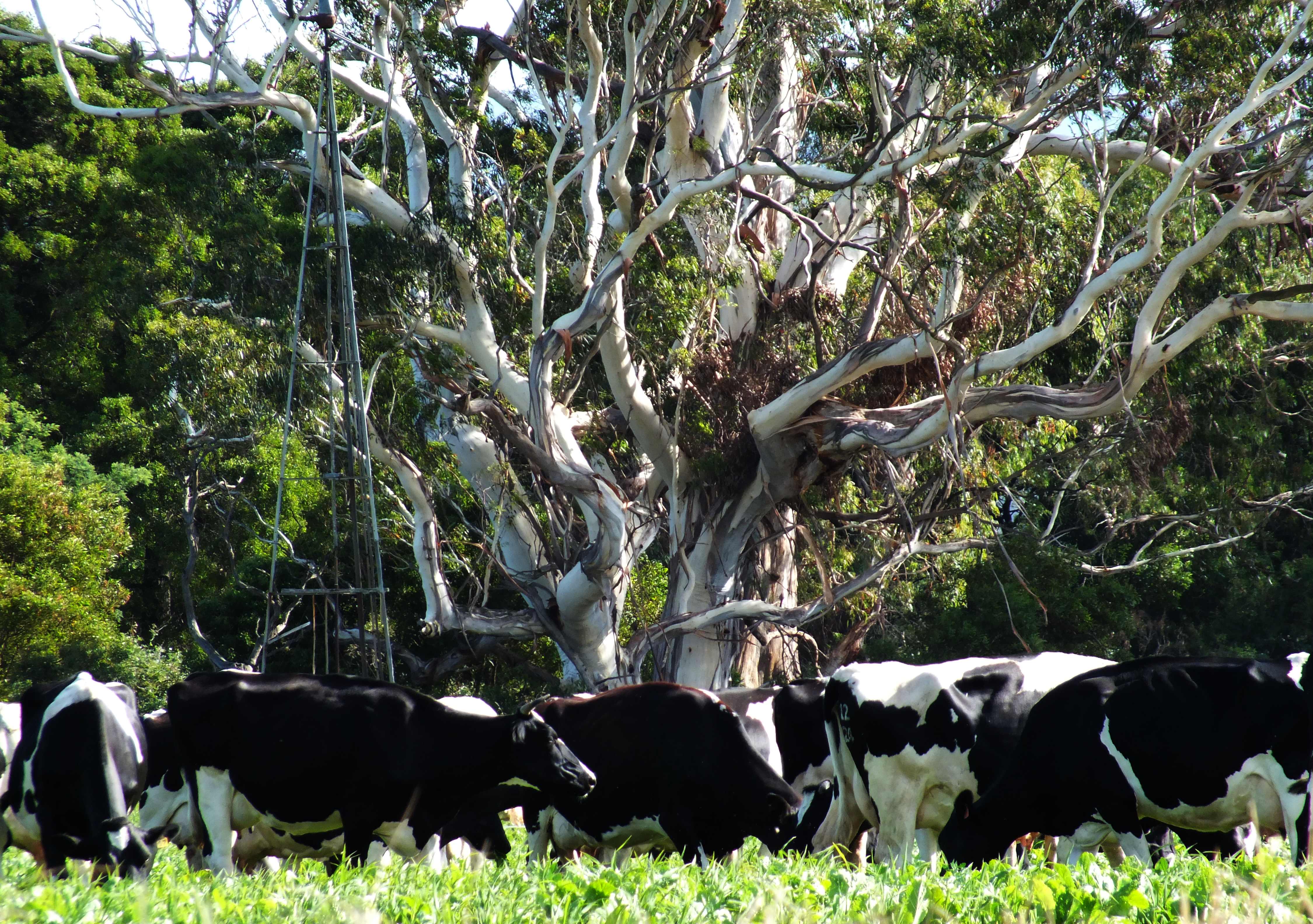
Milking cows certainly has its moments and there were quite a few of those “moments” for Wayne because now that the grass has pretty much shrivelled up, the cows have been dining on a divine, juicy crop of rape and tender young millet. Never mind, it’ll settle in a day or two…

Cows grazing millet

They can barely walk because their pants are suddenly too tight

Hot milk

Remember yesterday’s 41 degree Celsius heat? Now, imagine you were standing outside in it being blasted by 250 1500-watt hair dryers. How do you feel now? Ready to do athletics?

Grazing the lush crop

Icy poles for cows

Believe it or not, each of our dairy cows gives off body heat equivalent to a 1500-watt hair dryer on a hot day. Yet, incredibly, each still made an average of 29 litres of milk for us yesterday. We nursed them through with some very careful planning based on the principles of the Cool Cows program.

  • Wayne got up an hour earlier to milk before the sun’s rays began to sting and milked two hours later than usual. This meant that the cows spent less time in the sun on the concrete yard waiting to be milked.
  • We hosed the whole yard down about 45 minutes before the afternoon milking. It’s amazing how much cooler the yard felt afterwards.
  • The yard sprinklers were activated as the cows came towards the yard. (You remember the fun of dancing through sprinklers on the lawn!)
  • The cows’ diet changed a little for the day. The cows got a little more grain, a little more green crop and a little less hay yesterday. It takes more energy to digest high-fibre foods, which adds to heat stress. Rather than feeding out the hay during the day, Wayne stayed up late and offered the cows a “night-cap” in the relative cool of the evening.
  • We chose the coolest paddock on the farm, ringed by the deep shade of mature willow trees.
  • On a hot day, dairy cows can slurp up a staggering 250 litres each. Our extra-large troughs ensured they had plenty of fresh, cool water to drink when they chose to emerge from their hideouts.

Poor girls. According to the Cool Cows program leader, Dr Steve Little, dairy cows start to seek out shade when it gets to about 25 degrees C. I think the farm’s cows, dogs and humans all felt the need to go into summer hibernation yesterday.

Farm meets laboratory

It takes a lot of science to make our dairy farm tick these days. Our place is no factory farm either. With around 250 free-range milking cows, it’s a very typical Australian dairy farm.
Yet, only today, I have been keeping four different labs busy:

Environmental lab: what’s in our water?

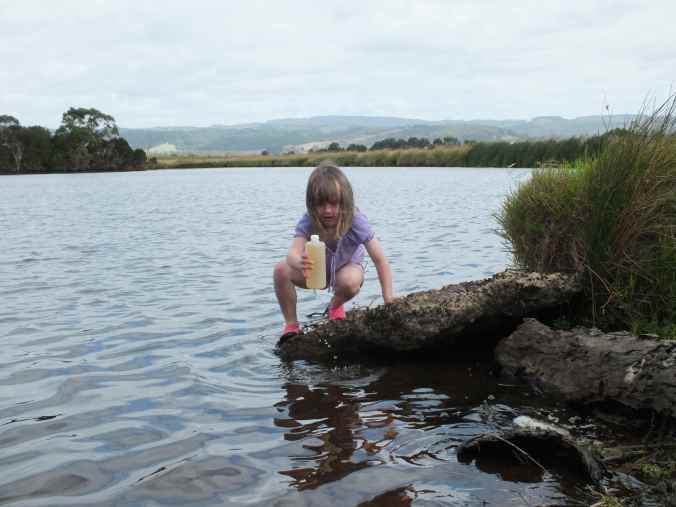
Sampling water from the farm dam

Don’t fall in!

We’re considering moving the water supply from the river to the dam but need to be sure the water is up to scratch first. While we don’t irrigate our farm, we need high quality water for the cows to drink and to keep the milking machinery hygienic and sparkling clean. We’re having it tested for minerals and nasty bugs like e-coli.

Animal health testing lab – looking for hand grenades in the grass

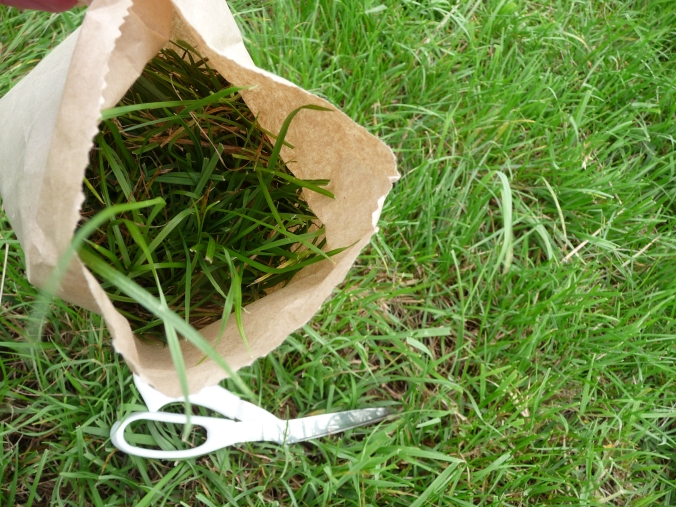
GrassClippingsOur farm has volunteered to be a ‘sentinel’ for the spores that cause the life-threatening condition of facial eczema. Collecting samples from a couple of paddocks only takes a few minutes but it could save hundreds of cows untold suffering.

Dairy nutrition lab – feeding the bugs that feed the cows

Yesterday, someone on Twitter asked Dr Karl how cows manage to get fat on grass while humans lose weight on veggies. The secret lies in four-chambered guts filled with life-giving bugs that do a lot of the work for the cows.

Our bovine ladies are athletes – each gives us around 7,000 litres of milk per year – and they and their bugs demand nothing short of perfection from us as chefs! Feed reports allow me to balance the cows’ diets with the right mix of fibre, energy and protein.

Soil nutrient lab – getting the dirt on our soils

Soil data allows me to apply the right fertiliser in the right amounts to the right places – lifting the productivity of our farm, reducing costs and preventing leaching into the river. I test the soils of all our paddocks every year. Some would regard that as wildly extravagant but a $110 test is nothing compared to the cost of a tonne of excess fertiliser.

Dairy farming is still the earthy, honest lifestyle it always has been but, these days, it pays to be a touch tech-savvy as well.

EDIT: Oh my goodness! Mike Russell (@mikerussell_) just pointed out that I forgot the bleeding obvious: the testing of our milk! It’s tested to an inch of its life – fat and protein content, sugars and cell counts are all tracked daily. Thanks Mike!

The dairy farmer’s calendar

Summer is the laziest time of year for a dairy farmer but when Wayne and I started writing a “to do” list yesterday, my head began to spin a little. Not satisfied with a mild head rush, I went on to draft a rough calendar:

The Annual Milk Maid’s To-Do List

Lazy Summer Days

  • Milk cows
  • Pay bills
  • Deal with crises (pump breakdowns are popular this season)
  • Begin drying cows off for their annual holiday
  • Make hay
  • Have we conserved enough fodder? Consider buying more
  • Begin feeding silage, crops and hay
  • Return cow effluent back to pastures
  • Spend a day changing rubberware in the dairy
  • Control blackberries
  • Vaccinations, drenching, branding, preg testing
  • Big maintenance projects (the stuff you put off the rest of the year)
  • Dream of the next Great Leap Forward

Autumn Anxieties

  • Milk cows
  • Pay bills
  • Deal with crises (milk quality issues popular this season)
  • Continue drying cows off for their annual holiday
  • Special feeding regime for expectant cows
  • Welcome and nurture new calves
  • Test soils for nutrient levels
  • Repair cow tracks
  • Sow new pastures
  • Fertilise pastures
  • Return cow effluent back to pastures
  • Chase revegetation grants and order trees
  • Maintenance
  • Still feeding silage and hay
  • Nude rain dancing in full swing

Winter Woes

  • Milk cows
  • Pay bills
  • Deal with crises (calving emergencies popular this season)
  • Welcome and nurture new calves
  • Fence and spray areas for revegetation
  • Spend a day changing rubberware in the dairy
  • Feed three groups of cows different rations
  • Mating program in full swing
  • Consider another drenching
  • Buy new gumboots and practise rain dancing in reverse
  • Redo budgets after milk factory announces opening price
  • Keep chin up

Supercharged Spring

  • Milk cows
  • Pay bills
  • Deal with crises (unpredictable weather popular this season)
  • Train the new members of the herd
  • Visit the accountant (and maybe the banker)
  • Fertilise, fertilise, fertilise
  • Vaccinate and wean calves
  • Thoroughly clean and disinfect the calf shed
  • Plant trees
  • Control thistles
  • Make silage
  • Sow summer crops
  • Make grass angels

I know I’ve missed stuff – lots of it – but it should give you an idea of what happens day-to-day and season-to-season on our very average Australian dairy farm. So, dear Reader, as we head into 2013, what do you want to know more about?

Not because I’m a nasty farmer

A grainy video of people holding their children down while they were being stabbed with pins would cause outrage around the world…until someone explained they were lucky kids receiving lifesaving vaccinations.

It’s a similar thing with farming and that’s one of the reasons I write a dairy farmer’s blog – so you have the explanations about our practices that you deserve.

Since I started writing Milk Maid Marian almost two years ago, I’ve had people express their relief about the truth about all sorts of topics but one that never seems to go away is: “why do you take the calves away from their mothers?”.

The reasons why we raise the calves away from the herd are compelling. And, if you thought the risk of animal wasting disease, Bovine Johnes Disease was remote and a poor justification, read this heart-breaking news story about a Queensland cattle station, where BJD is new.

Farmers are cautious, yes, but it would be cruel to be anything less than scrupulous about the way we raise our youngsters, don’t you think?