Cow in the naughty spot

Cow in the Naughty Spot

In the naughty spot


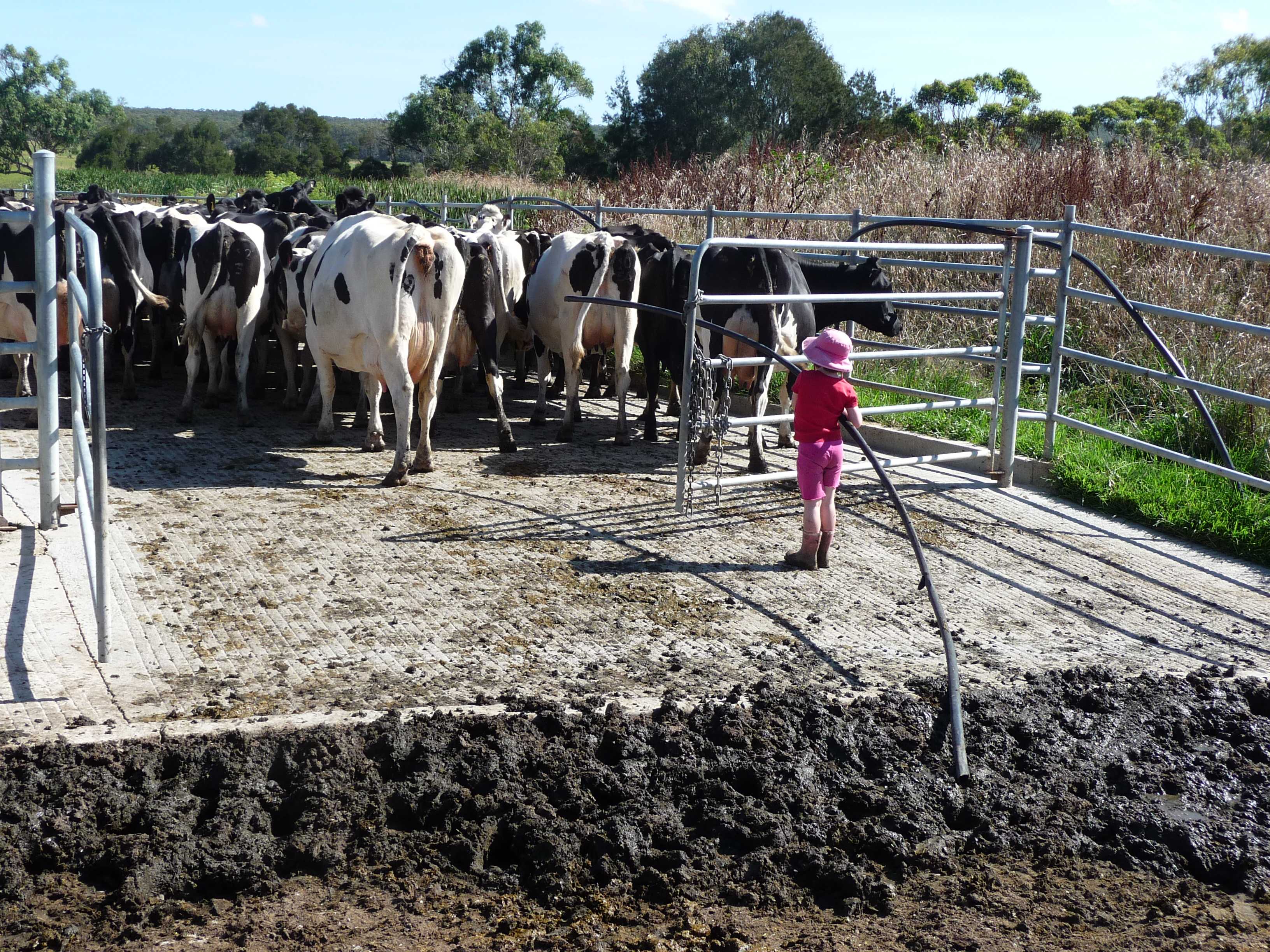
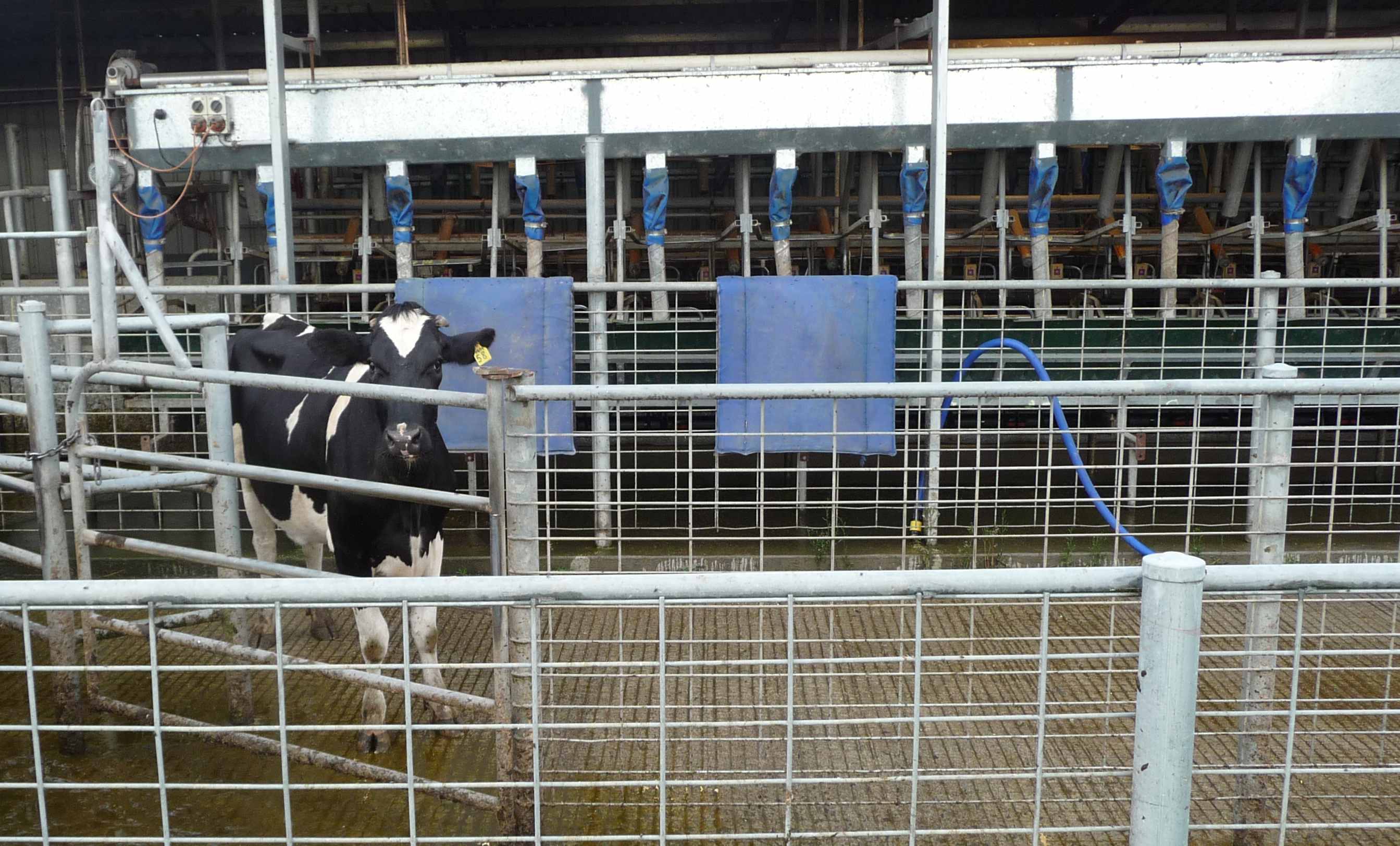
This is the dairy’s naughty spot and this cheeky young cow spends a lot of time there.

She’s a clever little thing and has noticed that there’s often grain under the feed bails when her sisters become a tad overenthusiastic tucking into breakfast. She lurks in the exit race waiting for her chance to quite literally “clean up”. The problem with this is that nobody else can get past her and a traffic jam ensues.

This morning, Wayne’s shooed her away three times and tried squirting her with the hose but her behaviour has continued to be “not acceptable”, so here she is in the “naughty spot” (with apologies to Super Nanny). She’ll be allowed out when she writes “I will not get in the way” 50 times and all her sisters have left the dairy.

What we feed our dairy cows

When I think of feed for our dairy cows, I think of grass. Unlike cows in much colder climates, ours live in the paddocks all year round and pasture is the “bread and butter” of their diets. Really, apart from hay baled in the summer and fed out in the depths of winter, that’s all our cows used to eat when I was a kid.

Everything changed, though, when a vicious drought desiccated Australia in 1982/83. That year, a massive dust storm blanketed Melbourne, ensuring that even inner-city dwellers felt the searing fury of mother nature. Like their neighbours, Mum and Dad cut every expense they could, right down to cancelling their newspaper subscription.

In desperation, they turned to grain to supplement the cows’ diets. And never looked back. We’re lucky in Australia to have such great wheat growers practically on our doorsteps. With grain at reasonable prices, we are able to buffer our cows from mother nature’s tantrums, keeping our cows well-fed, no matter whether it rains too much or too little. It also means our cows are able to produce more milk from less land – something that’s increasingly important as the population continues to climb.

Just as I created a breakfast for Zoe with the right building blocks of protein, fibre and carbs this morning, we offer the cows fibre, starch, protein and energy in the form of hay, silage and GM-free grain to top up their grass. So yes, Australian dairy cows are still pasture-fed but, these days, their diet has just a little added variety.

Making up for the heat

Do you tend to eat less in the heat? I do and so do our cows. This is the third day of hot weather here and there’s another on its way.

Once the mercury rises over about 25 degrees Celsius, the cows begin to find it uncomfortable. We’ve sent them to a shady paddock for the day and to make up for the fact that they’ll spend most of it under the spreading branches of the willows, we’ve also changed their feed pattern.

Shady paddock

A cool spot for a hot day

According to the gurus at Cool Cows:

  • Cows will eat less overall, so increase the energy density of your diet where possible. More starch or added fat can be useful tools.
  • The risk of ruminal acidosis is increased during hot weather by several factors:
    • Cows prefer to eat in “blocks” in the cooler times of the morning and evening each day in hot weather;
    • Cows tend to select against low quality forage/fibre; and
    • The natural buffering system the cow relies on to combat ruminal acidosis does not work as well in hot weather.
  • Feeding of a high quality fibre source in the diet that helps maintain a stable rumen, but still contributes energy rather than just gut fill, is therefore essential in hot weather. For high-producing herds already being fed plenty of starch via grain / concentrates, this is particularly crucial.
  • Recent research work in Arizona (where they know a bit about heat!) suggests that heat stressed cows switch metabolism and have an increased need for glucose within their bodies. Feedstuffs and feeding strategies that either provide the cow with more glucose or spare the amount she uses in her normal body processes may therefore be useful in hot weather.

For these reasons, they’re getting some extra grass tonight in a fresh new paddock. What about the farmers? Lots of refreshing baths for baby Alex, the minimum of farm chores and an early morning sojourn into the cool forest.

A cool place to hang out

A cool place to hang out

The perfect poo – a noble quest

Just like the mother of a newborn babe, dairy farmers spend a lot of time examining the poo of their charges.

The perfect patty?

Perfection in poo is a noble quest

It’s not easy to live on grass. The stuff is very hard to digest and that’s why cows have developed an amazing digestive system that this really nice little video explains beautifully in a little over a minute. As you’ll see, the rumen and its helpful bugs play a vital role.

Manure is the dairy farmer’s window into the rumens of the cows. If their diet gets out of balance, they can get “acidosis”, which means the bugs die off and the cows find it very hard to digest their food. Not surprisingly, this is bad news! If it gets bad enough, the cows get extremely sick but it can also be subclinical, only affecting milk production. One of the first signs is the wrong type of poo.

According to Dairy Australia’s informative Feed Fibre Future Quick Checks Fact Sheet D (c’mon DA, couldn’t you have come up with a more friendly name?):

“Manure has a porridge-like consistency. Forms a soft pile 40–50 mm high, which may have several concentric rings and a small depression in the middle. Makes a plopping sound when it hits concrete floors and will stick to the toe of your shoe. This is what you are aiming for.”

Because we’ve increased the cows’ grain ration with the onset of spring, we’ve matched that with extra fibre in the form of silage to prevent acidosis and I’ve been Chief Manure Monitor to check we’ve got it right.

I thought that when our farm consultant, Matt, arrived earlier this week he’d be proud of me. Well, he was but said that, if he was to be really picky, perhaps the poo was slightly too firm. As a consequence, we’ve upped the grain a little and backed off the silage by one roll.

Oh, the road to perfection has no end!

Crunch time

The pastures are still green but they’re barely growing and, now, we must make hard decisions about what to feed and to whom.

Already, we’re feeding seven rolls of silage (each weighing about 800 kg) and a very hearty meal of grain to the milkers and if I want to keep the cows milking really well, I’ll need to step that up even more in the next few weeks. Any cow who is not producing at least 10 litres of milk per day is not paying her way. If she’s in calf, we will let her take a holiday. If not, we must sell her. Fortunately, the vast majority of cows are in calf, so we should be able to keep almost every one.

The reality that farm animals are working animals rather than pets is one of the hardest lessons of life but a valuable one, I think. Farm kids learn from an early age that the circle of life is inescapable but it is in a farmer’s power, though, to make every life a good one. What an awesome privilege.

Sprinkle the cow track with rose petals

If I could, I’d sprinkle the cow track with rose petals! The cows average a 3.6km walk to and from the dairy every day and can easily become quite tender-footed, so the surfaces they walk on are incredibly important. If you can’t walk on it barefoot, you can’t expect your cows to walk on it either.

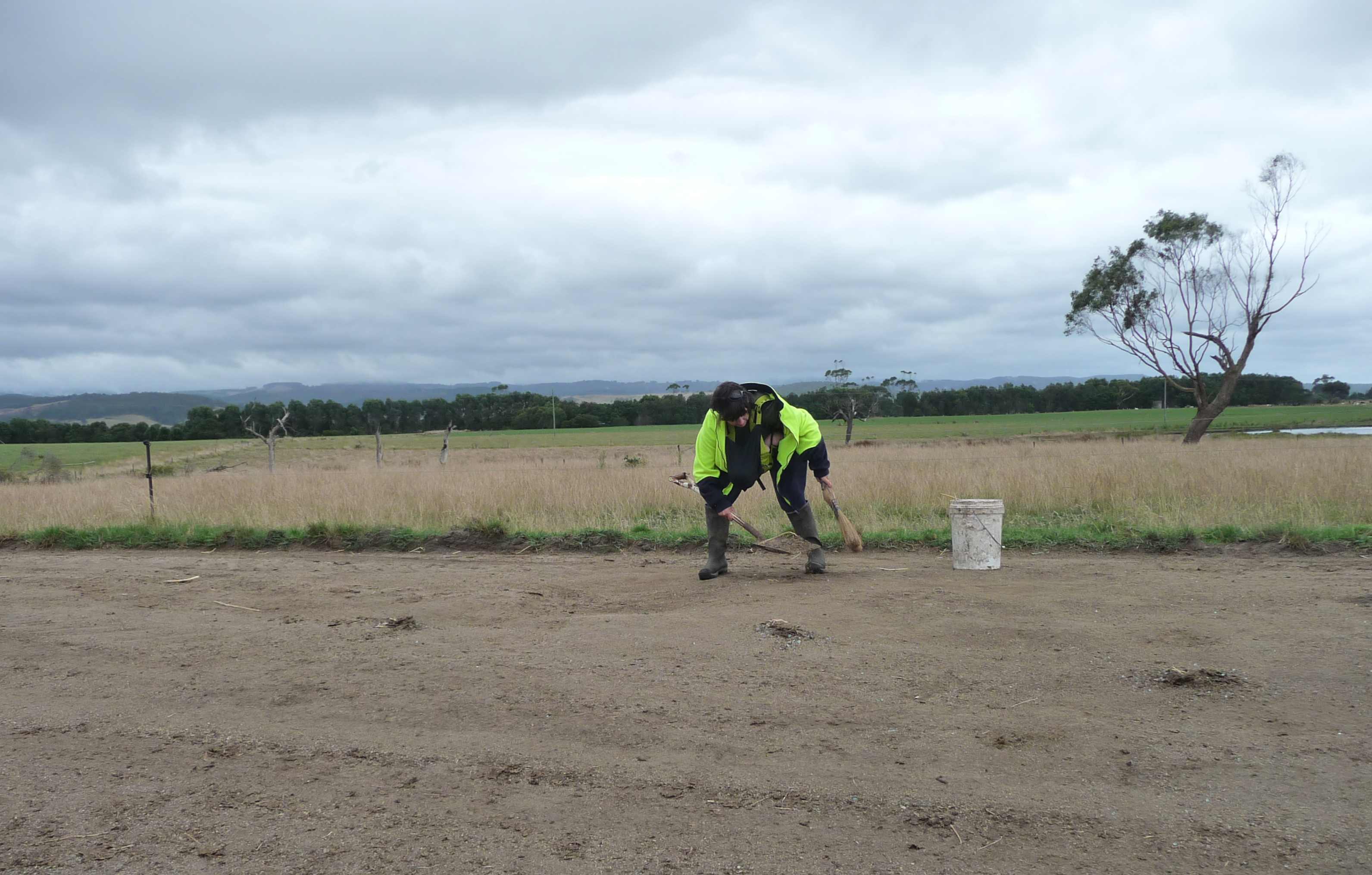
When a tractor window got smashed on the track, the only thing for it was to sweep all the glass up. Nearly broke Old Macdonald’s back!

Sweeping the cow track

Sweeping the track as Alex enjoys a hammock ride

The track is soft gravel for maximum cow comfort while providing a relatively mud-free surface. Last year, when the wet was at its worst and the cows’ feet were extra soft, we had loads of pine mulch spread on the tracks to provide more cushioning. Mulch works really well but unfortunately traps mud and eventually breaks down into a horrible mushy gumboot-gobbling goop.

The dairy yard is concreted for durability. Because smooth concrete can get too slippery for the cows, one of our first farm improvements was to have diamond-shaped grooves cut. The grooves help to drain the concrete and make it more grippy without becoming abrasive.

Grooved yard

What a groovy place to hang out

Just getting some extra cred

Remember Zoe and Pearlie Girlie?

Zoe and Pearlie Girlie back in November

Zoe and Pearlie Girlie back in November

Well, since I wrote about the tender relationship between young farmer and young cow, Pearlie Girlie decided to make a grab for power and began to scare me – taking a few aggressive strides towards Zoe and wagging her head. We’ve been making sure Zoe stays well clear of the little cow but, today, Zoe reclaimed her rightful position as boss.

Zoe is boss once more

Zoe is boss once more

Salmonella wipes the smiles from our faces

All four of us were enjoying sending the cows to the crop this afternoon sun when we realised something was wrong with one of our young cows. 1201 is not normally at the back of the herd but this afternoon she just wanted to bumble along slowly. This little cow is extra special to me because she was the first calf to be born after I took over the reins of the family farm and I always smile when I see her. Not today.

As I drew up beside her, I saw she was breathing heavily and to my horror, I found orange mucus trickling from her nostrils. We called the vet and nudged her gently along the track to the crush for an examination.

Pete arrived and checked for sugars in her urine, smelled her manure and found mucus in it, listened to her gut, heart and lungs, then reached into her gullet. The diagnosis: salmonella. Pete took a blood sample to confirm the diagnosis and ascertain the strain so we can respond appropriately if more cows fall ill, prescribed a course of antibiotics to fight the infection and delivered fluids straight to her gut to keep her hydrated.

We suspect the source of the contamination may have been the wildlife attracted by the crop and the dam (ducks love eating rape). Because salmonella infections in cattle can be passed on to humans, we will be washing our hands with the zeal of Lady Macbeth from now on.

The little cow is now in quarantine close to the house where we can keep an extra close eye on her and offer plenty of TLC.

Hell, no, we won’t go!

The cows have been known to take industrial action before but yesterday, they took it to a whole new level. This is what started it all:
Cows make their presence felt

"Get a mooove on and let us have our crop, NOW!"

With the onset of summer, we’ve had to give each paddock a longer rest between grazings, which means less grass for the cows. We make up for it with extra grain, hay, silage and crop. This means our arrival signals food and they watch us like hawks. My big mistake was to shift the tape in the crop paddock in full view of the herd.

They were a fairly disgruntled bunch – it was their third day in the paddock and even though they’d just stuffed themselves with five rolls of silage and vetch hay, they wanted out.

We dutifully finished setting up their dessert settings and returned to the “main dining room” to escort them to the crop. Sounds ideal? Well, not quite. The gate out of their paddock was in the opposite direction of the crop, so they effectively had to walk 75 metres and do a U-turn.

At first, they simply refused to move, pretending they didn’t understand what we meant by our standard “C’mon girls” call. So we upped the tempo a little by Unleashing the Zoe and tooting the horn but they just milled around us.

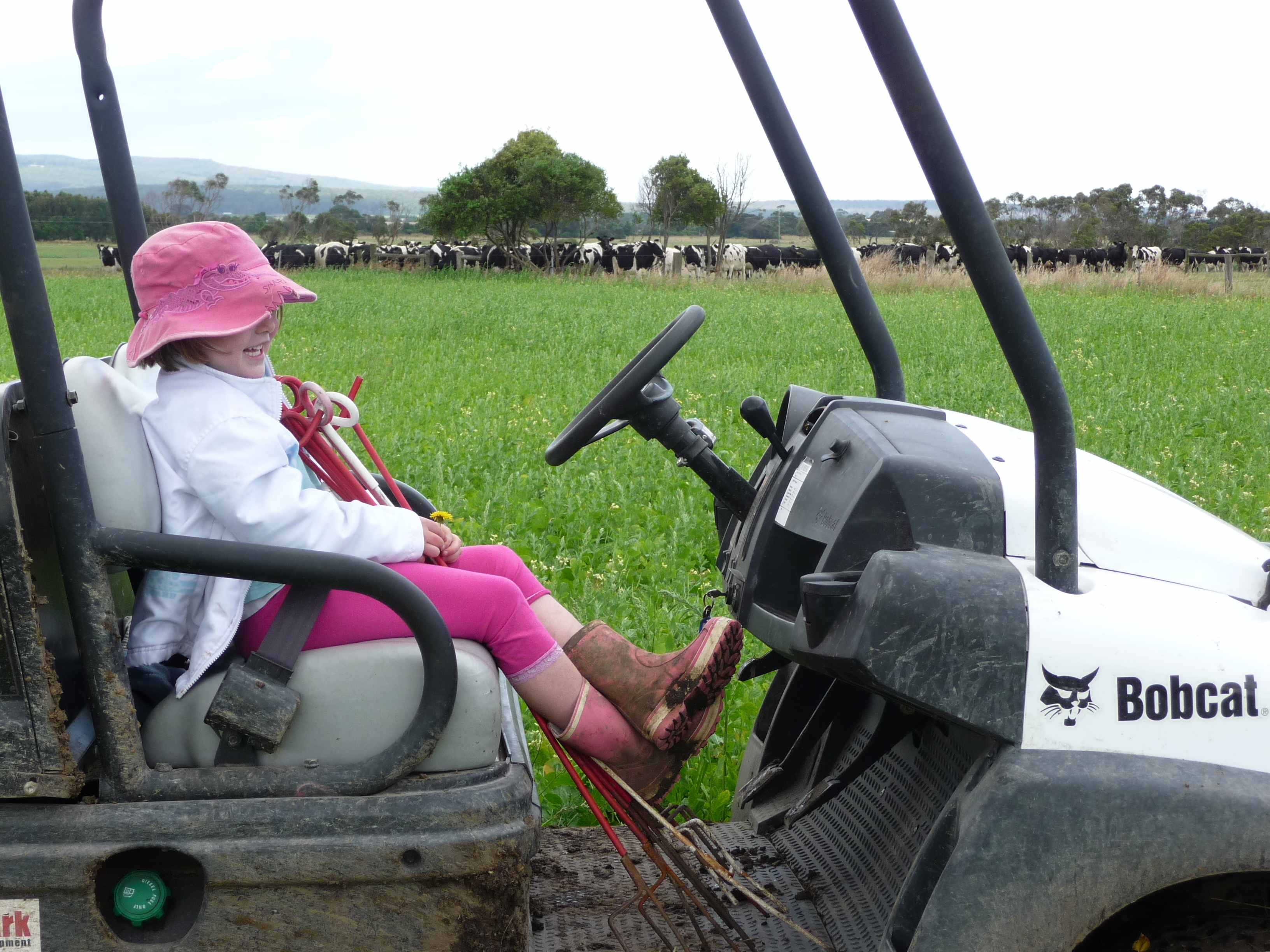
In desperation, I asked Zoe to hop aboard the Bobcat for safety and started a concerted campaign of whizzing backwards and forwards accompanied by furious tooting. It was like trying to push back the tide. I moved one end of the herd, the other half swelled back towards the crop.

Knowing that Wayne was in the adjacent garden building Zoe’s cubby, I figured he’d come to assist soon. He didn’t. “WTF is he doing?”

It took 15 minutes of encouragement to get them the 75 metres to the gate and about three minutes for them all to make it to the crop from there. “Oh, that’s what the humans meant!”

So where was Wayne? In the house, sharing chocolate biscuits and coffee with the neighbours while we unwittingly entertained them in the paddock. Apparently it was very funny.
Find out why these cows are soooo excited

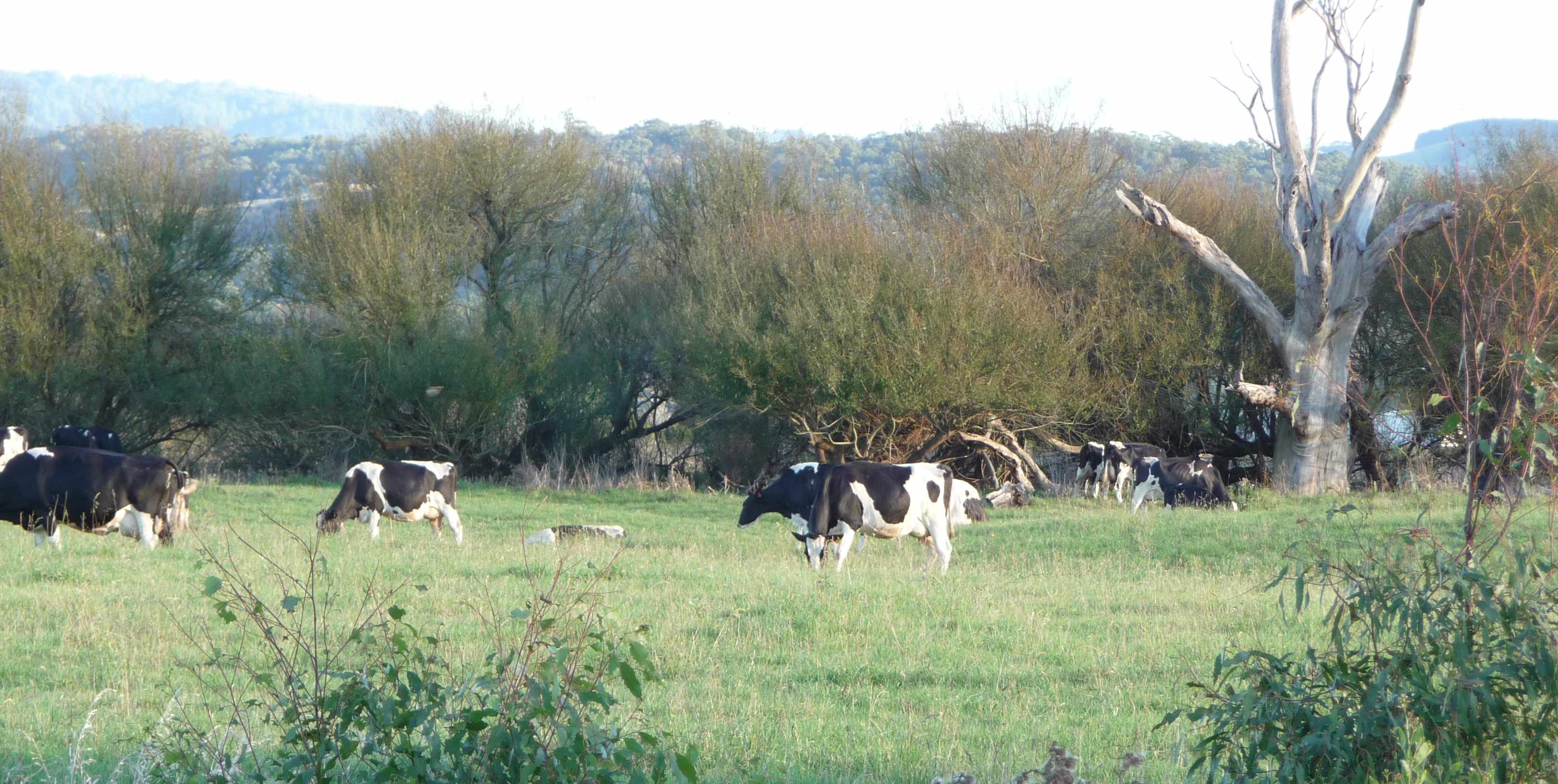
Do you know why these cows are so excited? Surprisingly, it’s not my cinematography skills (apologies) but the prospect of a wonderful meal of luscious green rape.

We planted the rape crop on November 19 to provide some quick, high energy, high protein food for the cows during summer. It was done at low cost and with the intention of grazing it off as soon as the caterpillars launched an attack because I don’t have the stomach for chemical warfare on farm.

With clouds of white butterflies hovering over the crop, I decided today was the day. We sectioned off a small part of the crop with a temporary electric fence and let the cows in for a belated Christmas feast. Really, it was more of an appetizer because you have to make sure cows don’t gorge themselves on brassicas to prevent the dreadful kale anemia.

Cows grazing forage rape

Delicioso!