Pregnancy a man’s job today

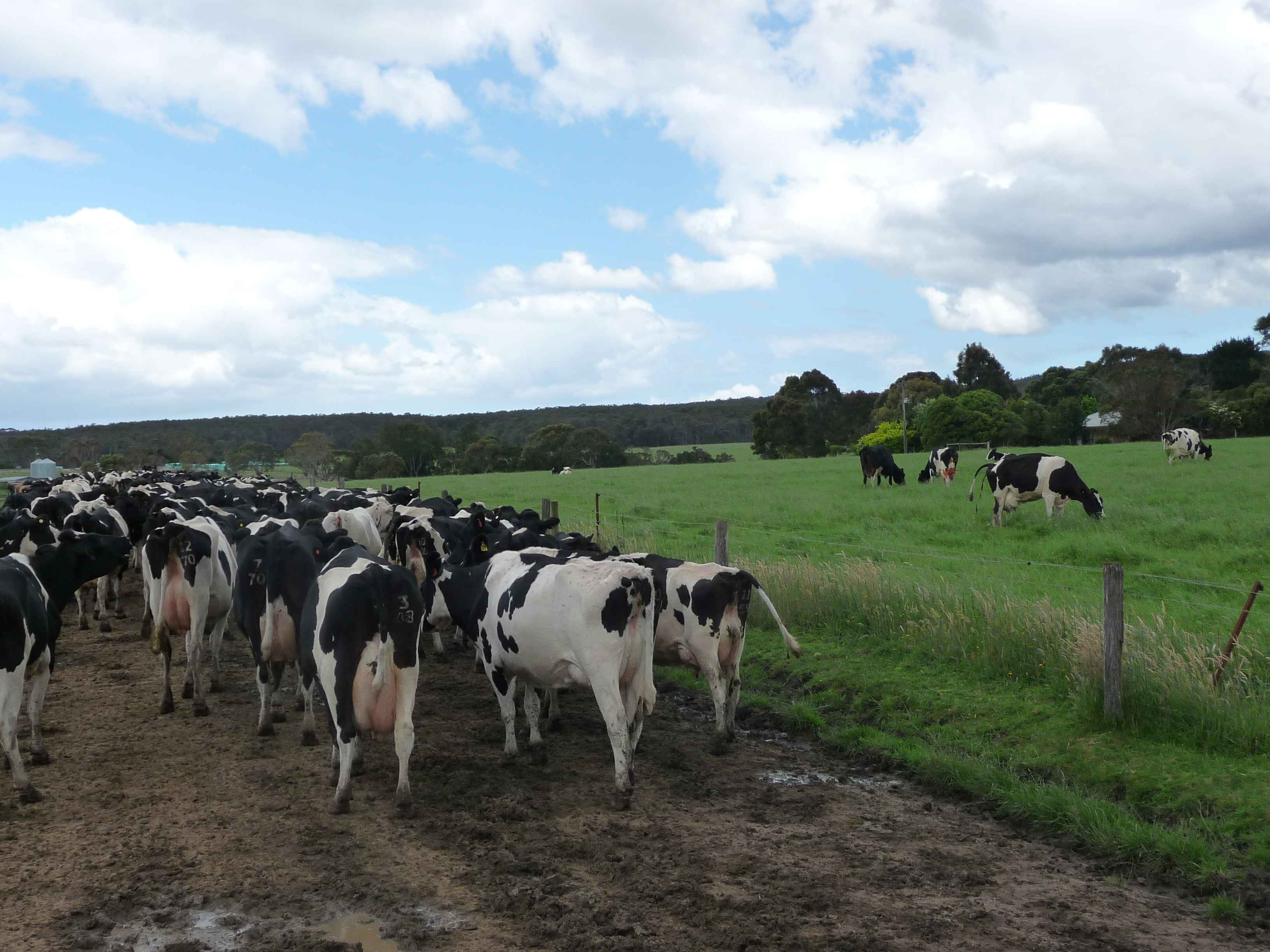
Wayne, Clarkie and vet Pete are down there at the dairy right now with half of our cows for the second day in a row. I suspect none of them are having fun.

It’s preg test and vaccination time. This is not a job for someone carrying a baby on her stomach because it is intense and there’s the risk of being hit by a kicking cow but it’s a must.

The “7 in 1” vaccinations protect the cows from a multitude of diseases. According to the supplier:

Blackleg, tetanus, malignant oedema, pulpy kidney and black disease are all clostridial diseases and are amongst the most common causes of death of cattle around Australia.

In all cases unvaccinated stock contracting these five diseases have very little chance of recovery. In fact often the first clinical signs seen by producers are dead cattle.

It also protects anyone working with our animals from a very nasty cow-borne disease called leptospirosis that can leave people ill for months – even hospitalised.

The preg tests let us know when to send each cow on her annual two-month holiday before calving. This rest helps her through late pregnancy and sets her up for a whole new season in great health.

Cows, sunburn, hand grenades and zinc

Have you ever had sunburnt nipples? If so, spare a thought for cows that need to be milked twice a day who succumb to the oddly-named “facial eczema”. This condition leaves the skin incredibly sensitive to light, to the point where whole sheets can burn and peel off.

We normally don’t get it in this part of the country but it’s been a problem for the Kiwis for decades and we’re lucky to be able to learn from our trans-Tasman dairying friends because it appeared in our part of Australia last summer and we are desperate to avoid it this year.

Dozens of our poor girls suffered burns to the white sections of their skin. It was hideous and we felt devastated. The only treatment is sunscreen, rest, shade and anti-inflammatories.  We also gave the cows extra drench to make sure their systems were as robust as possible.

The good news is that the New Zealand experience shows that we can help to prevent facial eczema. The key is to understand the cause: spores that look like hand grenades under a microscope.

Yesterday, the local pub was packed with dairyfarmers as we heard from a Dairy Australia project team that includes legendary dairy vets, Jacob Malmo and Jack Winterbottom, DA’s feed guru Steve Little,  and nutritionist, Andrew Debenham. In a nutshell, this is what they had to say:

Grass + humidity = fungus that generates spores

Cows eat grass and spores → spores release a potent mycotoxin called sporidesmin into the gut

Mycotoxin damages liver → liver cannot deal with chlorophyll properly → skin tissue sensitive to sun → sunburn

While the sunburn is the most obvious sign of facial eczema, the other symptoms can include diarrhoea, bloody urine, jaundice, a drop in milk production and even liver failure.

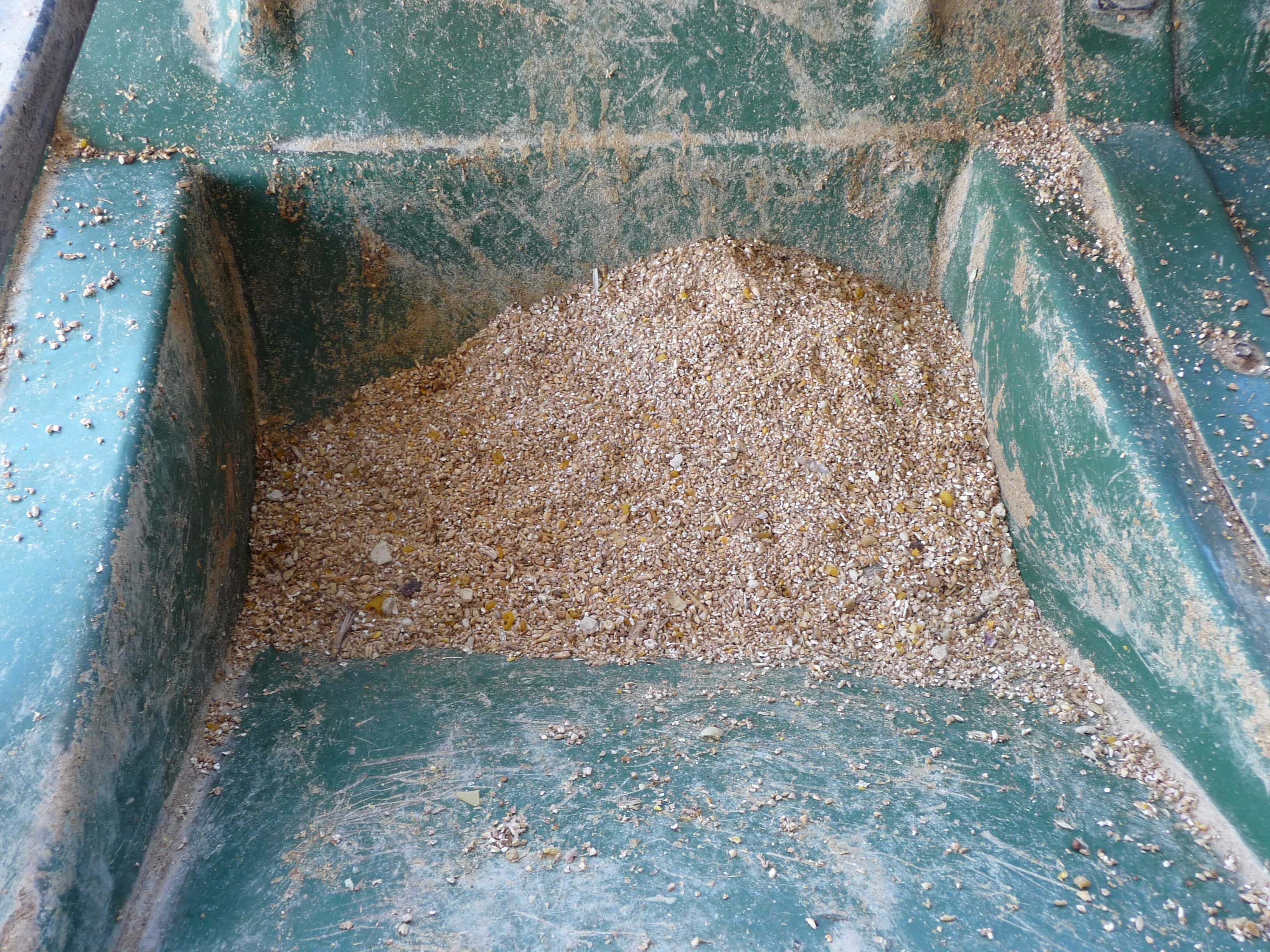
The Kiwis have found that zinc binds up the mycotoxin, inhibiting its ability to release free radicals and cause damage. We have to be quite careful with it though because too little is ineffective and too much zinc is very toxic indeed. It seems the best way to provide it to the cows is mixed into the feed, which we’ve been doing on our farm now for a month. The other downside is that it’s only known to be safe to feed for 100 days – not long enough to get through the summer/autumn danger period. After that, we will need to take regular blood samples and make sure zinc levels aren’t getting too high. I’ve arranged for the vet to come next week  to be sure our cows are getting just the right amount.

To learn more about facial eczema and how farmers are working to prevent it, check out this Dairy Australia fact sheet and booklet. It’s a must for anyone with cattle.
Our cows are so cool

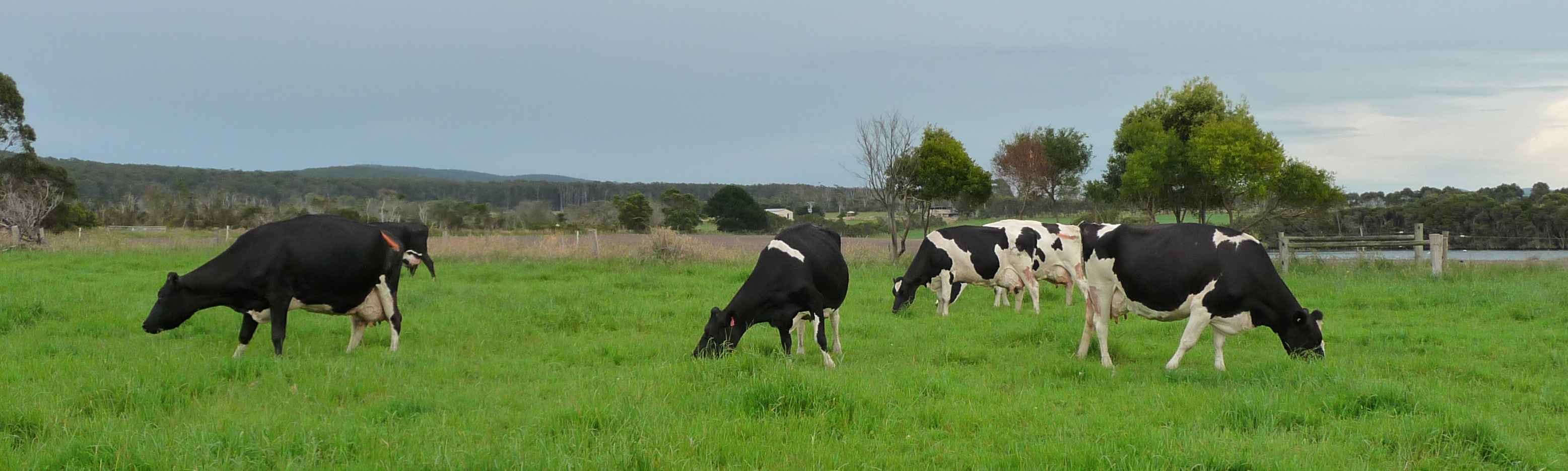
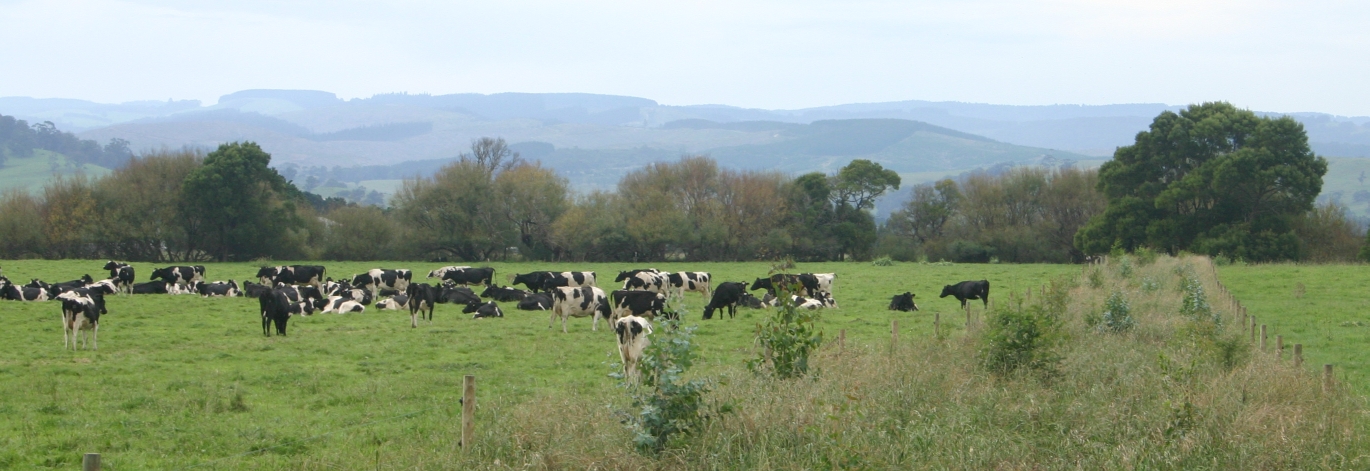
Our cows are dignified ladies who like to keep their cool in more ways than one. Bred in cooler climes than Australia, Holstein Friesians start to feel the heat once the mercury climbs over 25 degrees Celsius.

We’ve been really busy preparing the farm to help them deal with hot summer days:

  • planting thousands of trees for shade

    New plantation for shade and wildlife

    New plantations will provide shade for the cows and corridors for wildlife

  • installing 4 kilometres of large capacity water pipes and 17 massive water troughs. Milking cows can drink up to 250 litres each on a hot day or 20 litres in a minute!

    Water trough

    Installing water troughs has been a 3 year project

  • putting up sprinklers in the dairy yard to offer a cool shower while they wait to be milked and

    Yard sprinkler

    A shower cools the cows, the concrete underfoot and offers relief from flies

  • adding salt, minerals and zinc to their diets.

    Feed in the bail

    Zinc is added to the cows' feed during summer

I also select the paddock for the day with a keen eye on the forecast. Today is pretty uncomfortable, so they’ve been sent to a paddock ringed with trees and will graze a more open paddock tonight.

Cool cows are happy, healthy cows who make more milk, suffer fewer illnesses, carry pregnancies better and are nicer to work alongside! Dairy research body, Dairy Australia, has done lots of work on heat stress in dairy cows and you can access lots of useful info at the Cool Cows website.


Cows say “it’s not fair!”

As you may already know from my post about the herd’s concern for OHS, cows do not stand any nonsense from farmers. They also have a strong sense of justice.

Cows say "It's not fair"!

Cows say "It's not fair"!

That sense of fair play was offended yesterday when the herd walked past those in the lush hospital paddock towards the dairy. Bellowing and pointed staring at the “cheats” still in their paddock ensued and I had to Unleash the Zoe to get the herd moving again.

It’s not just the herd that has been upset by the separation of the hospital group. The patients are reluctant to go into their paddock after milking, preferring instead to hang around on the track in the hope that they can rejoin the herd.

Cows hate being separated from their peers and, ironically, this does help when their calves are moved from the paddock to shelter. Many cows seem to prefer “adult” company.

Look at my sick dairy cows

Cows in hospital paddock

Cows in hospital paddock


These cows look fine but they’re in the hospital paddock because they have mastitis. It’s an infection of the udder that can be caused by bugs out on the farm, stress or some form of “mechanical damage”, like a bump or malfunctioning milking machines.

Sadly, it’s been a big problem for dairy farmers in southern Victoria this season. Very wet conditions are the perfect breeding ground for the bugs, which include e. coli and staph. Our cows have not been immune and the co-op’s milk testing showed up increased levels of white blood cells – a sign that the cows are fighting infections.

Our first step was to look for cows with the classic symptoms: hot, firm quarters and clots in the milk. We do this routinely but we stepped it up a notch, closely examining every single cow and her milk in one night. We found a couple of cases but not enough to explain our herd’s elevated cell counts, so there was nothing for it but to carry out a spot herd test.

To do this, we divert a little milk from each cow into sealed tubes for analysis at the lab. They tell us which cows have high cell counts but can’t identify the bugs. So, yet another sample was taken from each of the high cell count cows, frozen and couriered to yet another lab. Four days later, we have the results and vet Amy has created a treatment program for each of the cows!

They’ll stay in the hospital paddock, though, until their course of treatment is complete and the milk tests free of antibiotic residue.

Is it cruel to use bulls to get dairy cows in calf?

Bull  waits for cows

Hello ladies!

A dairy farmer speaking with ABC Rural reporter Michael McKenzie the other day didn’t really get to explain himself after suggesting that using bulls rather than artificial insemination was linked with inductions.

For decades, it’s been pretty standard practice on Australian dairy farms to use straws of frozen sperm rather than natural matings. Artificial insemination (AI) doesn’t hurt and using frozen semen allows farmers to select traits from the best bulls around the world.

Each bull is given a numerical rating for the characteristics they pass on to their daughters. The scope is amazing – everything from teat length through to temperament is measured – and we can use that information to select sires that will correct problems in the herd. If, for example, we have quite a few cows with short teats, we can choose a mate whose daughters tend to have unusually long teats.

In this way, our cows get naturally healthier and stronger, generation after generation. Better legs and feet means less lameness, while better udders means less mastitis (oh, and susceptibility to mastitis itself is on the list, too!).

There is a drawback though. People are rarely as good as bulls are at detecting when a cow is fertile. Bulls curl back their lips to seemingly drink in the pheromones undetectable to humans while frozen semen may also be less potent than that of a bull.

For this reason, most farmers who aim to have the herd calve over just a few weeks use AI followed by a short period of natural matings with “mop up” bulls.

The farmer was trying to say that he used just the AI, effectively mating his cows over less time. That’s his choice but I can’t see how it has any impact on whether a farmer uses drugs to induce an early calving. If you want a lot of calves in a short time, feed the cows well, choose sires well ranked for fertility and pull the bulls out early.

As you can see from other Milk Maid Marian blog posts, I believe inductions for any reason other than the welfare of the mother cow should be banned. I am not alone – most dairy farmers detest it. The practice is already almost wiped out, with only 1.58 per cent of Australia’s dairy cows induced in 2010. Still too many but a long, long way off the epidemic suggested in media reports.

A young cow and a young girl

Zoe and Pearlie Girly the Cow

Zoe and Pearlie Girly have a unique relationship

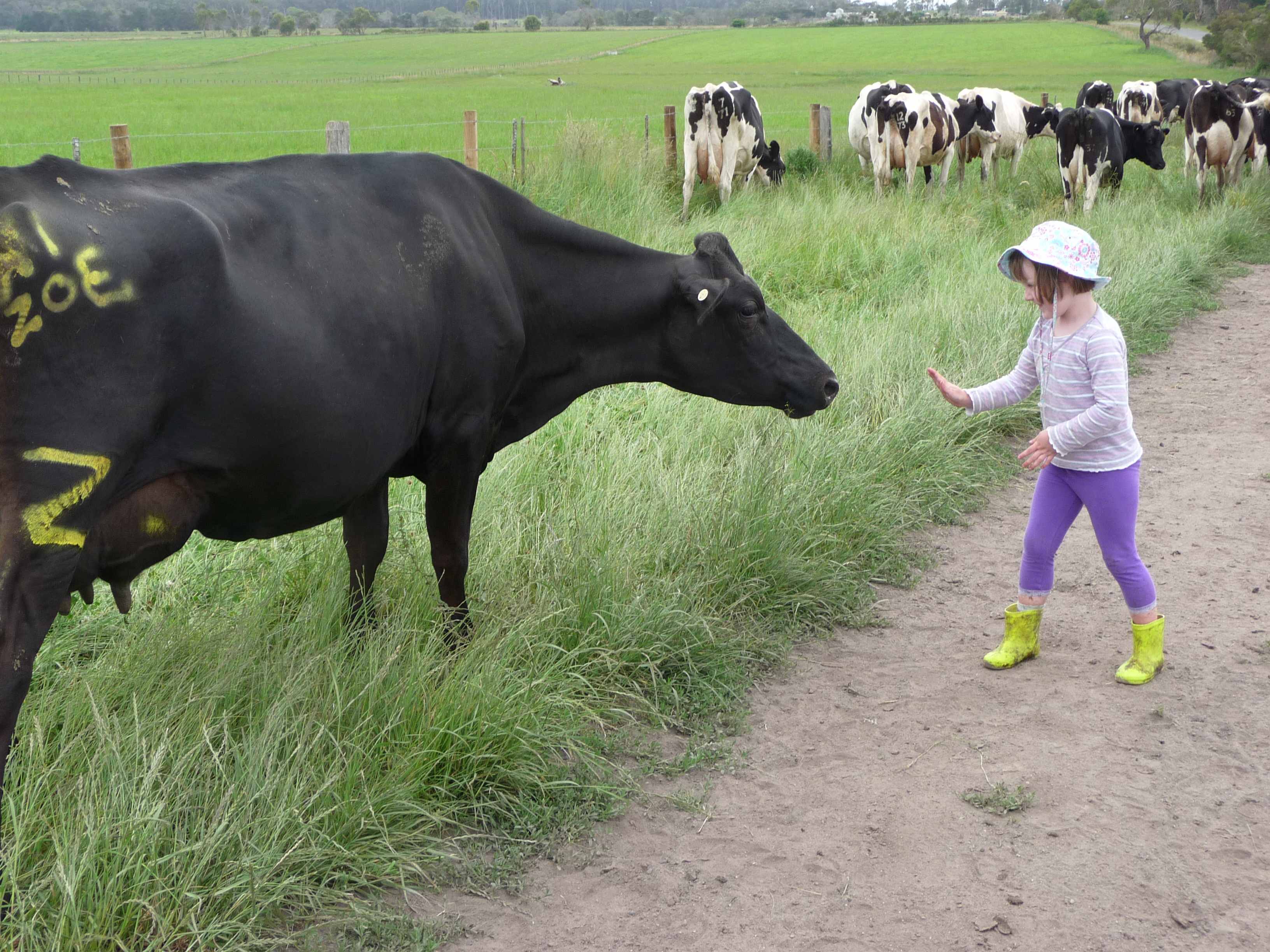
Meet Pearlie Girly. Just like her equally cheeky mate, cow 33, Pearlie Girly is a young crossbred cow with an extra dose of personality. Since she is always one of the last in the herd to come into the shed, we get to spend a lot of time with her and Zoe has struck up a curious relationship with the little cow.

Pearlie likes Zoe. Zoe likes Pearlie. Pearlie lets Zoe pat her on the shoulder. Pearlie says “Enough!” and that’s it for the rest of the trip to the dairy. Oh, to be queen of one’s domain…
 

Ashamed to be a dairy farmer today

Yesterday, two industry representatives and a dairy farmer spoke about the treatment of bull calves on Australia’s Radio National program, Bush Telegraph.

It made Victoria’s dairy farmers appear as callous as Big Tobacco and today, I am ashamed to call myself a farmer of any description, let alone one that bludgeons premature calves to death with an axe.

The media feeds voraciously on such hideous depictions and it will be all over the internet and in the mainstream media unless something with even more news appeal happens this weekend.

This is something we can’t deal with by talking about industry standards and so on. Nobody believes that stuff. None of it resonates in the soul. We need to tell people the whole truth and how we feel about it.

And the truth is this:

I will never induce the birth of a calf unless its mother’s life depends on it. In the four years since I took over custodianship of the family farm, this hasn’t happened.

I can barely manage to hear the shot ring out as a suffering animal is euthanased humanely, even though I know it is the right thing to do.

I will always put the quality of our animals’ lives before profit.

We sell every bull calf we can to neighbours who rear them until they are big and powerful steers, even though we sacrifice income to do it this way.

The bottom line is that I will not do anything on the farm that I could not show five-year-old Zoe without any qualms. Our farm is also our home and we could not live with cruelty.

Farmer’s forums are jammed with distressed dairy farmers this morning and I spoke long into the night about it with another yesterday. I am ashamed yet I am proud to know I am not alone in this. If you are a farmer reading this, please add your voice to the news forums and don’t be afraid to tell them how your heart guides you.

Why female elephants are called cows

“The problem with farmers is that they use all their vehicles as observation platforms,” someone told me recently and it’s true. We are always on the lookout for our animals, often without even realising it.

If the Bobcat is an observation platform, the house must be command central, so when I gazed out the kitchen window last night and saw this, I had to investigate.

Spying on the cows from the garden

Spying on the cows from the garden

The cows were gathering around a water trough rather than going into a truly delectable paddock of long yet succulent cocksfoot right nearby. This meant trouble. Either it was an empty water trough or the gate wasn’t open.

When Alex and I arrived, we found the trough brim-full and the gate wide open but the cows were angry. Angry cows mill about, urinate all over the place and sound very disgruntled. Could they have missed the open gate? I drove the Bobcat into the paddock and the mooing just got louder.

Cows outside the gate

Were the cows holding a stop work meeting?

I came back out for a “chat” and a delegate presented herself.

cow delegation

"We have an OHS issue"

It appeared there was an OHS issue to resolve. Now I know why elephants are called cows: because, like their bovine counterparts, they never forget.

During the big wet, the gateway had turned to porridge – a gooey mud that cows hate – and it was cow 33’s duty to inform me that she and her colleagues were having none of it this time. So I walked on it and she followed. As you can see, cow 33 is a young Friesian Jersey crossbred and these little cows have chutzpah beyond their years.

Once 33 had okayed the worksite, everyone else followed.

Cows entering paddock

It's good to go, girls!

Why are so many people interested in a cow’s vulva?

There have been just over 10,000 views of my blog since I started it in April and I’m delighted to have struck up conversations with so many people in such a short time but something has got me stumped.

The second most common term people used to reach the Milk Maid Marian dairy blog via a search engine was “cow vulva”. Why is this so fascinating? I’ve only referred to it once in passing in the blog. If my naivety is telling and I have offended anyone with its mention, please accept my apologies.

Farm life is educational but not “discreet”. Five-year-old Zoe knows how babies are made and, equally, what it means to die, simply by observing the cycle of life as it unfolds here every year.

I’d love some suggestions about future posts, so please don’t be coy!