From soggy paddock to paradise

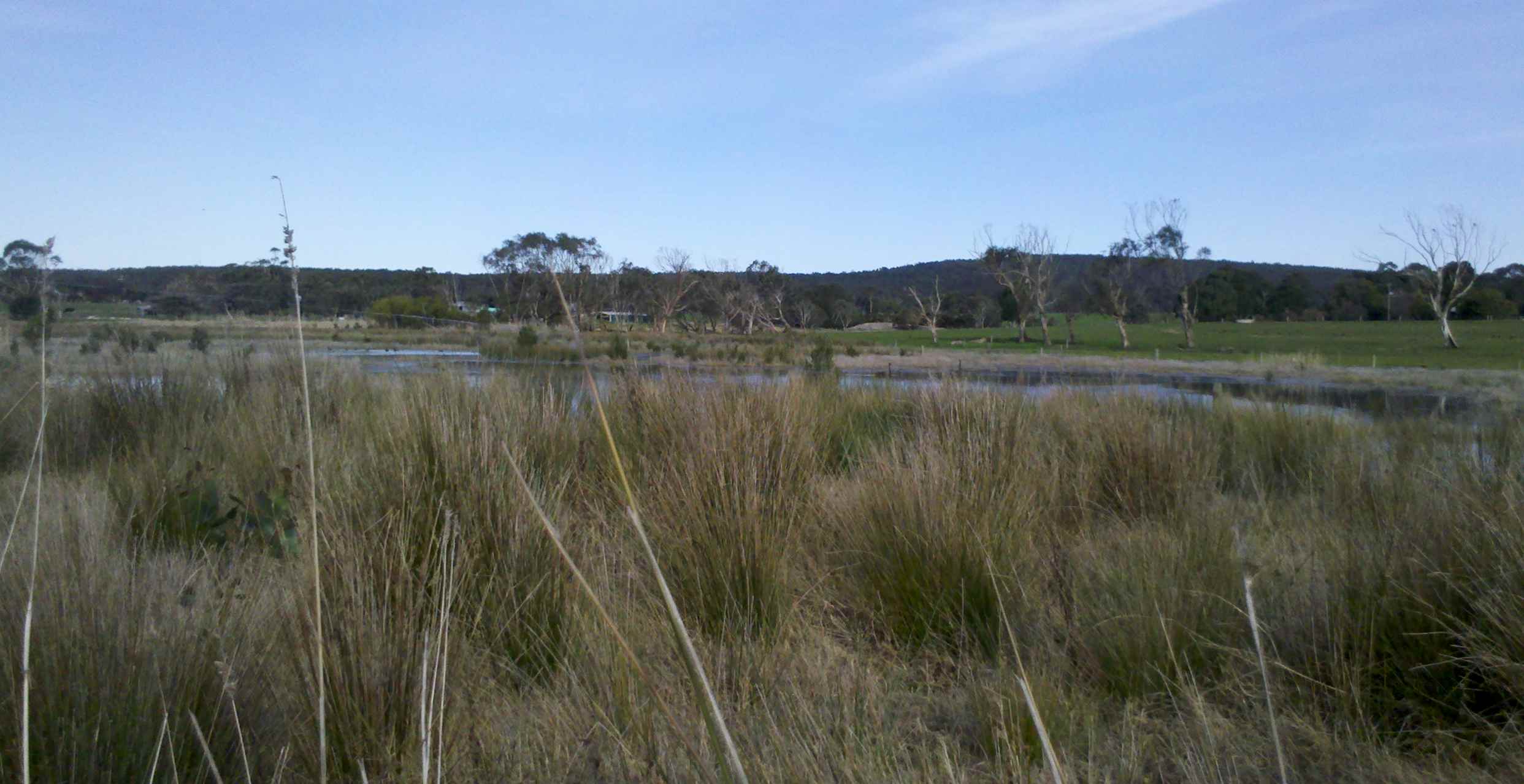
Can you spot two black swans and a flock of wood ducks and moorhens?

Can you spot two black swans and a flock of wood ducks and moorhens?

Stretching a temporary fence across an adjacent paddock in the warm winter sun, I was captivated by the scene through the tussocks. Two black swans were gliding across the water, a mob of moorhens were stretching their long orange legs, while a dozen or so wood ducks gathered a little way off.

It wasn’t always this way. This is, or was, paddock 17.  One of the lowest parts of the farm, paddock 17 was often under water and when we investigated the soil, we found it was a potential acid sulphate soil (PASS) with high levels of salinity. The safest thing to do was leave it alone, so we fenced it off and, one November, planted 800 moisture-loving plants with the help of a Landcare grant and the hard work of the Victorian Mobile Landcare Group volunteers.

The next two seasons were the wettest on record and I thought we’d lost the lot. We moved the fence out further and the Wellington Shire offered some extra money to replant the margins. Well, it’s all taken off – even some of the first plantings I’d given up on – and we now can boast a magical on-farm ephemeral wetland habitat.

Put yourself in the paddock with me for a few seconds and listen to this:
 

Why Landcare matters

It’s one of my earliest memories. Mum, Dad, my little brother and I took a tiny tree wrapped in paperbark down the paddock and planted it by the bank of the gully. It was a big affair that must have taken an hour by the time we got there, assembled the guard and wandered home again.

But that’s what “tree planting” meant back then and here is the very same tree today.

How we planted trees 40 years ago

A tree just about as old as the Milk Maid

Everything changed in my teenage years when we joined 20 or so of our neighbours to visit a nearby farm criss-crossed with healthy young stands of trees. John and Gayle had created an oasis on a windy flat. It was the first Landcare event I can remember and Dad and I came away totally inspired. He set about planting trees.

An aerial photo of the farm in 1994 shows young trees emerging around the dam but little else. It was still a blank canvas but there was a sniff of success.

The centre of the farm in 1994

The centre of the farm in 1994

Can you see a few trees along a rough line in the centre of the picture? It’s a denuded gully that now looks like this, thanks to Dad’s hard work and a Landcare grant that went towards his costs:

The gully 20 years later

The gully 20 years later

During my six-year-custodianship, we’ve planted nearly 10,000 trees and re-fenced our 11 hectares of forest with the help of Landcare, the local catchment management authority, the shire and Greening Australia. Although the funding sources are diverse, it’s all happened because of Landcare as the group acts like a triage service, matching funding sources with farm projects. The funding doesn’t cover everything but it does make it possible, especially with practical help from other Landcarers.

Landcare continues to inspire. In the last few years, our local Landcare group has created a grand vision that brings together the work of individual farms: creating wildlife corridors that stretch from the forest to the river to the foothills across farms, linking precious remnants to provide a network of habitats. And it’s working. Together, we can see that it’s not just our own farms that are changing, it is the entire landscape.

In this, the 25th Anniversary of Landcare, the Commission of Audit has recommended halving its funding – just as this powerful grass-roots volunteer movement has really begun to make a difference. Do you care? I do.

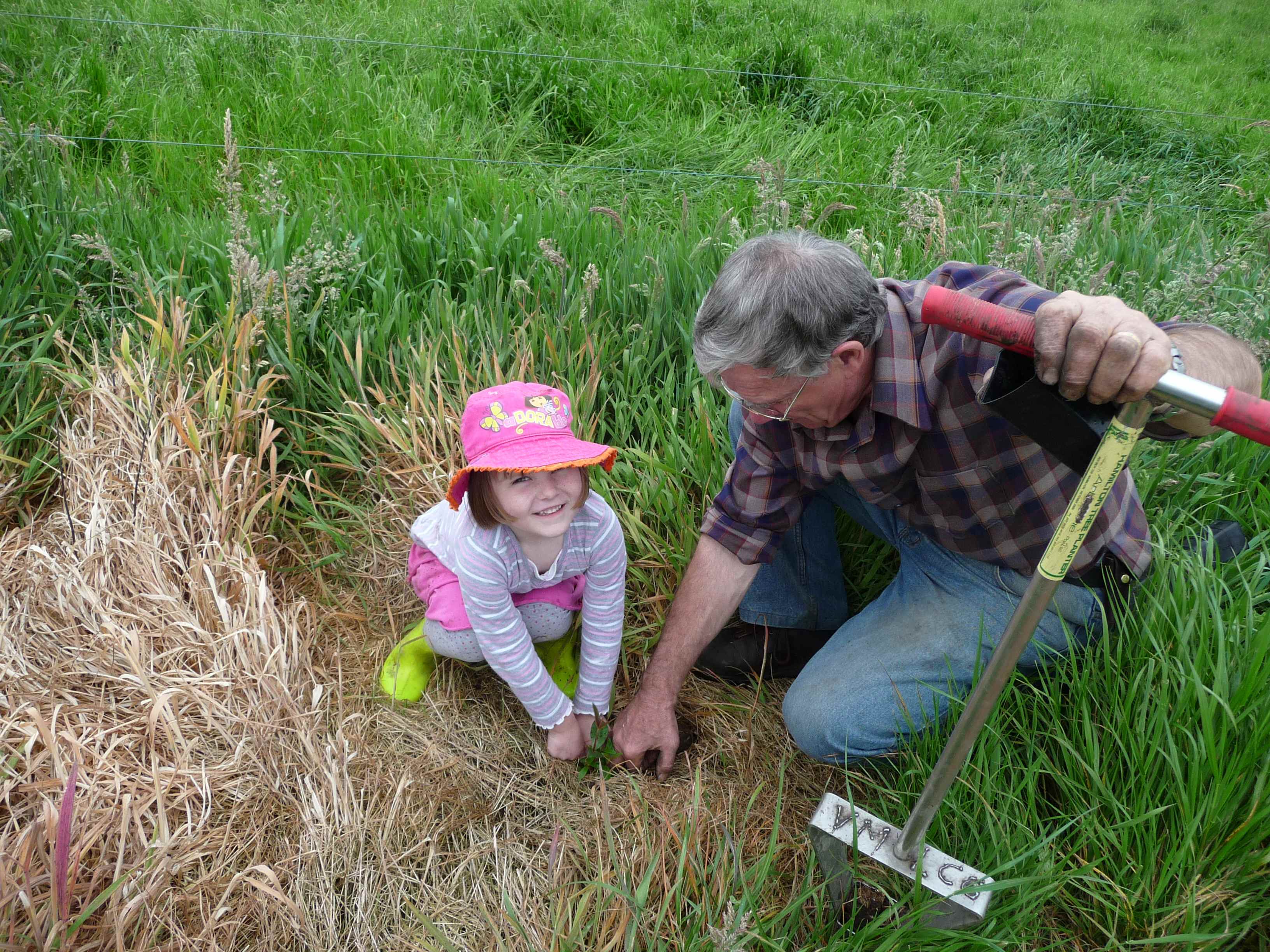
Bruce and Zoe planting in late October

Bruce and Zoe planting trees in October 2011

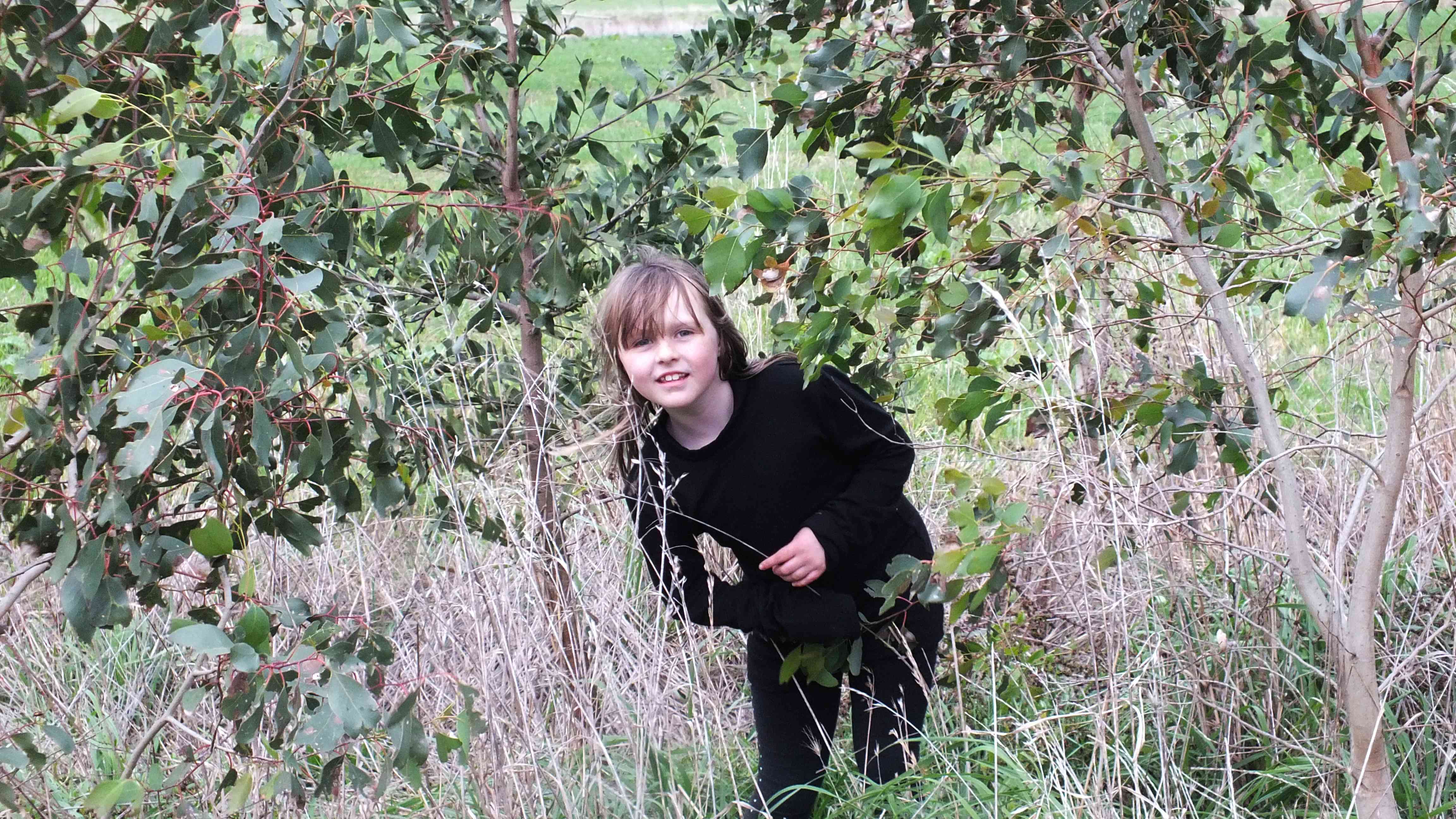
Progress: peeping through the same trees two and a half years later.

Progress: peeping through the same trees two and a half years later.

The faraway tree: our little piece of forest on the farm

From the forest into the light

From the forest into light

This has been a tedious morning of fence repairs – bending staples in decades-old wobbly hardwood posts and untangling cantankerous strands of barbed wire – so when we found a tree over the fence in the bush block, the kids and I broke it with a little “adventure”.

Inside our boundaries lies just 11 hectares of largely unremarkable bush. But it is a wonder, too, full of secret paths, dripping lichen and toadstools. After early hesitation, the kids relished their chance to explore this forgotten forest, darting here and there down the wallaby tracks, ducking under monstrous spider webs and peering into mysterious hidey-holes.

Days like this, it’s great to be a milk maid!

Instilling a love of nature the Brave New World way

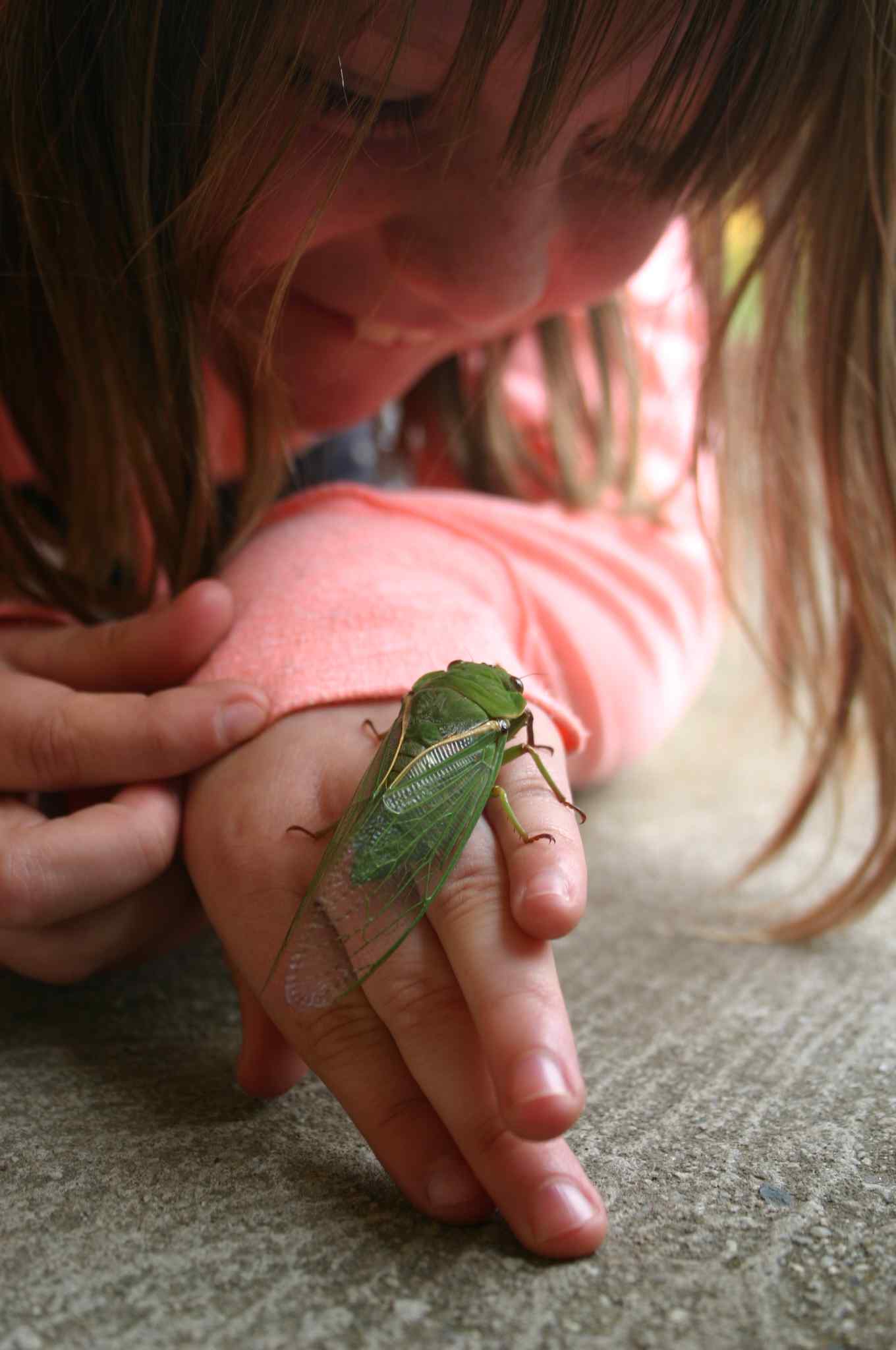
When Alex found this gorgeous green grocer cicada, he was a little wary. But, of course, cicadas don’t bite – they’re sap suckers – so I encouraged our little people to have a really good look at the marvellous creature.

CicadaZoeGrinLoRes

Once Alex saw Big Sister having fun with the green grocer, he was more inclined to get into the act, beginning with a cautious stalking session.

CicadaStalking

Then, with some trepidation, he let it creep slowly across his fingers and was actually starting to enjoy the encounter when the impossible happened: the wretched winged wolf BIT him.

CicadaDrill

Alex’s hands shook and tears began to well but the green grocer clung on with all six hooks and the proboscis too! We finally flicked it off a little less carefully, I must admit, than I’d like.  Twenty minutes later, Little Man was off for his afternoon nap, only to wake with a “Cada hurting me, Mama!” nightmare.

So much for instilling a love of nature. More like a Brave New World conditioning session.

PS: If you were under the illusion that cicadas won’t hurt you, watch the reaction of this grown-up:

For our children

Have you seen this?

Yes, it’s by Unilever. Yes, you’re entitled to be cynical and yes, I love it.

The global manufacturer and ice-cream maker has just accredited Australian dairy production as meeting its Sustainable Agriculture Code – a huge accomplishment, which is also a world first. Of course it doesn’t mean Australian dairying is perfect and Dairy Australia has published a Sustainability Framework that will nudge us all to do better.

Here on the farm, our family does a bite-sized project for the environment every year. We have:

When I say “our family”, I have to stress that we haven’t been able to do all this without help. Grants from Landcare, Greening Australia and the Wellington Shire, work by the West Gippsland Catchment Management Authority, together with the hard yakka of volunteers from the Victorian Mobile Landcare Group and some of our friends have made the tree planting possible.

It just goes to show what we can do when everyone pulls together.

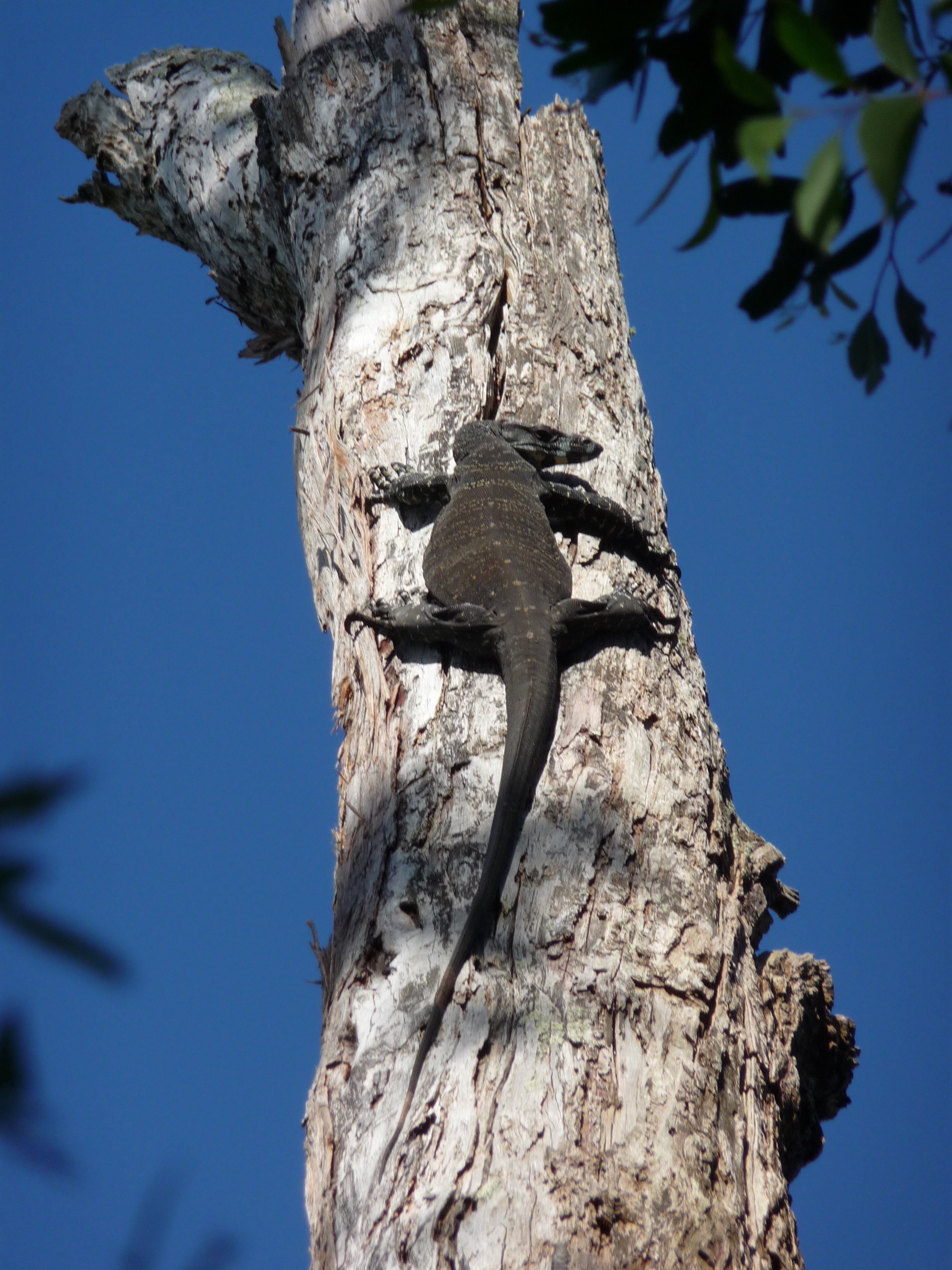
Goanna

When even the paddock gets fleas

This November has been one out of the box: hail, bad hair and now, fleas.

The hail I didn’t photograph. The hair? I’ll let Alex show you:

MudDigger

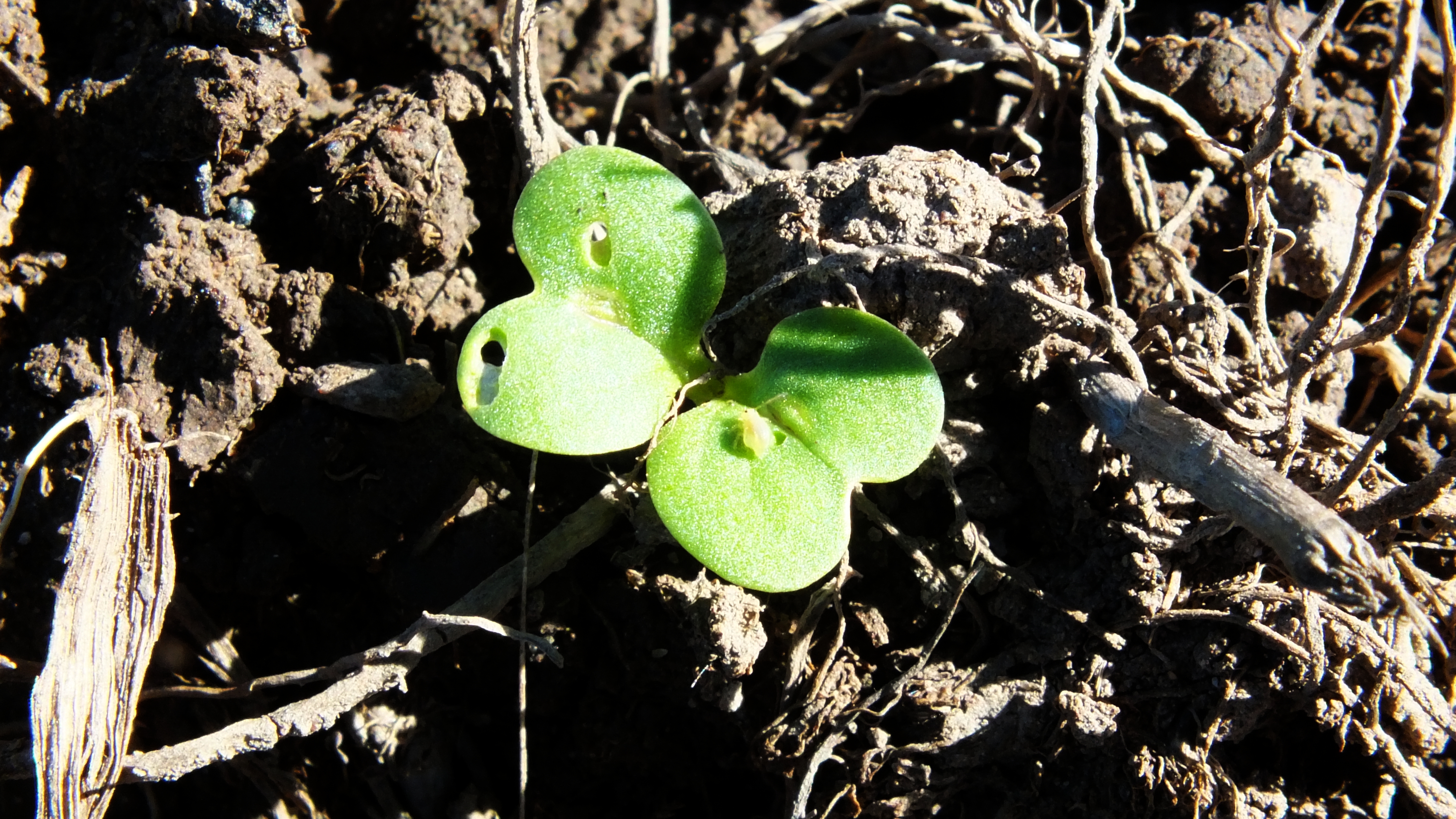
The fleas? Today, I was out crawling around in the paddock (as you do on a sunny Saturday afternoon), when I discovered someone had been out to lunch on the juicy new rape salad I’ve been growing for summer.

Yikes, there are fleas in my salad!

Yikes, there are fleas in my salad!

This little fella is tiny (see those wriggly twig things on the top right? They’re rye grass roots) but he and all his lucerne flea mates are marauders with super powers. Think I’m drawing a long bow? Watch the video.

We’ll have to do something about these microscopic pole vaulters in the next few days or be left with a lot of explaining to do when the cows are looking for their New Year’s Day dinner.

Fleas are not the only pests on the extermination list this November. To my shame, we’ve been harbouring three minibus-sized box thorns since I took over the farm. A member of the nightshade family, African box thorns are classified noxious weeds and are really nasty. This year, I decided these taloned monsters had to go.

You'd measure these thorns in inches

You’d measure these thorns in inches

The box thorns were so big and brutal, the only way to get rid of them was with a 12-tonne excavator. It only took Michael the Man in the Machine a few hours to uproot and squash all three. All I had to do was light a match so Alex and I sallied forth, armed with three plump copies of The Weekly Times (one for each of the crumpled behemoths) and a box of redheads.

Little Man against the mountain

Little Man against the mountain

Oh, what a pathetic figure I’d cut as a smoker. All three editions of The Weekly Times were waged against the first monster before it finally roared into oblivion.

Ablaze at last

Ablaze at last

The ridding of another fearsomely armoured yet fleshy menace was less flashy but no less spectacular.

We got more help in, this time to face a battalion of variegated thistles. Newly renovated pastures had stirred seed banks and the wet paddocks had made early access impossible. The result was chest-high walls of thistles up to 100 metres long.

Within days of spraying, they began to take on glorious, tremendously satisfying tortured shapes. Revenge is best served cold indeed.

ThistleUturnFrontLoRes

Proof that cleaning can kill

My Mum passed a love of gardening on to me and with it came a fascination with the small birds who love to hop about in the bottle brush hedges and sip at the emu bush blossoms.

My Little People meet a young honeyeater

My Little People meet a young honeyeater

This dear little New Holland Honeyeater was a casualty of our big spring cleaning effort this week, twice crashing into our sparkling windows. Lifted up ever so gently beyond Patch’s reach, the youngster recovered in a couple of minutes, only to fly along the verandah a few metres before crashing all over again! He or she took another breather under the watchful gaze of two Little People for a few moments before zipping off into the shrubs.

Whoever said housework never killed anybody clearly was misinformed. Next time the cleaning urge comes, I’ll try harder to resist.

I love the land, so it’s time to stand up for our national parks

Inspiration for a green farmer

Inspiration for a green farmer

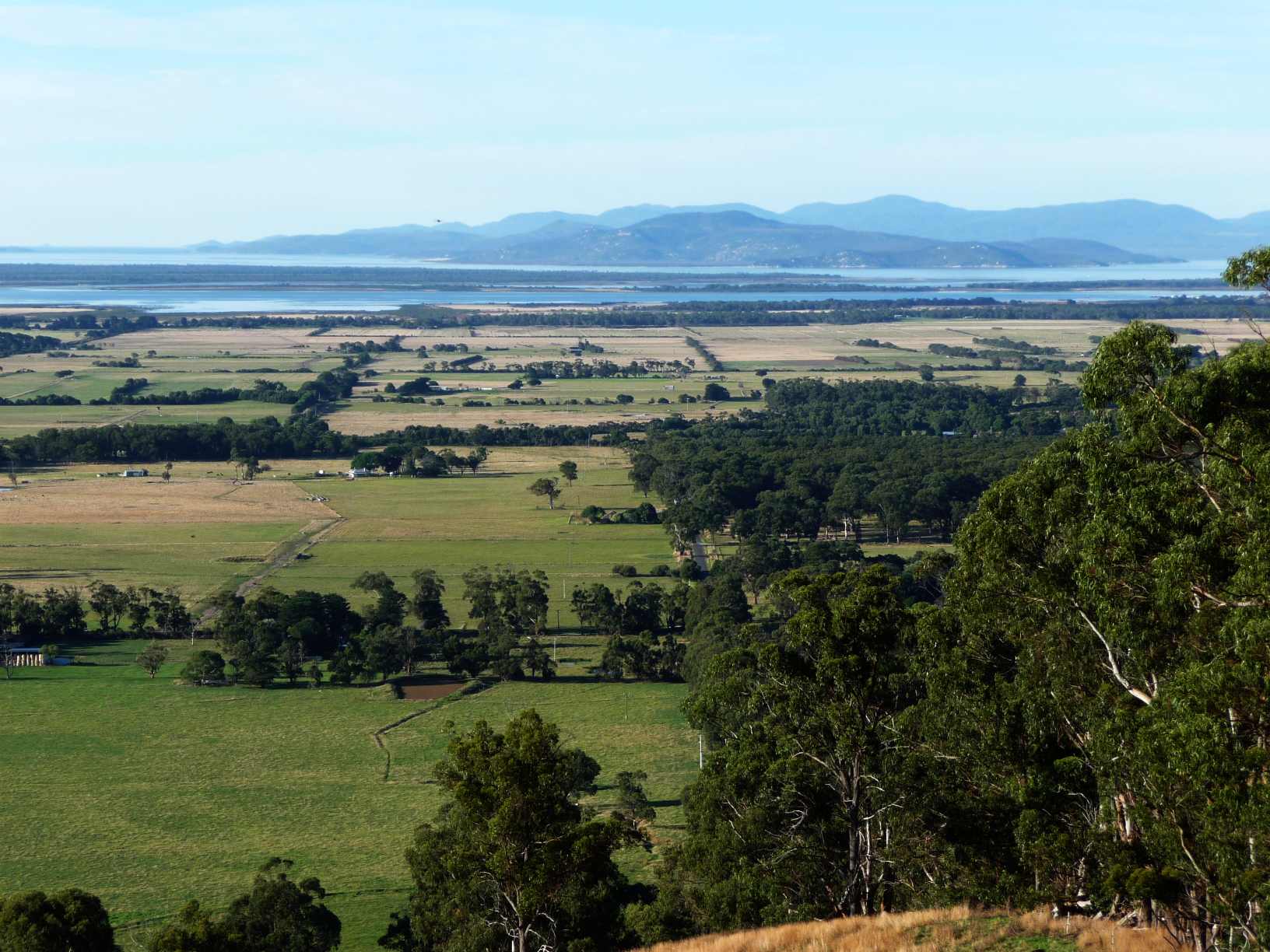
There’s a special spot high up on the hill through the forest at the back of our place. It’s a scene that inspires me to be a better custodian of our own land.

You can see right across Corner Inlet all the way to Wilson’s Prom. Under the water lie swaying seaweed forests that sustain life in the irreplaceable bird breeding grounds of this Ramsar-listed site. A little while back, the Catchment Management Authority even arranged a canoe tour to ever-so-gently ram the message home to landholders along the river: we are responsible for these delicate forests and everything that depends on them.

Stepping up to the plate, we’ve been planting trees as environmental buffers, reducing the risk of fertiliser leaching into the river and improving our effluent management. It’s a huge commitment that we’ve made because we treasure our beautiful landscape and its creatures.

The jewel in the centre of all this is Wilson’s Promontory National Park, a magical wilderness studded with granite peaks. Amazingly, its conservation values were recognised by government in the 1800s – a time when land-clearing was the priority. According to Parks Victoria:

“Following campaigns by the Field Naturalists Club of Victoria, and lobbying by the Royal Society of Victoria, the Victorian government temporarily reserved most of the Promontory as a national park in 1898. Permanent reservation followed in 1908, although the Yanakie area north of the Darby River was not added until the 1960s.”

Remarkably, it seems the 2013 Victorian government does not share the foresight of those who occupied their honorable seats in 1898. Rather than protecting the Prom, it plans to offer private developers leases of up to 99 years. I asked our local member and leader of the Victorian National Party, Peter Ryan, why the government had chosen this course. Among the material emailed by his office was this explanation:

“The government is keen to attract more international visitors to Victoria. There is growing demand for nature-based tourism and Victoria is keen to compete with other states to meet this demand. The guidelines provide certainty of process for unsolicited projects.”

“The move makes Victoria more competitive with other states in Australia, by supporting sensible and sensitive investment in national parks that complements environmental, heritage and other values and generates a net public benefit.”

To its credit, the government plans to control development in national parks to ensure that it is “sensitive” but lots of other issues bother me:

  • Where will the new buildings go? The Tidal River settlement is already very crowded. Will it be enlarged to encroach further onto the park or will it nudge out the low-cost camping that has made the Prom so accessible for generations of Victorian families?
  • It opens the door. Remember that multi-storey luxury hotel overlooking the beach Jeff Kennett wanted for the Prom back in the ’90s?
  • Why not simply enhance development outside the Park boundary? There’s plenty of tourist accommodation minutes from the park offered by small business owners who deserve the support of the government rather than competition from it.

The Tidal River Strategic Directions Plan 2010-2015  recognises that Wilsons Promontory National Park is already making a huge contribution to the economy of the surrounding region and the state as a whole.

“A 2003 study estimated that in relation to employment and business development it generated economic benefits of about $50 million per year for the region and the state.
“The Prom receives around 400,000 visits each year, most of them between November and April with peaks during the January and Easter holidays. Visitor facilities and services are concentrated at Tidal River, the largest visitor accommodation centre in a Victorian national park. It provides for a maximum of 4,000 overnight visitors at any one time.”

Why would we risk killing the goose that laid the golden egg?

Tidal River

Tidal River

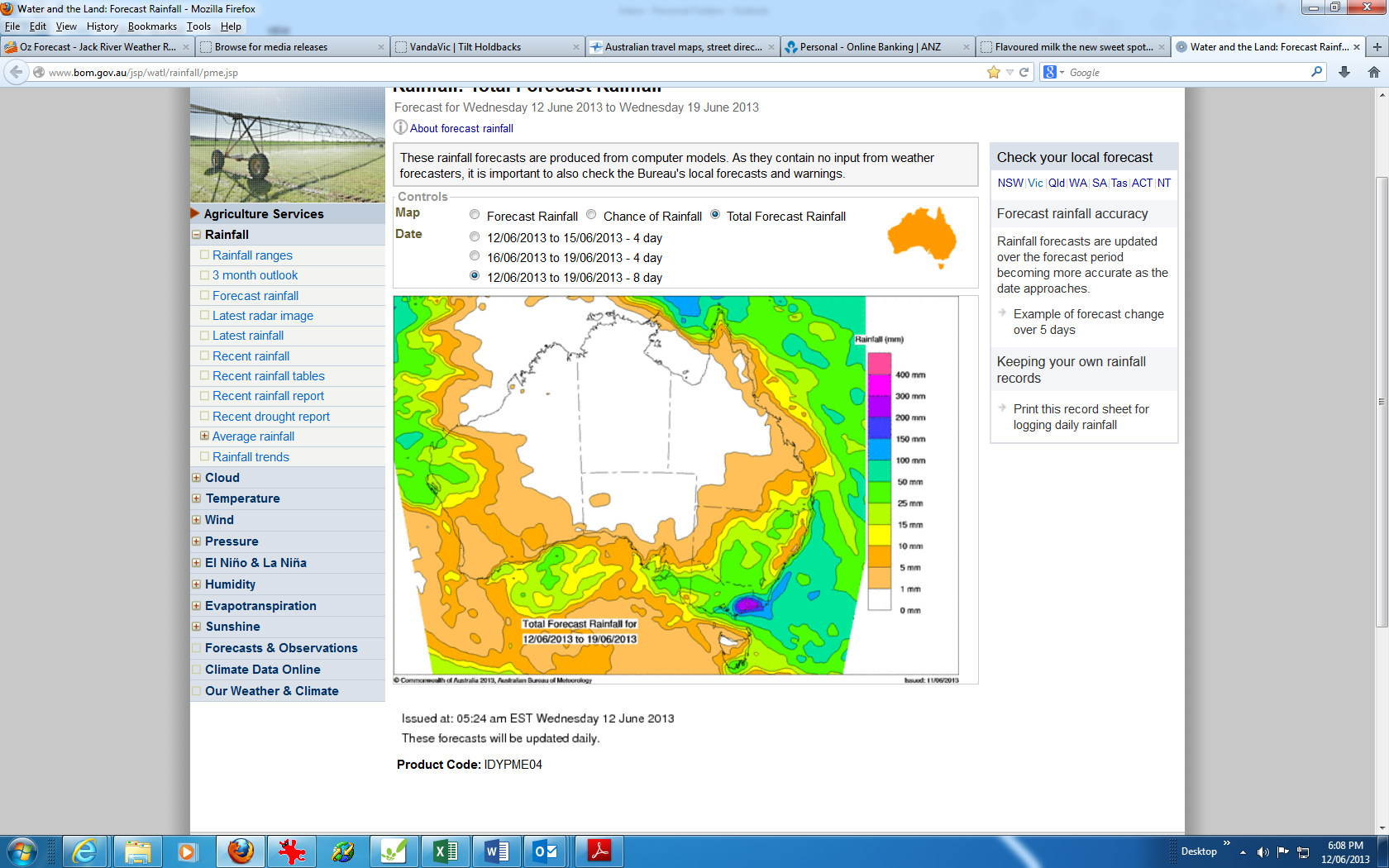
A purple blister on the weather map is coming to get us

Holy cow

Holy cow

It’s not a good sign when the local weather forecaster gets a spot on ABC Radio’s National news. Our forecast is so shocking that, yes, it made headlines today.

A massive chunk of Victoria is about to go underwater and, with it, a massive chunk of our farm. We’ve had an inch of rain in the last two hours and the prediction is for between 51 and 102mm tomorrow, followed by another 20 or 30mm over another couple of days.

I’m thankful for the undulations at the southern end of the farm. The cows will at least be safe.

I’m also thankful for the Bureau of Meteorology’s timely warnings. It gave us time to:

  • Set up safer paddocks for the cows
  • Ask Scott, the grain merchant, to deliver more feed before we get flooded in
  • Remove the power units from the electric fences on the river flats
  • Bring all the eight new calves born during the last 48 hours into the warmth of the poddy shed
  • Stock up at the supermarket
  • Pile the verandah high with dry kindling and wood to keep the kids warm

As the flood sets in, we’ll be:

  • Offering extra TLC for newborns and freshly-calved cows
  • Feeding out more of our precious and rapidly dwindling stock of hay while hitting the phones looking for more ridiculously scarce fodder
  • Keeping an even keener eye out for mastitis
  • Walking the cows extra gently to the dairy to reduce the risk of lameness
  • Hoping like hell that the damage to the fences and tracks isn’t too bad
  • Monitoring the condition of paddocks to minimise pugging (mud, mud, mud)
  • Stocking the dairy snack bar with a bottomless supply of soup and raisin bread

It’s often said that good farmers only worry about what they can control. I’ll do my best!

What would Dad think of the farm?

It’s at family occasions like Easter that I think of Dad most often.

Dad died at Christmas-time in 2006 when Zoe was just six months old. A new mum with a thriving micro-business and a husband from the city, I had to decide whether I would take on the family farm. Michael, the wise local accountant, advised to sell – I was doing well, farms are far from the most lucrative investment choice and why work so hard, anyhow? After all, my parents had invested in a great education so I didn’t have to be a farmer.

But I love the place. And the cows. And fresh air and the contentment that sore muscles bring. Even though I thoroughly enjoyed my career, a working life spent wholly indoors would be unimaginable. When I said I just couldn’t bear to lose the farm, Michael clicked his tongue, shook his head and said, “Well, don’t say I didn’t warn you”.

Michael was right, of course. It’s been a tough few years. The farm was run down and it’s taken a mighty effort to restore it to manageability, so now and then, I like to imagine what Dad would say if he could see it now.

With a lot of help, we’ve removed tonnes of old stuff, repaired kilometres of fencing, renewed kilometres more of the water system, installed 21 new troughs and a couple of water tanks, renovated 200 hectares of pasture and planted 8000 trees.

I thought I’d take a few photos to remind myself how far we’d come and discovered something humbling. For all we have achieved, it was Dad’s accomplishments that stole the show.

Dad planted the tall trees in 1999. The small ones went in two years ago.

Dad planted the tall trees in 1999. The small ones went in two years ago.

Dad built this wildlife haven in 1984 and planted the trees

Dad built this wildlife haven in 1984 and planted the trees

This is what would have taken Dad's breath away

This is what would have taken Dad’s breath away