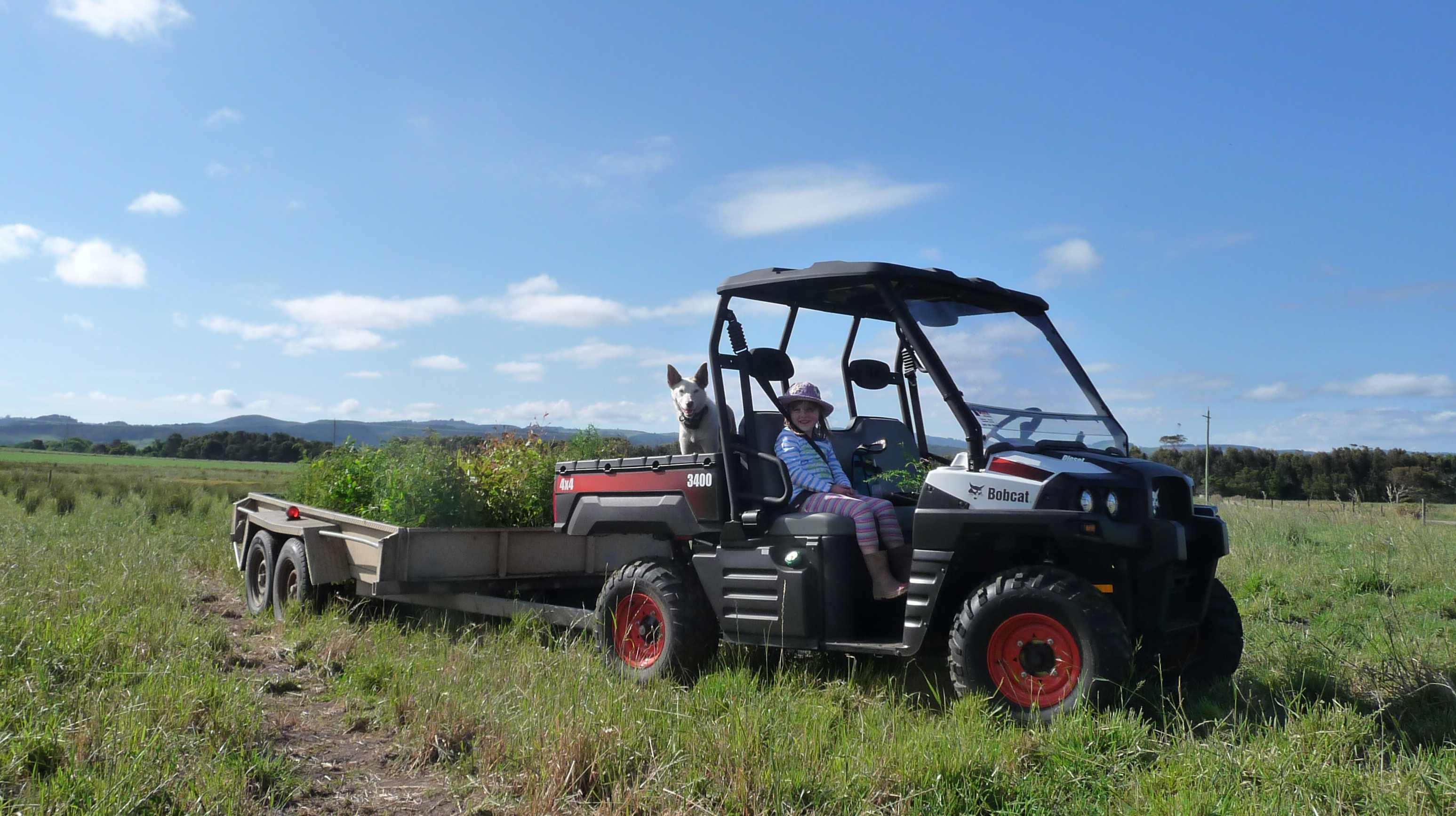
Big girl’s toy (my Big Rig)

UTV towing tandem trailer

Well, it’s not just a toy

This is a seriously fun way to get the farm work done. And, now, in relative comfort thanks to the posh roof and screen that came with my new beast on Friday.

WorkSafe and a consortium of others have been running a big campaign to move farmers from quads to UTVs like our Bobcat and, yes, they’re great. You can get the family (parent, two kids and dogs, at least) around the farm safely with a whopping toolbox and all the bits and pieces you need to tackle maintenance chores or major emergencies. It also has the grunt to carry about half a tonne in the box and tow another half tonne behind.

But there are limitations and we won’t be selling our two quads any time soon. Although difficult to bog, these machines do not float on excessively soft pastures, nor do they have the tight cornering needed to thread a wily heifer through a gate.

A UTV like this is a fantastic piece of farm transport that sits somewhere between a quad, a tractor and a ute. Just try taking mine away from me!

Angry mob stages a mootiny

They were right. There simply wasn’t enough grass left in the paddock for a repeat visit and, in the wash up of a riotously great 6-year-old birthday party, we were late on the scene.

We arrived on the river flats to find the first 50 or so cows out of the dairy staging a “stand-in” outside the entrance to the rejected paddock. I turned to set up an alternative just 100 metres the other direction and they marched towards us, disgusted to find I had taped off the lane behind us. While I set everything up and my little party-goer took a siesta, a few members of the mob broke ranks and began to filter in to graze the drabs.

After the party

She’d partied hard.

Of course, that meant we had to get them out and that’s when the trouble really started. Everyone else followed us in and were totally confused when we wheeled around and tried to push the surging mob back out from whence they came. Well, it took five minutes and a lot of determination to move them 40 metres.

Then they went the wrong way up the lane and it was my tough little farmer who convinced them to, very reluctantly, turn once again.

Angry mob of dairy cows

The ragged party goer came to life when presented with a challenge and was there behind them in the dust

A heartbeat after I took this pic, the leaders saw the opening to the fresh paddock and, like a stampede of New Years’ Day shoppers, they were off.

Friendly fire from the milk co-op

I don’t think MG’s chief banana, Gary Helou, was expecting its farmer shareholders to be pleased with the co-op’s rebranding exercise. Referring to the Dev ‘n Dale ads, he writes to his farmers:

“We have received several comments about the adverts in relation to farmer image. It is important to note that the Dev and Dale adverts have been carefully designed to achieve consumer cut-through to drive brand recognition and sales volumes.”

“This strategy is based on humour and the comic characters were designed to be over-the-top so they could not be construed as real representations of our farmers.

“The Dev and Dale characters were also developed to create greater recollection of the brand. Earlier market research found that consumers did not have strong recollection of the Devondale name or brand, and this means consumers are not often enough considering our products for purchase.

“We will monitor consumer response carefully to ensure there are no negative connotations for industry image.”

In earlier letters, the co-op had explained that the old branding was associated with a low-cost positioning and it was important to add value to the brand. I guess Dev ‘n Dale is their interpretation of “upmarket” then.

Please let me know – are the ads funny, memorable and indicative of a premium brand?

PS: For an alternate approach, check out Yeo Valley’s UK dairy promo.

How a girl becomes a cow-girl

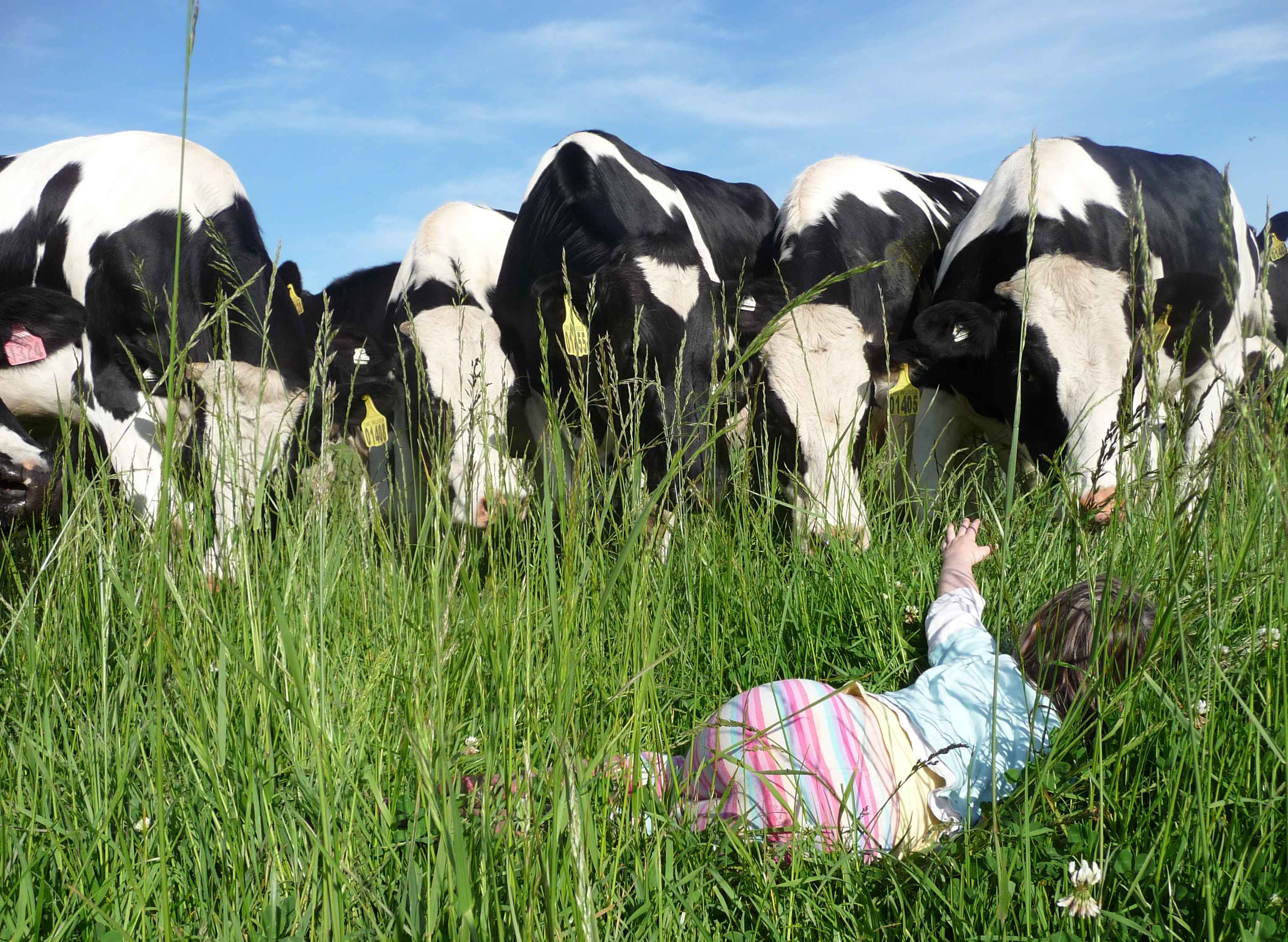
Zoe gets cows. She really undersands them but there’s still lots to learn and, early this morning, we had a fun little lesson with the “teenagers” on the farm.

Step one is to lie down nice and still in the grass. Step two is to stay still (and quiet). Step three is to wait a little bit longer.

Heifers and Zoe reach out

“You can trust me”

If you’re patient enough, they’ll come. Snuffling, chewing their cud and nudging forward little by little with unbridled curiosity. It’s not exactly “Gorillas in the Mist” but it is an awesome, humbling experience and everybody should try it.

Tragic irony

I cannot imagine finding a child killed on the farm yet this is perhaps Australia’s most dangerous backyard. One of the things we do to keep Zoe and Alex safe is to keep them off quad bikes.

According to Safety Around Farms:

“ATVs are the most common cause of death for children 5-14 yrs on farms. Between 2001-2004, 12 children died on ATV’s in Australia and many more were hospitalised with serious injuries, 50% of these children were visitors to farms. (National Farm Injury Data Centre, 2007)”

That’s why I have a Bobcat UTV. Problem is, it’s only a two-seater and Alex is getting to the stage where he likes to stand in his child carrier and give me loving kisses on the face while I am driving. Hardly ideal.

I’m in the process of upgrading to a three-seater so little man can be strapped in more safely beside me rather than on me. Among the options is the Polaris Ranger Diesel and here’s the promo for it:

Buy this big machine to keep your kids safe and we’ll give you a small machine to keep your kids #%@

Do you see the irony of it? I rang Polaris HQ to see if I could get more family-friendly Ranger accessories – like a roof and windscreen – instead of the dangerous machine for little children. No, certainly not.

I asked the marketing manager a raft of quite pointed questions about the safety of the little machine. He couldn’t answer them. It seems certain he hadn’t read this from the Canadian Paediatric Society:

“While industry guidelines suggest that children under 16 years of age should only operate youthsized models, these vehicles are still heavy and can travel at significant speeds. Also, a higher centre of gravity contributes to instability, making ATVs prone to flips or rollovers.”

“Currently,there is little evidence to suggest that smaller youth models are safer when used by children. US CPSC injury data from 2001 showed that the risk of injury per number of driving hours for an operator under the age of 16 is reduced by only 18% when driving a youth-model ATV with an engine size of 200 cc.

“In addition, the level of risk for a child or adolescent operating a youth-model ATV is still almost twice as high as for an adult on a larger machine; the risk of injury to a youth using a smaller machine is also five times higher than the risk to an adult on a machine of the same size.”

In other words, don’t think your child is safe on a quad bike of any size.

The Polaris kids’ quad may be free but it could be Aussie kids who pay the ultimate price for this corporation’s cynical grab for market share.
Monsters in the farm dam

There’s a creature on the farm that I find simply repulsive – eeeeeeels! Their hideous faces are teamed with swishing slippery bodies so readily mistaken for snakes. And we have them by the tonne.

It seems almost every time I set the dam siphon running, I get a hair-raising encounter with these ugly things.

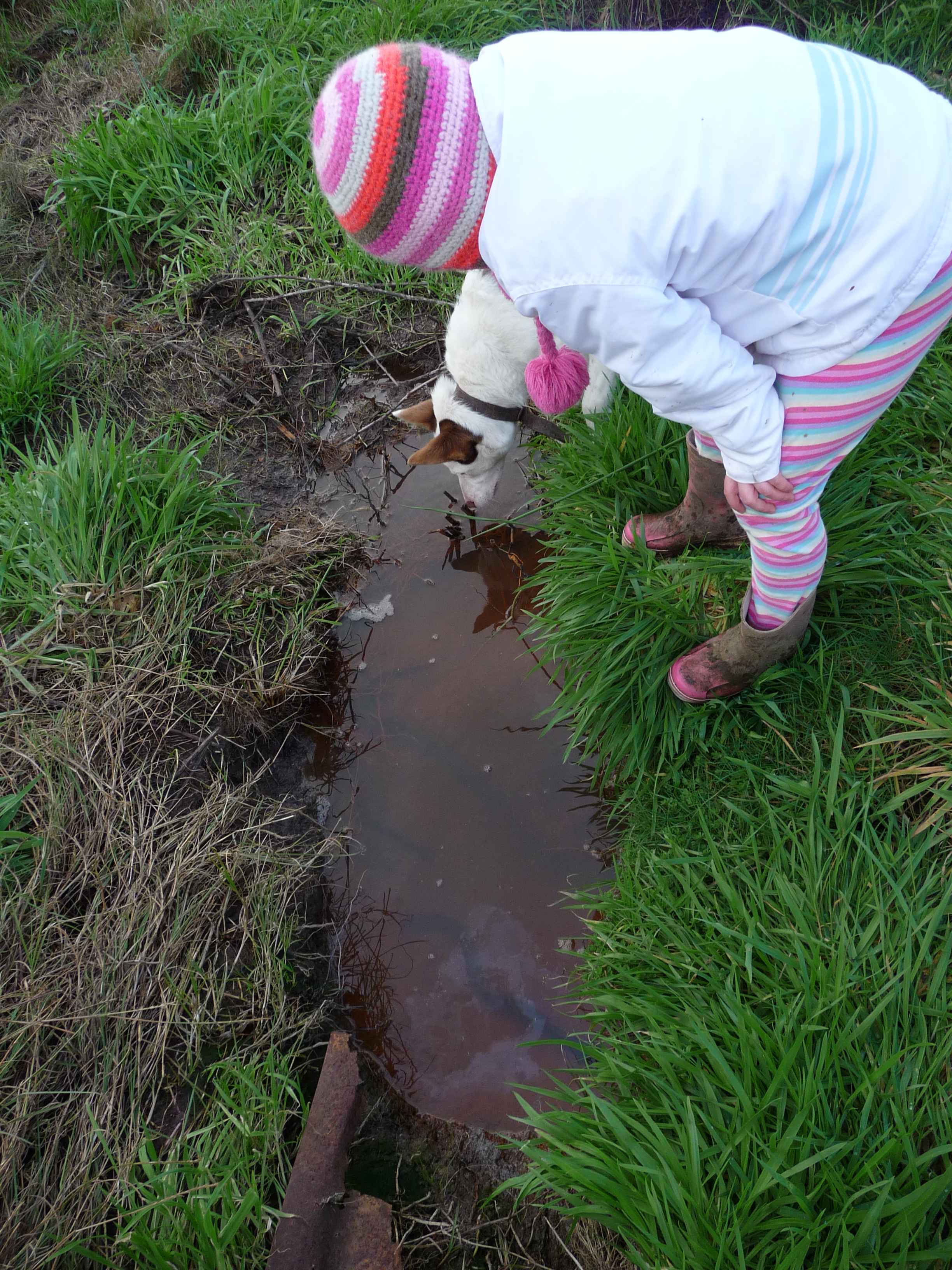
Eels

Zoe and Patch inspect a pool of writhing eels

But they are incredible creatures and, instinctive fear aside, I have a lot of respect for them. You see, the eels in our dam have actually come all the way from the tropics – New Caledonia perhaps – travelling thousands of kilometres to reach our little patch of paradise.

They can live 50 years, “breathe” on land, grow up to 2 metres long and weigh 20kgs and eat everything from dragonfly larvae to small ducks.

Apparently, they’re tasty, too.

Read more about extreme eels – I guarantee you’ll be amazed!

Catalyst: Eel Migration – ABC TV Science.

Please can we do some more farm jobs?

Apparently, Australian agriculture needs to be made more “sexy” to attract young people. I don’t think so. While you can get paid ridiculous amounts of money to work in mining, the call of the land is strong for those who really love it.

Already, I can see it’s in Zoe’s blood.

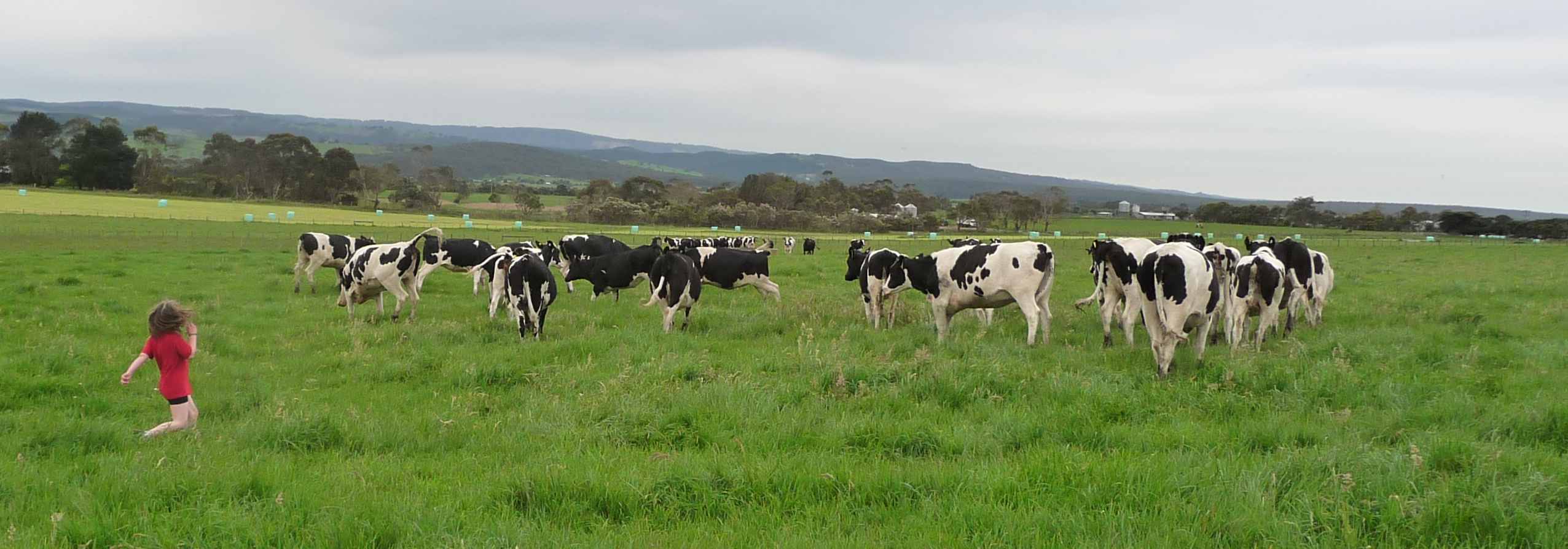
Zoe chases the heifers

“I’ll get them, Mum, I can do it, you watch!”

Straight off the school bus, she launched into moving the yearlings with great gusto. It was like watching Patch. She ran around them in circles first, then made some crazy dashes right through the centre of the mob. Pure unadulterated fun!

We got them all out a few minutes later, with flushed cheeks and the wind in our hair. “Please, Mum, can we do some more farm jobs before we go home?”

My gut tells me Australian farming and fresh food has a great future. My head tells me that’s so too, with one caveat: before they can feed the world, there has to be a sustainable return so they have confidence there’ll be enough to feed themselves.

The working dog from St Albans

Patch Rounds Up The Yearlings

I was born to do this

Patch runs rings around them - literally.

Just look at his face. When Wayne collected Patch from suburban St Albans this Easter, it was clear he was a working dog breed (or three) but I doubt his rescuers from Homeless Hounds would have envisaged this. Only problem is, he likes it too much.

It took me nearly half an hour to retrieve him from the yearling paddock and when he decided to round up Zoe yesterday, I decided something had to be done, and fast. You must not, cannot let a working dog get out of control, no matter what.

I called Paul Macphail of Beloka Kelpies for help and, 20 minutes later, Zoe, Alex, Patch and I were in training at his school in Welshpool. Paul quickly summed Patch up as a tad “arrogant” and swiftly put him in his place. I have not been a tough enough boss.

A litte while later, Patch, who had never seen a sheep before, was in the pen working a mob and then in the paddock masterfully bringing another (albeit rather tame) mob back to Paul. Just like Babe, really. Pig dog turns hero. “He’s a natural,” says the laconic Paul.

I am so impressed, I will be back at Paul’s with Patch in a week to see if I he will reach his calling as a semi-automatic dairy cow rounding up dog with the speed of a cheetah and the gentleness of a dove.

Sustainable dairy farming

Sustainability isn’t about the environment, animal welfare, profitability, business succession or manageability. For me, the definition of sustainability is all of them.

Australia’s dairy farmers are good at environmental sustainability – we are the front line environmentalists behind the Landcare movement. I like to think we are also exceptional when it comes to caring for our animals too. Profitability, not so good. Business succession, woeful. Manageability, well that’s debatable.

City friends think I live an idyllic life, frolicking among the cows but this lifestyle can bring stressors urban Australians would never imagine. According to the University of South Australia:

UniSA Psychology PhD student Alison Wallis knows what can drive a dairy farmer to cry over spilt milk.
For the past four years Wallis has been investigating the work stress of South Australia’s dairy farmers.
It’s a group she says at the time of the research had one of the highest incidences of work-related stress in the nation.
“There hasn’t been a lot of research done on the stress levels of those who are self-employed,” Wallis said.
“But we found that dairy farming produced some of the highest distress scores of many Australian occupations.”

Reading Tom Phillips’ excellent dairy blog, Pasture to Profit, I discovered we are not the only ones. Our trans-Tasman counterparts are also studying dairy farmer burnout.

It’s all amplified in times like these – when the rain won’t stop falling here in the south and when the prices won’t stop falling up there in New South Wales and Queensland – and so much of your success or failure seems to be in the laps of the gods (whether Thor or Coles).

On the other hand, it’s times like these that faith in human nature is restored by the generosity of people who care. People like Queensland ag teacher, Lisa Claessen, who, seeing the distress of her students, has taken to social media to petition the Coles CEO for a sustainable milk price. If you would rather not have UHT on your cornflakes, please add your name to her cause.

The perfect farmer’s body

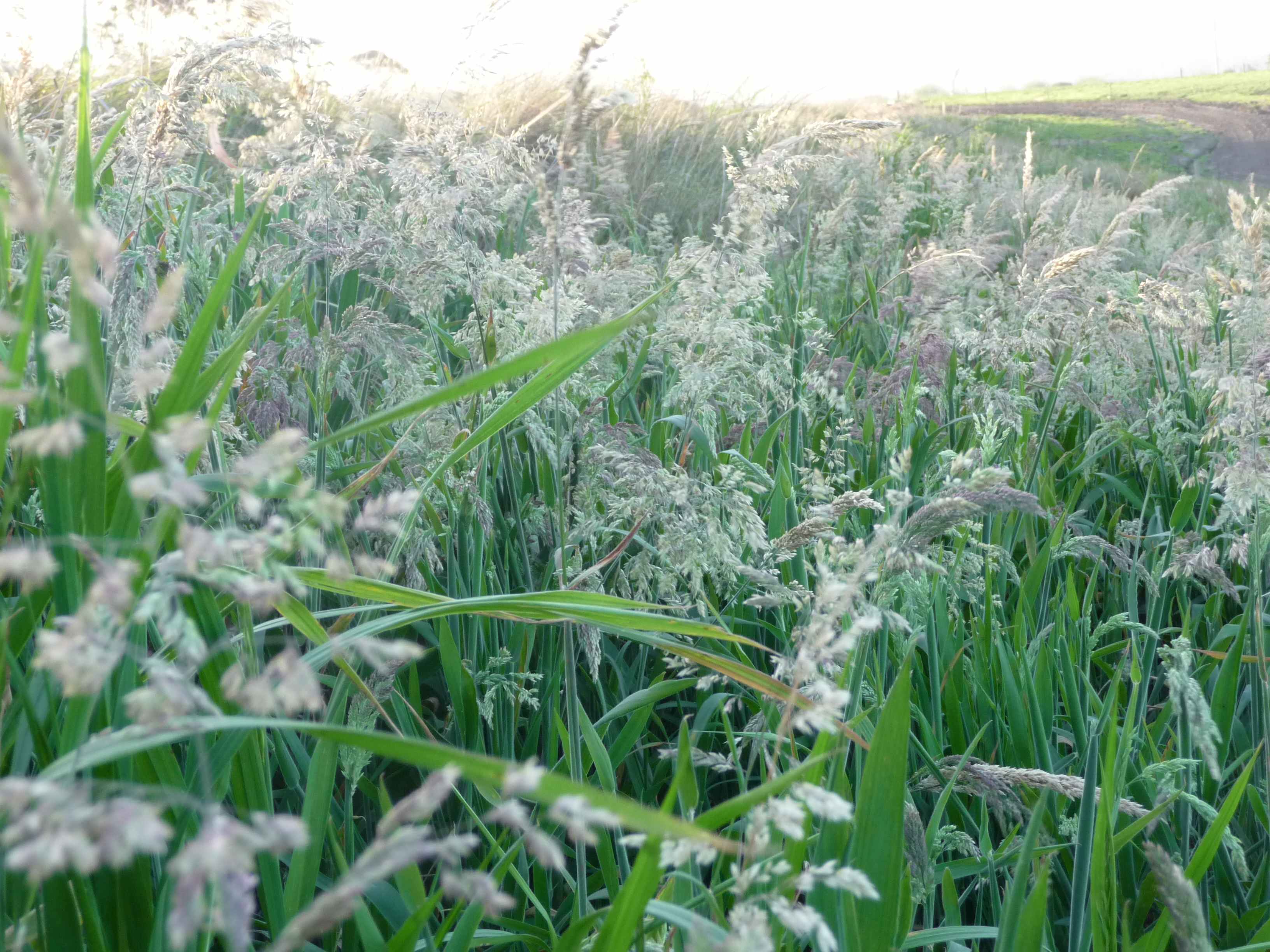
What does the perfect body look like? Not mine, that’s for sure! Yesterday, I was reminded just how bad my genes are for farming. Allergies run on both sides of my family and the worst irritant of all looks like this:

Yorkshire fog grass

Yorkshire fog grass: one UK expat we could do without!

I’m told it’s called “fog” grass because the pollen is released in such huge quantities, it makes everything go misty. Dynamite! Yesterday, I had to wander through thigh-high forests of it to get the dam siphon running again. My scalp, eyes, nose, mouth and arms are all still desperately itchy 15 hours later.

The cows don’t like it either. Fog grass is covered in thick velvety “fur” that understandably is most unpalatable.

Thankfully, we have a lot less of this hideous grass nowdays. It was everywhere when I was a girl but much better grazing management has seen it restricted to untouched pockets of dampness (like the dam wall).

Grass management is a big deal for Australian dairy farmers because it is the greatest predictor of profitability. We count leaves, we estimate the tonnes of pasture in paddocks and aim for the magic nexus of quality and quantity. Somehow, it’s reassuring to know that nothing beats the simplicity of grazing grass for high performance dairy farming, even in 2012.