Kicking back on the farm

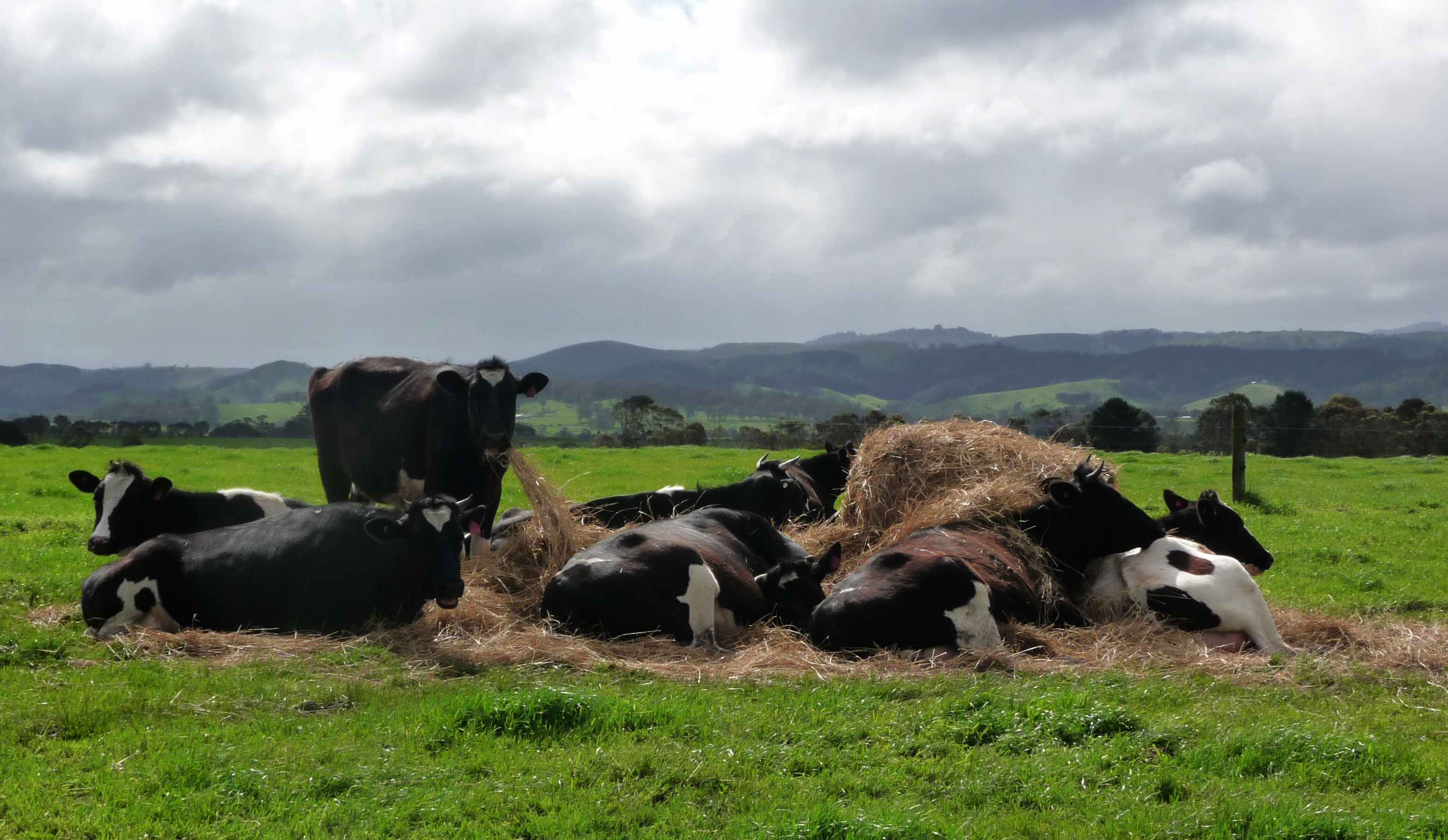
By far the coolest animals on our dairy farm are the 2 year olds.

Just kicking back

With the fearlessness and carefree existence of youth, these girls really know how to relax!

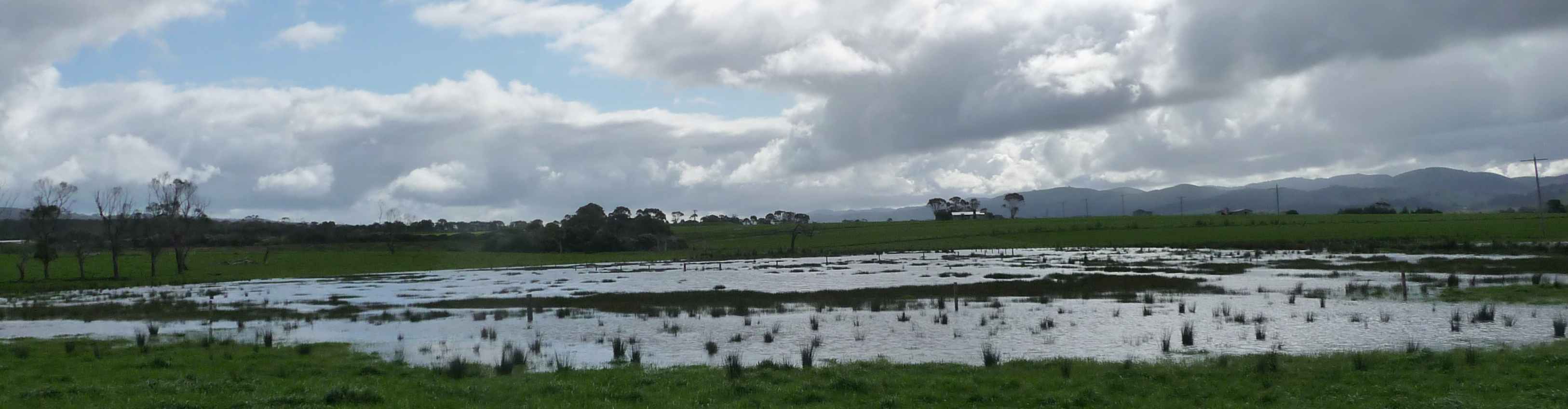
“Cool” is also the understatement of the month for Spring 2012. The area set aside for revegetation is earning its sexy NRM-funding title of ‘ephemeral wetland’ with more regularity than I would like.

Does this count as the fifth flood of 2012?

On the other hand, the grass is growing in between inundations. If it would just stop raining for a couple of weeks, we might get some silage tucked away for summer!

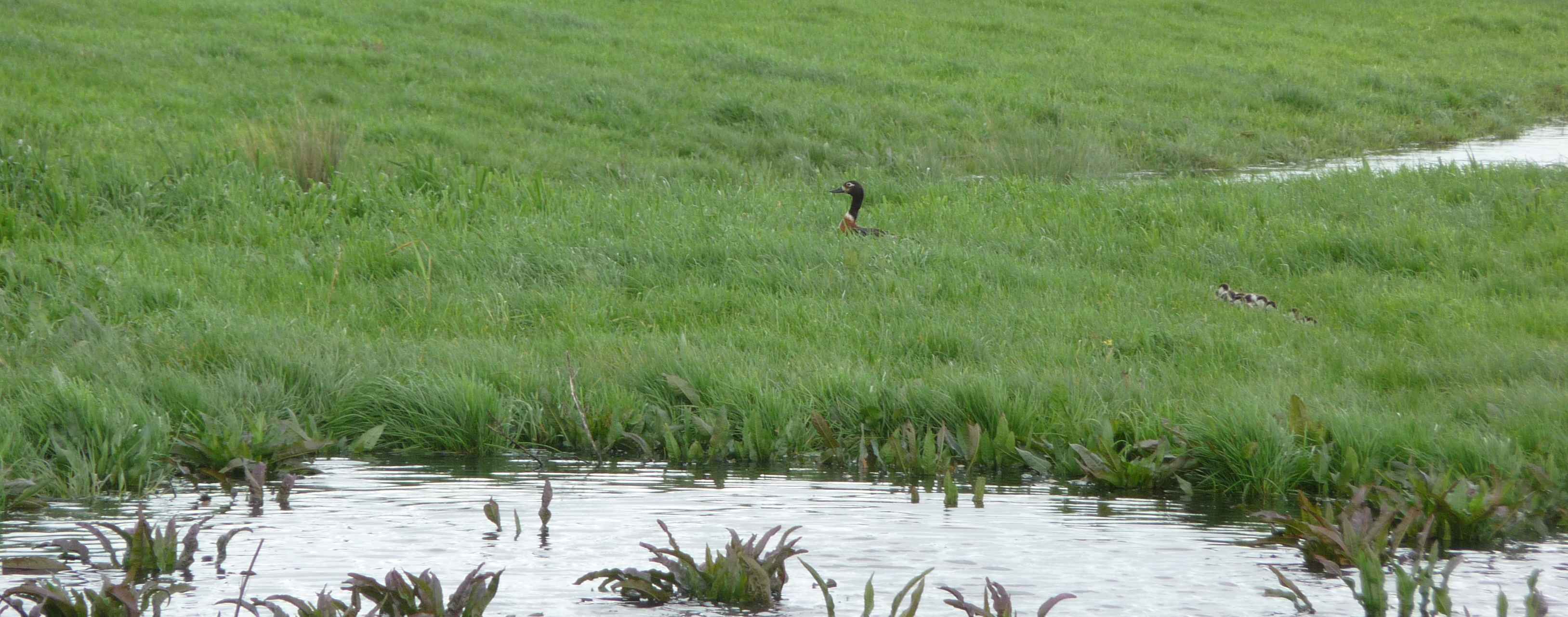
Mother duck speeds her charges away from the cow track as the herd passes by.

People and animals tell the farm’s story

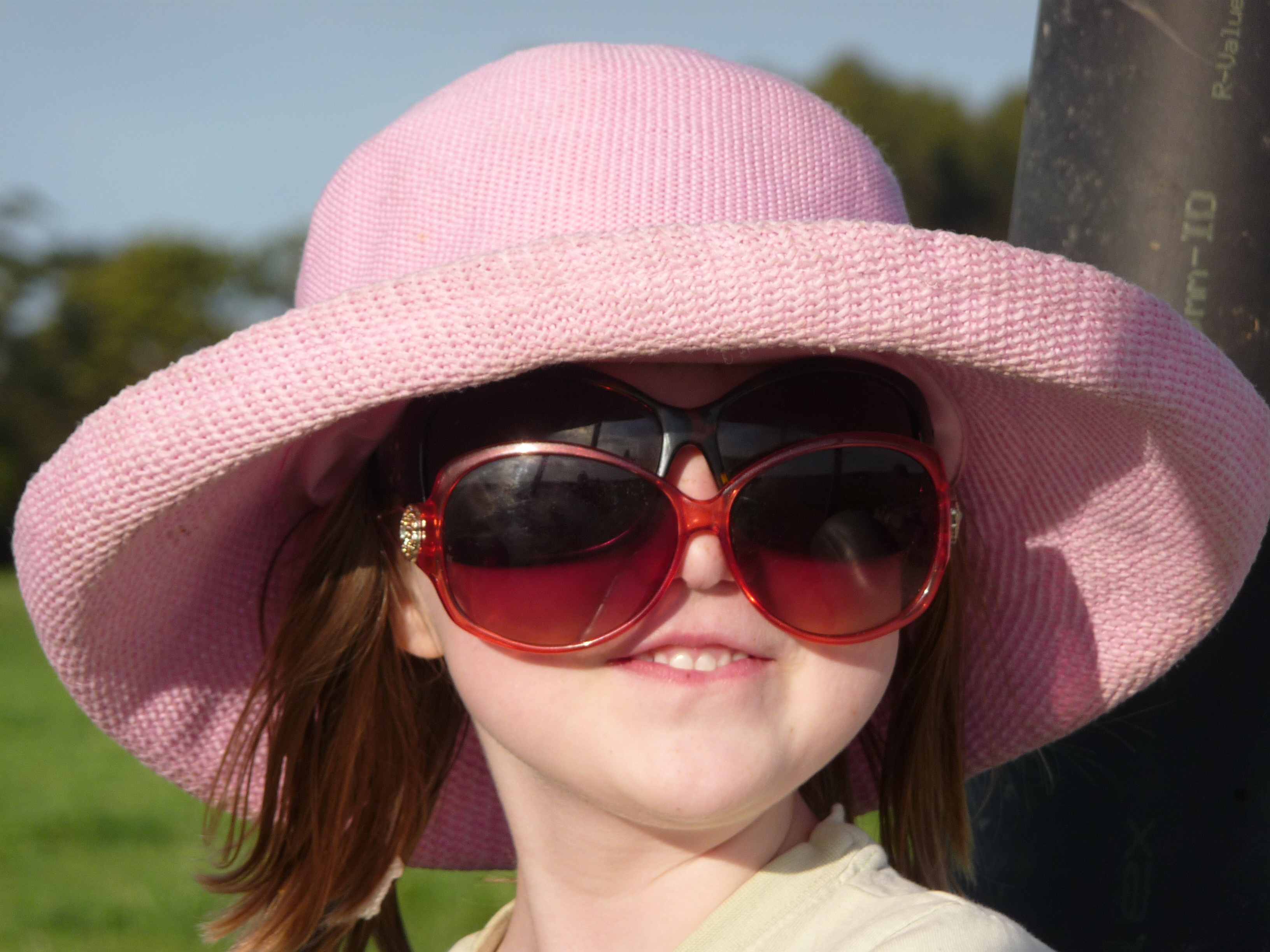
This was Zoe on the Bobcat as I moved the electric tape in paddock 6 on Friday. It really was sunny enough to dig out the zinc!

Yes, two pairs of oversized sunglasses are apparently “hot” right now

I’d been away from the paddock for a week and things had got away. It’s newly sown to a high performance grass and zoomed off once the saturated soil turned to plasticene over a balmy few days. We had to get the cows in at once if there was any chance of keeping grass quality levels up over Spring.

At this time of the year, it’s really important to divide the paddock into small strips. Let them into the whole lot at once and most will be wasted as the engorged cows make nests to sleep it off. The trick is to have the cows absolutely full to pussy’s bow, but only just. It’s good for the cows, good for milk production and good for the grass.

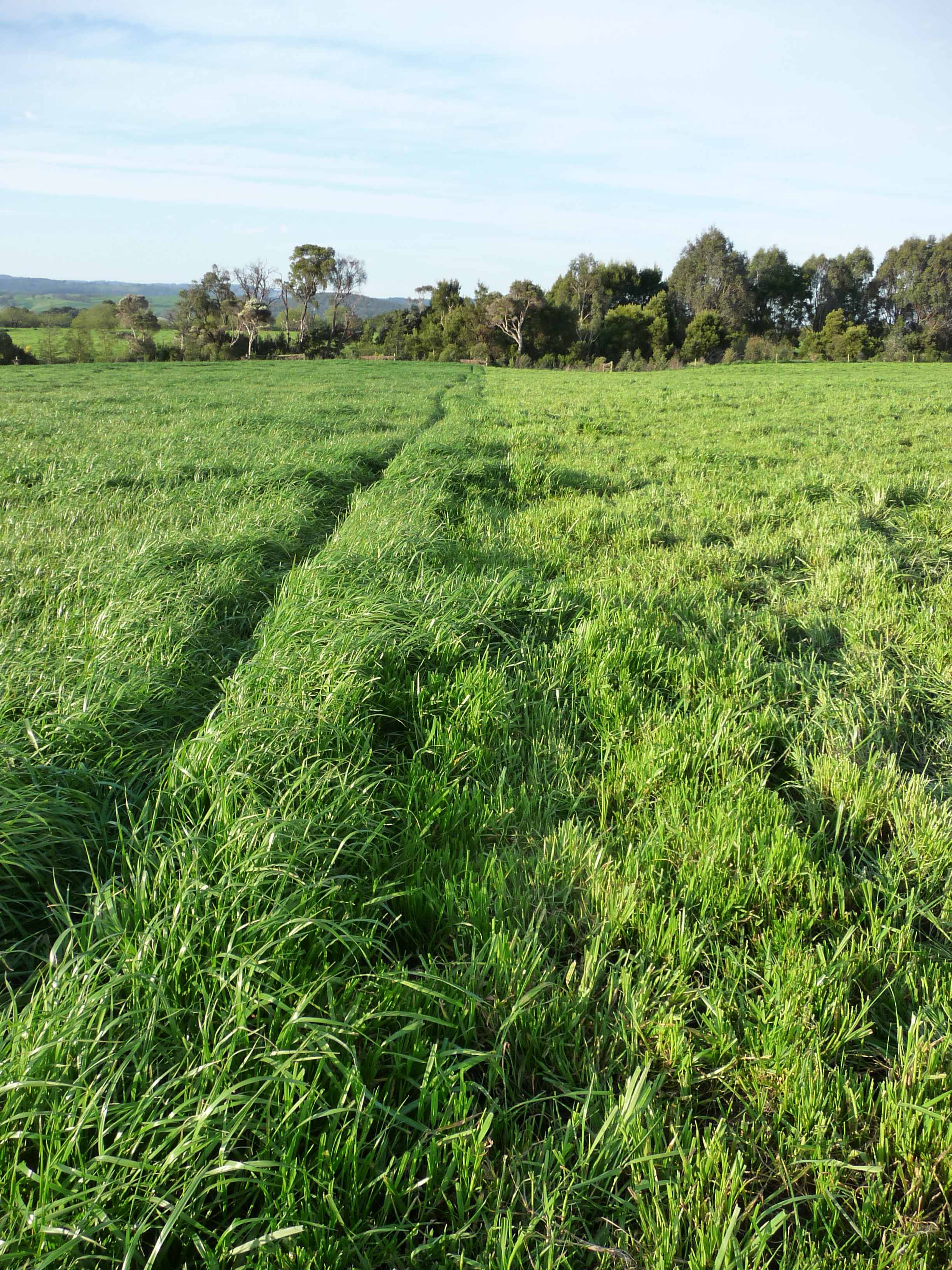
The grass on the right has just been grazed, the grass on the left is for dinner

Grass growth will have come to a skidding halt over the last couple of glacial days though. Everything is mushy and muddy all over again. Including Patch.

Whadda you mean I can’t come inside?


Solar on the farm? Maybe.

It costs between $4000 and $5000 per quarter in power bills just to run the dairy, so we jumped at the chance to have an energy audit done on the farm by Gabriel Hakim, thanks to GippsDairy.

Energy Audit with Gab

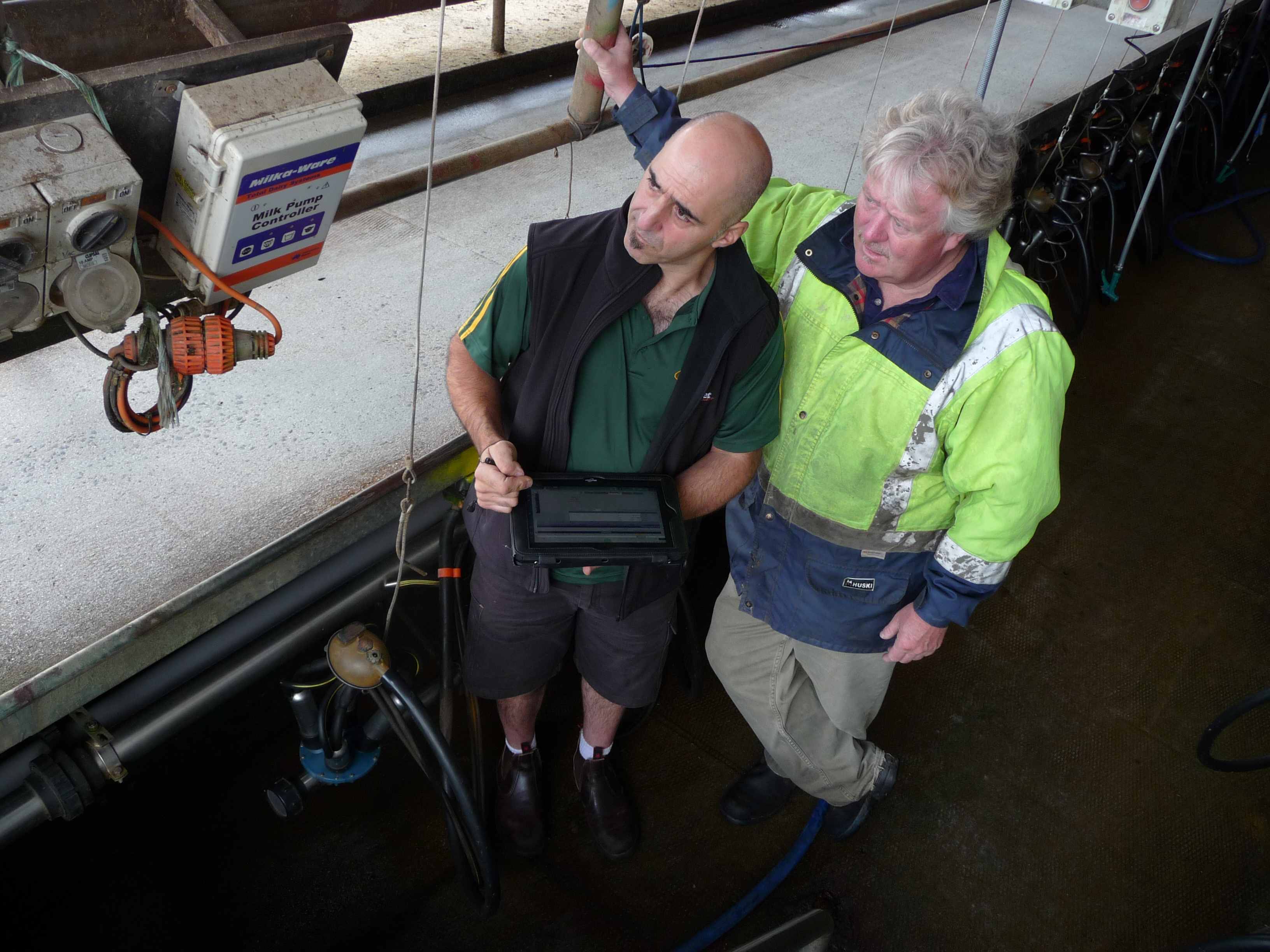
Gabriel and Wayne check out the systems

It showed us where our energy is used and highlighted that maybe we had better look at increasing the flow of water to our milk heat exchanger. Still, there were no massive savings to be made (and don’t we all love a silver bullet?), so I’ve started investigating alternative power for the dairy.

A wind turbine would have a payback period of 60 years! Jeepers! So, I’ve since been looking at solar. You can now lease solar systems with the repayments matched to your electricity savings, making the exercise cashflow neutral. Very nice! The only thing now is to get the right size system.

It’s not as easy as you think because the cows are generally milked too early and too late in the day to capitalise on solar energy, so I think we’ll be starting off small. That’s not so bad because it won’t lock us in to the technology forever and I am sure something even better is on its way!

How to dance with a Goliath

What would you say to encourage other dairy farmers to share their stories? Well, today, I am be doing just that, speaking to attendees of the Holstein Australia AGM via the internet and my message will be simply this:

“Whether we know it or not, ordinary Australians – farmers and non farmers – are fighting a desperate battle for good, fresh food against the Goliaths who increasingly control what we grow and what we eat.

The statistics are frightening. As ethical.org.au reports,

“Australia has one of the most concentrated grocery markets in the world. Woolworths and Wesfarmers (owner of Coles) account for almost 80% of supermarket sales, 60% of alcohol retail, 50% of petrol retail and 40% of all retail in Australia.”

According to an investigation by The Age one in every four grocery items now sold in Australian supermarkets is private label and, of those, about one in two is imported.

And who can blaim the Aussies happily scooping up the bargains? There is no warning label on these homebrand goods warning that choice and freshness will be the casualty. To make matters worse, we farmers don’t have the advertising and PR budgets to get the message heard.

But we do have people power. If you’re a little person, the only way to fight a Goliath is to think differently. The “Accidental Activist”, Jane Burney, did it with a rant on the Coles Facebook page. So can we.

Jane Burney

If you want to stay on the land or continue to enjoy high quality fresh food, please spread the word. Buying private label milk isn’t a sin but if you decide to make that choice, make it an informed choice.
Tribute to a farmer who’s not a farmer

My husband was not born a farmer. While I rode my pony to primary school, Wayne caught the tram through the, err, “colourful” streets of St Kilda.

Before we took on the farm, Wayne had the idea that after milking you could have a nap on the couch – a ritual my father had adopted. But that hasn’t been our experience. I was bequeathed a terrifying mortgage along with the farm and making ends meet means running the place at fever pitch. Wayne is still driving up and down to Melbourne a few times a week and rounding it off with 14-hour days on the farm. He’s doing it so I can follow my dream. Maybe I sold him a pup.

The workload is exhausting. Things are improving – we’ve fixed most of the water, weed and wire problems that hobbled the farm just a few years ago – but it’s really hard yakka and, with a toddler literally strapped to my chest, I’m still not pulling my weight in the paddocks.

We keep reminding ourselves how much we’ve accomplished in just a few short years. I keep thanking my lucky stars for the man I married.

How a farmer hangs out her washing (or desperation is the mother of invention)

At 15 months, Alex loves “riding” the quad bike.

The little man is drawn to anything he can climb, toot or wobble, especially if it has buttons and the quad has all those magical qualities with the added bonus that it’s his Dad’s.

The mite’s adventurousness is only slightly hampered by his wet blanket of a Mama. When Wayne bought Zoe a hot pink mini-quad for Christmas last year, I refused to let him bring it home. Quads are seriously dangerous bits of gear and, besides, a pushie is still the best way to burn up all that excess energy.

But whether it was out of sheer exhaustion or the joie de vivre that comes with the first truly warm day of Spring, I relented just a touch today and took Alex for an illicit ride on the quad. As we’d passed the quad with the washing basket, he’d somehow become firmly attached to the Suzuki’s grimy plastic faring. A moment later, his padded posterior was straddling the gear shift.

It turns out that the trip from the laundry to the washing line with a toddler is gloriously smooth-sailing when you’re riding a quad – albeit at a snail’s pace. It also turns out that the quad makes an excellent table for the washing basket and is just the right height for pegging up everything from unmentionables to our Sunday best. Don’t tell anyone, will you?

A sad discovery that is good for my green farm girl

We were off setting a dinner-time paddock for the cows yesterday afternoon when Zoe spotted something that looked like a dead calf on one of the cow tracks. But it was something even more heartbreaking.

Fallen Pelican

“I will really miss that fellow” – Rob

The pelican lay below the power lines near our Land for Wildlife dam.

“What should we do with him? Can we give him to someone to look after?”

Even though she knew he was beyond hope, Zoe shared my impulse to somehow rescue the magnificent aviator from such an ignominious resting place. Perhaps someone would like to study him. We rang our next-door neighbour, Rob, whose network of environmentalists outstrips mine.

“Oh, that’s very sad. I will really miss that fellow,” he said. Rob’s place has hectares of very beautiful wetlands that he and wife Jenny have preserved and regenerated over three decades. A former engineer, Rob said there was a new power line swing arm design that should reduce bird deaths but this seemed little comfort as we stood by the gorgeous bird’s body.

A quick Google afterwards showed that our pelican is far from alone in his fate. In South Africa, for example, 12 per cent of blue cranes – the country’s national bird – are dying every year due to collisions with power lines and the UN has released guidelines in an attempt to curb the destruction.

But, not surprisingly, Rob had no contacts who’d like a dead pelican, no matter how magnificent. In the end, we decided to study him ourselves. The curved tip of his beak, his amazing expandable gullet and those outstretched wings. If nothing else, Mr Pelican offered my little farm girl an even greater appreciation of what it takes to fly.

Fur flies as seven bulls join the herd

We did something desperately silly yesterday: we pushed not one but six fighting bulls along a one kilometre treck (including a road crossing) at once, just before milking time. Silly because I was very worried someone might get hurt. Desperate because they’d broken into the yearlings’ paddock.

Yearlings get as randy as a mature cow but until they’re 15 months old, their bodies just aren’t up to carrying a calf, let alone a one-tonne Friesian bull.

Strangely enough, the six jousting bulls went across the road okay. It was “Buster” who had my full attention. Buster the bull was in a group of seven until, suddenly, he was by himself over the fence. A seemingly impregnable, tightly strained eight-barb was no match for him and his mates. We hadn’t seem him exit the laneway but the fence was the worse for wear and a slow drip of blood from his tail showed he wasn’t completely unscathed.

As we approached – me, Zoe and Alex in the Bobcat and Wayne on a quad – Buster’s first response was to swing round at Wayne and put his head down. Now, that’s not a good start. That’s a threat.

Wayne very wisely stopped and feeling a little safer on the Bobcat, I called Buster’s bluff, who stood his ground. There we were in a bull to bull-bar standoff. I squeezed the accelerator and Buster pushed forward, then swung around again facing the Bobcat a-midships. Reverse, redirect, start again. This went on for about 15 minutes before we finally got Buster back out into the laneway.

We decided Buster was bound to make even more trouble with the “crew” in tow, so he had to be cajoled the entire way by himself. He was better with the cows but, even then, decided to pick a fight. Hope Buster just had PMT!

Anubis falls

This was Patch when he joined our family during Easter.

Patch

Patch’s first morning at the farm

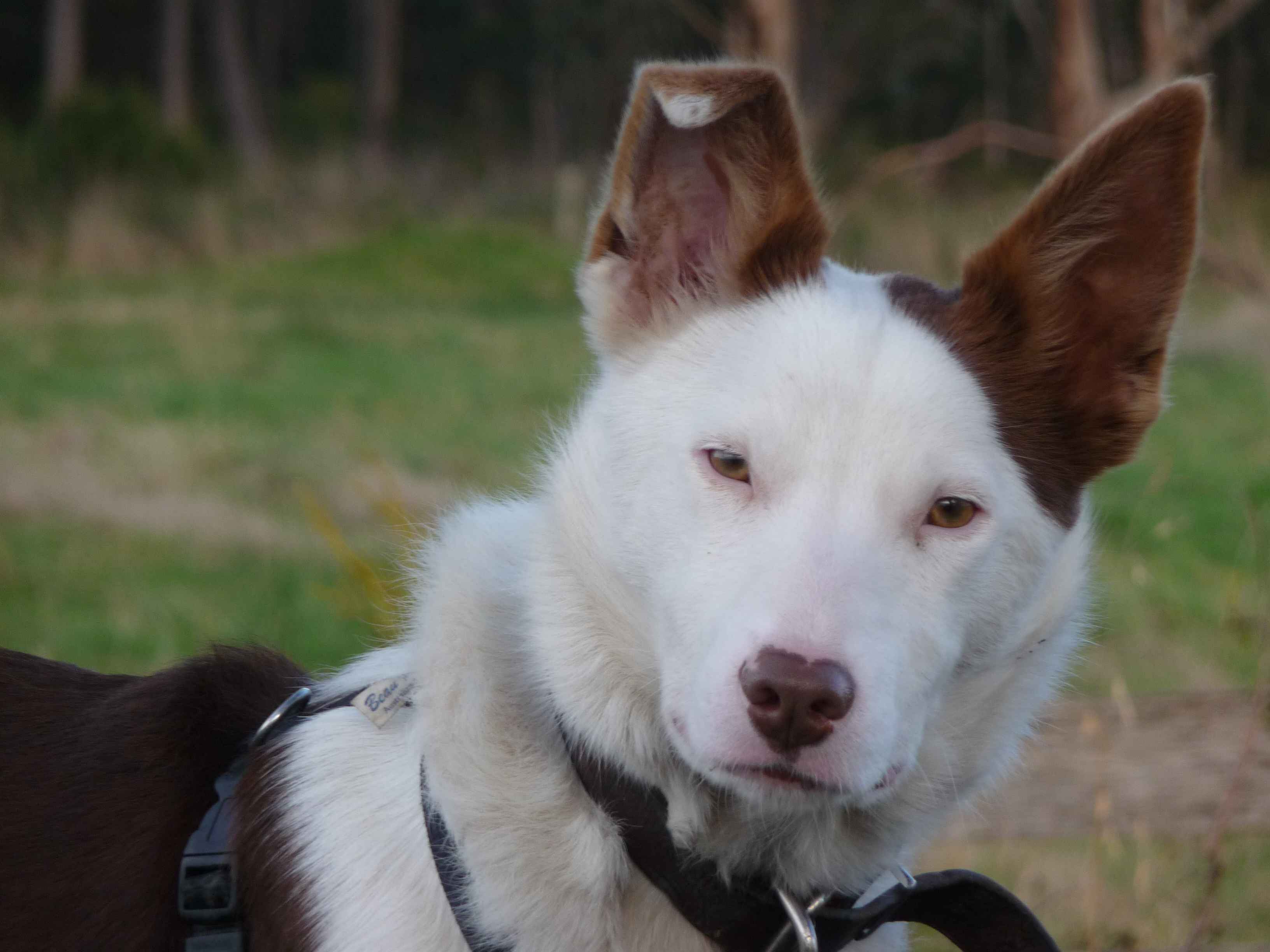
This is Patch now.

Anubis falls

“What do you mean, my ear looks funny?”

Back when I introduced Patch on Milk Maid Marian, Kevin Jones compared him to Egyptian god, Anubis. Well, how the mighty have fallen!

According to the Kelpie Standard, “The ears are pricked and running to a fine point at the tips, the leather fine but strong at the base, set wide apart on the skull and inclining outwards, slightly curved on the outer edge and of moderate size.”.

Oh dear, Patch! Your show career is over before it started. Then again, I’m not sure whether tan and white splashed with mud and manure would be well received in the ring, either!

Why dairy farmers loathe their leaders

Okay, we don’t all loathe all our leaders but I’d argue that generally, we do. Far more often than I hear a word of praise, I hear our R&D body, our co-op managers and even our own elected representatives criticised for not being “real” farmers, for forgetting us, having their noses in the trough or being plain idiots.

Why? Perhaps it is because too many of our leaders attempt to be leaders rather than hosts as Lynne Strong experienced in Canberra last week. But then, perhaps it is because we are lazy.

Lazy is not normally a description I’d apply to any dairy farmer – it’s hard work – and that’s exactly why we leave so much up to our leaders. Most of us are too busy fighting alligators to swim the political waters. It’s generally the older, better established farmers with adult children running the farm who can take days off at a time to attend meetings in the city.

Of course, there’s nothing lazy about a farmer unable to attend meetings because she’s working too hard but it does mean we tend to stop thinking about what’s happening beyond the farm gate. That’s what my husband calls “laziness of the mind”. We say “they” ought to “(insert colourful adverbs here) do something about it” and stop there.

So, what’s the answer? I don’t know but I think the question is obvious: how do we get farmers and their representatives talking?