What did one bull say to the other?

Aussie cricketers are infamous for sledging but, judging by last night’s performance, they have nothing on our Jersey bulls.

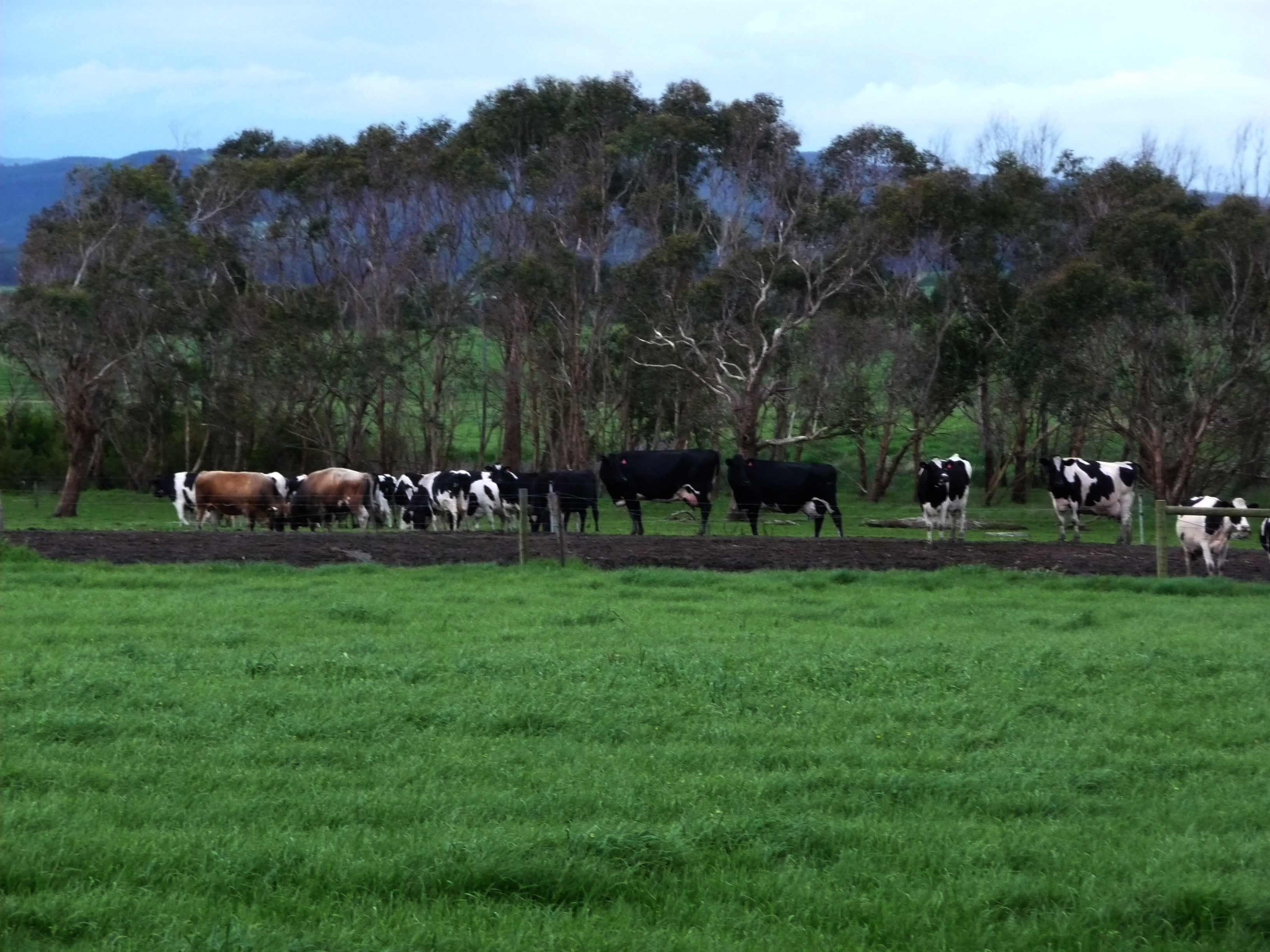
Three of these testosterone-fuelled bovines are in with the last of the cows due to calve and they are sharing a very strict pre-calving or “transition” diet that involves virtually no grass – just grain and cereal silage and hay. So, when I arrive with the grain trailer, everyone rushes over and tucks in before they miss out. Well, not quite everyone.

Bulls fighting in calving paddock

It all started when I arrived with the grain trailer

Headbutting bulls

Nobody else was impressed

Bulls still fighting

The bulls just kept on going

Bulls still warring half an hour later

The two bulls were still warring half an hour later (sorry about the pic quality)

Love to hear what you thought the original sledge was that sparked all this off!

New technology sparks a revolution on farm

I will never look at cow poo the same way again. A revolutionary technology arrived at the farm this week that is a huge win for the environment and for the farm.

Slurry Kat

New effluent technology

While most of the manure produced by our cows (and they dump a massive 40 litres each every day!) goes straight back onto the paddock, we do have to wash away the stuff that drops on the dairy yard while they’re waiting to be milked.

Rather than allow it to pollute our waterways, we collect it in an effluent pond to be applied on the paddocks as fertiliser. Sounds ideal but, unfortunately, there’s been a deal of guesswork in knowing exactly what’s in it and what rate to spread.

The only way until now was to agitate the pond (at significant expense) and send a sample off to a lab before agitating it all over again and getting it out with a slurry tanker that literally splashes it all over the pasture like Vegemite on toast.

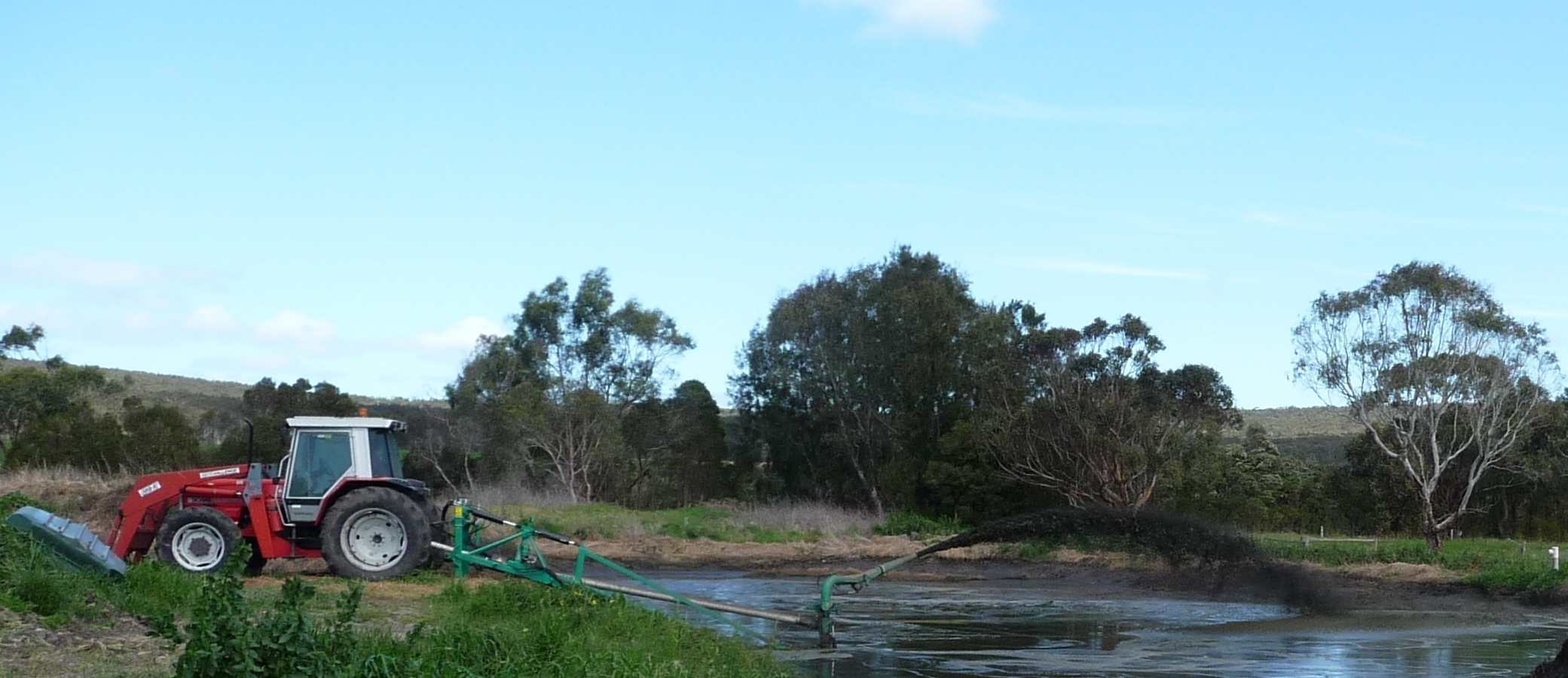
The local and forward-thinking Bowden’s Agricultural Contracting owner, Wayne Bowden, has just bought a Slurry Kat that monitors the nitrogen content of the effluent as it’s pumped out and lets me choose just how much is applied per hectare.

In practice, that means instead of saying: “Aaah, about a quarter inch thick, please”, I can say “60 units of N per hectare, please”. Wayne can even tell me how much phosphorous is going on.

Why do I care? It means less likelihood of leaching excessive nutrients and we don’t use too much or too little bought-in fertiliser.

How the Slurry Kat works
The Slurry Kat system involves three tractors:

  1. An agitator that ensures the heavy slurry at the bottom of the pond isn’t left behind
  2. A pump stationed at the pond to push the effluent out to the paddock at up to 160,000 litres per hour via a 5″ hose.
  3. The spreader tractor, which uses lots of hoses to dribble the effluent along the ground in lines.
Agitating the effluent pond

Agitating the effluent pond

Effluent agitator and pump

The front tractor pumps the effluent up the umbilical hose

Slurry Kat spreading effluent

Slurry Kat spreading effluent

How it helps us manage our effluent for a better environment and greater productivity
Aside from the extra information and control the system brings us, the benefits are:

  • Safety. Because there’s no need to reverse a tanker up to the effluent pond dozens of times, there’s less chance of someone falling in.
  • Lower greenhouse gas emissions. Manure dribbled onto the ground rather than splashed onto a plate and sprayed means less volatilisation of its nitrogen.
  • We can affordably apply effluent to paddocks 1.5 km from the effluent pond rather than limiting ourselves to those close-by.
  • Less odour. I couldn’t smell it from the road.
  • Lower access requirements – less damage to tracks and paddocks near gateways
  • Quicker return to pasture because there’s no thick slurry to wash off leaves.

Slurry Kat lines after 24 hours

Slurry Kat lines of effluent after 24 hours on the paddock


I love it (and, no, I didn’t get paid to say any of this)!

Dogs and ducks, genomics and designer bulls

Training working dogs with ducks

Paul McPhail training working dogs with ducks

Outside the pavilion, hundreds watched working dog trainer Paul McPhail show how young dogs are schooled herding ducks. Inside the pavilion, a small crowd lunched with researchers investigating genomic testing of bulls.

This scene from the Dairy Expo at Korumburra yesterday struck me as a really interesting statement about modern farming. It’s the meshing of age-old skills and cutting-edge science.

Zoe and I couldn’t resist watching the pups – one just four months old – rounding up the ducks. The warmth of Paul McPhail’s training and the dedication of his dogs were mesmerising. Nor could I resist the chance to find out what science will bring to our dairy farm in the next few years. One of the most interesting was the genomic testing – as distinct from genetic modification – of bulls.

Normally, bull calves are selected for breeding based on pedigree and their conformation or “type score”. Their semen is then collected and used to breed daughters, who must then get in calf so we know how fertile they are, and then be milked at age three before we know the real value of the bull as a sire.

It’s all based on observed and measured performance. On the other hand, genomic testing compares the DNA of new sires with the DNA of historically well-performing sires as a benchmark. More work needs to be done to increase the reliability of this testing but it promises a shortening of that four-year timeframe.

There is also hope that the testing will soon be affordable for mass screening of our cows. We will be able to verify the parentage of our animals and gauge their genetic merit very early on. This should “speed up” improvements in our herd with powerful animal welfare outcomes. By better selecting cows for breeding, we should be able to reduce the number that become lame, have bad udders and need to be treated for mastitis.

The scientists, who were from the DairyFutures CRC and are also working on designer forages, will help Australia’s dairy farmers remain competitive on the world stage.

Exciting stuff!

Surpassing my wildest dreams in sustainability

You can’t wipe the grin off my face at the moment because one of my most daring experiments has reaped massive dividends: a tripling of our topsoil in three years.

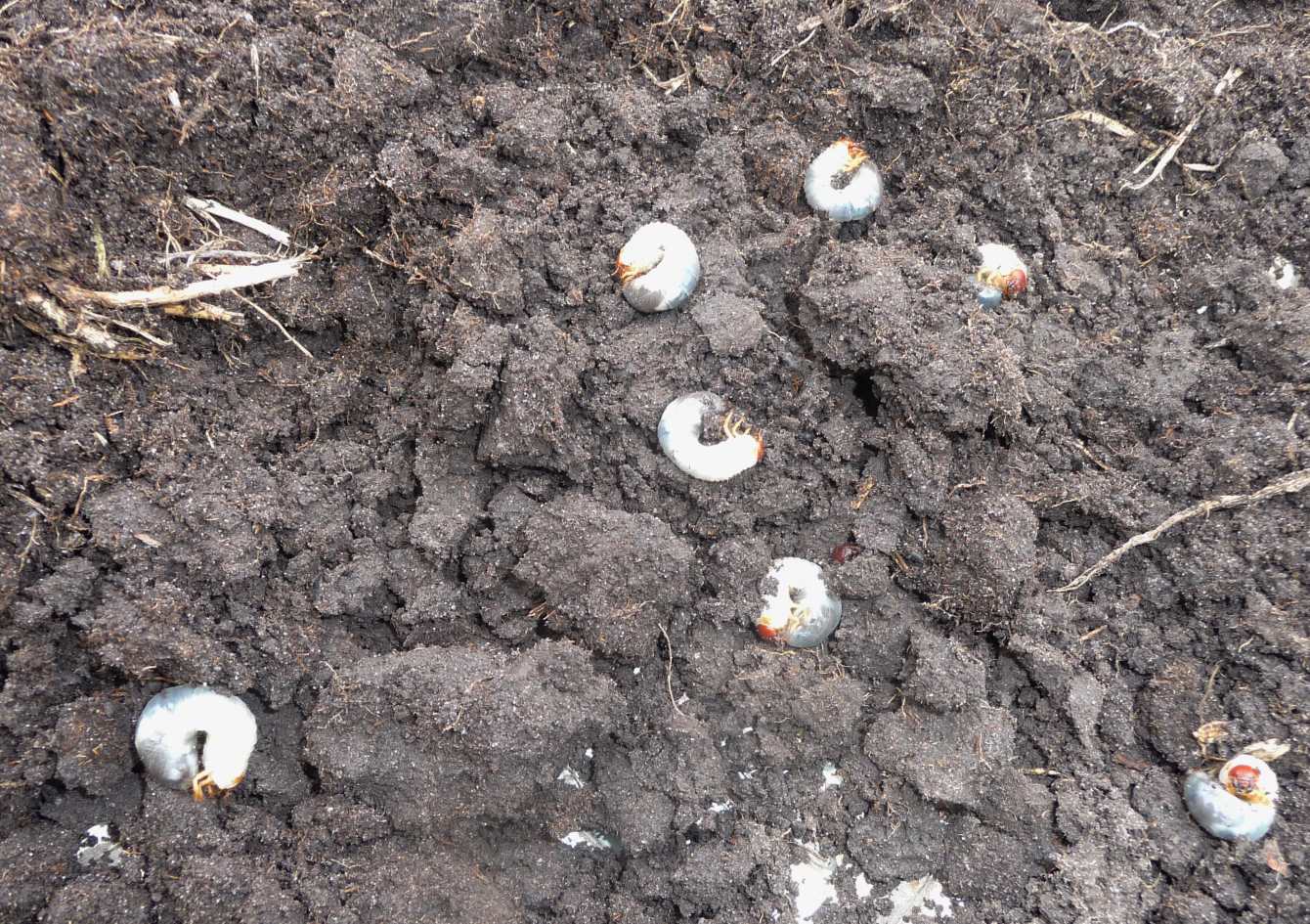
Three years ago, almost half of our pastures were destroyed by the root-eating red-headed cockchafer.

Red headed cockchafer grubs

Red-headed cockchafer grubs

These rotten grubs turned paddock 4 into a fluffy mix of topsoil and the desiccated remains of our ryegrass just ahead of Spring. It was devastating. You can’t control them with sprays because they stay too far down in the soil to be affected. The only alternatives are to resow and hope they won’t come back or physically squash them with cultivation and then resow and hope they don’t come back. The experts said two cockchafers per shovelful of soil equated to an infestation and paddock 4 had up to 50.

I became desperately worried as more and more paddocks succumbed. I started digging holes all over the farm trying to work out what would be hit next and looking for a cause in the hope of finding a solution. I failed in that quest but the exercise was worthwhile because the grubs taught me an incredibly valuable lesson. The pastures that suffered the most had relatively shallow topsoils over a hard clay pan.

Paddock 4 had about 12 to 15 cm of sandy loam over the moderately sodic clay. I decided to turn the expense of recultivation into an investment and had the soils deep-ripped and dressed with soil-conditioning gypsum in an attempt to keep them open.

Paddock 4 was sown with oats because they provide quick feed to fill the gap created by the grubs and their long roots are relatively cockchafer-resistant. After the oats were taken off in late spring, we planted the paddock with a summer brassica crop, which again has deep roots.

It was clearly time for some very expert help and we engaged independent agronomist Greg Forster, who worked out the nutrients, trace elements and lime needed to allow the soil to function at its best. We have since ploughed in the remains of a brassica crop, too.

Then, this week, scientists arrived to take metre-deep cores for analysis as part of the Victorian Soil Carbon Project. I was stunned. Too stunned even to remember to take a photo but that 12cm topsoil was now more like 45cm deep. “Lots of farmers would give their right arms to have soil like that,” remarked the supervisor.

I can’t believe it. I’m blown away and ever so slightly grateful to the red-headed cockchafer (though don’t think that’s an invitation to come back, you nasty little blighters).

I’m not afraid of La Nina

So, she’s on her way back, is she? La Nina wreaked havoc across Australia last season and forecasts predicting her return this summer have hit the headlines. But I’m not scared of her. In my region, La Nina is no grand dame.

In fact, the Bureau of Meteorology’s analysis of 12 La Nina years shows average rainfall in our region of south-east Victoria.

I had no idea this was the case until I subscribed to the fascinating and very informative Victorian DPI program, Milking the Weather. A more realistic seasonal outlook means we need to look at a whole series of climate drivers that Milking the Weather nicknames “Climate Dogs”. In their September newsletter, the DPI’s Bree Walsh and Zita Ritchie say:

“It is easy to look to the sky, irrigation dams and soil moisture levels and think the good old days of plenty of rain have returned. However, based on history an average outlook could mean rainfall could go either way, as rainfall events rely on a good moisture feed from the Pacific and/or Indian oceans.”

With this in mind, the smart money is not on building an ark or buying in vast quantities of fodder just yet. As Bree and Zita conclude:

“In summary, 2011 looks unlikely to mimic 2010, taking into account the current climatic indicators and model predictions. When comparing the seasonal outlook from year to year, it is important to keep risk in the back of you mind. Many factors affect our weather, with each region having their own specific risks which need to be considered in the context of the broader model forecasts. Managing climatic risk is complex, one of the hardest management decisions is around how all of these outlooks come together and affect your farm.”

Hidden farm hazard

Hidden farm hazards

Hidden farm hazard

Farms are notoriously hazardous workplaces. One of the reasons is the sheer unpredicatbility of what a day will bring. This morning, I drove the UTV across one of our riverflat paddocks. You can see my wheeltracks in the grass but can you see why I had to swerve suddenly? It’s just four metres away from the Bobcat’s bullbar.

When I was almost on top of it, a freshly-dug wombat hole appeared. Wombats are a common sight on the farm and while these podgy-looking recluses are endearing creatures, they’re also very powerful excavators. The holes are typically larger than a wheel and present a serious hazard to anyone riding a quad bike or even driving a 4WD. For this reason, we have a farm speed limit of 30km/hr on the tracks and 10km/hr in the paddocks.

Here’s the wombat hole I so narrowly missed this morning.

Hidden wombat hole hazard

Just missed this wombat hole

Mother duck shows spring is here

Mother duck

Mother duck and her brood

Driving over the dam spillway this morning, I gave mother duck and her brood the fright of their lives and had to leap off the UTV very fast to snap their photo! In the last week or so, we’ve seen quite a lot of waterbird chicks on or near the water and it gives me a real thrill to see them thriving on the farm.

We live close to the sea and are proud to offer this protected nesting site.

Feeding the cows who feed us

Gone are the days when dairy cows just ate grass. These days, there are people who get really geeky about feeding cows. Starch, protein, fat, fibre (only the right type, mind you) and energy levels can be perfected for optimal health and milk production.

This can really only be achieved when cows are fed a total mixed ration (TMR) and is more tricky when cows like ours are largely pasture-fed. Still, we can do better, so I was delighted when local DPI extension officer David Shambrook visited today to talk about what we’re feeding.

At the moment, the cows each eat just over 7kg of a rolled wheat, triticale, canola oil, limestone and salts mix during milking. The herd is also allocated about 2.9 hectares of fresh grass per day and fed two bales of top quality vetch hay (10.3 megajoules of energy and 22.8% crude protein for the benefit of farmer readers).

David had a look at the pasture they’ve left in the paddock, the pasture they’ll go to next, the milk production stats, the cows’ body condition score, whether they are chewing their cuds, their manure and rumen fill (indicated by how much a triangle of flesh bulges out). All these signs point to whether the cows are being well fed.

I have a gut feel (forgive the pun) for all of this but am determined to learn more about dairy cow nutrition. The combination of intellectual and physical challenges is one of the things I love most about dairy farming.

New part of the farm opens up

First grazing since the wet

The first time this paddock's been grazed since autumn

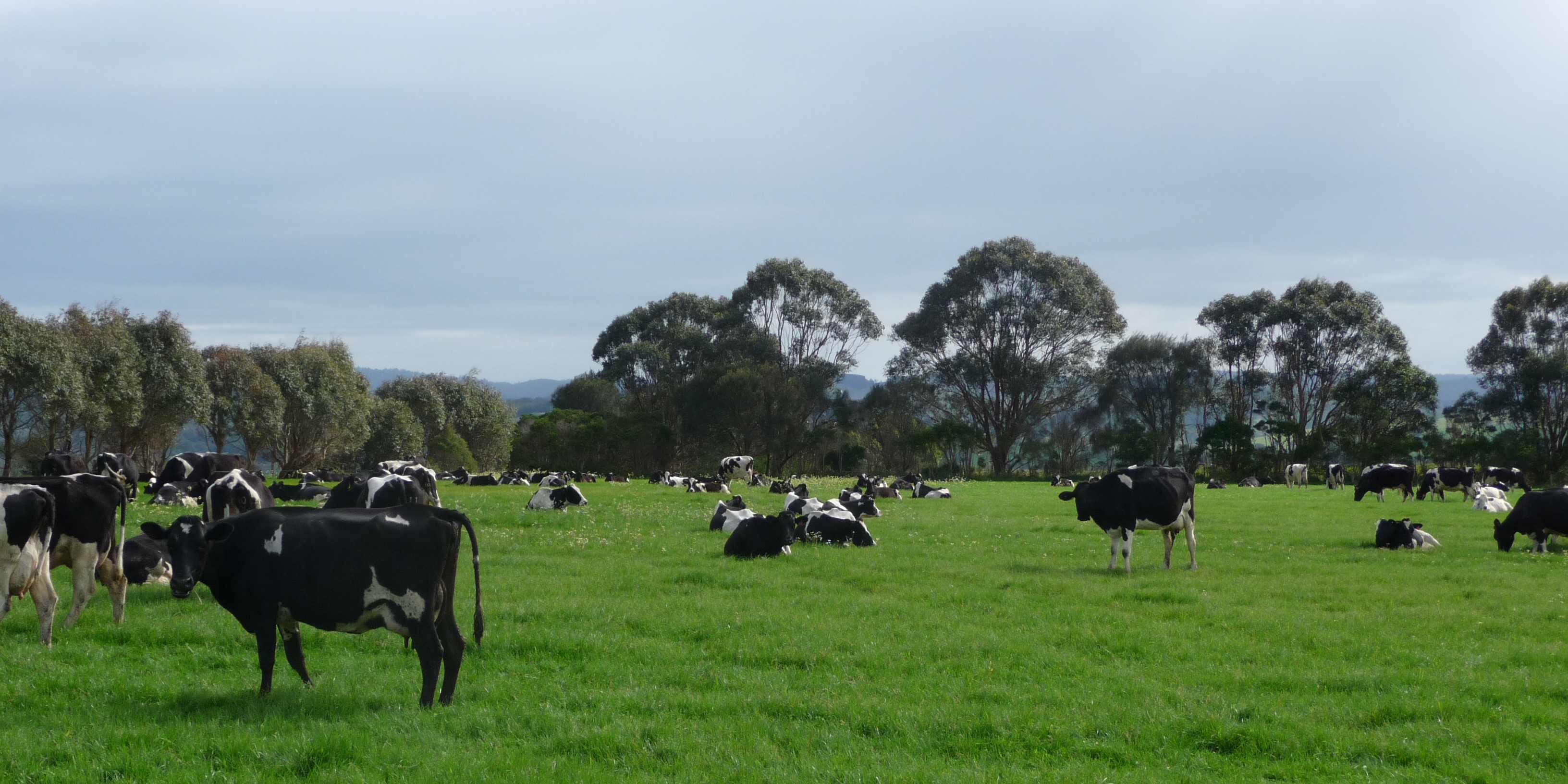
Here’s a view of the farm you haven’t seen before simply because it’s been too wet to get there until now! Spring has arrived and suddenly, there are four paddocks we can access that have been out of action since they were renovated in autumn. And don’t the cows love them! The pic above shows cows that have just left the dairy, while the ladies below have left the dairy, eaten their fill and decided it’s time for a snooze.

According to scientists quoted in The Weekly Times, rest time is really important for cows:

Promoting the idea that “cows should be cows”, Dr Burgi said on a daily basis a cow should spend five to five and a half hours eating, 12-14 hours lying down, two to three hours resting, standing or walking, half an hour drinking and two and a half to three and a half hours milking.

Cows resting in the paddock

Cows resting in the paddock after milking

Santa rides a grader

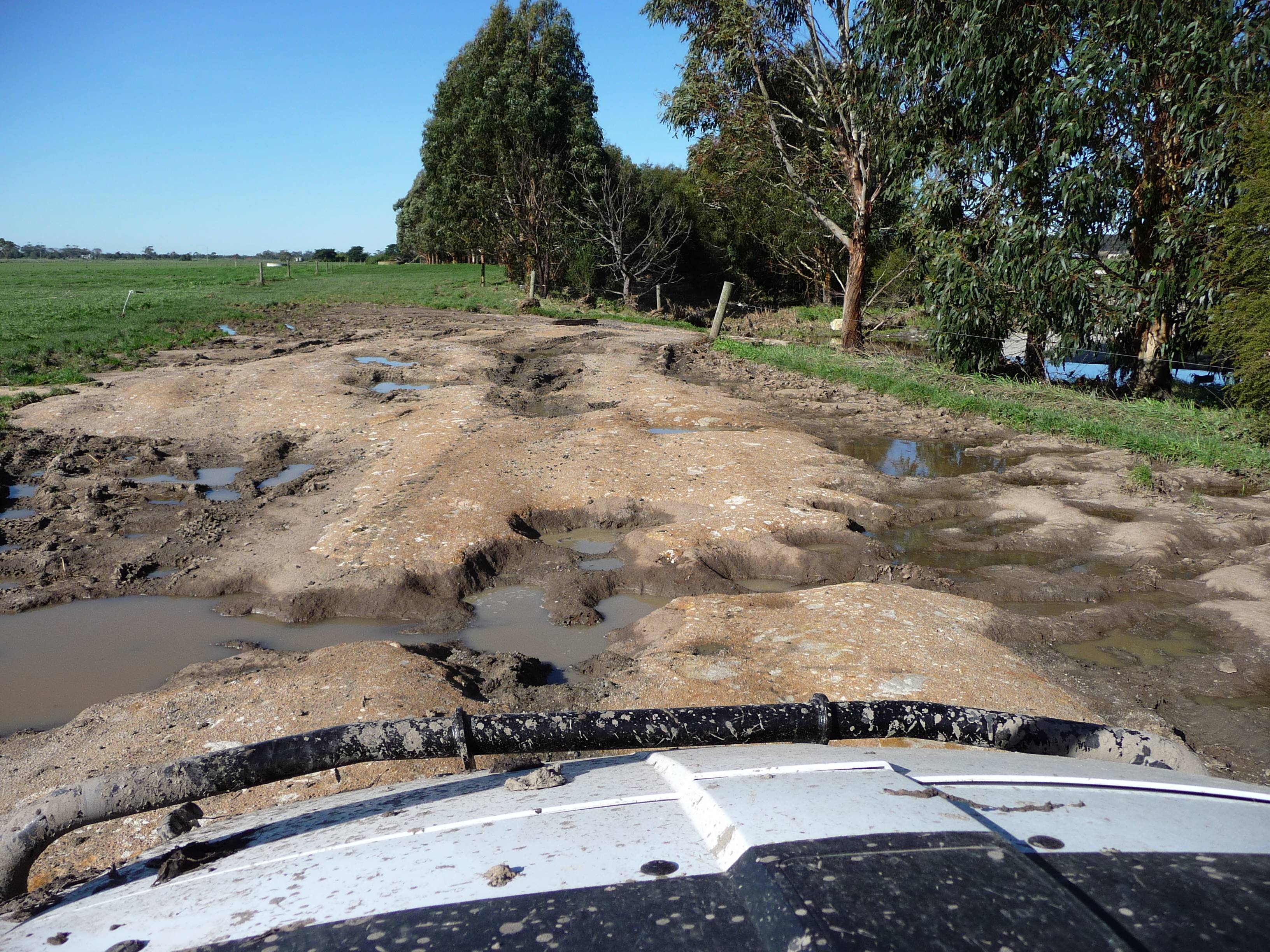
This is what our cow track looked like after the floods a few weeks ago:

Track after the July floods

Track after the July floods

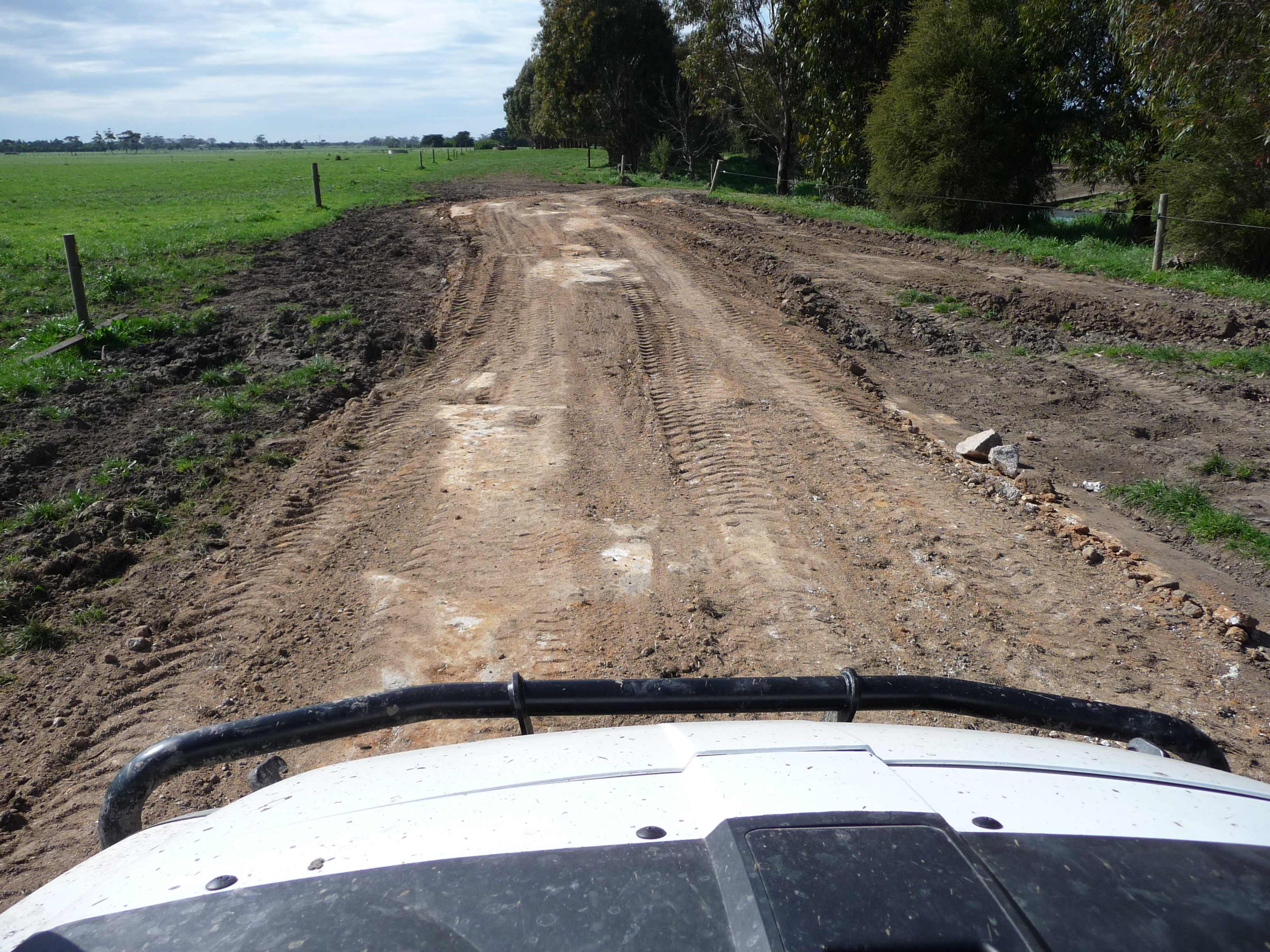
Thanks to the arrival of the grader, this is how it looks this morning!

Repaired cow track

After the grader!

The tracks – flood affected or not – have needed attention. Zoe and I had devised a game where we sang songs as the UTV bobbed over the corrugations and let our voices quaver.

The tracks were “good enough” though and we spent our farm budget on other things. The floods changed all that and, rather than spend tens of thousands of dollars on fresh gravel, we’ve taken the more conservative route of grading first, then seeing what else needs to be done in autumn.

For now, it feels like Christmas has come early. We practically glide along the tracks and can sing “Zoe Macdonald had a farm” at the tops of our voices without the slightest wobble!