The whingeing farmer

Farmers are infamous for never being happy with the weather. For years, we’ve been battling awful conditions – unreliable or non-existent autumn breaks, short springs and searing summers. The one blessing has been warmer and therefore more productive than normal winters.

This year, though, has been one out of the box. The landscape remained a verdant green right through summer and, with a precious bank of water in the soil, I took the opportunity to convert plenty of pastures from annual to perennials and when the “whole hog”, fully cultivating beautiful seed beds.

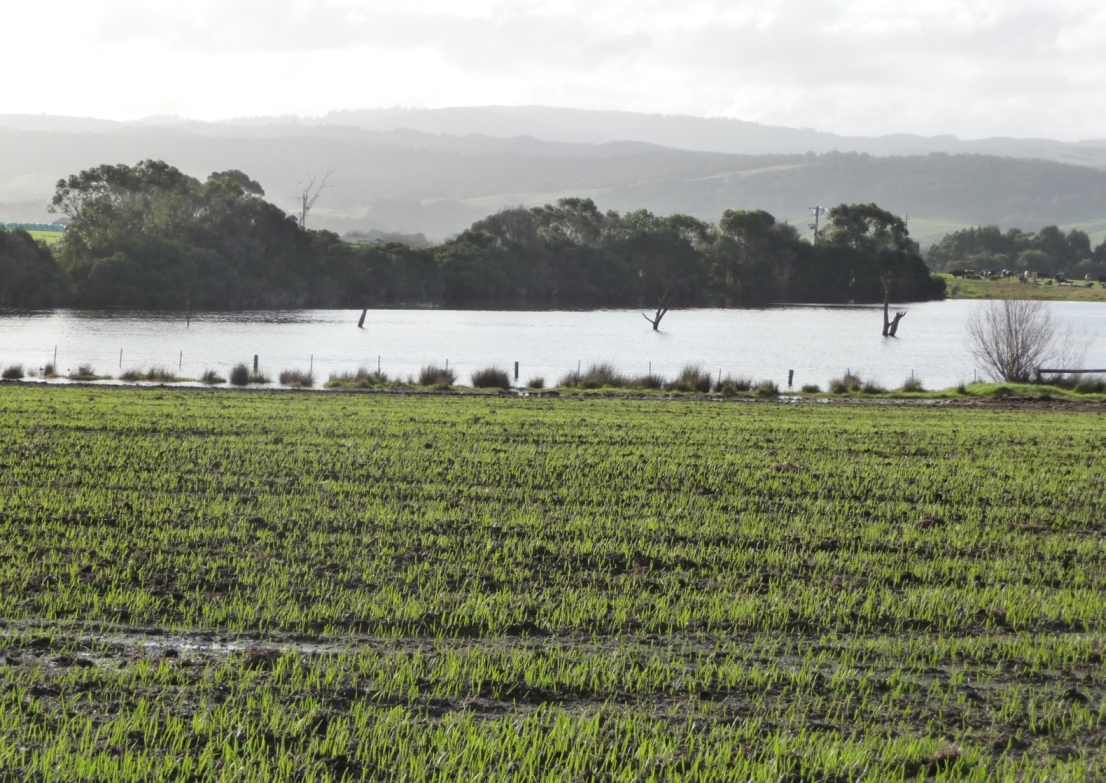
My gamble may still pay off but right now, the strategy has come back to bite me. The sun refuses to shine, the rain continues and that bank of soil moisture has been continually topped up to the point that very little of the new pasture is trafficable at a time when it desperately needs fertiliser and a trim. We may not be able to let the cows into some paddocks until spring.

So, as I type this post on a cold, wet, sunless day, I’m afraid I live up to the stereotype of the whinger. I have a good excuse but no good reason –  exposed to commodity price cycles, currency fluctuations, all the normal business hazards and mother nature herself, farming is innately a risky business but still we choose it as a way of life. After all, an affinity with mother nature is what binds us to it.

A new baby and being a farmer

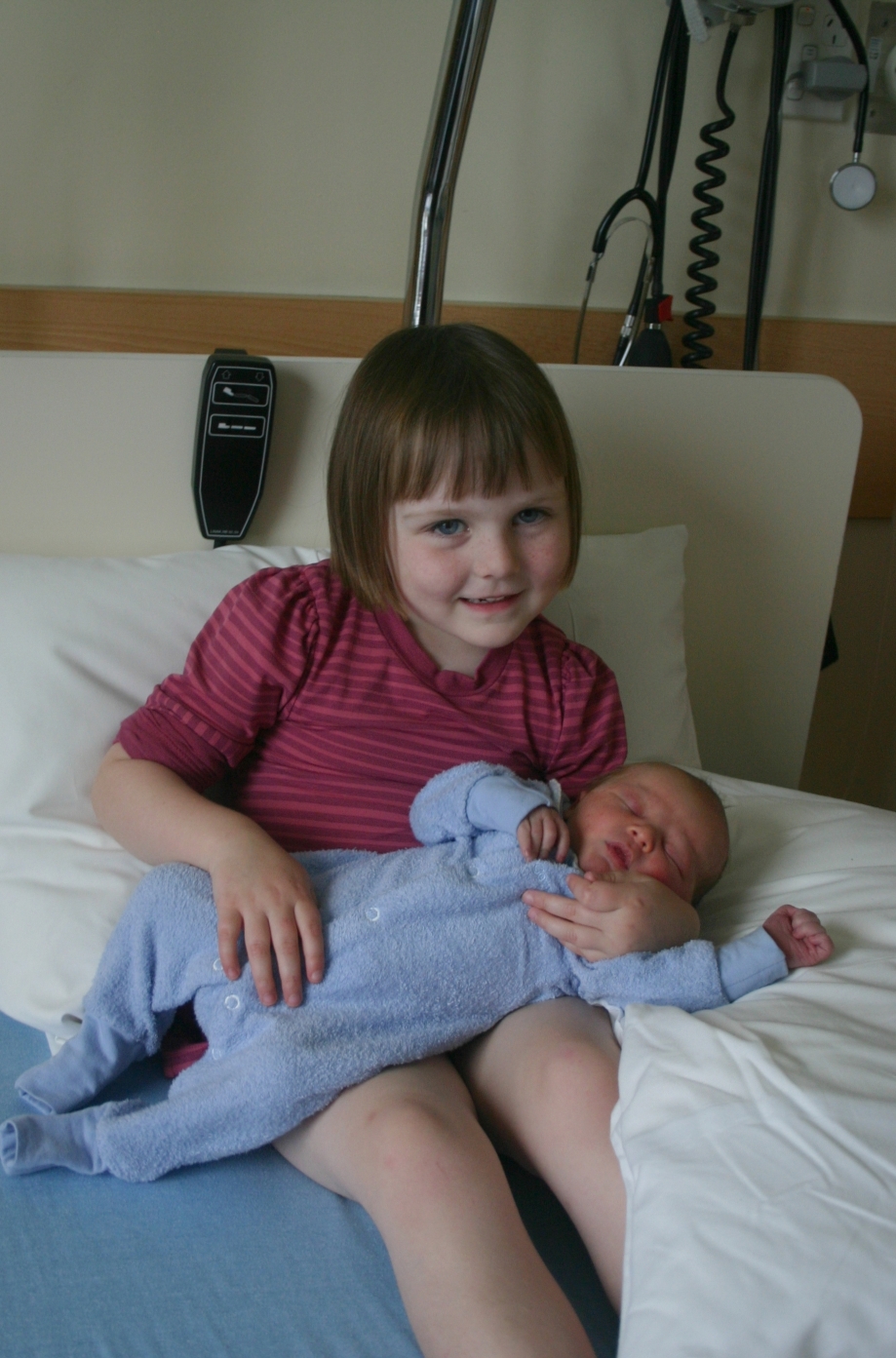
Zoe and baby Alex

Zoe and baby Alex

Alex has arrived and now I can’t wait to get out and show him the world with a suddenly very grown up Zoe as our guide. With my csection wound still very fresh and little man still so, so… though, an adventure bumping around the farm tracks today seems a little premature.

My “confinement” to a less physical but no less demanding existence for now has retuned my connection to the farm. Paddocks wrap themselves around the house and I can almost feel it breathing. Although I only spent four days away, the oats have galloped off and the new pasture in the house paddock is clearly thicker.

It doesn’t take long to fall out of touch with such a dynamic place and what this experience reinforces for me is that no one person can be the total master of all the systems on a dairy farm. And, if you’re a woman with a very young family, it’s an even more tricky balancing act. So, I guess it should come as no surprise that so many “women in agriculture” events focus on the support role a woman plays to a farmer husband. Another topic, another time!

Could I eat Laura?

Laura at 5 weeks

Laura at 5 weeks (left) with a friend

A while ago, I told you the story of Laura, a surviving twin heifer. Here she is today, about five weeks old, after her breakfast. When I came in for my own breakfast a little while later, I found this story about Facebook founder Mark Zuckerberg’s mission to eat only what he kills. I can see the merit in his argument but could never follow his lead.

I’m certainly not one of those people who can rear a steer called “Chops” and happily call the mobile butcher. Nor am I alone in being one of those people who likes to eat meat but doesn’t want to think about where it comes from. Maybe that makes me a hypocrite, yet it shows the strength of our bond with the animals around us and, as their custodians, that’s surely anything but shameful.

Why do farmers accept low milk prices?

During the recent publicity surrounding the milk price wars, I noticed a lot of comments following newspaper stories asking why dairy farmers continued to supply milk if it wasn’t financially rewarding. Simple question, complex answer.

Then yesterday, I went to a dairy farmer forum where respected farm consultant John Mulvany said, “A milk price of $5.00 to $5.50 per kilogram of milk solids is required for the foundation business of the industry (owner-operator farms) to receive an adequate return on the assets plus capital growth. This assumes ‘best practice’ management in the top 25 per cent.”

Also, that: “A large corporate investor will require a milk price of $5.50 to $6.00 per kilogram of milk solids to generate a return to shareholders in addition to growth.”

Then he presented a table that showed milk prices had only reached $5.00 per kilogram of milk solids twice since 1994/95.

If we accept John’s numbers, they raise two really important questions: why do dairy farmers keep going and why should family-run farms accept lower profits than corporate investors would? John’s always said that dairy farmers are optimistic by nature and I guess that’s part of the answer. But, if you can make a better return on the share market without working seven days per week, why wouldn’t you?

Every farmer will have a different answer to this question but I think it’s because we’re pretty much locked in, whether that’s emotionally or financially or a bit of both.

The financial ties that bind us are debt and the cost of exiting (and re-entering) milk production. Unlike broadacre farmers, we cannot readily shift our production focus in line with commodity price movements. We have a herd of cows that cannot be replaced overnight or “redeployed” and costly infrastructure that must be used to service debt. Nor can we readily wind back production. Cows must be well fed, no matter what, and that costs a lot of money. So when milk prices fall below profitable levels, we don’t withdraw supply immediately – instead, we draw on the buffer that equity in our land provides. Sadly, that’s just not good enough for many farmers and we are seeing a slow but constant attrition in farm and cow numbers as the decades roll on.

The emotional ties are harder to explain. After my father died, my accountant’s advice was to sell and invest the money elsewhere. “You’ve got other skills. Why work so hard when you could buy a nice little property out of town and be comfortable?” he reasoned. Sound advice but I wanted desperately to farm because, as corny as it sounds, I love the land, the animals, the life skills it will teach my children and the wind in my face. Something no corporate investor would value.

Quad bike politics put farmer safety at risk

Right now, there’s an unseemly squabble going on about the safety of quad bikes or ATVs. Everyone agrees that too many people are being injured and killed using these indispensable farm tools, so a working group was formed to find the answers. Disappointingly, the working group is so badly fractured, it’s better described as a “non-working group” marred by walkouts.

The main source of disagreement seems to be over anti-crush devices or rollover protection systems (ROPS). Unionist Yossi Berger is a strong advocate of the anti-crush devices. The representatives of the quad bike manufacturers contend the anti-crush devices may bring new hazards and advocate better rider training.

Both sides point to different research outcomes and claim the other sides’ research is flawed. I’m incredibly disappointed with this bickering. The issue is too important and the confusion it causes paralyses farmers from taking action.

The way I see it is this:

First, if you ride a quad bike in a dangerous fashion, no amount of protective equipment will prevent you being hurt. Like cars, trucks and forklifts, quad bikes are powerful, heavy vehicles that need to be treated with respect. For this reason, training and rider behaviour is undeniably an important part of quad safety. When someone comes to work at our farm, they must undergo an hour-long induction on safe quad bike riding and operation.

AND

Second, even if you are a careful rider, there will be times you’ll make a silly mistake (all humans do!) or you’ll encounter an unexpected hazard. For this reason, we need to make sure the quad bike is well maintained, designed to be as safe as practicable and that we use appropriate safety gear.

The word “appropriate” is key here, too. Even the most impressive safety equipment is useless if it impedes the user to the point where they bypass or sabotage it. That’s why seatbelts on a farm quad would not add to safety – nobody would use them because we get on and off frequently and because you need to move your body with the bike (aka “dynamic riding”). The implication of no seatbelts is that any large ROPS structure would certainly present new hazards. Flipped off the bike, you could well be crushed by its structure. This is one of the arguments maintained by the bike manufacturers, who also say that ROPS could interfere with the balance and handling of bikes.

The good news is that an Australian company has designed an anti-crush device that deals with both of these issues. The Quadbar is a strong hoop-shaped structure that can be fitted to the towbar and rear of practically any quad. It doesn’t get in the rider’s way and, is so light, it’s hard to imagine how it could affect the handling of a quad. The slender profile of the Quadbar also means that there’s less risk of being pinned by the bar than by the large surface area of the quad.

Quadbar in action on the farm

Quadbar in action on the farm

I got one fitted just last week and next time we get our second quad serviced, we’ll have a Quadbar fitted to that as well. Everyone here seems to appreciate the Quadbar’s added safety but there is one drawback: the structure around the tow ball makes for a very tight fit and skinned knuckles. Our next step is to fit jockey wheels to our small trailers so this isn’t such a problem.

Quadbar fitted to the towbar

A tight squeeze

And if ever you needed a reminder not to let visiting children go for joy rides on your quads, consider these statistics. According to a study quoted on Farmsafe, around 25% of all child deaths were visitors to the farm, but 50% of those killed on quad bikes were visitors. Quad bikes are also the most common cause of death for children 5-14 yrs on farms. Don’t let it happen on your farm.

A day in the life of an Australian dairy farming family

I kept a time log yesterday. Here’s how our busy but not unusual day went.

5.00am Wayne hops on the quad bike to round up the cows and slowly and quietly bring them to the dairy

5.45am Milking starts

6.30am Marian hits her desk to catch up on paperwork before Zoe wakes and checks the online forecast. All three computer models agree there’s a little rain coming tomorrow. Better get the nitrogen onto those paddocks we just grazed early tomorrow morning!

8.15am Milking’s finished and the cleaning begins

8.30am Zoe and Marian shift the effluent irrigator, fill the pump with petrol and get it going.

Zoe with effluent irrigator

Time to shift the irrigator

9.00am Marian and Zoe arrive on the Bobcat to give Papa a kiss and cuddle before we head off to feed the springers grain and anionic salts. The new calf spotted being born last night is a baby bull, who will be reared by one of our neighbours. We bring him and his mother back to the shed.
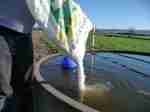
Anionic salts

Anionic salts (Zoe pic)

9.30am The milking machines, the yards and the vat room are spotless.

9.40am The three of us walk a couple of cows across the road to start their annual two-month holiday before they calve.

Cows going on holiday

Cows going on holiday

9.45am Wayne feeds three rolls of silage to the milkers

10.10am Zoe and Marian bring back two cows from the holiday paddock to join the springers in the TLC paddock.

10.45am Zoe and Marian refill the effluent pump and set it off again
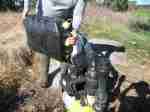
Refuel Pump

Refuel pump again! (Zoe pic)

10.55am We all meet up again to feed the youngest calves and muck out pens. Discover one is sick and Wayne heads off to town to get treatment for her and refill the jerry cans.

11.30am Zoe and Marian are starving. Lunch time!

12.50pm Treat the sick calf and muck out more pens while Wayne welds up a broken gate in the dairy

1.20 pm Wayne’s off to feed silage to the dry cows, calves and heifers. Zoe and Marian take a look at the heifers to see if any should join the springers. We decide to do a big sort out in one to two weeks.

1.40 pm Refuel the effluent pump and get it running again

1.50 pm Load up 10 buckets of grain to feed to the youngest of the one-year-old calves. They are very happy to see us!
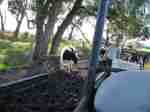
Feeding Calves Grain

Grain for calves (Zoe pic credit)

2.30 pm Check a new pasture on the way back

Zoe checks new pasture

Check new pasture

2.40 pm Quick snack and conflab with Wayne. 15 minutes later, we go off to round up while he feeds our maremmas, Charlie and Lola, and takes a bit of a break before milking.

Cows on the track

Rounding up

4.10 pm Finally get all the cows into the yard – Wayne’s already got the first 32 cows milked. The cows were in one of the furthermost paddocks from the dairy, we had to set up paddocks along the way and deal with a broken fence. Also discovered a major water leak 😦

4.20 pm Equipped with tools, start prodding around in the mud.
Zoe’s taking pics now while Mama makes a mess.

Zoe's pic of Mama looking for the leak

Mama looks for the leak

Oops! Zoe’s got a bootful but let’s make it funny.

Zoe on the Bobcat after mud accident

After a boot full of water

The cows crowd around us on their way back to the paddock.

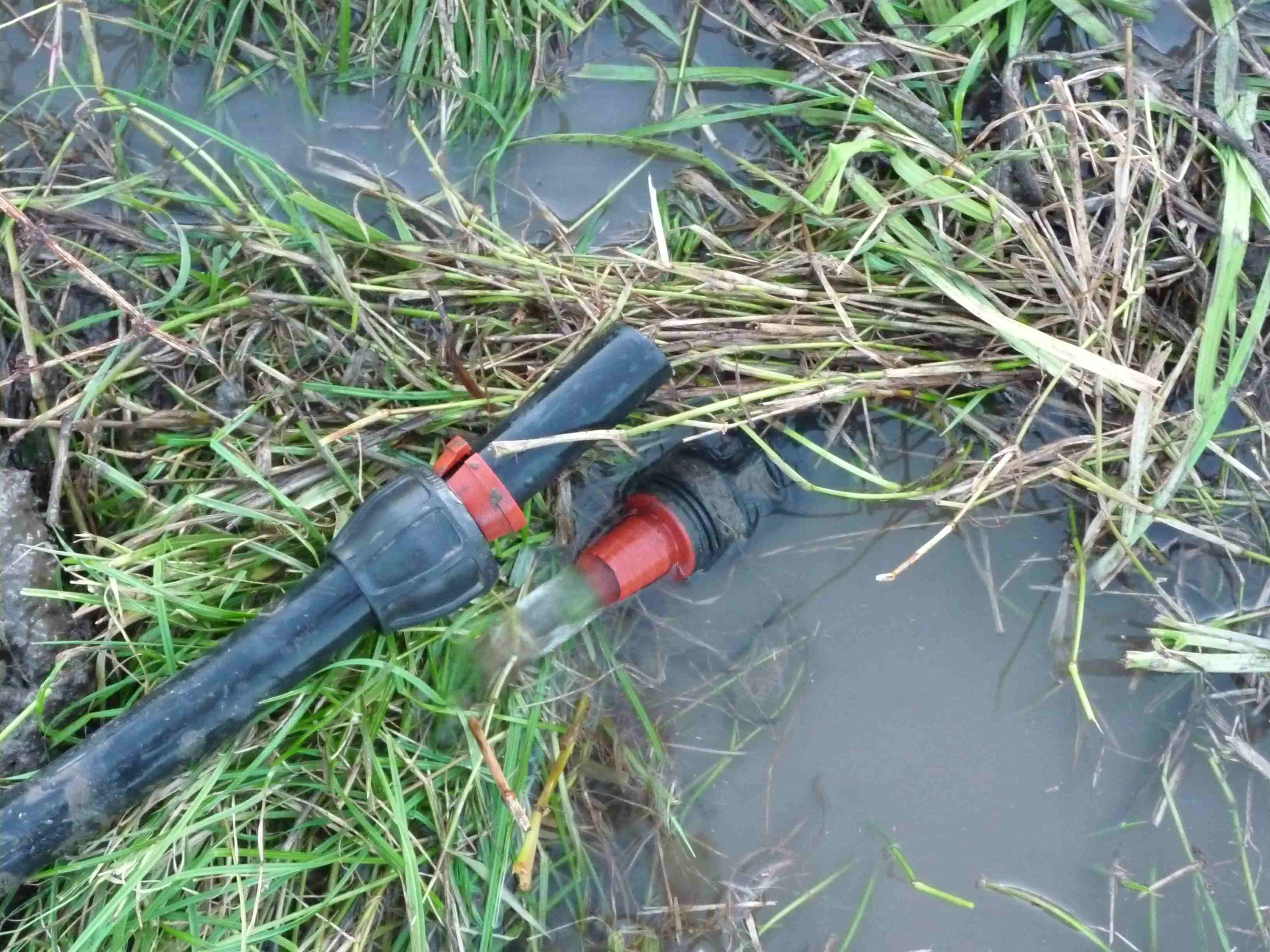
5.06 pm The Eureka Moment! An old (but still connected) water line has burst a fitting.

Pipe fitting

Unearthed the blasted leak

5.10 pm Outta there.

5.15 pm Set the travelling effluent irrigator on a new path, refuel pump and pull the rip cord!

5.35 pm Marian and Zoe home at last!

6.25pm Wayne’s home from milking. The end of a big day.
Meshing farm and family

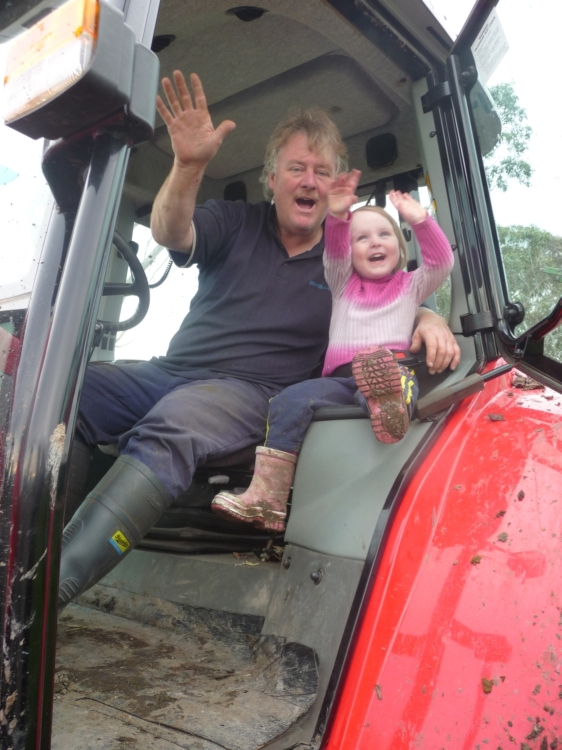
Farm kids get to spend lots of time with their Dads

Farm kids get to spend lots of time with their Dads

When I was a little girl, my brother and I had to feed the calves before we went to school and had plenty of jobs on the farm waiting for us once we got home. Naturally! It was the same for everyone else at our primary school.

It was an entirely different picture at our private secondary school in Sale, the home base for the oil and gas industry. Most of my classmates only had to take the bin out or do the dishes and some of them had never even been to their parents’ workplaces. To a teen who had to spend a couple of hours a day on the bus, it didn’t seem fair.

After a while and a few sleep-overs, though, I began to see some merit in living on a farm. We were certainly never bored and we did get to know Dad very well, even if it was while we worked.

It was all brought home to me the other day when Zoe’s kindergarten class put on a little performance for us. One of the songs, “I’m a little teapot”, made tears well up. My Dad had taught me the same song 35 years earlier as I skipped alongside him to round up the cows. Dad would have been so proud of my little girl and even though we round up with the Bobcat these days, Zoe prefers to walk along behind the cows while we sing silly songs together.

Weeds are part of my master plan

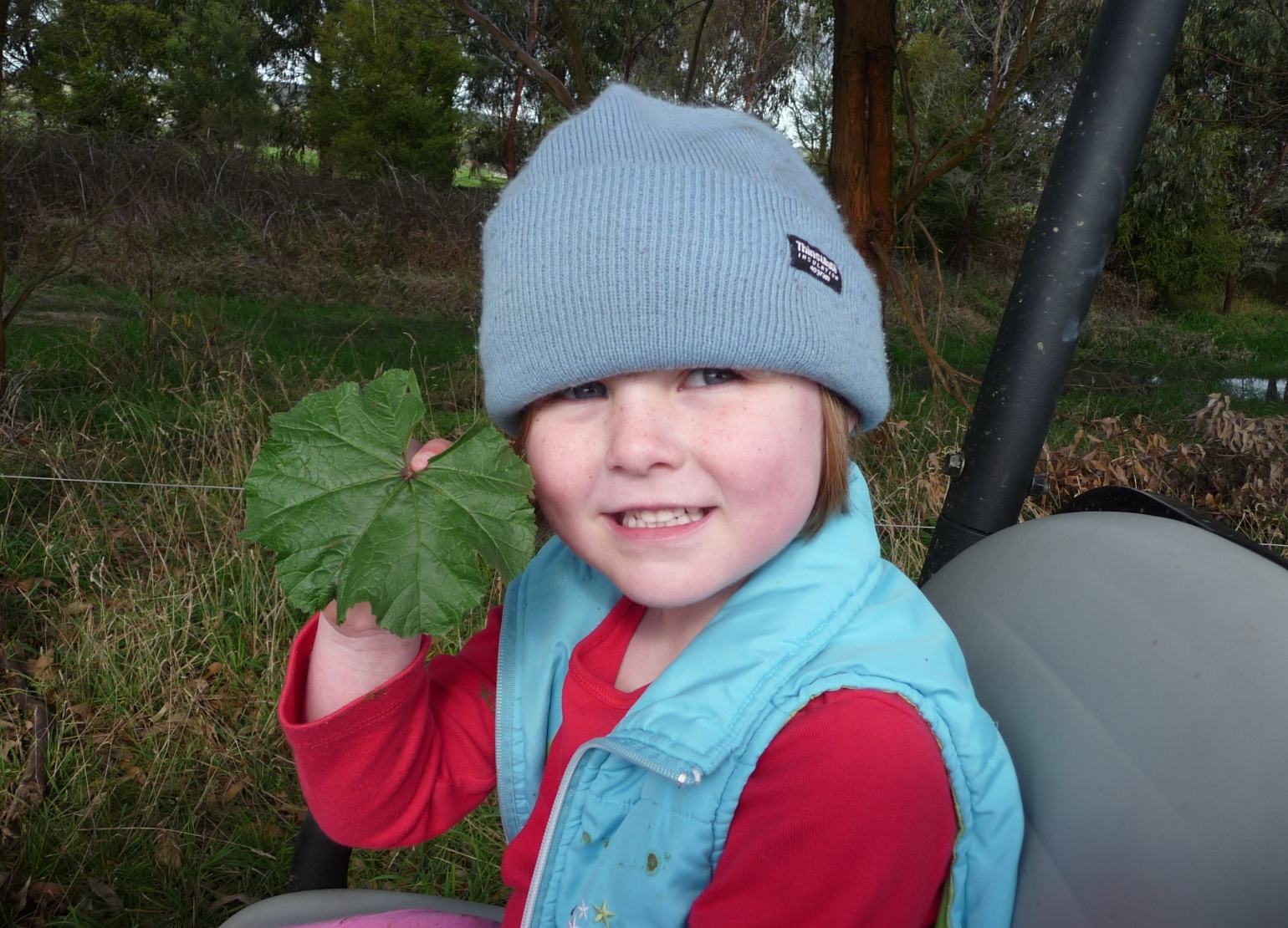
Zoe with marshmallow

Marshmallow is just one of the weeds to take off this season

“Weeds are part of my master plan” sounds like a phrase the Dr Evil of Dairy might use, doesn’t it?!

We’ve had a brilliant summer and autumn, which has made the grass and, ahem, the weeds, grow like crazy. Of course, there’s always a silver lining to every cloud and we’re seeing this as an opportunity to eradicate large banks of seed that has acccumulated over time without germinating.

Naturally, the weeds grow best on our best land, the river flats. The flats are next on my list of priorities for renovation and I don’t want new pastures overhwhelmed with thistles, nettles and other unpalatable – or even toxic – weeds.

The flats are rich, deep alluvial soils that retain moisture well during dry times yet drain well during wet times. They get us through summer and their pastures are always the quickest to recover but because the grass species are so old, quality is sometimes lacking.

Still, I’m a little reluctant to renovate them for a few reasons:

1. We rely on them being productive while our drier slopes are close to dormant over summer
2. They do flood and I don’t want to risk erosion
3. We need to be careful not to disturb the balance of soil life

The answer will be to temper my enthusiasm a little, take it gently, and renovate just a couple of our delicious river flat paddocks at a time.

False messiahs of the soil

Oats planted into a deep-ripped paddock

Oats planted into a deep-ripped paddock keep the soil open

There are plenty of people out there at the moment promising farmers an organic/biodynamic/permaculture nirvana. “Use less fertiliser, restore soils, improve animal health and fertility,” they cry. That’s a very attractive set of propositions to a dairy farmer like me and I have been tinkering around the edges, listening, sifting and learning.

Although alternative farming practices have been around for centuries, they’ve never been commercialised and marketed to the mainstream in the way they are today. In my experience, with that marketing has come some very questionable “experts”. I guess it’s like any emerging school of thought – there will be a mix of true visionaries, snake oil salesmen, good practitioners and fools. The trick is to work out who’s who!

Yet it seems almost every proponent of these alternative farming movements does have something to offer. Composting, for example, is a great way to improve the biological health and structure of our soils and this seems to be a universal tenet of all the alternative farming philosophies. It also resonates with me as a gardener. If I could afford to, I would “garden” the entire 500 acres but the intensive treatment we give our veggie plots is not feasible on such a large scale. Whatever we do has to be manageable.

I was all set to do an 11 hectare composting trial this year until a set of logistical nightmares stopped me in my tracks. The plan was to deep rip the soil, add lime and then hay soaked with effluent on one half of the paddock, while using more conventional treatments on the other half. I am almost certain it would have been a great success, so will have another go next season.

I think it will work best on our most troublesome soils. Some parts of the farm have a layer of compacted soil or “hard pan” caused by an acidic reaction, which prevents water from penetrating deeply. This means that those paddocks get very wet soon after rain but dry out extremely quickly. I’m aiming to break down that layer to increase the plant available water capacity of the soil. Paddocks of this type that are due for renovation have been deep ripped, limed and planted to oats, which have long, quick-growing roots. In the last couple of seasons, I’ve found that deep-ripped paddocks planted to long-rooted plants like brassicas and oats have remained more permeable than those planted immediately to rye grass.

I’ll keep on learning more about alternative farming techniques (with ears and eyes open) and gradually trial them on farm.

Why good news in the budget for scientists is good news for dairy farmers

Much to my relief, the word is that the federal budget has not cut spending on agricultural research and development. Yes, ag R&D funding has been steadily eroded and needs to be restored but I was almost certain it would be slashed. Earlier this year, a review of the Rural Research and Development Corporation by the Productivity Commission flagged a dramatic reduction in funding for agricultural research.

Why do I care? Because we need to farm smarter all the time in order to make a living. The farm I run now bears almost no resemblance to the farm of my childhood 30 years ago. It’s the same 500 acres but we milk 50 per cent more cows and each produces around 55 per cent more milk than her ancestor did in the 1980s: a huge leap in productivity.

Although these numbers are impressive, we are far from exceptional. According to Dairy Australia, Victoria’s raw milk production peaked in 2001-02 at 7.4 billion litres – more than double the 3 billion litres produced in 1980-81. Yield per cow also increased from 3,012 litres in 1979-1980 to 5,864 litres in 2008/09.

We achieved these gains scientifically. Thanks to Target 10 and Feeding Pastures for Profit, we make much more effective use of our pastures, while programs like “Fertilizing dairy pastures” showed us how to grow more grass with the efficient use of valuable nutrients like phosphorous and nitrogen.

Today, we are learning how to cope with new challenges brought by climate change: how to keep cows cool, new more drought-resistant pastures and declining fertility.

We must also be realistic about the rise of new competitors. Developing countries including China, Mexico and the Middle East are buying record numbers of Australia’s breeding stock in an attempt to fast-track the growth of fledgling dairy industries. India is also racing to become a dairy giant.

Australian dairy farmers do not enjoy the support lavished on our northern competitors. We can compete only because we are low-cost producers.

Although declining terms of trade mean we aren’t any richer than my father was, we are still on the land – thanks to government and farmer investment in agricultural R&D.