Just a handful of snaps from today:

New day and a new calf

View across the valley

The group of smaller calves enjoys breakfast
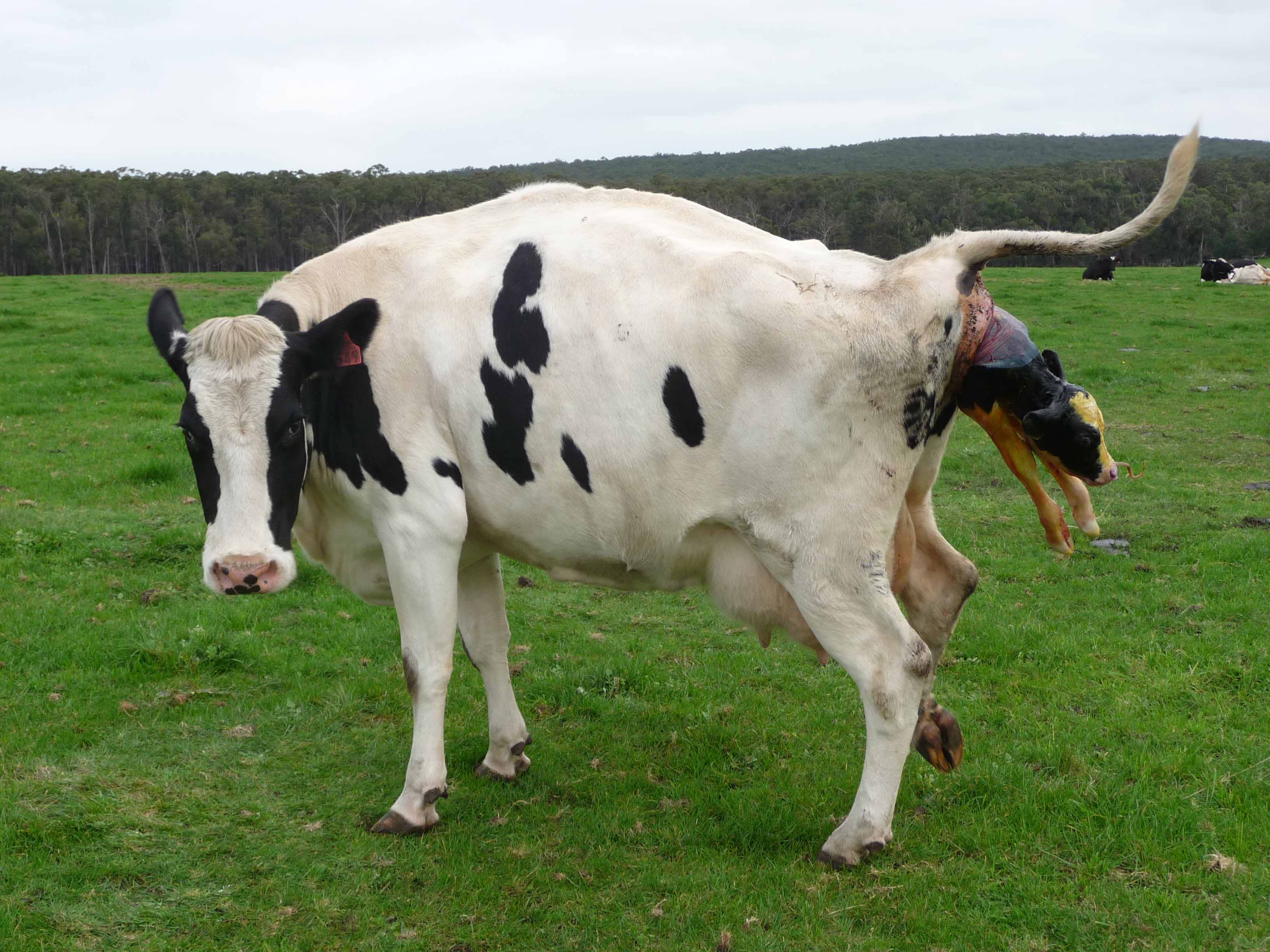
Calf takes her first breaths

Nothing compares to watching new life appear
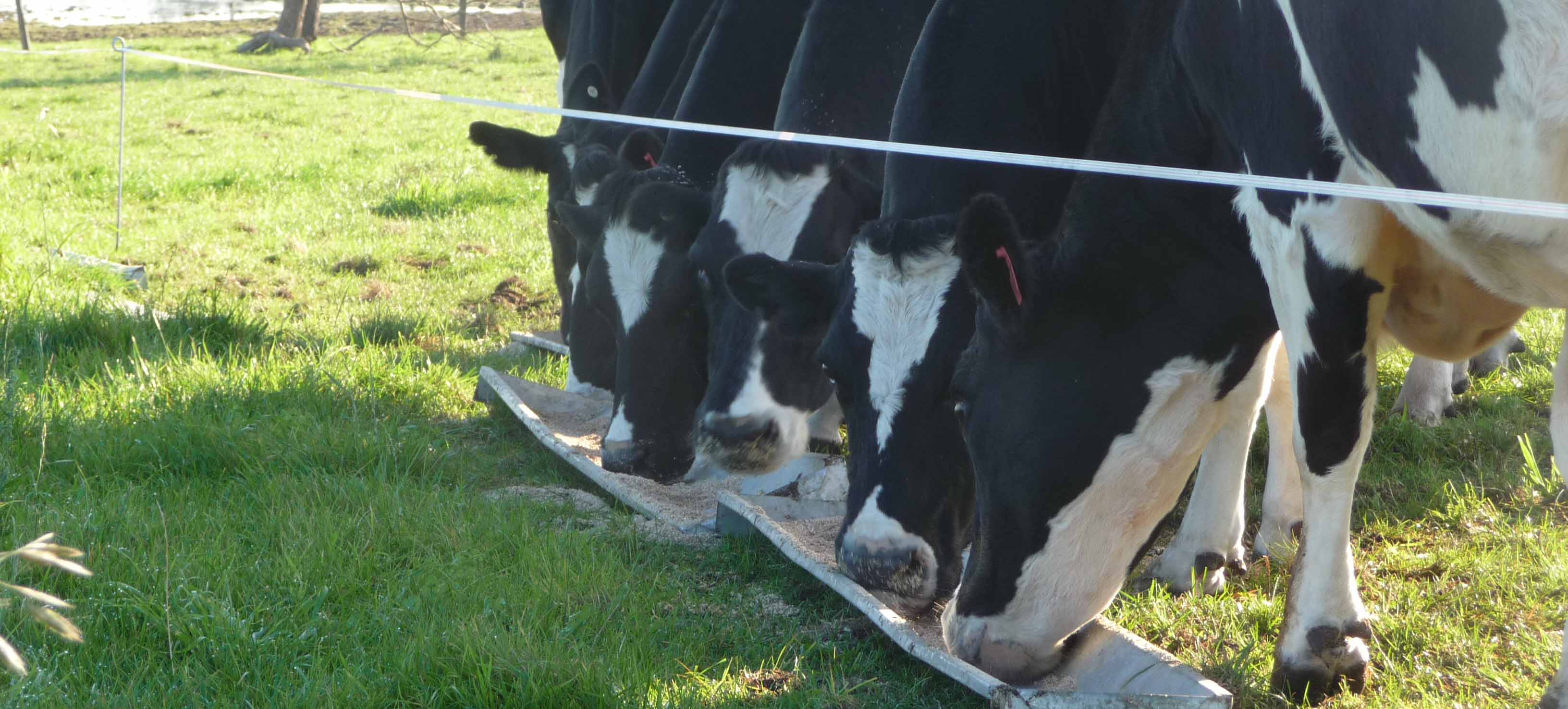
Expectant cows gobble up their grain
Just a handful of snaps from today:
New day and a new calf
View across the valley
The group of smaller calves enjoys breakfast
Calf takes her first breaths
Nothing compares to watching new life appear
Expectant cows gobble up their grain

Zoe with a seed drill from the 50s
When I was a teenager in the early 1980s, we bought the next-door neighbour’s farm and the one across the road to milk around 180 cows. At the time, it was an impressive herd.
Today, that’s quite small. The average Gippsland dairy farm now milks 265 cows on 130 hectares.
Turns out our farm is almost perfectly statistically average! Like many of our neighbours, we have a full-time employee and engage relief milkers to manage the workload. We no longer cultivate our own paddocks or cut our own hay because the job has just got too big. Instead, a specialist contractor with specialised, ultra-efficient machinery does it for us. Our very average farm of today would have been considered huge back then. Maybe even a factory farm.
Even so, the well-being of our animals has not diminished over time. We care just as much as we ever did and love of the land, the outdoors and our cows is why we farm. And now, thanks to the work of researchers, we are better equipped to keep them fit and healthy.
I don’t know what you’d classify as a factory farm these days but the low price of milk certainly puts us all under pressure to get bigger (and therefore better able to gain more efficiencies). Here in Australia, where cows are “free range” rather than housed and feed-lotted, big farms can be just as animal and environmentally-friendly as average farms like ours on one condition: the people who operate them still care.
Slow food versus cheap food conundrum for farmers
Quality food, lowered emissions, biodiversity, soil health, maximum animal welfare, cheap food. So many messages coming from consumer groups, so many implications for how we farm.
Slow Food Australia has a philosophy that resonates with me as a farmer:
“SLOW Food fosters community awareness of food that is good, clean and fair – that the food we eat tastes good and should be good for us; that it is grown and made in ways that respect animals, the environment and our health; and that the producers who grow or create it should be fairly rewarded for their endeavour.
Slow Food Australia’s website also carries a media release that says, “Almost $40 of every $100 spent by Australian households now lands in the cash registers of either Coles or Woolworths”. In light of the milk wars, this is a worrying statistic. While Coles denies the price cuts will be passed on to farmers, Woolworths admits they will. Even consumer advocate group, Choice, agrees farmers will bear the brunt. It’s hard to imagine that any company wielding that amount of market power won’t put pressure on suppliers to lower costs, which will inevitably flow on to those with the least market power – farmers.
The milk wars will have their greatest impact on farmers in states like Queensland, Western Australia and New South Wales but the story is no more rosy in my state, Victoria. According to official figures, most of the state’s dairy farms have a return on investment of 1 to 3 per cent, forcing a focus on financial survival.
Our farm is similarly affected. We want to improve the farm, so Wayne and I are both holding down second jobs. The plan is that these improvements will make the farm more profitable and sustainable. We are making progress but farm life is currently anything but sustainable from a personal point of view. You just can’t work this many hours forever.
So what’s the answer? For our family farm, in the short-term, it means no compromise on milk quality or animal welfare, while planting as many trees as we can afford. At the same time, we invest in anything that will make the farm more efficient and profitable.
In the long term, it means incorporating more and more organic principles into our farming methods and marketing our own milk directly to consumers who appreciate what we’re trying to achieve. The problem is that none of this comes cheaply and is out of the reach of most farmers (including us, right now).
If consumers really do care about sustainable food, driving prices “Down, down, down” is not the way to make it happen.
Dad missed out on his dairy
The royal wedding got me thinking about succession. Nobody maps it out more clearly than the Windsors. From the moment they are born, everyone knows exactly where they stand. Not so for many Australian farming families, including ours.
Dad and I loved each other but there just wasn’t enough room for both of us on the farm: financially, emotionally or in terms of management style. Although immensely proud of his university-trained daughter, I think he felt the farm was no place for a “girl” and, besides, this was his domain.
As Dad aged and grew more tired, it was great to have his daughter on hand to milk, feed calves, fix fences, drive tractors and so on but the subject of succession planning was taboo. He would tell anyone who cared to listen that he wanted to be “found dead in the dairy at 97”.
The dairy itself ended up being a rather poignant reminder of Dad’s determination and, ultimately, frustration. The dairy farmer who prided himself on always milking alone built a new 16-aside double-up herringbone in 2005/06. Sadly, he only milked in it a few times. Prostate cancer claimed Dad, aged “just” 77, in December 2006.
His last year was difficult. Dad did not want to admit defeat, so struggled on farming for many months despite being incredibly weak. Finally, the tipping point came when he fell off a tractor and had to be rushed into hospital unconscious.
In the weeks leading up to Dad’s death, the will was able to be discussed. He had remarried only five years earlier and the assumption was made that his wife would sell the farm. I was desperate to keep the farm and it became a bitter battle. In the last two or three weeks before his death, Dad decided that if he did die, I should be given the chance to pay her out and try my hand at farming.
It was almost too late and the indescribable stress was unfair on everyone. Tragically, this scenario is not unique and gets even more complicated when siblings are involved. Don’t let it happen to your family. Get everyone involved early and take advantage of all the resources and expert advice you can find.
Would love to hear how your family has approached this sometimes tricky topic.
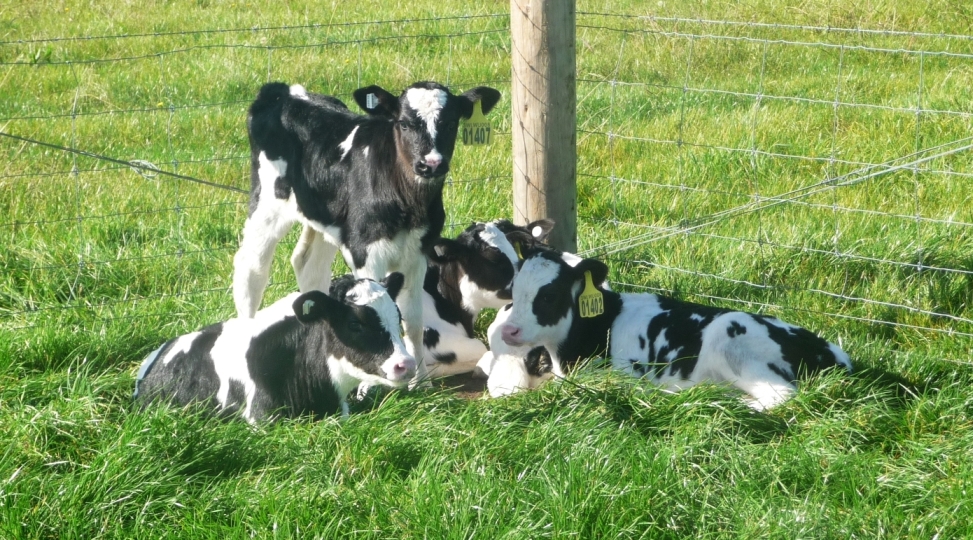
Ella and Bella, our premmie calves, soaking up the sun with friends
It’s been a normal day for a calving season but I’m just too tired to put a proper post together. Instead, here’s an update with some good news:
After feeding all the calves, mucking out stalls, sorting out cows to go in the “springer’s” (cows that are less than 3 weeks away from calving) paddock, fixing fences and a vital calf transport trailer, pouncing on sprightly newborns and doing all the normal farm stuff, the three of us are jiggered.
We’ve been preparing for this for two years now. The house paddock has been limed to manage its acidity, soil tested, fertilised to balance the nutrients, treated with effluent and deep ripped to improve its water storage capacity. Since then, we’ve had it sprayed with a biodegradeable weed-killer, disced, sown with perennial ryegrass seed and rolled. It’s a big investment, which is why I’ve been patrolling the paddock almost constantly.
And look!
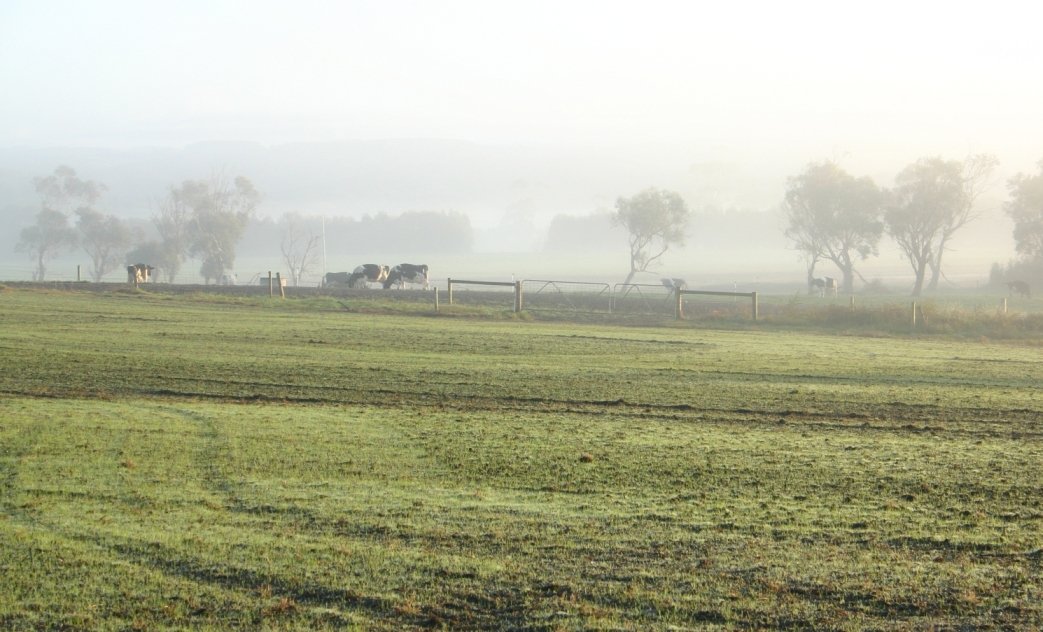
The house paddock on April 25
Here it was on April 13, just under a fortnight ago:
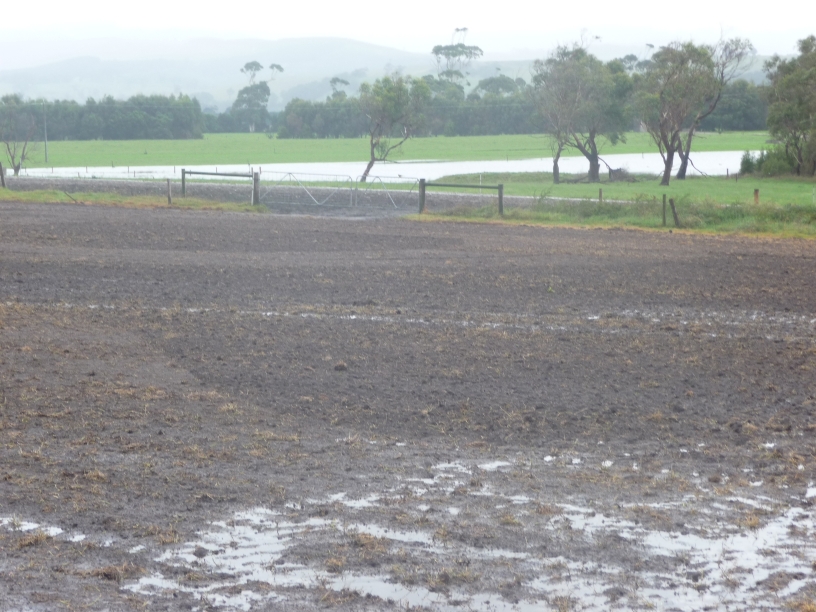
The house paddock on April 13
Now all we need to do is watch out for ravenous creepy crawlies and apply some nitrogen once it gets a little more established.
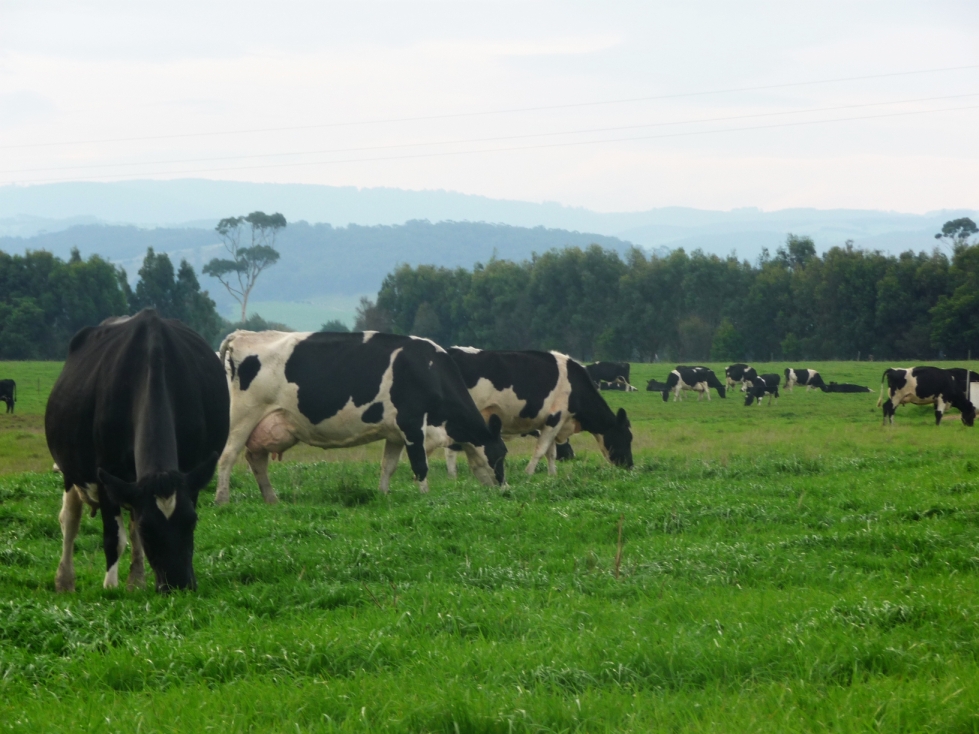
The cows really seem to prefer the Advance tall fescue over ryegrass
I’m beginning a clandestine (well maybe I’m coming out of the closet with this blog) love affair with fescue and cocksfoot. Our Gippsland dairy farm has always relied on a combination of ryegrass and clover, although prairie grass loves to volunteer. Because the weather patterns have changed so much, I’ve started to experiment with other pasture types.
We sowed the aptly-named swamp paddock with Advance tall fescue last year. It doesn’t mind waterlogging and produces massive volumes of feed in summer – just when the swamp paddock can withstand grazing without getting pugged. I’d had the paddock sown to an annual ryegrass which reshot and seemed to overwhelm it, so had the whole lot sprayed out with glyphosate. To my delight, the ryegrass was knocked out and the fescue has come back in force.
The cows seem to love Advance. I had them in the adjacent paddock of gorgeous perennial ryegrass but when I lifted the fence to let them into the rear of the still partially inundated swamp paddock, they rushed in and stayed there to eat the fescue.
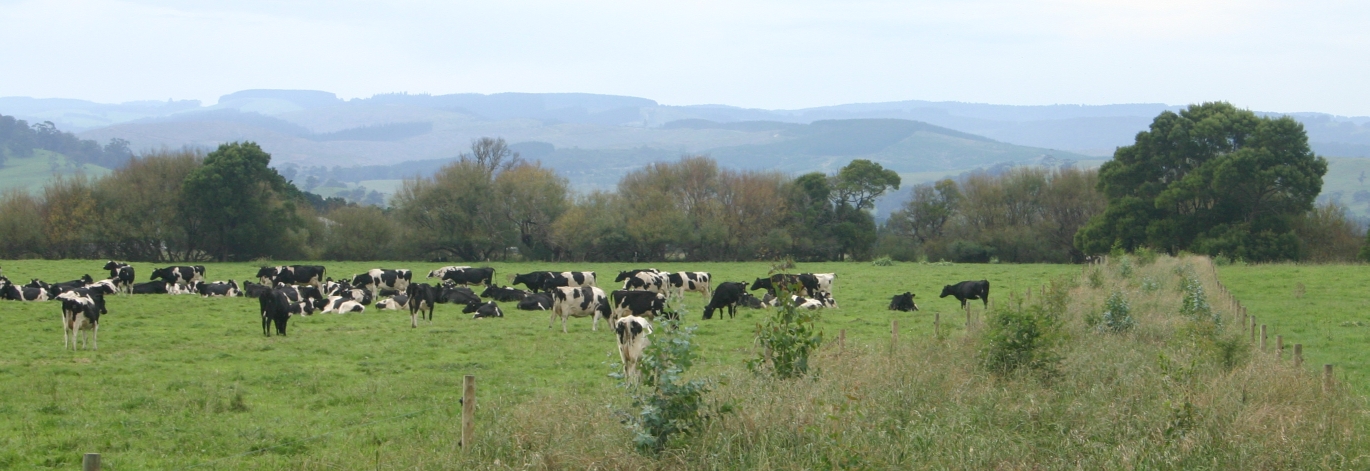
A few of the trees planted last spring

Trees Dad planted along a gully 12 years ago
Money may not grow on trees but I’m beginning to see that grass just might.
Our most productive pastures in summer are those that are sheltered on three sides by thick stands of willows. These are clapped out old ryegrass species but they outperform much newer pastures. I think that mostly it comes down to the relief the trees provide from those roasting NW winds. The cows also love the deep shade under the willows’ spreading branches, which must minimise heat stress. In other words, they create a more temperate micro-climate.
But willows are not universally loved, especially if you’re a native fish. Our farm draws water for cows and to clean the dairy machinery from the Albert River, so it is in our interests to protect the river’s health. I’m trying to see those shady willow windbreaks as “infestations” but without enough alternative shade, tearing them out is not a consideration.
So what are we doing? Planting hundreds and hundreds of native trees each year. If I had enough funding, I’d plant thousands every year! By doing this, we’re also creating wildlife corridors linking our gorgeous Land For Wildlife dam (which stretches over 8 acres) with two waterways and a wetland.
I’m so impatient. I can visualise the beauty of the farm in 20 years’ time, the cool oases of shade and the relief from the howling SW winter weather that these trees will bring. If the scientists are right, those refuges are going to be even more valuable as our climate becomes increasingly variable. If I’m lucky, I’ll be able to celebrate my 60th birthday in the summer of 2030 and Zoe’s 18th in the winter of 2024 in a very different and much more sheltered landscape to the one we enjoy now.
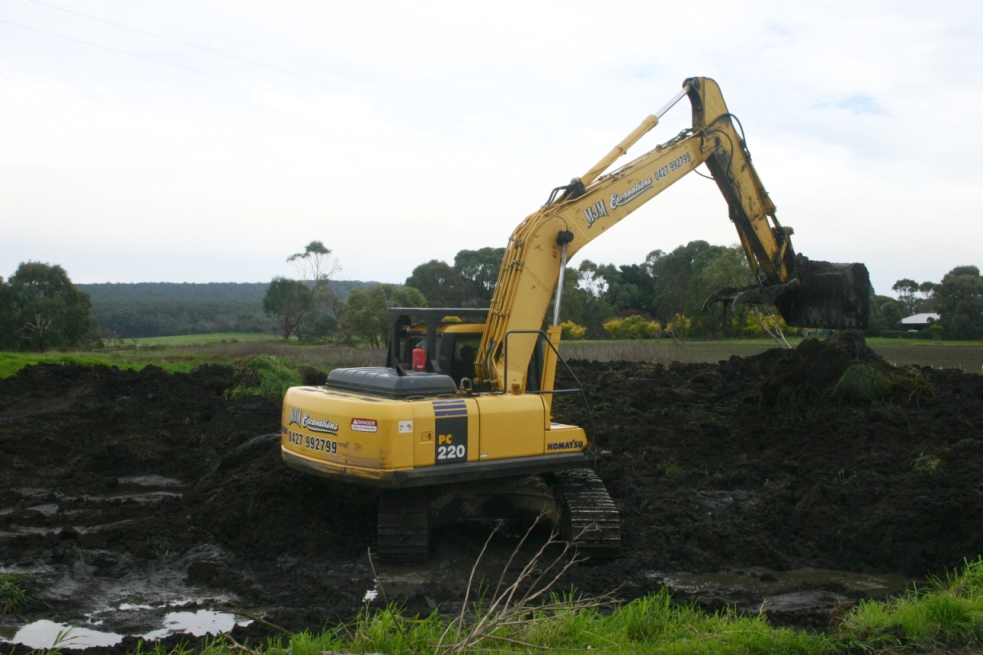
The ultimate boy's toy comes to our rescue
Mark arrived early with his excavator and the extension to the pond is already well underway. He reckons we might gain as much as 1 megalitre of capacity, which will help to make our effluent storage even more secure.
I didn’t think farmers were very good at self-promotion but the Year of the Farmer has released a video that makes increasing farm productivity over the last few decades look pretty funky.
 The Milk Maid Marian