What The Project didn’t have time for me to say

TheProject

The Project delivered a powerful story last night about the turmoil we face that included footage of Wayne recounting my unvarnished reaction to the price drop.

I’m upset and I’m anxious about the future but I’m okay.

The price drop felt like the last straw. We’ve been battling a horrid drought that has already drained much of my emotional reserves over the last year. To hear that we would now have to face this on top of what’s pretty much guaranteed to be a rotten milk price next financial year was just overwhelming. The light at the end of the tunnel suddenly became very dim.

But Wayne and I are a strong unit and we’re not giving up on anything.

We will get through this. We are luckier than many others and I am inexpressibly grateful to the people around me, especially Wayne.

I’m grateful to the generous dear people who have rung out of the blue just to ask “how’re you going?” over the last few weeks. I’m grateful to the strangers who have been moved to write notes of encouragement for farmers on Facebook forums. I’m grateful to the journalists who have helped share our stories.

What you didn’t hear me tell The Project was that we are resilient and we do this because we love it. That hasn’t changed.

What I do hope is that from this seismic shock will come seismic change. There has to be a better way both for our little family and the thousands of other farming families across the country. We cannot let the opportunity to reshape the future slip through our fingers now.


What the Fonterra Friday 13 announcement means in plain English

This plain English explanation is for anyone as confused as I was on Friday following Fonterra’s second announcement.

The May and June milk price is still slashed to $1.91kgMS
The prices outlined in the original announcement still apply. Friday’s announcement concerns milk to be supplied in 2016/17 but the amount you receive hinges partly on how much milk you supply in May and June 2016. Baffled? Stay with me for a minute.

Loans are still available in the same format
Nothing has changed in terms of the loans announced on May 5.

Why the latest announcement?
Although nobody came out of the May 5 announcement a winner, if your peak milk production was in May and June, you suffered far heavier losses than farmers whose herds peak in Spring.

Fonterra’s Friday May 13 announcement is designed to even out the impact.

July and August milk now attracts extra for the volumes you supplied in May and June
Fonterra will pay $2.50 kgMS extra for July and August milk in 16/17 but only for up to the same volume of milk you supplied in May and June.

Here’s an example: if Old Macdonald supplies Fonterra 10,000 kgMS in May and 10,000 kgMS in June but 15,000 in July and 15,000 kgMS more in August, she will be paid the extra $2.50 on 20,000kgMS rather than on 30,000 kgMS.

The remaining 10,000kgMS will be paid at the normal July and August rates (that’s base price + quality + production + seasonal incentives). So, Old Macdonald would find $2.50 x 10000 = $25,000 extra in each of the milk cheques that arrive on August 15 and September 15.

If, on the other hand, Old Macdonald supplies Fonterra a total of 20,000 kgMS for May and June but only 15,000 kgMS for July and August, she will still be paid the extra $2.50 kgMS on 20,000 kgMS.

The money is coming from the rest of the year
The milk price Fonterra pays farmers is made up of four components:

  • A base price paid at the same rate every month of the year for fat and protein (fat + protein = milk solids)
  • Quality incentives
  • Production payments
  • Seasonal incentives – which are apply in the “off-season” months of January to July.

To pay for the extra money announced on Friday, Fonterra will lower the base component of the milk price by 19 cents per kgMS. In other words, you may receive extra money in your August and September milk cheques but money will also be deducted every month for the whole of 16/17.

About this post and me: Milk Maid Marian supplies milk to Fonterra and this post was checked by Fonterra Australia for accuracy.

Straight-talking UDV president Adam Jenkins on milk price cuts

In the confusion that’s followed the cuts to milk prices, I asked the president of the United Dairyfarmers of Victoria, Adam Jenkins, how the UDV was responding.

Adam had some very clear messages for milk processors, politicians and bankers. A big thank-you to Catherine Jenkins for filming Adam’s answers to my questions in their calf shed on a very windy day.

This video is the first in a short series addressing the milk price crisis.


When Spring doesn’t spring

Spring is the time of plenty and everything here is timed to match it.

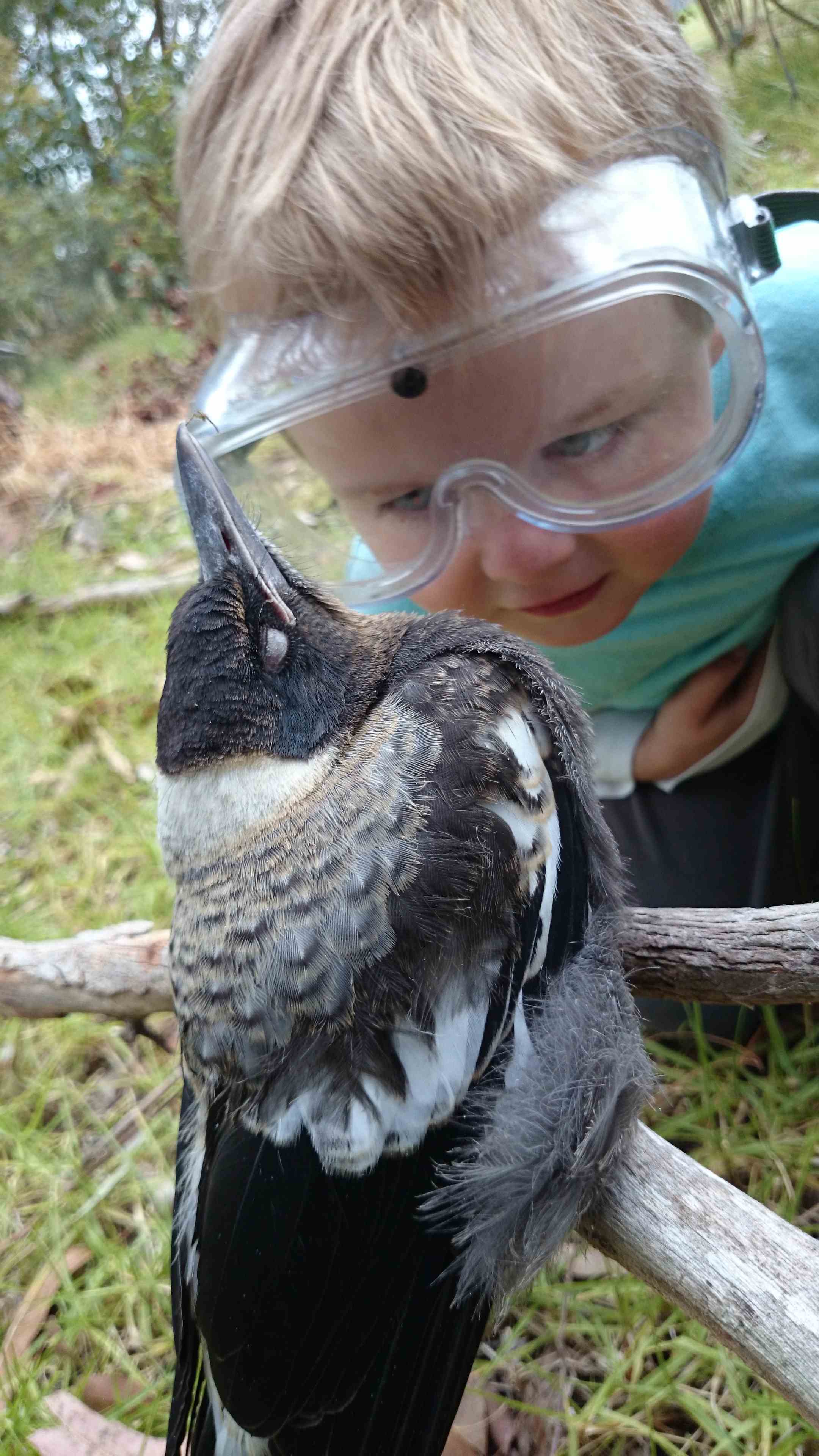
Young, innocent magpies sit for young scientists

Young, innocent magpies sit for young scientists

Landcare swings into action on the farm

Landcare swings into action on the farm

And the grass grows like a weed, which we turn into silage for the cows to eat over summer and winter.
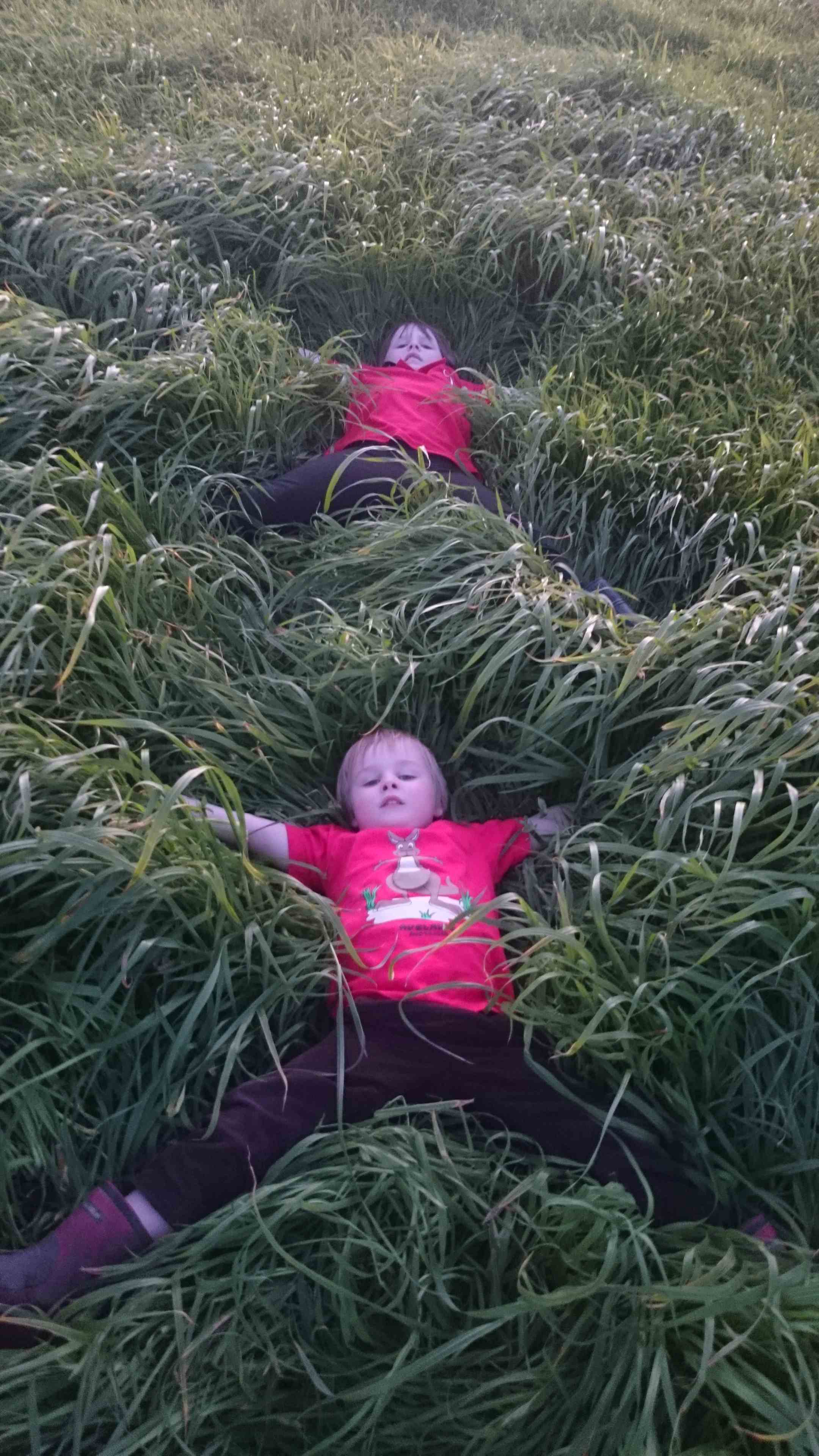
GrassAngels

But what happens when Mother Nature turns off the tap?

SoilMoistureSept

The sea of red shows just how dry it has become. Soil moisture levels are at historic lows in our part of Gippsland and farmers around here are struggling to get even small fractions of the normal silage yield tucked away for summer and next winter. We normally get around 800 rolls of silage to sustain the cows over summer and winter but may get 10% of that this year.

The man who cuts our Spring harvest describes the season as “bleak”, while our agronomist says most locals without irrigation “don’t know what to do” and are pinning their hopes on a November flood.

To be fair, we didn’t get so far into the red overnight. I saw it coming. We have been at rainfall decile 1 (out of 10) right through winter and it’s barely rained since. The blasts of heat we’ve had in the last couple of weeks were just the icing on the cake. It feels like drought. It measures up like drought, too.

Coping with El Nino
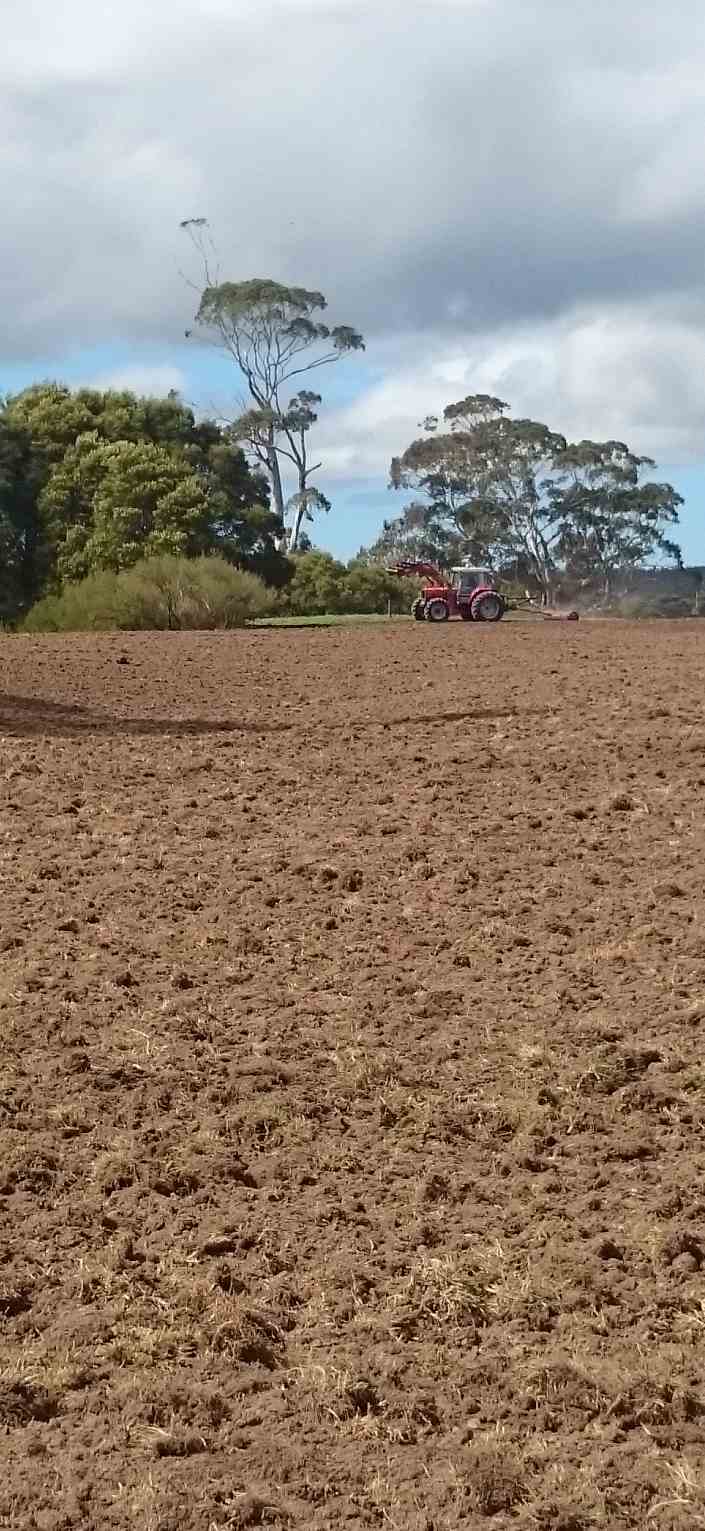
What have I done to prepare? First, we regretfully sold a lot of cows so there are fewer mouths to feed. Next, we planted turnips extra early on the river flats so they could get their roots down deep while there was still some moisture to support the seedlings.

Crops are sown so the cows will have lush green feed in summer

Crops sown so the cows will have some lush green feed in summer

Aside from this, I’ve been hammering the phone calling every man and his dog about securing large quantities of hay before it’s all gone while harassing pump, pipe and sprinkler people to get a little irrigation system up and going. If I have to talk about head, pressures and flow rates any longer, I think my own head will explode!

The system will mix water from our dam with the manure we collect from the dairy yard together to water a small crop of millet and chicory. It’s a great way to recycle the nutrients from the farm, protect our river and ocean, make the farm more resilient to climate change, offer the cows something green to eat and keep the milk flowing.

I haven’t done it all on my own because getting through a season like this demands a lot of expertise. I’ve been very lucky to have help from DEDTJR feed planning expert, Greg O’Brien, to model different scenarios and their financial impact on the farm as part of the Feeding Impact program.

The program provides a great framework for getting proactive about feeding decisions and brings farmers together to learn from each other. It’s great to know I’m not the only one in this position and I always marvel at just how generous groups of farmers can be with their moral support and advice.

Our nutrition consultant, Peter De Garis, and feed supplier, Jess May, have helped me create a balanced diet for the cows with not too much protein, too little energy and just the right amount of fibre.

Agronomist Scott Travers has offered his advice on the right type and timing of crops to keep feed up to the cows for the next few months. Fonterra irrigation and nutrient distribution advisor, John Kane, has kept me sane when assessing everything to do with pumps and pipes.

Farms like mine are small but very complex businesses. If I walk past you down the street looking a little distant and perplexed, you’ll know why.

Fonterra’s Judith Swales explains Theo’s thoughts on Aussie dairy farmers

Theo Spierings Fonterra chief executive Theo Spierings. Photo: Pat Scala, Sydney Morning Herald

Fonterra is one of the world’s biggest dairy companies with a glittering history. A cooperative in New Zealand, Fonterra is also Australia’s second-largest processor.

Just last year, Fonterra delivered a stellar Kiwi farmgate price far better than anything ever enjoyed by Aussie dairy farmers. Analysts enjoyed debating why Australia could not emulate its success. Today, the co-op is under intense scrutiny from its shareholders.

As I mentioned in the previous post, farmers in New Zealand are doing it very tough this year and Fonterra Australia chalked up losses last year.

Then, last week, Fonterra’s chief executive Theo Spierings​, was quoted in the Sydney Morning Herald  in a story headlined Aussie farmers being overpaid amid global dairy rout, says Fonterra boss.

After quoting Mr Spierings as saying the current price of $5.60kg MS could not be supported, the Sydney Morning Herald reported:

Mr Spierings said the method on how Australian farmers were paid needed to change so it wasn’t based just on the farm-gate price and matched other processors.

“It’s loyalty and skin in the game that can lead to an upside. You can call it a dividend, or whatever, a bonus per kilogram milk solids,” he said.

“But we need to have the conversation now about what the endgame looks like. What is the value being created – what’s the size of the cake? Then we need to have a good debate with farmers … about how are we going to share – how are we going to cut the cake?

The comments raised a lot of questions for a Fonterra Australia supplier like me, especially in respect to the “Bonlac Agreement”, which extends until 2019 and commits Fonterra to paying its Australian suppliers a price that equals or betters the dominant processor.

I put some of those questions to Fonterra Australia and am grateful to managing director, Judith Swales, for answering them.

Judith Swales, Fonterra Australia managing director. Pic source: Australian Dairy Farmer

MMM: Why has Theo chosen to telegraph a change in Fonterra’s dealings with Australian farmers via the media rather than by opening a conversation with farmers?
JS: Theo was commenting on the global dairy situation and its impacts for Australia. He was putting a voice to issues that many in the industry are well aware of. These are difficult issues and shouldn’t be shied away from, and as an industry we need to address them.

MMM: Are there any inaccuracies in the article you would like to correct?
JS: The headline was unfortunate. The main issue to point out is that the problem is not around Australians dairy farmers being overpaid – as stated in the headline – but rather the impact global volatility is having on the sustainability of current dairy pricing in Australia. What’s important, is that we’re sending the right price signals to our farmers to avoid any surprises and so that they can budget for various scenarios.

MMM: Theo appears to cast doubt on the Bonlac agreement that ensures farmgate prices match or better the dominant competitor. Will Fonterra honour that agreement this year?
JS: We remain fully committed to honouring the Bonlac agreement. We are focussed on giving our farmers line of sight to the price we can pay this year as quickly and accurately as we can. The price we pay this year must be sustainable. We do not want to sacrifice investment in our long term strategy, which aims to deliver returns above the Benchmark price, in response to short term, tactical pricing pressures.

MMM: Does Fonterra remain committed to the Bonlac agreement in the medium to long term?
JS: We view the BSC Milk Supply Agreement as a baseline. We always strive to aspire to more – whether it be with our SupportCrew services, price risk management tools or our suppliers receiving the highest milk price (as found in an independent report by Ian Gibb for the 2013/14 season). We expect our relationship with our suppliers to continue to evolve over time.

MMM: “It’s loyalty and skin in the game that can lead to an upside. You can call it a dividend, or whatever, a bonus per kilogram milk solids,” says Theo. Does this mean special pricing that favours long-term contracts and large farms?
JS: Achieving a mechanism for determining milk price that drives behaviours that support the success of Fonterra’s strategy for all suppliers is our aim. This work is always evolving and we will continue work with BSC on this.

MMM: Farmers who supply milk to Fonterra Australia are suppliers rather than shareholders. What does Theo mean by “sharing the cake”?
JS: We have always said that the best dairy industry model is the one where everyone can get a sustainable return. Farmers need to be able to make money, processors need to make money and so do customers, like retailers. And that’s what he means by sharing the cake.

MMM: Does Fonterra continue to have a long term commitment to Australia?

JS: Absolutely we are committed long term to Australia; and our Board continues to voice this commitment. Australia is one of our four key strategic markets for Fonterra. It is a key plank to our global multi-hub strategy, which complements our Retail and Foodservice business. We continue to invest: we are progressing our Beingmate partnership; we have plans to rebuild our cheese plant in Stanhope; and only this week we commissioned a multi-million dollar Beverages plant in Cobden.

Thank you very much, Judith Swales!

How our milk is tested for antibiotics

Milk testing

Yesterday, I explained why and how we use antibiotics to treat a cow who falls ill in the herd, together with what we do to make sure no antibiotics get in the milk that leaves the farm.

In this post, Fonterra’s quality manager for milk supply, Sarah Carter, answered a few questions about how the milk is screened for antibiotics by the milk factory.

MMM: Why is it important to keep antibiotics out of milk?
SC: Customers, consumers and markets have very clear requirements that dairy products are to be free of antibiotic residues. The two main reasons for this are: the risk of causing allergic reactions in humans (e.g. from penicillin), and the concern about a build-up of antibiotic resistance as a result of consumption of dairy products containing low levels of antibiotics.

MMM: What does the law say about antibiotics in milk?
SC: In Australia, the Australian Pesticides & Veterinary Medicines Authority (APVMA) assesses agricultural and veterinary chemicals, such as cattle antibiotics, as being suitable and safe for use. They set Maximum Residue Limits (MRLs) after undertaking a thorough evaluation, including a dietary exposure assessment. These MRLs apply to domestically-produced foods, and are set well below the level at which any residues would be harmful to human health. The MRLs are set at levels which are not likely to be exceeded if the approved label instructions on the antibiotic product are correctly followed.

MMM: How and when is the milk tested?
SC: Most, if not all, dairy companies test tankers of milk for antibiotics prior to unloading at the factory, to avoid any contaminated milk entering the supply chain.

A number of dairy companies will also have the individual farm milk samples randomly tested during each month to further discourage farmers from taking a risk and allowing a vat-load of milk to be collected where perhaps a treated cow had been accidentally milked.

At Fonterra, we have both these measures in places – we are very clear that to maintain and build the market relevance of our dairy products, dilution with milk from other farms in the tanker is not the solution.

MMM: How sensitive are the tests?
SC: There is quite a wide range of tests available to detect antibiotics in milk, and the detection limits for antibiotics vary between tests. All dairy companies have their antibiotic testing procedures audited by the relevant state dairy regulatory authority (such as Dairy Food Safety Victoria) to ensure that their chosen test method is suitable for purpose and based on a risk assessment.

Different test methods will have different sensitivities to the various active ingredients found in commonly-used antibiotics – there is a technical information note available on the DFSV website which lists the common tests and their detection limits.

MMM: What happens if antibiotic residues are detected?
SC: If antibiotics are detected at the tanker level (prior to unloading into the factory), the entire tanker load is rejected and the milk disposed of (e.g. via the factory environmental management system).

Traceback testing is undertaken on all farms on that tanker load, to identify the source of the issue. We then undertake an on-farm investigation to get to the root cause of the problem and put measures in place to ensure it doesn’t happen again. All antibiotic-positive tankers must be reported to the state dairy regulatory authority, and followed up with a report stating the findings of the on-farm investigation.

If antibiotics are detected on a random farm sample test, we again undertake the on-farm investigation to help the farmer identify what went wrong. We also undertake a trace-forward to check for any impacts to products manufactured from this milk.

Farmers receive a penalty for supplying antibiotic-contaminated milk, and this penalty increases significantly if it happens again – fortunately, repeat offenders are incredibly rare, which demonstrates that the investigation and corrective action process achieves what it’s meant to.

At Fonterra we also encourage our farmers to get in touch with our SupportCrew milk quality specialists, who can assist farmers with advice and support to minimise the risk of mastitis in the first place.

Thanks Sarah!

How much listening to farmers is okay?

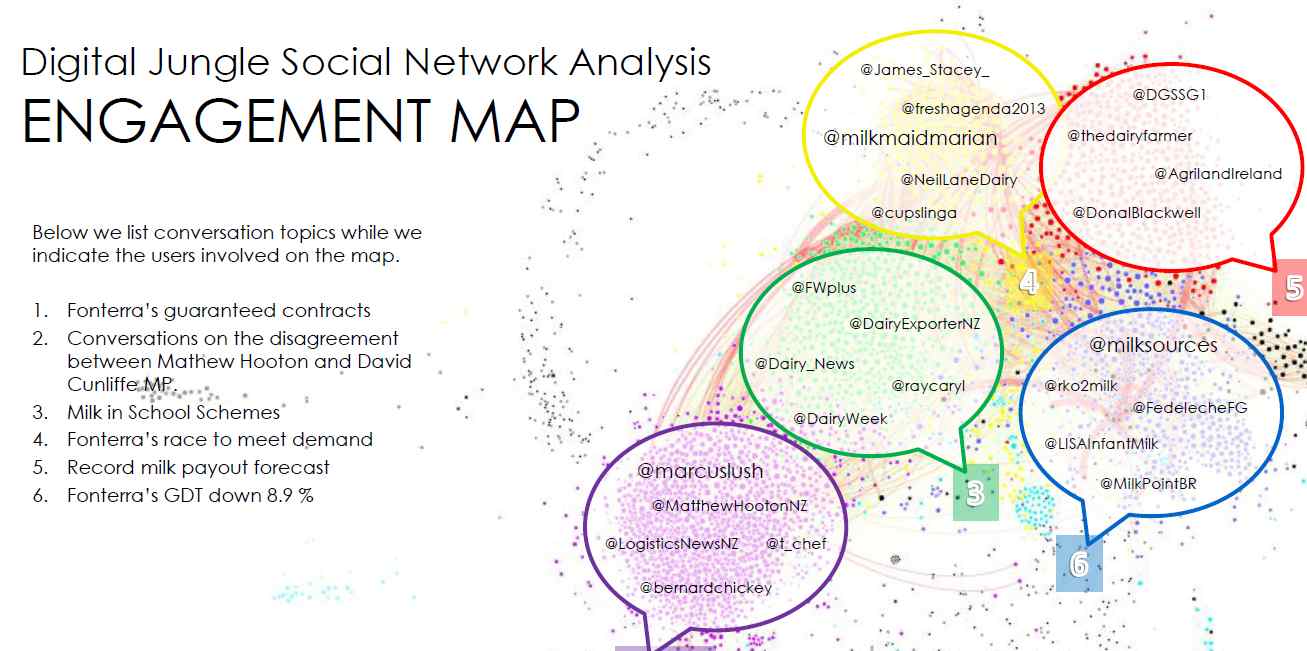
"Fonterra on Twitter" by Digital Jungle

Excerpt from “Fonterra on Twitter” by Digital Jungle

I don’t need to tell you how much of a stir a report tracing Twitter conversations surrounding Fonterra made when it was tweeted by farmer Shelby Anderson (@cupslinga) yesterday. The extensive 54-page document monitored just one week of Twitter conversations and looked to be a sample of what the social monitoring service could provide rather than a commissioned routine report. Still, as Shelby tweeted, it was a veeeerrry interesting report all the same. Continue reading