Quad bike politics put farmer safety at risk

Right now, there’s an unseemly squabble going on about the safety of quad bikes or ATVs. Everyone agrees that too many people are being injured and killed using these indispensable farm tools, so a working group was formed to find the answers. Disappointingly, the working group is so badly fractured, it’s better described as a “non-working group” marred by walkouts.

The main source of disagreement seems to be over anti-crush devices or rollover protection systems (ROPS). Unionist Yossi Berger is a strong advocate of the anti-crush devices. The representatives of the quad bike manufacturers contend the anti-crush devices may bring new hazards and advocate better rider training.

Both sides point to different research outcomes and claim the other sides’ research is flawed. I’m incredibly disappointed with this bickering. The issue is too important and the confusion it causes paralyses farmers from taking action.

The way I see it is this:

First, if you ride a quad bike in a dangerous fashion, no amount of protective equipment will prevent you being hurt. Like cars, trucks and forklifts, quad bikes are powerful, heavy vehicles that need to be treated with respect. For this reason, training and rider behaviour is undeniably an important part of quad safety. When someone comes to work at our farm, they must undergo an hour-long induction on safe quad bike riding and operation.

AND

Second, even if you are a careful rider, there will be times you’ll make a silly mistake (all humans do!) or you’ll encounter an unexpected hazard. For this reason, we need to make sure the quad bike is well maintained, designed to be as safe as practicable and that we use appropriate safety gear.

The word “appropriate” is key here, too. Even the most impressive safety equipment is useless if it impedes the user to the point where they bypass or sabotage it. That’s why seatbelts on a farm quad would not add to safety – nobody would use them because we get on and off frequently and because you need to move your body with the bike (aka “dynamic riding”). The implication of no seatbelts is that any large ROPS structure would certainly present new hazards. Flipped off the bike, you could well be crushed by its structure. This is one of the arguments maintained by the bike manufacturers, who also say that ROPS could interfere with the balance and handling of bikes.

The good news is that an Australian company has designed an anti-crush device that deals with both of these issues. The Quadbar is a strong hoop-shaped structure that can be fitted to the towbar and rear of practically any quad. It doesn’t get in the rider’s way and, is so light, it’s hard to imagine how it could affect the handling of a quad. The slender profile of the Quadbar also means that there’s less risk of being pinned by the bar than by the large surface area of the quad.

Quadbar in action on the farm

Quadbar in action on the farm

I got one fitted just last week and next time we get our second quad serviced, we’ll have a Quadbar fitted to that as well. Everyone here seems to appreciate the Quadbar’s added safety but there is one drawback: the structure around the tow ball makes for a very tight fit and skinned knuckles. Our next step is to fit jockey wheels to our small trailers so this isn’t such a problem.

Quadbar fitted to the towbar

A tight squeeze

And if ever you needed a reminder not to let visiting children go for joy rides on your quads, consider these statistics. According to a study quoted on Farmsafe, around 25% of all child deaths were visitors to the farm, but 50% of those killed on quad bikes were visitors. Quad bikes are also the most common cause of death for children 5-14 yrs on farms. Don’t let it happen on your farm.

A day in the life of an Australian dairy farming family

I kept a time log yesterday. Here’s how our busy but not unusual day went.

5.00am Wayne hops on the quad bike to round up the cows and slowly and quietly bring them to the dairy

5.45am Milking starts

6.30am Marian hits her desk to catch up on paperwork before Zoe wakes and checks the online forecast. All three computer models agree there’s a little rain coming tomorrow. Better get the nitrogen onto those paddocks we just grazed early tomorrow morning!

8.15am Milking’s finished and the cleaning begins

8.30am Zoe and Marian shift the effluent irrigator, fill the pump with petrol and get it going.

Zoe with effluent irrigator

Time to shift the irrigator

9.00am Marian and Zoe arrive on the Bobcat to give Papa a kiss and cuddle before we head off to feed the springers grain and anionic salts. The new calf spotted being born last night is a baby bull, who will be reared by one of our neighbours. We bring him and his mother back to the shed.

Anionic salts

Anionic salts (Zoe pic)

9.30am The milking machines, the yards and the vat room are spotless.

9.40am The three of us walk a couple of cows across the road to start their annual two-month holiday before they calve.

Cows going on holiday

Cows going on holiday

9.45am Wayne feeds three rolls of silage to the milkers

10.10am Zoe and Marian bring back two cows from the holiday paddock to join the springers in the TLC paddock.

10.45am Zoe and Marian refill the effluent pump and set it off again

Refuel Pump

Refuel pump again! (Zoe pic)

10.55am We all meet up again to feed the youngest calves and muck out pens. Discover one is sick and Wayne heads off to town to get treatment for her and refill the jerry cans.

11.30am Zoe and Marian are starving. Lunch time!

12.50pm Treat the sick calf and muck out more pens while Wayne welds up a broken gate in the dairy

1.20 pm Wayne’s off to feed silage to the dry cows, calves and heifers. Zoe and Marian take a look at the heifers to see if any should join the springers. We decide to do a big sort out in one to two weeks.

1.40 pm Refuel the effluent pump and get it running again

1.50 pm Load up 10 buckets of grain to feed to the youngest of the one-year-old calves. They are very happy to see us!

Feeding Calves Grain

Grain for calves (Zoe pic credit)

2.30 pm Check a new pasture on the way back

Zoe checks new pasture

Check new pasture

2.40 pm Quick snack and conflab with Wayne. 15 minutes later, we go off to round up while he feeds our maremmas, Charlie and Lola, and takes a bit of a break before milking.

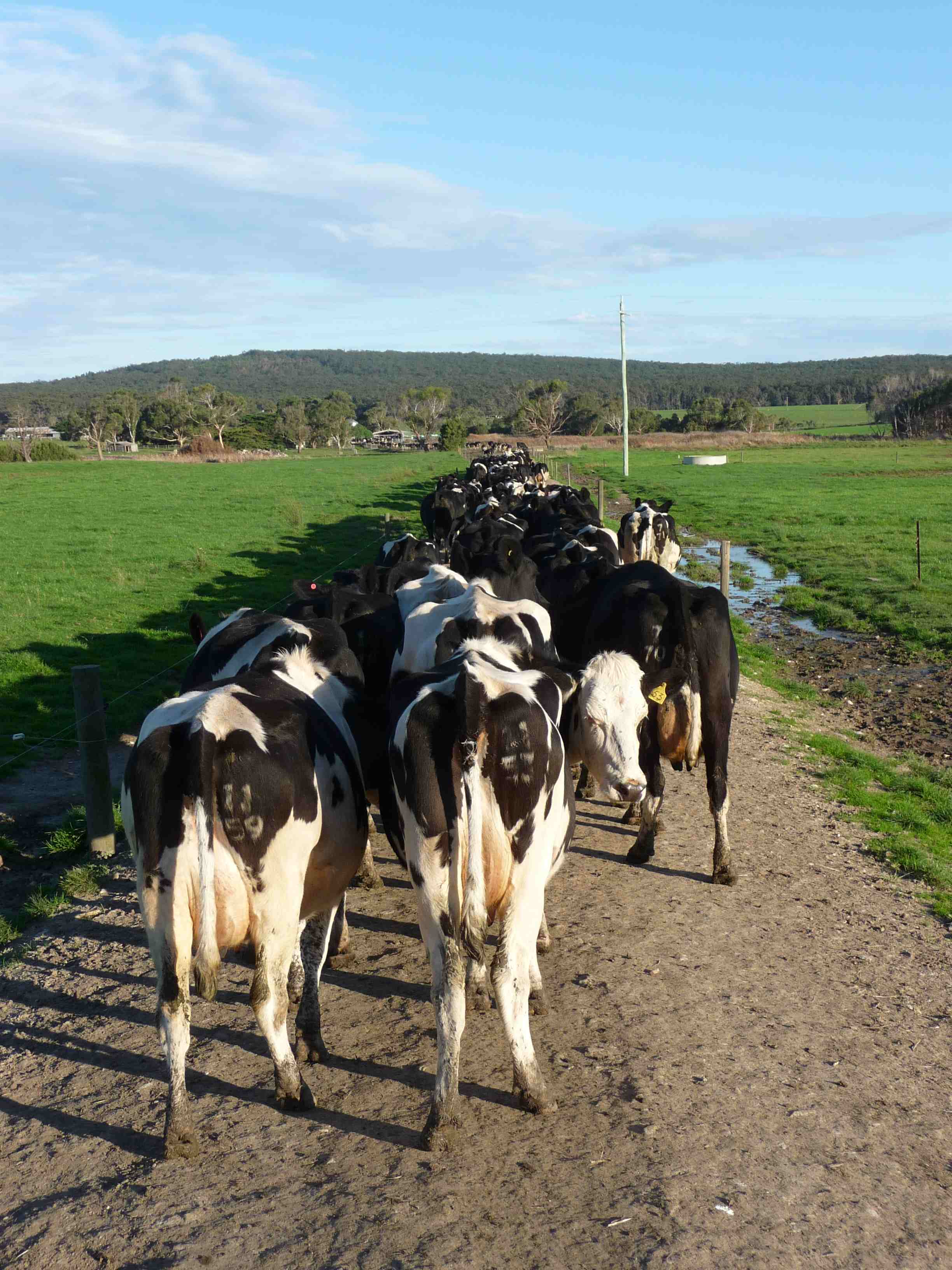
Cows on the track

Rounding up

4.10 pm Finally get all the cows into the yard – Wayne’s already got the first 32 cows milked. The cows were in one of the furthermost paddocks from the dairy, we had to set up paddocks along the way and deal with a broken fence. Also discovered a major water leak 😦

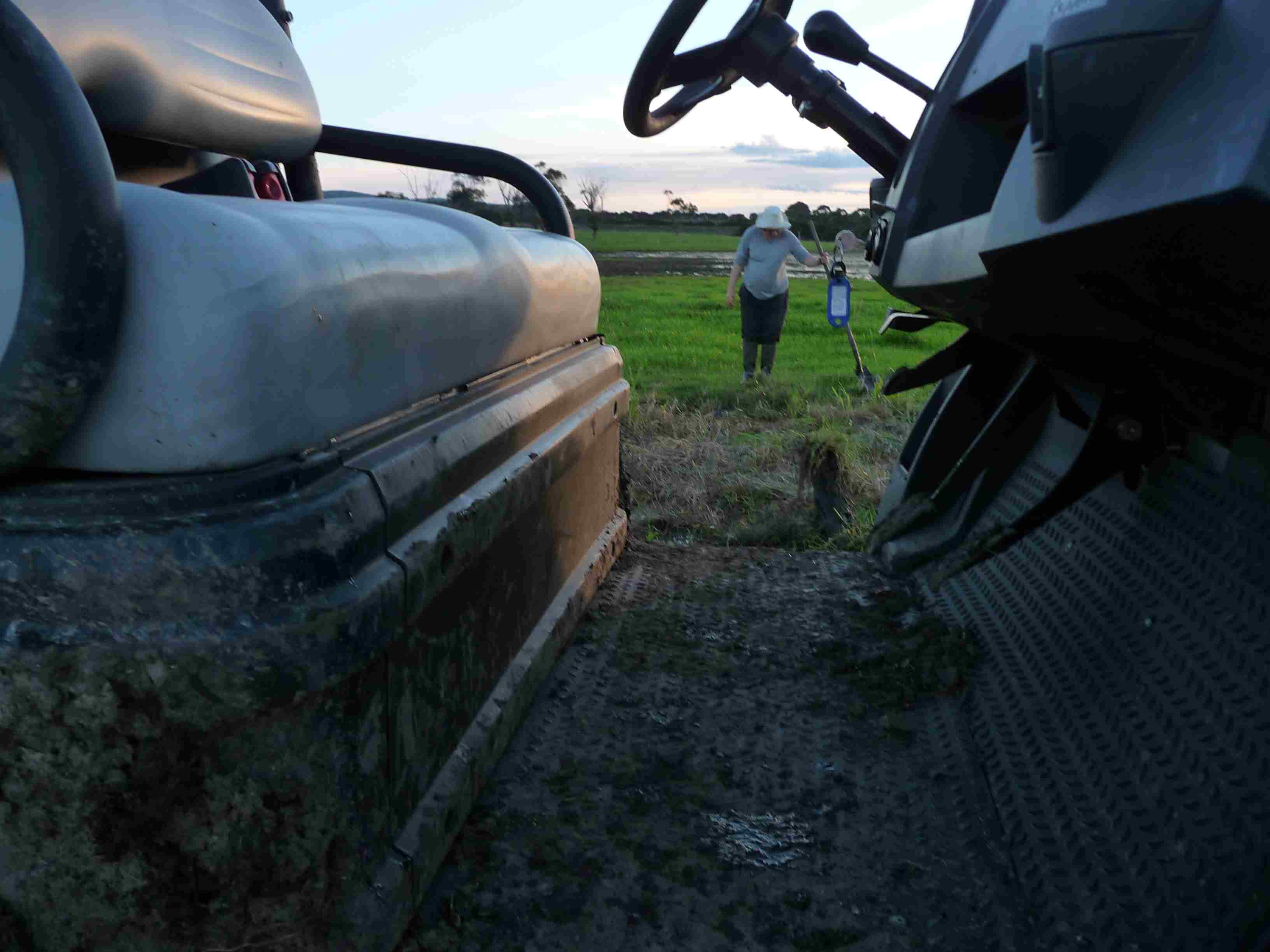
4.20 pm Equipped with tools, start prodding around in the mud.
Zoe’s taking pics now while Mama makes a mess.

Zoe's pic of Mama looking for the leak

Mama looks for the leak

Oops! Zoe’s got a bootful but let’s make it funny.

Zoe on the Bobcat after mud accident

After a boot full of water

The cows crowd around us on their way back to the paddock.

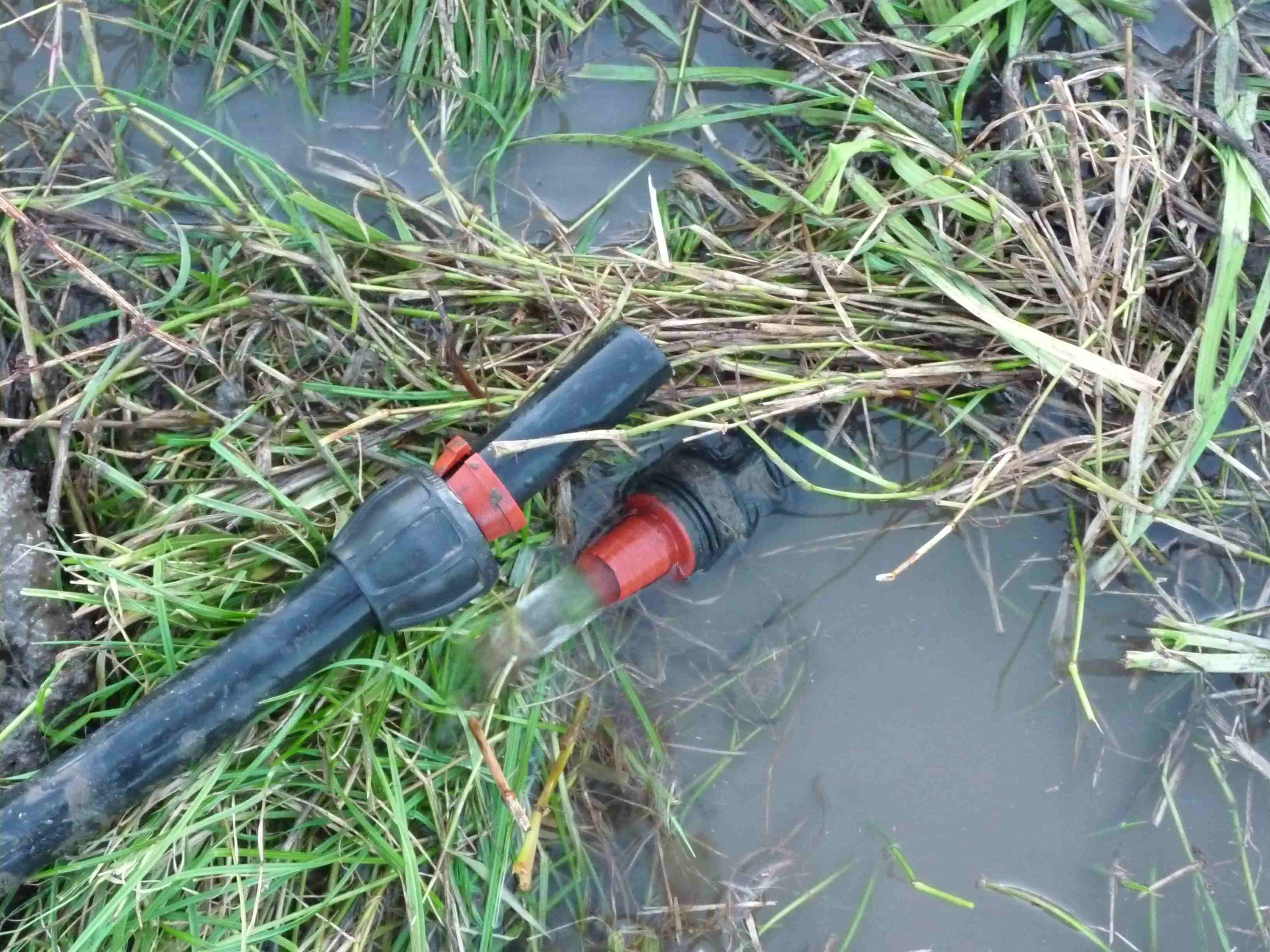
5.06 pm The Eureka Moment! An old (but still connected) water line has burst a fitting.

Pipe fitting

Unearthed the blasted leak

5.10 pm Outta there.

5.15 pm Set the travelling effluent irrigator on a new path, refuel pump and pull the rip cord!

5.35 pm Marian and Zoe home at last!

6.25pm Wayne’s home from milking. The end of a big day.

Meshing farm and family

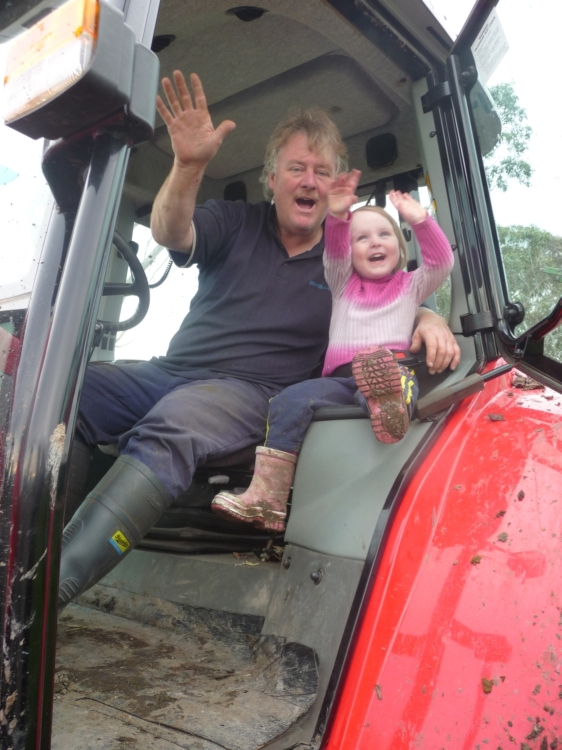
Farm kids get to spend lots of time with their Dads

Farm kids get to spend lots of time with their Dads

When I was a little girl, my brother and I had to feed the calves before we went to school and had plenty of jobs on the farm waiting for us once we got home. Naturally! It was the same for everyone else at our primary school.

It was an entirely different picture at our private secondary school in Sale, the home base for the oil and gas industry. Most of my classmates only had to take the bin out or do the dishes and some of them had never even been to their parents’ workplaces. To a teen who had to spend a couple of hours a day on the bus, it didn’t seem fair.

After a while and a few sleep-overs, though, I began to see some merit in living on a farm. We were certainly never bored and we did get to know Dad very well, even if it was while we worked.

It was all brought home to me the other day when Zoe’s kindergarten class put on a little performance for us. One of the songs, “I’m a little teapot”, made tears well up. My Dad had taught me the same song 35 years earlier as I skipped alongside him to round up the cows. Dad would have been so proud of my little girl and even though we round up with the Bobcat these days, Zoe prefers to walk along behind the cows while we sing silly songs together.

Rural isolation: what isolation?

A friend suggested I write about how I deal with “rural isolation” but the irony is that I feel less isolated living on 500 acres, 15 minutes out of a small town, than I did when I lived in Melbourne, a city of millions.

The farm is a busy place. As well as Clarkie, who works four days per week with us, we employ relief milkers and deal with a long list of contractors – vets, those who cultivate the soil and harvest silage, fencers, fertiliser spreaders, dairy service technicians, agronomists, farm consultants and earthworks contractors spring to mind. There are our suppliers too – stockfeed merchants, rural supplies, even waste collection.

It also seems there’s not a day goes by when I don’t get an invitation to an industry seminar or forum. Around Yarram, we have quite a group of progressive farmers who regularly attend field days and sessions to learn from the experts and our local Landcare network keeps a busy calendar. Slowly, too, farmers are getting together online as well as at field days. From the warmth of my office, I can connect with dairy farmers on the other side of the state or the world, whether that’s New York, Japan or even Africa.

Still, just as in the city, children draw the community together in a way that nothing else can. Kindergarten, swimming lessons and dancing classes offer a chance to relax, enjoy the moment and catch up with friends. With around 2000 residents, Yarram is the sort of place where you can’t walk down the street without bumping into somebody you know. That sense of community balances perfectly with the space of the farm.

I can’t imagine living in central Australia on a remote cattle station. That might be real rural isolation but this certainly is not.

Youngsters of all species love fun

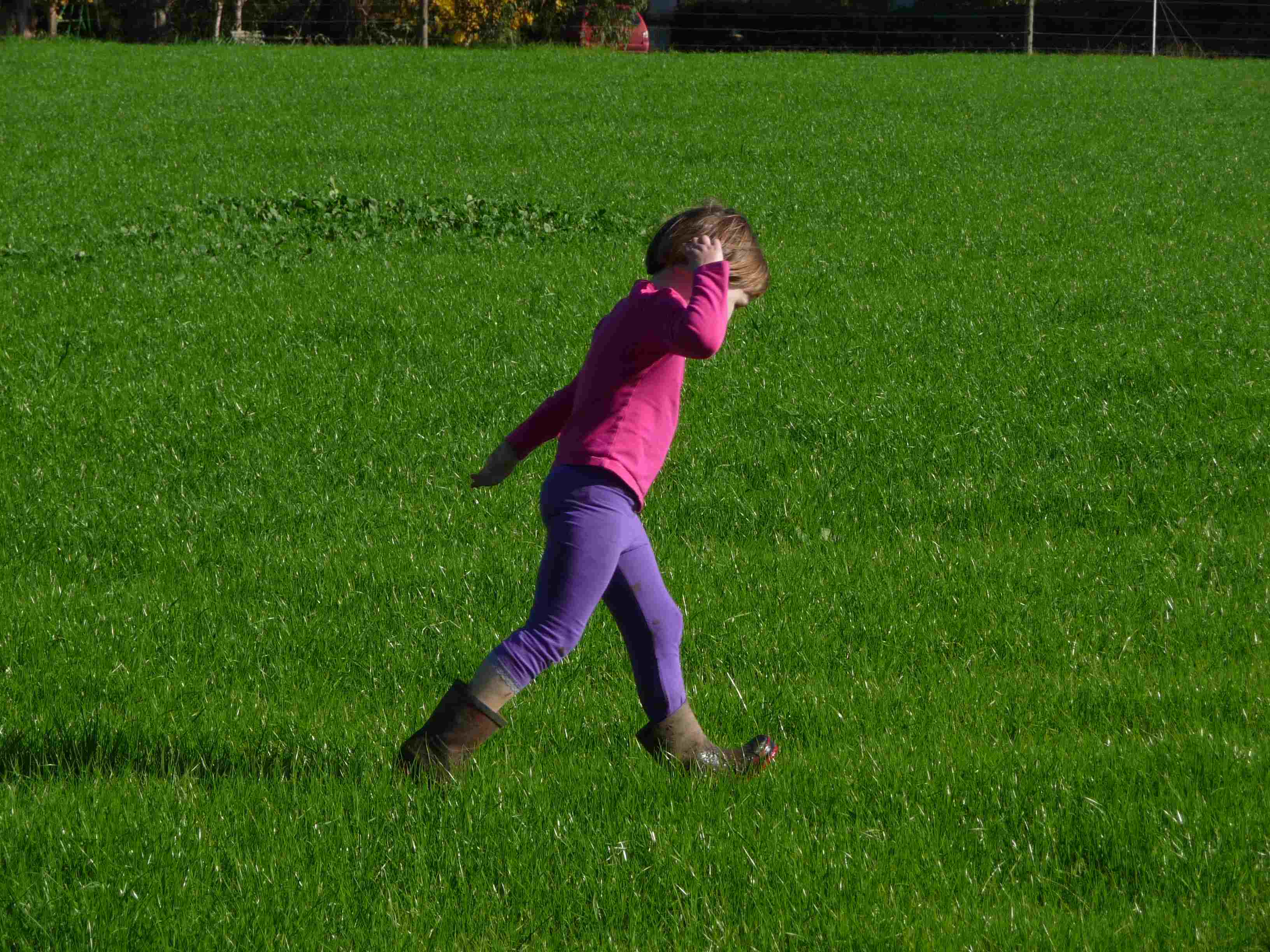
It’s been bitterly cold and Zoe’s just getting over a nasty bout of croup, so she’s been stuck in the house for days on end. When the sun finally broke through, we decided to get out and about and, while I fixed a fence, she decided to play “chasey” with the rising one-year-old calves. Sorry about the quality!

Why bother being green?

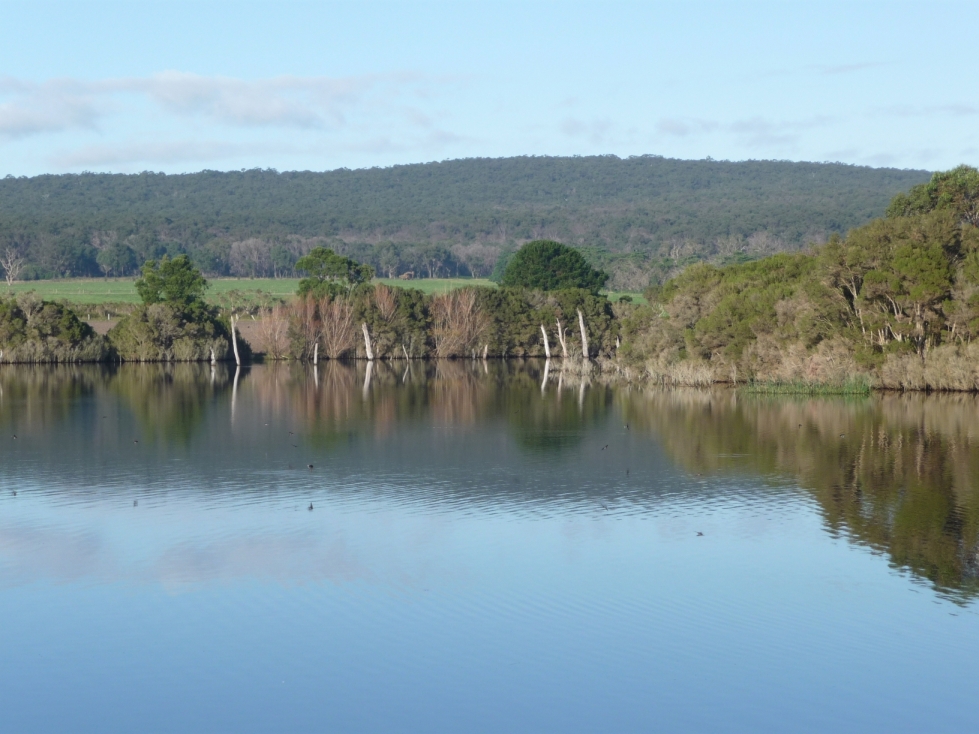
Land for Wildlife dam

Our Land for Wildlife dam

Our farm dam is a real jewel. Flanked by trees planted almost 30 years ago, it’s a beautiful 8 acre stretch of water that hosts an enormous range of bird species. The farm is only about 10km from the coast and the internationally significant Corner Inlet Ramsar site, so our dam hosts both inland and sea bird life – it’s not unusual to see cygnets gliding across the ripples behind their parents while pelicans roost above them. Dad had the foresight to register the dam under the Land for Wildlife program back in the ’80s to help protect the birds.

The dam sits at the heart of the farm, which is bounded by native state forest to the south and the Albert River to its north. The farm also incorporates 27 acres of remnant forest, a wetland and revegetated gully. We’re planting more trees every year.

Why? First of all, because of the much denigrated “warm and fuzzy feeling” that giving something back to nature brings. It’s not all about economics when it comes to the place you love! Second, because I firmly believe trees add to the sustainability not just of the planet but of our small patch, creating micro-climates that will protect people, animals and pastures as we endure increasingly more variable weather patterns.

Unfortunately, it’s really expensive to plant trees – allow $7 per metre for fencing, then spray for weeds, $1.10 per tree in a tube, plus the hard yakka involved with getting them in the ground – and you’re up for thousands of dollars in the blink of an eye. That’s nothing to complain about but it does limit the amount we can plant each year.

Fortunately, we can sometimes get grants for extra plantings and some volunteer groups make the plantings physically possible. These people, like the Victorian Mobile Landcare Group should be nominated for sainthood. Last October they came to help us plant 800 trees and are volunteering to help us again this year. Not everybody walks the talk like they do!

Oh, stinky me

Imagine this: lifting 10 litres of rich buttercup-yellow colostrum milk brimming with cream up to head height and pouring it all down your front. Then spend half an hour in the sun teaching a calf to accept a rubber teat while being smeared in fluorescent orange poo. Well, that was me yesterday. The only part of me that didn’t get covered in milk (digested or otherwise) was the top of my pants sheltered by the overhang of my big pregnant belly. Oh joy! Not even the flies dared come too close.

I’ve come to the conclusion that Cleopatra’s penchant for bathing in milk might have been exaggerated. Either that or she steered clear of colostrum and calf poo mix and went for buttermilk instead. Ah well, you have to be able to laugh at yourself!

By the way: no pic for this post!

What is a factory farm?

Zoe with a seed drill from the 50s

Zoe with a seed drill from the 50s

When I was a teenager in the early 1980s, we bought the next-door neighbour’s farm and the one across the road to milk around 180 cows. At the time, it was an impressive herd.

Today, that’s quite small. The average Gippsland dairy farm now milks 265 cows on 130 hectares.

Turns out our farm is almost perfectly statistically average! Like many of our neighbours, we have a full-time employee and engage relief milkers to manage the workload. We no longer cultivate our own paddocks or cut our own hay because the job has just got too big. Instead, a specialist contractor with specialised, ultra-efficient machinery does it for us. Our very average farm of today would have been considered huge back then. Maybe even a factory farm.

Even so, the well-being of our animals has not diminished over time. We care just as much as we ever did and love of the land, the outdoors and our cows is why we farm. And now, thanks to the work of researchers, we are better equipped to keep them fit and healthy.

I don’t know what you’d classify as a factory farm these days but the low price of milk certainly puts us all under pressure to get bigger (and therefore better able to gain more efficiencies). Here in Australia, where cows are “free range” rather than housed and feed-lotted, big farms can be just as animal and environmentally-friendly as average farms like ours on one condition: the people who operate them still care.

Early to rise in the freedom (and safety) machine

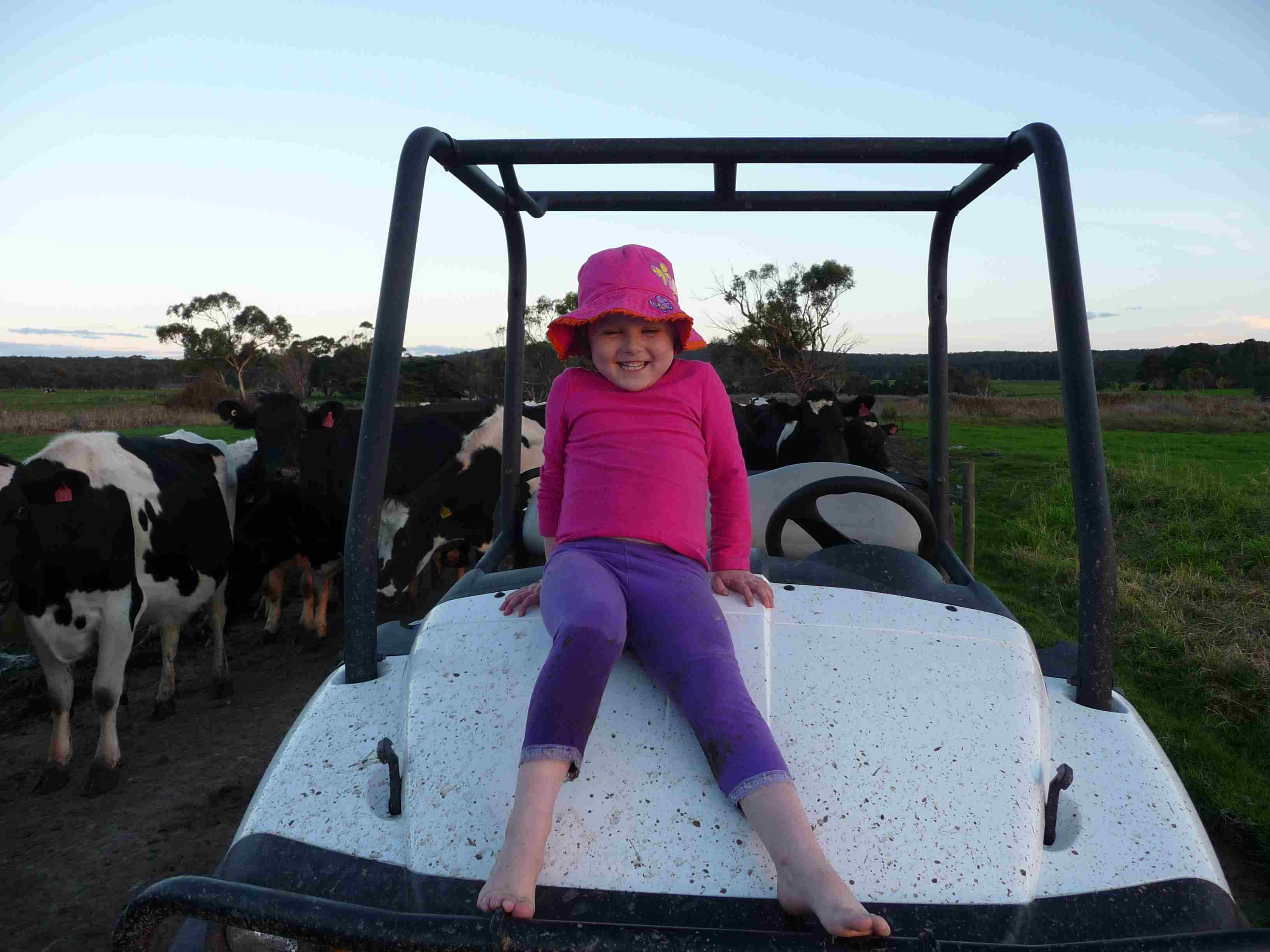
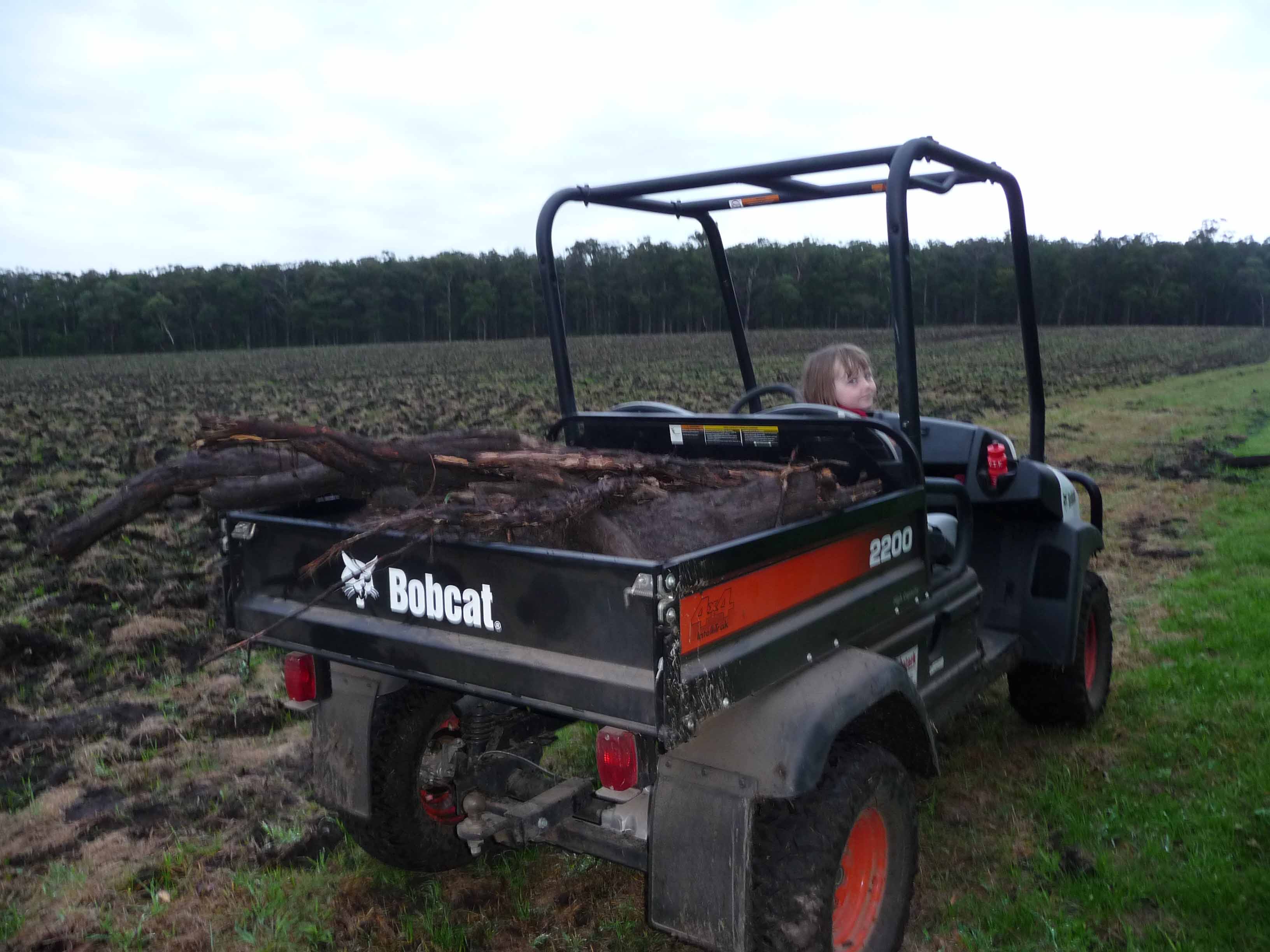
The UTV is safe and comfortable farm transport

The UTV is safe and comfortable farm transport

It’s been a race against time all day. Zoe and I got out of bed extra early this morning to see if we could remove fallen timber before the big set of discs arrived to make another pass of paddock B9.

By 7am we were out in the crisp autumn air tossing logs and branches into the Bobcat that I hadn’t been able to pick up with the tractor the evening before. I must admit to loving this little machine. It’s gutsy, is easy to get into and off, takes me all over the farm with all the tools I need and, most importantly, Zoe and I can ride together in comfort and safety. When Unicorn (Zoe’s nickname for our baby due in 3 weeks) arrives, it will be possible to fit all three of us on.

Safe transport is a big issue on Australian farms. Quad bikes have been in the news for all the wrong reasons. Too many have rolled, killing their riders. We’re all too aware of this and although our farm is flat to gently undulating, we make sure our quads are as safe as possible by making sure they’re properly maintained. Anyone riding a quad on our farm first undergoes a thorough induction and must observe on-farm speed limits and a strict policy of wearing helmets.

We’ve also invested in a man-down alarm, which sends a text and voice call to our phones if the wearer has been immobile at the wrong angle for too long.

Our safety systems are not perfect but we’re working on them – controlling the most serious risks first – and quad bike use is right up there.

Sustainable and cheap food: how does a farmer get there?

On the path to slow food

Slow food versus cheap food conundrum for farmers

Quality food, lowered emissions, biodiversity, soil health, maximum animal welfare, cheap food. So many messages coming from consumer groups, so many implications for how we farm.

Slow Food Australia has a philosophy that resonates with me as a farmer:

“SLOW Food fosters community awareness of food that is good, clean and fair – that the food we eat tastes good and should be good for us; that it is grown and made in ways that respect animals, the environment and our health; and that the producers who grow or create it should be fairly rewarded for their endeavour.

Slow Food Australia’s website also carries a media release that says, “Almost $40 of every $100 spent by Australian households now lands in the cash registers of either Coles or Woolworths”. In light of the milk wars, this is a worrying statistic. While Coles denies the price cuts will be passed on to farmers, Woolworths admits they will. Even consumer advocate group, Choice, agrees farmers will bear the brunt. It’s hard to imagine that any company wielding that amount of market power won’t put pressure on suppliers to lower costs, which will inevitably flow on to those with the least market power – farmers.

The milk wars will have their greatest impact on farmers in states like Queensland, Western Australia and New South Wales but the story is no more rosy in my state, Victoria. According to official figures, most of the state’s dairy farms have a return on investment of 1 to 3 per cent, forcing a focus on financial survival.

Our farm is similarly affected. We want to improve the farm, so Wayne and I are both holding down second jobs. The plan is that these improvements will make the farm more profitable and sustainable. We are making progress but farm life is currently anything but sustainable from a personal point of view. You just can’t work this many hours forever.

So what’s the answer? For our family farm, in the short-term, it means no compromise on milk quality or animal welfare, while planting as many trees as we can afford. At the same time, we invest in anything that will make the farm more efficient and profitable.

In the long term, it means incorporating more and more organic principles into our farming methods and marketing our own milk directly to consumers who appreciate what we’re trying to achieve. The problem is that none of this comes cheaply and is out of the reach of most farmers (including us, right now).

If consumers really do care about sustainable food, driving prices “Down, down, down” is not the way to make it happen.