How you can tell winter is coming

New pastures are flushed with growth.

New pasture soaks up the sun

New pasture soaks up the sun

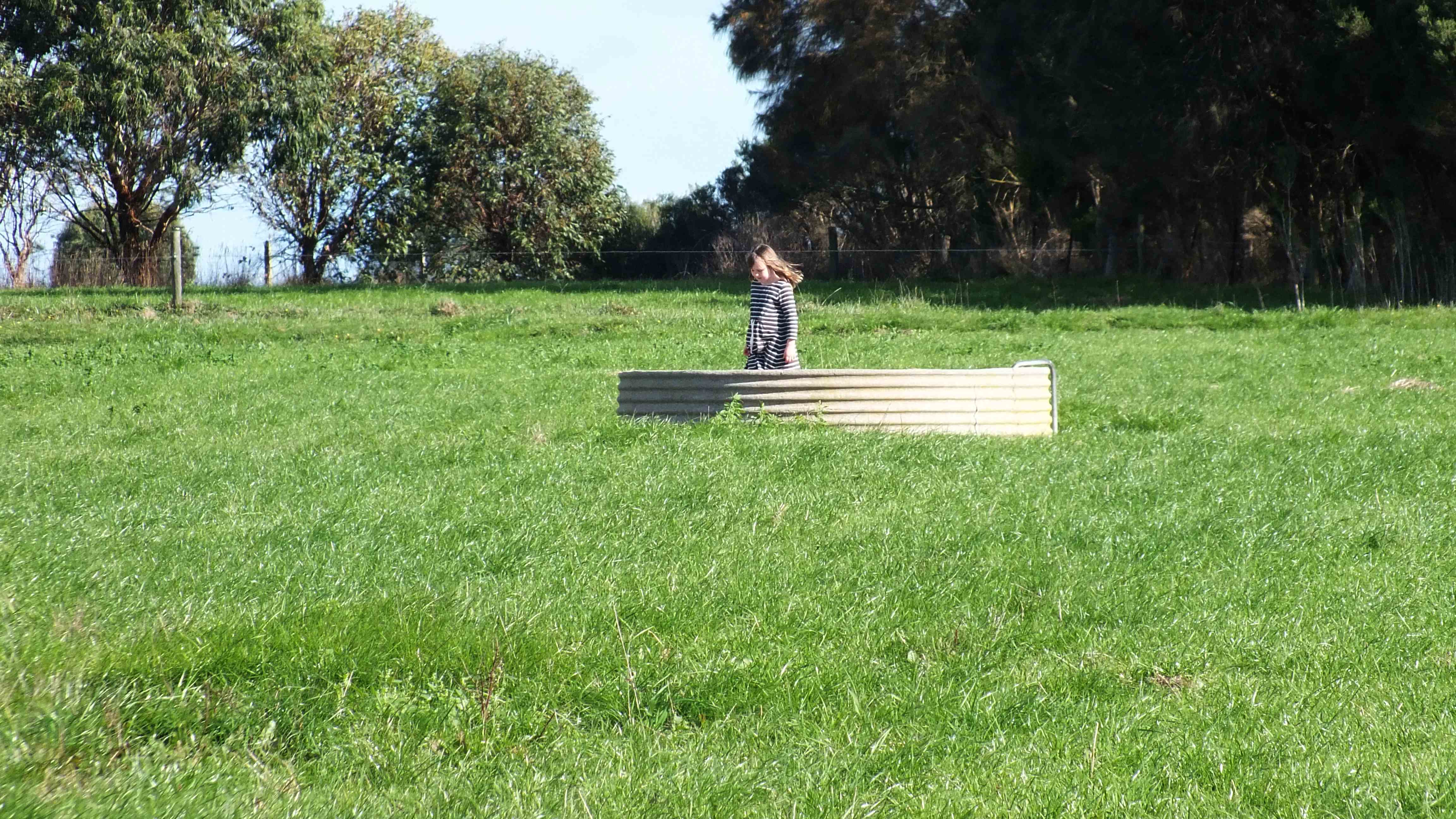
The ground is still warm and dry enough for bare feet.

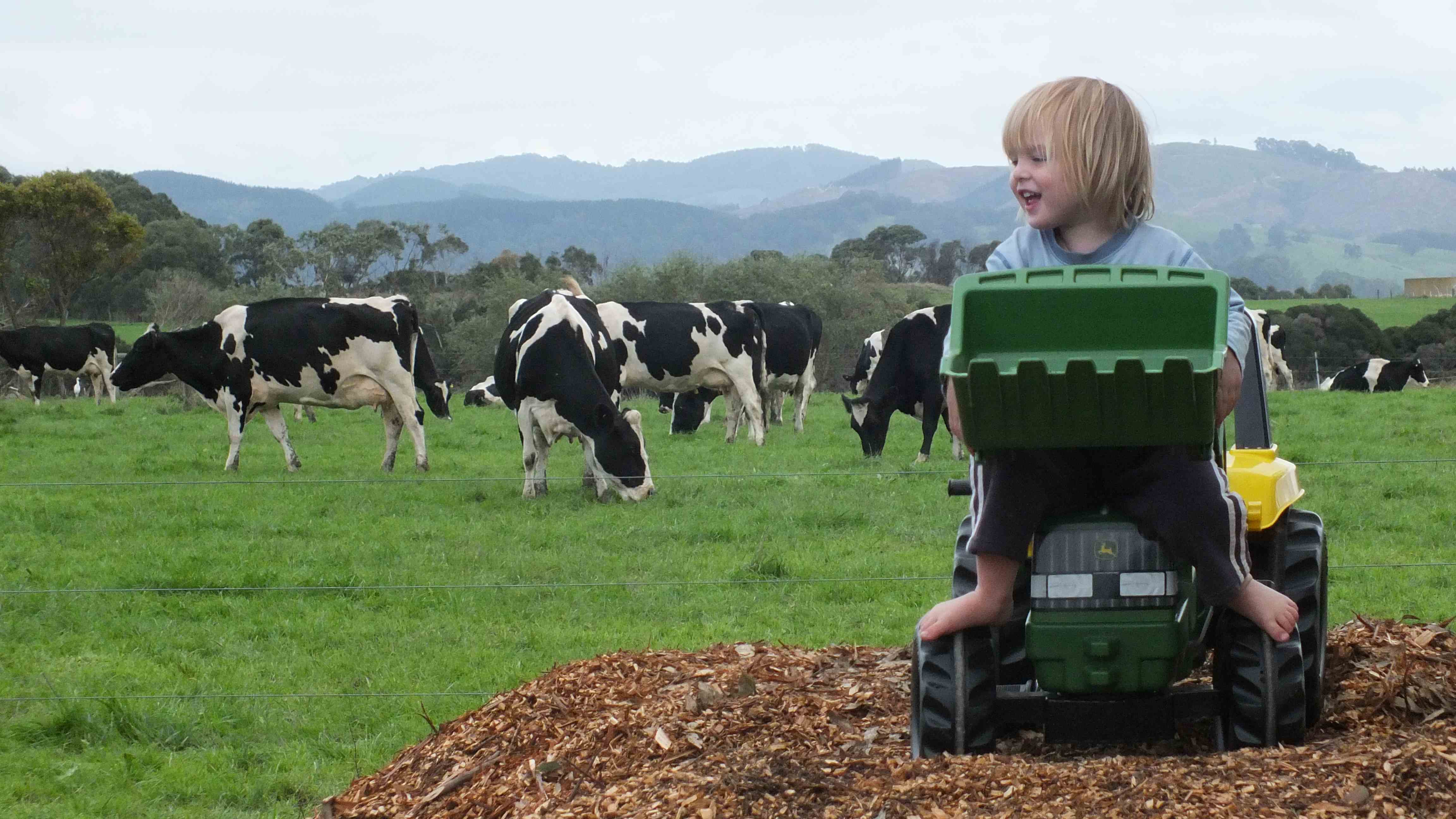
TractorWork

The cows are ebullient.

ButterHeads

The brilliance of our wildlife is unmissable.

The marvellous moorhen

The marvellous moorhen

But, there’s this.

Is this the beginning of the end?

Is this the beginning of the end?

Winter is inevitable and so are rubber boots. In turn comes twisted, slithering southwards socks – enough to test the patience of a milk maid at the best of times, let alone when struggling through mud.

My trusty ones from last season have had it, so now I’m on the hunt for socks that will stay true all day long. There are plenty of great work socks for blokes but their wide toes mean uncomfortable bunches at the tips of my boots. Any recommendations?

A milkmaid’s dirty linen and why you shouldn’t see it

In the three years since I started Milk Maid Marian, I’ve written about everything we do here on the farm. I’ve got nothing to hide. Well, almost nothing.

You haven’t seen our kids running around starkers in the paddock because, goodness, there are some weirdos out there and, in any case, my little people deserve some privacy.

You haven’t seen much in the way of veterinary treatment, either. I’ve written about sick cows here and here, for example, but I’m not going to post a picture of a newly-lanced abscess; me in action using a tractor to lift a cow threatened with paralysis; or the face of a cow in recovery after eye cancer surgery.

Why not? Because it would be unfair. You might not want to see graphic images as you munch your muesli and, second, the images could be abused. In the name of a higher cause, it’s not unknown for activists to take images of cows being nursed back to health and portray them as abuse.

My family’s privacy and the potential for misleading the public are two reasons why I shudder to imagine activists creeping onto the farm or spying on us with drones. I’m naturally protective, so when an email came through from an animal welfare group on just this topic today, I read it with a sense of dread. Here’s part of what it had to say:

“Alarmingly, support for ag-gag legislation is slowly creeping into politics here in Australia.”

“Ag-gag targets undercover investigators, whistleblowers and journalists by criminalising the undercover surveillance of agricultural facilities or by requiring that any footage which is obtained must be turned over to enforcement agencies immediately rather than given to animal protection groups or the media.”

My farm – my home – is an “agricultural facility”, you see.

And, you know what? If cruelty on a farm was recorded, I’d want the information to get to the enforcement agencies immediately so the animals could be rescued straight away rather than whenever it fitted in with the media cycle, wouldn’t you?
The faraway tree: our little piece of forest on the farm

From the forest into the light

From the forest into light

This has been a tedious morning of fence repairs – bending staples in decades-old wobbly hardwood posts and untangling cantankerous strands of barbed wire – so when we found a tree over the fence in the bush block, the kids and I broke it with a little “adventure”.

Inside our boundaries lies just 11 hectares of largely unremarkable bush. But it is a wonder, too, full of secret paths, dripping lichen and toadstools. After early hesitation, the kids relished their chance to explore this forgotten forest, darting here and there down the wallaby tracks, ducking under monstrous spider webs and peering into mysterious hidey-holes.

Days like this, it’s great to be a milk maid!

Dairy pawn

Image from http://enos.deviantart.com/art/Cow-Chess-1353853 by enos of Deviant Art

These days, I feel a little like a chess piece; more pawn than queen.

The Australian federal government has rushed into a free trade agreement with Japan that does next-to-nothing to help Aussie dairy break through tariff barriers, even though Japan is hardly known for a growing dairy industry of its own that deserves protection. I don’t know why we were overlooked but a Sydney Morning Herald story quotes Warren Truss as citing “compromises”.

It’s been an interesting few days for dairy. Coincidentally, the ACCC forced supermarket superpower, Coles, to confess that it was lying when it claimed the $1 milk had not hurt dairy farmers.

At the same time, the media is littered with references to milk as “white gold” and so on, while our co-op, Murray Goulburn, contemplates a partial sell-off to raise capital.

And the milk maid? Yes, I’ve almost recovered financially from last year now but not emotionally.

A Kiwi who’s now dairy farming here in Victoria tells me that one of the differences he’s noticed is that there’s just not the “buzz” around our farmers in a good year that you get in NZ.

Why? First, we’re more battle-weary and risk averse after a decade of drought knocked us around. Second, we’re rightly a little more cynical. In NZ, dairying gets a lot of encouragement from a government that understands dairy’s huge economic impact on the entire nation. The sector accounts for about 3% of NZ’s GDP. Have a look at this economic statement:

“Rebounding dairy production drove a 1.4 percent increase in gross domestic product (GDP) for the September 2013 quarter — the biggest quarterly increase since December 2009, Statistics NZ (SNZ) said.”
The New Zealand Herald, 19 December 2013

Here in Australia, the dairy sector contributes $13 billion to our economy but that’s considered small fry, accounting for less than 1% of our GDP, which totalled $1451.1 billion in 2011–12.

If we are to realise our potential, we need a government that helps dairy grow rather than considering it as a tradeable concession. All eyes are now on the FTA negotiations with China.

A slice of lime, anyone?

What is not rain, not sunshine, not bugs and not fertiliser but makes a Gippy milkmaid’s grass grow?

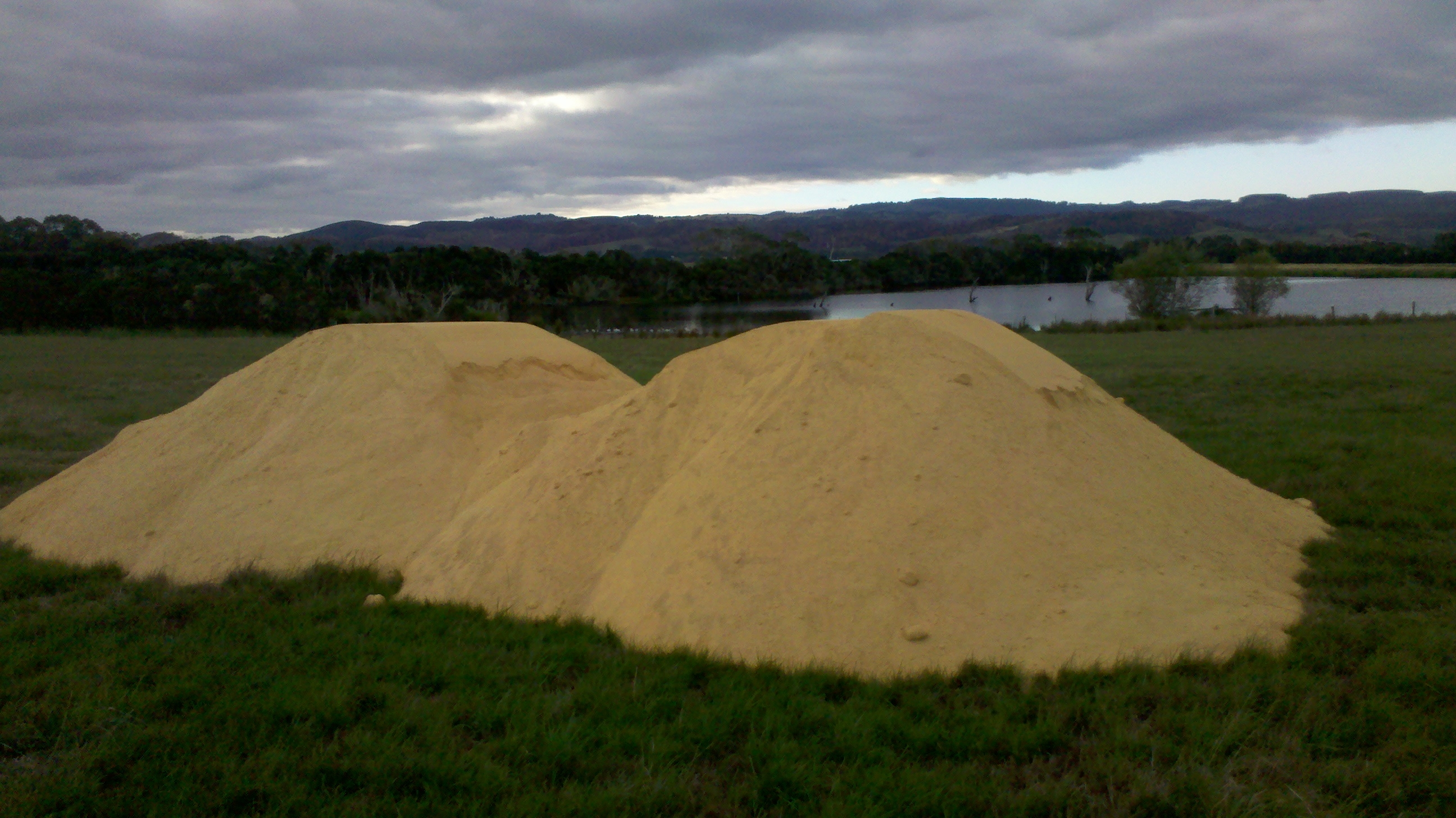
The great pyramid of Gippsland

The great pyramid of Gippsland

Lime! This is the first 30 tonne load of a 210 tonne order I placed the other day. High in calcium, lime helps to balance the natural acidity of our soils. Why does it matter? You can read all about it on a DEPI acid soil factsheet but here are the basics:

  • a low pH binds up the soil’s nutrients, making them less available to the plants
  • there’s a greater risk of manganese toxicity in acidic waterlogged soils
  • the nitrogen-fixing organisms in the soil suffer
  • plant roots become stunted in acidic conditions, making them more vulnerable to dry spells and root-eating pests
  • aluminium becomes more soluble and affects plant growth

Some of our paddocks are fine but others are desperately low, both in calcium and pH. Last year’s finances were just too tight to do much about it but, with a better milk price this year, I’m making up for lost ground.

It will take years to see any impact. In three applications over the last seven years, for example, we’ve spread a total of 7.5 tonnes/ha of lime on the paddock around the house because it’s one of the most acidic on the farm. Despite such a heavy dose of lime, we’ve only managed to lift the pH from 4.0 (that’s in CaCl2, not water, for the aficionados)  to 4.5, which still qualifies it as highly acidic.

Just goes to show that Giza wasn’t built in a day.

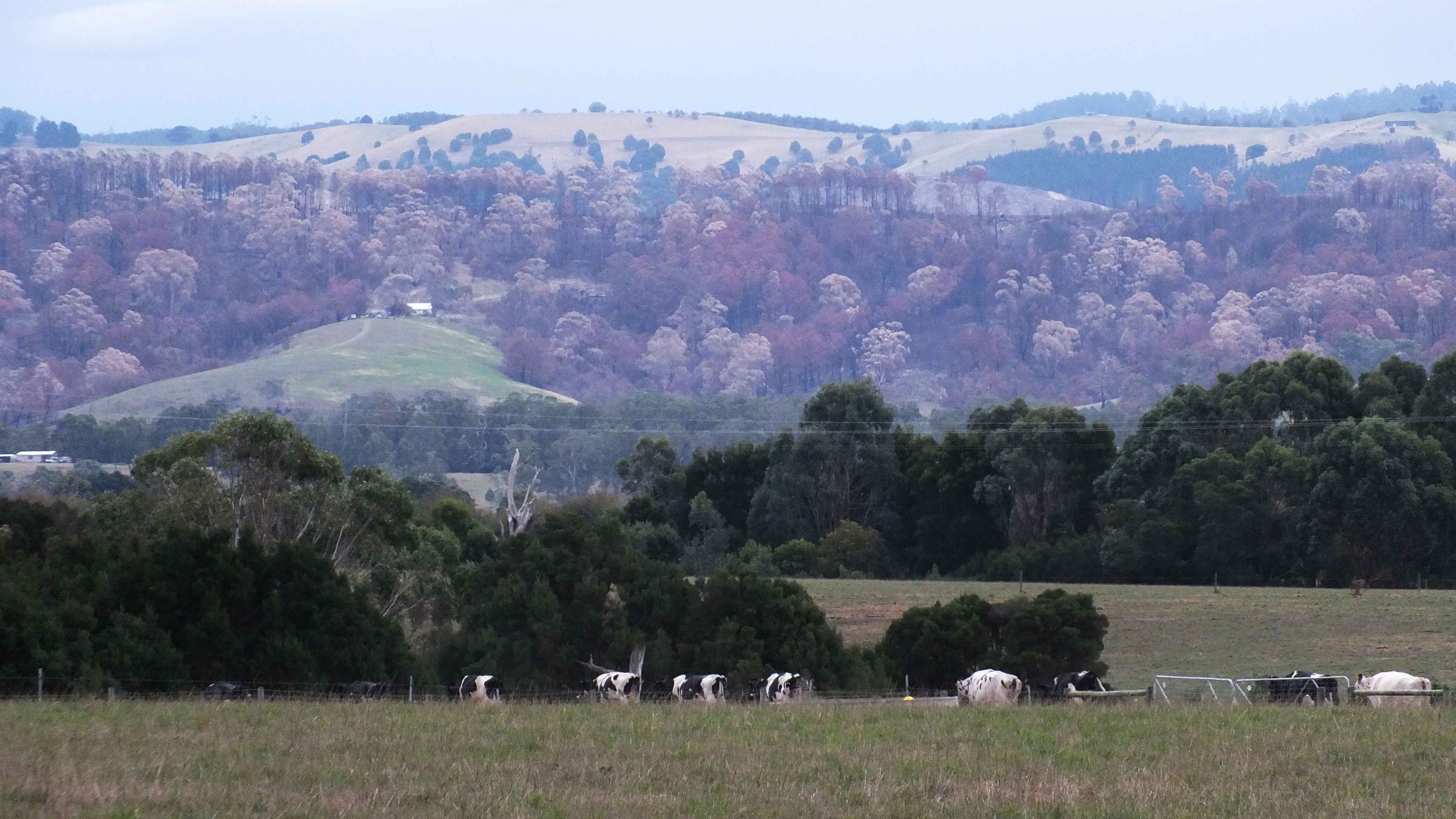
A month after the fires

The view from the house after the fire

The view from the house after the fire

One month and 30mm later

One month and 30mm later

Over there in the foothills, things are still tough. Stoic 84-year-old quarry-man, Jim, is still coming to terms with what he’s lost. Thankfully, his son and workers got out just in time but nearly a lifetime’s work went up in smoke that day.

Here on the other side of the valley, we’re just grateful to have been spared.

A couple of dumps of rain have brought summer (and the threat of fire) to an end and while the grass is yet to get moving, it is greening. Groups of cows are being sent on maternity leave, seed is being drilled into tired pastures and we’re cleaning out the calf shed again.

In five years, our little valley has seen fire twice, devastating floods, drought and plagues of grubs. It’s all a bit biblical.

“May you live in exciting times.”
– ancient Chinese curse

Our co-op gallops towards the wide blue yonder blindfolded

Me (whispering): “You need brain surgery”

You: “Huh?”

Me (a little louder but still almost inaudibly): “You need brain surgery. Tomorrow.”

You: “Wha…why?”

Me (with great confidence): “Because I am a brain surgeon and it will make you better in every way.”

You: “What do you mean?”

Me: “Look, if you keep on like that, you’ll never get anywhere.”

You: “What is this surgery?”

Me: “I haven’t yet decided on the details but I am a surgeon and you would do well to respect my expertise. In any case, I will have finalised the details by tomorrow. If you have any more questions, you’ll have ample opportunity to ask them on the way to theatre. Thank you for your interest and attending this consultation.”

Our co-op, MG, is rushing onwards with a “capital raising project” that would forever change it from being 100% farmer-owned to “farmer-controlled”. It’s one of the biggest changes in the co-op’s history.

It might well be wonderful but what’s certain is that the ramifications are complex. It’ll take time for us to:

  • understand why we really need to raise half a billion dollars of external capital
  • understand the proposal
  • tease out the pros and cons
  • consider the alternatives and
  • debate it.

Our Kiwi counterparts took five years to make such an important decision about their co-op. We seem hell-bent on doing it in weeks. Why?

A brush with fire

DSCF3954

It’s all a little surreal. We are still being urged to take shelter from a fast-moving bushfire but the cows are in for the evening milking and the kids are watching Ben & Holly’s Little Kingdom. Over a howling south-westerly, I can hear the thudding blades of water bombing helicopters.

All in all, it’s a miracle. After an anxious day spent with friends in town, I can breathe again.

The fires are only about 5kms away but they’re upwind. Just to be sure, the cars are still packed to the gills with our most precious belongings and every few minutes, I trot outside to survey the fire activity.

The cows spent the day in a closely grazed paddock with access to the river and will stay by the dam tonight, in case we lose power and can’t refill the troughs.

That south-westerly change was our salvation but we know it will have been someone else’s menace. Take care.

The last time I applied for drought assistance

Jan25PanoramaLoRes

I was scared. The earth was scorched bare, cockchafers had decimated our paddocks and feed was at record prices. I’d been brought up on the land but was new to the experience of actually holding the reins.

I didn’t want to let my husband know how scared I was, either. He was new to farming altogether and we were betting everything we had on my skills, our sweat, the international commodity price cycle and the weather.

When we became eligible to apply for exceptional circumstances funding, I sought guidance from a Rural Financial Counsellor then locked myself in the office for two long days and sweated over the paperwork.

The first envelope in return said my application had been rejected because I was not a farmer. I was, and still am, earning some off-farm income to feed the family and the assessing officer had decided that, since I would naturally be working 38 hours a week in total, and I was clearly spending time non-farming, I was not farming at all. The reality was that I was working into the small hours to survive. After a lot of persuasion and quoting industry statistics, he conceded that, yes, perhaps I was a farmer.

The next envelope said my application had been rejected because our farm was unviable. He told me I had to show we could pay back all our loans in 10 years as well as achieving an 8% return on investment to prove my viability. My bank manager just laughed when I told him. “I don’t think of any of my clients could achieve all that,” he said.

I gave up.

Why am I telling you all this? Because there are a whole lot of people out there under the impression that drought aid is dished out like boiled lollies. Maybe I went about it the wrong way. Maybe I hit a particularly tough assessor having a tough time. But don’t tell me it’s easy pickings.