We’re all individuals: the herd mentality

The Life of Daisy

The Life of Daisy

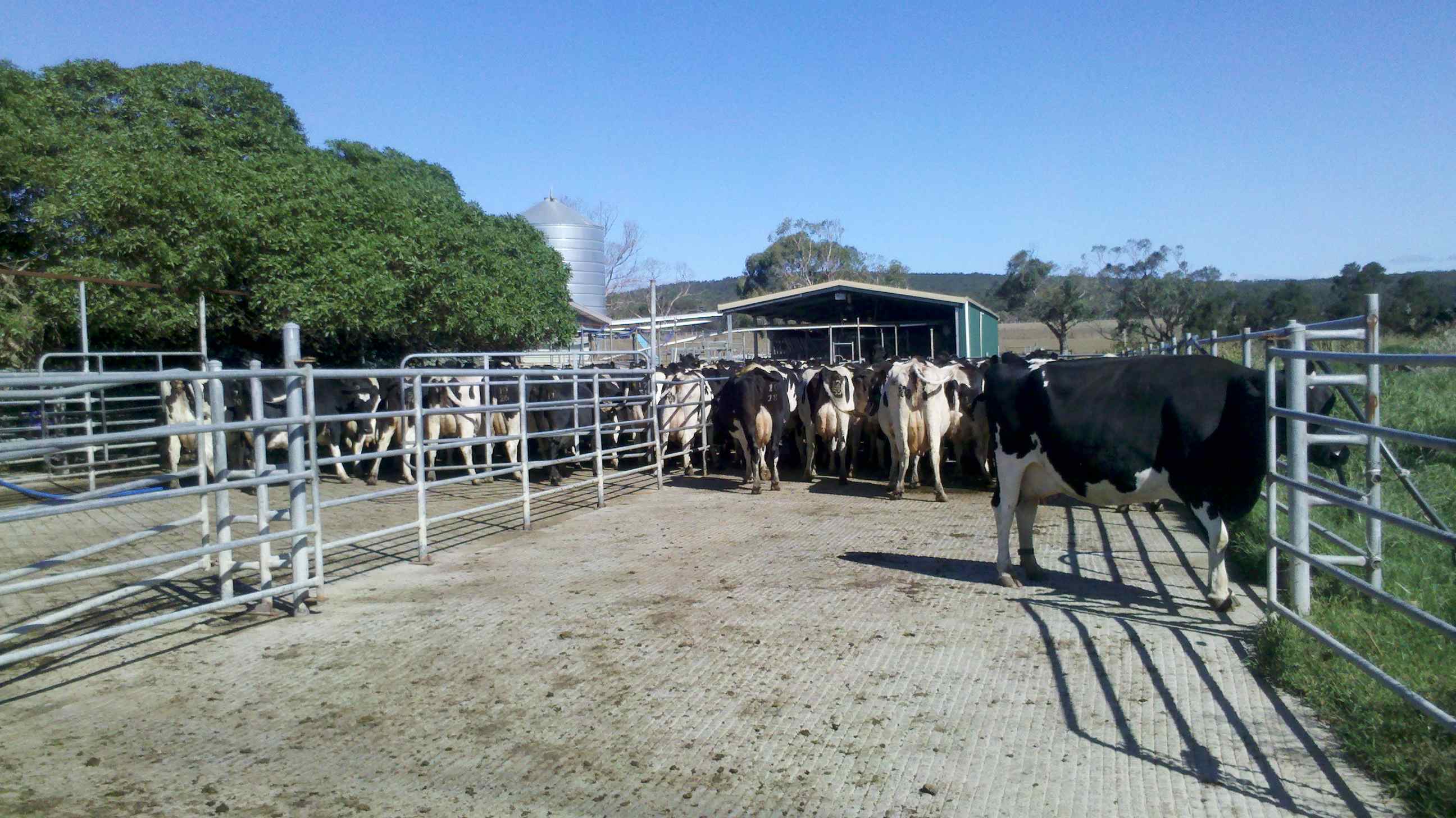
A quote from the Life of Brian (1979) springs to mind whenever I see our cow ‘Solo’ at the end of the yard:

Brian: Look, you’ve got it all wrong. You don’t need to follow me. You don’t need to follow anybody! You’ve got to think for yourselves! You’re all individuals!
The Crowd: Yes! We’re all individuals!
Brian: You’re all different!
The Crowd: Yes! We’re all different!
Man in crowd: I’m not…

The herd instinct remains strong, even in our dairy cows who’ve been domesticated for thousands of years. It’s so strong that if one cow heads the wrong way during rounding up, we generally don’t worry – she’ll head back to her herd mates anyway.

But every now and then you meet a true individual like Solo. The entire herd faces the dairy in anticipation of breakfast or dinner with the exception of this one member, who, without fail, heads to the north-west corner of the yard and gives everyone else the cold shoulder. She doesn’t want to rush out the gates (as you can see, they’re wide open in the pic above). Instead, Solo likes to poke her nose into the gatepost.

Generally, cows that hang towards the back of the yard are at the bottom of the pecking order, pushed back by more dominant cows eager to get into the shed. That’s not Solo, who’s strong, average-sized for our herd and in her prime. Just a little different, that’s all.

Inconvenient dairy truths

I am not a spokesperson for the dairy community. I’m simply an average dairy farmer who likes to write.

The way my family cares for our cows is very typical of what happens on farms right across Australia. It’s important that more of us share what we do, why we do it and why that matters with non-farming Australians because there is much to be proud of.

It’s equally important that average dairy farmers like me are constantly challenged to do better and that we, in turn, challenge others involved in dairy to improve the way we care for our land and cows.

I am ashamed when dairy spokespeople try to defend the indefensible actions of the minority of farmers who cling onto practices that the rest of us wouldn’t entertain. It’s embarrassing that I have done so little to try to influence them to represent (and lead) all of us.

Someone who has gone beyond the call in her role as Dairy Australia’s animal welfare manager is Bridget Peachey, who was never afraid to tell the good stories and work with farmers to lift our standards. Bridget leaves DA this week and I will miss her leadership, knowledge and sense of what really matters to farmers and the animals in our care.

I’m a rich farmer

Back before the beginning of time, when Wayne told an acquaintance he was soon to marry a dairy farmer’s daughter, her response was, “Ker-ching! You’ve found the pot at the end of the rainbow there!”

She was a city-slicker who thought simply being farmers qualified our family as wealthy. There’s some truth in that, according to the Australian Bureau of Statistics (ABS). In its feature on Australian farms and farmers, the ABS points out that:

“…the average weekly disposable income of farmers in 2009-10 ($568) was considerably lower than that of people working in other occupations ($921)…”

“While the reported income of farmers might have been relatively low, it is important to recognise that income is only one aspect of economic wellbeing. Wealth, in the form of bank accounts, shares, superannuation or property, is another important component, and can be drawn upon to smooth and support consumption over time, including during periods of low income. Indeed, wealth is particularly crucial for farming families given that farming income is often at the mercy of climatic conditions. The average equivalised net worth (taking into account both assets and liabilities) of farming households in 2009-10 was $1.3 million, much higher than the average across other households ($393,000). However, such high levels of wealth are not enjoyed by all farming households. In fact, 10% of farming households could be classified as having relatively low levels of wealth (i.e. in the lowest 40% of the wealth distribution). However, the bulk of farming households (71%) were in the top 20% of the wealth distribution. The high levels of wealth explain why, despite relatively low income, only a fraction (5%) of farming households are classified as having low economic resources, compared with a fifth (21%) of other households.”

One day, if my children decide not to become farmers and sell the place, all that wealth will come in handy! And while my postcode may not be prestigious, my home boasts a rather large backyard, unparalleled privacy and stunning views. But I have something even more priceless: a vocation, as the ABS explains.

“Farming as a vocation tends to be characterised by a high degree of self-employment and long working hours. In 2011, half (50%) of farmers worked 49 hours or more a week. Only 17% of other workers put in such long hours. More than half (56%) of Australia’s farmers were self-employed owner managers (compared with 15% of other workers), with a further 17% working as employees managing farms owned by someone else.”

“Although people who are self-employed generally work longer hours than others, this only goes part of the way to explaining the working hours of farmers. Even when comparing just among the self-employed, farmers were still much more likely to work long hours, with 56% farmers working 49 hours or more a week, compared with 30% of self-employed people in other occupations. This may in part reflect the nature of farm work which can necessitate tending to crops and animals at various times of the day and night.”

I think the last sentence is a little twee, don’t you? All sorts of people must attend to their work around the clock – firefighters, police, nurses, chefs, to name a few – but they share the workload with colleagues. The unvarnished truth is that because farm incomes are so low, few farmers can afford to employ enough help. That, my friend, is the downside of farming.

Still the upsides are pretty darned glorious and something a statistician could never hope to capture.

Is autumn really here? No, it’s coming, so cows are going

AutumnLeaf

Golden leaves carpet the farmhouse driveway. Yes, it’s autumn at last but I’m not sure whether the ash are superbly tuned into the seasons or simply too water stressed to hold onto their leaves any longer. The crisp autumnal mornings are yet to arrive – it was already 26 degrees Celsius when Alex and I checked the weather outlook just before six this morning – and the farm is again desperately dry.

But a dairy farmer is always planning ahead. Last weekend we sent a handful of cows on their annual two-month maternity leave, with a dozen or so more to join them in a fortnight.

The summer millet crops are getting their final grazing today and tomorrow so we can prepare for sowing new perennial pastures when the “autumn break” finally arrives. We’re testing the soils of each paddock so we can apply just the right levels of nutrients – enough to maintain fertility without risking leaching into the river or water table.

In anticipation of rain (and mud), our cow tracks are also about to get a makeover to help prevent two of the most troublesome afflictions for dairy cows: lameness and mastitis.

Autumn is the time when dairy farmers lay the foundations of a successful season and it’s strangely exciting. I wonder what will mark this year?

Modern farming and nostalgia

Although I was just a tween during the 82/83 drought, I remember it vividly. That was the year the school bus was overwhelmed by a dust storm and the year my parents cancelled the newspaper deliveries just so they could be sure they’d saved every dollar they could.

It was also the first year we fed our cows grain and, gosh, it taught us a lot. Cleaning up, I stumbled across some notes written by my father’s farm consultant (and even a farm consultant was a new concept) that December:

“Feed grain, increasing slowly to 4kg, watching carefully for signs of grain poisoning.”

Grain poisoning is not funny but that little sentence make me laugh out loud. These days, cows start the season on 4kg, which is seen as pretty much a minimum supplement level, even in the flush of spring. No risk of grain poisoning there.

We manage dry spells so much better now than we did then and the cows, the farmers and even the environment are the winners. No longer are paddocks stripped bare, exposing the topsoil and all the life in it to the cruelties of the Australian summer. We graze just enough to keep the grass from becoming stalky.

This modern way of farming also means the pastures are quicker to respond to the rains when they do come. Just look at it.

Just add water...

Just add water…

Modern farming attracts plenty of critics but I think that, in many ways, the way we farm now would make our early environmentalists very proud indeed.

The brains behind “The truth about the supermarket war”

Vet student, Cassandra MacDonald, launched her single-handed David vs Goliath battle against supermarket giant Coles yesterday and, already, her clever YouTube video “The TRUTH about the supermarket war” looks like going viral.

So, who is this talented young woman? Milk Maid Marian asked Cassandra a few questions to find out more.

MMM: Tell us about yourself – do you have a dairying connection?

I am a fifth year veterinary science student studying at Charles Sturt University in Wagga Wagga. I am not from a farm, I was brought up in the suburban South Coast of NSW for the first ten years of my life. My connection to the dairy industry started through showing dairy cattle at high school. Through the opportunities I have been given and the people I have met/connections I have made through this initial start in the dairy industry, I have been able to get where I am today, studying veterinary science, showing and breeding dairy cattle, milking on dairies, scholarships I have won, trips overseas that I have won. All because someone saw my interest as an eleven year old, who had fell in love with dairy cattle. I feel I owe it to the industry to promote it and share with others how great the industry is.

MMM: What made you decide to create your infographic?

I saw the Coles video, after seeing an article about it on FarmOnline and felt angry about the misrepresentations that presented in their video. I couldn’t believe or understand the way they tried to represent the different points just to spin them to their advantage and fool consumers into believing them. And believe they will! I wanted to reply and vent my anger. So I thought almost immediately- hey I can draw, why not use that talent and copy them and throw it straight back in their faces? Especially when they have obviously spent a lot of money and effort on it, and me being an absolute amateur, I wanted to make fun of their efforts and make it seem trivial in a way I guess.

MMM: How did you do it? How long have you been working on it?

I started by doing drawings and then realised I needed a plan, a path to follow so I scrapped that idea and started again by writing what I thought I would narrate over the top of the video. I wanted it to address the same issues as brought up in the Coles video but represent them properly and wholly. I wrote it off the cuff, after having written a letter to The Land for their editorial (after finding out it was way too long for what they wanted) which was researched using ABARE data and data and information from Dairy Australia as well as a few of my farmer contacts who are extremely experienced in the matter – I am always either text messaging or conversing with them either over the phone or in person about these issues.

I then went through the text I had written and wrote down a list of what I could draw to represent the points I was trying to make. It took me a couple of hours over two afternoons to make the drawings- of which I filmed on the floor with my iPad- and everything you see in the video is the first and only draft- there were no mistakes, no reshooting, or several tried at any of the pictures- they’re all the ones I drew off the cuff as I consulted my list I made. I think I made about 52 clips altogether.

I then had to work out how to record my voice (easy once I found the voice recorder on my computer), and then, compile and edit the clips to make the video. This is where I ran into a dead end. I didn’t think it was going to make it passed this. I had several ‘movie maker’ programs on my computer, didn’t know how to use any of them, and none of them did what I wanted them to do.

Two nights ago I finally found a program on the internet, downloaded it and spent the next 16 hours working on getting the clips to match the audio – which was not easy – especially when my ancient computer couldn’t deal with the needs of the program and wouldn’t let me preview anything before committing to making it a movie. And each time you commit, it took about one hour for it to process it, so after ‘making’ the movie 7 times, it was finally close enough to what I wanted and I was ready to post it! I even went as far as to looking up what the best time to post on Facebook was, and luckily my research told me the time I had planned.

MMM: How do you hope Coles, shoppers and dairy farmers will respond?

I hope it makes Coles realise that there are people out there ready to fight back against their sneaky spin. They will have to think harder to try and justify their moves, because if they lie or warp the truth again, I will be more than happy to come back at them again. Also, as I say in the video, I want them to stop denying that they are not having an effect on the price some farmers are getting for their milk, and on the industry as a whole. Because even if they are not having a direct effect, their effect is certainly indirect with the decreased sale in branded products and thus decrease in income and profits of the processing companies who ultimately need to pay the farmer.

I hope consumers will stop and think about what exactly is happening. I hope they think about the choices they make, and how it affects others. Ultimately it would be great to see more people boycotting generic brand milks and buying branded milk products, I think this is the only way we can combat the issue, as Coles is not going to budge anytime soon (unless they get done in the current investigation by the ACCC). I also want them to think about the information they are being fed, especially by such big powerful companies – not to believe everything they are fed!

For dairy farmers, I would like to see them agree with me as I hope I have done the right thing and represented them in a way that is honest and accurate. I want their approval basically. After their approval I would love them to all share the video around to everyone they know – why because it will get to more and more people, and most of them won’t be form a dairy background. And most of them do buy milk, and most likely buy it from a supermarket. Then we are educating our consumers for our ultimate benefit, for their support and hope that they will make conscious decisions at the supermarket and not just go for the cheapest alternative.

MMM: What has been the response so far?

So far the response has been somewhat unbelievable. It is what I wanted though. I want this to reach as many people as it can. One of my biggest passions is educating people about agriculture, especially about the dairy industry. At present I have had over 50 of my friends share the video on Facebook with who knows how many friends (and who knows how that keeps going), I have had numerous people share it on other pages on Facebook, and before I knew it, it had hit Twitter – I wasn’t even a part of Twitter (but I am now!). On YouTube itself, I have had 2788 views in not even 24 hours. The support has been fantastic as I was somewhat nervous, but the commendations have been all positive and really amazing!
Love at the circus

Two miniature horses, two sleek chocolate goats, two barrel-shaped red cows and two donkeys were the stars of the circus yesterday. The team of eight struck impossibly cute and clever poses in an incredibly endearing performance.

It all felt very familiar. Circus acts have barely changed since I was six years old, except (and it’s a BIG except) that the animals are far less exotic than the stunning Siberian tigers I remember. The resourceful circus folk have adapted artfully to changing community expectations, shifting the role of performance animals from that of mesmerising danger to beguiling charm.

Of course, some animal activists believe there is no place for animals in a circus at all. I don’t really understand why not. The faces of the two trainers were as much a delight as those of the animals. They coaxed, were proud of their little charges and, when something went wrong, swapped understanding tiny smiles rather than tight-lipped grimaces. In other words, they loved.

Those four-legged circus performers are clearly among the globe’s most treasured creatures – hardly exploited and overworked.

“Exploitation” is a charge often directed at the human carers of working animals, including farmers. But is it a bad thing? Yes, we do exploit the cow’s amazing ability to nourish us, just as the heightened senses of search and rescue dogs are exploited to rescue victims. Working together, humans and animals can achieve so much more than alone. The fundamental question is this: what do the animals rightfully deserve in return for their help?

GPS on the farm

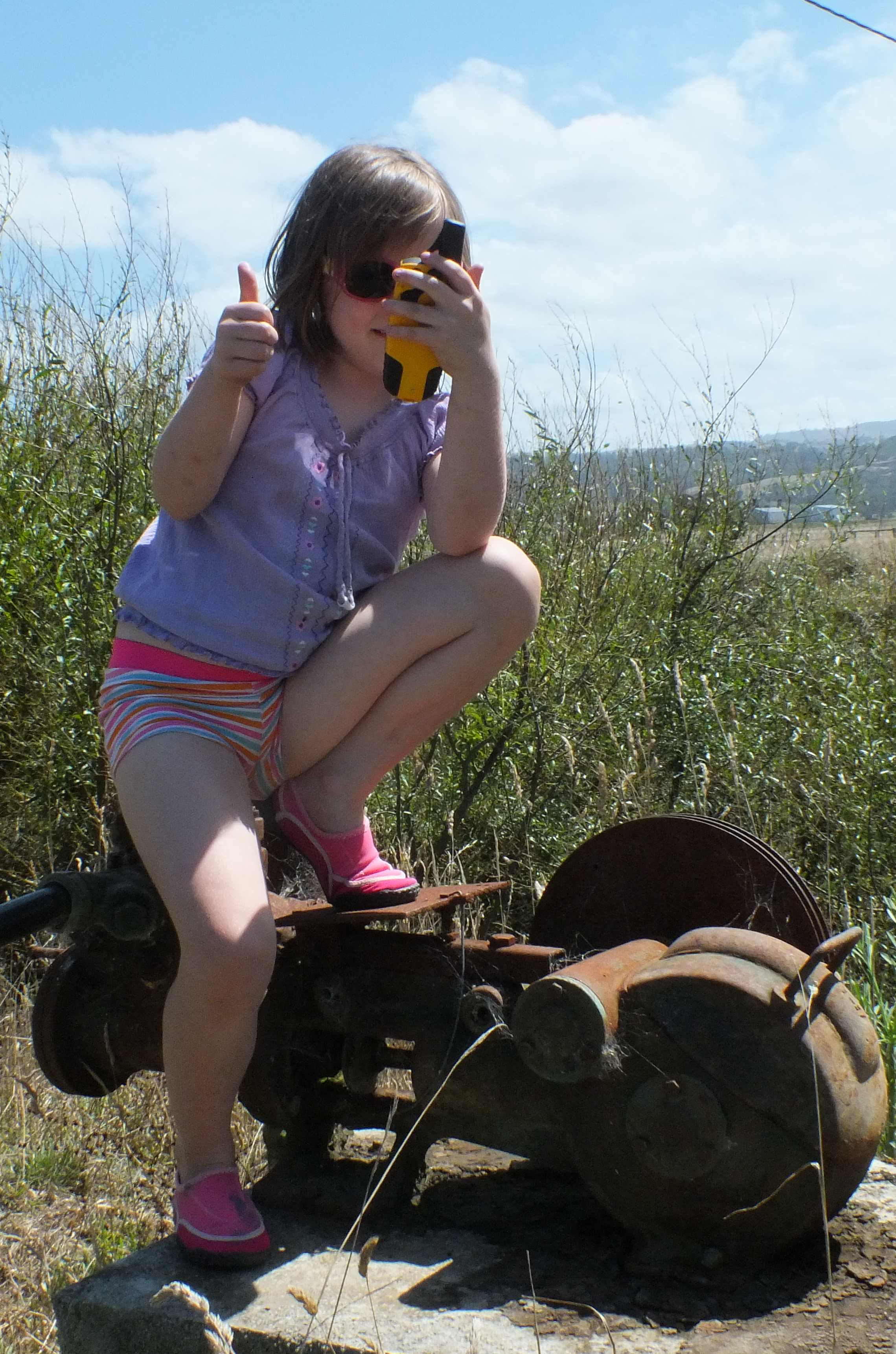
A GPS comes in handy on the farm. We use it to plot farm infrastructure and maps, while contractors use them to fertilise and sow our pastures. Today, it did another very important job: science teacher for Zoe.

"We've got four, no, FIVE satellites!"

“We’ve got four, no FIVE satellites!”

With 250 cows drinking up to 200 litres of water each on a hot day, we need a pump we can rely on, so when the pressure began to fall, we were quick to investigate. Bugger. Faithful old Davey is getting pretty tired. An inch has been worn off his venturi and the jets need replacing. It’s a major overhaul, so we’ve decided to buy a second pump to keep Davey Senior company in semi-retirement.

To make sure Davey Junior is right for the job, it’s important to check how high he needs to suck water out of the river and then how high he needs to push it around the farm, which is where the GPS and its six-year-old pilot came in.

The GPS is magical to my little girl, and why not? It’s covered in buttons and talks to satellites whizzing through space at thousands of kilometres an hour. She was practically an astronaut today!

Cows on top

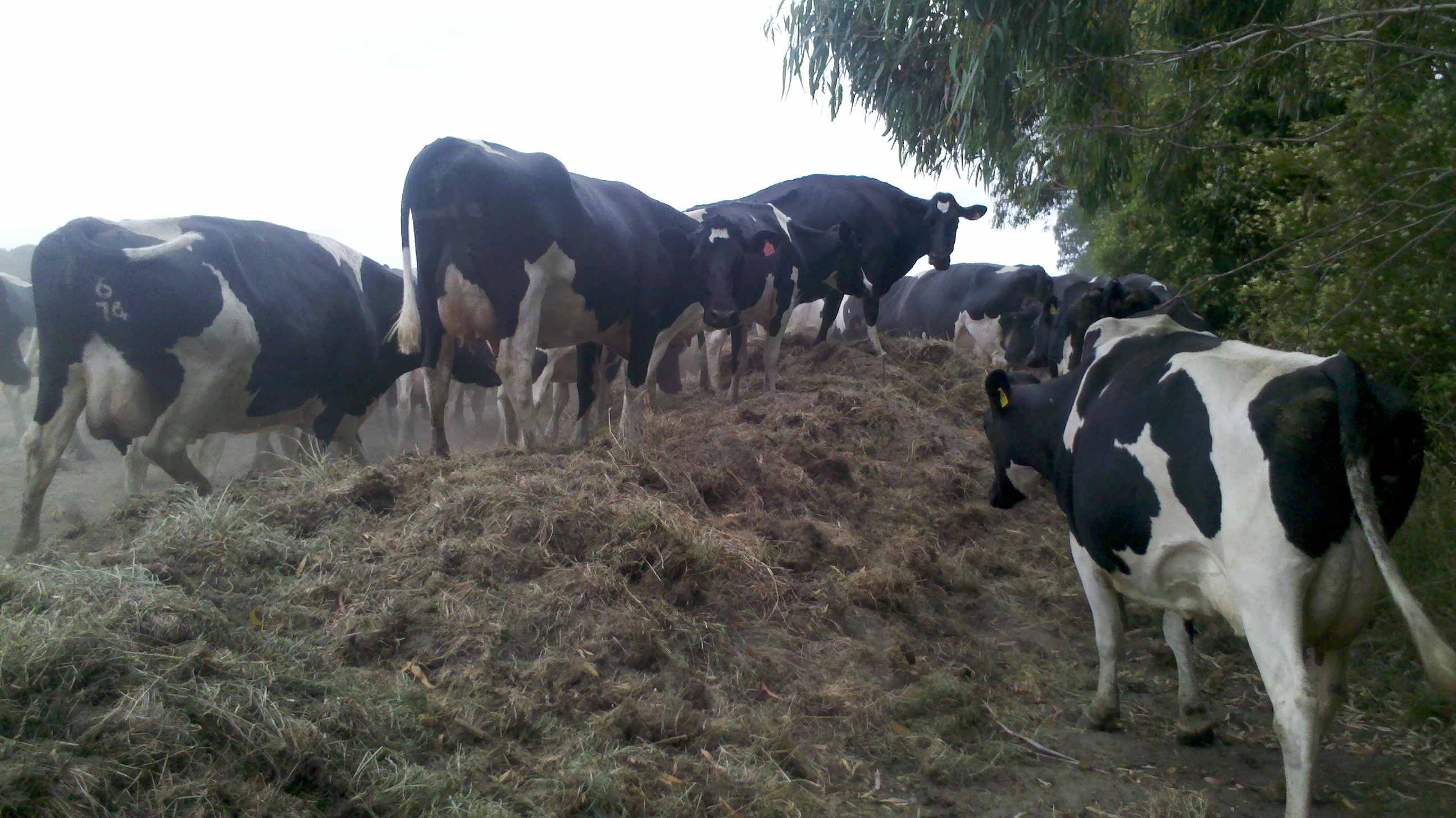
You and whose army?

You and whose army?

Cows rule, okay?

No dairy farmer worth her salt treats a cow as anything other than a queen. A cow track is only fit for a cow if her farmer finds it comfortable barefoot, a perfectly balanced dinner must arrive at the right time and in the right portion or there will be hell to pay and, most importantly, it is the cow who sets the timetable.

Milkings should be as evenly spaced as possible and the cow is a masterful timekeeper. If we are half an hour late, she will arrive at the dairy demanding better service and if we are early, well, we must simply wait for her to gather herself.

With all this in mind, I should have known better than to cut it fine rounding up before my regular rendezvous with the school bus. They should not, would not be hurried.

Cow comfort is actually a big deal for dairy farmers. We spend a lot of time worrying about (and researching) resting time, dairy ventilation, “traffic” flow, yard design, walking surfaces, excessive noise and avoiding heat stress.  The biggie when rounding up for milking is to just let them come in gently. Yep. Should have got out there 15 minutes earlier.