Plastic in the paddock

I may not be able to look my fellow farmers in the eye after publishing the next photo, especially those of the calibre of @Hoddlecows of Montrose Dairy, for I have committed a dairy farming sin.

Grass ready for ensiling

Not quite “the more the merrier”

If you ever needed proof that farmers are a hard lot to please, this is it: we want our grass to be lush but not this lush. It’s past its best and I should never have let it get so long. Now that it is this long, I should not be spending lots of money to have it cut, tedded, baled and wrapped in plastic to create that fermented delicacy called “silage”. It’s too crappy. Oh, the tut-tutting.

How did I get to this point? Well, the farm has been so wet that I simply wouldn’t have been able to get this paddock grazed without bogging a few bovines along the way, so I just looked the other way until we had this tiny window of almost-good-enough silage-making weather. I’m told it’s only me and one other farmer on the other side of town who have ventured into silage making around here so far this season.

“Fools rush in…etc, etc, etc.”

Thankfully, the team at Bowden’s Ag Contracting got it done for us, just in the nick of time. Even though it’s creating more mud and misery out there, it sure feels good listening to the rain on the roof tonight, knowing that it will be pattering on plastic in the paddock. So there!

The working dog from St Albans

Patch Rounds Up The Yearlings

I was born to do this

Patch runs rings around them - literally.

Just look at his face. When Wayne collected Patch from suburban St Albans this Easter, it was clear he was a working dog breed (or three) but I doubt his rescuers from Homeless Hounds would have envisaged this. Only problem is, he likes it too much.

It took me nearly half an hour to retrieve him from the yearling paddock and when he decided to round up Zoe yesterday, I decided something had to be done, and fast. You must not, cannot let a working dog get out of control, no matter what.

I called Paul Macphail of Beloka Kelpies for help and, 20 minutes later, Zoe, Alex, Patch and I were in training at his school in Welshpool. Paul quickly summed Patch up as a tad “arrogant” and swiftly put him in his place. I have not been a tough enough boss.

A litte while later, Patch, who had never seen a sheep before, was in the pen working a mob and then in the paddock masterfully bringing another (albeit rather tame) mob back to Paul. Just like Babe, really. Pig dog turns hero. “He’s a natural,” says the laconic Paul.

I am so impressed, I will be back at Paul’s with Patch in a week to see if I he will reach his calling as a semi-automatic dairy cow rounding up dog with the speed of a cheetah and the gentleness of a dove.

Sustainable dairy farming

Sustainability isn’t about the environment, animal welfare, profitability, business succession or manageability. For me, the definition of sustainability is all of them.

Australia’s dairy farmers are good at environmental sustainability – we are the front line environmentalists behind the Landcare movement. I like to think we are also exceptional when it comes to caring for our animals too. Profitability, not so good. Business succession, woeful. Manageability, well that’s debatable.

City friends think I live an idyllic life, frolicking among the cows but this lifestyle can bring stressors urban Australians would never imagine. According to the University of South Australia:

UniSA Psychology PhD student Alison Wallis knows what can drive a dairy farmer to cry over spilt milk.
For the past four years Wallis has been investigating the work stress of South Australia’s dairy farmers.
It’s a group she says at the time of the research had one of the highest incidences of work-related stress in the nation.
“There hasn’t been a lot of research done on the stress levels of those who are self-employed,” Wallis said.
“But we found that dairy farming produced some of the highest distress scores of many Australian occupations.”

Reading Tom Phillips’ excellent dairy blog, Pasture to Profit, I discovered we are not the only ones. Our trans-Tasman counterparts are also studying dairy farmer burnout.

It’s all amplified in times like these – when the rain won’t stop falling here in the south and when the prices won’t stop falling up there in New South Wales and Queensland – and so much of your success or failure seems to be in the laps of the gods (whether Thor or Coles).

On the other hand, it’s times like these that faith in human nature is restored by the generosity of people who care. People like Queensland ag teacher, Lisa Claessen, who, seeing the distress of her students, has taken to social media to petition the Coles CEO for a sustainable milk price. If you would rather not have UHT on your cornflakes, please add your name to her cause.

The perfect farmer’s body

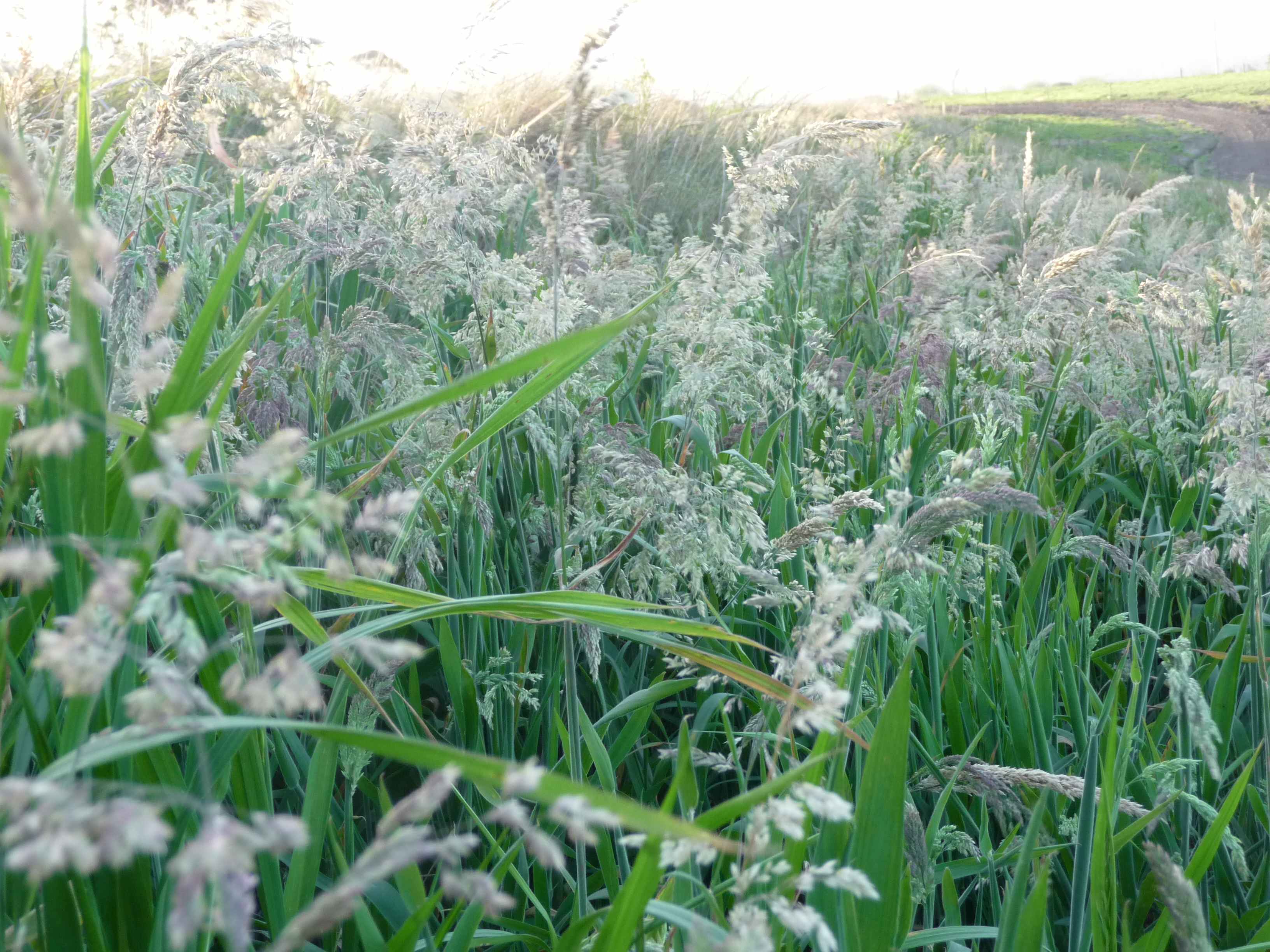
What does the perfect body look like? Not mine, that’s for sure! Yesterday, I was reminded just how bad my genes are for farming. Allergies run on both sides of my family and the worst irritant of all looks like this:

Yorkshire fog grass

Yorkshire fog grass: one UK expat we could do without!

I’m told it’s called “fog” grass because the pollen is released in such huge quantities, it makes everything go misty. Dynamite! Yesterday, I had to wander through thigh-high forests of it to get the dam siphon running again. My scalp, eyes, nose, mouth and arms are all still desperately itchy 15 hours later.

The cows don’t like it either. Fog grass is covered in thick velvety “fur” that understandably is most unpalatable.

Thankfully, we have a lot less of this hideous grass nowdays. It was everywhere when I was a girl but much better grazing management has seen it restricted to untouched pockets of dampness (like the dam wall).

Grass management is a big deal for Australian dairy farmers because it is the greatest predictor of profitability. We count leaves, we estimate the tonnes of pasture in paddocks and aim for the magic nexus of quality and quantity. Somehow, it’s reassuring to know that nothing beats the simplicity of grazing grass for high performance dairy farming, even in 2012.

Kicking back on the farm

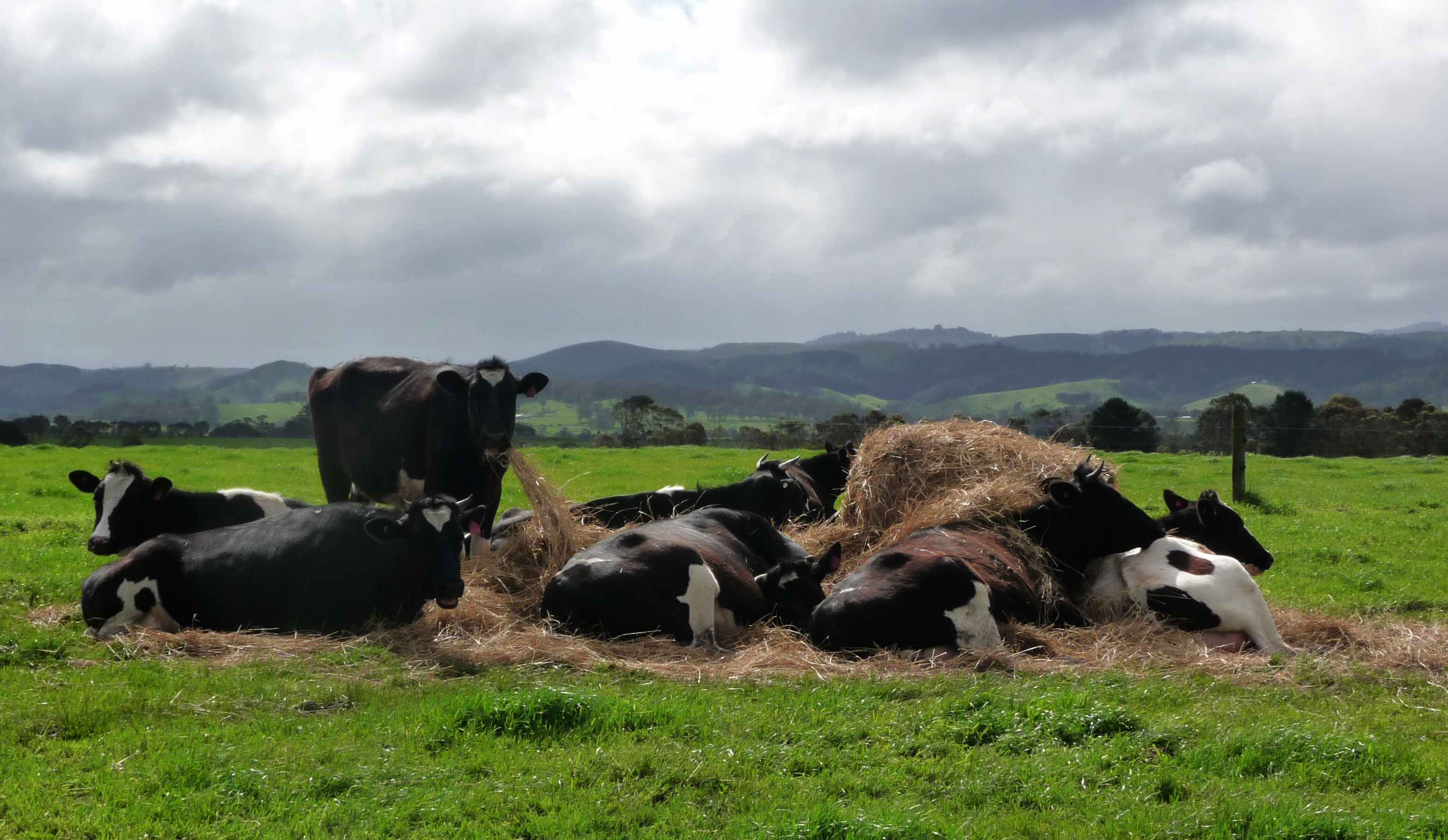
By far the coolest animals on our dairy farm are the 2 year olds.

Just kicking back

With the fearlessness and carefree existence of youth, these girls really know how to relax!

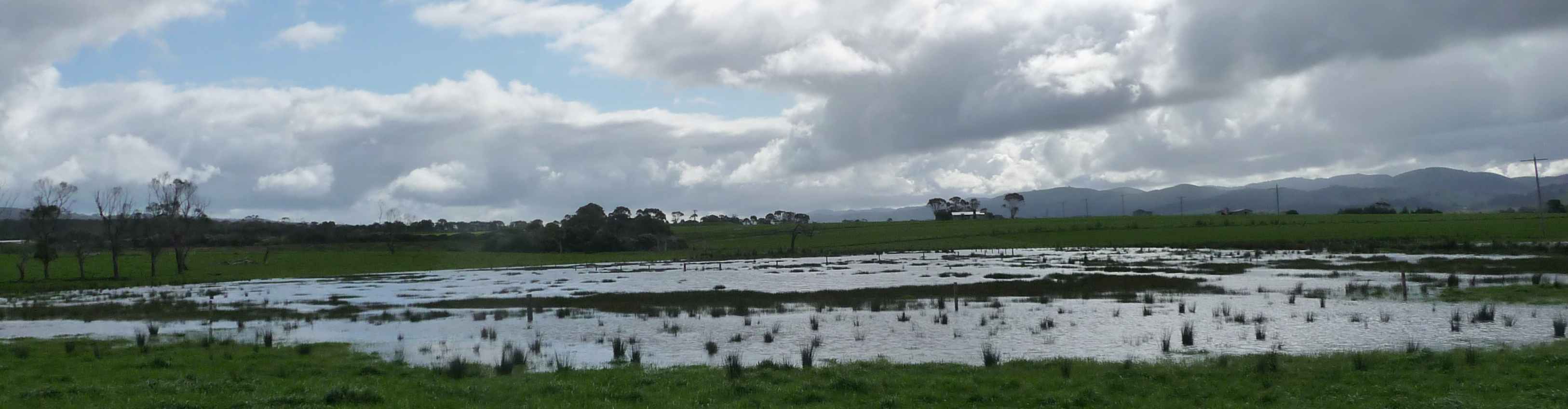
“Cool” is also the understatement of the month for Spring 2012. The area set aside for revegetation is earning its sexy NRM-funding title of ‘ephemeral wetland’ with more regularity than I would like.

Does this count as the fifth flood of 2012?

On the other hand, the grass is growing in between inundations. If it would just stop raining for a couple of weeks, we might get some silage tucked away for summer!

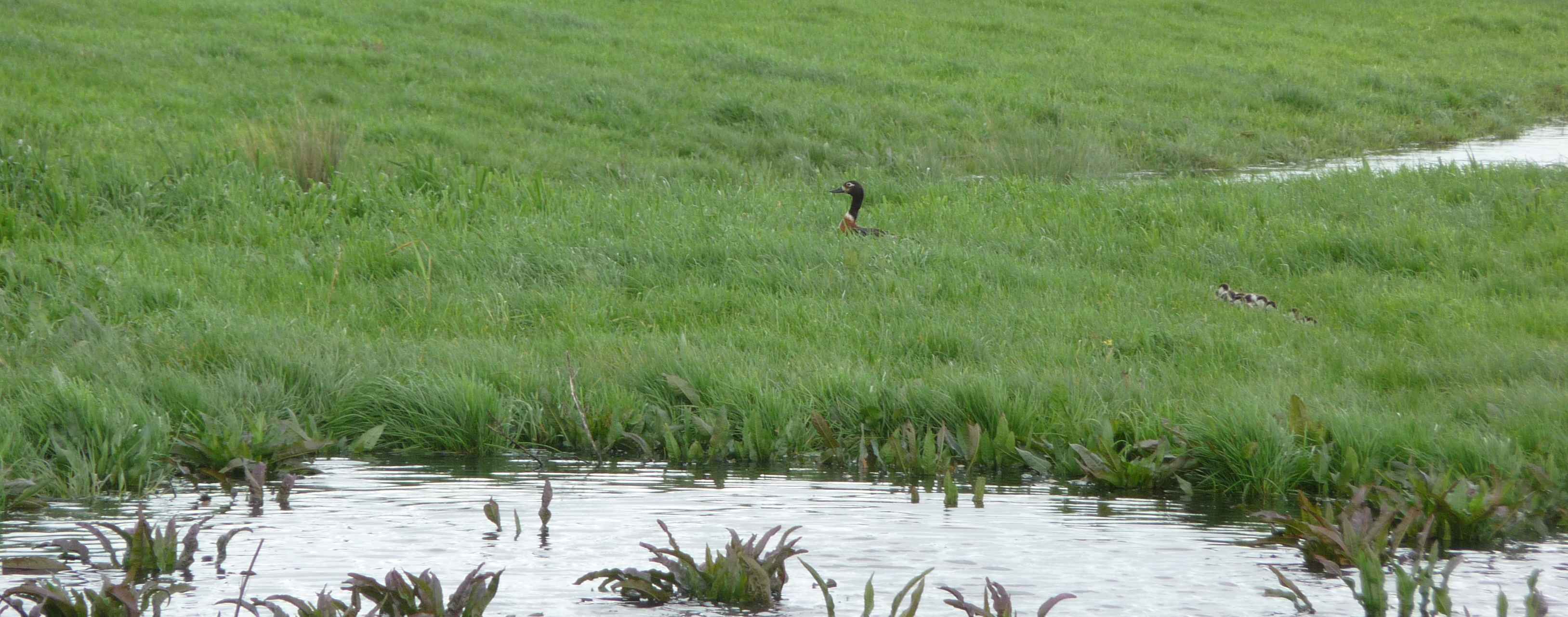
Mother duck speeds her charges away from the cow track as the herd passes by.

People and animals tell the farm’s story

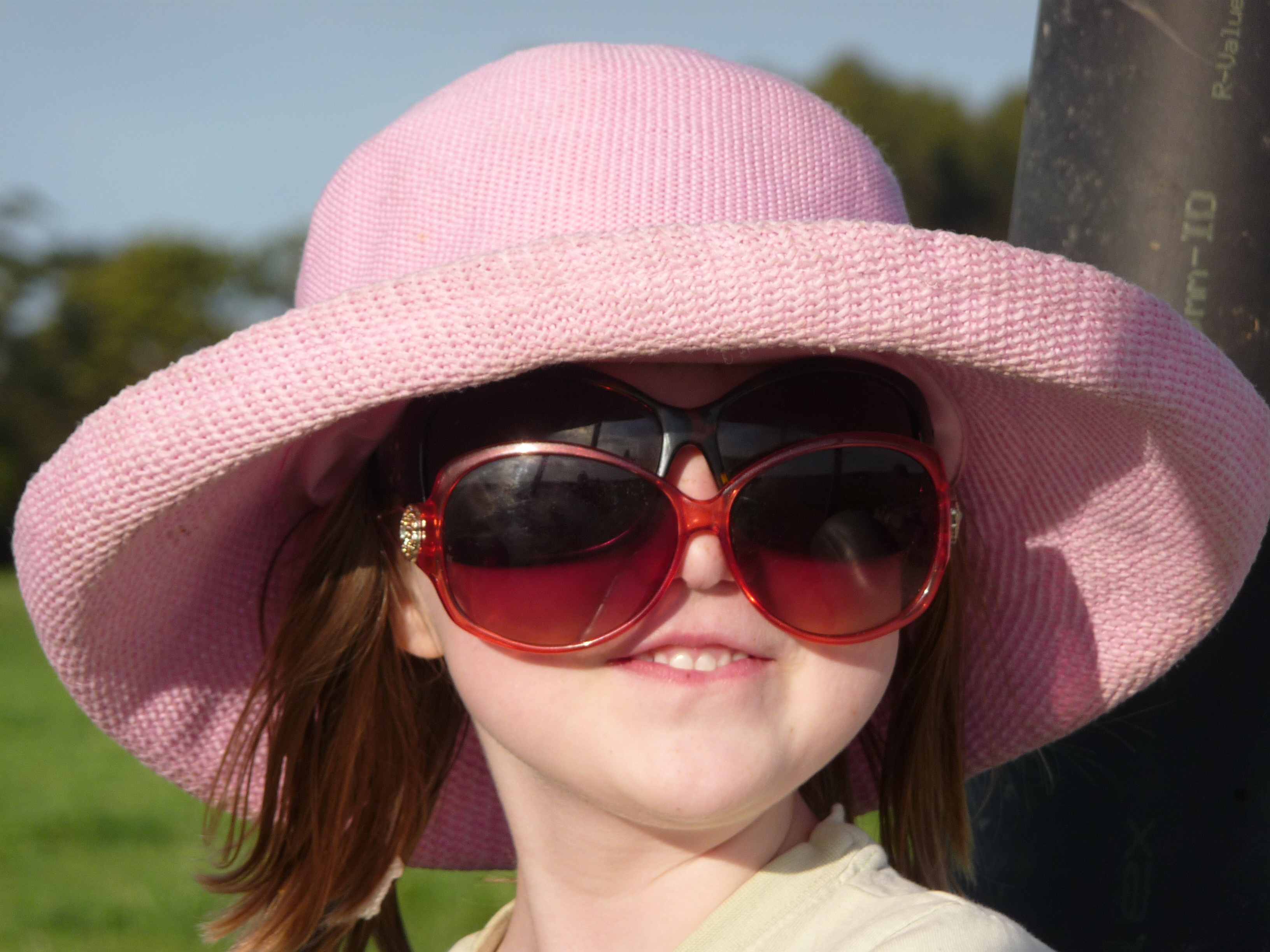
This was Zoe on the Bobcat as I moved the electric tape in paddock 6 on Friday. It really was sunny enough to dig out the zinc!

Yes, two pairs of oversized sunglasses are apparently “hot” right now

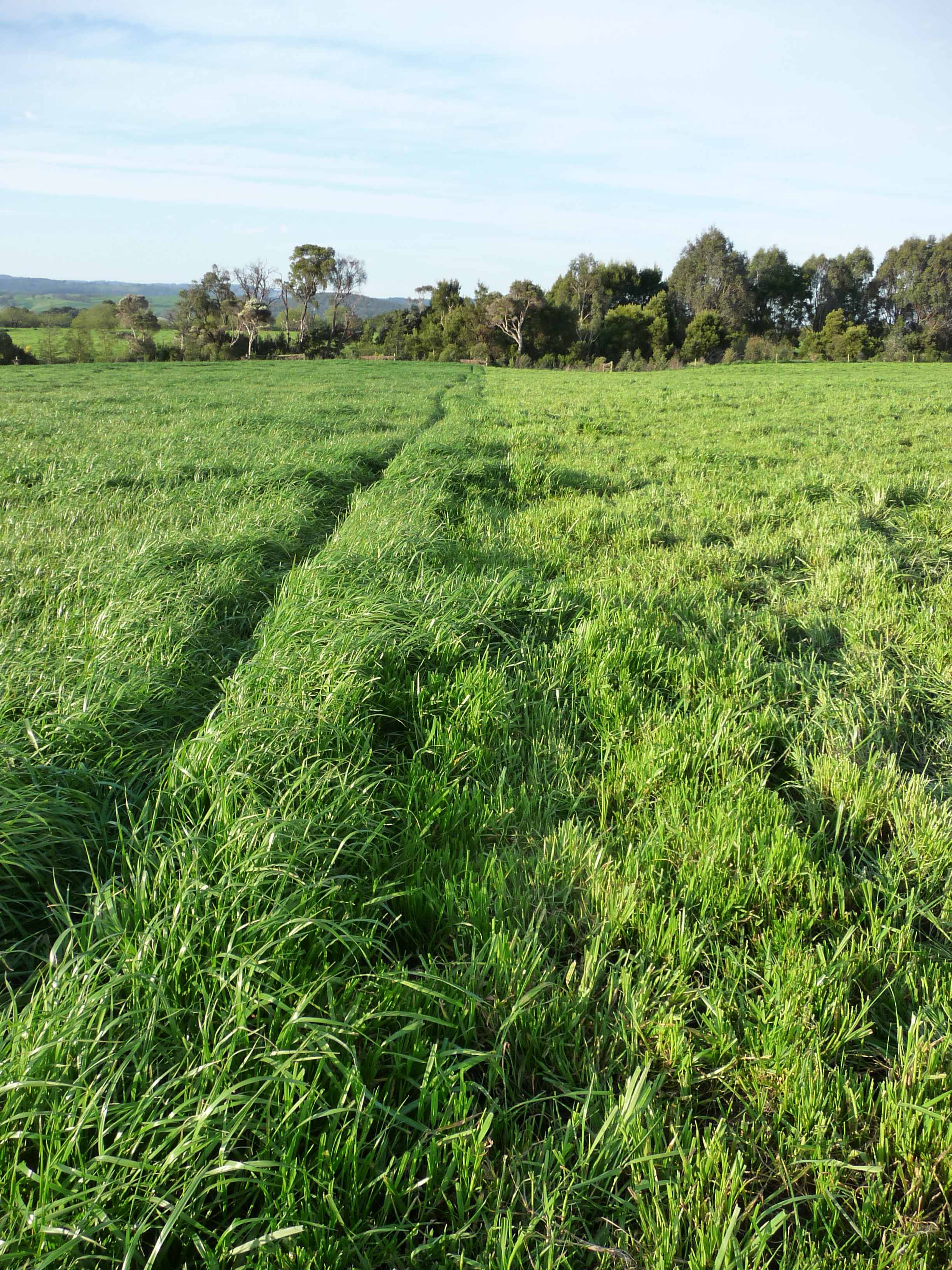
I’d been away from the paddock for a week and things had got away. It’s newly sown to a high performance grass and zoomed off once the saturated soil turned to plasticene over a balmy few days. We had to get the cows in at once if there was any chance of keeping grass quality levels up over Spring.

At this time of the year, it’s really important to divide the paddock into small strips. Let them into the whole lot at once and most will be wasted as the engorged cows make nests to sleep it off. The trick is to have the cows absolutely full to pussy’s bow, but only just. It’s good for the cows, good for milk production and good for the grass.

The grass on the right has just been grazed, the grass on the left is for dinner

Grass growth will have come to a skidding halt over the last couple of glacial days though. Everything is mushy and muddy all over again. Including Patch.

Whadda you mean I can’t come inside?


Solar on the farm? Maybe.

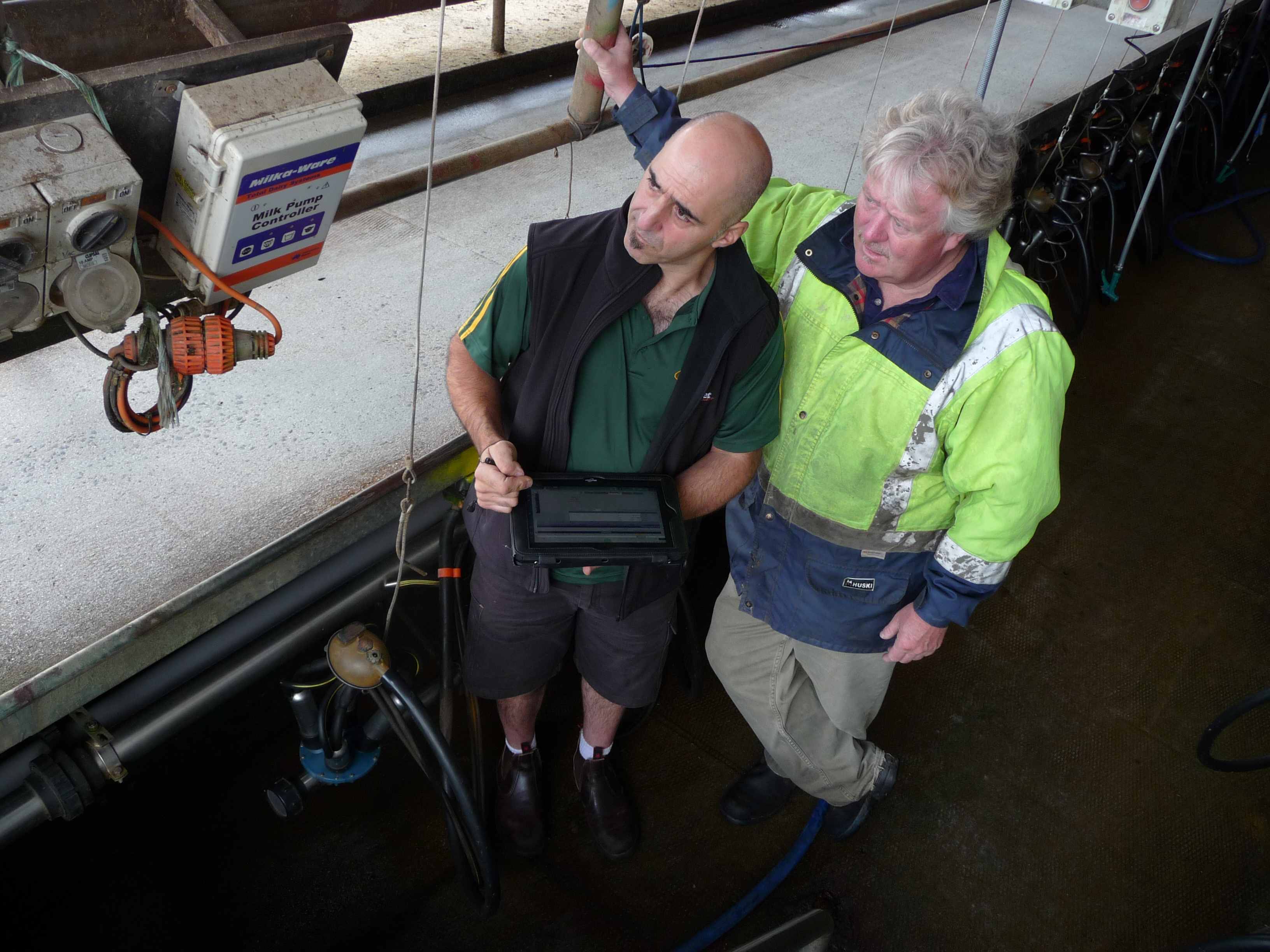
It costs between $4000 and $5000 per quarter in power bills just to run the dairy, so we jumped at the chance to have an energy audit done on the farm by Gabriel Hakim, thanks to GippsDairy.

Energy Audit with Gab

Gabriel and Wayne check out the systems

It showed us where our energy is used and highlighted that maybe we had better look at increasing the flow of water to our milk heat exchanger. Still, there were no massive savings to be made (and don’t we all love a silver bullet?), so I’ve started investigating alternative power for the dairy.

A wind turbine would have a payback period of 60 years! Jeepers! So, I’ve since been looking at solar. You can now lease solar systems with the repayments matched to your electricity savings, making the exercise cashflow neutral. Very nice! The only thing now is to get the right size system.

It’s not as easy as you think because the cows are generally milked too early and too late in the day to capitalise on solar energy, so I think we’ll be starting off small. That’s not so bad because it won’t lock us in to the technology forever and I am sure something even better is on its way!

How to dance with a Goliath

What would you say to encourage other dairy farmers to share their stories? Well, today, I am be doing just that, speaking to attendees of the Holstein Australia AGM via the internet and my message will be simply this:

“Whether we know it or not, ordinary Australians – farmers and non farmers – are fighting a desperate battle for good, fresh food against the Goliaths who increasingly control what we grow and what we eat.

The statistics are frightening. As ethical.org.au reports,

“Australia has one of the most concentrated grocery markets in the world. Woolworths and Wesfarmers (owner of Coles) account for almost 80% of supermarket sales, 60% of alcohol retail, 50% of petrol retail and 40% of all retail in Australia.”

According to an investigation by The Age one in every four grocery items now sold in Australian supermarkets is private label and, of those, about one in two is imported.

And who can blaim the Aussies happily scooping up the bargains? There is no warning label on these homebrand goods warning that choice and freshness will be the casualty. To make matters worse, we farmers don’t have the advertising and PR budgets to get the message heard.

But we do have people power. If you’re a little person, the only way to fight a Goliath is to think differently. The “Accidental Activist”, Jane Burney, did it with a rant on the Coles Facebook page. So can we.

Jane Burney

If you want to stay on the land or continue to enjoy high quality fresh food, please spread the word. Buying private label milk isn’t a sin but if you decide to make that choice, make it an informed choice.

It’s not all black and white at the Royal Melbourne Dairy Show

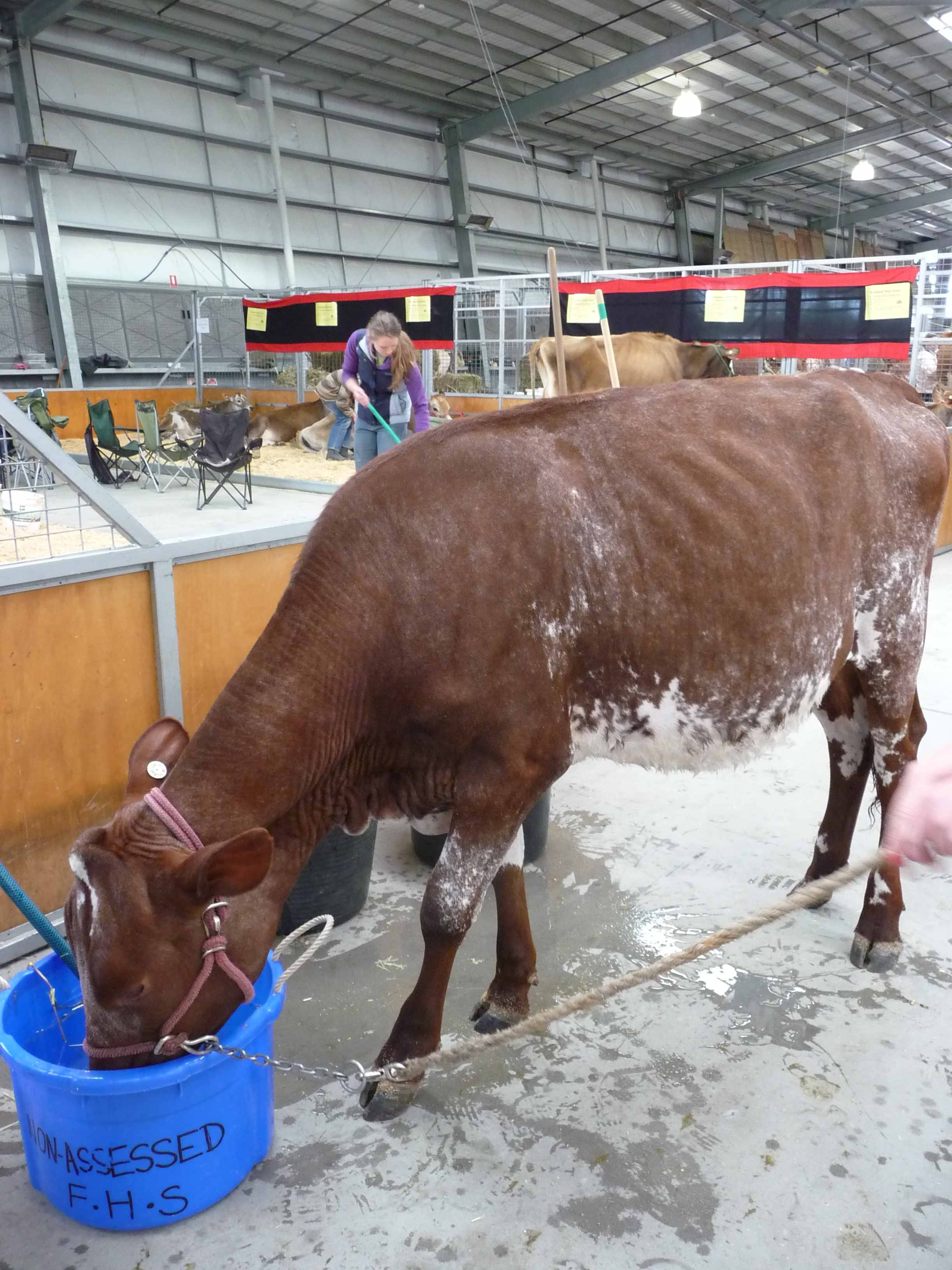
There hasn’t been a lot of activity on the Milk Maid Marian dairy blog of late because we’ve taken a family mini-break centred around the Royal Melbourne Dairy Show. Held a week or so before the big public Royal Melbourne Show, this event is the opportunity for dairy breeders to strut their stuff.

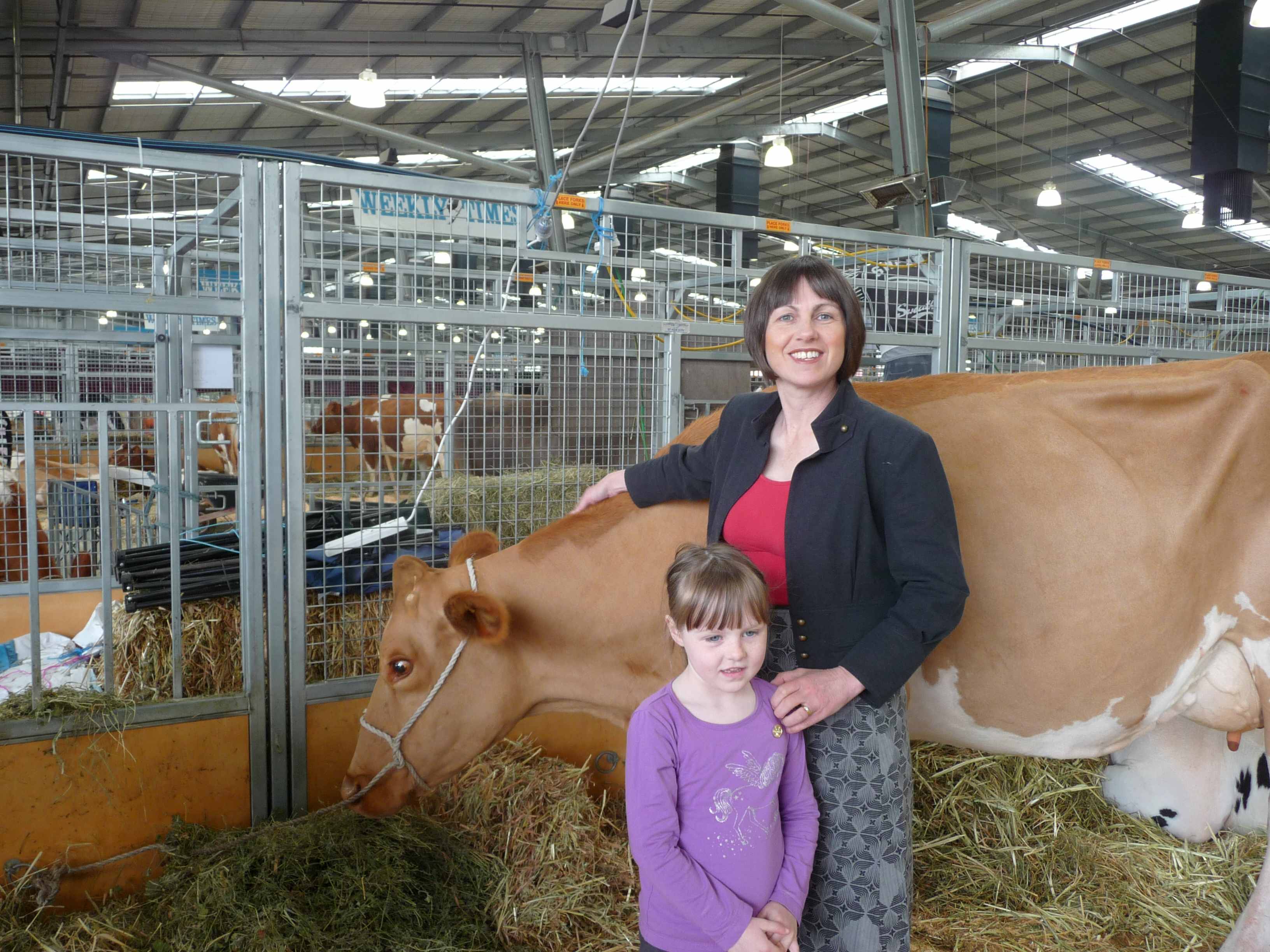
What struck us as “commercial” dairy farmers rather than showies was the variety of cows and the sheer size of the Holsteins. Just take a look at this cow!

Huge Holstein cow

The guy handling the cow was not a midget

We also fell in love with a few gorgeous cows.

Illawarra cow

Young Illawarra cow – Australia’s own dairy breed

Guernsey cow

A gentle Guernsey called “Bling”

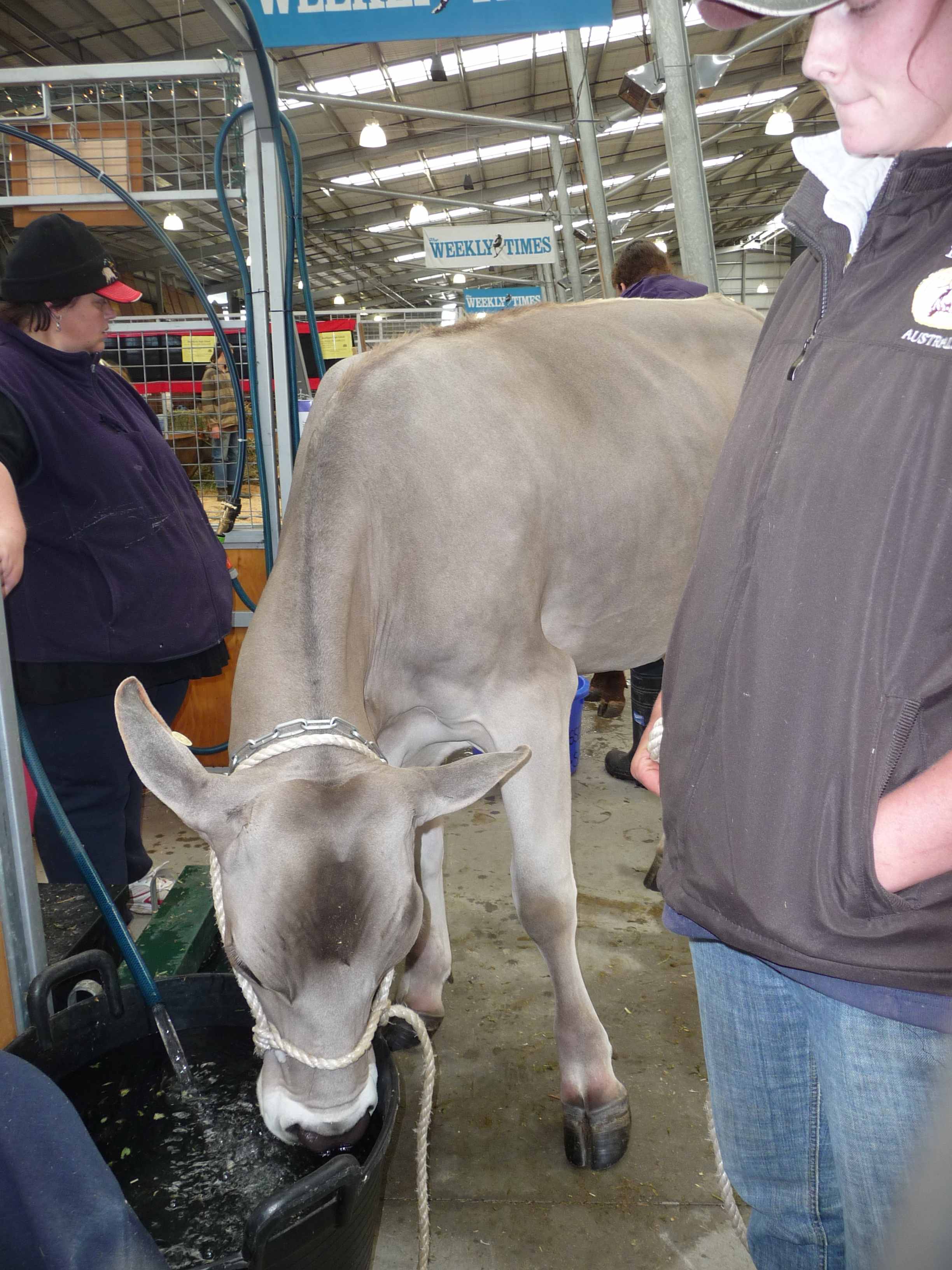
Brown Swiss cow

Beautiful Brown Swiss

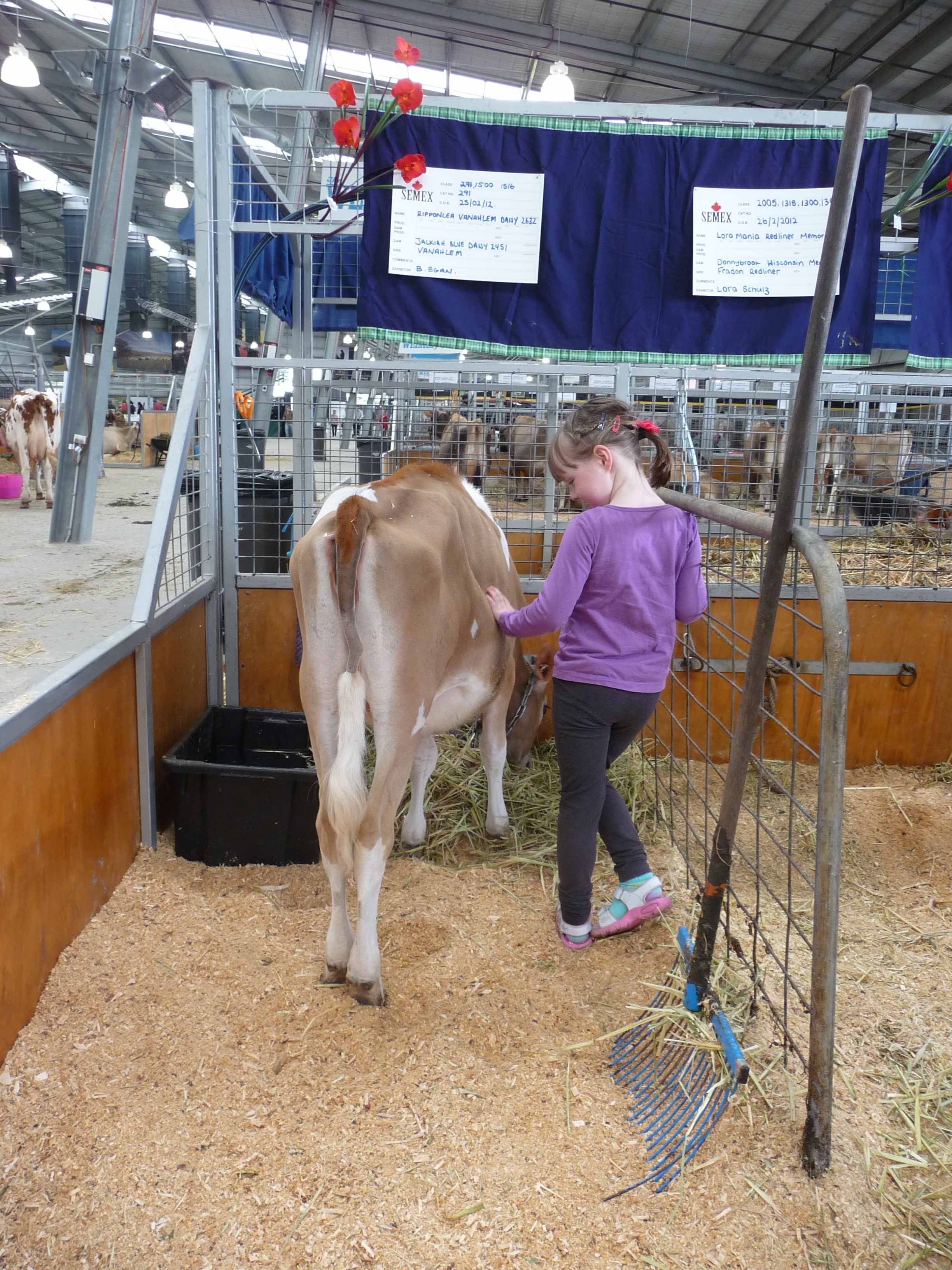
Jersey Heifer

Zoe with a dear little Jersey yearling

It’s a great reminder that even though 1.4 million of Australia’s 1.7 million dairy cows are Holsteins, there’s a whole kaleidoscope of cows out there.

Design a warning label for cheap milk

The people who make milk and the people who drink it are on the same side. We all want safe, high quality food at a reasonable price without compromising the way we care for our animals or land. Put simply: sustainable food.

But when you stand in front of the supermarket fridge, there’s no way of telling what is sustainable. There’s nothing on the label that says: “WARNING: Buying milk at $1 per litre will mean your fresh milk will soon be flown to China“.

My advice is to keep it simple and steer clear of plain label milk. It’s looking after the interests of the big end of town and all the little people – milk producers and milk lovers – are the ones who will ultimately pay the price. It’s time for us all to make a stand – please tell everyone who will listen.