Antibiotics in milk keeps us up at night

Yesterday I made a phone call that could cost our family thousands of dollars.

It had all started during the routine rounding up for the afternoon milking. I love rounding up. It’s a great time to chill out, enjoy the scenery, check the fences and troughs and admire the cows. I take my little red book and write down the numbers of any cows that need attention and have a look at the pastures to check the cows got the perfect amount of grass.

While scanning the herd, my eye rested on a young black cow with a ridiculously round belly and very little milk. I knew her. Only two weeks ago, I’d had her preg tested and sent on her annual holiday. On Sunday, I’d decided she was closer to calving than first thought and put her in the calving paddock.

But here she was with the milkers. After freezing in my tracks for a moment and taking a deep breath, I turned around and rushed to the house to start making phone calls. The first phone call was to our field officer at the co-op, Gregor.

“Gregor, I’ve just seen a cow in the herd who must have been milked this morning during her withhold period. What happens now?”

The problem was that this cow, 1216, had been treated with an antibiotic to cure and prevent mastitis during the critical calving period. That morning, Clarkie had found a lot of white “stuff” in one of the filters after milking. Now that I’d seen her, I knew it must have been teat seal – which is used to keep nasty bugs out of her teats, while holding in the antibiotics. The $64,000,000 question was: had the automatic cup removers taken the milking machines off in time to prevent antibiotics reaching the vat?

If there was even a trace of antibiotics in there, a whole day’s milk would have to be poured down the drain.

The only thing to do was take a sample from the vat into the local vet centre to be tested, a process which could take up to four hours. When I got back outside, Clarkie had taken over rounding up, wondering what on earth I was up to. Once I explained, he sent the cows back to the paddock while I shot off to town with a sick stomach and one of Zoe’s water bottles filled to the brim with milk.

On the way home after school, I explained to Zoe what it all meant, including the implications of pouring the milk down the drain and the implications of not being honest with Murray Goulburn about spotting the cow in the first place. It was a quiet trip and a long, long few hours while we waited to hear from vet Amy who’d stayed back late to test our sample. But our patience was finally rewarded with a negative result – four hours after normal milking time and at the end of an already very long working day, Clarkie fired up the machines again and topped up the vat with the day’s milk.

I am so appreciative of the support from Clarkie, Gregor and Amy during this crisis on old Macdonald’s farm. And, today, I am off to buy another electric fence unit that will be dedicated to the calving paddock.

Caring for Our Country requires a team effort

If it takes a village to raise a child, it takes a country to take care of its land.

Our family has set a target of planting at least 1000 trees on our dairy farm every year but we’ve only been able to do it with a lot of help.

  • Greening Australia helped me develop a whole farm plan and funded the refencing of 11ha of remnant vegetation plus 800 trees that our friends helped us to plant.
  • Our local Landcare group provided a good chunk of the funding for fencing off and revegetating a wetland that volunteers from the Victorian Mobile Landcare Group came down from the city and planted with us.
  • The West Gippsland Catchment Management Authority funded kilometres of fencing and thousands of trees along the gully and anabranch, plus connecting wildlife corridors.
  • Again, the volunteers from the Victorian Mobile Landcare Group came and planted 1200 trees for us last year.
  • The Wellington Shire Council funded the planting of trees along the roadside bounding our farm a year ago and has funded more work in the wetland this year.

We are so, so grateful for all this help. Revegetation is an expensive affair that involves a lot of planning and hard yakka. It’s so worthwhile! This is one of the trees planted by Bruce, Chris and David of the VMLG last October.

Six month old tree

The trees will provide wildlife habitats, help to keep the water table healthy, protect our rivers and the ocean and make a small contribution to reducing carbon pollution. They will also make our cows more comfortable in unpleasant weather and enhance the beauty of our landscapes.

With all this in mind, it was a relief to hear that the doomsayers’ predictions of funding cuts to the chief national environmental program, Caring for Our Country, that helps to fund all this work failed to materialise in the federal budget. There are unwelcome cuts (on top of previous cuts) but it is still here.

What is going on in the calving paddock?

Calving trouble

Trouble with a capital T

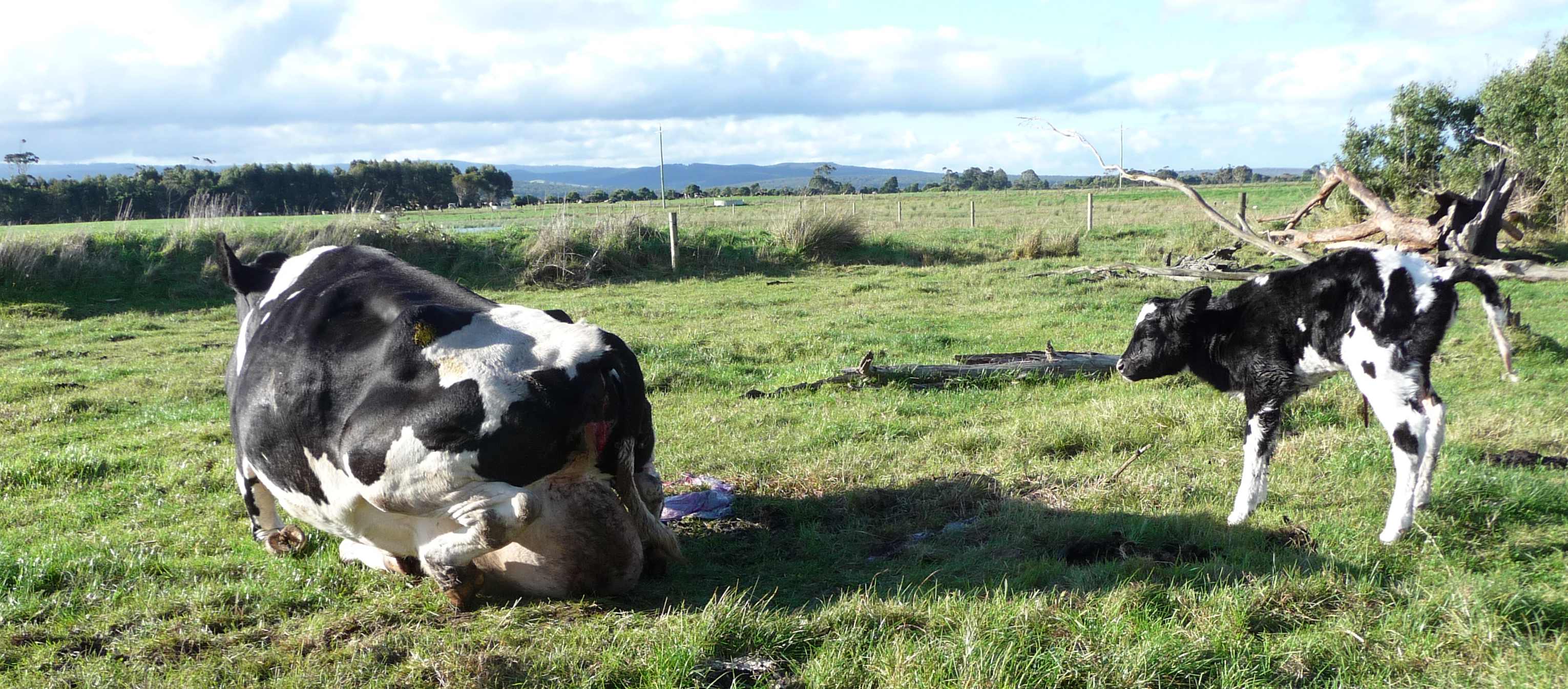
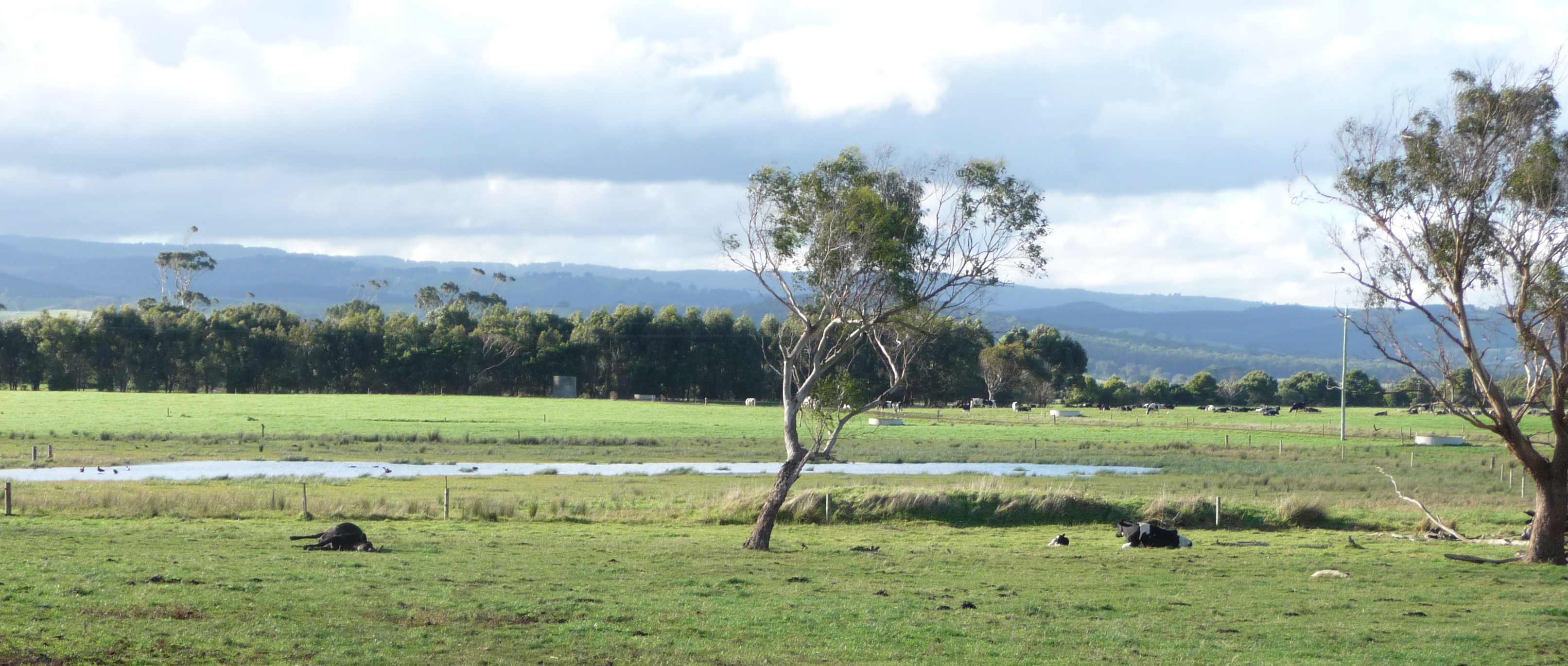
A cow lying on her side with her legs stuck straight out like this is not a good sign. “She’ll just be in the throes of calving,” I told myself as Zoe, baby and I bounced across the calving paddock.

It was not to be – the little cow was trying to push out a massive bull calf who had become stuck just after his shoulders. His tongue was pink, his eyes shone but, sadly, he was gone. Our attention turned immediately to the cow for if left too long, she would almost certainly suffer paralysis.

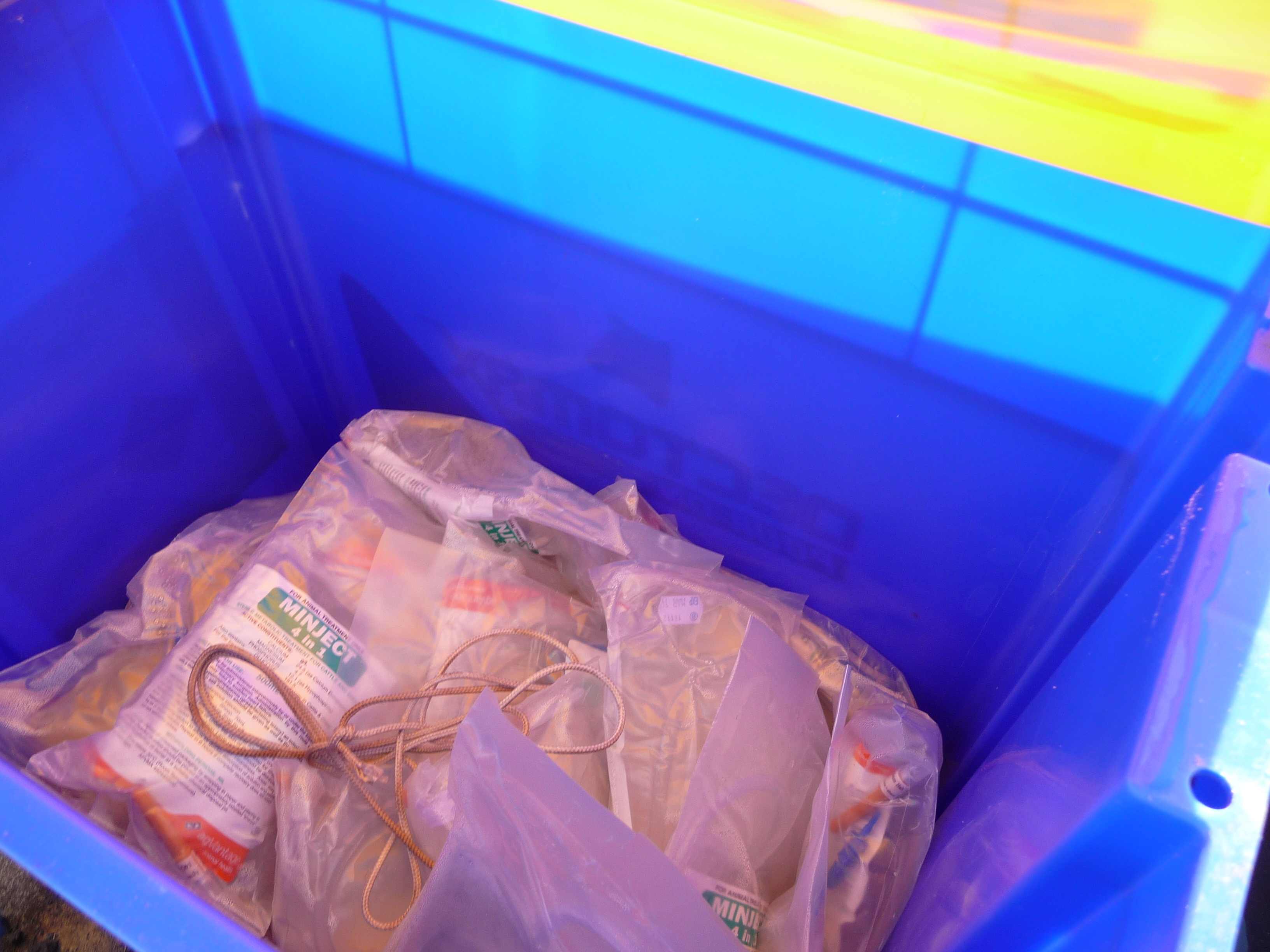
We keep a strong rope in the calving paddock’s medicine chest to help with calvings when necessary. Although we select bulls with smooth shoulders and of medium stature in an attempt to avoid trouble, calves are sometimes just too big, turned the wrong way or the cow is simply too weary to manage it on her own.

Dairy cow calving medicine chest

Emergency supplies are kept in a chest in the calving paddock

I looped the ends of the cord around the calf’s feet, stepped into the circle and eased back with the cow’s contractions. Nothing. I tried again but the calf could not be budged. Heavy reinforcements in the shape of husband Wayne were called in and, thankfully, the calf was out.

By then, I’d discovered there was another cow in trouble. 196, who is 14 years old, had earlier given birth to a beautiful heifer calf and when I went to check on her, this is all she could manage.

Milk fever

My legs aren’t working!

Dear old 196 was suffering from milk fever. This is really a metabolic disorder suffered by cows who just can’t get enough calcium into their blood streams after calving. Calcium is vital in the control of muscles, which is why she didn’t have the energy to stand up. Because the heart is a giant muscle, milk fever can also cause heart failure and immediate treatment is vital.

We minimise the risk of milk fever by feeding the cows very differently in the three weeks before calving. Instead of grass, they get hay that’s low in potassium and grain, while we add anionic salts to their water. This regimen encourages the cows to release calcium into their bloodstream so it’s available in the hours of peak demand after calving. When milk fever does strike, we give the cows a drip that includes calcium and sugar. Most cows are as right as rain again in no time, as was 196!

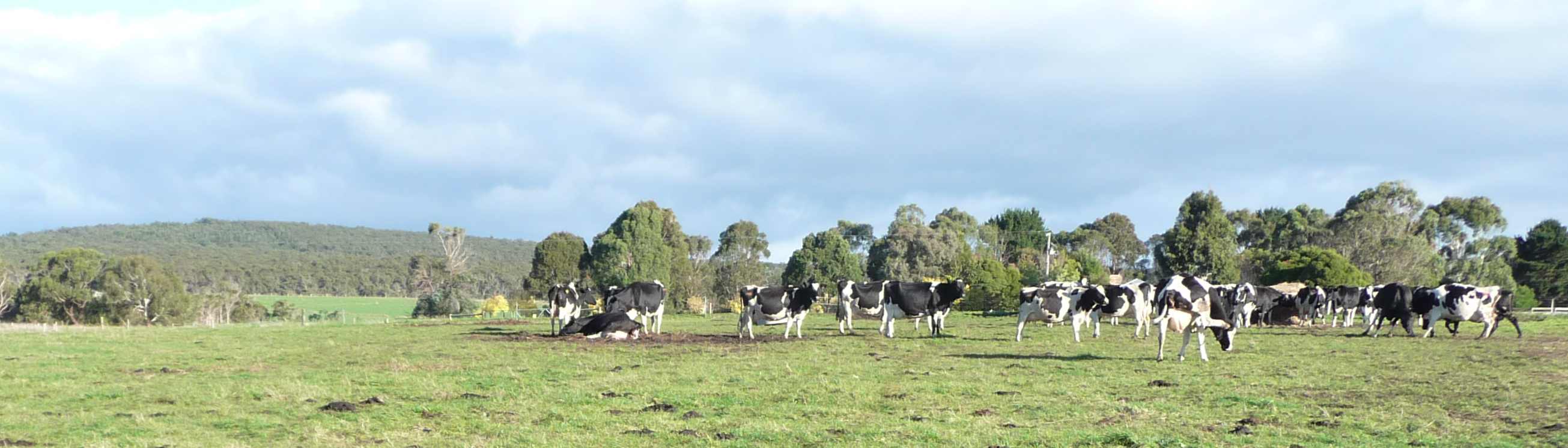
Both cows taken care of, we turned around to go and goodness gracious, it was all happening, including yet another calving underway!

Calving Paddock

It’s all happening in the calving paddock!

A concrete step forward ahead of winter

The entrance and exit to a dairy yard is often a miserable place. If you have an average herd of 250 cows, it gets trodden on by 1000 hoofs each day and bearing in mind that each cows weighs about 550 to 600kgs, that’s an awful lot of work. It also gets heavily “fertilised”!

Here’s how ours looked in summer.

Dairy yard entrance

Already boggy in January

I wasn’t looking forward to seeing it in winter! The rain has set in early and the feeling I have in my waters is that it’s going to be another nasty wet winter this year, so fixing up the bog-hole quickly became a high priority. Mud like this is a recipe for disaster in the form of lameness and mastitis – two things every dairy farmer tries to avoid at all costs.

Every season, we put loads of gravel in there and, every season, it seems to disappear before our eyes. I decided we had two problems: first, a concrete lip designed to force the cows to lift their hoofs, depositing the gravel back outside the yard had the twin effect of forcing each cow to step in precisely the same spot. Second, the legacy of loads and loads of gravel is that you end up building a mountain that, in our case, drained right back to the bog hole with nowhere for the water to escape.

So, we’ve taken a deep breath, got the excavator in to remove the mountain and the concreting crew in to provide a firm footing at the end of the yard.

New concrete at the end of the yard

Bog hole be gone!


Several seasoned characters have since wagged their heads, saying “You’ll only move the problem, you know…” but I don’t think it will be as bad. There’s now no need for the cows to so precisely follow in each others’ footsteps and the watery muck drains away from the track instead of into it. (Duh!) Wish us luck!

The love drug

Cows and women both fall under the spell of an amazing love drug every time they produce milk: oxytocin. As a breastfeeding mother, I know the dreamy feeling that it brings first-hand and the cows might just enjoy the same sensation in the dairy.

Oxytocin triggers the “let down” reflex amongst other things (sexual arousal included!) but its action is pretty much blocked by stress hormone, adrenaline.

This is really obvious in the dairy. We make sure there aren’t too many people in the dairy, avoid shouting or having barking dogs nearby and even keep the radio on the same station. Upset the routine at all and the cows start to get jumpy. And that means lots of cow poo and golden showers plus a very slow milking coupled with less milk in the vat.

So, if you visit your local dairy farmer, try not to get too excited in the shed. Walk slowly and gently and, if you must make noise, make it a lullaby.

Confidence to grow: could foreign ownership be a godsend?

Farmers are a little enigmatic.

On one hand, we must be the most optimistic people on earth: we don’t give up easily because a great season could be just around the corner. On the other hand, we’re not typically the type that goes out and buy lots of stuff in the good times: we know another bad season could be just around the corner.

One thing of which you can be certain is that we know how to pull our horns in and refuse to open the cheque book when times look a little shaky. This seems to be just one of those times. The bank tells me that business is “quiet”, dozens of farms are for sale but not selling and one rural financial counsellor noted that she’s seeing more and more depressed farmers.

The market for dairy farms is now so quiet that I can’t tell you how much our own farm is really worth because there’s simply no benchmark. This in itself leads to a lack of confidence and, so, a vicious cycle ensues.

It was with all this in mind that I read Jonathan Dyer’s (@dyerjonathan on Twitter) blog post on foreign ownership of Australian farmland this morning. Referring to the purchase of farmland near his own property by a Qatari corporation, Jonathan remarks:

“Perhaps because we don’t know just how amazing our natural wealth is we aren’t appreciative of it and are happy for it to be sold off. We don’t value it and look after it like we should. If that is the case, if we don’t value what we have and aren’t willing to develop it, then maybe it’s good that others who do value and need quality food production are getting a chance here in Australia.”

I couldn’t agree more. What I am hoping though, is that the interest of foreigners in our natural wealth will encourage Australians to reconsider the way we view our amazing land. If we are to remain one of the world’s leading food bowls, we must have the confidence to grow.

Twin calves confuse cows as well as the cocky

This is what I found when I got to the calving paddock:

Who's who?

Too many calves, not enough cows.

 
Yep, two calves having a drink but what about that one over there sitting down? Twice the size of the other two but clearly still a newborn…

I watched the cows and calves for a few minutes while shifting the fence and during that time, the big one took a fancy to me as the mother cow (yes, I know what you’re thinking!).

Are you my Mother?

Are you my Mother?

Having decided I wasn’t much chop as a mother cow, this suckie decided to try his luck with another cow. A serious tussle ensued between the two mother cows over the same calf and eventually, this girl ended up with two heifer (female) calves about the same size and the other cow claimed the big bull calf. Phew!

No rest for the mother of twins

A perfect multi-tasking mother!

I say “Phew!” because the female twin of a bull calf is likely to be an infertile “freemartin” so it was extra important that the pair was two females.

And did you say “eew” when you saw the first photo? Apologies if you were eating! If not and you have a strong stomach, consider this article on eating your own placenta.

Welcome to the Big Outdoors, suckies!

Yesterday, these seven to 10-day-old calves rediscovered the joy of the Great Outdoors. They’ve been in our little calf shed since birth, warm and safe from foxes. Most importantly of all, we’ve been making sure they’ve had enough colostrum – the special milk produced by cows in the first days after calving – to set them up for long, healthy lives.

Climate change: the gazillion-dollar question

Nick Minchin doesn’t stand a chance of changing my mind – I accept the evidence that climate change is real, along with (apparently) 97% of scientists.

In our part of the world, the long term trend is “dry, dry and drier” and the CSIRO’s State of the Climate Report confirms what many farmers here are dealing with right now.

What local dairy farmers are doing to cope with climate variability
We’ve been holding meetings and farm days to discuss how we can adapt. Here are some of the things locals are doing to help their farms cope with increased climate variability:

  • Changing the time of year calves are born
    On our farm, we are moving the start of calving from winter to autumn – a shift of almost two months. This allows us to take advantage of extra grass during milder winters while reducing our exposure to longer, hotter, drier summers.
  • Planting trees
    Trees aren’t just good for wildlife – they offer our cows shelter from uncomfortable weather and help to protect pastures from searing summer winds.
  • Trialling new pasture types
    Rye grass is the mainstay of dairy farming pastures around here but it has shallow roots that are quite vulnerable to heat and pests (which are expected to become more problematic). We’ve been sowing cocksfoot and fescue in some of our less productive pastures. Both have deep root systems that can tap into moisture lower in the soil. Other farmers are trialling chicory, plantain and other herbs too.
  • Shade and sprinklers at the dairy
    Lots of us have installed sprinklers and shade sails over the dairy yards and fans in the shed to help keep the cows cool while they wait to be milked, minimising the risk of heat stress.
  • Increasing energy efficiency
    Farmers have been flocking to seminars about green cleaning and water heating technology. For us, it’s meant a thorough audit of our dairy’s refrigeration, milking machines and hot water system.

In other words, local farmers are reading the tea leaves and, for us, the gazillion-dollar question is not whether climate change is real (or whether it’s caused by people) but what we should do about it. Consider us your canaries.

What on earth are these cows doing?

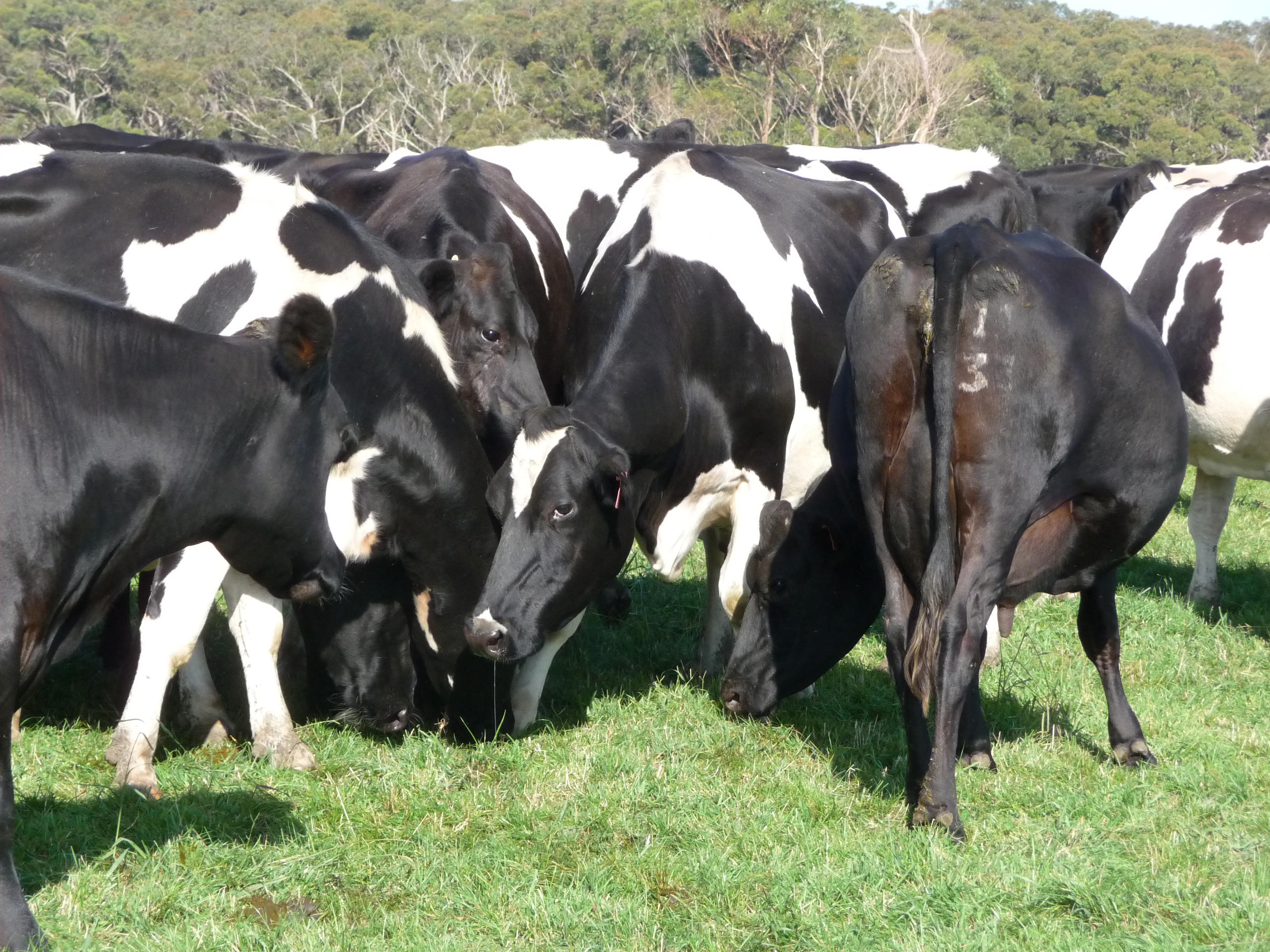
“Rounding up the cows” took on a whole new meaning tonight. In the middle of the herd was a huddle of cows encircling a rather ordinary-looking yet obviously extraordinary patch of grass.

Mystery In Grass

Even after I chased them away, the cows were drawn to this mysterious patch of grass

What on earth could they sense? Blood, perhaps? Not that I’m suggesting anything but the only time I’ve seen cows go “crazy” in this way was after they passed yards in the old days after dehorning was done. It was a messy, deeply unsettling affair and the cows could smell it from a mile away.

We all hated the job but Dad explained it was kinder than having the cows down the pecking order gored with the sharp horns of their merciless superiors. Thankfully, these days we are able to cauterise the horn buds and spare the cows the trauma.