2012 is the Australian Year of the Farmer. I thought I’d celebrate by posting this amazing and informative little animoto. Enjoy!
Should farmers be embarrassed to talk about money?
A very thought-provoking piece by Terry Etherton deserves some discussion in dairy circles, I think.
Is it considered a little shabby for dairy farmers to be concerned with profit? Certainly, animal activists are quick to label farmers as greedy at the expense of their animals and the environment. Their web sites and advertisements paint “profit” and “money” as very dirty words indeed.
In contrast, Terry Etherton makes the point very well that:
“My perspective is that sustainable should first be viewed through the ‘lens’ of economic sustainability. Farms are businesses. If they don’t make money they close…pretty simple.”
“However, sustainable gets used in a myriad of confusing ways. For example, some in society talk about sustainable in the context of this being the ‘best’ food production practice to embrace. I am sure many readers have seen the marketing message: organic food production is more sustainable than other agricultural production practices and, therefore, better.”
Mr Etherton is right and Australian dairy farms are even more precariously balanced than their US counterparts, receiving no taxpayer-funded subsidies at all. We do have to be keenly focussed on the almighty dollar to survive. On the other hand, that doesn’t mean we cut corners when it comes to animal wellbeing.
A dairy farmer with a dislike of animals would soon quit. We work with them all day, 365 days of the year. They’d also quite likely get “sacked by the bank” because being mean is not profitable. Our livestock, our land and our people are our greatest assets – generations of farmers and cows know that.
So, how do we respond when we are labelled as “greedy farmers who exploit animals”? The US experience is that it’s best to say little about the link between profitability and animal welfare, preferring instead to focus on the values that we as farmers hold.
I agree because it’s true that values are much more powerful than profit. When the chips are down during drought, fire or pestilence (so to speak), it is the farm family that goes without, not the cows.
Pregnancy a man’s job today
Wayne, Clarkie and vet Pete are down there at the dairy right now with half of our cows for the second day in a row. I suspect none of them are having fun.
It’s preg test and vaccination time. This is not a job for someone carrying a baby on her stomach because it is intense and there’s the risk of being hit by a kicking cow but it’s a must.
The “7 in 1” vaccinations protect the cows from a multitude of diseases. According to the supplier:
Blackleg, tetanus, malignant oedema, pulpy kidney and black disease are all clostridial diseases and are amongst the most common causes of death of cattle around Australia.
In all cases unvaccinated stock contracting these five diseases have very little chance of recovery. In fact often the first clinical signs seen by producers are dead cattle.
It also protects anyone working with our animals from a very nasty cow-borne disease called leptospirosis that can leave people ill for months – even hospitalised.
The preg tests let us know when to send each cow on her annual two-month holiday before calving. This rest helps her through late pregnancy and sets her up for a whole new season in great health.
Our green investment already begins to grow
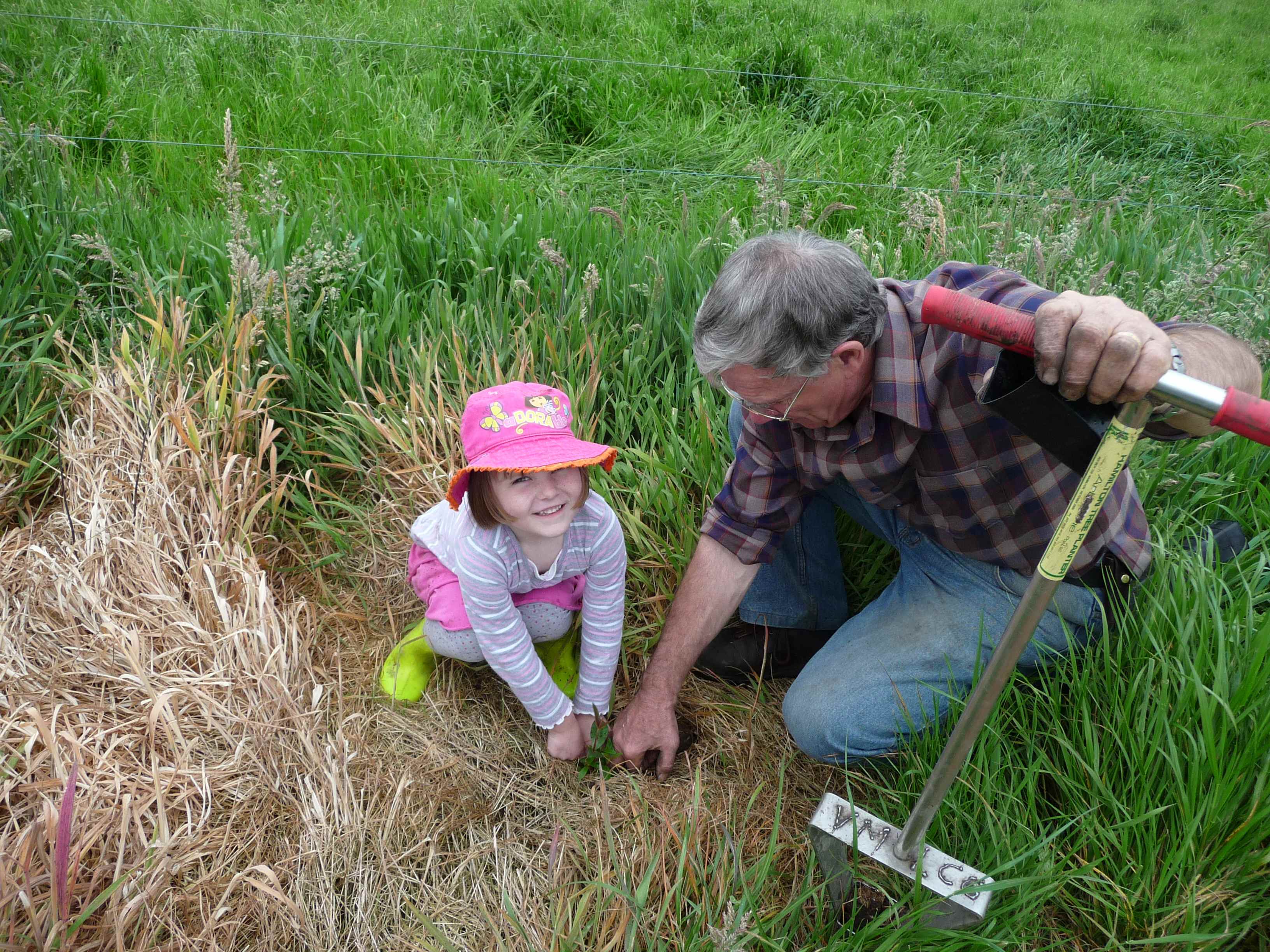
Bruce and Zoe planting in late October

The next generation is looking good!
Just eight weeks ago, Bruce, Chris and David of the Victorian Mobile Landcare Group helped us plant 1200 trees. Yesterday, Zoe and I were staggered and delighted to see how much they’d grown.
Planting trees is always a bit of a gamble and the wet year had delayed their planting, which added to the risk they’d perish. Of course, it’s only the start of summer and they’re not out of the woods yet (dreadful pun, sorry) but what a great start they’ve had.
Thanks again, Bruce, Chris and David!
PS: I had to edit this – I meant 1200 trees, not 800! We were given 400 more at the last minute!
Where city collides with country
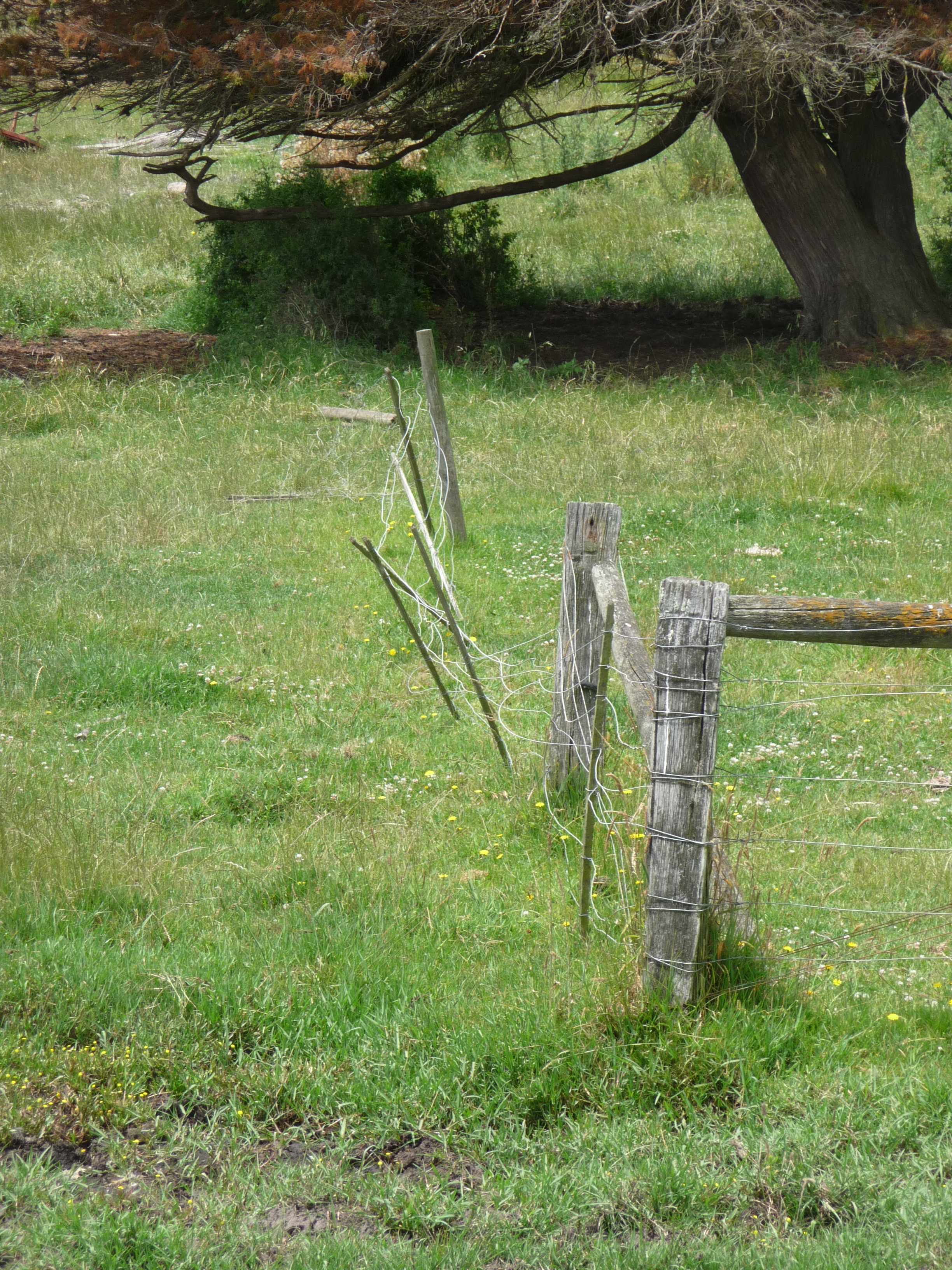
"But I don't have any stock..."
I don’t know when this fence was built but it was there in the 1970s when I was a child and, as you can see, it does little more than serve as a marker these days.
The significance of the fence is that it marks our boundary with an abandoned house site held by an absentee owner. He doesn’t maintain his land and was shocked to receive a call from me asking him to share the cost of rebuilding the fence. “Whose stock trampled it? I don’t have any stock,” was his response. And that was before I gave him the estimate.
I had to very gently explain that fences slowly deteriorate over decades and eventually are beyond repair. The reality is that we have been maintaining his internal fences for some years and using those as a boundary fence but they too are now past it.
It’s the responsibility of both neighbours to build and maintain boundary fences – whether you have stock or not is completely irrelevant. After all, if he decided to sell, I reckon the fencing would suddenly become an asset (or not).
This incident touches on one of the reasons I decided to create the Milk Maid Marian blog. Unless farmers and other Australians “talk”, what hope is there of mutual respect?
The cream of Christmas at Montrose Dairy
This post at Montrose Dairy is just gorgeous – the people, the food, the tradition and the sentiment. Check it out at Montrose Dairy.
Christmas in a country hall
Last night, the meaning of Christmas was there in all its glory. The hills bathed in the golden light of early evening, our little family drove through the valley to sing carols at the local hall.
Fifty or so members of our extended neighbourhood had brought plates of home-made delicacies to share and some enthusiastic young women had decorated the tiny wooden hall with tinsel, fairy lights and balloons. One of the district’s matriarchs led the singing, complete with readings and a nativity scene reconstructed by the children.
I haven’t been a member of a congregation since I left school but this felt like a homecoming, not to my faith but to my community.
As the adults renewed friendships over cupcakes, Zoe ran around the oval with a dozen other kids ranging in age from three to 13 and when the treats were handed out at 9.30, she was running purely on adrenaline. Walking back through the chilly air to the car, we wondered at the stars, admiring Venus and Mars among the glittering planets.
How lucky are we?
I’m a rotten driver and it all started here
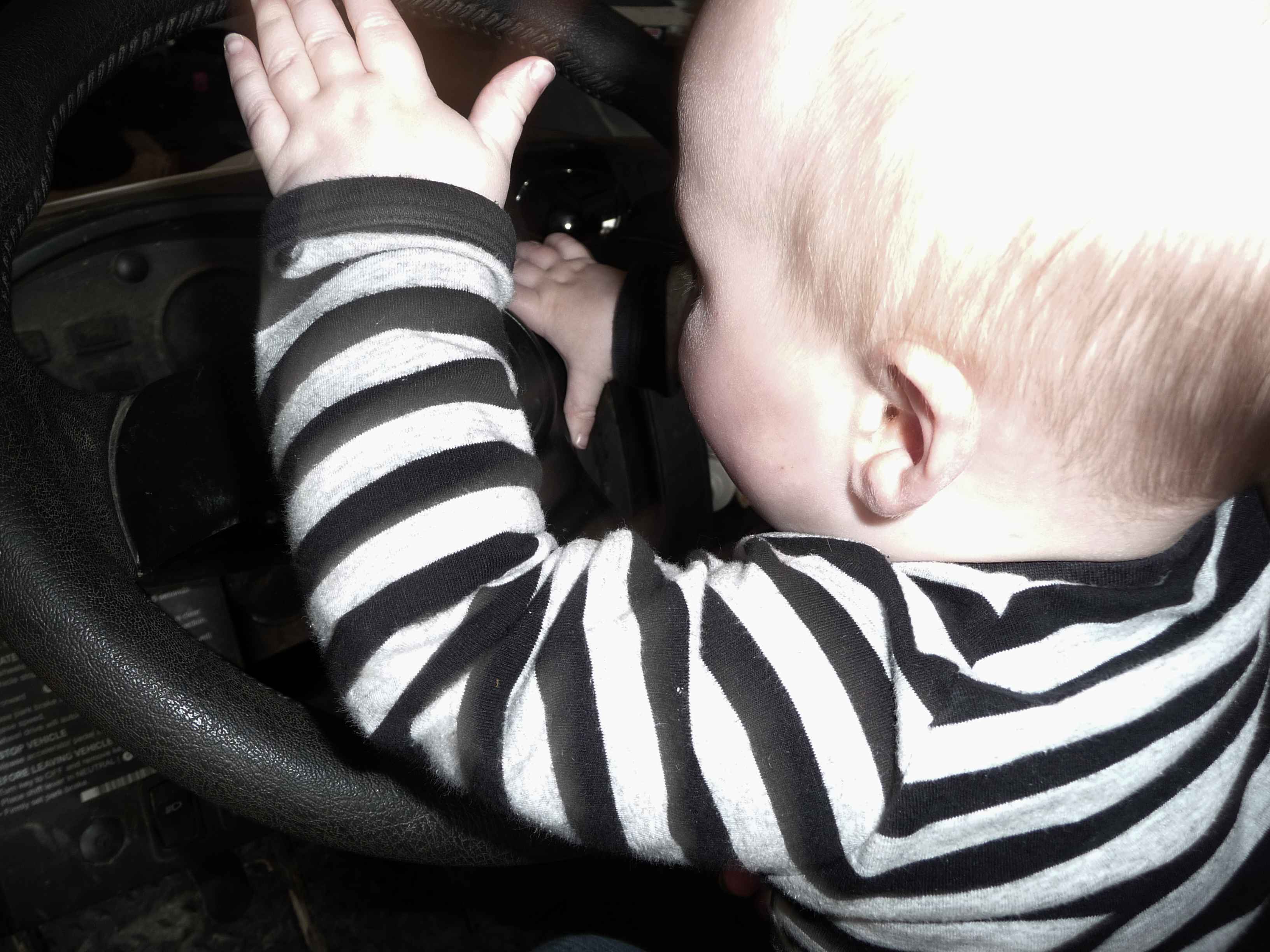
What's the holdup? Where did that idiot learn how to drive?
My late father used to tell anyone who would listen that “Marian’s a terrible driver, you know. Once, she would have driven us both into the river if I hadn’t snatched the wheel just in time.”. It was okay if I was there to defend my reputation.
You see, I was two years old at the time, propped up on phone books with a peg on the accelerator, while dad threw hay off the back of the ute. It was my job to steer the ute in serpentines and, according to legend, I had let him down with almost tragic consequences.
Although she is the ripe old age of five, Zoe does not drive and I’m not sure Alex has the right temperament just yet.
The hay is down and I’m hoping for a wet Christmas
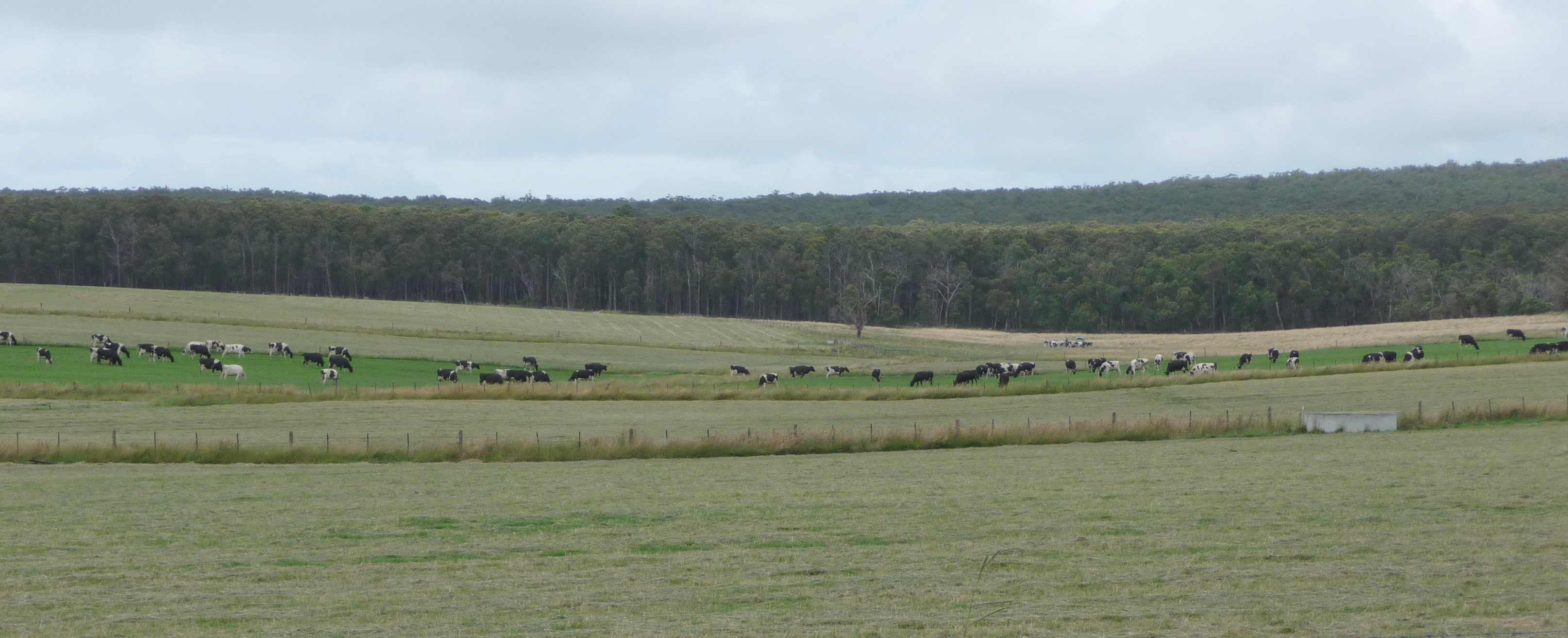
No rain dancing until Christmas Eve, please
Christmas in this part of the world is always a surprise – you never know whether it will be stinking hot or if you’ll be running inside to the warmth of the pudding. This year, I hope it pours!
We have a huge slab of the farm’s pasture cut for hay and it’s going to be baled in the next couple of days. If we get some nice follow-up rains, our farm will be celebrating the New Year with spring-like pastures. If it disintegrates into a series of scorchers, we will have short, dessicated pastures.
No matter what happens, I have made the right decision to cut the stalk off and return quality to the pastures. Too much stalk for dairy cows is like too many rice cakes for an athlete: there just isn’t enough goodness in the diet. On the other hand, any farmer will tell you it’s foolish to be smug on the promise of a weather forecaster with your hay still in windrows.
A prickly character on farm
Dairy farms are great places to teach kids a love of – and respect for – creatures of every kind.
We are really privileged to have acres of beautiful bush on our farm and we come across all sorts of creatures – even the threatened goanna. One of the cutest but least cuddly is the echidna and the forest has thousands of these little ant-eating waddlers.
An environmentalist once told me that she builds connections with farmers via birds because they are the most visible fauna on a farm but it’s the far less glamorous and more timid creatures that make an ecosystem. This was brought home to me yesterday when one of the shire’s environmental staff visited to assess the farm’s potential for green projects. One of the criteria was whether the farm is home to threatened flora or fauna. Apart from the goannas, I really don’t know, and that’s a shame.
I hope my children will indeed learn so much more than I’ll ever know about our wonderful world.
 The Milk Maid Marian