Video shows what happens if you tangle with ag on the road

When you see a tractor on a straight stretch of road, you get ready to overtake the slow coach while you can, right? Well, this driver was preparing to do just that as he approached a tractor towing a silage trailer and mustn’t have noticed the right turning indicator was on until it was too late.

Apparently changing his mind and trying to go left around the outside instead, his ute ended up going under the cart and out the other side. Looking at the damage on this video, it’s amazing he survived.

Our silage and sowing contractor, Wayne Bowden, asked me to upload this video and plead with drivers to watch out for slow-moving ag equipment as the silage season begins. This is the second big road crash his team has experienced and he tells me they have near misses every year. One car even clipped the front tyre of a tractor and kept on going.

The same applies for cows on the road, so watch this space for a story about cows who are bad drivers!

Human babies and calves are worlds apart

Face of a newborn calf

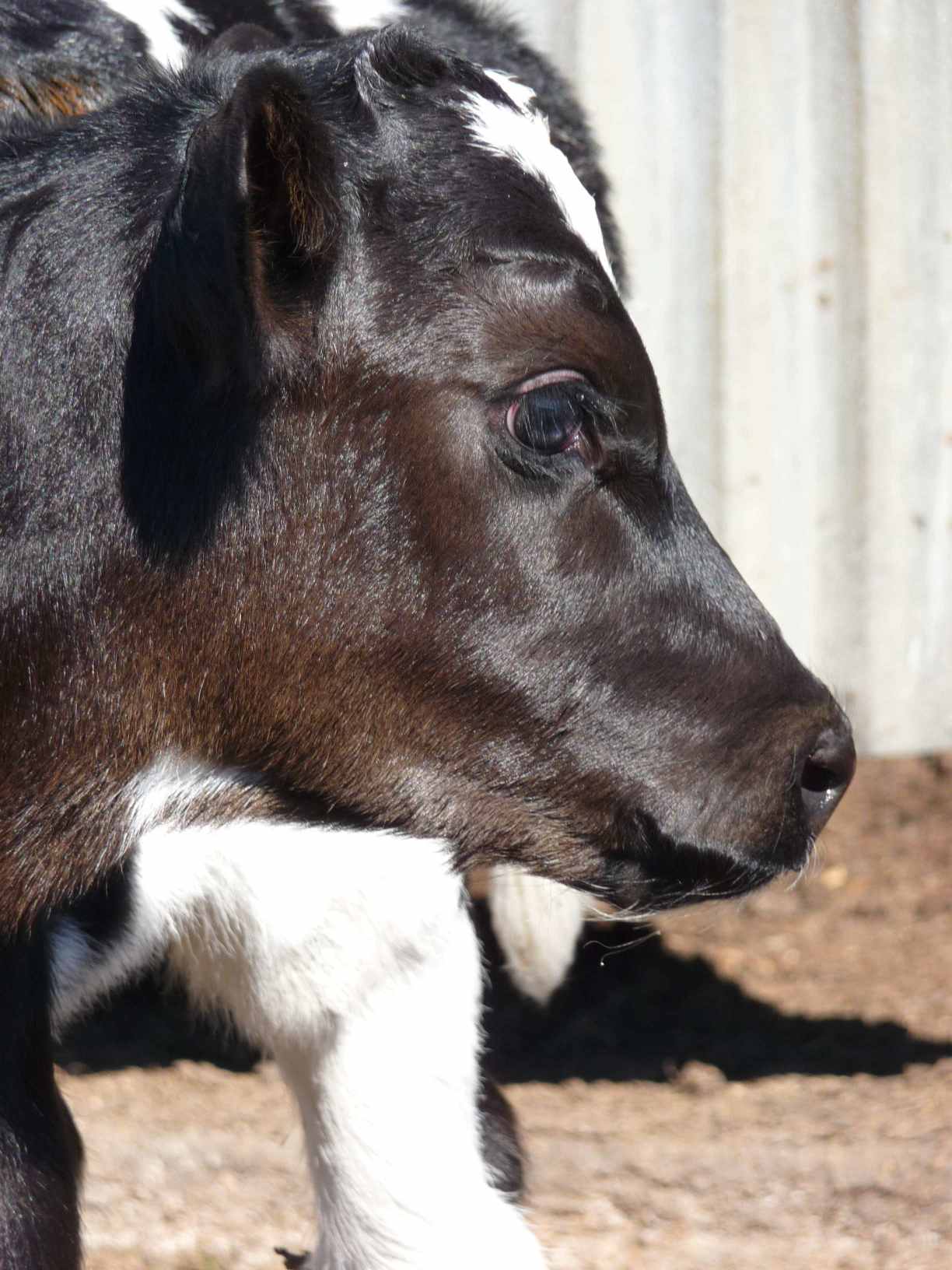
This calf is only a day old

At just one day old, this bright little calf can outrun any of us – Zoe can vouch for that! Given that my baby Alex will probably take his first staggering steps at about one year old, there’s no comparison between human and bovine babies in the athletic stakes.

There are some similarities though. Both need lots of colostrum in the early days and both have developing immune systems that mean extra TLC is essential early on. For this reason, we house the newborn calves in a warm, dry shed on beds of sawdust for their first week or so. We can monitor their intake of colostrum and make sure they’re sturdy enough for outdoor life with their friends.

Breech birth but cow hates hospital

Cow facing a breech birth

Cow facing a breech birth

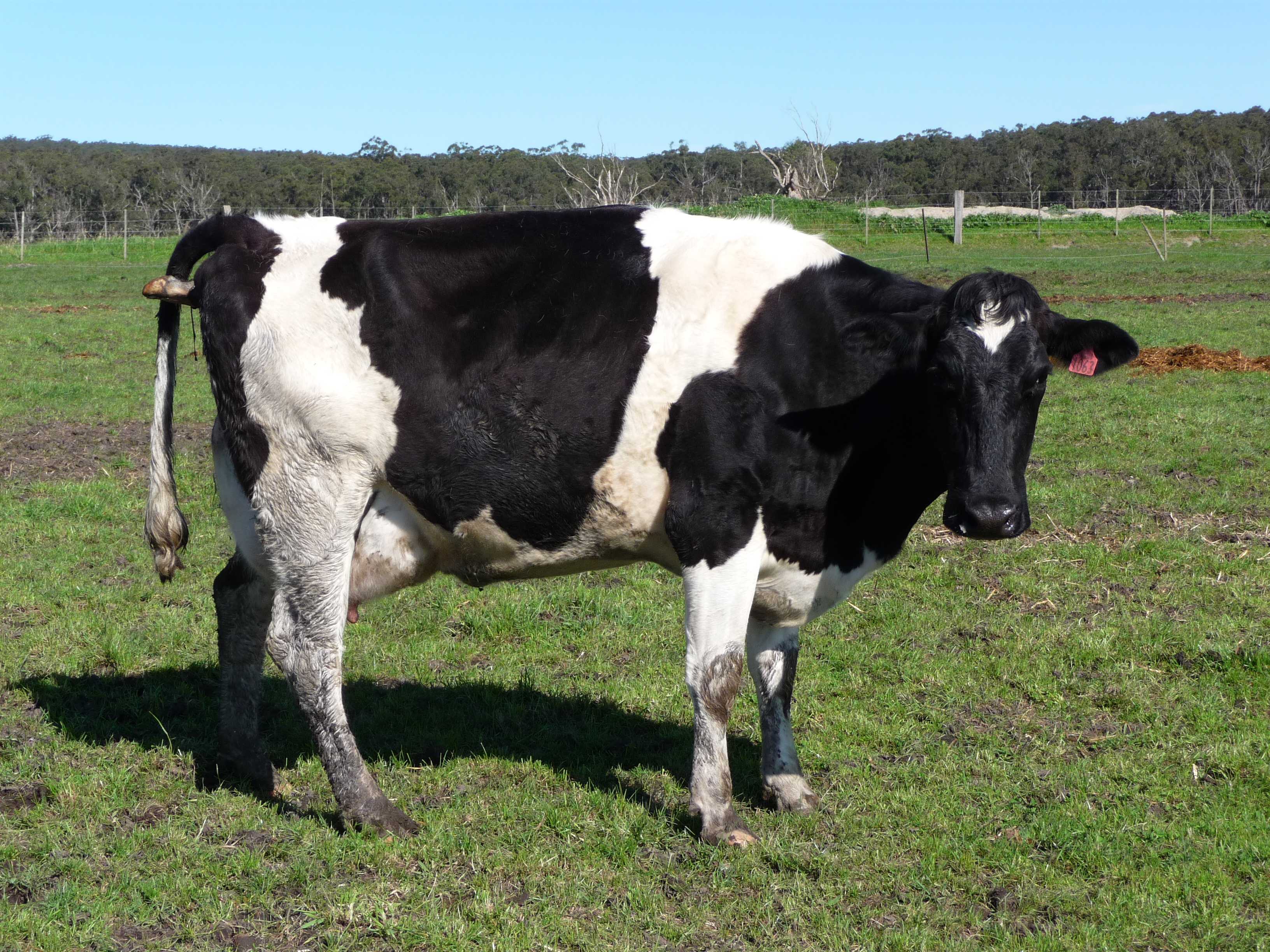
This cow led us on a merry dance. Zoe and I had spotted a single, dry hoof on its way out and up the wrong way – a sure sign of big calving trouble. Two front hoofs should appear to “dive” out of the cow, closely followed by a nose and it should all happen too quickly for the membranes to dry in the sun.

Despite her predicament (breech births are difficult and life threatening) and little Zoe’s sage advice, 1063 raced around the paddock like the Artful Dodger. She even paused defiantly for me to take her picture before we set off on another game of cat and mouse. Eventually, we got her into the yards and, 25 minutes later with a lot of help from Clarkie, 1063 gave birth to a stillborn bull calf. We were just glad she was okay.

As in humans, breech presentations are unpredictable and unpreventable. Most calving problems at our farm are caused by calves that are just too big. To minimise the likelihood of difficult calvings, we choose bulls with narrow shoulders and medium rather than large statures. We also mate our maiden heifers (cows who have never calved before) with Jersey bulls. Because this breed is significantly smaller than the Friesian cows we milk, the calves pose little risk for heifers.

Bank manager comes out on the farm

Our bank manager, Rohan, came out to visit us yesterday and since he’s relatively new in his post, he hadn’t toured the farm before. Seeing as it was sunny, Zoe, Alex and I took the opportunity to show him around.

I’m glad we did. Rohan has a fresh appreciation of the opportunities a stock underpass presents for the farm. About 40 per cent of the property sits across the road from the dairy. This means milking cows can only visit that side of the farm during the day and creates extra risk and work for all of us.

It was also a chance to show him the damage the floods had caused to tracks and demonstrate how we are protecting the pastures from long-term damage while keeping the cows happy and healthy.

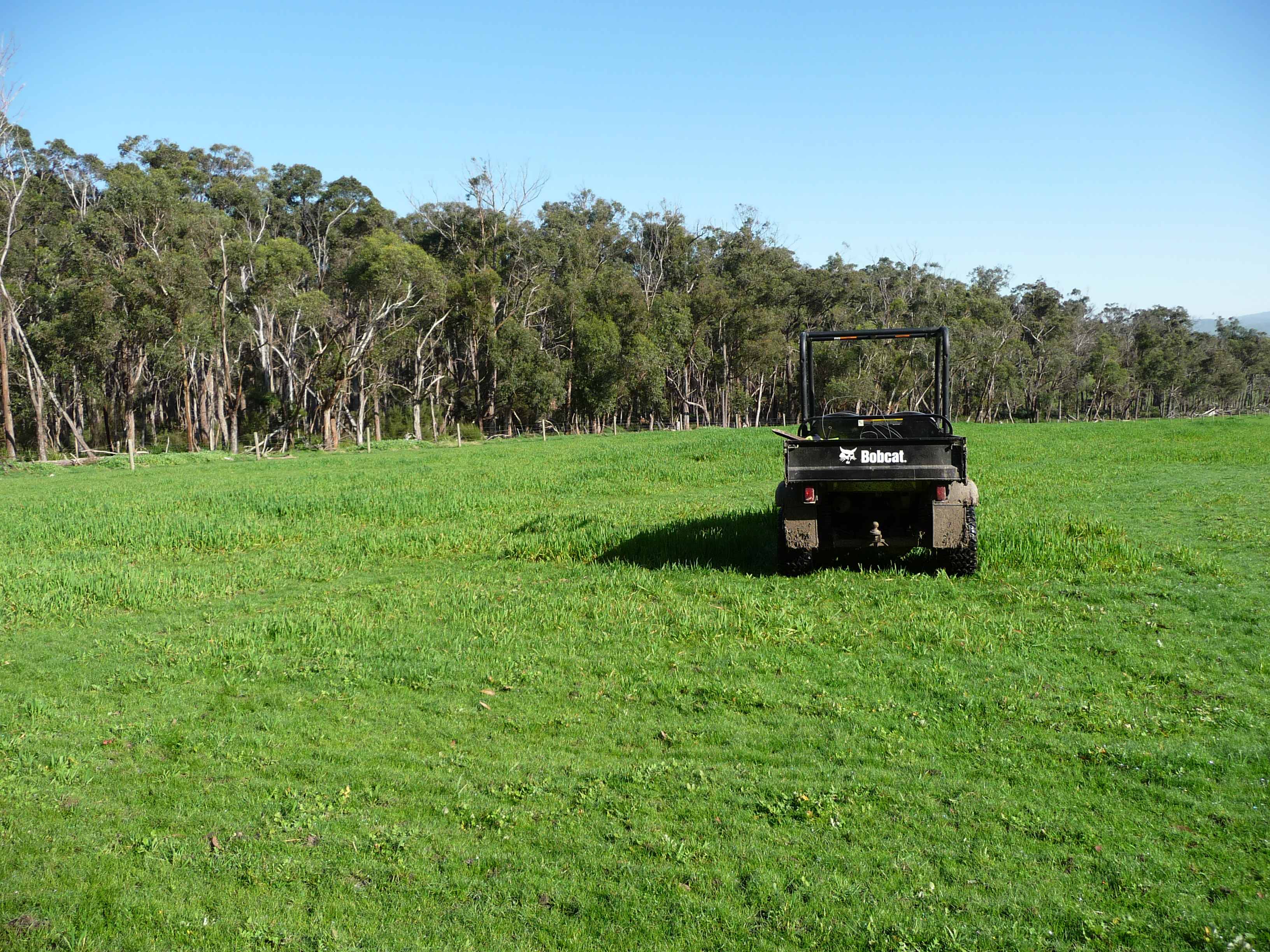
When you’re coming out of a crisis like this, it’s a good idea to keep your advisors and everyone who has a stake in the farm close, which of course includes the bank manager. We did nearly bog the Bobcat in a remote paddock with Rohan on board, though. Not a good idea to have your bank manager trudge 800m through mud in leather boots.

Photographic proof that kangaroos compete with livestock

Oats eaten by kangaroos

Oats eaten by kangaroos

Oats guarded by dogs unaffected by kangaroos

Oats guarded by dogs unaffected by kangaroos


Just in case you were ever in doubt that kangaroos and wallabies compete with livestock, a quick look at one of my paddocks of forage oats is all that’s needed.

These pics are taken at opposite ends of the same paddock. At one end, the paddock shares two fence lines with forest, while at the other, it shares a fence with the maremmas. Who can guess which is which?

This crop was sown before the maremmas were allowed to roam the entire property, so I’m hoping there will be no repeat next year. The two dogs, Charlie and Lola, have been gradually increasing their range since we released them from the calf paddock four months ago but still stay very close to their calves. The next challenge is to encourage them to stray a little more!

By the way, just in case you think I’m stating the obvious, read this report on kangaroos in the SMH.
 

Toad rush is more fallout from the wet

Toad rush

Toad rush has overwhelmed this paddock, lending it a yellow hue

Some of our paddocks have been so saturated for so long that the newly sown perennial pastures have been overwhelmed by toad rush.

Toad Rush is a weed described by the RIRDC in this cheerful way:

“Toad rush tends to thrive where soils are waterlogged and poorly drained. Although toad rush is a small, shallow rooted plant, it germinates in extremely high numbers and the seed is viable in the soil for over 10 years. Toad rush can use over 30% of the available nitrogen in the topsoil and can substantially reduce crop yields.”

Not happy. I’ll have to wait until the paddocks firm up enough to spray it out and then look at these options:

  1. Resow with more perennial seed in spring and hope the summer is mild enough for it to establish itself (expensive and too risky)
  2. Sow a brassica crop like turnips or rape (sick of ravenous caterpillars)
  3. Sow a summer crop like sorghum or millet (poor quality feed/not reliable)
  4. Sow an Italian ryegrass (Lolium multiflorum)

Looks like the Italians are the way to go. A spring sowing should yield some silage and because it’s after the frosts are over, the grass should stay lush if there’s summer rain rather than bolting to head.

Dangerous dietary advice on air gets me riled up

Listening to local radio on my way back from kindergarten this morning I was shocked to hear a naturopath talk about milk with such prejudice I felt compelled to ring in (or run the risk of crashing the car in a fit). She declared milk “completely compromised” by modern processing and even suggested that the immune systems of breastfed infants could be forever affected by their mothers’ dairy intakes. No mention of the need for calcium!

After taking her to task, the naturopath did say that hundreds of thousands drink milk every day with no ill effects. Dairy has too important a role in our nutrition to be so readily dismissed.

According to Dairy Australia:

New research shows people with self-perceived lactose intolerance may be at risk of poor bone health and higher rates of diabetes and hypertension.

The study published in the latest American Journal Clinical Nutrition examined the effects of self-perceived lactose intolerance – whether they were self-diagnosed or physician-diagnosed – on calcium intake and risk of specific health problems related to reduced calcium intakes[i].

The US researchers surveyed 3452 adults aged 19-70 and found participants who identified themselves as lactose intolerant had significantly lower calcium intakes than those who did not, particularly from lower intakes of dairy foods such as milk, cheese and yogurt.

Participants with self-perceived lactose intolerance were also significantly more likely to have been diagnosed with hypertension and diabetes.

Dairy Australia dietitian Glenys Zucco said people sometimes avoid milk and other dairy products due to concerns about lactose intolerance, but eliminating these nutrient-rich foods could impact diet and health.

“Dairy is a readily accessible source of calcium, and nine other essential nutrients such as magnesium, potassium and vitamin A. Inadequate consumption of these nutrients may increase the risk for chronic health problems,” she said.


But people who are concerned about lactose intolerance may still be able to enjoy dairy foods.


In 2010 a panel of experts was assembled by the National Institutes of Health (NIH) to review the available scientific evidence about lactose intolerance and health after experts expressed concern people were self-diagnosing lactose intolerance and eliminating nutrient-rich foods such as dairy from their diet.


A consensus paper released by the group advised that in most cases eliminating dairy foods may be unnecessary.[ii]


‘Even in persons with diagnosed lactose intolerance, small amounts of milk, yogurt, hard cheeses, and reduced-lactose foods may be effective approaches to managing the condition,’ the paper reported.

Ms Zucco said hard cheeses (like cheddar and parmesan) contained virtually no lactose, making them generally well tolerated.

“Yogurt is also usually well digested due to the natural bacterial cultures it contains – which help to digest lactose,” she said.

“Milk can also be tolerated well – with a little know how.  Drinking milk in small amounts throughout the day, as well as enjoying it with meals, can reduce intolerance symptoms.

“And if lactose tolerance is particularly low, there are a number of lactose-free cow’s milks available in supermarkets.”


[i] Nicklas T, et al. 2011, ‘Self-perceived lactose intolerance results in lower intakes of calcium and dairy foods and is associated with hypertension and diabetes in adults,’ Am J Clin Nutr doi: 10.3945/​ajcn.110.009860

[ii] NATIONAL INSTITUTES OF HEALTH CONSENSUS DEVELOPMENT CONFERENCE STATEMENT NIH Consensus Development Conference: Lactose Intolerance and Health February 22–24, 2010
Why farmers are so conservative


Oats too wet to graze

Feed everywhere and barely a blade to eat

What lovely forage oats at the perfect stage to graze! But we can’t. The paddock is too mushy.

Since I took over management of the family farm in 2008, we’ve had a drought, a record price, an unprecedented milk price collapse, unheard-of grub infestation and now, a record-breaking wet season. Volatility in the extreme. Such an unpredictable environment weeds out rash risk-takers in the long term.

We’re seeing urban parallels while the world’s economies reel from one shock after another and the gold price soars as investors scurry for safety. Conservatism is suddenly universally in vogue.