What’s in your milk and why permeate is a dirty word

“We only drink milk that doesn’t have any of that permeate stuff you guys add to your milk,” a friend told my husband yesterday.

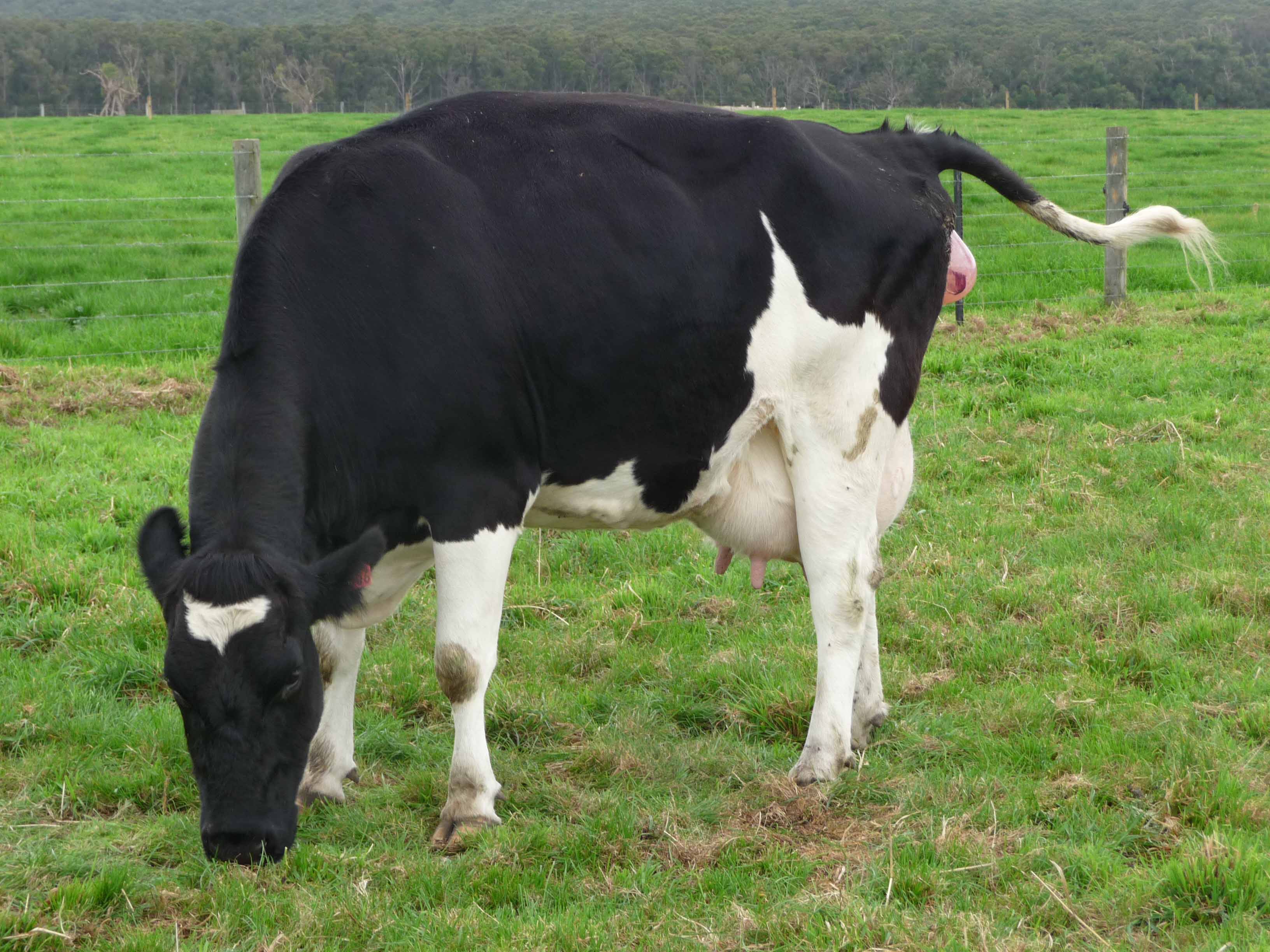
We don’t add anything to milk. At the farm, milk comes straight from the cows through a cooler into a refrigerated stainless steel vat for collection by the co-op. What happens there is more complex but no more sinister. Basically, fresh milk on Australia’s supermarket shelves has been heated (pasteurised) to make sure any bugs are killed, mixed so the cream doesn’t rise to the top (homogenised) and filtered.

Filtering the milk means you get to choose milk with your favourite protein and fat content – whether that’s skim or milk with an “extra dollop of cream”. It also helps the co-op deal with the natural variation in the protein and fat content of milk over a season. Yesterday, for example, our herd averaged 4.49 per cent butterfat and 3.39 per cent protein whereas, back in October, it got as low as 3.57 per cent butterfat and 3.28 per cent protein.

Dairies have been dealing with this variation in milk production and tastes for hundreds of years by separating cream from milk to make other foods like butter, cream and yoghurt.

So, where does “permeate” come into it? When the milk is filtered to even out fat and protein, the sugars, minerals and vitamins in milk are separated before going back into the milk. Some nerd gave them this ugly name (I think it sounds like plastic) and it’s been used and abused ever since.
Why good news in the budget for scientists is good news for dairy farmers

Much to my relief, the word is that the federal budget has not cut spending on agricultural research and development. Yes, ag R&D funding has been steadily eroded and needs to be restored but I was almost certain it would be slashed. Earlier this year, a review of the Rural Research and Development Corporation by the Productivity Commission flagged a dramatic reduction in funding for agricultural research.

Why do I care? Because we need to farm smarter all the time in order to make a living. The farm I run now bears almost no resemblance to the farm of my childhood 30 years ago. It’s the same 500 acres but we milk 50 per cent more cows and each produces around 55 per cent more milk than her ancestor did in the 1980s: a huge leap in productivity.

Although these numbers are impressive, we are far from exceptional. According to Dairy Australia, Victoria’s raw milk production peaked in 2001-02 at 7.4 billion litres – more than double the 3 billion litres produced in 1980-81. Yield per cow also increased from 3,012 litres in 1979-1980 to 5,864 litres in 2008/09.

We achieved these gains scientifically. Thanks to Target 10 and Feeding Pastures for Profit, we make much more effective use of our pastures, while programs like “Fertilizing dairy pastures” showed us how to grow more grass with the efficient use of valuable nutrients like phosphorous and nitrogen.

Today, we are learning how to cope with new challenges brought by climate change: how to keep cows cool, new more drought-resistant pastures and declining fertility.

We must also be realistic about the rise of new competitors. Developing countries including China, Mexico and the Middle East are buying record numbers of Australia’s breeding stock in an attempt to fast-track the growth of fledgling dairy industries. India is also racing to become a dairy giant.

Australian dairy farmers do not enjoy the support lavished on our northern competitors. We can compete only because we are low-cost producers.

Although declining terms of trade mean we aren’t any richer than my father was, we are still on the land – thanks to government and farmer investment in agricultural R&D.

Why bother being green?

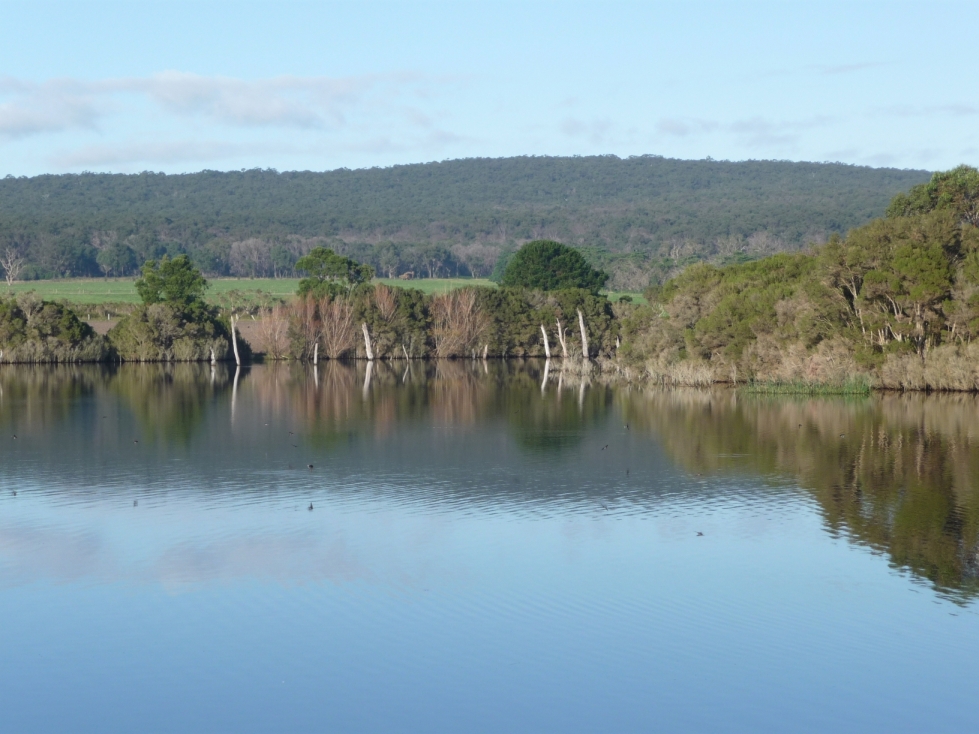
Land for Wildlife dam

Our Land for Wildlife dam

Our farm dam is a real jewel. Flanked by trees planted almost 30 years ago, it’s a beautiful 8 acre stretch of water that hosts an enormous range of bird species. The farm is only about 10km from the coast and the internationally significant Corner Inlet Ramsar site, so our dam hosts both inland and sea bird life – it’s not unusual to see cygnets gliding across the ripples behind their parents while pelicans roost above them. Dad had the foresight to register the dam under the Land for Wildlife program back in the ’80s to help protect the birds.

The dam sits at the heart of the farm, which is bounded by native state forest to the south and the Albert River to its north. The farm also incorporates 27 acres of remnant forest, a wetland and revegetated gully. We’re planting more trees every year.

Why? First of all, because of the much denigrated “warm and fuzzy feeling” that giving something back to nature brings. It’s not all about economics when it comes to the place you love! Second, because I firmly believe trees add to the sustainability not just of the planet but of our small patch, creating micro-climates that will protect people, animals and pastures as we endure increasingly more variable weather patterns.

Unfortunately, it’s really expensive to plant trees – allow $7 per metre for fencing, then spray for weeds, $1.10 per tree in a tube, plus the hard yakka involved with getting them in the ground – and you’re up for thousands of dollars in the blink of an eye. That’s nothing to complain about but it does limit the amount we can plant each year.

Fortunately, we can sometimes get grants for extra plantings and some volunteer groups make the plantings physically possible. These people, like the Victorian Mobile Landcare Group should be nominated for sainthood. Last October they came to help us plant 800 trees and are volunteering to help us again this year. Not everybody walks the talk like they do!

Oh, stinky me

Imagine this: lifting 10 litres of rich buttercup-yellow colostrum milk brimming with cream up to head height and pouring it all down your front. Then spend half an hour in the sun teaching a calf to accept a rubber teat while being smeared in fluorescent orange poo. Well, that was me yesterday. The only part of me that didn’t get covered in milk (digested or otherwise) was the top of my pants sheltered by the overhang of my big pregnant belly. Oh joy! Not even the flies dared come too close.

I’ve come to the conclusion that Cleopatra’s penchant for bathing in milk might have been exaggerated. Either that or she steered clear of colostrum and calf poo mix and went for buttermilk instead. Ah well, you have to be able to laugh at yourself!

By the way: no pic for this post!

I must have offended the tractor god

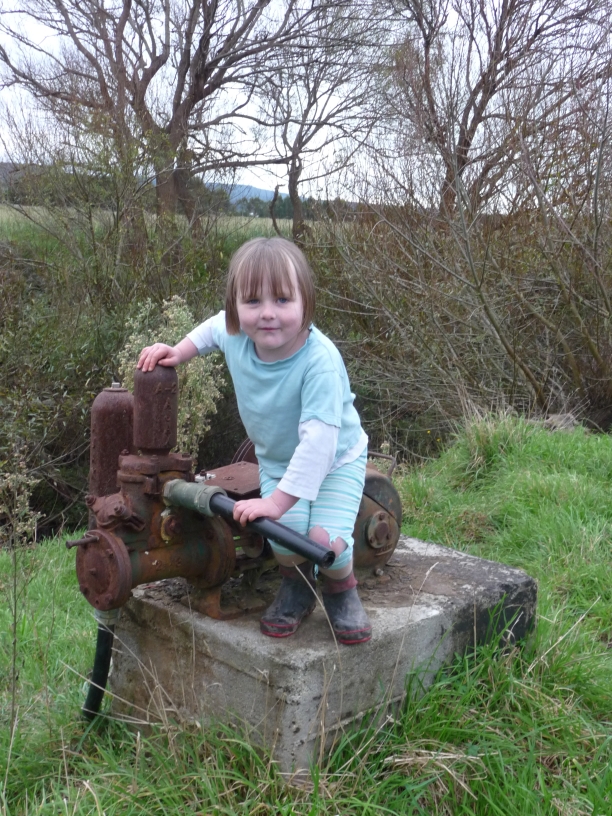
Zoe plays on an old relic while we prime the modern equivalent

Zoe plays on an old relic while we prime the modern equivalent

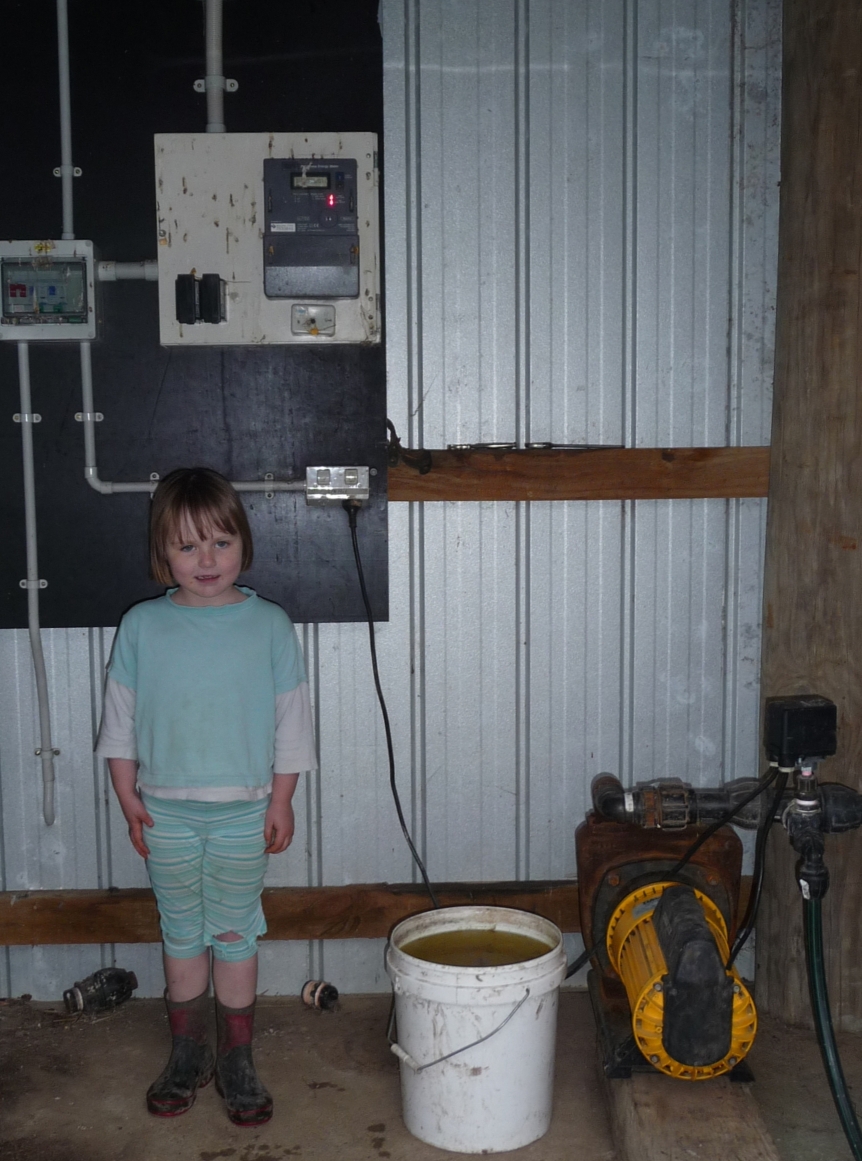
The more modern pump

Our almost indestructible pump

I don’t like spending money on tractors. They depreciate very quickly and, so long as it’s reliable and reasonably comfortable, we don’t need anything flash. Yes, so long as it’s reliable. Oh dear. This is the second tractor we’ve bought in four years.

The first one was nothing but trouble (spent half its value in repairs in 18 months) so we traded it in on one that a friend had owned and said was solid as could be. Less than a year later and after fitting a new turbo, its engine needs rebuilding. Aaaargh. Any suggestions for an offering to appease the tractor gods?

The farm’s main water pump, on the other hand, works away tirelessly without complaint. Occasionally, the foot valve on the suction line gets jammed open with sticks and that’s what happened today. There’s nothing more critical than water, so we were onto it straight away. Of course, water disasters only ever seem to happen at milking time – maybe water lines have pheremone sensors that can tell when you’re a little bit stressed!

Beautiful birth

Cow 506 beginning to calve

Cow 506 beginning to calve at 11.50am

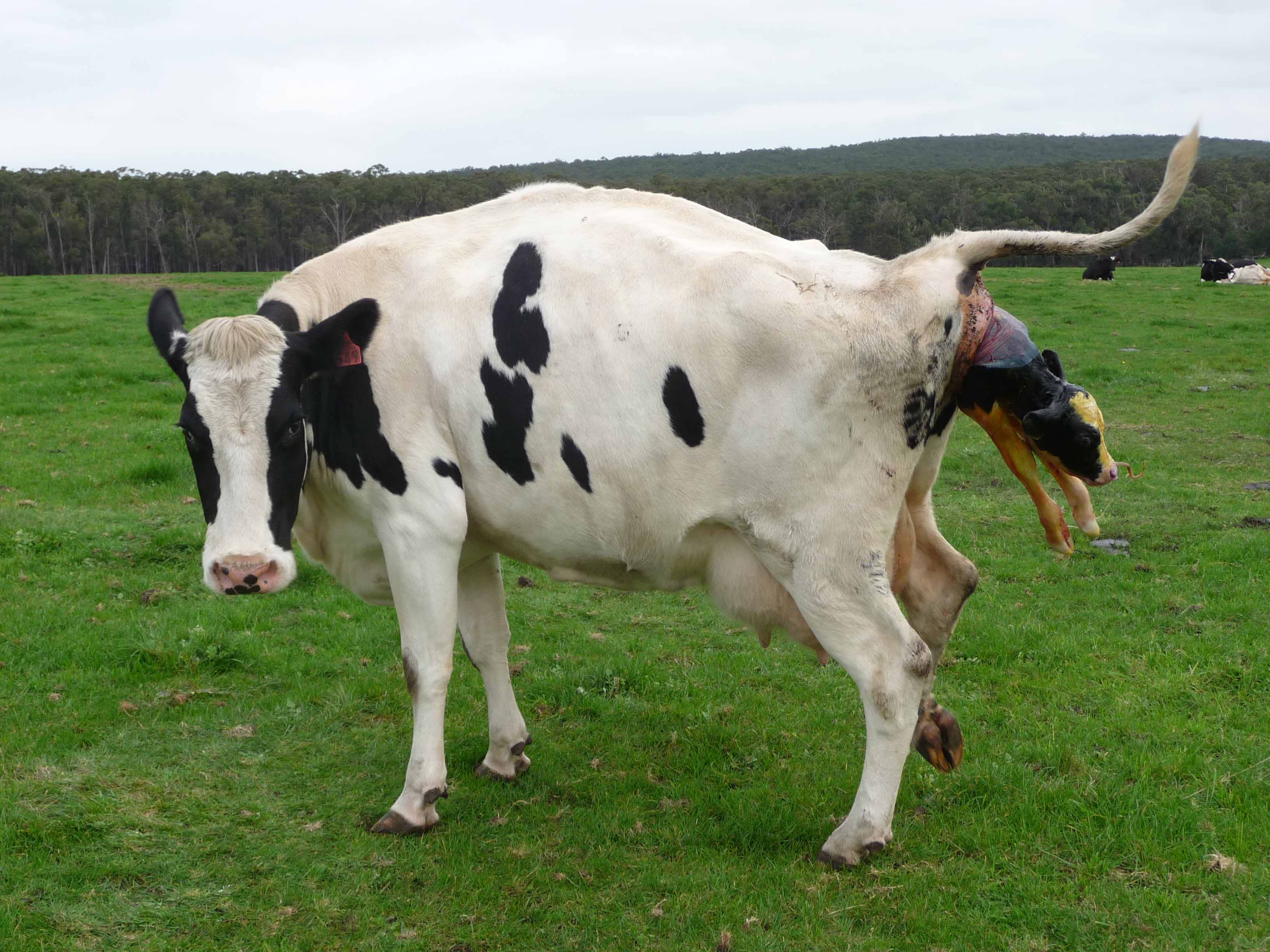
By the time I took this photo at 11.50 yesterday, I’d been watching over cow 506 for an hour or so. She’d been showing all the classic signs of a cow about to calve: restlessness, getting up and down. It was a relief to see her labour had progressed. I came back again an hour later to make sure everything was okay and look what I found! Licking her little one with gusto, she looked very comfortable.

Cow 506 licks her newborn at 1pm

Cow 506 licks her newborn at 1pm

Of course, it’s not always this simple. Sometimes the calf is too big, sometimes breech, sometimes the cow herself has a problem. With 340 cows set to calve over the next few months, it’s an anxious time for us.

To make it easier to keep an eye on our ladies, we do a weekly sort-out, drafting cows that are about three weeks from calving out from the rest so they can get extra special TLC in our calving paddock. This paddock is small and close to the house and dairy. We check it three times a day and, if any of the cows look like they’re about to calve, we hop up during the night to check them as well. Some of the signs are a swollen vulva, mucus, tight udder and unusual behaviour. The reality is though that, despite breeding programs meddling with the cow’s biology for thousands of years, almost all of them calve quite easily.

I hate comparing women with cows but, at almost 36 weeks myself, I can’t help wondering why it seems so much more complicated for us!

What is a factory farm?

Zoe with a seed drill from the 50s

Zoe with a seed drill from the 50s

When I was a teenager in the early 1980s, we bought the next-door neighbour’s farm and the one across the road to milk around 180 cows. At the time, it was an impressive herd.

Today, that’s quite small. The average Gippsland dairy farm now milks 265 cows on 130 hectares.

Turns out our farm is almost perfectly statistically average! Like many of our neighbours, we have a full-time employee and engage relief milkers to manage the workload. We no longer cultivate our own paddocks or cut our own hay because the job has just got too big. Instead, a specialist contractor with specialised, ultra-efficient machinery does it for us. Our very average farm of today would have been considered huge back then. Maybe even a factory farm.

Even so, the well-being of our animals has not diminished over time. We care just as much as we ever did and love of the land, the outdoors and our cows is why we farm. And now, thanks to the work of researchers, we are better equipped to keep them fit and healthy.

I don’t know what you’d classify as a factory farm these days but the low price of milk certainly puts us all under pressure to get bigger (and therefore better able to gain more efficiencies). Here in Australia, where cows are “free range” rather than housed and feed-lotted, big farms can be just as animal and environmentally-friendly as average farms like ours on one condition: the people who operate them still care.

Which of these cows is the mother?

Which is the mother cow?

Which is the mother cow?

This morning, we found a new heifer calf curled up in a corner of the calving paddock. She’d been licked clean but judging by her tucked up sides, she hadn’t had a drink. Why not? Her mum was nowhere to be seen. This is not uncommon – cows often leave their calves in remote spots while they go off to have a feed or a drink, so we got the calf up and tried to attract the mother cow’s attention with our best imitation of plaintive-sounding calf noises (not “moo” but something like “mmmmbeaaaaargh”).

Two aunties immediately rushed over. We call cows that haven’t calved but would love to steal someone else’s poddy an “aunty” and they can be exceedingly convincing. Not this time. They still had bulging bellies and no sign that anything had been recently stretched (IYKWIM). The mother was clearly not particularly maternal and was still waiting for her milk to come in properly.

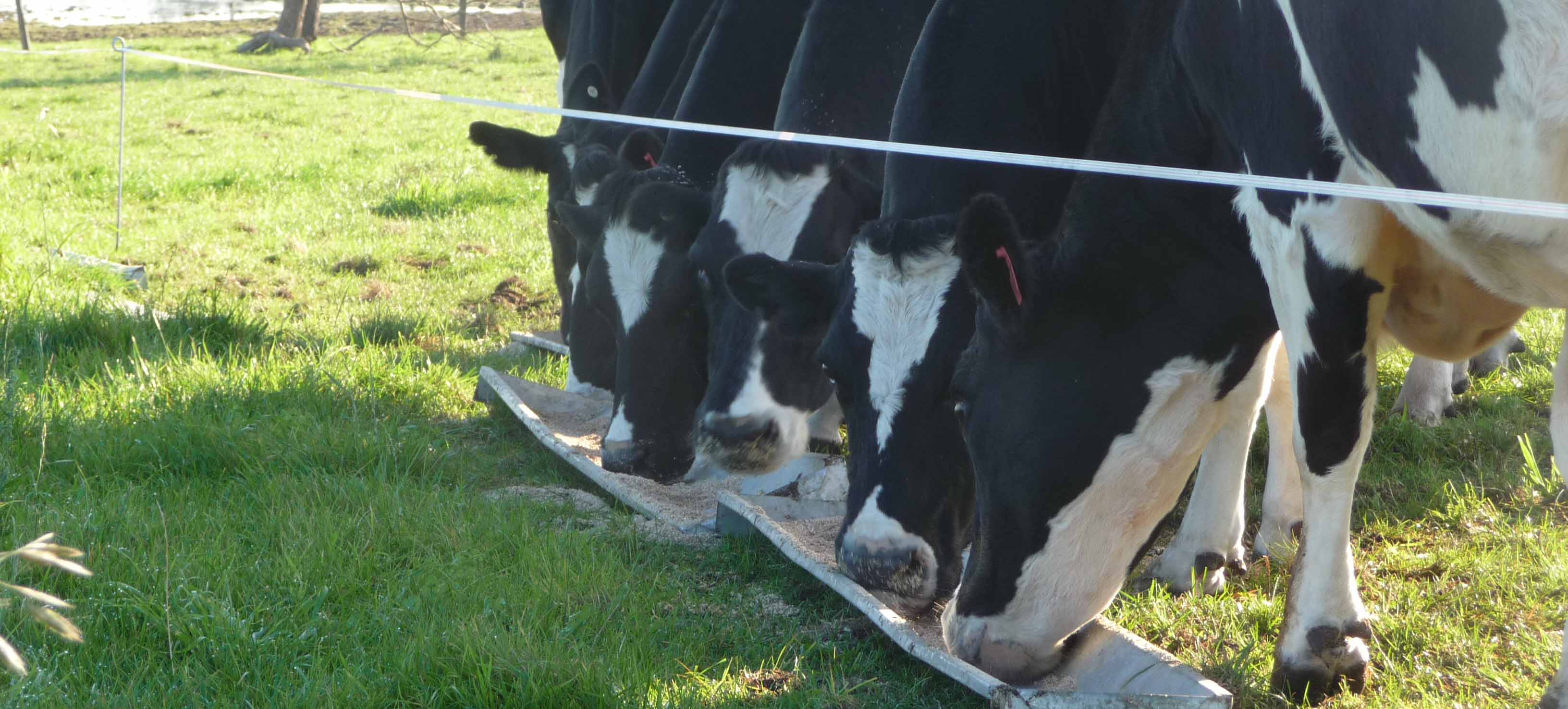
The only thing to do was to organise a line-up. Cows due to calve within the next three weeks get a daily ration of grain that is half what they’ll get when they rejoin the herd in the dairy, so we spread their breakfast out and did an inspection. Who do you think it was?

Early to rise in the freedom (and safety) machine

The UTV is safe and comfortable farm transport

The UTV is safe and comfortable farm transport

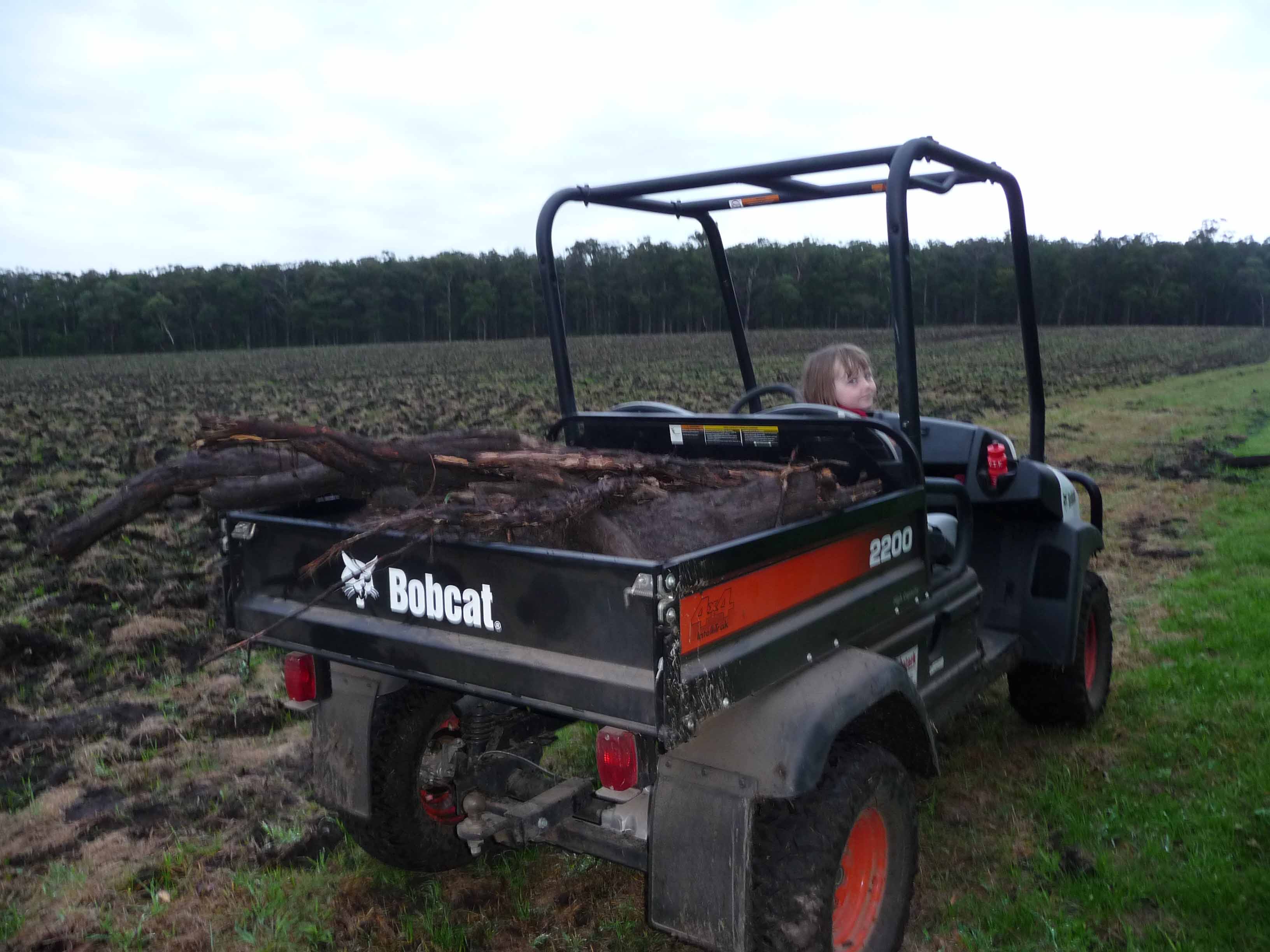
It’s been a race against time all day. Zoe and I got out of bed extra early this morning to see if we could remove fallen timber before the big set of discs arrived to make another pass of paddock B9.

By 7am we were out in the crisp autumn air tossing logs and branches into the Bobcat that I hadn’t been able to pick up with the tractor the evening before. I must admit to loving this little machine. It’s gutsy, is easy to get into and off, takes me all over the farm with all the tools I need and, most importantly, Zoe and I can ride together in comfort and safety. When Unicorn (Zoe’s nickname for our baby due in 3 weeks) arrives, it will be possible to fit all three of us on.

Safe transport is a big issue on Australian farms. Quad bikes have been in the news for all the wrong reasons. Too many have rolled, killing their riders. We’re all too aware of this and although our farm is flat to gently undulating, we make sure our quads are as safe as possible by making sure they’re properly maintained. Anyone riding a quad on our farm first undergoes a thorough induction and must observe on-farm speed limits and a strict policy of wearing helmets.

We’ve also invested in a man-down alarm, which sends a text and voice call to our phones if the wearer has been immobile at the wrong angle for too long.

Our safety systems are not perfect but we’re working on them – controlling the most serious risks first – and quad bike use is right up there.