Does grass grow on trees?

A few of the trees planted last spring

Trees Dad planted along a gully 12 years ago

Money may not grow on trees but I’m beginning to see that grass just might.

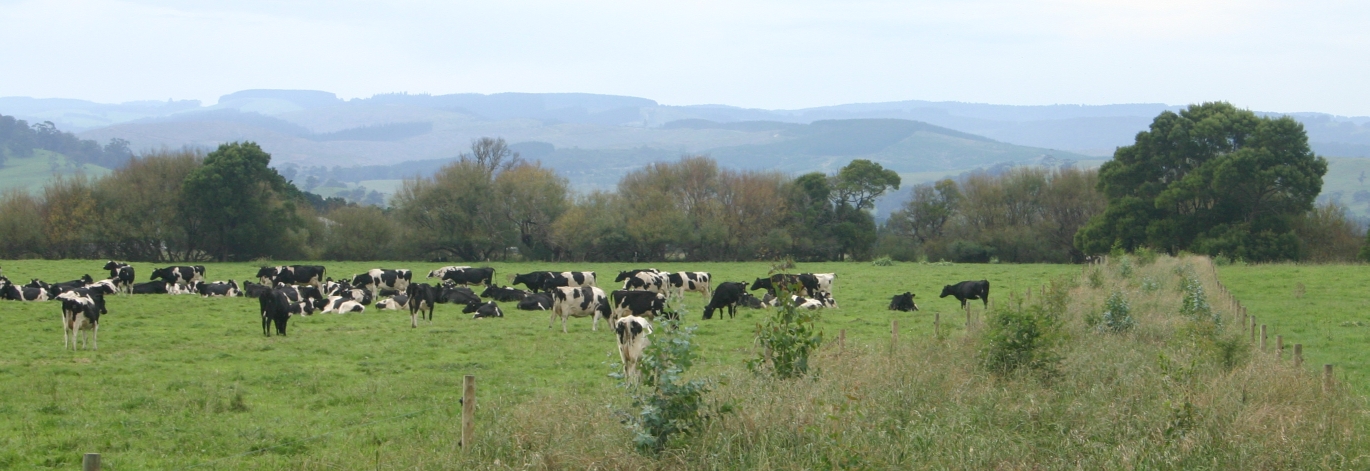
Our most productive pastures in summer are those that are sheltered on three sides by thick stands of willows. These are clapped out old ryegrass species but they outperform much newer pastures. I think that mostly it comes down to the relief the trees provide from those roasting NW winds. The cows also love the deep shade under the willows’ spreading branches, which must minimise heat stress. In other words, they create a more temperate micro-climate.

But willows are not universally loved, especially if you’re a native fish. Our farm draws water for cows and to clean the dairy machinery from the Albert River, so it is in our interests to protect the river’s health. I’m trying to see those shady willow windbreaks as “infestations” but without enough alternative shade, tearing them out is not a consideration.

So what are we doing? Planting hundreds and hundreds of native trees each year. If I had enough funding, I’d plant thousands every year! By doing this, we’re also creating wildlife corridors linking our gorgeous Land For Wildlife dam (which stretches over 8 acres) with two waterways and a wetland.

I’m so impatient. I can visualise the beauty of the farm in 20 years’ time, the cool oases of shade and the relief from the howling SW winter weather that these trees will bring. If the scientists are right, those refuges are going to be even more valuable as our climate becomes increasingly variable. If I’m lucky, I’ll be able to celebrate my 60th birthday in the summer of 2030 and Zoe’s 18th in the winter of 2024 in a very different and much more sheltered landscape to the one we enjoy now.

The art of caring for new mums

New mums deserve TLC courtesy of our researchers

There’s a real art and a science to looking after cows in the lead-up to, and just after, calving. As you can imagine, cows need an incredible amount of calcium to both grow their calves and to produce milk.

You’d think that adding extra calcium in their diets would be a good idea, wouldn’t you? Well, actually vets tell us that adding calcium is one of the worst things you can do to a cow that’s about to calve. It makes her much more likely to suffer from a life-threatening disorder called “milk fever”, where the body cannot produce enough calcium to power her muscles (including the heart).

Instead, we must choose feeds that encourage the cow’s body to draw calcium from her bones and that will help her adjust to the diet she’ll receive as a member of the milking herd. If we don’t get the feeding regime right during the two to three weeks before calving, cows are more likely to have trouble calving, develop lameness, lose weight, produce less milk and get sick with mastitis.

Ironically, too much grass at this time also spells big trouble. It generally has a high dietary cation anion difference (DCAD), which doesn’t help get precious calcium into the bloodstream. That’s why cows in our calving paddock have access to short but clean grass, anion salts in their drinking water, cereal hay and half the ration of grain they’ll get in the dairy. They’re too precious to treat with any less TLC.

Dairy farming a glamorous job?

At a social get-together today, someone said dairy farming was glamorous. Rewarding, challenging, interesting, in touch with nature, a great way to raise a family, yes. Glamorous? I’d never thought of it that way. My friend (not a farmer) pointed out that many urban professionals might envy the freedom and sense of purpose enjoyed by dairy farmers.

It’s all about perspective, I guess. My husband saw me engrossed in reading a farmer’s newsletter last night and said: “You really love your farming, don’t you?”. “Yes,” I said, “Look at this! Turns out the nitrogen in the first effluent pond is much less volatile and…”. Well, there’s nothing sexy about a primary effluent pond. Realising how ridiculous I sounded, all I could do was laugh at myself. I do love it – especially learning how all the natural systems that come together in a farm work – even though there are days when it’s a really hard, dirty and uncomfortable grind that’s anything but glamorous.

But how do other Australians see us? According to one 2010 poll, as trustworthy. I wonder how the milk wars have affected public perceptions.

My lucky girl

Farm life can be fun and safe for children but tragedy strikes too often

Farms are extremely dangerous places for children. FarmSafe warns farming families of the horrible record of child deaths on Australian farms and makes some very sensible recommendations.

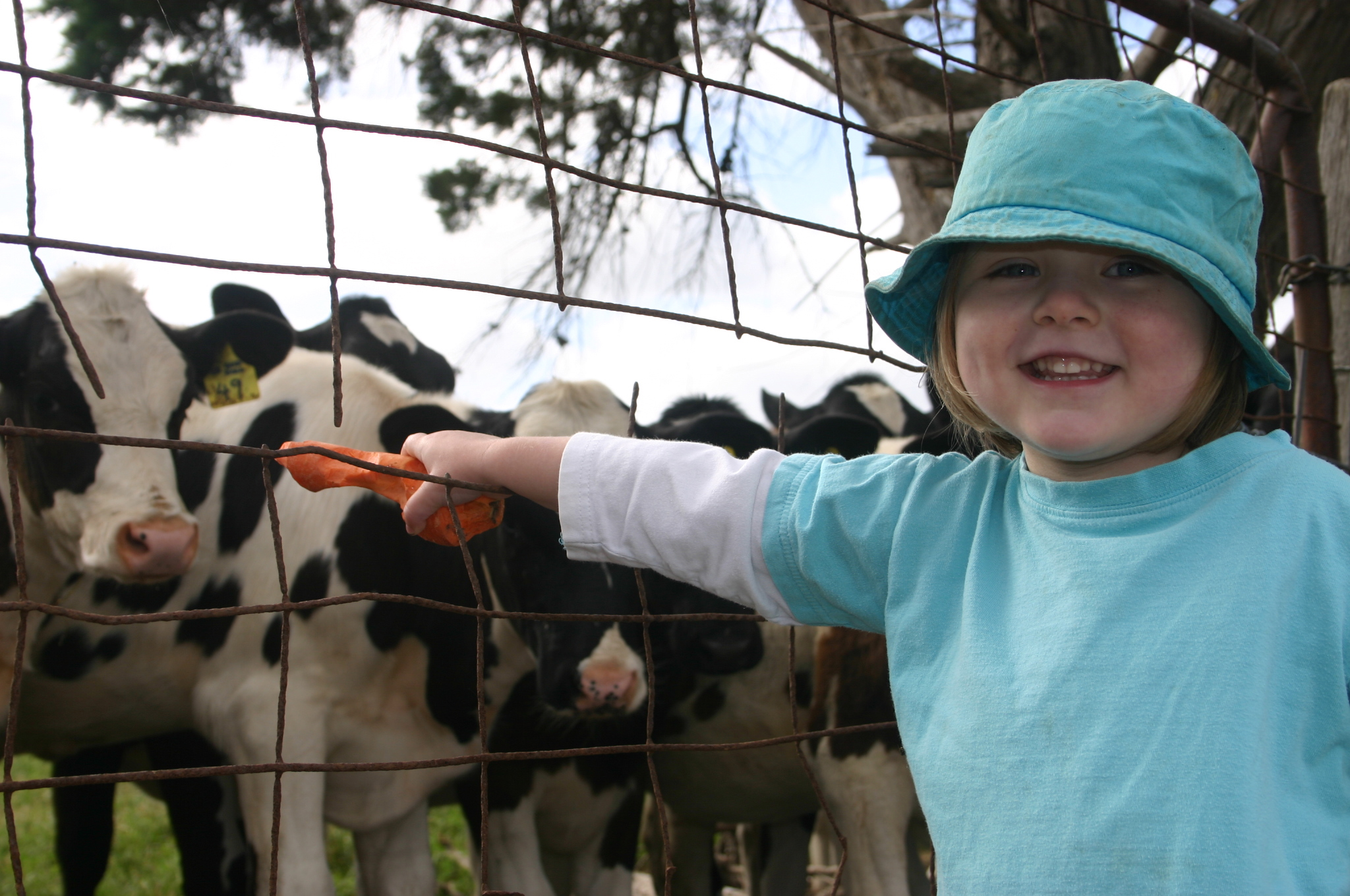
Some more conservative organisations recommend children are confined to safe play areas. That’s not reality for many farming families, including ours. We all work together because we need to and because it’s fun. On our farm, we are really careful Zoe understands there are some no-go zones and to observe some critical rules (not to get too close to the cows is one example).

One of Zoe’s favourite jobs around the farm is rounding up the cows for milking. It’s a great chance to run around, be an important helper and show how responsible she is. Zoe’s very proud and very lucky. So am I.

Charlie and Lola the maremmas

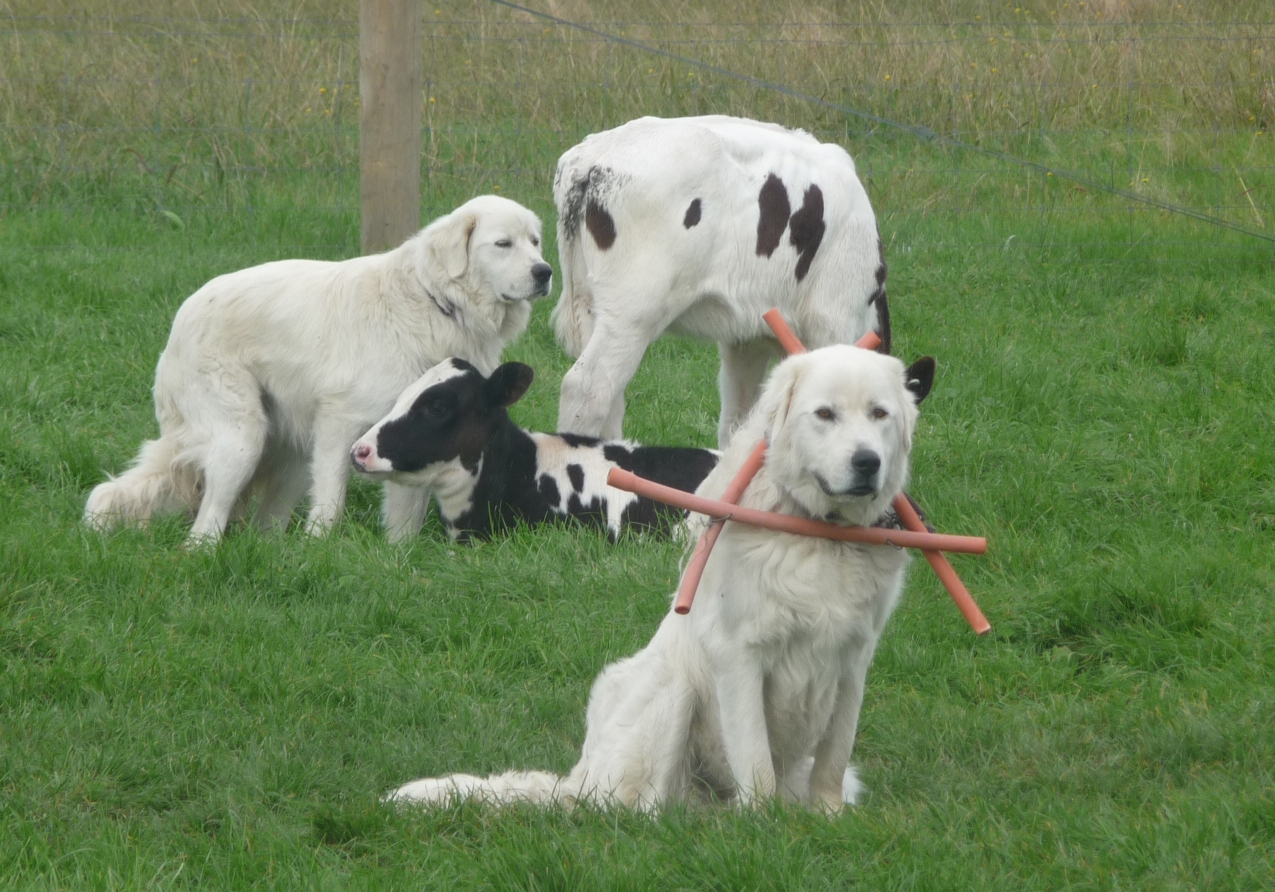
Charlie and Lola love their bovine friends


We’ve had Charlie and Lola since they were just 10 weeks old but, while they love us, we’re not their real family. The calves are. Now nearly two years old, they’ve slept, played and eaten alongside calves ever since they arrived.

The idea is that these beautiful Maremmas, bred as paddock-dwelling livestock guardians, will protect our calves from foxes and chase kangaroos and wallabies from the paddocks.

You see, I am a bit of a softie. Although I have a permit, I can’t bear to shoot at the 200 or more kangaroos and wallabies that visit us every day even while they’re decimating our fodder reserves and quite literally eating us out of house and home. The solution? I’m not sure I’m onto a winner yet but bonding the maremmas with the calves has been a two-year training phase in a grand Milk Maid experiment in macropod control. Over the last few weeks, we’ve been training Charlie and Lola to respect the 4km boundary fence and will soon let them out of the calf paddock to roam their 200-acre domain. I can hardly wait to see how they, the livestock and the wildlife respond and am practically twitching with excitement. Will keep you posted.

Cows do a LOT of poo but nothing goes to waste

Cows do a LOT of poo. About 40 litres of the green stuff per day (that’s besides number ones). Because they spend all their time grazing in paddocks, most of it goes straight back onto the grass as nature’s own organic fertiliser. The stuff that gets dropped onto the yard twice a day while they’re waiting to be milked is a different matter, though. It would be environmentally wrong and illegal to let it run into waterways, so this yard manure is hosed into large ponds for storage and digestion by aerobic and anaerobic bugs.

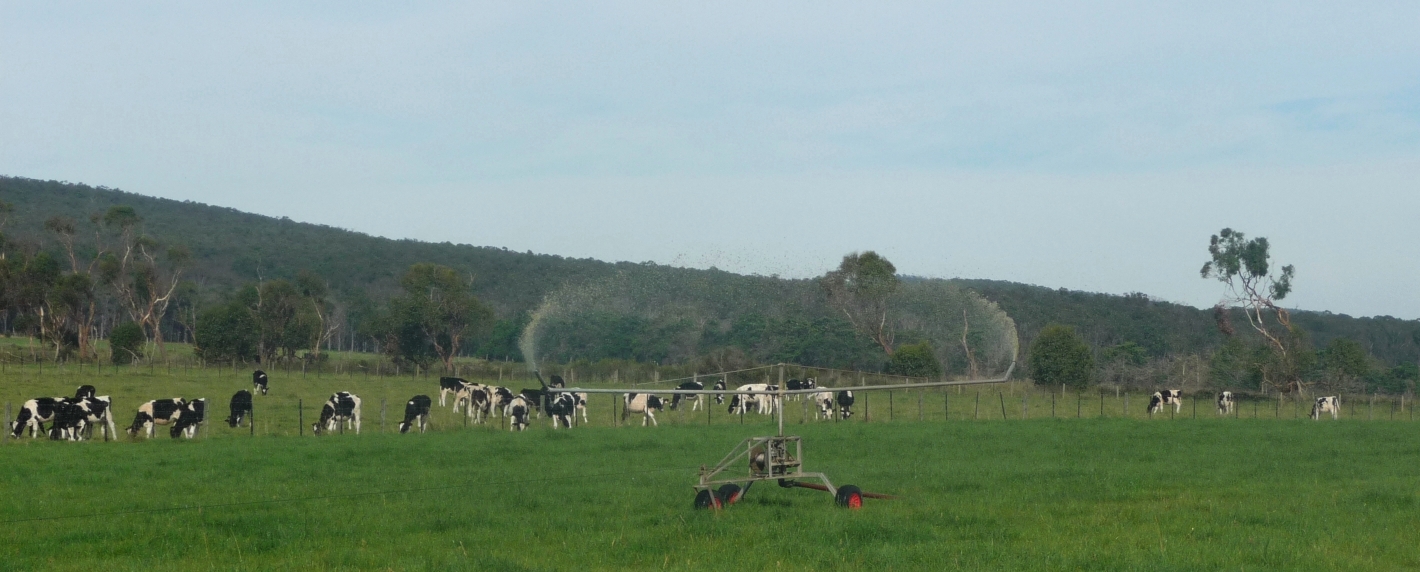
When it’s dry during summer and autumn, we pump the effluent on to paddocks using a little travelling irrigator hooked up to a fire-fighting pump. The effluent is full of great nutrients and beneficial bugs, we save trucking in inorganic fertiliser (not to mention the concept of peak phosphorous) and avoid polluting our rivers. When the pond is just TOO full for me and the irrigator to keep up with, we engage a contractor to come and pump it out and spread it with a huge tanker.

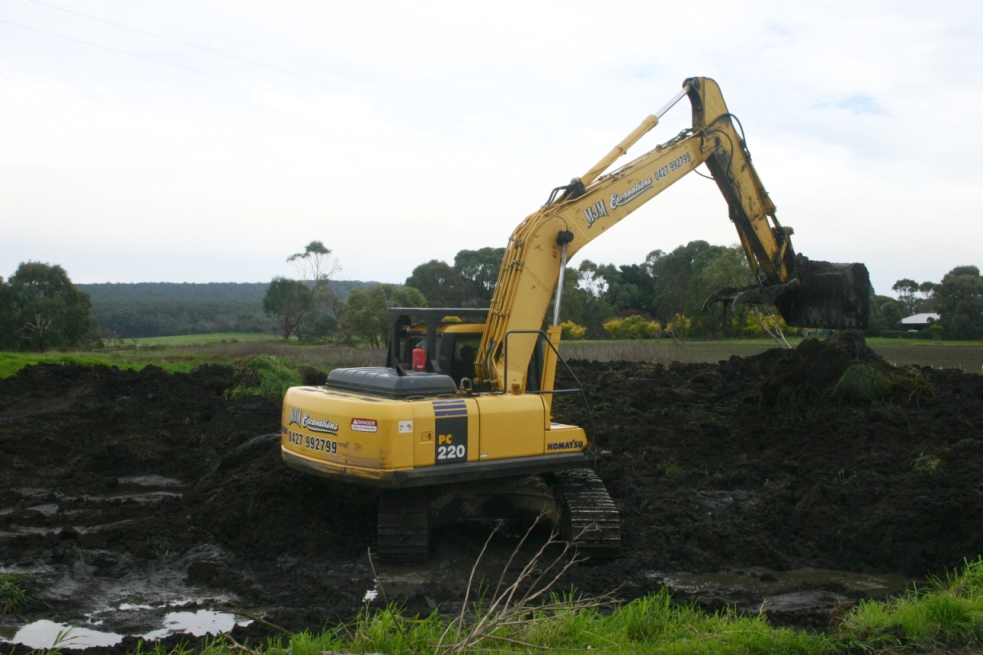
That’s been something of a challenge this year. The tractor and fully laden tanker weigh about 45 tonnes and, because  summer was so wet, access has been very limited. In fact, they just can’t get in at the moment. The effluent spreader shook his head and suggested calling for some rock. The quarry owner shook his head and suggested calling in the grader, excavator and the bank manager. I just hung my head and looked at my boots. Then, my lightbulb moment! If I can’t get the track to the pond, bring the pond to the tanker! I’m getting the excavator in to extend the pond so it’s really close to an existing cow track. Mark, the excavator supremo, expects it to be here in a couple of weeks, so I should have some boys’ toys pics up then.

Just because I told you the climate was getting drier…

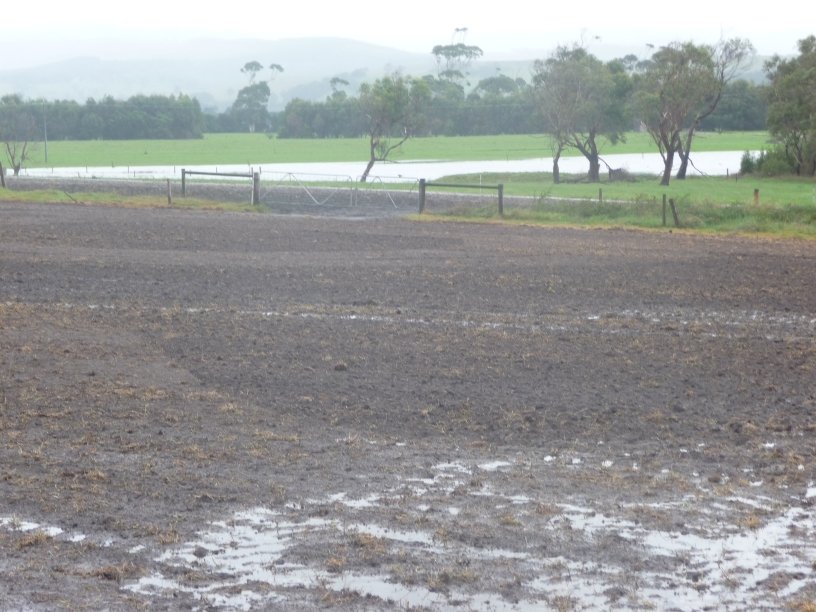
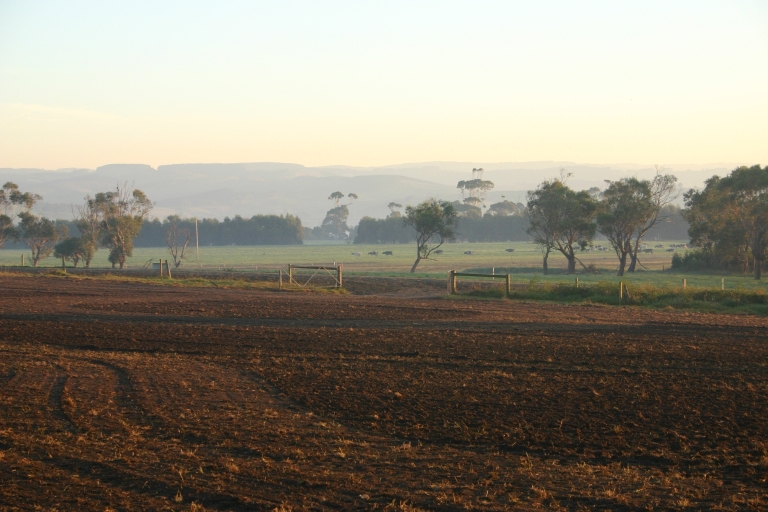
It must have been because I wrote about dry summers and autumns in my previous post – the weather gods have once again turned on the rain. Paddock 17 is today better known as “Lake 17”. Compare this pic taken this morning with the one I shot just a few days ago.

It’s nice to have the moisture but this much rain certainly calls a halt to our pasture renovation for now. I’m also wondering how many more times the 800 trees we planted in paddock 17 last October can cope with going underwater.

What a difference a few days make!

The same view just a few days ago

Cycle of life adapts to a new climate

The calves are offered a special treat


Whether you call it climate variability or climate change, one thing’s for sure: we’re dealing with very different weather patterns in our part of Gippsland. The summers are hotter and tougher. The dryness now often begins in November and sometimes stretches into May. On the other hand, winter is warmer and grass grows far better in June and July than ever before.

This has fundamentally changed the farm, right down to the cycle of life. Instead of planning the calving season to begin in mid-July, we’ve decided to begin on April 20 this year. We’ve been surprised to see four premature calves (including twins Ella and Bella) born already – best laid plans often come undone at the hands of mother nature.

The reasoning is that we want to match the cows’ need for grass with the time when it grows best. Naturally, cows need the most energy when they produce the most milk, so we’re hoping to hit peak production in July/August/September, which is the period when the farm’s pastures are most productive under the new conditions.

The cows will have their two-month annual holiday from mid-February until calving begins in April – the time when grass is hardest to grow and when the cows’ energy needs are lessened. It will take time (two or three years) for us to get the whole herd into this pattern but it will be worth it. There will be less pressure on all of us.